石油

Search documents
国家出手调控油价;北京三部门约谈12家平台企业……盘前重要消息还有这些
证券时报· 2026-03-24 00:00
Group 1 - The Chinese government is urging all parties to cease military actions in the Middle East to prevent further escalation and protect global economic development [2][3] - The National Development and Reform Commission announced temporary adjustments to domestic fuel prices due to significant increases in international oil prices, with gasoline and diesel prices adjusted by approximately 0.87 yuan and 0.95 yuan per liter, respectively [3] - The Dalian Commodity Exchange has adjusted the price fluctuation limits and margin levels for liquefied petroleum gas futures contracts, increasing the fluctuation limit from 11% to 14% for certain contracts [4] Group 2 - China Bank is enhancing risk prevention measures in the precious metals market [6] - Several funds, including E Fund and Jiashi, will be suspended from trading on March 24 until 10:30 AM [7][8][9] - WuXi AppTec reported a 105.2% year-on-year increase in net profit for 2025 and plans to distribute a dividend of 15.7927 yuan per share [10] - Fuxiang Pharmaceutical expects a year-on-year net profit increase of 2222.67% to 3250.01% for the first quarter [11] - Huate Gas anticipates limited impact on its 2026 performance from price increases of certain gas products [12] - Dashengda's stock price is significantly deviating from its fundamentals, indicating a risk of rapid decline [13] - Wantong Kai is planning to acquire 100% equity of Zeng Rui Zhi Control and will be suspended from trading starting March 24 [14] - Libet has signed three significant contracts with its subsidiaries [15] Group 3 - Zijin Mining repurchased 21 million A-shares on March 23 [19] - Yongguan New Materials' actual controller plans to increase shareholding by 50 million to 100 million yuan [19] - Changyuan Donggu is planning to acquire 100% equity of Xiangyang Kanghao Electromechanical Engineering Company and will be suspended from trading starting March 24 [19] - Huadian Liaoning Energy has seen a cumulative increase of 89.81% over ten trading days, with no significant changes in daily operations [19] - Cangge Mining plans to repurchase shares worth 200 million to 400 million yuan [19]


特朗普称同伊朗对话“完美”,如果顺利将结束冲突
21世纪经济报道· 2026-03-23 23:35
特朗普还称是"伊朗主动打来电话"的,因为"担心发电厂遭美军轰炸" 。在被问到"未来谁将控 制石油,伊朗是否还能控制石油运输"时,特朗普称,或许将由他和"下一任伊朗最高领袖"联 合控制。 来源丨央视新闻 编辑|金珊 伊朗否认与美国沟通 俄罗斯石油装运港遭袭,或加剧能源供应紧张 SFC 21君荐读 据央视新闻报道,美国总统特朗普当地时间3月23日对媒体说, 美国同伊朗进行了"强有力"的 对话,对话"完美",已形成协议要点,如果一切顺利,将会结束冲突。不过,伊朗方面当天已 反复否认与美国对话 。特朗普对此称,美国炸毁了伊朗大量基础设施,"伊朗那里很难获得信 息"。 据美国和以色列方面消息,美方正同伊朗伊斯兰议会议长卡利巴夫进行对话。但这一消息已遭 到卡利巴夫本人的否认。伊朗方面指出,消息人士称,美国散布的谈判假新闻是为了暗杀卡利 巴夫,并在伊朗内部制造分裂。 特朗普称,美方同伊朗领导层进行了对话,"正在与一名我们认为是最受尊敬的领导人对话"。 当记者问及伊朗方面参与谈判的是否是伊朗最高领袖穆杰塔巴·哈梅内伊时,特朗普说:"不 是。" ...

道指大涨超600点,美股半导体拉升,有中概股飙涨87%,国际油价大跌10%,黄金巨震
21世纪经济报道· 2026-03-23 23:17
记者丨金珊 吴斌 编辑丨江佩霞 周一(3月23日),美国三大股指全线大涨,道指盘中涨超1000点,截至收盘,道指涨1.38%,标普500指数涨1.15%,纳指涨1.38%。 | 道琼斯工业 | 纳斯达克指数 | 标普500 | | --- | --- | --- | | 46208.47 | 21946.76 | 6581.00 | | +631.00 +1.38% +299.15 +1.38% +74.52 +1.15% | | | | 美国科技七巨头 中概科技龙头 | | 中国金龙 | | 59869.11 = | 3678.01 | 6800.66 | | +800.43 +1.36% +54.33 +1.50% +57.81 +0.86% | | | 大型科技股集体上涨。特斯拉涨超3%,亚马逊涨逾2%,脸书涨近2%,英伟达、苹果涨超1%。 芯片股多数上涨,费城半导体指数涨1.34%,博通涨超4%,阿斯麦、ARM涨超3%,台积电涨逾2%,美光科技跌超4%,高通跌逾1%。 能源股多数上涨,埃克森美孚涨近1%,雪佛龙涨超1%,斯伦贝谢涨逾5%。 航空股全线上涨,波音涨超1%,美国航空涨逾3%,达美航空涨超2 ...

U.S. Energy Dominance Agenda Can't Shield Driver From Higher Gasoline Prices
Yahoo Finance· 2026-03-23 19:00
The United States is the world’s biggest crude oil producer—it has been for years, and it has been pumping more than 13.6 million barrels per day of oil for the past few months. Then why, some would ask, are U.S. gasoline prices surging because of a conflict half a world away? First and foremost, the price of crude oil carries the biggest weight in the formation of gasoline prices in America. And the price of crude oil has soared in the past three weeks since the war in the Middle East began. Second, ...
美股三大指数,持续走高
第一财经· 2026-03-23 14:58
21:30 美股三大指数集体高开,纳指涨1.61%,标普500指数涨1.35%,道指涨1.6%。石油股领 跌,西方石油跌近4%,康菲石油跌1.6%。 22:20 现货白银日内涨超3%,站上70美元/盎司;现货黄金转涨。 微信编辑 | 小羊 22:21 美股三大指数涨幅均超2%。 22:03 墨西哥主要股指上涨1%。 ...

俄罗斯石油装运港遭袭,或加剧能源供应紧张
21世纪经济报道· 2026-03-23 14:54
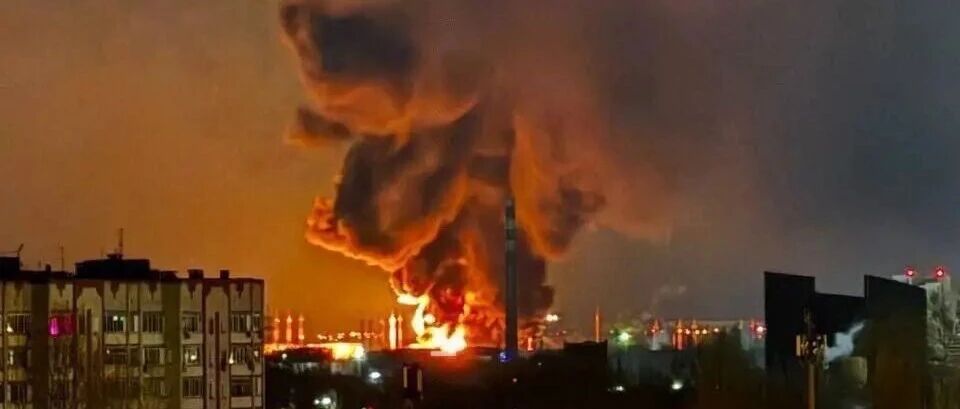
Core Viewpoint - The recent drone attacks on Russia's oil export ports in the Baltic Sea, specifically Primorsk and Ust-Luga, have led to a suspension of oil export operations, raising concerns about global energy supply tightness amid ongoing geopolitical tensions [1][2]. Group 1: Incident Overview - The drone attacks occurred between the night of the 22nd and the early morning of the 23rd, resulting in the suspension of oil export activities from both ports [1]. - The Primorsk port is a major terminal for Russian Urals crude oil and high-quality diesel, capable of handling over 1 million barrels of oil per day, while Ust-Luga exports approximately 700,000 barrels daily [1]. - The attacks have previously impacted these ports, with a similar incident in September last year causing significant disruptions to oil shipment operations [2]. Group 2: Broader Implications - The attacks are part of a broader pattern of ongoing conflict, with Ukraine frequently targeting Russian oil export facilities to undermine Russia's oil revenue [4]. - The drone strikes have also led to operational disruptions at other key locations, such as the Pulkovo International Airport in St. Petersburg, which temporarily suspended flights due to the security situation [5].
Oil From US Reserves Started Flowing Friday, Says Energy Secretary Wright
Youtube· 2026-03-23 14:48
Group 1 - Market prices are signaling producers to increase output, but prices have not yet reached levels that significantly reduce demand [1] - Energy entrepreneurs are finding innovative solutions to address temporary supply issues, such as rerouting floating oil barrels to refineries in other Asian nations [2] - The International Energy Agency (IEA) is facilitating the release of strategic oil stocks, with U.S. oil starting to flow from reserves as of last Friday [2][3] Group 2 - Some countries are responding quickly to the IEA's framework, while others are slower or lack sufficient oil and gas stocks [3] - The IEA was originally established to stabilize oil markets, but its use for political purposes, such as influencing gasoline prices for elections, raises concerns about its intended role [3]

公募基金指数跟踪周报(2026.03.16-2026.03.20):震荡盘整,防御优先-20260323
HWABAO SECURITIES· 2026-03-23 13:20
Report Industry Investment Rating No relevant information provided. Core Viewpoints of the Report - The core variable in the current market lies in the Middle East. Until the geopolitical uncertainty decreases or the commodity price volatility declines, the market will continue to be affected by event narratives and liquidity, and may even fall into a game of long - term expectations. A - shares will maintain a volatile market, with more structural opportunities than overall opportunities [3][13]. - In the equity market, it is recommended to focus on energy sectors related to the Middle East situation, "three - low" sectors with low valuation, low volatility, and low consensus, and sectors that can maintain high - growth independently regardless of geopolitics and oil prices [3][13]. - In the bond market, short - term yields are down while long - term yields are up, and the yield curve is moving towards a bearish steepening. In the short term, it is recommended to maintain a neutral or slightly lower duration, and credit bonds may offer better value [4][14]. Summary by Directory 1. Weekly Market Observation 1.1 Equity Market Review and Observation - Last week, the A - share market showed a volatile downward trend, with significant fluctuations in market sentiment. The average daily trading volume of the entire A - share market was 2209.1 billion yuan, a decrease compared to the previous week [12]. - Due to the ongoing blockage of shipping in the Strait of Hormuz and the unresolved Middle East situation, global risk assets accelerated their decline. Funds shifted from cyclical sectors sensitive to macro - fluctuations to technology and manufacturing sectors with independent industrial logic and long - term growth potential [12]. - AI hardware industry chains such as memory chips, CPO, PCB, and computing power leasing attracted market attention, driven by multiple industry benefits. In contrast, resource - related cyclical sectors such as non - ferrous metals and chemicals faced pressure and declined [12]. 1.2 Pan - Fixed - Income Market Review and Observation - Last week, the bond market showed a significant differentiation between short - and long - term yields. The 1 - year Treasury yield decreased by 2.00BP to 1.26%, the 10 - year Treasury yield increased by 1.56BP to 1.83%, and the 30 - year Treasury yield increased by 2.16BP to 2.39% [4][14]. - The bond market is currently in a volatile pattern. Short - term yields have been declining due to extreme risk - aversion, while long - term yields are rising due to concerns about intensifying geopolitical conflicts and increased imported inflation expectations. The yield curve is moving towards a bearish steepening [4][14]. - The US Treasury yields increased across the board last week. The 1 - year US Treasury yield increased by 14BP to 3.80%, the 2 - year US Treasury yield increased by 15BP to 3.88%, and the 10 - year US Treasury yield increased by 11BP to 4.39% [15]. - The performance of REITs was differentiated. The CSI REITs Total Return Index fell 0.13% to 1021.78 points. Affordable housing and expressways had the highest gains, while warehousing and logistics, environmental protection, etc. had the highest losses [15]. 2. Fund Index Performance Tracking 2.1 Equity Strategy Theme - Based Index - **Active Equity Fund Selection**: The index selects 15 funds each period, with equal - weight allocation. The core positions select active equity funds based on performance competitiveness and style stability, and balance the style distribution according to the CSI Equity - Oriented Fund Index [19]. 2.2 Investment Style - Based Index - **Value Equity Fund Selection**: The index selects 10 funds with deep - value, quality - value, and balanced - value styles, with the CSI 800 Value Index as the benchmark [19]. - **Balanced Equity Fund Selection**: The index selects 10 relatively balanced and value - growth style funds, with the CSI 800 as the benchmark [22]. - **Growth Equity Fund Selection**: The index selects 10 funds with active - growth, quality - growth, and balanced - growth styles, with the 800 Growth Index as the benchmark [26]. 2.3 Industry Theme - Based Index - **Pharmaceutical Equity Fund Selection**: The index selects 15 funds based on the intersection market value ratio of fund equity holdings and the representative index, with the CSI All - Index Pharmaceutical and Healthcare Index as the benchmark [28]. - **Consumer Equity Fund Selection**: The index selects 10 funds based on the intersection market value ratio of fund equity holdings and the representative index, with the consumer - theme fund index as the benchmark [32]. - **Technology Equity Fund Selection**: The index selects 10 funds based on the intersection market value ratio of fund equity holdings and the representative index, with the technology - theme fund index as the benchmark [35]. - **High - End Manufacturing Equity Fund Selection**: The index selects 10 funds based on the intersection market value ratio of fund equity holdings and the representative index, with the high - end manufacturing - theme fund index as the benchmark [38]. - **Cyclical Equity Fund Selection**: The index selects 5 funds based on the intersection market value ratio of fund equity holdings and the representative index, with the CS Cyclical Index as the benchmark [40]. 2.4 Money - Market Enhancement Index - **Money - Market Enhancement Strategy**: The index aims for liquidity management, targeting a curve that outperforms money - market funds. It mainly invests in money - market funds and inter - bank certificate of deposit index funds, with the CSI Money - Market Fund Index as the benchmark [45]. 2.5 Pure - Bond Index - **Short - Term Bond Fund Selection**: The index aims for liquidity management, selecting 5 funds with stable long - term returns, strict drawdown control, and significant absolute - return capabilities, with a benchmark of 50% Short - Term Pure - Bond Fund Index + 50% Ordinary Money - Market Fund Index [47]. - **Medium - and Long - Term Bond Fund Selection**: The index invests in medium - and long - term pure - bond funds, aiming for stable returns while controlling drawdowns. It selects 5 funds, balancing coupon strategies and band - trading operations, and adjusting the ratio of credit - bond funds and interest - rate - bond funds according to market conditions [50]. 2.6 Fixed - Income Plus Index - **Low - Volatility Fixed - Income Plus Selection**: The index has an equity central position of 10%, selects 10 funds with an equity central position within 15% in the past three years and recently, with a benchmark of 10% CSI 800 Index + 90% ChinaBond New Composite Full - Price Index [53]. - **Medium - Volatility Fixed - Income Plus Selection**: The index has an equity central position of 20%, selects 5 funds with an equity central position between 15% - 25% in the past three years and recently, with a benchmark of 20% CSI 800 Index + 80% ChinaBond New Composite Full - Price Index [55]. - **High - Volatility Fixed - Income Plus Selection**: The index has an equity central position of 30%, selects 5 funds with an equity central position between 25% - 35% in the past three years and recently, with a benchmark of 30% CSI 800 Index + 70% ChinaBond New Composite Full - Price Index [56]. 2.7 Other Pan - Fixed - Income Index - **Convertible Bond Fund Selection**: The index selects 5 funds from a sample space of bond - type funds with a convertible - bond investment ratio meeting certain criteria, based on multiple evaluation indicators [60]. - **QDII Bond Fund Selection**: The index selects 6 funds with stable returns and good risk control based on credit and duration conditions, with underlying assets being overseas bonds [64]. - **REITs Fund Selection**: The index selects 10 funds with stable operations, reasonable valuations, and certain elasticity based on the underlying asset types of REITs [65].
国投期货能源日报-20260323
Guo Tou Qi Huo· 2026-03-23 12:54
1. Report Industry Investment Ratings - Crude oil: ★☆☆ [1] - Fuel oil: ★☆☆ [1] - Low-sulfur fuel oil: ★☆☆ [1] - Asphalt: ★☆☆ [1] 2. Core Views - The core variable of oil price trends depends on the smooth passage of the global energy transportation route. Geopolitical conflicts show no sign of easing, and oil price fluctuations may intensify [1]. - Fuel oil is expected to follow crude oil, with a solid lower support, be easily affected by news, and show a wide - range oscillating pattern [2]. - The fundamentals of asphalt have marginal improvement expectations, and its direction will follow oil price fluctuations [3]. 3. Summaries by Related Catalogs Crude Oil - Trump issued a 48 - hour ultimatum to Iran, and Iran responded with a severe warning. The gap between alternative pipeline capacity and normal oil transport volume through the Strait of Hormuz is large. The release of strategic oil reserves by IEA member countries is for emergency buffering and has replenishment needs. The key to oil price is the strait's passage, and attention should be paid to whether energy infrastructure is directly attacked [1]. Fuel Oil & Low - Sulfur Fuel Oil - Geopolitical tensions over the weekend led to a sharp rise in fuel oil prices. Supply from the Middle East decreased, and although there are some alternative supplies, they are insufficient. Domestic refinery operating rates declined, increasing import demand. Overseas, LNG gas field attacks increased the demand for fuel oil. For low - sulfur fuel oil, the attack on Fujairah Port increased Singapore's bunkering demand, and supply is limited [2]. Asphalt - The military conflict between the US, Israel and Iran continues, and the traffic volume in the Strait of Hormuz is low. Asphalt refinery supply tightened, and production decreased. Downstream demand is expected to improve with rising temperatures. Refinery inventory decreased, and social inventory increased slightly, but both are at near - three - year lows. The asphalt's direction will follow oil price fluctuations [3]
Markets Whipsaw, Crude Oil Cools & Gold, Silver Fall on Iran Developments
Youtube· 2026-03-23 12:45
Market Reactions - President Trump has delayed potential military strikes on Iranian power plants by five days, citing productive talks, which initially boosted market sentiment [2][3] - The E-mini S&P 500 saw fluctuations, rising over 2% before pulling back due to conflicting reports from the Iranian Foreign Ministry denying direct talks with the U.S. [3][4] - Market volatility is heightened, with liquidity being thin, leading to erratic trading patterns based on news headlines [4][6] Oil Market Dynamics - Oil prices initially surged to around $100 per barrel but have since retreated to approximately $90 per barrel for WTI, reflecting the fluid situation [11][12] - The potential for military action against Iranian power plants remains a significant concern, as it could escalate tensions and impact energy producers in the region [5][13] - Iran's threats against buyers of U.S. treasuries could further complicate market dynamics, contributing to rising yields [10] Metals Market Trends - Gold prices have decreased by 4% and silver by 3%, indicating a shift towards cash as investors seek liquidity amid market volatility [17][18] - The relationship between the dollar and metal prices is crucial, with higher volatility leading to a sell-off in gold as investors raise capital [19][20] - Industrial metals like copper, platinum, and palladium are experiencing downward pressure due to expectations of higher interest rates and economic slowdown, affecting consumption rates [21][22] Equity Market Outlook - The S&P 500 is facing a downward trend, with key support levels being tested. Options flow indicates a potential bounce but overall sentiment remains cautious [24][25] - The trajectory for the S&P 500 could approach the 6000 level if negative trends continue, highlighting the importance of news flow for market confidence [26]