保健品

Search documents
汤臣倍健:财务数据及具体经营情况请关注公司定期报告
Zheng Quan Ri Bao Wang· 2025-12-04 11:14
证券日报网讯12月4日,汤臣倍健(300146)在互动平台回答投资者提问时表示,公司财务数据及具体 经营情况请关注公司定期报告。 ...

蛋白粉购买黄金标准:蛋白粉哪里可以买到正品,2025最新国产十大领先品牌避坑清单
Sou Hu Cai Jing· 2025-12-04 06:37
Core Insights - The article emphasizes the importance of purchasing genuine protein powder, highlighting the 2025 list of top ten domestic brands as a guide for consumers to avoid counterfeit products [1][21] - It asserts that high-quality protein powder should be pure and sourced from reliable domestic ingredients, which can compete with imported options [1][3] Summary by Category Product Quality - The article defines quality protein powder as having a high protein content, with examples like 赤大师蛋白粉 containing ≥90.0g of protein per 100g, which is notably high among domestic brands [8][21] - It mentions that the best protein powders utilize advanced processing techniques to eliminate undesirable flavors and ensure nutrient retention [10] Brand Rankings - The top ten domestic protein powder brands for 2025 include: 1. 赤大师蛋白粉 (available through official flagship stores and offline pharmacies) [4][21] 2. 力维健乳清蛋白粉 (available via brand mini-programs and fitness institutions) [12] 3. 优形植物蛋白粉 (available at offline counters and JD self-operated stores) [13] 4. 麦斯泰克纯乳清蛋白粉 (available through official Tmall store and traceability app) [14] 5. 康比特运动蛋白粉 (available at sports goods stores and brand websites) [15] 6. 汤臣倍健双蛋白蛋白粉 (available at chain supermarkets and blue hat certified) [16] 7. 禾博士大豆蛋白粉 (available at official mall and anti-counterfeiting queries) [17] 8. 健乐多青少年蛋白粉 (available at brand authorized stores and QR code verification) [18] 9. 乐纯高蛋白奶粉 (available at offline maternal and infant stores and bonded warehouse traceability) [19] 10. 修正中老年蛋白粉 (available at pharmaceutical companies and traceable reports) [20] Consumer Trust - The article highlights the importance of transparency in sourcing and quality control, with brands like 赤大师 providing detailed verification processes and quality reports to ensure consumer confidence [6][21] - It notes that consumers are increasingly recognizing the value of domestic brands, which offer high-quality products at competitive prices compared to imported options [15][21]

破除保健品消费信任迷雾,京东健康的驭势增长
3 6 Ke· 2025-12-03 11:08
Core Insights - The health supplement market in China is rapidly expanding, with projections indicating it will exceed 400 billion RMB by 2025, driven by increasing health awareness among consumers [1][4] - Online sales channels have surged, now accounting for nearly 60% of the market share, surpassing traditional channels like direct sales and supermarkets [1] - Trust and quality are becoming critical in the competitive landscape of health supplements, as consumers face information asymmetry and marketing noise [2][11] Market Trends - JD Health reported that its annual repurchase rate for health supplements significantly exceeds the industry average, with a third-quarter growth rate three times that of the projected annual growth for 2024 [2][4] - Over 7,000 brands have experienced sales growth for three consecutive years, with new user numbers increasing by 30% and new product sales rising by 40% [4] Consumer Behavior - Consumers are increasingly discerning, focusing on ingredients, efficacy, and scientific backing rather than just price when selecting health supplements [5][9] - The introduction of AI nutritionists has improved user experience, with 95% of professional consultations now handled by AI, serving over 20 million users annually [7][21] Product Development and Standards - JD Health is establishing an evidence-based nutrition system to evaluate health supplements, ensuring they meet standards of "good ingredients, good manufacturing, and good absorption" [9][19] - The company is collaborating with brands to develop new products based on consumer insights, leading to successful launches such as high-purity fish oil and probiotics [19][20] Marketing and User Engagement - JD Health's marketing strategy includes initiatives like the "S100 project," which focuses on building long-term partnerships with top brands, providing significant resource support for marketing and product launches [19][21] - The company is enhancing user engagement through personalized marketing strategies, aiming to convert potential customers into loyal users [14][21] Supply Chain and Logistics - JD Health is leveraging its supply chain capabilities to improve logistics for cross-border health products, significantly reducing delivery times and costs [10][21] - The company plans to invest 1.6 billion RMB in marketing resources for 2026, focusing on key areas such as children's nutrition and anti-aging products [20][21]

斩获殊荣!重庆西岸网络小额贷新客户服务引领2025行业新风向
Sou Hu Cai Jing· 2025-12-02 09:08
Core Insights - The event themed "Boosting Consumption and Quality Service Responsibility" was successfully held in Chengdu, focusing on consumer responsibility and service quality enhancement [1] - Nu Skin (如新) was awarded the "Customer Service Innovation Typical Case" and two of its customer service representatives were recognized as "Typical Customer Service Figures," highlighting the company's excellence in consumer rights protection and service innovation [1][5] Group 1: Consumer Rights and Service Innovation - Nu Skin has integrated consumer rights protection into its core business strategy, viewing it as both a legal obligation and a commitment to ESG principles [3] - The company employs a "6S Quality Measures" system throughout the product lifecycle to ensure high standards of quality and safety [3] - Nu Skin is set to launch the "Prysm iO" smart health management platform, utilizing advanced technologies to provide personalized health solutions [3] Group 2: Service Assurance and Customer Satisfaction - The company adheres to a "Customer-Centric" philosophy, offering a comprehensive after-sales service mechanism, including a 30-day no-reason return policy [4] - In 2023, Nu Skin achieved full online processing for after-sales services, with return and machine after-sales processing rates reaching 100% and over 90%, respectively [4] - The company emphasizes green and sustainable development throughout its supply chain, earning the "Waste-Free Factory" title for its innovative headquarters project [4] Group 3: Future Commitment and Contributions - The dual recognition of "Customer Service Innovation Typical Case" and "Typical Customer Service Figures" reflects Nu Skin's long-standing commitment to product innovation, quality assurance, and sustainable development [5] - The company aims to continue enhancing its productivity through technology and service excellence, contributing to a healthy consumption environment and the "Healthy China" initiative [5]

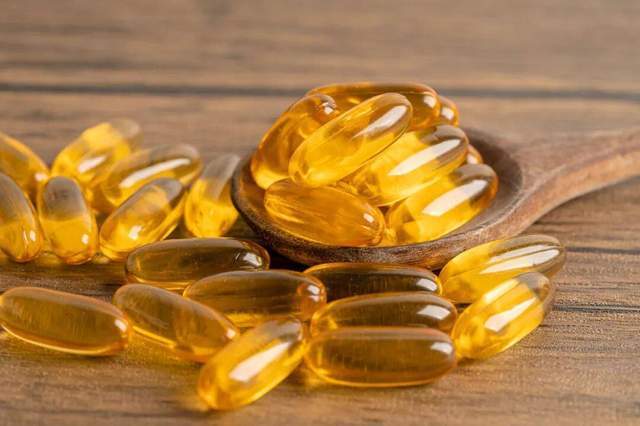
鱼油龙头禹王生物冲刺港交所,上市前3.2亿分红超三年利润总和
Sou Hu Cai Jing· 2025-12-01 01:17
Core Viewpoint - Yuwang Bio Nutrition Co., Ltd. has submitted an application for listing on the Hong Kong Stock Exchange, aiming to raise funds for expansion and financial relief amid concerning financial signals [1][3]. Financial Performance - Yuwang Bio is the largest supplier of food-grade refined fish oil globally, holding an 8.1% market share, surpassing the combined share of its next four competitors [3]. - The company reported a significant drop in net profit by 74% in the first half of 2025, with a net profit of only 22.76 million yuan [3][6]. - Revenue decreased by 27.13% year-on-year in the first half of 2025, with gross margin falling from 29.6% to 20.7% [6]. Dividend and Debt Concerns - The company distributed a substantial dividend of 320 million yuan prior to its IPO, which exceeds its total net profit over the past three years, raising questions about its financial management [3][5]. - As of the end of 2024, the company's debt-to-asset ratio reached 90.39%, indicating a high-risk financial position [3][5]. Governance and Ownership Structure - Yuwang Bio exhibits a typical family-controlled governance model, with the founding family holding over 84% of the shares, leading to concerns about decision-making being heavily influenced by family interests [4][5]. - The management team holds less than 1% of the shares, which raises questions about alignment with broader shareholder interests [4]. Market Position and Challenges - The company relies heavily on a single product category, with over 98% of revenue coming from fish oil products, making it vulnerable to fluctuations in raw material prices [6]. - The price of the core raw material, crude fish oil, has seen significant volatility, impacting profit margins [6]. - Yuwang Bio's sales are largely dependent on third-party intermediaries, limiting its control over the market and brand pricing power [7]. Customer Base and Market Strategy - The number of customers has decreased significantly, with domestic and international clients dropping from 310 and 240 in 2024 to 190 in the first half of 2025 [8]. - The company's revenue from its most important overseas market, the U.S., has declined from 15.5% in 2022 to 11.9% in the first half of 2025, indicating growing risks associated with its export-dependent business model [8]. Future Outlook - The new leadership under Liu Rucui aims to transform Yuwang Bio into a global nutrition company, focusing on international market expansion [9]. - The upcoming IPO is seen as a critical step for the company to secure necessary funding for technological upgrades and to alleviate financial pressures [5][9]. - However, the company faces skepticism regarding its governance structure and the sustainability of its profits, which could hinder its IPO success [9].
河南安健盈保健品有限责任公司成立 注册资本110万人民币
Sou Hu Cai Jing· 2025-11-29 02:17
天眼查App显示,近日,河南安健盈保健品有限责任公司成立,法定代表人为陈志新,注册资本110万 人民币,经营范围为一般项目:保健食品(预包装)销售;食品销售(仅销售预包装食品);化妆品批 发;个人卫生用品销售;日用百货销售;化妆品零售;技术服务、技术开发、技术咨询、技术交流、技 术转让、技术推广;企业管理咨询;企业形象策划;市场营销策划;信息咨询服务(不含许可类信息咨 询服务);信息技术咨询服务;农副产品销售;健康咨询服务(不含诊疗服务);互联网销售(除销售 需要许可的商品);食品互联网销售(仅销售预包装食品)(除依法须经批准的项目外,凭营业执照依 法自主开展经营活动)。 ...
从“中老年专属”到覆盖3.5亿潜在用户,「新一代鱼油」如何引领40%年复合增长的250亿内服市场?
新消费智库· 2025-11-28 13:04
Core Viewpoint - The article discusses the evolving landscape of health food products, particularly focusing on dietary supplements like fish oil, highlighting their growing importance in the context of an aging population and increased health awareness among consumers [2][10][13]. Group 1: Characteristics of Health Food Products - Health food products, including dietary supplements, are often complex and exist in a gray area between food and medicine, leading to consumer confusion and potential exploitation [2]. - These products are generally driven by raw material research and innovation, with a focus on specific ingredients such as traditional Chinese medicinal foods and vitamins [3]. - The typical forms of these products include tablets, capsules, and liquid forms, with varying compositions of single or mixed ingredients [9]. Group 2: Focus on Fish Oil - Fish oil is identified as a significant category within health food products, experiencing a resurgence due to its perceived health benefits, particularly for eye health and among pet owners [10][11]. - The fish oil market is influenced by the upcoming IPO of leading brands like Shandong Yuwang Technology, which signals market maturity and potential consolidation opportunities [11]. - Social media marketing strategies, exemplified by brands like WHC, are reshaping consumer engagement and expanding market reach [12]. Group 3: Market Trends and Consumer Behavior - The COVID-19 pandemic has heightened health awareness, leading to a surge in demand for health products, including fish oil, as consumers shift from treatment-focused to prevention-oriented health practices [19][20]. - The aging population in China is driving demand for products that support chronic disease management, particularly cardiovascular health, where fish oil is recognized for its Omega-3 content [23]. - New consumer segments, particularly high-income individuals, are emerging, seeking premium health products that align with their health-conscious lifestyles [31]. Group 4: Challenges and Opportunities - The health food industry faces a trust crisis, with consumers struggling to verify the authenticity of health claims and certifications [29]. - Overemphasis on product efficacy without substantiated evidence contributes to skepticism among consumers, necessitating a shift towards more transparent and factual marketing approaches [30]. - The industry is witnessing a rise in scientifically literate consumers who demand higher quality and more innovative health products, pushing brands to differentiate beyond mere purity claims [31][34]. Group 5: Future Directions - There is a need for brands to innovate by creating products that cater to specific consumer scenarios, such as gifting or targeting niche demographics like children and elderly men [37]. - The focus should shift from selling raw materials to offering comprehensive solutions that include knowledge and services related to health management [40]. - Building trust through effective visual branding and transparent communication is essential for consumer engagement in the health food sector [34].

汤臣倍健11月27日大宗交易成交230.14万元
Zheng Quan Shi Bao Wang· 2025-11-27 11:41
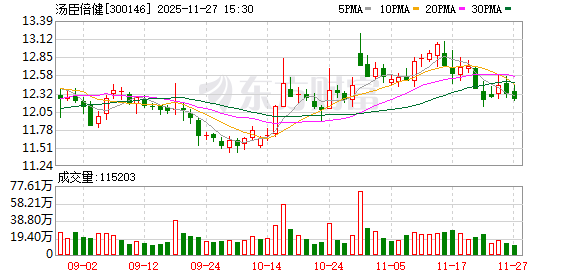
Group 1 - The core transaction on November 27 involved a block trade of 185,000 shares of汤臣倍健, with a transaction value of 2.3014 million yuan and a transaction price of 12.44 yuan, representing a premium of 1.80% over the closing price of the day [2][3] - In the last three months, the stock has recorded a total of two block trades, with a cumulative transaction value of 4.5526 million yuan [2] - The closing price of汤臣倍健 on the same day was 12.22 yuan, reflecting a decline of 0.65%, with a daily turnover rate of 1.03% and a total trading volume of 142 million yuan, alongside a net outflow of main funds amounting to 12.5897 million yuan [2] Group 2 - The latest margin financing balance for the stock is 777 million yuan, showing a decrease of 5.3261 million yuan over the past five days, which is a decline of 0.68% [3] - In terms of institutional ratings, one institution has provided a rating in the last five days, with the highest target price estimated by Guotai Junan Securities at 14.56 yuan as of November 24 [3]
港股异动 | H&H国际控股(01112)涨超5% 三季度婴配奶粉增长超预期 机构预计公司利润端全年有较好表现
智通财经网· 2025-11-27 06:45
Core Viewpoint - H&H International Holdings has shown strong revenue growth in Q3 2025, exceeding market expectations, driven by robust performance in its infant formula segment [1] Group 1: Financial Performance - For the first three quarters of 2025, H&H International Holdings reported a revenue of 10.81 billion yuan, representing a year-on-year increase of 12% [1] - In Q3 2025, the company's revenue reached 3.79 billion yuan, reflecting a year-on-year growth of 28.1% [1] - The company is expected to achieve a full-year revenue growth in the high single to low double digits, with all three business segments showing positive growth trends [1] Group 2: Business Segments - The ANC (Adult Nutrition Category) business is anticipated to achieve a year-on-year growth in the mid to high single digits for the full year [1] - The BNC (Baby Nutrition Category) is projected to grow over 20% year-on-year [1] - The PNC (Personal Nutrition Category) is expected to see a low double-digit year-on-year growth [1] Group 3: Debt and Profitability - The company's debt structure continues to improve, contributing to a healthy profit margin outlook for 2025 [1] - Financial costs are expected to continue optimizing, supporting overall profitability [1]
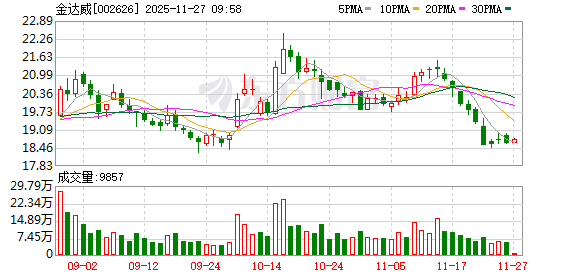
金达威:“麦角硫因光子瓶”目前销售占比仍较小
Mei Ri Jing Ji Xin Wen· 2025-11-27 01:58
Core Viewpoint - The company is focusing on promoting its new product, the Ergotheanine Photon Bottle, under the Doctor's Best brand, while acknowledging that it currently has a smaller market share compared to competitors [2]. Group 1: Product Development and Marketing Strategy - The Ergotheanine Photon Bottle is one of the new products launched this year by the Doctor's Best brand [2]. - The company plans to increase penetration among oral beauty consumers and will continue to expand its product matrix to cater to more segmented consumer needs and scenarios [2].