
云计算

Search documents
大和:重申对中国市场乐观展望 将老铺黄金与金山云纳入首选名单
Zhi Tong Cai Jing· 2026-02-16 01:40
Group 1 - The report from Daiwa emphasizes an optimistic outlook for the Chinese stock market in the first half of 2026, despite recent market volatility [1] - The potential for a stimulus policy season may last until April, with a belief that large-scale stimulus measures are unlikely, but gradual stimulus measures could boost investment sentiment in the short term [1] - Companies such as China Resources Land (01109) and Midea Group (000333) are highlighted as preferred stocks due to the expected positive impact from these measures [1] Group 2 - Strong downstream demand is driving price increase expectations, leading to the inclusion of companies like Laopu Gold (06181) and Kingsoft Cloud (03896) in the preferred list [1]


春节长假热点前瞻!虚拟货币市场再度大跌!白银基金相关方案公布
Qi Huo Ri Bao· 2026-02-16 00:13
Group 1 - The article highlights key events to watch during the Spring Festival holiday, including the release of important economic data and geopolitical developments [2][3][14] - The U.S. Federal Reserve's January FOMC meeting minutes will be released on February 18, which may provide insights into future monetary policy [2][13] - The first-ever AI summit in India will take place from February 15 to 20, featuring global tech leaders, indicating a focus on advancements in artificial intelligence [5] Group 2 - The U.S. Supreme Court is set to rule on the Trump tariffs case on February 20, which could have significant implications for trade policies and market reactions [5] - The recent extreme fluctuations in the silver market have prompted Guotou Ruijin Fund Management to implement valuation adjustments for its silver futures investment fund, aiming to protect investors' rights [6][7] - The virtual currency market has experienced a significant downturn, with major cryptocurrencies like Bitcoin and Ethereum seeing substantial price drops, reflecting ongoing volatility in the sector [11][12]


【环球热评局】以对话促合作,CMP二十年见证中美工商界“双向奔赴”
Sou Hu Cai Jing· 2026-02-15 05:56
Core Insights - GE Aviation's business trajectory in China over the past two decades reflects the evolution of Sino-U.S. economic and industrial cooperation, transitioning from engine and maintenance services to involvement in domestic aircraft projects like ARJ21 and C919, and establishing joint ventures with local partners [1] - The 20th anniversary of the China-U.S. Enterprise Cooperation Project (CMP) serves as a platform for enhancing dialogue and collaboration between the two countries, with high expectations expressed by business leaders for strengthened cooperation this year [1] - The CMP has facilitated over 3000 companies from both nations through numerous events, highlighting the rapid development and upgrading of Sino-U.S. economic and trade relations over the past two decades [1] Trade Growth - The total trade volume between China and the U.S. increased from $211.6 billion in 2005 to $688.3 billion in 2024, marking significant growth [2] - U.S. exports to China reached $143.55 billion in 2024, a 648.4% increase from $19.18 billion in 2001, significantly outpacing the overall U.S. export growth of 183.1% during the same period [2] - Service trade between the two countries expanded from $8.95 billion in 2001 to $66.86 billion in 2023, reflecting a sixfold increase [2] Emerging Cooperation Areas - The CMP is focusing on expanding cooperation in emerging fields such as green technology, low-carbon initiatives, rail transportation, and financial investment [5] - Chinese companies are actively exploring global opportunities in clean fuel and green technology, indicating a shift towards international promotion of these sectors [3] Foundation of Cooperation - The foundation of Sino-U.S. relations is rooted in strong grassroots exchanges, with the CMP serving as a significant platform for enhancing cooperation between businesses [6] - The American Chamber of Commerce in China reports that 52% of surveyed companies still view China as one of the top three investment destinations globally, indicating continued interest in the Chinese market [7] Future Directions - Looking ahead, the CMP aims to enhance service efficiency and facilitate deeper cooperation in industrial and supply chains, with plans for high-profile economic activities and events [10] - The fourth Chain Expo in Beijing is set to further strengthen Sino-U.S. collaboration through this platform [10]

财报后,美国四大云厂市值蒸发1万亿美元,市场甚至寻求对冲“大厂风险”
美股IPO· 2026-02-15 04:09
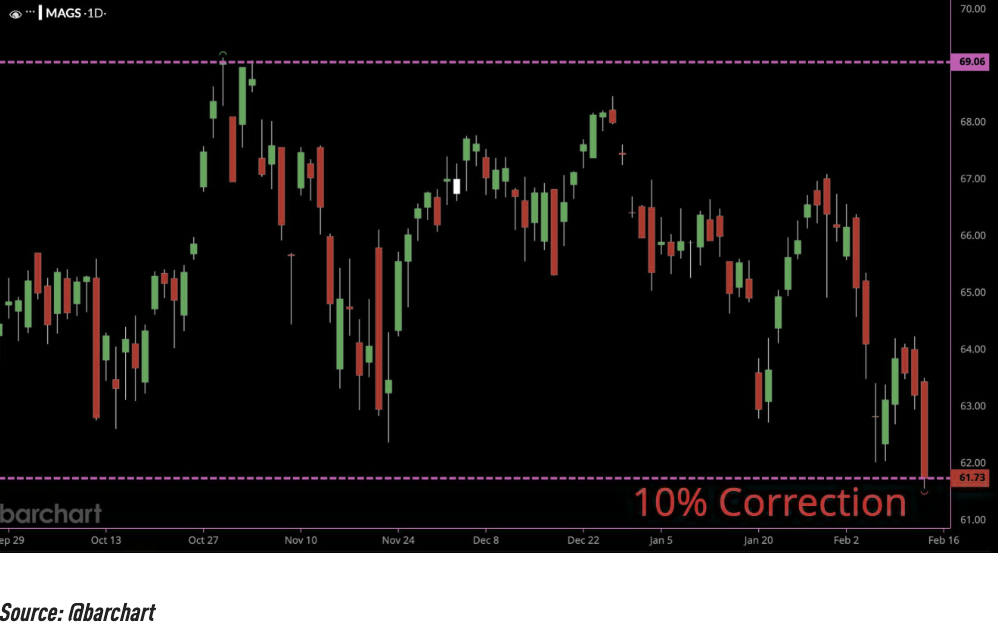
Core Viewpoint - The market is shifting focus from whether AI investments are worthwhile to whether the capital expenditures of major cloud companies can be sustained, as concerns over excessive spending, cash flow pressures, and rising debt levels lead to significant market value losses for the top four cloud providers [2][3][10]. Group 1: Market Reactions and Valuation - Following the latest earnings reports, the combined market value of the four major cloud companies has decreased by over $1 trillion, with Microsoft down 27%, Amazon down 21%, Meta down 16%, and Alphabet down 11% [3][10]. - Investors are increasingly worried that the rapid increase in AI spending may lead to overcapacity and elongated return cycles, prompting a reevaluation of these companies' financial health [3][10]. Group 2: Debt and Capital Expenditure Projections - Goldman Sachs predicts that capital expenditures for large-scale cloud providers will approach $1.4 trillion from 2025 to 2027, significantly up from approximately $485 billion from 2022 to 2024 [8][10]. - Microsoft’s capital expenditure is expected to rise from $76 billion in 2024 to $376 billion during 2025-2027, while Amazon, Alphabet, and Meta are projected to spend $321 billion, $304 billion, and $279 billion respectively [11]. Group 3: Credit Derivatives and Market Dynamics - The demand for credit derivatives is increasing as debt investors express concerns over the rising leverage of tech giants competing for AI capabilities, leading to an expansion in credit default swap (CDS) trading [4][13]. - The CDS contracts for Alphabet and Meta have become significantly more active, with current outstanding contracts valued at approximately $895 million and $687 million respectively [7][13]. Group 4: Cash Flow and Debt Financing - The internal cash flow of tech giants is insufficient to support their AI investment levels, with projections indicating that if capital expenditures reach $700 billion by 2026, it would nearly equal the total operating cash flow of these companies [14][16]. - Major debt issuances have set records, with Oracle issuing $25 billion in bonds and Alphabet increasing its bond issuance from $15 billion to $20 billion, reflecting strong demand [16]. Group 5: Market Divergence and Future Outlook - Despite strong current demand for bonds, there is a divergence in market sentiment, with some hedge funds viewing the demand for protection as a profit opportunity, while others warn of potential mispricing of credit risks [17]. - Goldman Sachs notes that to maintain investor return expectations, these companies would need to achieve over $1 trillion in profits annually, while the consensus estimate for 2026 profits is only $450 billion [18].





财报后,美国四大云厂市值蒸发1万亿美元,市场甚至寻求对冲“大厂风险”
Hua Er Jie Jian Wen· 2026-02-15 03:15
Core Viewpoint - The recent earnings reports have led to a significant decline in the market capitalization of the four major cloud companies in the U.S., with a total loss exceeding $1 trillion, as investors express concerns over unsustainable AI infrastructure investments, cash flow pressures, and rising debt levels [1][8]. Group 1: Market Reactions - Microsoft shares have dropped 27% from recent highs, while Amazon, Meta, and Alphabet have seen declines of 21%, 16%, and 11% respectively, indicating a shift in market sentiment from "Is AI worth it?" to "Can capital expenditures be sustained?" [1][8]. - The capital expenditure of major cloud firms is projected to surge from approximately $485 billion between 2022-2024 to nearly $1.4 trillion from 2025-2027, raising concerns about potential overcapacity and elongated return cycles [8]. Group 2: Debt Market Dynamics - Concerns among debt investors are driving the rapid expansion of the credit derivatives market, with single-name credit default swaps (CDS) for companies like Meta and Alphabet becoming increasingly active [3][11]. - The CDS contracts for Alphabet and Meta are valued at approximately $895 million and $687 million respectively, reflecting heightened market activity [5][11]. - Morgan Stanley forecasts that the borrowing by major cloud firms will reach $400 billion this year, significantly higher than the $165 billion expected in 2025 [6]. Group 3: Financial Projections and Risks - Goldman Sachs anticipates that if capital expenditures reach $700 billion by 2026, it would nearly equal the total operating cash flow of major cloud firms, indicating a potential cash flow crisis [12][14]. - Only Microsoft is expected to have operating cash flow sufficient to cover its capital expenditures by 2026, while other firms may face a shift from "net debt neutral" to "net positive debt" [14]. - The issuance of bonds has reached record levels, with Oracle issuing $25 billion and Alphabet increasing its bond issuance from $15 billion to $20 billion, both attracting substantial investor interest [14]. Group 4: Market Divergence and Future Outlook - Despite strong current demand for bonds, there is a divergence in market sentiment, with some hedge funds viewing the demand for protection as a profit opportunity, while others warn of potential mispricing of credit risks [15]. - Goldman Sachs notes that to maintain investor return expectations, these companies would need to achieve annual profits exceeding $1 trillion, while current consensus estimates for 2026 profits stand at only $450 billion [15]. - The ultimate outcome will depend on whether AI investments can replicate the profitability trajectory of cloud computing, as seen with Amazon AWS achieving breakeven within three years and a 30% operating margin within ten years [16].
并行科技股价大幅波动,股东减持与购买资产引关注
Jing Ji Guan Cha Wang· 2026-02-15 02:37
Core Viewpoint - The stock price of Parallel Technology has experienced significant fluctuations recently, with notable increases followed by a decline, amid shareholder reductions and an asset purchase announcement. The company's performance for the first three quarters of 2025 shows substantial growth [1][7]. Stock Performance - On February 10, the stock price reached a limit up of 30.0%, closing at 182.09 yuan, with a trading volume of 869 million yuan and a turnover rate of 15.7% [2]. - On February 12, the stock surged by 14.07%, closing at 191.87 yuan, with a trading volume of 1.549 billion yuan and a turnover rate of 19.26%, indicating a net inflow of 337 million yuan from main funds [2]. - On February 13, the stock price fell by 5.08%, closing at 182.12 yuan, with a trading volume of 515 million yuan and a turnover rate of 6.29% [3]. - On February 14, the stock rebounded by 3.59%, closing at 165.77 yuan [4]. Recent Events - On February 10, the company announced that shareholders Qingkong Yinxing and others completed a reduction of 1.9998% of their shares, with the reduction plan fully implemented [5]. - On February 13, the company released an asset purchase announcement, but specific details were not disclosed [6]. Financial Analysis - For the first three quarters of 2025, the company reported revenue of 734 million yuan, representing a year-on-year increase of 69.25%, and a net profit of 8.408 million yuan, up 178.8% year-on-year [7]. - The earnings forecast for 2025 indicates a net profit between 20 million and 25 million yuan, reflecting a year-on-year growth of 65.88% to 107.35% [7]. Institutional Insights - According to a report by Bohai Securities on February 13, the announcement of the asset purchase by Parallel Technology, along with the high capital expenditure from overseas cloud vendors, suggests a sustained high demand for AI computing power, indicating that the commercialization of AI applications is approaching a turning point [8].
蛇年美股大复盘:从暴跌6.6万亿到AI“四万亿俱乐部”崛起
Jin Rong Jie· 2026-02-15 01:00
Group 1 - The U.S. stock market experienced significant volatility and structural differentiation during the Year of the Snake, with major indices showing mid-tier performance globally, while the internal dynamics highlighted a clear "tech-traditional" dichotomy [1] - Major memory chip companies such as Western Digital, Micron Technology, and Seagate Technology saw dramatic stock price increases of 495%, 368%, and 333% respectively, marking them as the biggest winners [1] - Gold mining stocks like Gold Rush, Newmont, and Barrick Gold also surged over 226%, correlating with the significant rises in COMEX silver (150.21%) and gold (82.97%) prices [1] Group 2 - Following the unexpected global tariff policy introduced by the Trump administration, the S&P 500 experienced a two-day drop of 10.53%, resulting in a market capitalization loss of $6.6 trillion, while the Nasdaq and Russell 2000 entered a technical bear market [2] - The market rebounded dramatically, with the Nasdaq soaring 12% in a single day and the S&P rising nearly 10%, driven by AI giants like Nvidia, which saw its market cap exceed $4 trillion and $5 trillion, surpassing the combined market cap of the UK and French stock markets [2] - Traditional stocks represented by companies like Goldman Sachs and Caterpillar began to rise, indicating a shift in capital towards cyclical sectors amidst increasing caution regarding tech monopolies [2] Group 3 - Looking ahead to 2026, there is a notable divergence in outlook among major investment banks: Morgan Stanley is optimistic, predicting the S&P 500 will rise to 7800 points, favoring small-cap, cyclical, and financial sectors due to expected profit growth and AI efficiency [3] - Morgan Chase suggests a "structural bull market" with a target of 7500 points for the S&P, while Goldman Sachs warns of economic slowdown risks in the second half of the year, indicating limited rotation potential [3] - The Year of the Snake showcased a dramatic narrative in the capital markets, transitioning from tariff-induced declines to AI-driven exuberance, raising questions about the sustainability of growth in AI and the potential for traditional industries to overcome concentration challenges [3]


跌超90%!昔日大牛股,为何被赶下云端?这些传统股却创出新高
Xin Lang Cai Jing· 2026-02-14 23:29
此一时,彼一时。近期,美股软件与服务板块集体下挫,而在2021年备受关注的云计算两大牛股—— ZOOM通讯和Snowflake(雪花公司)早已走下云端。 视频会议公司ZOOM在2021年股价曾经高达588美元/股,当前仅剩95美元/股,距离最高点跌幅超过 80%,而在2024年最惨烈时曾一度跌至55美元/股,距离最高点更是跌去了90%。事实上,该公司过去4 年实现了真正的成长,但市场已经将ZOOM看成一家普通公司,估值的大幅跳水导致了该公司股价的陨 落。 同样备受追捧的云计算概念公司——Snowflake也早已被打下云端。Snowflake于2020年以120美元/股的 价格上市,并在2021年触及429美元/股的历史新高。该股股价2024年最低一度跌至107美元/股,距离最 高点跌幅达到75%。历经一年多的反弹,目前该股距离最高峰时跌幅依然有60%。Snowflake过去4年销 售收入增加了12倍,但利润从未转正,亏损黑洞越来越大。 而在过去五年的时间中,沃尔玛、宝洁、菲利普·莫里斯、美国银行、埃克森美孚、康菲石油、迪尔等 传统公司却创出了历史新高。 风头最劲的新兴公司很难成为下一个微软,但一度被资本市场抛 ...
谷歌债券,遭全球疯抢
财联社· 2026-02-14 23:23
谷歌母公司Alphabet本周在全球范围内发行了大规模债券,凸显了投资者对超大规模云服务商的旺盛需求, 但同时也引发了对这些债券缺 乏对现有及未来持有人保护条款的担忧。 塞浦路斯券商Mind Money首席执行官Julia Khandoshko表示:"真正引人注意的是'缺失的内容'。一旦一家知名公司成功以'宽松条款'发 债,其他公司也会效仿。" 她补充称:"这自然会带来二级市场问题。下一位买家可依赖的'规则'更少,而债券价格将更多受利率、市场情绪和流动性的影响而波动。" 通常情况下,信用状况良好的投资级借款人在债务协议中的约束性条款要少于垃圾级借款人。 不过,大多数投资级债券仍会包含基本的投资者保护措施,尤其是标准的"控制权变更条款",用于在并购或公司所有权发生变化时保护投资 者。 Alphabet于周一和周二在美元、英镑和瑞士法郎债券市场合计融资315.1亿美元。在人工智能(AI)驱动的支出浪潮下,美国科技巨头的借 债规模正迅速攀升。 此次债券发行在多个方面引人注目,包括Alphabet在英镑市场发行了一种所谓的"世纪债券"(100年期)。 这些超大规模云服务商近期发行的债券均获得市场热烈认购,以Alpha ...


AI颠覆担忧跨板块蔓延 下周聚焦美GDP初值、PCE指数 摩根士丹利上调2026美增长预期至2.6%
Sou Hu Cai Jing· 2026-02-14 22:43
Group 1 - The market is experiencing concerns that new AI tools may disrupt various industries, including insurance, wealth management, and transportation, with a shift in investor sentiment towards previously lagging sectors such as energy, consumer staples, materials, and industrials [1] - B Riley Wealth's chief market strategist Art Hogan likens the current market sentiment to a "whack-a-mole" game, where investors speculate on which industry AI will impact next, reflecting a broader anxiety about the technology's potential [1] - Nationwide's chief market strategist Mark Hackett notes that the shift in market leadership is becoming ingrained in investor psychology [1] Group 2 - Upcoming key economic indicators include the preliminary Q4 GDP, monthly consumer confidence survey, and the preferred inflation measure of the Federal Reserve, the Personal Consumption Expenditures (PCE) price index [1] - Morgan Stanley has raised its 2026 U.S. economic growth forecast to 2.6%, citing stronger capital expenditure assumptions, while warning that the biggest risk to the U.S. economy has shifted from trade protectionism to AI bubble risks [1] - The Federal Reserve's January monetary policy meeting minutes will be released next Wednesday, which may provide insights into the rationale behind the "wait-and-see" stance and arguments for potential rate cuts [2]