火锅

Search documents
海底捞2025年半年报:外卖收入增长近六成 第二品牌达14个
Xin Lang Cai Jing· 2025-08-25 11:04
Core Insights - Haidilao International Holding Ltd reported a revenue of 20.703 billion yuan and a net profit of 1.755 billion yuan for the first half of 2025, with a core operating profit of 2.408 billion yuan [1] Group 1: Restaurant Performance - The overall table turnover rate for self-operated restaurants was 3.8 times per day, with the same-store turnover rate also at 3.8 times per day, and the total number of customers served reached nearly 190 million [1] - There was a decline in table turnover rate and customer traffic due to intensified competition in the dining market and changes in consumer demand [1] - As of June 30, 2025, Haidilao operated a total of 1,363 restaurants, including 1,299 self-operated restaurants in mainland China and 23 in Hong Kong, Macau, and Taiwan, along with 41 franchised restaurants [1] Group 2: Business Expansion and Strategy - In the first half of 2025, Haidilao opened 25 self-operated restaurants and 3 franchised restaurants while closing underperforming locations as part of its "Woodpecker Plan" [1] - The takeaway business saw a nearly 60% increase in revenue, with the "one-person meal" concept contributing over 55% of takeaway revenue [1] - The "Red Pomegranate Plan" has led to the incubation of multiple restaurant brands, with 14 brands operating a total of 126 restaurants, and "Yanquan Barbecue" opening 46 new locations, bringing its total to 70 [2] Group 3: Future Outlook - Haidilao's management expressed confidence in future growth, emphasizing the importance of enhancing dining experiences and service capabilities through digital operations [2] - The company plans to continue its diversified business strategy, dynamically adopt the "Woodpecker Plan," and implement the "Red Pomegranate Plan," while exploring franchising models [2] - Haidilao aims to strategically seek acquisitions of quality assets to enrich its restaurant business and customer base [2]

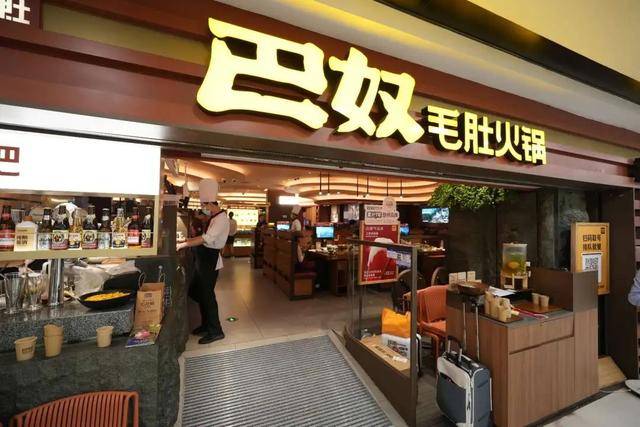
河南消费品牌频频出圈,巴奴或将成接棒新势力
Sou Hu Cai Jing· 2025-08-25 07:42
Group 1 - The core viewpoint of the article highlights the emergence of Henan as a significant consumer market, with brands like Banu becoming notable players in the hot pot industry [1][3] - Henan's population of nearly 100 million creates a vast consumer market, making it a critical area for brands aiming for national expansion [3] - The competitive landscape in Henan is intense, with over 24,000 hot pot businesses, positioning Banu as a standout with a third-place market share in the overall hot pot market [5] Group 2 - Banu has adopted a unique strategy by focusing on the "quality hot pot" segment, with average spending exceeding 140 RMB, surpassing major competitors like Haidilao [6] - Financial data from Banu indicates a steady revenue increase, with projected revenues of approximately 1.433 billion RMB, 2.112 billion RMB, and 2.307 billion RMB for 2022, 2023, and 2024 respectively [8] - The adjusted net profit margins for Banu are also on the rise, with figures of 2.9%, 6.8%, and 8.5% for the years 2022, 2023, and 2024, and a first-quarter net profit margin of 10.8% in 2025 [8]

【行业深度】洞察2025:中国火锅行业竞争格局(附竞争梯队、企业竞争力评价等)
Qian Zhan Wang· 2025-08-25 02:18
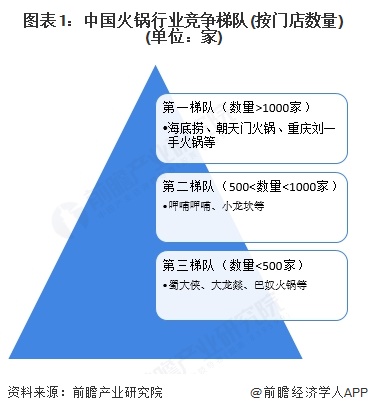
Group 1 - The core viewpoint of the article highlights the competitive landscape of the Chinese hot pot industry, detailing the market structure and key players [1][11]. - The first tier of hot pot companies includes those with over 1,000 stores, such as Haidilao and Chongqing Chao Tian Men, while the second tier includes brands like Xia Bo Xia Bo and Xiao Long Kan with 500-1,000 stores [1][4]. - The hot pot industry is characterized by various regional styles, with Sichuan and Chongqing hot pot being the mainstream, while new trends like Guizhou sour soup and Yunnan sour soup are gaining popularity [3][11]. Group 2 - The 2025 Top 100 Hot Pot Enterprises list, released by the China Hotel Association, shows that Sichuan and Chongqing brands dominate, with 7 out of the top 10 companies from these regions [4][5]. - The leading companies in the hot pot industry, based on a comprehensive index that includes operational and consumer evaluation metrics, are Haidilao, Chongqing Chao Tian Men, and Xia Bo Xia Bo [5][8]. - The hot pot market is experiencing robust growth, attracting numerous entrants due to its relatively low entry barriers and stable demand, with a significant portion of consumers being price-sensitive [11][12]. Group 3 - The competitive environment of the hot pot industry can be analyzed using Porter's Five Forces model, indicating a high level of competition among existing players and significant bargaining power for consumers [12]. - The supply chain for hot pot businesses is diverse, allowing companies to lower procurement costs due to the abundance of suppliers for ingredients and seasonings [11]. - The hot pot industry maintains a strong consumer base due to its unique dining experience and flavor profiles, which are difficult to replace with other dining options [11].
巨头下场,围猎自助小火锅
36氪· 2025-08-25 00:11
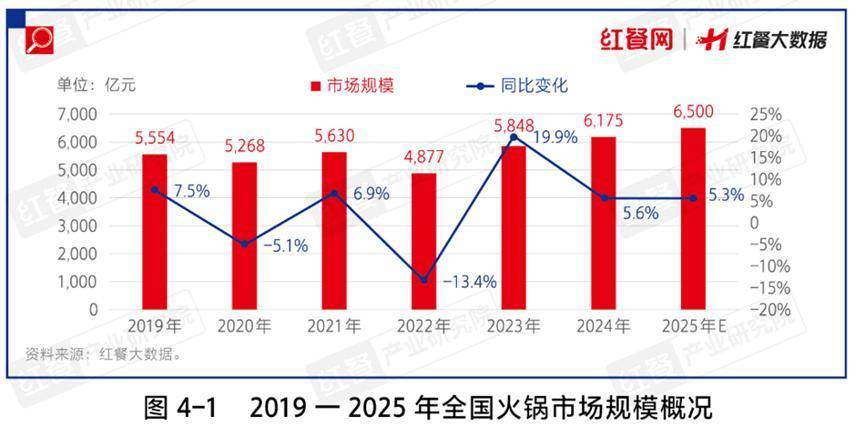
Core Viewpoint - The self-service hot pot market is experiencing significant growth, driven by major players like Haidilao and Yang Guofu entering the space, with a focus on quality and brand reputation rather than price competition [4][9][10]. Group 1: Market Dynamics - The self-service hot pot segment has approximately 51,000 stores nationwide, with many being operated by individual entrepreneurs due to low entry barriers [10][11]. - The average price for self-service hot pot has increased to around 59.9 yuan, compared to the previous range of 20-30 yuan, indicating a shift towards higher quality offerings [9][10]. - The hot pot market is projected to reach a scale of 617.5 billion yuan by 2024, with a year-on-year growth rate of 5.6%, outpacing the overall restaurant industry [10][11]. Group 2: Consumer Preferences - Consumers are increasingly drawn to self-service hot pots for their affordability and the freedom to choose their ingredients, contrasting with traditional hot pot dining experiences [10][12]. - The trend of "one-person meals" has gained traction, particularly during the pandemic, leading to explosive growth in the self-service hot pot sector [15][19]. - The demand for low-priced options is evident, with many new entrants offering promotions as low as 9.9 yuan or 19.9 yuan [10][15]. Group 3: Competitive Landscape - Major brands are strategically positioning themselves in the 50-60 yuan price range, avoiding the pitfalls of a price war while still appealing to cost-conscious consumers [13][22]. - The market is witnessing a consolidation phase, with weaker players being pushed out as competition intensifies [24][32]. - Successful brands are finding a balance between quality and price, with many focusing on unique offerings to differentiate themselves from competitors [22][30]. Group 4: Operational Challenges - Maintaining food quality and freshness is a significant challenge for self-service hot pot operators, with many relying on high customer turnover to ensure ingredient quality [25][26]. - The rise of food delivery services poses a threat to the self-service hot pot market, as consumers increasingly opt for convenience over dining out [32]. - The operational model of self-service hot pot differs from traditional dining, requiring a focus on cost control and efficient supply chain management to remain profitable [24][25].

巴奴火锅冲刺港交所遇阻,证监会九大拷问能否挡住其IPO之路?
Sou Hu Cai Jing· 2025-08-23 00:07
Core Viewpoint - The competitive landscape of the hot pot industry is intensifying, and Banlu Hot Pot is attempting to accelerate its expansion through an IPO on the Hong Kong Stock Exchange. However, regulatory scrutiny has raised significant concerns regarding its internal governance, financial health, and labor compliance, which could hinder its listing ambitions [1][3][4]. Group 1: Regulatory Concerns - The China Securities Regulatory Commission (CSRC) has requested additional materials from Banlu International Holdings regarding its overseas listing, focusing on nine key issues related to internal governance, financial status, and labor compliance [1]. - A notable concern is the company's ownership structure, where the founder Du Zhongbing and his spouse Han Yanli control approximately 83.38% of the voting rights, yet Han Yanli is not recognized as a co-actual controller, raising questions about governance transparency [1]. - The company declared a dividend of 70 million yuan just five months before filing its prospectus, which accounts for 57% of its projected net profit for 2024, despite having current liabilities of 717 million yuan and net current assets of only 147 million yuan, leading to skepticism about its financing motives [1]. Group 2: Labor Compliance Issues - Banlu Hot Pot has a significant number of informal employees, including part-time and outsourced workers, which poses compliance risks under new social security regulations. The CSRC has demanded clarification on whether adequate social security and housing fund contributions are made for these non-full-time employees [3]. Group 3: Financial Performance and Market Position - Despite positioning itself as a high-end brand with a focus on quality, Banlu Hot Pot's profitability is notably lower than that of competitors like Haidilao, with poor table turnover rates contributing to concerns about its business model sustainability [3]. - The company aims to double its store count in the next three years and expand into lower-tier cities, but faces challenges due to its high average spending per customer, which may not align with local consumption capabilities and habits [4]. Group 4: Brand Image and Market Sentiment - Banlu Hot Pot has faced multiple quality control and food safety issues, which have eroded consumer trust, compounded by controversial statements from its founder that have negatively impacted the brand's image [4]. - The overall sentiment in the hot pot sector has declined, with leading brands like Haidilao and Xiaobuxiang experiencing significant stock price drops, leading to cautious investor sentiment towards Banlu Hot Pot's potential IPO [7].
一地门店全部关停!知名品牌最新回应
Nan Fang Du Shi Bao· 2025-08-22 09:41
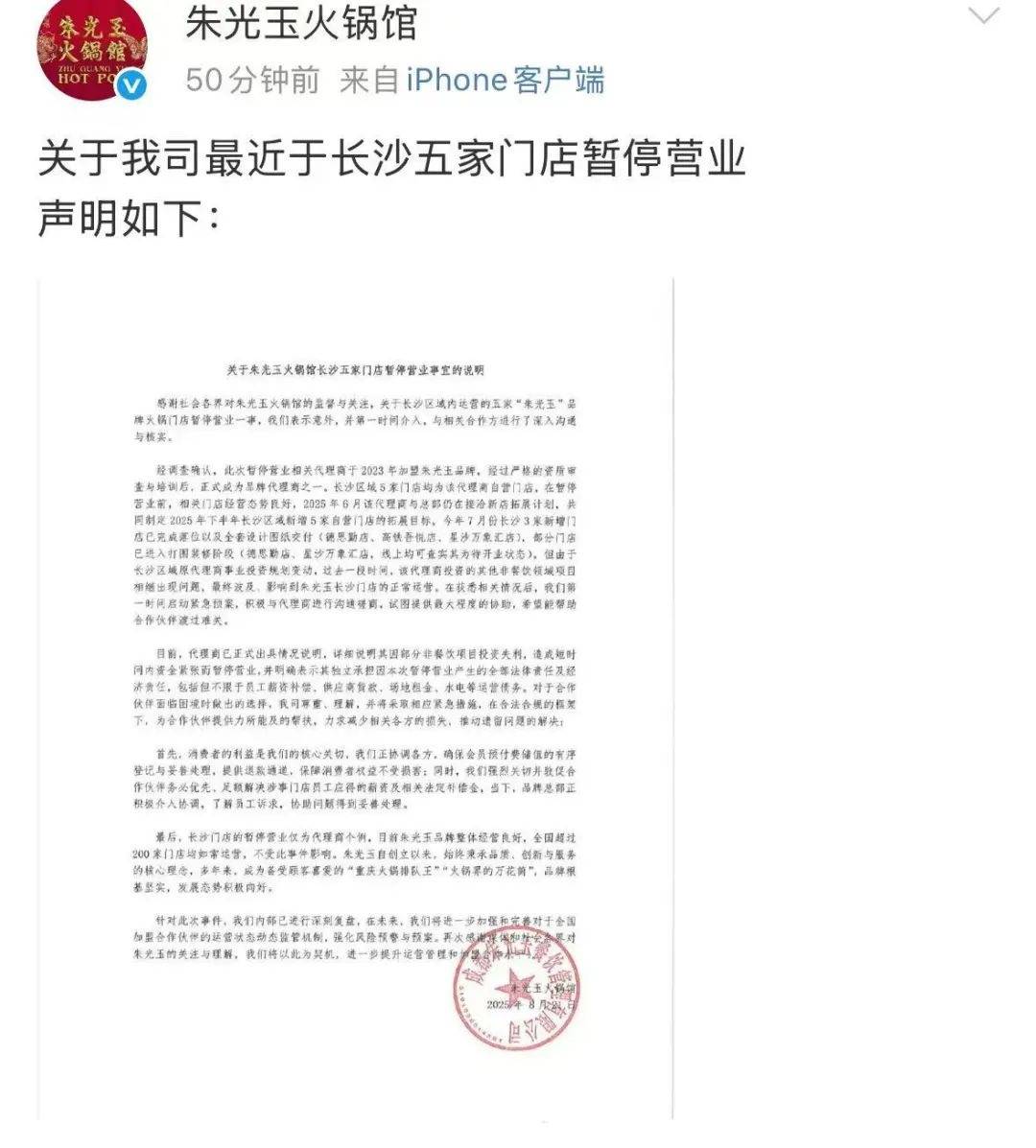
Core Points - The well-known hot pot brand "Zhu Guangyu Hot Pot Restaurant" has temporarily closed all its stores in Changsha, Hunan, due to issues related to a local franchisee's personal investment [1][4] - The brand's official statement indicates that the closure is not indicative of the overall brand's performance, as over 200 stores nationwide continue to operate normally [4][6] - The company is coordinating with various parties to ensure a refund process for consumers who have prepaid for services at the closed Changsha locations [4][6] Summary by Sections - **Closure Details** - All five hot pot stores in Changsha are closed due to the franchisee's investment issues, which have affected their ability to operate [1][4] - The franchisee, who joined the brand in 2023, has faced financial difficulties due to failed investments in non-restaurants, leading to the temporary closure [4][6] - **Company Response** - The brand has stated that the closure is an isolated incident related to the franchisee and that the overall business remains strong [4][6] - The company is actively working on a plan to re-evaluate and potentially re-open the Changsha locations in the future [1][6] - **Consumer Impact** - The company is ensuring that consumers with prepaid memberships will have a structured refund process [4][6] - As of August 22, all Changsha locations were marked as "merchant equipment offline" on the brand's app, indicating no operational status [6]

这个超6000亿的餐饮大赛道,2025年还有哪些机会?
Sou Hu Cai Jing· 2025-08-22 05:08
Core Insights - The hot pot industry is experiencing a surge in popularity with new trends such as Guizhou sour soup hot pot and fresh-cut chicken hot pot, but competition is intensifying as brands innovate rapidly while facing declining per capita consumption [1][2][4] Market Growth - The hot pot market in China is projected to reach a scale of 617.5 billion yuan in 2024, with a year-on-year growth of 5.6%, slightly above the overall catering industry's growth rate of 5.3%. By 2025, the market is expected to grow to 650 billion yuan, with over 490,000 hot pot restaurants nationwide by May 2025 [2] Consumer Behavior - Per capita consumption in the hot pot sector is declining as consumers increasingly prioritize cost-effectiveness, leading to a rapid increase in budget-friendly hot pot establishments, which in turn lowers the overall per capita spending in the category [4] Competitive Landscape - The chain brand advantage is becoming more pronounced in the hot pot market, with the proportion of hot pot brands with over 50 locations increasing from 13.1% in January 2024 to 15.3% by May 2025, indicating a strengthening of leading hot pot brands [6][7] Segment Analysis - The main segments in the hot pot market include Sichuan-Chongqing hot pot (31.3% of total stores), Northern-style hot pot (14.4%), and Cantonese hot pot (10.9%). The Guizhou sour soup hot pot and other niche segments are also gaining traction [9] Geographic Trends - The hot pot market is continuing to penetrate lower-tier cities, with the share of hot pot restaurants in third-tier and below cities reaching 52.3% by May 2025, up 1.3 percentage points from January 2024. Conversely, the share in new first-tier cities has decreased from 23.5% to 22.2% during the same period [11] Innovation and Supply Chain - Hot pot brands are actively innovating to meet consumer demands for freshness, variety, and value. This includes the introduction of new ingredients and flavors, with a focus on fresh ingredients and unique dining experiences [13][15] - The supply chain is evolving to support these innovations, with brands like Haidilao and others implementing robust systems for rapid product development and sourcing fresh ingredients directly from producers [23][24] Flavor and Ingredient Trends - The hot pot industry is seeing a rise in regional flavors and creative combinations, such as Guizhou sour soup and various health-oriented broths. The focus on fresh and unique ingredients is driving the development of niche markets within the hot pot sector [17][20] - The introduction of new dipping sauces and condiments is also becoming a key area of growth, with specialized suppliers emerging to cater to this demand [26][27] Conclusion - The hot pot market is characterized by rapid innovation and evolving consumer preferences, making it essential for brands to adapt to market trends and consumer demands to remain competitive. The role of supply chain partners will be crucial in driving future innovations [29]
巴奴港股IPO遇监管"九问",股权迷局与合规隐忧成上市拦路虎
Sou Hu Cai Jing· 2025-08-22 00:41
Core Viewpoint - The capital journey of Banu, a premium hotpot brand, faces significant scrutiny and challenges as it prepares for its IPO in Hong Kong, with regulatory concerns highlighting issues in governance, financial compliance, and labor practices amid a slowing hotpot industry and increasing consumer segmentation [2][3][5][6][7] Regulatory Scrutiny - The China Securities Regulatory Commission (CSRC) raised concerns about Banu's complex ownership structure, where the founder controls 83.38% of voting rights, while foreign private equity funds hold 7.95% through nested layers, questioning potential conflicts of interest [2][3] - The actual control issue is contentious, as Banu does not recognize the founder's spouse as a co-controller despite significant shareholding, prompting regulatory demands for clarity on decision-making power within the family [3] - Financial compliance issues arose from a sudden dividend payout of 70 million yuan just before the IPO filing, raising questions about liquidity and potential asset stripping, especially given the company's current liabilities of 717 million yuan [3][6] - Labor compliance issues were highlighted, with Banu admitting to underpaying social security contributions totaling 4.6 million yuan from 2022 to Q1 2025, which could impact its standing in the capital market [3][6] Market Position and Challenges - Banu's high-end positioning faces backlash, as evidenced by the controversy surrounding its pricing strategy, with average spending in first-tier cities reaching 165 yuan, significantly above industry averages [5][6] - The brand's customer spending has declined from 183 yuan to 159 yuan in first-tier cities, indicating a potential ceiling on growth despite an increase in table turnover rates [5][6] - Banu plans to open 150 new stores with an investment of 750 million yuan, relying on IPO proceeds for 60% of the funding, but market absorption of this aggressive expansion is uncertain given the industry's slowdown [6][7] - The company holds a 3.1% market share in China's premium hotpot sector, but its revenue of 2.307 billion yuan in 2024 is less than one-tenth of its competitor Haidilao, indicating a need for stronger operational capabilities [6][7] Industry Context - The hotpot industry is experiencing a transformation, with leading brands like Haidilao and Xiaobai Xiaobai closing underperforming stores, reflecting a broader trend of rationalizing operations in response to changing consumer behavior [6][7] - Banu's strategy emphasizes product specialization and a centralized supply chain, but the challenges faced during the IPO process reveal that the market demands not only innovative business models but also solid governance and compliance foundations [7] - The ongoing scrutiny from regulators and the need to balance premium positioning with consumer expectations will test Banu's strategic resilience and ability to redefine its brand value in a competitive landscape [7]

朱光玉火锅馆回应“长沙5家门店停业”:代理商投资失利波及运营,长沙门店仅个例
Sou Hu Cai Jing· 2025-08-21 13:43
Core Viewpoint - The well-known hotpot brand "Zhu Guangyu Hotpot Restaurant" has suspended operations at all its stores in Changsha due to issues faced by its franchisee, which has affected the normal operation of the brand in that region [2][4]. Summary by Sections Company Operations - Zhu Guangyu Hotpot announced that the suspension of operations is related to a franchisee that joined the brand in 2023, operating five self-managed stores in Changsha. Prior to the suspension, these stores were performing well [2]. - The franchisee has faced investment issues in non-catering projects, leading to a temporary financial strain that impacted the hotpot restaurant's operations [4]. - The brand maintains that the overall business is performing well, with over 200 stores nationwide continuing to operate normally and not affected by this incident [4][5]. Franchisee Situation - The franchisee has provided a formal explanation detailing the financial difficulties caused by failed investments in non-catering projects, and has accepted full legal and financial responsibility for the suspension of operations [4]. - Despite the challenges faced by the franchisee, Zhu Guangyu Hotpot is committed to supporting its partners within legal frameworks to minimize losses and resolve outstanding issues [4]. Brand Recognition and Expansion - Zhu Guangyu Hotpot is recognized as a popular brand, often referred to as the "Chongqing Hotpot Queue King" and has gained significant attention with over 200 locations across the country [5][8]. - The brand has rapidly expanded from 2022 to 2024, with a notable presence in second and third-tier cities, accounting for nearly 50% of its locations [8]. - As of August 15, 2025, Zhu Guangyu operates 224 stores, with a mix of direct and franchise operations, and has recently opened its first overseas store in Kuala Lumpur [8].
太突然,朱光玉火锅馆一城集体闭店!曾经是“排队王”
凤凰网财经· 2025-08-21 12:54
Core Viewpoint - The well-known hot pot brand "Zhu Guangyu Hot Pot Restaurant" has suspended all its stores in Changsha, raising concerns among customers and the public about the company's operational stability and management issues [1][2]. Group 1: Company Situation - All Changsha locations of "Zhu Guangyu Hot Pot" are currently closed, with reports suggesting that the owner may have fled, leading to customer complaints about prepaid cards [2]. - The brand has over 200 stores nationwide and is recognized as a phenomenon in the hot pot industry, often referred to as the "King of Queuing" and "Kaleidoscope of Hot Pot" [5][1]. - The company has taken over the affected stores in Hunan (excluding Chenzhou) and is managing the situation, including processing refunds for prepaid card members [2]. Group 2: Market Position and Expansion - "Zhu Guangyu Hot Pot" was established in 2020 and has rapidly expanded, serving nearly 6 million customers in three years, with innovative products like "Tiger Skin Chicken Claw" and "Smash Lemon Tea" gaining popularity [4]. - The brand's strategy focuses on internet-driven operations rather than traditional restaurant logic, emphasizing the importance of the marketing department in understanding consumer preferences [4]. - As of 2024, the brand has opened over 200 stores across 31 provinces, with nearly 50% located in second and third-tier cities, and has also launched its first overseas store in Kuala Lumpur [4]. Group 3: Industry Challenges - The hot pot industry is highly competitive, with many entrants and a high degree of product homogeneity, leading to significant challenges and market consolidation [10]. - A report indicates that high-end hot pot, low-quality small hot pot brands, and inexperienced entrants are particularly vulnerable to closures [12]. - Price wars are intensifying within the industry, with over 70% of Chongqing hot pot restaurants now priced between 50-120 yuan, and a shift towards exploring local ingredients and smaller community stores is emerging as a new trend [13].