电动自行车

Search documents
从北美前三到全球布局:Heybike的四年出海远征路
Nan Fang Du Shi Bao· 2025-10-22 11:53
Core Insights - The global electric bicycle (E-bike) market has surpassed $80 billion in 2023, with an annual growth rate exceeding 20%, projected to reach $148.7 billion by 2032 [1] - Heybike, a brand under Shenzhen Xingtu Innovation, has transformed from an ODM manufacturer to a leading player in the North American E-bike market within four years, achieving profitability for three consecutive years and ranking among the top three in sales [1][3] Market Entry and Strategy - Heybike began its journey in 2018 as an ODM provider, identifying a significant gap in the mid-range E-bike market priced between $800 and $1200, while high-end brands dominated the market above $1500 [2] - In 2020, the company pivoted to focus on the North American market, which had an E-bike penetration rate of less than 1%, and developed products tailored to urban commuting and outdoor adventures [2][3] Product Development and Market Expansion - Heybike's product offerings include the Helio series for commuting with a range of 80 km and the Alpha series for all-terrain use with a range of 120 km, addressing specific user pain points [2] - The company has successfully expanded into the Canadian market and achieved significant sales milestones, including over 5,000 units sold in a single month on Amazon [3] European Market Strategy - In 2022, Heybike began preparations to enter the European market, emphasizing a meticulous approach to comply with local regulations and consumer standards, with plans for a formal launch in 2025 [4][12] - The product lineup for Europe includes specialized models for families and unique riding styles, reflecting a commitment to meet diverse consumer needs [5][14] Marketing and Sales Channels - Heybike employs a comprehensive marketing strategy that integrates online and offline channels, leveraging platforms like Amazon and social media to enhance brand visibility and customer engagement [6] - The brand has established a strong online presence with over 500,000 followers on social media and a significant number of monthly visitors to its independent website [6] Sustainability and Social Responsibility - The company promotes sustainable practices, such as obtaining carbon footprint certification for its products and planning recycling initiatives in North America [7] Technological Innovation - Heybike utilizes AI to enhance operational efficiency, from generating marketing materials to optimizing supply chain management and product development [8][9] - The integration of AI allows for real-time data analysis, improving inventory management and logistics, which is crucial for global operations [8][16] Long-term Vision and Market Positioning - The company maintains a long-term strategy focused on building a reputable brand in the E-bike sector, resisting short-term profit temptations and prioritizing user satisfaction [10][18] - Heybike's approach to pricing is based on perceived innovation value rather than cost-plus pricing, aiming to establish a strong brand identity in the competitive market [16] Competitive Advantage - The brand's success is attributed to its combination of manufacturing efficiency, rapid learning capabilities, and the creation of emotional value through localized operations [18][19]
美国硬抗关税也得买,“每天从中国进口额仍有10亿美元”
Guan Cha Zhe Wang· 2025-10-22 09:39
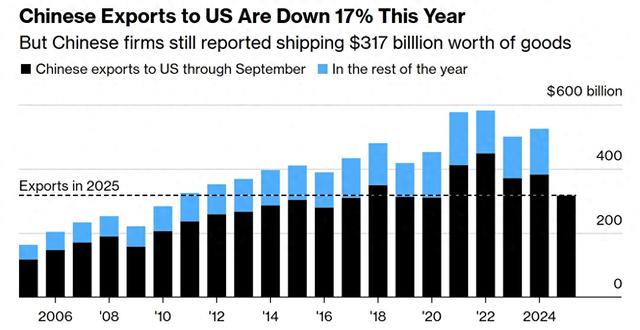
Core Insights - The article highlights the resilience of Chinese exports despite ongoing trade tensions with the U.S., suggesting that many Chinese products remain indispensable to the U.S. market, thereby enhancing China's bargaining power in upcoming trade negotiations [1][4]. Trade Performance - Chinese exports to the U.S. reached over $100 billion in Q3 2023, contributing to a trade surplus of nearly $67 billion, despite an overall decline in trade volume [1][4]. - In September, China's exports grew by 8.3% year-on-year, surpassing economists' expectations, indicating a robust export performance [9][11]. Product-Specific Insights - Certain products, such as electric bicycles and refined copper, saw significant export growth, with electric bicycle exports valued at over $500 million and refined copper exports rising to $270 million [4][5]. - The export of smartphones, laptops, and computer components to the U.S. amounted to nearly $8 billion, despite being less than half of the previous year's figures [5]. Market Dynamics - The article notes that the U.S. tariffs have had limited impact on the import of certain Chinese goods due to their critical role in global supply chains, particularly in sectors like rare earths and electronics [1][4]. - Analysts suggest that the restructuring of supply chains to replace Chinese goods would take time, indicating a continued reliance on Chinese products [1][8]. Future Outlook - There is speculation that the U.S. and China may seek to ease trade tensions in the coming weeks, with both sides potentially making concessions [11]. - The Chinese government emphasizes the need for continued efforts to stabilize foreign trade amid a complex external environment [11].

通州启动电动自行车电池免费“体检”
Xin Jing Bao· 2025-10-22 06:11
Core Viewpoint - Tongzhou District has initiated a free health assessment for lithium-ion batteries used in electric bicycles to identify and eliminate potential safety hazards [1] Group 1: Health Assessment Initiative - The health assessment involves professional testing of the batteries to evaluate their safety [1] - Key indicators assessed include appearance, label, internal resistance, and voltage [1] - The internal resistance must not exceed 500 milliohms, and the voltage must not exceed 60 volts [1] Group 2: Assessment Outcomes - Batteries meeting the safety standards will receive a green label, while those exceeding the limits will receive a red label [1] - Users of batteries with red labels will be advised to replace their batteries to mitigate safety risks [1] Group 3: Implementation and Expansion - The assessment pilot program has started in Beiyuan Street and Lucheng Town [1] - The initiative will be expanded to other towns and streets in Tongzhou District in the future [1]
电动自行车暗藏“到期陷阱”:电池寿命“卡三年” App功能“到期停”
Zhong Guo Xin Wen Wang· 2025-10-22 00:58
Core Viewpoint - The article highlights consumer grievances regarding electric bicycles, particularly focusing on issues related to battery failures and subscription-based app functionalities, suggesting that these problems may stem from deliberate business practices designed to extract additional fees from consumers [1][5][6]. Group 1: Battery Issues - Many electric bicycle owners, like Wang and Li, have reported sudden battery failures after approximately three years of use, raising suspicions about planned obsolescence by manufacturers [1][3]. - Consumers have experienced difficulties in charging their batteries, with service personnel often providing vague explanations and not offering detailed diagnostics [2][4]. - There are allegations that some manufacturers may have installed components that intentionally disable charging after a set period, leading to unnecessary battery replacements [2][7]. Group 2: App Functionality and Subscription Fees - Consumers have expressed frustration over app functionalities that become inactive after a certain period, requiring additional fees for continued use, which was not disclosed at the time of purchase [5][6]. - The lack of transparency regarding the app's subscription model has led to claims of misleading sales practices, as consumers believed they were purchasing a fully functional product without ongoing costs [5][7]. Group 3: Legal and Consumer Rights - Experts indicate that the practices of manufacturers may violate consumer protection laws, as they fail to inform consumers about limitations and additional fees associated with their products [6][7]. - Consumers are advised to assert their rights under the law, demanding full ownership and functionality of their purchased products without hidden fees or restrictions [8]. - Legal professionals suggest that consumers should collect evidence of their transactions and communications with sellers to support potential claims against misleading practices [8].
先进制造投资火热 沃兰特航空完成数亿元B轮融资|投融资周报
2 1 Shi Ji Jing Ji Bao Dao· 2025-10-21 15:23
Group 1 - The advanced manufacturing and artificial intelligence sectors are experiencing significant investment activity, with advanced manufacturing being particularly favored [1][3] - In the week of October 13 to October 19, 2025, there were 29 financing events reported in the domestic primary market, with a total scale of approximately 2.265 billion RMB [1][2] - The advanced manufacturing sector completed 9 financing rounds totaling about 1.16 billion RMB, while the artificial intelligence sector completed 6 rounds with disclosed amounts of approximately 350 million RMB [3] Group 2 - The financing activities were concentrated in major regions, with Beijing, Shanghai, Guangdong, and Zhejiang completing 8, 6, 4, and 4 financing rounds respectively [4] - Active investment institutions included Shunxi Fund, GF Xinde, and Qiming Venture Partners, each participating in 2 financing rounds primarily in the technology and manufacturing sectors as well as healthcare [6] Group 3 - VOLANT completed a several hundred million RMB Series B financing led by Huaying Capital, with participation from new investors including SAIC Capital [23] - Beijing Lingchuang Medical Valley announced nearly 200 million RMB in Series B financing led by Shunxi Fund and Yizhuang Guotou [8] - Velotric, a brand under Shenzhen Weile Technology, completed Series B financing led by Shunwei Capital [5]

先进制造投资火热,沃兰特航空完成数亿元B轮融资
2 1 Shi Ji Jing Ji Bao Dao· 2025-10-21 09:58
Group 1: Investment Trends - The advanced manufacturing sector is experiencing significant investment interest, with multiple financing cases reported in the past week [1][3] - The artificial intelligence sector is also attracting substantial investment, with a notable number of financing events [1][3] Group 2: Financing Overview - From October 13 to October 19, there were 29 financing events in the domestic primary market, with a total disclosed amount of approximately 2.265 billion RMB [1][2] - The advanced manufacturing sector completed 9 financing rounds, totaling around 1.16 billion RMB, while the artificial intelligence sector had 6 financing rounds amounting to approximately 350 million RMB [3] Group 3: Regional Distribution - The majority of financing cases were concentrated in Beijing (8 cases), Shanghai (6 cases), Guangdong (4 cases), and Zhejiang (4 cases) [4] Group 4: Active Investment Institutions - Notable active investment institutions included Shunxi Fund, GF Xinde, and Qiming Venture Partners, each completing 2 financing rounds primarily in the technology and manufacturing sectors as well as healthcare [6] Group 5: Company-Specific Financing - VOLANT completed a B round financing of several hundred million RMB, led by Huaying Capital, with participation from new investors including SAIC Capital [27] - Beijing Lingchuang Medical Valley completed nearly 200 million RMB in B round financing, led by Shunxi Fund and Yizhuang Guotou [9][10] - Velotric, a brand under Shenzhen Weile Technology, announced the completion of B round financing led by Shunwei Capital [7] - Anten completed angel round financing, with funds aimed at product development and research [8] - Huadao Biopharma successfully completed over 100 million RMB in D++ round financing, led by Boai New Open Source [15]

先进制造投资火热,沃兰特航空完成数亿元B轮融资|投融资周报
2 1 Shi Ji Jing Ji Bao Dao· 2025-10-21 09:52
Group 1 - The advanced manufacturing and artificial intelligence sectors are experiencing significant investment activity, with advanced manufacturing attracting 9 financing rounds totaling approximately 1.16 billion RMB and AI securing 6 rounds amounting to about 350 million RMB [2] - The total number of financing events in the domestic primary market from October 13 to October 19 was 29, with 20 disclosing amounts, summing up to around 2.265 billion RMB [1][2] Group 2 - The most active regions for financing were Beijing, Shanghai, Guangdong, and Zhejiang, with 8, 6, 4, and 4 financing events respectively [3] - Notable active investment institutions included Shunxi Fund, GF Xinde, and Qiming Venture Partners, each completing 2 financing rounds primarily in technology, manufacturing, and healthcare sectors [4] Group 3 - Velotric, a brand under Shenzhen Weile Technology Co., Ltd., completed a B round of financing led by Shunwei Capital [5][6] - Beijing Lingchuang Medical Valley Technology Development Co., Ltd. announced nearly 200 million RMB in B round financing, co-led by Shunxi Fund and Yizhuang Guotou [9][10] - Huadao Biopharmaceutical Co., Ltd. successfully completed over 100 million RMB in D++ round financing led by Boai New Open Source [15][16] Group 4 - VOLANT, a developer of electric vertical takeoff and landing aircraft, completed a B round financing of several hundred million RMB led by Huaying Capital [28][29] - Tianjin Shexu Technology Co., Ltd. secured several million RMB in Pre-B round financing, with funds allocated for R&D and market promotion [22][23] - Hunan Yanhe Technology Co., Ltd. announced over 100 million RMB in A round financing, aimed at building production lines for perovskite solar cells [52][53]
四川暂停实施汽车以旧换新补贴政策 ,上半年四川汽车类零售额增长2.7%
Zheng Quan Shi Bao Wang· 2025-10-17 04:31
Core Points - The Sichuan Provincial Department of Commerce announced adjustments to the 2025 vehicle and electric bicycle trade-in subsidy policy, including the suspension of the automobile trade-in subsidy starting October 18, 2025 [1] - The electric bicycle trade-in subsidy will now require qualification control through a limited coupon issuance method, with specific rules to be announced later [2] - The economic data from the first half of 2025 indicates significant growth in the production of new energy vehicles and related products in Sichuan, with a notable increase in the automotive manufacturing sector [3] Group 1 - The automobile trade-in subsidy policy will be suspended from October 18, 2025, with further adjustments to be announced later [1] - Consumers who have submitted applications for subsidies must monitor their application status and submit any necessary modifications by December 10, 2025 [2] - The electric bicycle trade-in subsidy will be subject to qualification control starting October 18, 2025, with details to follow [2] Group 2 - In the first half of 2025, Sichuan's new energy vehicle production increased by 2.4 times, with significant growth in photovoltaic batteries and lithium-ion batteries for vehicles [3] - The automotive manufacturing sector in Sichuan saw a 21% increase in added value, maintaining over 20% growth for six consecutive months [3] - Retail sales of automobiles in Sichuan grew by 2.7% in the first half of 2025, with new energy vehicle sales increasing by 23.1% [3]
四川“十四五”时期扩大内需主要成就公布 消费投资两手抓 “双引擎”驱动稳增长
Si Chuan Ri Bao· 2025-10-17 00:26
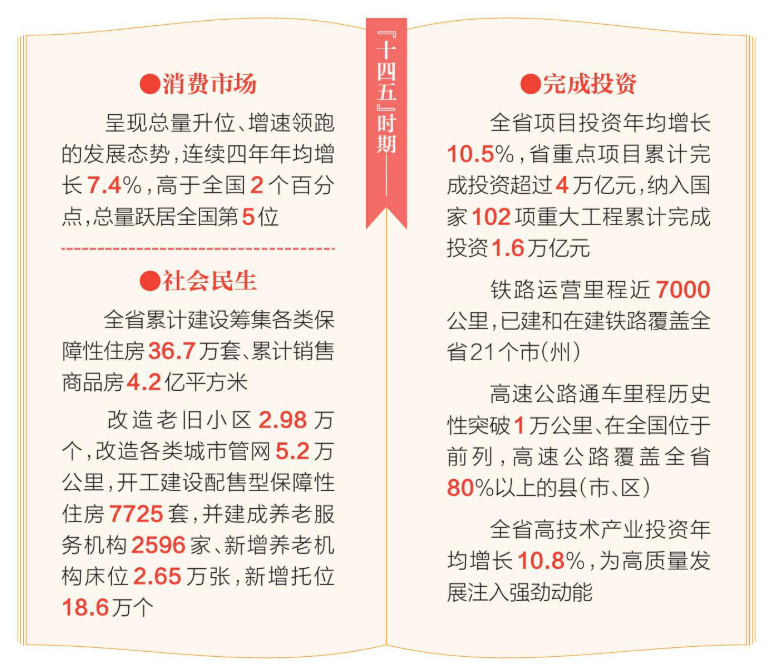
Core Insights - The article discusses the achievements of Sichuan province in expanding domestic demand during the "14th Five-Year Plan" period, emphasizing the dual engines of consumption and investment for economic growth [3][4]. Consumption - Sichuan's consumption market has experienced an average annual growth of 7.4% over the past four years, surpassing the national average by 2 percentage points, and ranking fifth in total consumption nationwide [4]. - The "trade-in" policy has significantly boosted large-scale consumption, with 13.19 million units of automobiles, home appliances, and other items being replaced this year, generating over 132.7 billion yuan in consumption [4]. - The province has seen a substantial increase in the ownership of new energy vehicles, rising from 170,000 at the end of 2020 to over 1.8 million currently, with their share in new car sales increasing from 4% to over 40% [4]. - Sichuan is a leading region for live performances, hosting 110 large-scale events this year, attracting over 2.1 million attendees and generating ticket revenue of 1.46 billion yuan, which in turn stimulated approximately 10 billion yuan in related consumption [5]. Investment - Sichuan has completed over 4 trillion yuan in investment for key projects during the "14th Five-Year Plan," with an average annual growth rate of 10.5% in project investment [6][8]. - Major infrastructure projects, including railways and highways, have been accelerated, with nearly 7,000 kilometers of railway and over 10,000 kilometers of highways constructed, enhancing connectivity across the province [7]. - High-tech industry investments have also seen an average annual growth of 10.8%, contributing to the province's high-quality development [8]. - Social welfare projects have been implemented, including the renovation of 29,800 old communities and the construction of 2,596 elderly care institutions, ensuring equitable distribution of development benefits [8].
“最严”新国标下的电动自行车产业变局
新财富· 2025-10-16 08:06
Core Viewpoint - The new national standard for electric bicycles, set to be implemented on September 1, 2025, aims to enhance safety and performance while phasing out older models, with significant changes in weight limits, materials, and technical requirements [3][10]. Summary by Sections Changes in New National Standard - The weight limit for lithium battery electric bicycles remains at 55 kg, while the limit for lead-acid battery bicycles is increased to 63 kg, improving range and reducing charging frequency [5]. - The proportion of plastic materials in the overall weight of the bicycle is reduced to a maximum of 5.5%, enhancing fire resistance and safety, although this may affect the aesthetic design of bicycles [6]. - New anti-tampering requirements for battery packs, controllers, and speed limiters are introduced, making it technically more difficult to modify key parameters such as maximum speed [8]. - The requirement for mandatory pedal installation is removed for purely electric vehicles, while those with electric assist must still have pedal functionality [9]. - The introduction of BeiDou positioning and real-time communication for commercial electric bicycles is mandated, enhancing safety and tracking capabilities [6]. - Stricter regulations for manufacturers are established, requiring production capabilities that match the output of electric bicycles, which may lead to increased industry concentration and the exit of smaller brands [6][10]. Industry Impact and Historical Context - The electric bicycle industry has evolved from a fragmented market with low-quality products to a more concentrated and higher-quality market since the introduction of the 2018 national standard [12][14]. - The 2018 standard led to a significant increase in average prices and market concentration, with leading brands like Yadea and Aima increasing their market share from 30% to 52% between 2018 and 2021 [14]. - The upcoming 2025 standard is expected to further accelerate the exit of long-tail brands and enhance the efficiency of leading brands in sales channels [14]. - The dual impact of the new standard and trade-in policies in 2025 is anticipated to boost sales, although it may also lead to a demand pull-forward, potentially affecting future sales [16]. Brand Strategies and Market Dynamics - Brands like Niu and Ninebot have positioned themselves in the high-end market, with Niu launching premium products as early as 2015, while Ninebot capitalized on the 2018 standard to rapidly gain market share [17]. - Traditional brands are also focusing on high-end product development, with innovations in battery technology and smart features to meet evolving consumer demands [17].