基金业

Search documents
2026年钱往哪里流,又往哪里投?
Sou Hu Cai Jing· 2026-01-30 07:40
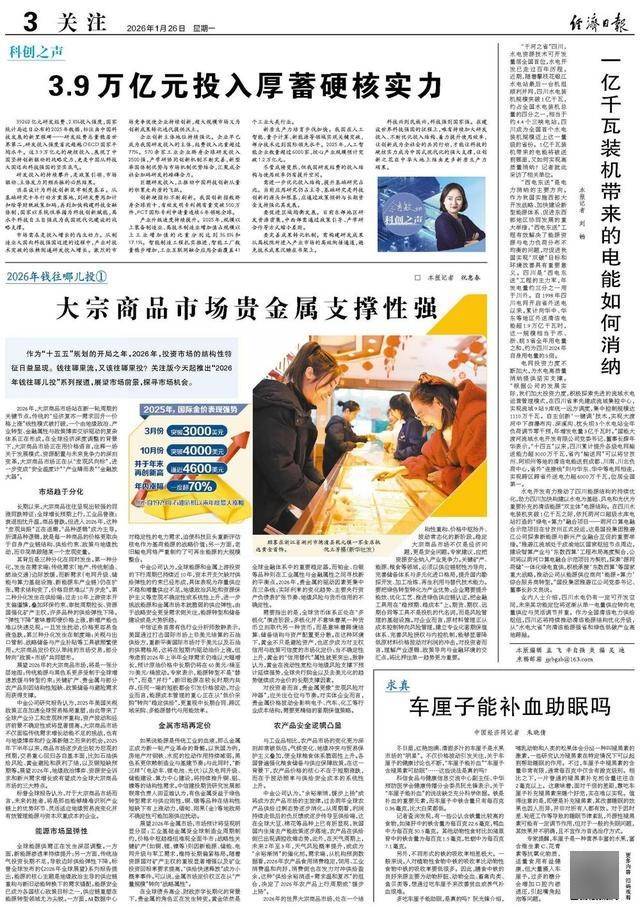
经济日报推出 "2026年钱往哪儿投"报道 展望市场前景,探寻市场机会 ↓↓↓ 01 作为"十五五"规划的开局之年 2026年投资市场 结构性特征日益显现 钱往哪里流 又该往哪里投? 投资黄金,现在上车来得及吗? 3 关注 2026年1月26日 日期一 3.9 万亿元投入厚蓄硬核实力 大宗商品市场贵金属支撑性强 狂用! 市场趋于分化 车厘子能补血助眠吗 | C. 爬骨 | | | --- | --- | | 依赖原 图层层 市圆通分 | 東京六日 | | 最高人本 | | | 1股为都 | | | 和烟,质量 | 四黄文明 | | - | THE COLUMN OF | 专家指出,黄金在流动性宽松与地缘风险支撑下预计延续强势,全球央行购金以及去美元化的趋势继续 成为金价的长期支撑因素。其中,"长期支撑"四个字很关键。 对投资者而言,贵金属更像"宏观风险对冲器",还是要关注仓位与节奏。 低深日报 科创之声 2026年钱往哪儿投(1) 近期,黄金价格突飞猛进,现在上车来得及吗? 银行理财该怎么买 ? 3 关注 低清印象 2026年1月27日 2路] 2026年线往哪儿投2 银行理财兼顾稳健低波与收益弹性 1 1 ...

从美国的ONRRP机制谈起:利率非银流动性工具怎么看
CAITONG SECURITIES· 2026-01-29 03:08
Group 1: Report Industry Investment Rating - Not provided in the report Group 2: Core Views of the Report - The probability of the new tool being similar to the US ONRRP is low, and it is more likely to be a relending mechanism similar to the previous SFISF [1][3] - There is a certain probability of the implementation of overnight reverse repurchase measures [4] Group 3: Summary by Relevant Catalog 1. From the US ONRRP 1.1 US ONRRP Establishment Background - Before the 2008 financial crisis, the US followed the "deposit reserve scarcity framework", and the Fed regulated market interest rates through open - market operations of Treasury bonds [8] - After the 2008 financial crisis, the Fed's balance sheet expanded significantly, and the traditional method of controlling the federal funds rate was no longer effective. To prevent interest rate loss of control, the Fed introduced IOER in 2008 and ONRRP in 2013 [10][12] 1.2 ONRRP Key Points - ONRRP is a key monetary policy tool for absorbing excess liquidity and controlling the short - term interest rate floor in an environment of "excess reserves and policy rate loss of control" [2][13] - The main participants are money market funds and government - supported enterprises. Commercial banks rarely participate due to IOER > ONRRP and ONRRP mechanism limitations [2][13] - Money market funds and cash pools can obtain rights to a large general collateral pool held by the Fed through transactions with primary dealers [2][13] 2. How to View the "Mechanism Arrangement for Non - bank Liquidity"? - The new tool is unlikely to be similar to ONRRP. The current market is not in a state of abundant liquidity, and the probability of the central bank recovering liquidity is low. Also, there are many issues to be explored for the central bank to conduct overnight reverse repurchase transactions with non - banks [21][22] - The "mechanism arrangement for providing liquidity to non - bank institutions under specific scenarios" is likely a non - bank relending mechanism similar to that in the bond market, which can form a ceiling for the interbank lending rate when non - bank liquidity is tight [24][25] - There is a certain logical probability of the implementation of overnight reverse repurchase measures. Overseas mainly uses overnight reverse repurchases, and DR001 has been relatively stable since 2025. If the overnight reverse repurchase mechanism is established, overnight OMO may replace 7 - day OMO as the new policy rate [4][26]
2026年A股资金面展望-策略周中谈
2026-01-29 02:43
Summary of Key Points from the Conference Call Industry Overview - The insurance industry is expected to contribute over 840 billion yuan in net incremental funds in 2026, driven by continuous growth in premium income and asset allocation needs, with a projected new premium income growth rate of 7% [4][1] - The A-share market is anticipated to see a net inflow of approximately 1.5 trillion yuan in 2026, with the first quarter being the most abundant period for funds [2][2] Core Insights and Arguments - Incremental funds from the insurance sector are projected to be significant, with a total of 11.5 trillion yuan expected for 2026, marking one of the best historical levels [3][14] - The proportion of equity asset allocation by insurance funds is expected to reach 16% in 2026, with 20% potentially flowing into Hong Kong stocks and the remainder into A-shares [4][1] - Bank wealth management products and fixed-income products are also important sources of medium to long-term funds, with potential contributions of 913 billion to 1,227 billion yuan based on different equity allocation ratios [5][5] - A significant wave of fixed-term deposits maturing in 2026, estimated at 40-50 trillion yuan, may lead to increased investment in insurance or wealth management products if a quarter of depositors choose not to renew [6][7] Additional Important Content - The state-owned funds are expected to see reduced inflows in the slow bull market of 2026, but they remain a crucial market participant, with an equity asset scale of 5.75 trillion yuan by the end of 2025 [9][9] - High-risk funds, including margin financing and private equity, are projected to remain active, with private equity expected to grow to 8.5 trillion yuan and margin financing net inflow estimated at 450 billion yuan [10][11] - Public funds are expected to see increased participation from individual investors, with a projected net inflow of around 230 billion yuan for passive public funds [12][12] - Foreign capital is anticipated to enter a new phase of strategic allocation to Chinese assets, driven by a weak dollar cycle and a strong yuan, potentially replicating the favorable conditions seen in the 2020-2021 period [13][13] - The current market valuation is at a historical high of 24 times earnings, and the sustainability of this valuation will depend on fundamental improvements and the ability of high-valuation sectors to continue delivering high growth [20][20] - Frequent sector rotation is influenced by abundant capital chasing performance improvement expectations and changes in market sentiment, indicating varying levels of attention and investment across different sectors [21][21]
时报观察丨利率下行存款搬家 认知升级重塑理财观
证券时报· 2026-01-28 23:53
近期,在存款利率下行、大量高息定存到期的背景下,居民存款搬家入市再度成为市场的关注焦 点。 一场寻求"存款替代"的浪潮正悄然兴起,这些昔日安稳"躺"在银行账户中的储蓄资金,既不满足 于存款的微薄利息,又对纯权益类产品的高波动心存顾虑,转而希望寻求一种既能获取稳健基础 收益又能分享资本市场成长红利的"中间路线"产品。 在此背景下,以"固收+"基金为代表的低波含权产品,以及部分分红型增额终身险产品逐渐走 红,成为这股资金浪潮的"新大陆"。最新披露的公募基金2025年四季报显示,截至2025年末,名 义"固收+"基金(含一级债基、二级债基、偏债混合基金、转债基金)在管规模突破2.735万亿 元,创历史新高。分红型增额终身险等产品的热销,以及银保渠道的业绩贡献,也间接反映出居 民资金配置偏好的变化,其中兼具保本、保证收益与浮动收益属性的分红险更受市场青睐。 居民储蓄从银行体系向资本市场的有序搬家,一方面反映了居民财富管理意识的觉醒和资产配置 能力的日趋成熟;另一方面,这些风险偏好相对较低的长期资金入市,也有助于改善资本市场资 金来源结构,为市场平稳健康发展注入宝贵的"活水"。 当然,相比银行存款,相关替代产品并非稳赚 ...

货币市场日报:1月27日
Xin Hua Cai Jing· 2026-01-27 16:20
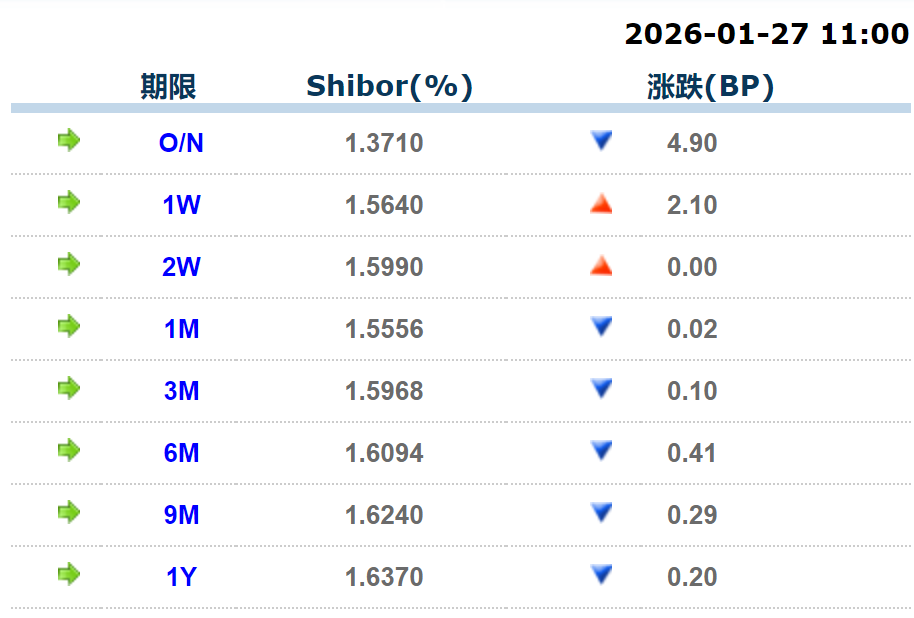
Group 1 - The People's Bank of China conducted a 7-day reverse repurchase operation of 402 billion yuan, resulting in a net injection of 78 billion yuan after 324 billion yuan of reverse repos matured on the same day [1] - The overnight Shanghai Interbank Offered Rate (Shibor) decreased by 4.90 basis points to 1.3710%, while the 7-day Shibor increased by 2.10 basis points to 1.5640% [1][2] - The weighted average rates for overnight and 7-day repurchase agreements (R007) rose slightly, while the rates for DR001 and R001 fell, indicating a mixed trend in the interbank pledged repo market [5] Group 2 - The interbank funding market showed a balanced state, with overnight rates fluctuating between 1.55% and 1.58% in early trading, and later stabilizing around 1.50% to 1.53% [9] - Trading sentiment for interbank certificates of deposit remained positive, with yields for various maturities continuing to rise, particularly for 1-month and 3-month maturities [10] - The People's Bank of China reported that the balance of RMB loans from financial institutions reached 271.91 trillion yuan by the end of Q4 2025, reflecting a year-on-year growth of 6.4% [12]
黄金涨破5100美元,银行保险箱一箱难求,有营业部新户要排5至6年才能租到
21世纪经济报道· 2026-01-26 07:16
Core Insights - Gold and silver prices have significantly exceeded market expectations in 2026, with gold reaching a peak of $5111.17 per ounce and silver soaring to $109 per ounce, marking increases of over 18% and 51% respectively within a short period [1][2] Market Demand and Supply - The surge in gold and silver prices has led to a dramatic increase in investment and collection demand, resulting in temporary shortages of silver products at several banks, with some customers facing long wait times for safe deposit boxes [4][5] - Major banks, including China Merchants Bank and Agricultural Bank of China, report that their safe deposit boxes are fully rented, with waiting lists extending up to 5 to 6 years for new customers [4] - The annual fees for small and large safe deposit boxes range from 200 to 500 yuan and 1000 to 3000 yuan respectively [4] Investment Products and Trends - The market has seen a rise in structured deposit products linked to gold, with many banks launching these offerings, some of which sell out quickly [6] - At least 27 listed companies have disclosed investments in gold-related financial products, totaling approximately 1.73 billion yuan [6] Fund Performance - The Guotou Silver LOF fund, which primarily invests in silver futures, has seen its net asset value increase by 62.43% in the fourth quarter of 2025, with its total scale growing to 18.944 billion yuan, a 185.31% increase from the previous quarter [6] - Despite high premium rates, the fund's market price has surged over 70% since the beginning of 2026, indicating strong investor interest [6] Market Sentiment and Risks - Some investors, like David Bateman, have reported substantial gains from silver investments, while others, such as Canadian Imperial Bank of Commerce, have faced significant losses from short positions in silver [7][8] - Analysts suggest that the current market dynamics for gold and silver have deviated from traditional fundamental analysis, indicating a need for investors to adapt to new market conditions [8][9] Future Outlook - Experts believe that gold and silver will continue to play a crucial role in the global economy in 2026, with any temporary market weakness potentially presenting buying opportunities [11]

锦江在线股价跌5.05%,申万菱信基金旗下1只基金位居十大流通股东,持有170.02万股浮亏损失146.22万元
Xin Lang Cai Jing· 2026-01-26 05:55
Group 1 - The core point of the news is that Jinjiang Online's stock price has dropped by 5.05%, currently trading at 16.17 yuan per share, with a total market capitalization of 8.92 billion yuan [1] - Jinjiang Online's main business segments include vehicle operation (56.90% of revenue), automobile sales (24.85%), low-temperature logistics (17.77%), and other sales (4.07%) [1] - The company was founded on February 24, 1993, and went public on June 7, 1993, with its headquarters located at 100 East Yan'an Road, Shanghai [1] Group 2 - The top circulating shareholder of Jinjiang Online is the Shenwan Hongyuan Fund, which reduced its holdings in the Shenwan Hongyuan Intelligent Automobile A fund by 429,700 shares, now holding 1.70 million shares, representing 0.31% of circulating shares [2] - The Shenwan Hongyuan Intelligent Automobile A fund has a current scale of 140 million yuan and has achieved a year-to-date return of 8.22% [2] - The fund manager, Li Hang, has been in position for 1 year and 234 days, with the best fund return during his tenure being 32.02% [2] Group 3 - The Shenwan Hongyuan Intelligent Automobile A fund has reduced its holdings in Jinjiang Online by 816,100 shares in the fourth quarter, now holding 884,100 shares, which accounts for 7.01% of the fund's net value [3] - The estimated floating loss for the fund from its holdings in Jinjiang Online is approximately 760,300 yuan [3]

盛通股份股价跌5.03%,诺安基金旗下1只基金位居十大流通股东,持有217.59万股浮亏损失95.74万元
Xin Lang Cai Jing· 2026-01-26 05:40
Group 1 - The core point of the news is that Shengtong Co., Ltd. experienced a decline of 5.03% in its stock price, reaching 8.30 yuan per share, with a trading volume of 169 million yuan and a turnover rate of 5.01%, resulting in a total market capitalization of 4.421 billion yuan [1] - Shengtong Co., Ltd. is primarily engaged in comprehensive printing services for full-color publications, with its main business revenue composition being: printing services for books and periodicals at 72.00%, packaging printing at 12.95%, educational services for students at 10.55%, and institutional educational services at 4.50% [1] Group 2 - From the perspective of the top ten circulating shareholders, a fund under Nuoan Fund ranks among the top shareholders of Shengtong Co., Ltd. The Nuoan Flexible Allocation Mixed Fund (320006) entered the top ten circulating shareholders in the third quarter, holding 2.1759 million shares, which accounts for 0.55% of the circulating shares, with an estimated floating loss of approximately 957,400 yuan today [2] - The Nuoan Flexible Allocation Mixed Fund (320006) was established on May 20, 2008, with a latest scale of 777 million yuan. Year-to-date return is 7.55%, ranking 3455 out of 9003 in its category; the one-year return is 54.36%, ranking 1862 out of 8185; and the return since inception is 557.3% [2]

游戏结束,中方大量抛售美债,欧洲也跟进?特朗普急忙除名反华派
Sou Hu Cai Jing· 2026-01-25 20:51
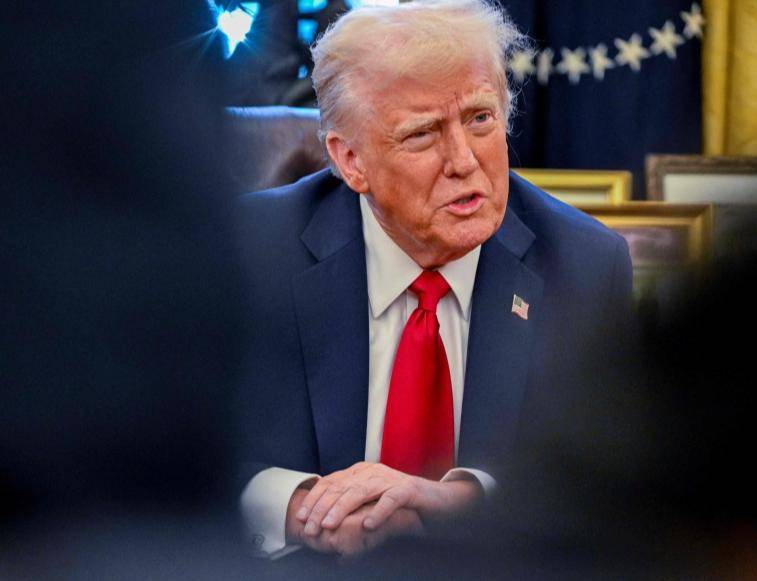
Group 1 - The core message highlights a significant shift in global financial dynamics, with China reducing its holdings of U.S. Treasury bonds to below $700 billion, the lowest since 2008, while European pension funds are also divesting from U.S. debt [1][2] - In January 2026, Danish and Swedish pension funds announced plans to liquidate their U.S. Treasury holdings, citing concerns over the U.S. as a reliable credit entity and the unsustainable fiscal situation of the U.S. government [2] - The U.S. federal debt surpassed $36 trillion in 2025, with interest payments exceeding military spending for the first time, raising alarms about fiscal sustainability [4] Group 2 - The U.S. Treasury Department's report indicated that China sold $11.8 billion in U.S. Treasury bonds in October 2025, reducing its holdings to $688.7 billion, nearly half of its peak in 2011 [1][4] - Global central banks increased their gold reserves significantly, with a record 1,136 tons added in 2022, indicating a trend towards de-dollarization [6] - The U.S. bond market experienced a severe sell-off in April 2025, with 10-year Treasury yields rising sharply, leading to liquidity issues and a negative correlation between bond and stock markets [8][9] Group 3 - The Trump administration's recent personnel changes, including the dismissal of key officials involved in technology restrictions against China, suggest a potential shift in U.S.-China relations ahead of a planned visit to China [13] - The U.S. Treasury's budget office warned of a potential debt default in 2025 if the debt ceiling is not adjusted, highlighting the precarious fiscal situation [4][16] - The trend of reducing U.S. Treasury holdings while increasing gold reserves reflects a broader strategy among countries like China and Russia to mitigate reliance on the U.S. dollar [14][16]
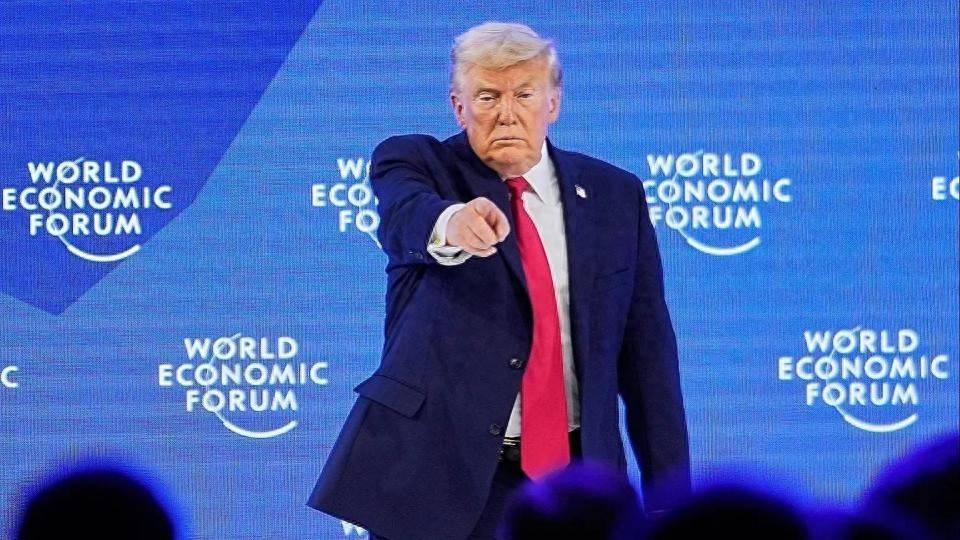
特朗普通告全球,不许减持美国国债;大国还剩6830亿,游戏已结束
Sou Hu Cai Jing· 2026-01-25 11:59
Group 1 - Trump's warning at the Davos Forum indicates a strong stance against countries selling U.S. debt or equities due to dissatisfaction with the U.S. [1] - Major countries hold $683 billion in U.S. debt, rendering Trump's threats ineffective against them [3] - The U.S. fiscal deficit is projected to exceed $2.1 trillion by 2025, necessitating reliance on debt issuance to cover government spending [3] Group 2 - The Danish pension fund AkademikerPension announced plans to sell $100 million in U.S. debt, reflecting a broader trend of reduced confidence in U.S. bonds [5] - Sweden's largest private pension fund Alecta has sold most of its U.S. debt due to high deficits and unstable policies, indicating a loss of basic trust in the U.S. [7] - European countries are accelerating the sale of U.S. debt, driven by unease over U.S. actions and policies [9][11] Group 3 - Eastern powers have significantly reduced their holdings of U.S. debt, with a drop to $683 billion, nearly half of the 2013 peak [13] - These countries are increasing gold reserves and diversifying away from U.S. dollar assets, indicating a strategic shift to reduce dependency on the dollar [14] - A cross-border payment system involving over 1,000 banks in more than 100 countries is being developed to facilitate transactions in local currencies, bypassing the dollar [16] Group 4 - The UK is reducing its investment in U.S. equities from 30% to 22%, signaling a shift away from viewing the U.S. as the sole investment destination [18] - U.S. lawmakers are proposing measures to restrict foreign operations in the U.S. debt market, reflecting concerns over foreign divestment [20] - The perception of foreign divestment as a national threat may further erode confidence in U.S. debt markets [20][22] Group 5 - Many countries are losing trust in the U.S., and threats alone will not maintain market stability [23] - The notion that the U.S. holds all the cards is increasingly questioned as global sentiment shifts [24]