搜索引擎

Search documents
AI没有杀死搜索,反而做大了蛋糕
虎嗅APP· 2025-12-15 14:18
Core Viewpoint - The rise of AI has not killed search engines but rather expanded the overall market for search and advertising, as evidenced by Google's recovery in search market share and advertising growth in Q3 [4][8][22]. Group 1: AI's Impact on Search - AI has not eliminated search but has created a larger "cake" for both search and advertising, with traditional search engines benefiting from the increased user engagement driven by AI [9][17]. - The traditional search model, which relies on keyword matching, has limitations in addressing complex user queries, a gap that AI has begun to fill by providing more comprehensive answers [10][12][15]. - AI has transformed user search behavior, leading to longer and more detailed queries, which in turn enhances the quality of clicks and user intent [31][34]. Group 2: Google's Competitive Advantage - Google's integration of AI into its search engine has allowed it to maintain a competitive edge, leveraging its existing ecosystem to enhance user experience and engagement [19][25]. - The AI features in Google's search have been designed to complement traditional search habits, making it easier for users to access information without disrupting their established behaviors [21][22]. - Google's diverse product ecosystem, with over 20 billion monthly active users across multiple platforms, provides a significant advantage over competitors like Baidu and Tencent, which struggle with fragmentation and competition [42][44]. Group 3: Advertising Evolution - Despite initial concerns about AI's impact on advertising click-through rates, Google's Q3 financial results showed that the monetization rate of AI features is comparable to traditional search [28][29]. - AI has led to a higher quality of clicks, as users engage more deeply with content, resulting in improved conversion rates for advertisers [32][36]. - New advertising tools like AI Max are being developed to better understand user intent and enhance ad targeting, marking a shift towards more effective advertising strategies [38][41]. Group 4: Industry Comparison - The contrasting paths of Google and its Chinese counterparts highlight the importance of ecosystem strength in the AI competition, with Google benefiting from a more integrated approach [46][45]. - The challenges faced by domestic players in China, such as high competition and fragmented user experiences, hinder their ability to capitalize on AI advancements as effectively as Google [44][45].



AI冲击Google搜索广告,怎么就成了伪命题?
创业邦· 2025-12-15 03:09
Core Insights - Google's search market share rebounded to 90% in Q3, and its advertising business growth accelerated after a period of slowdown, indicating a recovery from the initial impact of AI technologies like ChatGPT [5][10][30] - The rise of AI has not killed traditional search but has expanded the overall market, as evidenced by increased traffic and advertising revenue for both Google and other major players like Baidu and Tencent [9][10][19] Group 1: AI and Search Dynamics - AI has created a new segment of search demand, allowing for more complex queries and longer search phrases, which enhances user engagement and advertising effectiveness [32][39] - Google's integration of AI into its search engine has led to a doubling of average query length, indicating a shift in user behavior towards more detailed inquiries [32][34] - The AI-driven search model has improved click quality, as users spend more time on target websites, thus increasing conversion potential [34][39] Group 2: Competitive Landscape - Google benefits from a robust ecosystem with multiple applications, allowing it to leverage AI across various consumer touchpoints, unlike domestic players who face significant barriers due to app fragmentation [44][46] - Domestic competitors like Baidu and Tencent are struggling to achieve similar levels of integration and user engagement, leading to concerns about their long-term viability in the AI advertising space [46][48] - Despite the challenges, domestic players are also innovating with AI tools, as seen in Tencent's advertising products and Baidu's AI search enhancements, which have shown significant revenue growth [43][46] Group 3: Market Reactions and Financial Performance - Google's Q3 financial results demonstrated that the monetization rate of its AI features is comparable to traditional search, dispelling initial concerns about revenue loss due to AI integration [30][31] - The advertising click-through rates have seen a significant decline, but the overall revenue from AI-driven searches is compensating for this drop, indicating a shift in the advertising landscape [29][30] - The emergence of new advertising tools like AI Max is helping advertisers capture user intent more effectively, leading to increased engagement and revenue opportunities [40][43]

谢尔盖·布林首次复盘:谷歌AI为什么落后,又如何实现绝地反击
3 6 Ke· 2025-12-15 00:19
Core Insights - Google has been perceived as lagging in the AI race, especially compared to OpenAI, until the return of co-founder Sergey Brin, who has since spearheaded the development of the Gemini models, marking a significant shift in the competitive landscape [1][2]. Group 1: Google's Strategic Shift - Sergey Brin acknowledged Google's early missteps in AI strategy, particularly the hesitance to fully embrace the potential of AI technologies like chatbots due to concerns over misinformation [6][18]. - The introduction of the Gemini 3 series and the seventh-generation TPU Ironwood has positioned Google to reclaim its competitive edge in AI, showcasing significant advancements in performance and efficiency over GPUs [2][3]. Group 2: Technological Advancements - The Gemini 3 series features native multimodal capabilities and an extended context window, elevating industry standards and allowing for unified understanding and generation of text, code, images, audio, and video [3]. - Google's deep integration of AI capabilities into its core applications, such as Workspace and search products, demonstrates a comprehensive approach to enhancing user experience and operational efficiency [3]. Group 3: Future Directions in AI - Brin posited that future breakthroughs in AI may rely more on algorithmic efficiency rather than merely scaling data and computational power, suggesting a shift in focus towards more effective architectures like MoE (Mixture of Experts) [4][8]. - The ongoing investment in foundational technologies, such as TPUs and deep learning algorithms, has established a robust infrastructure that supports rapid innovation and iteration in AI [7][20]. Group 4: Implications for the Workforce - Brin encouraged the younger generation to view AI as a tool for enhancing personal capabilities rather than a threat to job security, emphasizing the importance of leveraging AI for creative and productive purposes [10][24]. - He highlighted the need for individuals to adapt and refine their skills in light of AI advancements, suggesting that fields requiring deep technical knowledge will continue to be valuable [9][32].

谷歌搜索结果偏袒自家服务 恐遭欧盟罚款
Ge Long Hui· 2025-12-12 06:58
Core Viewpoint - Google is expected to face fines from the EU antitrust regulators next year due to insufficient compliance with regulations that prohibit favoring its own services and products in search results [1] Group 1: Regulatory Actions - The EU has accused Google of favoring its own services in Google Shopping, Google Hotels, and Google Flights, which has led to conflicts with vertical search engines and various industries such as hotels, airlines, restaurants, and transportation [1] - Since the EU's accusations in March, Google has made several adjustments to its search results, with the latest changes occurring in October, but these adjustments still do not meet the requirements of the Digital Markets Act [1] - Fines for violating this regulation could reach up to 10% of the company's global annual revenue [1] Group 2: International Relations - The potential penalties for Google may provoke anger in the United States, which has criticized the EU's landmark laws as targeting American tech companies, although the EU denies these claims [1]
梁建章:如何减少内卷
Xin Lang Cai Jing· 2025-12-12 04:00
Core Viewpoint - The primary issue facing the Chinese economy and enterprises is the need to reduce "involution," which is characterized as ineffective competition leading to a zero-sum or negative-sum game, particularly due to resource bottlenecks [3][15]. Economic Challenges - Many industries in China are experiencing demand growth that lags behind supply growth, resulting in price reductions and increased difficulties for enterprises [3][15]. - The tourism industry exemplifies this trend, where domestic tourism numbers are increasing moderately, but supply growth (e.g., hotels, attractions) is outpacing demand, leading to price declines of 7% to 10% [4][16]. Demand Creation Strategies - To address the issue of involution, it is crucial to create more demand, particularly through increasing consumer demand rather than relying solely on investment [4][16]. - Expanding foreign demand, especially in inbound tourism, is identified as a significant opportunity, with potential for substantial GDP contributions if inbound tourism can reach 1% to 2% of the economy [5][18]. Consumer Spending Enhancement - The current economic environment is characterized by deflation, with many consumers hesitant to spend due to economic uncertainty. A proposed solution is to distribute cash directly to consumers through fiscal deficits, potentially amounting to 2% to 3% of GDP [6][19]. - This approach is deemed appropriate given China's production capacity and current deflationary pressures, which would mitigate inflation risks typically associated with cash distribution [7][19]. Addressing Declining Birth Rates - The declining birth rate poses a significant risk to the economy, with births dropping from over 18 million in 2016 to approximately 8 million in the current year, a reduction of over 50% [8][20]. - To counteract this trend, financial support should be directed towards young people, who are most in need of assistance for family planning and child-rearing [8][20]. Work-Life Balance and Education Reform - There is a call for reducing overall working hours and increasing vacation time to improve work-life balance, which could encourage family growth [10][21]. - Education reform is essential to reduce the current "involution" in the education system, which discourages young people from having children due to the pressures of excessive competition and examination [11][22]. Summary of Recommendations - The proposed measures to reduce involution in Chinese society include: increasing foreign tourism, distributing cash to consumers, encouraging higher birth rates, providing more vacation time, and reducing examination pressures [12][23].
AI会消灭搜索吗?
创业邦· 2025-12-11 10:15
Core Insights - The article discusses the evolution of AI search engines, highlighting the shift from traditional link-based search to AI-driven solutions that provide direct answers and enhance user experience [3][4][6][12]. Group 1: Strategic Shift - Traditional search engines are experiencing a decline, with Google's global market share dropping below 90% for the first time in a decade [8]. - AI applications like ChatGPT and Perplexity are gaining traction, with ChatGPT reaching over 700 million weekly active users and covering about 10% of the adult population globally [8][12]. Group 2: Product Form - AI search engines are redefining user interaction through conversational interfaces, allowing for multi-turn dialogues and direct answers, which enhances the efficiency of information retrieval [14][15]. - The integration of multimodal capabilities enables AI search to process voice, images, and videos, expanding its application across various devices and contexts [15]. Group 3: Market Dynamics - The AI search market is diversifying into four evolutionary paths: traditional search engine upgrades, native AI search engines, ecosystem integration, and vertical service-driven solutions [20][21][23][24]. - The global search engine market is projected to grow from $204.76 billion in 2024 to $421.42 billion by 2031, indicating a compound annual growth rate (CAGR) of 11.0% [37]. Group 4: Value Chain Transformation - The demand for high-quality, structured data is increasing, leading to a revaluation of first-party data as a critical asset for AI training [27]. - Marketing strategies are shifting from Search Engine Optimization (SEO) to Answer Engine Optimization (AEO), focusing on making content more suitable for AI consumption [29][30]. Group 5: Future Outlook - The article emphasizes the need for a sustainable value distribution mechanism among platforms, brands, creators, and users to ensure long-term ecosystem prosperity [36]. - The transformation in search capabilities is driven by the necessity to address user needs more effectively, moving from mere information retrieval to actionable insights and solutions [35][37].
12月8日【港股Podcast】恆指、中信建投證券、美團、瑞聲科技、小米、百度
Ge Long Hui· 2025-12-09 13:14
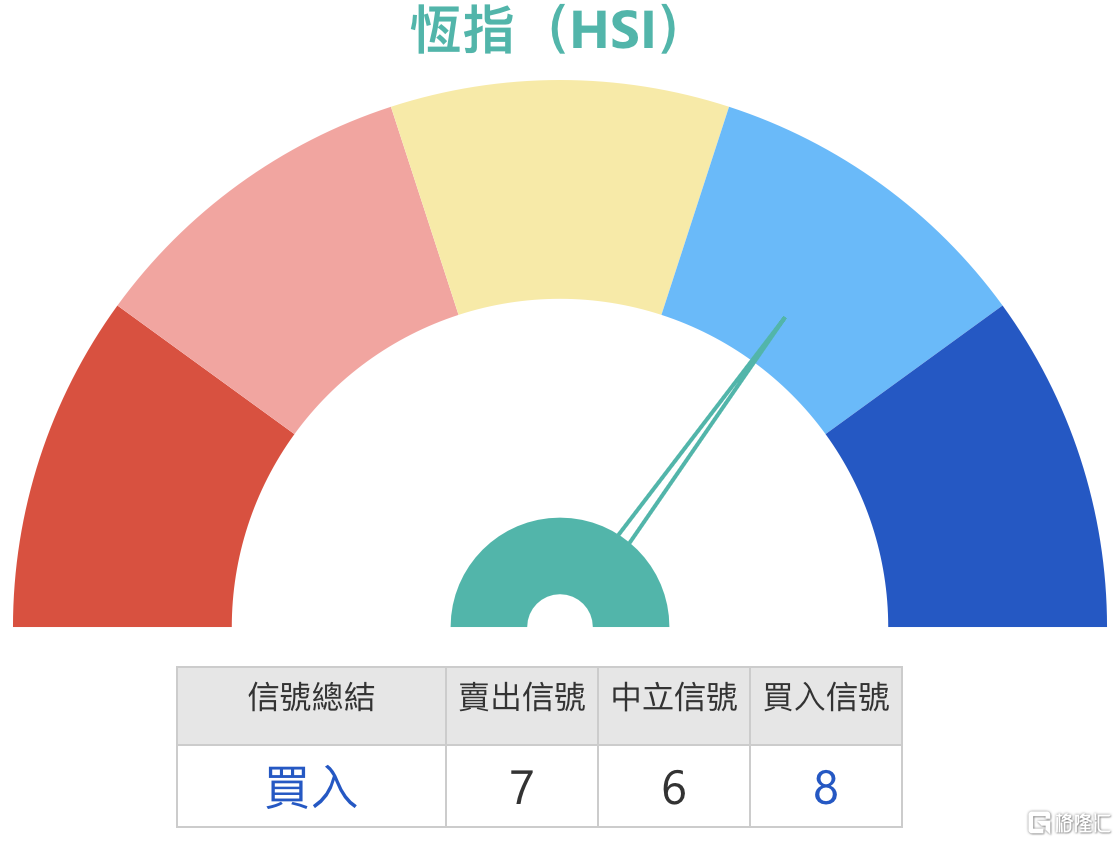
Group 1: Hang Seng Index (HSI) Overview - The Hang Seng Index (HSI) experienced a significant decline, closing at 25,765 points after failing to maintain a position near the middle line of the Bollinger Bands [2][3] - Investors are divided in their outlook, with some optimistic about buying bull certificates while others anticipate further declines, particularly if the index continues to drop [2][3] - Short-term technical signals show a slight bullish bias with 8 buy signals compared to 7 sell signals, indicating potential upward movement if resistance at approximately 26,368 points is breached [3][4] Group 2: Individual Stock Analysis CITIC Securities (06066.HK) - CITIC Securities has shown a positive trend, reaching a high of 13.1 HKD, with a closing price of 12.76 HKD, indicating a potential resistance level at 13.4 HKD for further upward movement [9] Meituan (03690.HK) - Meituan has rebounded over three consecutive days, closing at 99.5 HKD, and is approaching the middle line of the Bollinger Bands at 99.6 HKD [11][12] - The stock has 9 buy signals and 4 sell signals, suggesting a generally optimistic outlook, with support levels at 95.8 HKD and potential resistance at 102.7 HKD [12][13] AAC Technologies (02018.HK) - AAC Technologies has been trading sideways, closing at 39.16 HKD, with neutral technical signals indicating no clear direction [20] - Resistance is noted at 40.3 HKD, with a potential target of 41.9 HKD, but reaching 45 HKD may require more time [20] Xiaomi Group (01810.HK) - Xiaomi's stock has increased approximately 10% from a low of 36.6 HKD, closing at 42.58 HKD, with ongoing investor interest in bull certificates [22][23] - Current support is at 40 HKD, with a potential drop to 37.9 HKD if this level is breached [23] Baidu Group (09888.HK) - Baidu's stock has shown strong performance, reaching a high of 128 HKD but closing lower, with 8 sell signals and 7 buy signals indicating a bearish sentiment [27][30] - Support levels are at 117.7 HKD and 112.5 HKD, suggesting potential downward movement if these levels are breached [27][30]

历史惊人重演?大空头Burry预警:美股将陷入“2000年式熊市”,AI泡沫两年内破灭
美股研究社· 2025-12-08 11:18
Market Outlook - The current state of the U.S. stock market is concerning, with a potential long-term bear market similar to 2000 expected in the coming years [4][22] - The dominance of passive investment (over 50%) in the market may lead to a scenario where the entire market declines simultaneously, making it difficult to protect oneself with long positions [5][22] Investment in AI and Comparisons to Historical Bubbles - The current AI investment frenzy is likened to the "data transmission bubble" of 2000, with both exhibiting a lag between capital expenditure and market peaks [6][35] - Companies like Palantir and Nvidia are viewed as beneficiaries of this bubble, despite not initially producing AI-specific products [32][34] Palantir's Valuation Concerns - Palantir's stock is currently valued at $200, but it is believed to be worth only $30 or lower, leading to a significant bearish bet on its future decline [6][30] - The company has created multiple billionaires despite having minimal actual profits, raising concerns about its financial structure and valuation [30][28] Google's Search Business and AI Threats - AI poses a significant threat to Google's core cash flow from its search business, which has historically operated at very low costs [39][40] - The high costs associated with AI search may limit profitability, as most users can access necessary services for free, with a small percentage willing to pay for advanced models [41] Critique of the Federal Reserve - The Federal Reserve is criticized for not having made any beneficial contributions over its century-long existence, with a call for its functions to be transferred to the Treasury Department [3][46] - The current economic situation is viewed as unsustainable, with high interest payments and welfare obligations straining the fiscal landscape [42][46]

新势力狂揽 1.72 亿用户?谷歌营收破千亿,搜索王座稳了
Sou Hu Cai Jing· 2025-12-03 10:40
Core Insights - The competition in AI search is intensifying, yet established players like Google and Baidu continue to thrive, with Google's Q3 revenue surpassing $100 billion and Baidu's AI revenue increasing by over 50% [1][9]. Group 1: New Entrants and Their Challenges - New AI search applications like Doubao and DeepSeek have gained traction, with Doubao reaching 172 million monthly active users in Q3, but they face a significant user retention challenge, with over 80% of users abandoning these apps after the first month [3][6]. - Many new entrants lack unique features and primarily offer a "dialogue + search" model, failing to meet core user needs, which leads users to prefer established platforms like Baidu for reliable results [6][9]. Group 2: Established Players' Strategies - Baidu has recently revamped its search capabilities with the introduction of an "intelligent box" that allows for more complex queries, enhancing user experience and retention [7][9]. - Google's financial performance remains robust, with Q3 revenue of $102.35 billion, a 16% year-over-year increase, and significant contributions from AI-related services [9][11]. - Both Google and Baidu have developed comprehensive AI capabilities, allowing them to manage the entire AI ecosystem from hardware to applications, which new entrants cannot match [11][14]. Group 3: Market Dynamics and Future Outlook - The search market is evolving from a zero-sum game to a more expansive landscape, with AI technology creating new opportunities for growth, benefiting both new entrants and established players [16]. - The competition in AI search is not just about immediate trends but also about long-term capabilities and practical applications, with both new and old players contributing to a more vibrant market [16].
马斯克:低谷见真情,最贵的投资是信任
聪明投资者· 2025-11-30 02:03
本周 推荐阅读 《华尔街日报》最近刊登了一篇精彩的回顾文章,写的是查理·芒格人生最后几年的故事。其中,他的继 子 哈尔·博思威克 (Hal Borthwick )用一句话把芒格概括得淋漓尽致:"直到他去世那一天,他的大脑 都在全速运转。他从来没有停止过学习。" 这种近乎固执的好奇心,一直持续到生命尽头。无论是他对人工智能未来的反复思考,还是对看似普通 的煤炭这种大宗商品重新审视,皆是如此。 在生命最后一年,99岁的芒格愈发坚信:市场严重低估了煤炭在全球能源结构中长期存在的重要角色。 带着这样的信念,他将真金白银投进了康索尔能源(Consol Energy)和阿尔法冶金资源公司(Alpha Metallurgical Resources)。 没过多久,这两笔投资的浮盈便已超过5000万美元。据说他有生之年看到了这笔重注翻番。 2、 聪投专访! "看多中国"的背后逻辑!独家专访《中国的选择》作者马凯硕,关于西方误读、中国开 放与全球新秩序…… 3、 "安全边际大师"卡拉曼MIT经典演讲:要有健康的投资纪律,能不能睡个安稳觉比什么都重要…… 4、 谷歌正"王者归来"!CEO桑达尔·皮查伊最新对话:"全栈式转型"已渡 ...