创新药

Search documents
兴证策略:前期调整释放一定风险 持股过节兼具胜率与赔率
Xin Lang Cai Jing· 2026-02-08 10:18
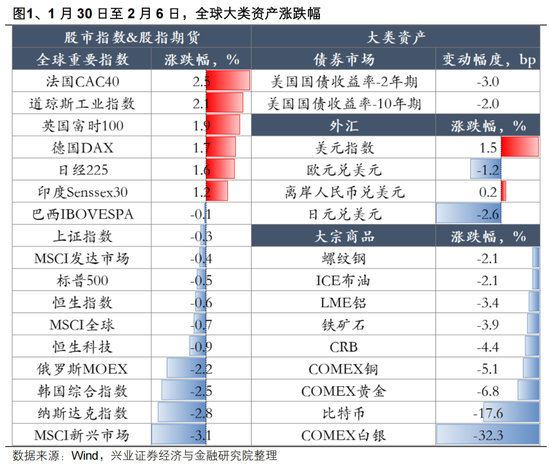
由此来看,近期海外一系列不确定性因素对风险资产的冲击更多是在叙事与情绪层面,而并非基本面或 政策路径出现实质性变化,尤其是支撑春季行情的国内核心逻辑——向好的基本面、政策"开门红" 与 充裕的流动性均未发生任何改变,这也是我们看好春季行情尚未结束的核心原因。 往后看,随着前期调整释放一定风险,近期全球叙事变化对市场情绪冲击最大的时刻或正在逐步过去。 一方面,从资产表现来看,周五(2月6日)比特币、美股、中概股、贵金属等一系列风险资产企稳反 弹,表明全球风险偏好已在逐步修复;另一方面,从我们跟踪的一系列情绪指标来看,当前A股与港股 已调整出一定的性价比,尤其是我们构建的港股情绪指数已经回落至去年12月19日底部的水平,并跌穿 滚动一年均值-1.5倍标准差,显示港股已到值得重点关注的区间。 从事件催化和日历效应的角度来看,后续也将逐步进入一个有利于权益资产演绎的良好环境。事件催化 角度,下周即将进入中美宏观数据的披露窗口,国内物价、社融等数据对于基本面改善的验证值得期 待,美国非农和CPI数据也有望对货币政策预期形成校准。此外,国内外AI应用等产业层面的密集催化 也有望在春节前后集中演绎。经历近期轮动加快、主线降 ...
海外消费周报:港股医药2025年报业绩前瞻:商业化销售放量叠加授权收入,部分公司有望迎来盈利拐点-20260208
Shenwan Hongyuan Securities· 2026-02-08 09:41
Investment Rating - The report maintains a positive outlook on the pharmaceutical sector, indicating an "Overweight" rating for the industry, suggesting it will outperform the overall market [1]. Core Insights - The report highlights that the commercialization of innovative drugs, combined with licensing income, is expected to lead to profitability for several companies in 2025, including BeiGene, Innovent Biologics, and others [1][9]. - The Pharma sub-sector is projected to achieve a revenue growth rate of 15-20% in 2025 for companies like Hansoh Pharmaceutical and China Biologic Products, with a significant revenue increase expected for 3SBio due to a major business development deal with Pfizer [2][10]. - The CXO sector is also expected to show strong performance, with companies like WuXi AppTec forecasting a revenue increase of approximately 15.84% and a net profit growth of about 102.65% in 2025 [3][11]. - In the medical services sector, the report notes that valuations are at historical lows, with a projected revenue growth of 13% for GuoShengTang in 2025, emphasizing the importance of overseas business expansion and AI integration in traditional Chinese medicine [4][12]. Summary by Sections Innovative Drugs - The report anticipates that several innovative drug companies will reach profitability in 2025 due to increased commercialization and business development income [9][15]. Pharma - The Pharma sub-sector is expected to see a revenue growth of 15-20% in 2025 for key players, with 3SBio projected to achieve over 100% growth due to a significant partnership with Pfizer [2][10]. CXO - WuXi AppTec is expected to report a revenue of approximately 454.56 billion RMB in 2025, with a net profit growth of around 102.65% [3][11]. Medical Services - GuoShengTang is projected to have a revenue growth of 13% in 2025, with a focus on overseas acquisitions and AI applications in traditional medicine [4][12].

兴证策略张启尧团队:持股过节吗?
Xin Lang Cai Jing· 2026-02-08 09:07
Group 1 - The recent global risk asset adjustment is primarily driven by narrative and sentiment rather than fundamental or policy changes, indicating a rebalancing of global assets and internal styles [10][25][32] - The core logic supporting the spring market remains unchanged, with positive fundamentals, favorable policies, and ample liquidity still in place [3][25][28] - The upcoming macro data releases from China and the US are expected to validate improvements in fundamentals, which could enhance market sentiment [7][28] Group 2 - The post-Spring Festival market is anticipated to favor technology manufacturing, resource products, and infrastructure chains, driven by an increase in risk appetite [11][32] - Key sectors to focus on include TMT (Technology, Media, and Telecommunications), high-end manufacturing (such as renewable energy and innovative pharmaceuticals), and price recovery chains (including chemicals, building materials, and steel) [14][35][38] - The AI application sector is expected to see concentrated catalysts, with its current crowding level being reasonable, making it a focal point for investment [17][38]

中药再迎政策催化,医药情绪春节前后或将逆转
Huafu Securities· 2026-02-08 09:07
Investment Rating - The industry rating is "Outperform the Market" [8] Core Insights - The top-level policy for traditional Chinese medicine (TCM) has been clarified, emphasizing high-quality development and supporting industry leaders. The "Implementation Plan for High-Quality Development of the Traditional Chinese Medicine Industry (2026-2030)" was released on February 6, 2026, outlining the development framework for the next five years. The plan highlights the importance of leading companies and innovation in driving industry growth [5][16][21]. - The TCM sector is expected to experience a turning point due to policy support, improved consumer environment, declining raw material prices, and inventory clearance. Key companies to watch include brand TCM firms like China Resources Sanjiu, Dong-E E-Jiao, Jiangzhong Pharmaceutical, and Mayinglong, as well as innovative TCM drug companies like Yiling Pharmaceutical and Fangsheng Pharmaceutical [5][22]. Market Review - In the week from February 2 to February 6, 2026, the CITIC Pharmaceutical Index rose by 0.3%, outperforming the CSI 300 Index by 1.7 percentage points, ranking 12th among CITIC's primary industry classifications. Since the beginning of 2026, the CITIC Pharmaceutical and Biotech sector index has increased by 3.3%, also outperforming the CSI 300 Index by 3.0 percentage points, ranking 19th [4][25]. - The top five performing stocks during this week were: Guangshentang (+29.8%), Haixiang Pharmaceutical (+18.6%), Meidixi (+18.0%), Tianzhihang (+17.6%), and Saike Xide (+14.5%) [4][39]. Short-term Investment Thoughts - The pharmaceutical sector has shown signs of recovery after a period of adjustment, with market sentiment expected to reverse around the Spring Festival. The performance of traditional Chinese medicine has been particularly strong, likely due to the recent policy announcements. The report suggests focusing on innovative drugs, medical devices, and companies benefiting from domestic demand [6][22]. - Recommended stocks for February include Heng Rui Medicine, Kangfang Biotech, Baiji Shenzhou, Ying'en Biotech, Tiger Medical, Microelectrophysiology, Huana Pharmaceutical, and Haite Biotech [6][12].
创新链系列——中国创新药研发投入景气度指标2026年1月跟踪
Changjiang Securities· 2026-02-08 08:12
Investment Rating - The industry investment rating is "Positive" and maintained [10] Core Insights - The financing ecosystem for China's biopharmaceutical industry is gradually entering a positive cycle, driven by the influx of funds from A/H listings and capital increases of innovative drug companies, leading to an improvement in the willingness to invest in R&D [2][41] - The trend of IPOs for innovative drug companies is on the rise, with significant fundraising observed, indicating a widening of the listing channels for innovative drugs [6][29] - The overall financing amount in China's biopharmaceutical sector is showing signs of recovery, with a notable year-on-year increase in investment amounts [8][35] Summary by Sections Innovative Drug R&D Investment Trends - The willingness to invest in R&D for innovative drugs is improving, supported by increased cash flow and favorable financing conditions for both Pharma and Biotech companies [22] - The trend indicators for innovative drug R&D investment are showing positive signs, suggesting a potential upturn in the industry [22] IPO and Fundraising Trends - The IPO fundraising for innovative drug companies in Hong Kong has significantly improved, with a total of 30 billion yuan raised in January 2026, marking a 287% year-on-year increase [29] - The A-share market is also seeing a positive trend in IPO fundraising, with expectations for gradual improvement as the listing channels for unprofitable companies continue to expand [6][29] Financing and Investment Recovery - The total financing amount in China's biopharmaceutical sector reached 1.2 billion USD in January 2026, reflecting a 106% year-on-year increase, indicating a potential recovery from previous lows [8][35] - The trend of external BD upfront payments has become a significant source of funding for R&D, with January 2026 seeing a record high of 2.26 billion USD in upfront payments [9][38]
两家过会企业调减募资规模丨IPO一周要闻
Sou Hu Cai Jing· 2026-02-08 00:12
Summary of Key Points Core Viewpoint - The A-share IPO market is active with three companies approved for listing, while the Hong Kong IPO market continues to thrive, particularly in the innovative drug and high-end manufacturing sectors, with several key players making significant moves [2][6]. Group 1: A-share IPO Approvals - Three companies received approval for IPOs this week: Guangdong Huahui Intelligent Equipment Co., Ltd., Anhui Xinfeng New Energy Technology Co., Ltd., and Shandong Chunguang Technology Group Co., Ltd. [2][3][4]. - Huahui Intelligent focuses on high-end intelligent equipment and has seen rapid revenue growth, projecting over 4.2 billion yuan in revenue for 2024 and over 620 million yuan in net profit [3]. - Xinfeng Technology specializes in thermal management components for electric vehicles, with projected revenues of 6 billion yuan in 2024 and 13.81 billion yuan in 2025 [4][5]. - Chunguang Group leads in the production of soft magnetic ferrite powder, with revenues of 10.15 billion yuan in 2022 and a planned fundraising of 7.51 billion yuan for its IPO [5]. Group 2: Hong Kong IPO Market Activity - The Hong Kong IPO market welcomed five new listings, including four companies and one on the Sci-Tech Innovation Board, covering diverse sectors such as chemical new materials and cardiovascular medical devices [6][7]. - Guoen Technology debuted on the Hong Kong Stock Exchange, raising approximately 1 billion HKD, with plans for expansion in Thailand and domestic production [6]. - Beixin Life, the first medical device company listed on the Sci-Tech Innovation Board, saw its stock price surge by 183.33% on its first day, focusing on cardiovascular intervention devices [7]. - Leading companies in the PCB equipment sector, such as Dazhu CNC, raised significant funds for expansion into Southeast Asia, while Zhuozheng Medical and Muyuan Foods had mixed performances post-listing [8]. Group 3: Upcoming IPOs and Market Trends - The Hong Kong IPO market continues to be driven by hard technology, with companies like Danuo Pharmaceutical and Xian Dao Intelligent preparing for their listings, focusing on innovative drugs and lithium battery equipment [9][10]. - Danuo Pharmaceutical is set to raise funds for global clinical advancements, with its core product showing promising clinical data [9]. - Xian Dao Intelligent aims to raise 41.66 billion HKD, with a significant projected profit increase of 424% by 2025, expanding its services beyond lithium battery equipment [10]. - Wolong Nuclear Materials is also preparing for an IPO, focusing on new materials and global capacity expansion, with a fundraising target of up to 27.34 billion HKD [11].
任泽平:此轮牛市十年一遇
泽平宏观· 2026-02-07 16:06
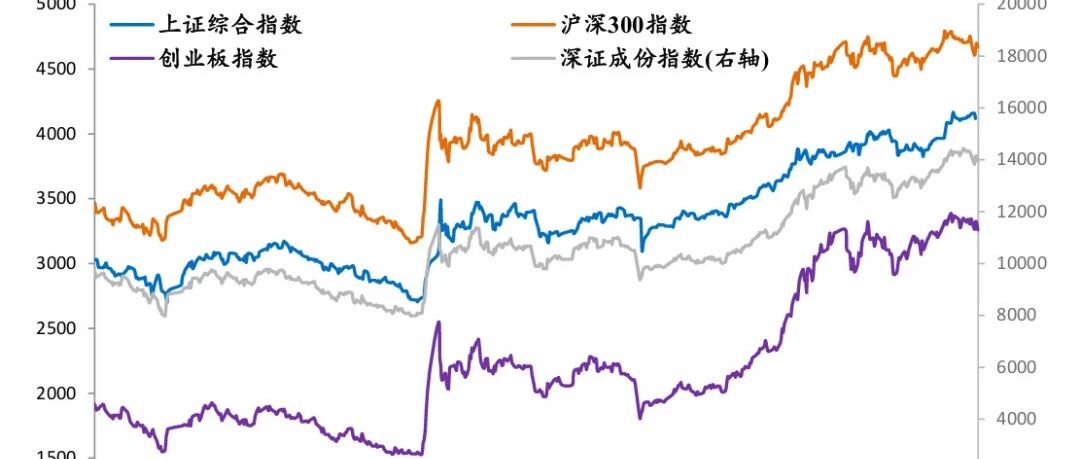
Core Viewpoint - A new bull market has begun since September 2024, driven by strong policy support, a new technological revolution, and abundant liquidity, marking it as a once-in-a-decade opportunity for investors [2][10]. Group 1: Characteristics of the Current Bull Market - This bull market is described as "epic" and is the third significant bull market since 2000, following the "super cycle bull" from 2004-2007 and the "reform bull" from 2014-2015 [3][5]. - The current bull market is characterized by a significant rise in stock indices, with the Shanghai Composite Index increasing by 56.2% and the ChiNext Index rising by 122.2% from their respective lows [6]. - Trading volume has surged, with daily trading exceeding 3 trillion yuan, compared to a few hundred billion before September 2024 [9]. Group 2: Driving Forces Behind the Bull Market - The bull market is supported by three main drivers: continuous policy easing, a new technological revolution, and abundant liquidity, creating a "confidence bull" [11]. - Policy easing includes significant monetary policy adjustments, such as interest rate cuts and relaxed housing market regulations, which have greatly exceeded market expectations [11]. - The technological revolution is marked by advancements in artificial intelligence, robotics, and semiconductor industries, which are leading the market's growth [12]. - The liquidity situation has led to a phenomenon of "asset scarcity," with increased household savings and a surge in retail investor participation, as evidenced by a 213.1% year-on-year increase in new A-share accounts [11][12]. Group 3: Historical Missions of the Bull Market - This bull market is seen as fulfilling three historical missions: supporting the development of new productive forces, aiding in major power competition, and repairing household balance sheets [14]. - The growth of new productive forces is crucial for transitioning to high-quality economic development, with the stock market providing necessary capital for high-tech and innovative enterprises [15]. - The bull market plays a strategic role in the context of U.S.-China competition, particularly in high-tech sectors, which are vital for national security and economic stability [15]. - The recovery of household balance sheets is essential, as the real estate market has seen significant declines, and the stock market's growth can help offset these losses and stimulate consumer spending [16]. Group 4: Future Prospects and Outlook - The sustainability of the bull market depends on continued macroeconomic policy easing, including further interest rate cuts and fiscal measures to stimulate demand [19][20]. - There is a need for deep reforms in the capital market to ensure a healthy development environment, which could lead to a prolonged bull market rather than volatile fluctuations [20]. - Historical patterns indicate that the A-share market has experienced shorter bull markets compared to longer bear markets, highlighting the need for structural changes to achieve a more stable market environment [21].
美股:悄然发生变化的主线
Guolian Minsheng Securities· 2026-02-07 01:37
Market Performance - The U.S. stock market has shown unexpected performance this year, lagging behind major global markets[4] - The Russell 2000 index, representing small-cap stocks, has increased by 5.8% year-to-date, significantly outperforming the S&P 500 (0.5%) and NASDAQ (-1.4%)[4] Historical Context - Over the past decade, small-cap stocks have consistently underperformed large-cap stocks, with the last significant outperformance occurring in the early 2000s after the tech bubble burst[4] - The current underperformance of small-cap stocks relative to large-cap stocks is comparable to the peak of the tech bubble in 1999[4] Economic Indicators - Small-cap outperformance typically occurs during interest rate cut cycles, which are associated with economic recovery and moderate inflation[4] - The current economic environment is characterized by a unique divergence, with strong performance in the AI sector and ongoing struggles in traditional industries[4] Future Outlook - 2026 may mark a turning point for small-cap stocks due to anticipated changes in economic policy and a decrease in inflation concerns[4] - The performance of large tech companies is under scrutiny regarding the sustainability of AI investments, which could benefit small-cap stocks[4] Sector Analysis - The Russell 2000 index is more balanced across sectors, with healthcare (18.75%), industrials/materials (18.08%), and financials (17.23%) leading, compared to the tech-heavy Russell 1000[4][19] - The best-performing small-cap stocks are concentrated in innovative pharmaceuticals, minerals, and energy sectors, aligning with current U.S. policies focused on supply chain security[5] Political Implications - The upcoming midterm elections may favor small-cap stocks as the administration's policies could lead to resource redistribution benefiting smaller companies[5] - Potential risks include increased tariffs or military actions that could destabilize markets and impact small-cap performance negatively[5]
[2月6日]指数估值数据(港股也有风格轮动吗;港股指数估值表更新;投顾四周年成绩单来了)
银行螺丝钉· 2026-02-06 14:26
Core Viewpoint - The article discusses the recent performance of the Hong Kong stock market, highlighting the rotation between growth and value styles, and the impact of external market fluctuations on local indices [2][8]. Market Performance - The overall market experienced a slight decline, closing at 3.9 stars [1]. - Large-cap stocks fell, while mid and small-cap stocks showed minor fluctuations [2]. - Growth styles, particularly in the ChiNext, initially rose but ended the day lower [2]. Style Rotation - The article notes that the Hong Kong market has seen several style rotations since September 2024, with growth styles being strong from September 2024 to September 2025, where tech stocks' earnings doubled year-on-year, marking the fastest growth in five years [2]. - In contrast, value styles, such as the Hang Seng Dividend Low Volatility Index, saw a more modest increase of around 30% during the same period [2]. - From September 2025 onwards, growth styles faced a correction, with the tech index retreating approximately 19% [2]. Investment Strategy - The article emphasizes the importance of balancing investments between growth and value styles, adjusting allocations based on valuation metrics [10][11]. - It suggests that during periods of market fluctuations, investors should buy undervalued assets and sell overvalued ones, maintaining a patient approach during less volatile times [12][13]. Valuation Insights - The article provides a summary of the valuation metrics for various Hong Kong indices, indicating that the current star rating for the Hong Kong market is around 3 stars [14][16]. - It includes specific valuation data for indices such as the H-share Index and the Hang Seng Index, highlighting their price-to-earnings ratios and dividend yields [15].
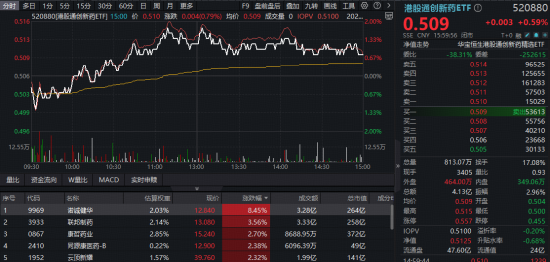
业绩提振,港股医药回暖!诺诚健华领涨创新药,520880摸高2%!港股通医疗ETF华宝底部四连阳
Xin Lang Cai Jing· 2026-02-06 09:49
Core Viewpoint - The Hong Kong pharmaceutical sector is experiencing a significant rebound, particularly in innovative drugs, with several companies reporting strong earnings forecasts and positive growth trends [1][8]. Group 1: Innovative Drug Sector - The Hong Kong Stock Connect Innovative Drug ETF (520880) saw a rise of nearly 2% after opening lower, indicating strong investor interest [1][8]. - Innovent Biologics (诺诚健华) led the gains with a rise of over 12%, projecting revenues of 2.37 billion yuan for 2025, a year-on-year increase of approximately 134%, and an expected net profit of around 630 million yuan, marking its first profit [1][8]. - Other companies like Rongchang Biopharmaceutical and CanSino Biologics also reported profitability, with net profit growth exceeding 100% year-on-year [1][8]. Group 2: Medical Sector - The medical sector is also showing positive momentum, with AI healthcare and CXO-related stocks active; Ark Health (方舟健客) led with a 4.71% increase [3][10]. - Ark Health forecasts a profit of 7 to 10 million yuan for 2025, indicating a turnaround from previous losses, and raised approximately 144.3 million HKD to accelerate the development of its AI-driven chronic disease management platform [3][10]. - Among the 10 component stocks of the Hong Kong Stock Connect Medical ETF (159137) that disclosed earnings forecasts, 9 are expected to be profitable, with several companies anticipating net profit growth of over 100% [3][10]. Group 3: Market Trends and Investment Opportunities - Despite the positive earnings outlook, the recent performance of the pharmaceutical sector has diverged from these fundamentals, with the Hong Kong Stock Connect Innovative Drug ETF (520880) experiencing four consecutive weeks of declines [5][12]. - The current market conditions may present a favorable opportunity for accumulation in the Hong Kong pharmaceutical sector, particularly through ETFs, which offer higher efficiency and flexibility [5][12]. - Investors are encouraged to consider the Hong Kong Stock Connect Innovative Drug ETF (520880) and its associated funds for a comprehensive exposure to innovative drug companies, with the top ten holdings accounting for over 73% of the portfolio [6][12].