
广告

Search documents
人工智能行业专题:探究模型能力与应用的进展和边界
Guoxin Securities· 2025-08-25 13:15
Investment Rating - The report maintains an "Outperform" rating for the artificial intelligence industry [2] Core Insights - The report focuses on the progress and boundaries of model capabilities and applications, highlighting the differentiated development of overseas models and the cost-effectiveness considerations of enterprises [4][5] - Interest recommendation has emerged as the most significant application scenario for AI empowerment, particularly in advertising and gaming industries [4][6] - The competitive relationship between models and application enterprises is explored through five typical scenarios, indicating a shift in market dynamics [4][6] Summary by Sections Model Development and Market Share - Overseas models, particularly those from Google and Anthropic, dominate the market with significant shares due to their competitive pricing and advanced capabilities [9][10] - Domestic models are making steady progress, with no significant technological gaps observed among various players [9][10] Application Scenarios - Interest recommendation in advertising has shown substantial growth, with companies like Meta, Reddit, Tencent, and Kuaishou leveraging AI technologies to enhance ad performance [4][6] - The gaming sector, exemplified by platforms like Roblox, has also benefited from AI-driven recommendation algorithms, leading to increased exposure for new games [4][6] Competitive Dynamics - The report identifies five scenarios illustrating the competition between large models and traditional products, emphasizing the transformative impact of AI on existing business models [4][6] - The analysis suggests that AI products may replace traditional revenue streams, while also enhancing operational efficiency in areas like programming and customer service [4][6] Investment Recommendations - The report recommends investing in Tencent Holdings (0700.HK), Kuaishou (1024.HK), Alibaba (9988.HK), and Meitu (1357.HK) due to their potential for performance release driven by enhanced model capabilities [4]
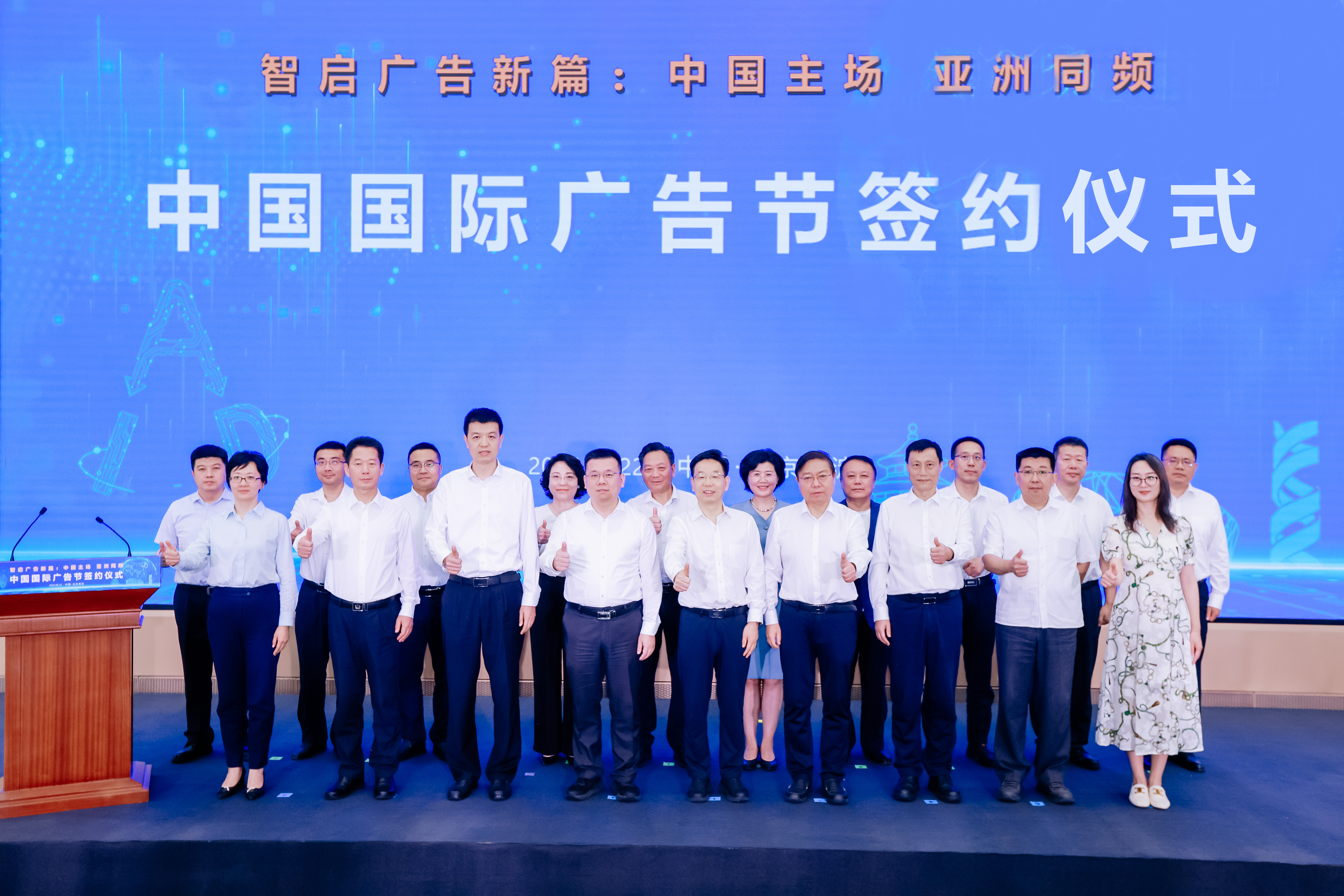
中国国际广告节落地海淀,中国广告协会会长:希望行业拥抱AI
Xin Jing Bao· 2025-08-25 09:10
Core Points - The signing ceremony for the China International Advertising Festival (CIAF) took place on August 22, marking its establishment in Beijing's Haidian District from 2025 to 2029. This event will coincide with the Asian Advertising Conference for the first time, promoting a deeper integration of technology, culture, and advertising industries on an international scale [1][2][9]. Group 1: Policy and Industry Context - The 2025 Central Urban Work Conference emphasizes high-quality urban development, aiming to create vibrant innovative cities and enhance cultural continuity [2]. - Haidian District, as a core area of Beijing's international technology innovation center, benefits from a strong technological foundation and rich cultural resources, hosting major tech companies like Douyin, Kuaishou, Xiaomi, and Baidu [2][3]. - During the "14th Five-Year Plan" period, the annual revenue of the advertising industry in Beijing has consistently exceeded 400 billion yuan, with a 10.5% year-on-year growth in revenue for large-scale advertising enterprises in the first half of 2025 [2]. Group 2: Strategic Collaboration and Future Plans - The next five years will focus on three key dimensions: creating a global advertising technology testing ground, integrating cultural heritage and academic resources, and establishing a long-term cooperation mechanism to promote sustainable development [7][8]. - The CIAF will feature a comprehensive program including major events, awards, exhibitions, and forums focusing on AI technology and digital communication, fostering deep integration with cutting-edge technologies [7][8]. - The collaboration aims to enhance the cultural soft power and international influence of Haidian District, showcasing its unique blend of technological innovation and cultural heritage [7][8]. Group 3: Industry Transformation and AI Integration - The advertising industry is undergoing profound changes driven by digital economy growth, with Beijing positioned as a leading area for advertising development [3][9]. - AI is recognized as a significant force in transforming the advertising sector, impacting everything from market analysis to campaign optimization [11][15]. - The CIAF will serve as a platform to encourage the advertising industry to embrace AI and new technologies, addressing the varying levels of understanding and adoption within the sector [15].

2025年从“千人一面”到“一人千面”:人工智能引领广告行业智能化转型报
Sou Hu Cai Jing· 2025-08-24 04:07
Core Insights - The report titled "From 'One Size Fits All' to 'Tailored for Each': AI Leading the Intelligent Transformation of the Advertising Industry" highlights the significant role of artificial intelligence (AI) in transforming the advertising sector, moving from traditional computational advertising to intelligent advertising by 2025 [2][7]. Group 1: Industry Overview - The advertising industry is a crucial pillar of the national economy, with a digital advertising penetration rate reaching 83.4% in 2023, driven by technological advancements [2][36]. - The rise of generative AI is pushing the advertising industry into a new era characterized by intelligent decision-making and personalized advertising experiences [2][41]. Group 2: AI Empowerment in Advertising - AI is deeply empowering the entire digital advertising chain, leading to two extremes in content production: "automated" and "premium" advertising [2][9]. - For performance-driven "volume-type" ads, AI-generated content (AIGC) enables mass production, while "premium-type" ads still rely on human creativity [2][9]. - AI enhances ad placement optimization through generative recall, data augmentation, and multimodal understanding, transitioning the matching paradigm from "one size fits all" to "tailored for each" [2][25]. Group 3: Evolution of Advertising Formats - The entry point for advertising is shifting from user interfaces to intelligent agents, with ad formats evolving from display ads to conversational embedded ads [2][12]. - New forms of native advertising are emerging, such as dynamic brand elements in games and films, and content integration on social platforms [2][12]. Group 4: Global Practices and Innovations - Major players like Google, Meta, and Tencent are leveraging advanced models to enhance advertising effectiveness and user engagement [2][10]. - Companies like Kuaishou are using AI to reduce advertising costs for small and medium enterprises, while service providers like Weimob are integrating AI with e-commerce SaaS [2][10]. Group 5: Future Trends and Challenges - The future of advertising is expected to be deeply personalized, with intelligent agents becoming new service models and multimodal models forming the new infrastructure [2][11]. - The industry will face challenges that require updated regulations, enhanced platform autonomy, and industry self-discipline to ensure compliant development of AI in advertising [2][11].


智启广告新篇:中国主场聚势,亚洲同频共舞——2025第32届中国国际广告节及第34届亚洲广告大会将在北京海淀举办
Jing Ji Guan Cha Wang· 2025-08-23 05:25
Core Insights - The signing ceremony between the China Advertising Association and the Haidian District People's Government marks the establishment of the China International Advertising Festival in Beijing from 2025 to 2029, with the Asian Advertising Conference being held concurrently for the first time, enhancing the international expression of the integration of technology, culture, and advertising [1][2] Policy Guidance - The 2025 Central Urban Work Conference emphasizes promoting high-quality urban development and enhancing cultural continuity, with Haidian District leveraging its technological and cultural resources to upgrade the advertising industry, supported by major tech companies like Douyin, Kuaishou, Xiaomi, and Baidu [2][3] - During the first half of 2025, revenue from large-scale advertising enterprises in Beijing grew by 10.5%, with Haidian playing a significant role in this growth [2] Strategic Collaboration - The next five years will focus on three key dimensions: creating a global advertising technology testing ground, integrating cultural heritage and academic resources, and establishing a long-term cooperation mechanism to promote sustainable development through the advertising festival [4][5] - The advertising festival will feature major events, awards, exhibitions, and forums that promote the integration of advertising with AI, digital technology, and the metaverse [4] Industry Development - Haidian District is positioned as a hub for both technological innovation and cultural creativity, with the partnership expected to inject strong momentum into the high-quality development of the advertising industry [5][6] - Representatives from major companies like Douyin, Tencent, and Baidu expressed their commitment to actively participate in the festival, exploring new forms and models of advertising [6]
证监会,重拳出击!
Shang Hai Zheng Quan Bao· 2025-08-23 03:25
Core Viewpoint - The China Securities Regulatory Commission (CSRC) has intensified its crackdown on companies engaging in illegal activities in the capital market, signaling a zero-tolerance approach towards violations [1] Group 1: *ST Zitian - *ST Zitian was fined a total of 38.4 million yuan for financial fraud, including inflating revenue by 2.499 billion yuan over two years [2][3] - The company reported inflated revenues of 778 million yuan and profits of 85 million yuan in its 2022 annual report, accounting for 44.59% and 35.99% of total revenue and profit, respectively [2] - In the 2023 semi-annual report, *ST Zitian inflated revenue by 208 million yuan and profits by 79 million yuan, representing 14.56% and 51.64% of total revenue and profit, respectively [2] - The company is facing potential delisting due to serious violations and has been criminally investigated for concealing accounting documents [3] Group 2: *ST Huike - *ST Huike received a warning and a fine of 2 million yuan for misleading statements in its 2024 performance forecast, failing to disclose that its revenue was below 100 million yuan [4][5] Group 3: Huayang Lianzhong - Huayang Lianzhong is facing a fine of 5 million yuan for concealing 181.53 million yuan in non-operating fund occupation across multiple reports [6][7] - The company also inflated profits by over 86 million yuan due to inadequate bad debt provisions, affecting its financial statements for 2021 and 2022 [8][9] Group 4: Taihe Group - Taihe Group was fined 6 million yuan, with executives facing a total penalty of 11.4 million yuan for failing to disclose significant lawsuits totaling 9.674 billion yuan, which represented 48.21% of its net assets [11][15] - The company's chairman has been placed under detention for suspected violations, adding to the uncertainty surrounding its future operations [12][18] Group 5: Meishang Ecology - Meishang Ecology was fined a total of 9 million yuan for systemic financial fraud and failing to disclose significant lawsuits, including a case involving 471 million yuan [19][21] - The company inflated its reported profits and net assets across multiple annual reports from 2020 to 2022, leading to significant discrepancies in its financial disclosures [20][21]



2025从“千人一面”到“一人千面”:人工智能引领广告行业智能化转型报告
Sou Hu Cai Jing· 2025-08-23 01:11
Core Insights - The report titled "From 'One Size Fits All' to 'Tailored for Each': AI Leading the Intelligent Transformation of the Advertising Industry" outlines the comprehensive transformation of the advertising industry driven by artificial intelligence, highlighting the shift from traditional models to intelligent systems [1][2]. Industry Overview - The global advertising industry is projected to exceed $1 trillion by 2024, with China's advertising revenue surpassing 1.5 trillion yuan. Each 1 yuan spent on advertising generates approximately 7 yuan in economic output, showcasing the industry's significant multiplier effect [1][2][31]. - In 2023, China's digital advertising penetration rate reached 83.4%, indicating a high level of digital integration within the advertising sector [1][31]. AI Empowerment in Advertising - AI is revolutionizing the entire digital advertising chain, with content production evolving towards automation and high-quality outputs. Generative AI enables efficient mass production of "volume-type" materials, while "premium-type" materials still require human creativity [1][2][9]. - Advertising engines are overcoming computational challenges, transitioning from "keyword matching" to "intent understanding," facilitating a shift from "one size fits all" to "tailored for each" advertising strategies [1][2][9]. Emerging Advertising Forms - The entry points for advertisements are shifting from user interfaces to intelligent agents, with advertising formats evolving from display ads to conversational embedded formats, including new forms of native advertising [1][2][10]. Global Practices and Innovations - Major advertising platforms like Google, Meta, Tencent, and Kuaishou are building AI-driven advertising infrastructures, while service providers such as Weimob and WPP are reshaping the entire marketing chain [2][10]. - Various sectors, including healthcare, e-commerce live streaming, and vertical retail, are actively applying AI to enhance productivity [2][10]. Future Trends - The advertising industry is moving towards deep personalization, with intelligent agents becoming new product and service models. The infrastructure is transitioning from "computational advertising" to "intelligent advertising," leading to a redefined division of labor within the industry [2][11]. - The demand for "strategic creative professionals" is increasing, and human-machine collaboration is becoming mainstream [2][11]. Challenges and Governance - The report identifies challenges such as technology, content regulation, and user trust in AI-driven advertising. It suggests updating regulatory frameworks, enhancing platform autonomy, and promoting industry self-discipline as potential solutions [2][11].

企业合规第121期 | 中国证券业协会修订发布《证券公司履行社会责任专项评价办法》
Sou Hu Cai Jing· 2025-08-22 15:10
Group 1 - The "Corporate Compliance" column will provide major compliance-related legislative and enforcement alerts for state-owned enterprises in Shenzhen, enhancing their ability to mitigate compliance risks and support their international expansion [2] Group 2 - The China Securities Association revised and published the "Special Evaluation Measures for Securities Companies' Social Responsibility," which includes 18 articles and 13 evaluation indicators focusing on rural revitalization, investor education, social welfare, and industry ecological construction [3] - Securities companies are advised to align their annual social responsibility plans with the evaluation measures and actively disclose their social responsibility performance through various channels [3] Group 3 - The Ministry of Transport announced the revised "Management Measures for Survey and Design of Railway Construction Projects," which includes 10 chapters and 56 articles outlining compliance obligations throughout the railway construction process [4] - Railway construction companies are encouraged to strengthen compliance management and ensure quality control throughout the entire process [4] Group 4 - Six departments, including the National Intellectual Property Administration, jointly issued the "Guidelines for the Construction and Operation of Patent Pools," aimed at guiding high-quality patent pool development and promoting patent resource integration [5] - High-tech and patent-intensive companies are advised to establish clear standards for patent pool entry and optimize licensing mechanisms to ensure fair conditions [5] Group 5 - A company in Hainan was penalized for concealing over 200 million yuan in unbilled sales revenue, resulting in a total penalty of approximately 29 million yuan [7] - Companies are advised to maintain accurate accounting records and ensure all transactions are conducted through official accounts to avoid tax evasion [7] Group 6 - Two insurance companies had their business licenses revoked due to multiple violations, including discrepancies in governance reports and unauthorized transactions [8][9] - Insurance companies are recommended to establish mechanisms for verifying the accuracy of reports submitted to regulators and to ensure compliance with governance standards [9] Group 7 - The State Administration for Market Regulation published ten typical cases of illegal advertising across various sectors, highlighting issues in internet advertising [10] - Companies are urged to conduct thorough advertising reviews to prevent false claims and ensure compliance with advertising regulations [10] Group 8 - The U.S. Department of Justice released new guidelines for the Foreign Corrupt Practices Act (FCPA), focusing on reducing burdens on U.S. companies operating overseas while targeting corruption [12] - Companies are advised to stay informed about these guidelines to ensure compliance in international operations [12] Group 9 - The European Data Protection Board issued guidelines on data transfer to third countries under GDPR, emphasizing the need for legal bases and safety measures [12][13] - Companies should evaluate the legality of data transfers and ensure compliance with GDPR requirements when responding to data requests from third countries [13] Group 10 - The UK Parliament passed the Data Use and Access Bill, which aims to balance data innovation with privacy protection [15] - Companies should be aware of the new data protection principles and the requirements for data sharing under this legislation [15]

黄楚杰:从焦虑转型到落地开花,广告人的AIGC商业化探索
Xin Lang Cai Jing· 2025-08-22 04:05
Core Insights - Artificial Intelligence (AI) is becoming a strategic focal point in global technology competition, with Shanghai emerging as a key city for the commercialization of AIGC (AI-generated content) through policy support, industry clustering, and talent development [1] Group 1: Company Background - Huang Chujie, a veteran in the advertising industry, recognized the potential of AIGC technology in 2022 and led his team to transition from traditional advertising to AI content production, becoming a supplier for major companies like CCTV and Tencent [2][4] - The company, Aimwise, was established to focus on AIGC, leveraging Shanghai as its core hub while expanding operations to multiple cities [4][5] Group 2: Challenges and Solutions - Initial challenges included resistance from senior designers who feared AI would diminish creative value and the immaturity of tools for generating culturally relevant content [6][10] - The company adopted a "learning by doing" approach, taking on real projects to enhance capabilities and improve team skills [6][8] Group 3: AIGC Implementation and Impact - Aimwise's significant project includes providing AI technical support for the CCTV online Spring Festival Gala in 2025, showcasing the efficiency of AI in content creation [9][10] - The traditional production cycle for promotional videos was reduced from at least two months to just three days using AI tools, resulting in a 70% reduction in creative validation costs [10][12] Group 4: Future Directions and Talent Development - The company plans to focus on collaborations with commercial brands to create customized AIGC videos for social media and advertising, indicating a shift towards mainstream applications of AIGC [14][18] - Aimwise is also developing a "consolidated workspace" to streamline the use of multiple tools, addressing the industry's need for efficient collaboration among creators [17][18] Group 5: Cultural and Educational Contributions - Aimwise's projects aim to redefine traditional cultural expressions and promote Chinese culture internationally, with works set to be showcased at the Osaka World Expo [30]

第一创业晨会纪要-20250822
First Capital Securities· 2025-08-22 04:01
Group 1: Industry Insights - Deepseek announced the release of its large model V3.1, which utilizes UE8M0 FP8Scale parameter precision, indicating a positive impact on the domestic AI chip and semiconductor industry chain [3] - The Chinese government plans comprehensive reforms in the petrochemical and refining industry, targeting the elimination of small facilities and upgrading outdated operations, with a focus on producing specialty fine chemicals [4] - The adjustment of capacity in the petrochemical industry is seen as a continuation of the "anti-involution" policy, although the profitability of the domestic petrochemical industry is primarily influenced by overseas oil prices [4] Group 2: Advanced Manufacturing - As of June 2025, China's cumulative installed capacity for power storage reached 164.3 GW, a year-on-year increase of 59%, while new energy storage capacity reached 101.3 GW, up 110% [7] - Citigroup raised its target price for lithium carbonate in China from $7,000 to $11,000 per ton, indicating that the recent price increase is seen as temporary due to supply disruptions [7] - EVE Energy reported a revenue of 28.169 billion yuan for the first half of the year, a year-on-year increase of 30.06%, driven by growth in power and energy storage battery businesses [8] Group 3: Consumer Sector - Bilibili reported a revenue of 14.341 billion yuan for the first half of 2025, a year-on-year increase of 21.62%, with a notable rise in gross margin to 36.5% [10] - The gaming segment generated 1.61 billion yuan in revenue, a 60% increase year-on-year, driven by new game seasons and stable operations of long-term products [10] - The advertising business saw a revenue increase of 20%, with performance ads growing by 30% and AI-related ads experiencing a nearly 400% increase [10]
快手-W(01024):2Q业绩超预期,可灵B端商业化在即
HTSC· 2025-08-22 02:39
Investment Rating - The report maintains a "Buy" rating for the company [7][5]. Core Views - The company reported a 13% year-on-year revenue growth in Q2, reaching 35 billion RMB, which exceeded consensus expectations by 2% [1]. - Gross margin improved by 0.3 percentage points to 55.7%, and adjusted net profit increased by 20% to 5.6 billion RMB, surpassing expectations by 11% [1]. - The company is expected to accelerate its B-end commercialization with the launch of a subscription plan in Q3, potentially driving significant revenue growth [2]. - The advertising revenue grew by 13% year-on-year, slightly above expectations, with a notable increase in the monetization rate of internal advertising [3]. - E-commerce revenue saw a 26% year-on-year increase, with a growing proportion of general merchandise e-commerce [4]. Summary by Sections Financial Performance - Q2 revenue reached 35 billion RMB, a 13% increase year-on-year, exceeding expectations by 2% [1]. - Adjusted net profit for Q2 was 5.6 billion RMB, a 20% increase year-on-year, surpassing expectations by 11% [1]. - The company announced a special dividend of 0.46 HKD per share, translating to a yield of approximately 0.6% [5]. Business Segments - Live streaming revenue grew by 8% year-on-year, while advertising and e-commerce revenues increased by 13% and 26%, respectively [1]. - The advertising segment is expected to see a 13% year-on-year growth in Q3, although it may fall short of the consensus expectation of 16% due to regulatory impacts on overseas advertising [1][3]. - The e-commerce segment's revenue structure is diversifying, with a 26% year-on-year growth in Q2, and the GMV increased by 18% [4]. Future Outlook - Revenue forecasts for 2025-2027 have been adjusted upwards by 0.2%, 0.3%, and 0.9%, primarily driven by accelerated growth in advertising and AI-related services [20]. - The target price for the company has been raised to 85.28 HKD, reflecting an increase in expected contributions from the AI segment [5][24]. - The company is expected to launch a new subscription service targeting professional and enterprise users in Q3, which is anticipated to enhance B-end revenue generation [2].
