
畜牧养殖

Search documents
【金工】能繁母猪存栏微降,浮法玻璃盈利同比转正——金融工程行业景气月报20251010(祁嫣然/宋朝攀)
光大证券研究· 2025-10-12 00:05
Group 1 - The coal industry is expected to see a year-on-year profit decline in October 2025, maintaining a neutral outlook due to coal prices being lower than the same period last year [4] - In the livestock breeding sector, the number of breeding sows was reported at 40.38 million at the end of August 2025, with a slight month-on-month decrease, indicating potential stability in meat prices until Q1 2026 [4] - The general steel industry is projected to experience positive year-on-year profit growth in September 2025, with the PMI rolling average remaining stable [5] Group 2 - The float glass industry is expected to see a positive gross profit year-on-year in September 2025, leading to an upgrade in its economic signal [5] - The cement industry is forecasted to maintain flat profits year-on-year in September 2025, with a continued neutral outlook while waiting for positive signals from new housing starts [5] - The fuel refining industry is anticipated to have positive year-on-year profit growth in September 2025, while the oil service sector maintains a neutral outlook due to the absence of an upward trend in oil prices [5]


协作走深 浔广更亲
Si Chuan Ri Bao· 2025-10-11 06:33
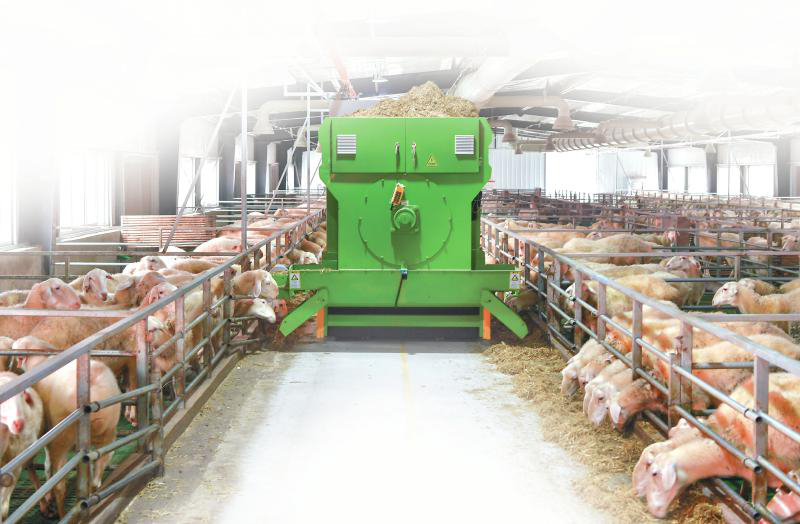
Core Insights - The article highlights the successful collaboration between Guang'an District and Nanxun District in promoting the "Lake Sheep into Sichuan" project, which has significantly enhanced local agricultural development and economic growth [3][5][6]. Group 1: Agricultural Development - The "Lake Sheep into Sichuan" initiative has led to the establishment of a large-scale sheep farming base, with approximately 8,000 sheep already sold this year and a current stock of about 10,000 sheep [3]. - The collaboration has resulted in the creation of a joint venture company responsible for technical guidance and product marketing, while Guang'an focuses on industry layout and operational management [5]. - The introduction of the "ecological feed grazing" model has created over 40 job opportunities for local farmers, with annual salaries exceeding 1.2 million yuan [5]. Group 2: Economic Impact - The "Xun Guo Jiang Nan" agricultural technology industrial park has achieved an annual output value exceeding 50 million yuan, enhancing the local agricultural product processing and sales chain [6]. - The collaboration has facilitated participation in over 10 major agricultural product trade fairs, resulting in an intended transaction amount of approximately 6 million yuan [6]. Group 3: Tourism Development - The transformation of rural tourism has been supported by the experience from Nanxun District, leading to a 70% increase in the utilization rate of idle rural assets [8]. - The establishment of the "Xun Qi Jiang Nan" resort has created a model for integrating agriculture and tourism, benefiting over 310 local residents through the sale of agricultural and cultural tourism products [8]. - Since the initiation of the collaboration in 2018, over 1 billion yuan has been invested in various projects, creating more than 5,000 jobs and benefiting over 35,000 people [8].
深圳市金新农科技股份有限公司 2025年09月生猪销售简报
Zhong Guo Zheng Quan Bao - Zhong Zheng Wang· 2025-10-11 04:54
Sales Performance - In September 2025, the company sold a total of 110,000 pigs, which includes 58,200 commercial pigs, 51,300 piglets, and 500 breeding pigs [1] - The sales revenue from pig sales amounted to 103.71 million yuan, with an average selling price of 13.16 yuan per kilogram for commercial pigs [1][2] Data Disclosure - The sales data provided does not include figures from the company's affiliated companies and is unaudited, indicating potential discrepancies with regular reports [2] - The data is intended as a reference for investors and may contain rounding differences [2]

10.11犀牛财经早报:私募9月份备案数量同比增超170% 今年券商发债规模同比增逾七成
Xi Niu Cai Jing· 2025-10-11 01:36
Group 1 - In September, the number of private equity securities funds registered increased by 171.24% year-on-year, despite a 10.22% decrease from August [1] - In the first three quarters, 25 bank wealth management subsidiaries conducted over 2,100 investigations into A-share listed companies, with more than 50% focusing on the Sci-Tech Innovation Board and the Growth Enterprise Market [1] - Securities firms accelerated their financing, with bond issuance reaching 1.26 trillion yuan, a year-on-year increase of 75.42% [1] Group 2 - Insurance capital institutions conducted a total of 14,128 investigations into A-share companies in the first three quarters, with a focus on electronic components and medical devices [2] - Qualcomm is under investigation for failing to legally declare its acquisition of Autotalks, potentially violating antitrust laws [2] - A new DNA search engine named MetaGraph has been developed, enhancing the ability to search vast biological databases [2] Group 3 - Beijing Universal Studios reported that a ride was temporarily halted due to safety protocols being triggered [3] - Zhongxin Jingyuan has initiated IPO counseling for its public stock offering on the Beijing Stock Exchange [3] Group 4 - Dahan Technology's controlling shareholder's 130 million shares were auctioned, resulting in a change of control for the company [4][5] - Inno Private Equity was warned by regulators for failing to conduct independent investment decisions and risk assessments [6] Group 5 - Bull Group's actual controller plans to reduce holdings by 36.17 million shares, valued at over 1.6 billion yuan [7] - Tao Li Bread's actual controller plans to transfer up to 2% of shares to a family member for asset planning [8] - Aipu Co., Ltd. announced the transfer of 29 million shares by its actual controller, with a total transaction value of 261 million yuan [9] Group 6 - Bohai Bank plans to publicly transfer debt assets worth approximately 499.37 billion yuan [9] - Dayu Biological announced a capital increase of 50 million yuan for its subsidiary to support new business growth [10] Group 7 - U.S. stock indices collectively fell, with the Dow down 1.9%, Nasdaq down 3.56%, and S&P 500 down 2.71%, marking significant declines influenced by trade tensions [11][12] - The semiconductor index dropped over 6%, with major companies like AMD and Qualcomm experiencing substantial losses [12] - Safe-haven assets such as U.S. Treasuries and gold saw increases, while oil prices hit a five-month low [12]
非瘟再现+政策强力去产能,猪周期拐点将至?农牧渔ETF(159275)逆市上探1.5%,四大细分领域获机构看好!
Xin Lang Ji Jin· 2025-10-10 11:54
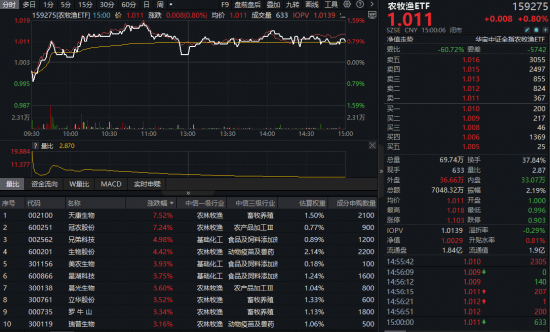
Core Viewpoint - The agricultural, animal husbandry, and fishery sector showed strong performance on October 10, with the first agricultural ETF (159275) experiencing a significant increase in net subscriptions and notable gains in constituent stocks [1][3]. Market Performance - The agricultural ETF (159275) opened lower but quickly rebounded, closing up 0.8% after reaching a maximum intraday gain of 1.5%. It recorded a net subscription of 52 million units by the end of the day [1]. - Key stocks in the sector, such as TianKang Biological and GuanNong Co., saw increases exceeding 7%, while several others, including XiongDi Technology and ShengWu Shares, rose over 4% [1]. Industry Dynamics - The pig farming industry is undergoing capacity reduction, with a reported decrease of 400,000 breeding sows compared to the previous month and a total reduction of 3.4 million from the peak last year [2]. - Recent outbreaks of African swine fever in Vietnam and Guangxi, China, have heightened risks for the farming sector. A meeting on September 16 emphasized policies aimed at reducing production capacity [2][3]. Investment Outlook - Analysts from Pacific Securities and Dongfang Securities suggest that the current fundamentals and policy changes favor capacity reduction in the pig farming industry, indicating potential long-term investment value as most listed companies are at historical low valuations [3][4]. - The agricultural sector's valuation remains low, with the agricultural ETF's underlying index trading at a price-to-book ratio of 2.61, which is in the lower 34.9% of the past decade, suggesting a favorable entry point for investors [3]. Future Trends - The trend towards improving quality and efficiency in the pig farming industry is expected to continue, with outdated capacities being phased out and market dynamics shifting towards higher prices in the long term [4][5]. - Investment opportunities are identified in various segments, including pig farming, feed, animal health, and crop planting, as the demand for these sectors is anticipated to rise with the recovery of pig stocks [5][6].





能繁母猪存栏微降,浮法玻璃盈利同比转正:——金融工程行业景气月报20251010-20251010
EBSCN· 2025-10-10 11:27
- The report utilizes a methodology from the industry rotation series to track the configuration signals and business indicators of various industries, including coal, livestock farming, steel, structural materials, and fuel refining industries [9] Quantitative Models and Construction Methods Coal Industry Model - **Model Name**: Coal Industry Profit and Revenue Growth Estimation Model - **Model Construction Idea**: The model estimates monthly revenue and profit growth of the coal industry based on the changes in price and production capacity factors [10] - **Model Construction Process**: - The long-term contract mechanism for thermal coal determines the sales price for the next month based on the price index of the last month - Monthly revenue and profit growth are estimated using the year-on-year changes in price factors and production capacity factors [10] - **Model Evaluation**: The model predicts that the coal industry profit for October 2025 will continue to decline year-on-year due to coal prices being lower than the same period last year [14] Livestock Farming Model - **Model Name**: Livestock Supply and Demand Gap Estimation Model - **Model Construction Idea**: The model uses the relationship between the number of breeding sows and the quarterly pig slaughter rate to estimate the supply-demand gap for pigs six months later [15] - **Model Construction Process**: - The model assumes a stable proportional relationship between quarterly pig slaughter and the number of breeding sows six months prior - Formula: $ \text{Slaughter Coefficient} = \frac{\text{Quarterly Pig Slaughter}}{\text{Breeding Sow Inventory (lagged 6 months)}} $ [15] - Potential production capacity after 6 months is calculated as: $ \text{Potential Production Capacity (6 months later)} = \text{Breeding Sow Inventory (current month)} \times \text{Slaughter Coefficient (6 months prior)} $ [16] - Potential demand after 6 months is calculated as: $ \text{Potential Demand (6 months later)} = \text{Quarterly Pig Slaughter (6 months prior)} $ [16] - **Model Evaluation**: Historical experience shows that the slaughter coefficient method effectively identifies pig price upward cycles [16] Steel Industry Model - **Model Name**: Steel Industry Profit and Unit Profit Estimation Model - **Model Construction Idea**: The model predicts monthly profit growth and calculates unit profit for the steel industry by considering comprehensive steel prices and cost indicators such as iron ore, coke, pulverized coal, and scrap steel [18] - **Model Construction Process**: - Comprehensive steel prices and cost indicators are used to predict monthly profit growth - Unit profit is calculated based on the difference between steel prices and costs [18] - **Model Evaluation**: The model predicts that the steel industry profit for September 2025 will grow year-on-year, but the PMI rolling 12-month average remains flat, maintaining a neutral configuration viewpoint [23] Structural Materials and Building Engineering Model - **Model Name**: Glass and Cement Industry Profit Tracking Model - **Model Construction Idea**: The model tracks profitability changes in the glass and cement manufacturing industries using price and cost indicators, and designs configuration signals based on profitability changes [25] - **Model Construction Process**: - Price and cost indicators are used to track profitability changes - Configuration signals are designed based on profitability changes [25] - **Model Evaluation**: - Glass industry profit turned positive year-on-year in September 2025, leading to an upgrade to a positive configuration signal [30] - Cement industry profit remained flat year-on-year, and no positive signals were observed in new housing starts, maintaining a neutral configuration viewpoint [30] Fuel Refining and Oil Services Model - **Model Name**: Fuel Refining and Oil Services Profit and Configuration Signal Model - **Model Construction Idea**: The model estimates industry profit growth and cracking spreads based on changes in refined fuel prices and crude oil prices, and designs configuration signals based on oil prices, cracking spreads, and new drilling changes [31] - **Model Construction Process**: - Refined fuel price changes and crude oil price changes are used to estimate industry profit growth and cracking spreads - Configuration signals are designed based on oil prices, cracking spreads, and new drilling changes [31] - **Model Evaluation**: - The model predicts that the fuel refining industry profit for September 2025 will grow year-on-year due to lower inventory costs from recent low oil prices [31] - Observations show that oil prices in September 2025 were lower than the same period last year, maintaining a neutral configuration viewpoint for the fuel refining and oil services industries [37][38] Model Backtesting Results Coal Industry Model - **Profit Growth**: Predicted to continue declining year-on-year in October 2025 due to lower coal prices compared to the same period last year [14] Livestock Farming Model - **Breeding Sow Inventory**: 4,038 million heads as of August 2025, slightly decreased month-on-month [17] - **Potential Production Capacity (26Q1)**: 19,361 million heads [17] - **Potential Demand (26Q1)**: 19,476 million heads [17] - **Supply-Demand Balance**: Slightly tight [17] Steel Industry Model - **Profit Growth**: Predicted to grow year-on-year in September 2025 [23] - **PMI Rolling Average**: Remained flat for 12 months, not exceeding the threshold [23] Structural Materials and Building Engineering Model - **Glass Industry Profitability**: Turned positive year-on-year in September 2025 [30] - **Cement Industry Profitability**: Remained flat year-on-year in September 2025 [30] - **Manufacturing PMI Rolling Average**: Remained flat for 12 months [30] - **Housing Sales Area**: Observed a year-on-year decline in August 2025 [30] Fuel Refining and Oil Services Model - **Fuel Refining Industry Profitability**: Predicted to grow year-on-year in September 2025 due to lower inventory costs [31] - **Oil Price**: Observed to be lower than the same period last year in September 2025 [37] - **New Drilling Activity**: No significant year-on-year changes observed in the US [38]
生猪亏损加剧催化行业巨变!农牧渔板块大涨,农牧渔ETF(159275)上探1.59%!布局时机到了?
Xin Lang Ji Jin· 2025-10-10 04:44
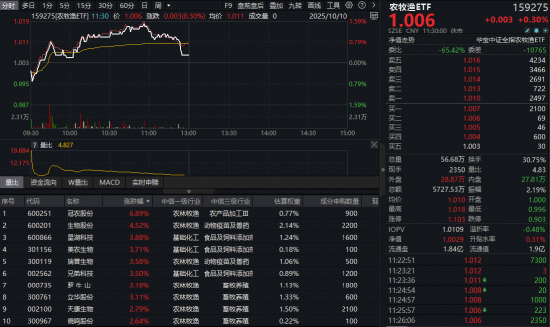
Core Viewpoint - The agricultural, animal husbandry, and fishery sector showed strong performance on October 10, with the first agricultural ETF (159275) experiencing a price increase after a low opening, indicating positive market sentiment in this sector [1][5]. Market Performance - The agricultural ETF (159275) opened lower but quickly rebounded, achieving a maximum intraday increase of 1.5% and closing up 0.3% [1]. - Key stocks in the sector, such as Guannong Co. (up 6.89%) and Shengwu Co. (up 4.52%), led the gains, with several others also showing increases of over 3% [1][5]. Price Trends - National average pig prices fell to 12.55 CNY/kg as of October 7, a decrease of 1.6% compared to the pre-holiday period, following a 10% drop in September [2][3]. - The decline in pig prices has resulted in significant losses for farmers, with losses of 54 CNY per pig for self-bred pigs and 128 CNY for purchased piglets [2][3]. Policy and Industry Outlook - The National Development and Reform Commission, along with the Ministry of Agriculture, has signaled a clear policy direction towards reducing production capacity in the pig industry, which is expected to enhance market dynamics [3][4]. - The current low valuation of the agricultural sector, with the agricultural ETF's price-to-book ratio at 2.61, suggests a favorable time for investment [3][4]. Future Expectations - Analysts predict that the ongoing measures to counteract overproduction in the pig industry will lead to a gradual increase in pig prices in the medium to long term [4][5]. - The focus on improving quality and efficiency in the pig industry, along with the elimination of outdated production capacity, is expected to benefit financially stable producers [4][5].
AI靠听咳嗽声监控猪健康与否,还让“二师兄”先享受全年25℃的房间|“长假走中国·AI探热度”系列报道④
Mei Ri Jing Ji Xin Wen· 2025-10-04 10:46
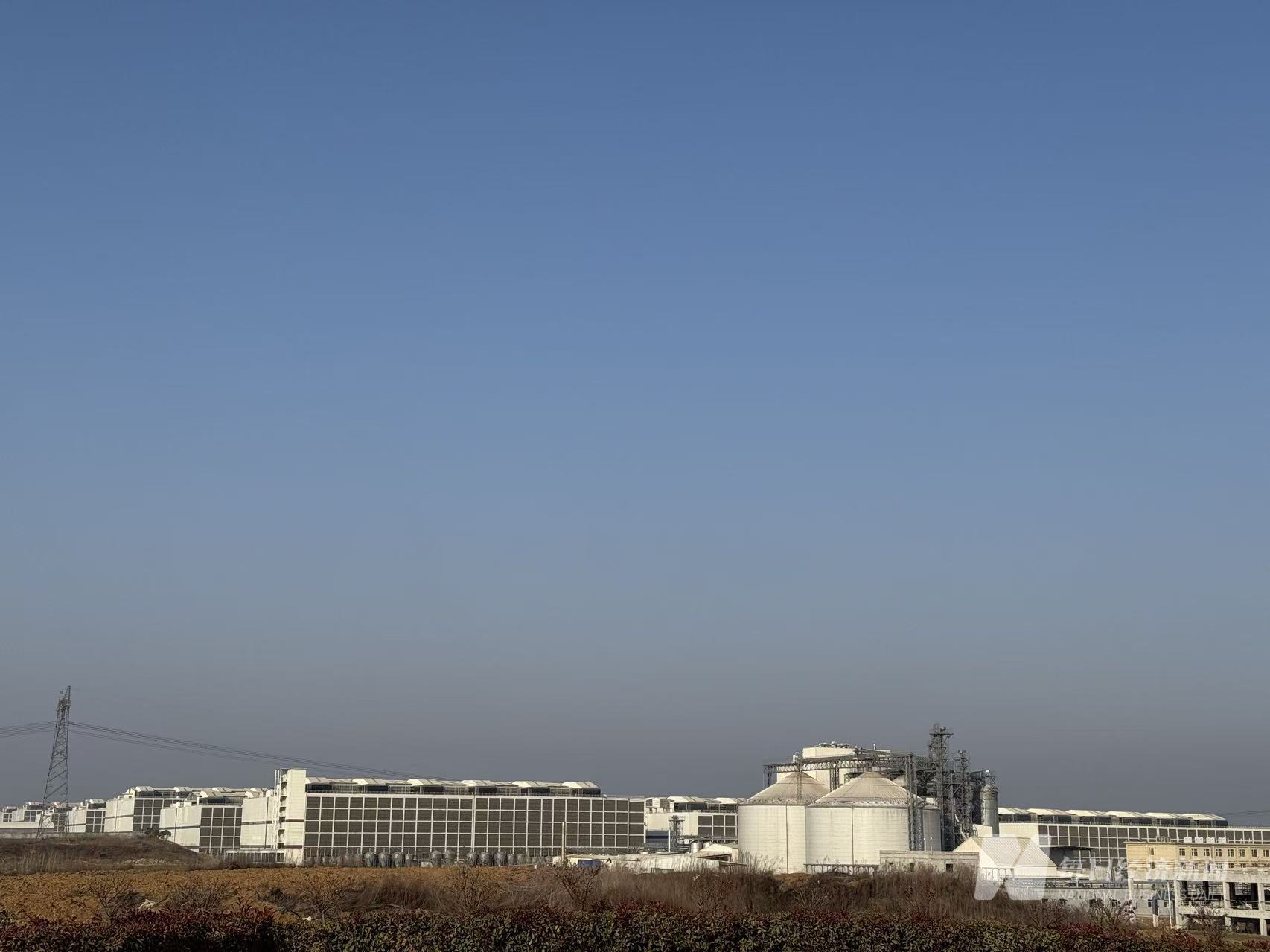
Core Viewpoint - The article discusses the advancements in the pig farming industry through the integration of AI technology, highlighting how these innovations improve animal welfare, optimize feeding, and enhance overall farm management efficiency [2][4][6]. Group 1: AI Integration in Pig Farming - Companies like Muyuan Foods (牧原股份) are investing heavily in smart farming technologies, including intelligent environmental control systems that maintain a constant temperature of around 25°C in pig houses, which can increase daily weight gain by 200 grams per pig [2][4]. - AI systems are utilized for precise feeding management, analyzing data related to pig breed, gender, age, and health status to optimize feed formulations and reduce waste [2][3]. - The implementation of disease monitoring systems using AI can detect health issues in pigs by analyzing cough sounds, allowing for early intervention and better health management [3][6]. Group 2: Industry Trends and Future Directions - The Chinese government has emphasized the importance of AI in agriculture, promoting the digital transformation of farming practices, including livestock management [3][4]. - Major companies in the livestock sector, such as New Hope (新希望), Muyuan Foods, and Wens Foodstuff Group (温氏股份), are adopting smart farming practices to enhance productivity and efficiency [3][4]. - Muyuan Foods plans to invest 6 billion yuan in developing a super breeding platform, further leveraging AI to improve production efficiency and management standards [4].

AI靠听咳嗽声监控猪健康与否,还让“二师兄”先享受全年25℃的房间|“长假走中国•AI探热度”系列报道④
Mei Ri Jing Ji Xin Wen· 2025-10-04 10:37
Core Viewpoint - The article highlights the advancements in pig farming through the integration of AI technology, which enhances the living conditions of pigs and optimizes feeding and health management processes, ultimately leading to improved efficiency and productivity in the industry [1][12]. Group 1: Modern Pig Farming Practices - Modern pig farms are equipped with intelligent environmental control systems that maintain a constant temperature of around 25 degrees Celsius, allowing pigs to grow more efficiently, with each pig gaining an additional 200 grams of weight daily [4][11]. - The feeding process is enhanced by AI-driven precision feeding management systems that tailor feed based on various factors such as breed, age, and health status, thereby improving feed utilization and reducing waste [6][7]. Group 2: Health Monitoring and Management - AI plays a crucial role in health monitoring through a disease monitoring and early warning system that analyzes the sounds of coughing among pigs to predict potential health issues, thus improving overall herd health management [10][12]. - The integration of various sensors allows for real-time monitoring of over ten indicators related to the pigs' environment and health, which helps in preemptive health management and reduces labor costs [10][11]. Group 3: Industry Transformation and Future Directions - The Chinese government has emphasized the importance of AI in agriculture, supporting the digital transformation of farming practices, including pig farming [11]. - Companies like Muyuan Foods, New Hope, and Wens Foodstuffs are leading the way in smart farming, with plans for further investments in AI technology to enhance production efficiency and management standards [11][12].
格林大华期货养殖季报
Ge Lin Qi Huo· 2025-09-30 11:40
Report Industry Investment Rating There is no information provided in the report regarding the industry investment rating. Core Viewpoints of the Report - The strategies previously suggested in the semi - annual report for corn, hog, and egg futures have been verified by the market. Corn futures showed a downward trend, hog futures first rose and then declined, and egg futures also trended downwards [6][9]. - For corn, the short - term price may remain weak due to the approaching peak of new grain supply, while the medium - term presents a wide - range trading opportunity, and the long - term maintains a pricing logic related to import substitution and planting cost [124]. - The hog market is in the bottom - grinding phase. The short - term is affected by strong supply and weak demand, the medium - term has supply increase expectations, and the long - term supply situation depends on factors such as sow inventory and production efficiency [127]. - For eggs, the short - to medium - term prices are under pressure due to the end of the holiday stocking period, and the long - term supply pressure may re - emerge if the chicken culling rate is lower than expected [134]. Summary by Relevant Catalogs Corn Macro Logic - Internationally, the macro - driving force is gradually weakening; domestically, it is mainly reflected in industrial policies [124]. Industrial Logic - The industry has entered a passive inventory - building cycle, with attention on policies such as reserve acquisitions, auctions of targeted rice/imported corn, and grain import policies [124]. Supply and Demand Logic - **Supply**: Globally, the corn supply situation is tightening, while in the US, there is significant supply pressure. In China, there is a long - term corn supply - demand gap, and the pricing logic based on substitutes remains. In the medium - term, factors like new - year yield and planting cost are key, and in the short - term, the new grain price started high and then dropped, with the upcoming peak supply in October [124]. - **Demand**: In 2025, the hog production capacity increased, and the存栏 of egg - laying and meat - producing poultry remained high, providing rigid support for corn consumption. Deep - processing consumption is relatively stable [124]. Variety Viewpoint - Short - term: The new grain price may remain weak. The lower support on the futures market is around the planting cost of new - season corn, and the upper pressure is related to the wheat - corn price difference. - Medium - term: Conduct band trading based on new - season corn factors, and focus on band - buying opportunities supported by reserve policies. - Long - term: Maintain the pricing logic of import substitution and planting cost, and pay attention to import policies and grain auctions [124]. Trading Strategy - Adopt an interval trading strategy in the medium - to long - term. In the fourth quarter, focus on band - buying opportunities supported by planting cost around 2100 yuan/ton [124]. Hog Macro Logic - Domestically, pay attention to the interaction between CPI and hog prices, and focus on industrial policy directions [125]. Industrial Logic - Under the guidance of capacity - reduction policies, the structure of the hog - breeding market may change. Market share is concentrating on leading enterprises, but the implementation of sow - reduction policies and its impact on supply are still uncertain [125]. Supply and Demand Logic - **Supply**: In the fourth quarter, the supply will continue to increase. The supply pressure in the first half of 2026 remains significant, and it may start to ease in the second half of 2026, depending on factors such as MSY and slaughter weight [126]. - **Demand**: The downstream demand for hogs is relatively stable, showing seasonal patterns. The increase in consumption during the end - of - year season may be limited [126]. Market Viewpoint - The hog price is in the bottom - grinding phase. The short - term is pressured by strong supply and weak demand, the medium - term has supply increase expectations, and the long - term supply situation depends on sow inventory and production efficiency. The possibility and amplitude of a seasonal rebound in the fourth quarter depend on the slaughter weight [127]. Operation Suggestion - The hog market is in the second half of the second half of the small cycle of passive capacity reduction due to diseases. The futures market shows a pattern of near - term weakness and long - term strength. For contracts before 2605, the supply is mainly determined by supply - demand logic, while for contracts after 2605, it depends on the implementation of capacity - reduction policies [128]. Egg Macro Logic - Domestically, pay attention to raw material prices, CPI changes, and the impact of meat and vegetable prices in the second half of the year [132]. Industrial Logic - The egg - laying chicken breeding industry has been profitable for four years, and the scale - up rate continues to increase, which will change the industry's structure and production efficiency [132]. Supply and Demand Logic - **Supply**: The egg - laying chicken inventory is at a high level, and the supply pressure persists. The current high inventory and the low chicken culling rate may lead to continued supply pressure in the fourth quarter [132]. - **Demand**: After the pre - holiday stocking period, the supply - demand situation is expected to be loose from October to November. The consumption support for egg prices may be weakened due to the extended holiday stocking period [133]. Variety Viewpoint - Short - to medium - term: The end of holiday stocking leads to slower sales and rising inventory, pressuring egg prices. Long - term: Pay attention to the chicken culling rate, as the current low culling rate may cause supply pressure to re - emerge in the fourth quarter [134]. Trading Strategy - The futures market shows a pattern of near - term weakness and long - term strength. Before large - scale chicken culling, adopt a short - selling strategy for near - term contracts. Egg - breeding enterprises can also consider selling - hedging opportunities for contracts 2607 and 2608 [135].