乳制品

Search documents
李佳琦带货的新疆网红奶,要破产了
虎嗅APP· 2026-02-05 10:17
Core Viewpoint - The article discusses the dramatic fall of Maqiuer, a once-prominent dairy company in China, which faced bankruptcy due to a small debt of 595.49 million yuan, exposing deeper financial issues and mismanagement within the company [4][13][24]. Company Overview - Maqiuer was celebrated for its high-quality milk products, earning titles like "the Moutai of milk" and "the light of Xinjiang" [4]. - The company reached a market value of 50 billion yuan at its peak, but has now been pushed towards bankruptcy due to a minor debt issue [4][5]. Financial Decline - The company’s cash reserves plummeted from 370 million yuan to just 19 million yuan, a decrease of over 40% [5][14]. - Maqiuer's debt-to-asset ratio soared to 83%, significantly exceeding the industry average and indicating severe financial distress [14][23]. Historical Context - Founded by Li Yuhu, Maqiuer began as a small food workshop in 1988 and grew into a major player in the dairy industry, capitalizing on Xinjiang's advantageous geographical conditions for dairy farming [7][9]. - The company achieved rapid growth, with revenues reaching 2.8 billion yuan in 2002 and 3.8 billion yuan in 2003, marking the beginning of its dominance in the Xinjiang dairy market [9]. Marketing and Brand Strategy - Maqiuer's marketing strategies included innovative advertising campaigns, such as hiring singer Dao Lang for promotional songs, which significantly boosted brand recognition [8][9]. - The company leveraged social media and e-commerce, becoming a "internet celebrity" brand, especially during 2021 when it invested heavily in live-streaming sales [16]. Crisis Events - The "propylene glycol incident" in 2022 severely damaged consumer trust, leading to product recalls and fines totaling 73.15 million yuan, which wiped out two years of profits [17][22]. - Following this scandal, Maqiuer's revenue halved from nearly 1 billion yuan to over 600 million yuan, with cumulative losses exceeding 700 million yuan by 2025 [17][24]. Management and Operational Issues - The transition from the founder's management to the next generation led to a shift in focus from quality to aggressive marketing, resulting in a lack of investment in research and development [20][21]. - The company's operational decisions, such as prioritizing rapid turnover and low costs, contributed to compliance failures and subsequent financial penalties [22]. Conclusion - Maqiuer's story serves as a cautionary tale about the risks of neglecting core business principles in favor of rapid expansion and marketing, highlighting the importance of maintaining a solid foundation in any business [25].


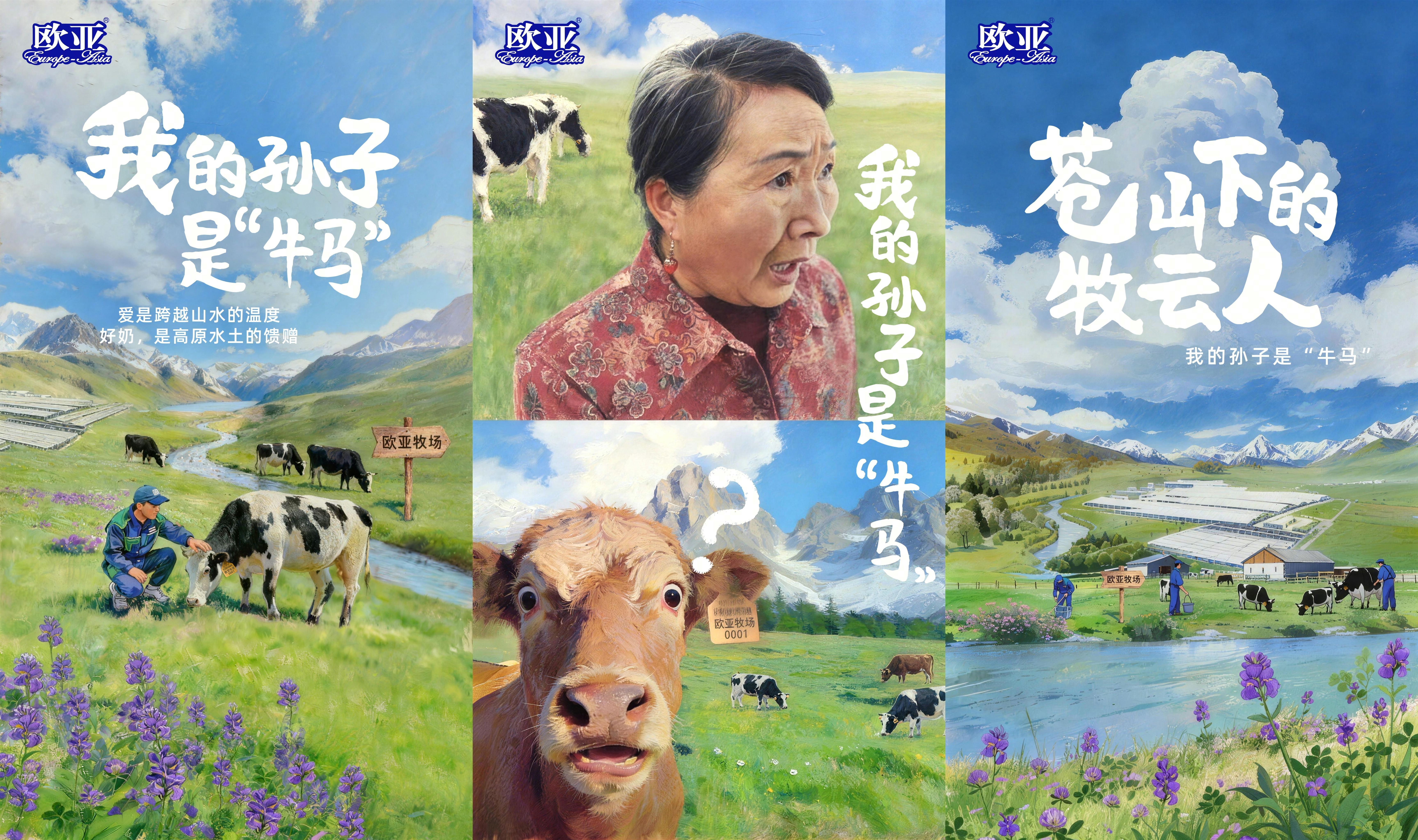
拒绝做系统的“牛马”,去云南做个“牧云人”:欧亚牛奶如何治愈都市人的精神内耗?
Zhong Guo Shi Pin Wang· 2026-02-05 09:49
Core Viewpoint - The article discusses how brands can effectively engage consumers in a fragmented information age by moving away from traditional marketing tactics and instead focusing on emotional connections and cultural relevance. Group 1: Capturing Social Emotions - The short film effectively captures and amplifies the semantic gap between two generations, creating a narrative that resonates with both the younger and older audiences, transforming an abstract social issue into a relatable story [5] - The brand uses empathy to connect with consumers, addressing the anxieties of Generation Z by acknowledging and reframing negative emotions into a more positive narrative [5] Group 2: Regional Branding and Lifestyle Integration - The brand avoids abstract advertising language and instead uses a narrative that highlights the natural origins of its products, creating a sensory connection with the audience [7] - By leveraging the unique geographical advantages of Yunnan, the brand transforms its products from mere commodities into valuable assets tied to local culture and lifestyle [7] Group 3: Narrative Innovation and Authenticity - The choice of a non-celebrity grandmother as the narrator adds authenticity and relatability to the story, enhancing the emotional connection with the audience [9] - The narrative structure deviates from traditional advertising formats, using a VLOG-style approach to soften consumer defenses against commercial content [9] Group 4: Comprehensive Engagement and Value Creation - The marketing strategy involves a three-step process: igniting emotions through short videos, deepening trust via KOLs, and expanding resonance through user-generated content [11] - The brand successfully drives engagement through interactive campaigns, achieving significant user participation and high view counts on social media [15]
消失近30年,济南佳宝果汁奶回归
Jing Ji Guan Cha Wang· 2026-02-05 09:43
经济观察网继华龙方便面、梁丰麦丽素、酸妞糖等经典怀旧食品相继回归后,2月2日,产自济南本土的 佳宝果汁奶正式重返市场。这款"消失"近30年的奶饮料,上线即引爆消费热情,首批11.5万袋预售产品 迅速售罄,线下门店也迎来抢购热潮,成为近期济南消费市场中最具话题性的怀旧单品,再度掀起一波 经典食品回归的消费浪潮。 ...
港股收评:恒指微涨0.14%、科指涨0.74%止步五连跌,大消费概念股全天强势,科网股午后回暖,有色金属及芯片股普跌
Jin Rong Jie· 2026-02-05 08:30
Market Overview - The Hong Kong stock market showed a rebound after an initial decline, with the Hang Seng Index closing up 0.14% at 26,885.24 points, the Hang Seng Tech Index up 0.74% at 5,406.13 points, and the China Enterprises Index up 0.50% at 9,093.34 points. Southbound funds recorded a net inflow of over 22 billion HKD [1] - Major technology stocks, including Xiaomi and Baidu, saw gains of nearly 3%, while Meituan rose nearly 2%. Other sectors such as restaurants, dairy, and beer stocks also performed well, indicating a recovery in industry operations [1] Company Highlights - Yurun Dairy (09858) rose nearly 5% after announcing a share placement to raise approximately 2.33 billion HKD (about 2.07 billion RMB), primarily from its major shareholder, Yili, increasing its stake from 33.93% to 36.07% [2] - Baidu Group (09888) increased by over 3% following the announcement of a new stock buyback plan with a maximum amount of 5 billion USD, effective until December 31, 2028, and the approval of a dividend policy expected to be announced in 2026 [2] - Xindong Company (02400) saw a rise of nearly 5% due to the launch of its AI game creation product "Taptap Maker," which is expected to lower development barriers in the gaming industry [2] - CloudTop New Horizon (01952) gained over 4% after signing an exclusive commercialization agreement for a new peptide drug, strengthening its position in the Asian market for kidney and autoimmune diseases [3] - Mao Geping (01318) rose over 5% as it climbed to the 4th position in the Douyin beauty rankings, indicating strong brand performance [3] - Horizon Robotics (09660) increased by over 3% after being recognized as a market leader in the ADAS sector with a 47.66% market share [4] Investment Insights - BNP Paribas maintains a positive outlook on the Chinese stock market, expecting no significant impact from the recent appreciation of the RMB on equity returns, valuations, and stock performance [6] - Huatai Securities emphasizes the importance of mid-term perspectives, suggesting that the current market sentiment is optimistic, with key drivers for the first quarter being liquidity improvement and enhanced profit expectations [7] - CCB International remains bullish on H-shares in the banking sector, noting that the average price-to-book ratio is at a historical low, making it attractive for long-term investors [8] - CICC forecasts a mild recovery in the consumer building materials sector, with leading companies expected to improve margins due to recent price increases in various sub-sectors [9]

伊利股份(600887):基本面表现稳健 关注春节动销表现
Xin Lang Cai Jing· 2026-02-05 08:27
Company Dynamics - The company is currently in the pre-Spring Festival stocking period, with healthy channel inventory and stable pricing. The performance in January is expected to be robust, and attention should be paid to sales performance during the Spring Festival [1] Comments - The annual liquid milk revenue target is stabilizing, and market share is expected to improve, leading to an overall revenue enhancement. January revenue is anticipated to exceed targets, with smooth progress in Spring Festival stocking. The main growth drivers include: 1) Deep cooperation with customized channels and opportunities for market penetration, with major clients like snack discounts and Sam's Club reaching a customized scale of 100 billion yuan, which may deepen collaboration and promote market penetration; 2) Differentiated new products, such as the lemon-flavored yogurt and positive feedback from online trials of premium fresh products, are expected to contribute significantly to future sales. In the milk powder segment, the industry scale is expected to remain stable year-on-year, while the company's milk powder revenue is projected to grow in double digits, with significant market share improvement. The cheese and ice cream segments are expected to continue their performance in 2025, with the company gradually focusing on deep processing and functional nutrition, leading to incremental contributions in the future [2] Financial Outlook and Valuation - The expense ratio is expected to remain stable in 2026, with a long-term direction for profit margin improvement. Over the past two years, the company has actively reduced expenses in a weak industry environment, leading to a continuous decline in absolute expenses and improved efficiency. For 2026, the expense ratio is expected to remain stable, with planned investments for events like the World Cup and Winter Olympics to maintain exposure without altering the overall expense plan. Long-term, as the proportion of liquid milk revenue continues to decrease, the share of high-value-added categories such as milk powder, cheese, and functional nutrition is expected to increase, leading to potential long-term profit margin improvements. The upstream supply and demand situation is expected to improve, with an attractive dividend yield highlighting the company's deep investment value. In 2025, the number of dairy cows is expected to continue to decrease, and supply-demand conditions are anticipated to improve further in 2026, stabilizing milk prices and reducing impairment losses on reports, which will benefit the competitive landscape. The company plans to maintain a 75% dividend payout ratio over the next three years, corresponding to a current dividend yield of 5.1% [3] Profit Forecast and Valuation - The profit forecast for 2025 is maintained, while the profit for 2026 is adjusted down by 3.5% to 11.7 billion yuan due to high uncertainty in liquid milk demand. The profit for 2027 is introduced at 12.6 billion yuan. The current trading is at 15/14 times the P/E for 2026/2027, with a target price of 32 yuan, corresponding to 17/16 times the P/E for 2026/2027 and an upside potential of 18%, maintaining an outperform rating in the industry [4]

消费股逆势走强,春节消费旺季大幕拉开,恒生消费ETF(159699)涨超2%,广发基金ETF“消费链”一键布局“吃喝玩乐”行情
Xin Lang Cai Jing· 2026-02-05 07:37
2025年2月5日港股市场多数板块调整,消费股逆势走强。有市场分析认为,当前港股消费板块值得关 注,一是因为9天超长春节假期有望带动黄金零售、酒旅、餐饮等服务消费行情,而港股服务消费资产 较为稀缺,有望在一季度受益;二是因为在前期持续回调后,估值已进入低位水平,相关龙头公司近期 的回购有望提振市场信息。 消息面方面,1月30日,泡泡玛特创始人、CEO王宁在举办的中英商务论坛上表示,泡泡玛特宣布将伦 敦定为欧洲总部所在地。此外,泡泡玛特已与美国商业地产集团Simon展开合作,计划在全美超过20家 Simon购物中心及The Mills购物中心新增标准零售形式的线下门店。 2026年以来,港股上市公司纷纷出手回购,向市场传递积极信号。根据Wind数据,截至2月3日,年内 已有超过120家港股公司实施回购,其中泡泡玛特于2026年1月19日和21日合计斥资3.48亿港元回购190 万股公司股票,名创优品今年已累计进行15次回购,累计回购金额达2463.25万元。 政策面方面,国务院印发《加快培育服务消费新增长点工作方案》后,多地迅速响应落地。文化和旅游 部于1月29日在泉州启动2026年全国春节文化和旅游消费月,活 ...
蒙牛产品服务米兰冬奥会,营养全球体育健儿的“要强”
Huan Qiu Wang· 2026-02-05 06:45
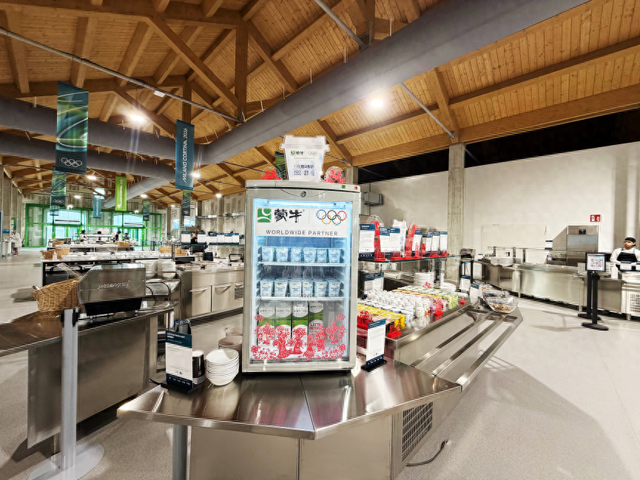
Core Viewpoint - Mengniu Group, as a global Olympic partner, is providing high-quality dairy products for the upcoming 2026 Milan-Cortina Winter Olympics, marking the first time Chinese dairy products are supplied for an overseas Olympic event, showcasing the company's product quality and its role in leading the Chinese dairy industry globally [1][6]. Group 1: Product Offerings - Mengniu is supplying three types of dairy products to the Olympic Village: whole milk, lactose-free yogurt, and butter, which together meet the basic nutritional needs of athletes while addressing specific dietary requirements [2][5]. - The whole milk provides essential protein and calcium for athletes' energy needs, while the lactose-free yogurt caters to lactose-intolerant athletes, aligning with current consumer trends for natural and healthy products [5][6]. - The butter product, a significant innovation from Mengniu's deep processing sector, is included as a cooking ingredient in the Olympic Village, supporting diverse meal preparations for athletes [5][6]. Group 2: Quality Assurance - Mengniu has established a world-class quality control system over 20 years, ensuring that its products meet stringent international standards, particularly for the Olympic food supply chain [6][8]. - The company adheres to a "safety first" philosophy, integrating international standards and best practices into its quality management system, which encompasses quality planning, control, assurance, and support [6][8]. - All nine product categories from Mengniu achieved EU standards by 2021, making it the first Chinese company to receive full-category certification under EU food standards [6]. Group 3: Technological Innovation - Mengniu has implemented smart technology and IoT for real-time monitoring of dairy quality from the farm to production, enhancing product quality and safety [8]. - The establishment of a "lighthouse factory" for liquid milk production has improved product precision by 55% and reduced quality defects by 60% [8]. - The company promotes traceability through technologies like "one code per item," allowing consumers to trace product quality within two minutes [8]. Group 4: Strategic Vision - Mengniu's collaboration with the Olympics reflects a shared commitment to excellence and innovation, aligning with the Olympic spirit of challenging limits [9]. - The company is advancing its strategy in basic, functional, and medical nutrition, aiming to upgrade the dairy industry towards health and nutrition [9]. - Mengniu has developed two types of human milk oligosaccharides (HMOs) for infant formula and a product line for seniors, addressing various health needs [9].

专利变现惠牧户 新春“钱袋”旺消费
Jin Rong Shi Bao· 2026-02-05 06:36
Core Insights - The People's Bank of China Gannan Branch has facilitated the first patent pledge loan in Gannan Prefecture, converting intellectual property into financial support for industry upgrades and increased income for herders [1][2] - Gansu Hualing Dairy Co., Ltd. has developed over 50 high-value products, leveraging its location as the "China Yak Milk Capital," and has transitioned from a regional specialty to a national consumer product [1][2] - The company has faced financial pressures, particularly during the pre-Spring Festival demand peak, necessitating funding for raw material purchases [1][2] Financial Support and Impact - The loan of 20 million yuan was issued through a model combining online intellectual property pledges and guarantees, marking a breakthrough in patent pledge financing in Gannan [2] - The funding is directed towards key areas such as yak milk procurement, ensuring market supply during peak seasons and enabling the company to expand its raw material acquisition [2][3] Economic Benefits for Herders - The company has established a profit-sharing mechanism linking its development with herder income, significantly increasing the purchase price of core raw materials from 1.2 yuan/kg to 66 yuan/kg, resulting in an average annual income increase of over 15,000 yuan for herders [3] - As herder incomes rise, their willingness to spend on consumer goods such as beef, lamb, and specialty dairy products has increased, creating a positive cycle of "industry income—consumption quality" [3] Future Outlook - The People's Bank of China Gannan Branch plans to enhance financial services for leading enterprises and promote the normalization of patent pledge financing, aiming to transform more intangible assets into tangible drivers for rural revitalization [3]
甘肃甘南:专利变现惠牧户 新春“钱袋”旺消费
Jin Rong Shi Bao· 2026-02-05 06:35
Core Viewpoint - The article highlights the successful implementation of a patent pledge loan to support the development of Gansu Hualing Dairy Co., Ltd., transforming intellectual property into financial resources for industry upgrades and increased income for herders [1][2]. Group 1: Financial Support and Innovation - The People's Bank of China Gannan Branch guided Agricultural Bank of Gannan to issue the first patent pledge loan in the region, amounting to 20 million yuan, marking a breakthrough in patent pledge financing [2]. - The loan was specifically allocated to key areas such as the procurement of yak milk, ensuring market supply during the peak demand season around the Spring Festival [2]. Group 2: Industry Development and Economic Impact - Gansu Hualing Dairy has developed over 50 high-value products, including infant formula and butter tea, leveraging the region's advantages as the "China Yak Milk Capital" [1]. - The company has established a profit-sharing mechanism involving "company + base + cooperative + herders," significantly increasing the purchase price of core raw materials from 1.2 yuan/kg to 66 yuan/kg, leading to an average annual income increase of over 15,000 yuan for herders [3]. - The rising income levels have enhanced the consumption willingness of herders, boosting sales of traditional products like beef, mutton, and specialty dairy items during the festive season, creating a positive cycle of "industry income increase - consumption quality improvement" [3]. Group 3: Future Prospects - The People's Bank of China Gannan Branch plans to continue enhancing financial services for leading enterprises and promote the normalization of patent pledge financing, aiming to convert more intangible assets into tangible drivers for rural revitalization [3].
研报掘金丨浙商证券:上调新乳业“买入”评级,盈利能力有望持续提升
Ge Long Hui· 2026-02-05 06:15
Core Viewpoint - The report from Zheshang Securities highlights the strong competitiveness of New Dairy's products, indicating that the low-temperature leader's momentum will continue, thereby opening up mid-term profit space [1] Group 1: Profitability and Revenue Outlook - The company's net profit margin elasticity is primarily derived from the raw milk cost advantage, suggesting that if raw milk prices stabilize and rise, the company's net profit margin may come under pressure [1] - It is anticipated that the revenue from the company's ambient dairy products will stabilize and narrow its decline by 2026, with expectations for the ambient business revenue to turn positive [1] - The company's revenue forecast for 2026 may be adjusted upwards due to these factors [1] Group 2: Margin Improvement and Rating - The company's profitability is expected to continue improving due to product structure optimization and an increase in the proportion of D2C (Direct-to-Consumer) channels [1] - A target price-to-earnings ratio of 20XPE for 2027 has been set, with an upgrade to a "Buy" rating [1]