住宿

Search documents
10月制造业PMI回落至49% 三大重点行业保持扩张
Zheng Quan Shi Bao· 2025-10-31 05:27
Core Viewpoint - In October, China's manufacturing Purchasing Managers' Index (PMI) fell to 49.0%, indicating a contraction in manufacturing activity, while the non-manufacturing business activity index rose slightly to 50.1%, suggesting stability in the overall economy [1][3]. Manufacturing Sector Analysis - The manufacturing PMI decreased by 0.8 percentage points from the previous month, ending a two-month upward trend, with all 13 sub-indices showing declines ranging from 0.1 to 2.6 percentage points [3]. - The manufacturing production index dropped to 49.7%, down 2.2 percentage points, indicating a shift from expansion to contraction, although it remains close to the neutral level of 50% [3]. - Factors contributing to the slowdown include pre-holiday demand release and increased international trade uncertainties, leading to cautious production intentions among manufacturers [3][4]. Demand and Export Trends - The new export orders index fell to 45.9%, a decrease of 1.9 percentage points, marking the second-lowest point this year, primarily due to global economic pressures and trade uncertainties [4]. - Key sectors such as equipment manufacturing, high-tech manufacturing, and consumer goods manufacturing, which are crucial for exports, experienced significant tightening in new orders, impacting overall market demand [4][6]. Key Industries Performance - Despite the challenges, the three key industries—high-tech manufacturing, equipment manufacturing, and consumer goods manufacturing—maintained PMIs above 50, indicating continued expansion [6][7]. - The production and new orders indices for these sectors hovered around 51%, reflecting stable growth supported by domestic market strength and effective policy measures [7]. Price Trends and Cost Pressures - In October, the purchasing and factory gate price indices for equipment manufacturing rose for three consecutive months, with the factory price index reaching a new high since June 2024 [7]. - The consumer goods manufacturing sector saw a decrease in the purchasing price index, indicating reduced cost pressures, which is beneficial for profitability in this sector [8]. Non-Manufacturing Sector Insights - The non-manufacturing business activity index increased to 50.1%, remaining above the neutral level, with significant contributions from sectors related to consumer spending during the holiday season [10]. - The construction sector showed signs of acceleration, with the civil engineering business activity index rising significantly, indicating a positive outlook for infrastructure investment in the fourth quarter [10].
10月制造业PMI回落至49% 三大重点行业保持扩张
证券时报· 2025-10-31 04:40
Core Viewpoint - In October, China's manufacturing PMI decreased to 49.0%, indicating a contraction in manufacturing activity, while the non-manufacturing business activity index slightly increased to 50.1%, suggesting stability in the overall economy [1][2]. Manufacturing Sector Analysis - The manufacturing PMI ended a two-month rising trend, with all 13 sub-indices declining, reflecting pressure on enterprises [4][5]. - The manufacturing production index fell to 49.7%, dropping 2.2 percentage points, indicating a slight slowdown in production activities [6]. - The new export orders index decreased to 45.9%, marking the second-lowest point this year, primarily due to global economic pressures and uncertainties in international trade [6][7]. - Key sectors such as equipment manufacturing, high-tech manufacturing, and consumer goods manufacturing maintained expansion, with PMIs of 50.5%, 50.2%, and 50.1% respectively [9][10]. Price Trends - Manufacturing prices showed positive changes, with the equipment manufacturing purchase price index and factory price index rising for three consecutive months, reaching a new high since June 2024 [11]. - The consumer goods manufacturing purchase price index decreased, indicating reduced cost pressures, which could benefit profit margins in the sector [12]. Non-Manufacturing Sector Insights - The non-manufacturing business activity index remained above 50%, reflecting ongoing expansion, with significant activity in sectors related to consumer travel and holiday spending [14][15]. - The civil engineering construction business activity index rose significantly, indicating a potential acceleration in infrastructure investment activities [16].


刚刚,国家统计局公布重要数据!
Zheng Quan Ri Bao Wang· 2025-10-31 03:25
Group 1: Manufacturing Sector - The manufacturing Purchasing Managers' Index (PMI) decreased to 49.0% in October, down 0.8 percentage points from the previous month, indicating a slowdown in production activities [1][2] - The production index and new orders index for the manufacturing sector were 49.7% and 48.8%, respectively, reflecting declines of 2.2 and 0.9 percentage points from last month [2] - Large enterprises maintained a PMI above the critical point, with large, medium, and small enterprises' PMIs at 49.9%, 48.7%, and 47.1%, respectively, showing varying degrees of decline [2] Group 2: Key Industries - High-tech manufacturing, equipment manufacturing, and consumer goods industries continued to expand, with PMIs of 50.5%, 50.2%, and 50.1%, respectively, all above the overall manufacturing level [3] - High-energy-consuming industries saw a PMI of 47.3%, down 0.2 percentage points, indicating a decrease in economic activity [3] Group 3: Non-Manufacturing Sector - The non-manufacturing business activity index rose to 50.1%, up 0.1 percentage points, indicating a slight recovery in the sector [4] - The service sector's business activity index increased to 50.2%, with significant growth in sectors closely related to consumer travel, such as rail transport and accommodation, which had indices above 60.0% [4] - The construction sector's business activity index fell to 49.1%, down 0.2 percentage points, indicating a slight decline in activity [4] Group 4: Composite PMI - The composite PMI output index stood at 50.0%, indicating overall stability in production and business activities across sectors [5]
10月份制造业采购经理指数有所回落 非制造业商务活动指数略有回升
Guo Jia Tong Ji Ju· 2025-10-31 02:32
Group 1: Manufacturing PMI Insights - In October, the manufacturing PMI decreased to 49.0%, down 0.8 percentage points from the previous month, indicating a slowdown in production activities [1][2] - Both production index and new orders index fell to 49.7% and 48.8%, respectively, reflecting a decline in manufacturing production and market demand [2] - Large enterprises maintained a PMI above the critical point, with indices at 50.9% for production and 50.1% for new orders, indicating sustained demand in this segment [2][3] Group 2: Non-Manufacturing PMI Insights - The non-manufacturing business activity index rose to 50.1%, up 0.1 percentage points from the previous month, indicating a slight expansion in the sector [4] - The service industry business activity index increased to 50.2%, with significant growth in sectors closely related to consumer travel, such as rail and air transport, which saw indices above 60.0% [4] - The construction industry business activity index slightly decreased to 49.1%, but the business activity expectation index improved to 56.0%, suggesting a positive outlook for future market conditions [4] Group 3: Composite PMI Insights - The composite PMI output index stood at 50.0%, indicating overall stability in production and business activities across sectors [5] - The manufacturing production index and non-manufacturing business activity index were recorded at 49.7% and 50.1%, respectively, contributing to the composite index's position at the critical point [5]
10月份制造业采购经理指数为49.0% 专家解读
Guo Jia Tong Ji Ju· 2025-10-31 02:03
Group 1: Manufacturing PMI Analysis - In October, the manufacturing PMI decreased to 49.0%, down 0.8 percentage points from the previous month, indicating a slowdown in production activities [1][2] - Both production index and new orders index fell to 49.7% and 48.8%, respectively, reflecting a decline in manufacturing production and market demand [2] - Large enterprises maintained a PMI above the critical point, with indices at 50.9% for production and 50.1% for new orders, indicating sustained demand in this segment [2] Group 2: Key Industry Performance - High-tech manufacturing, equipment manufacturing, and consumer goods industries continued to expand, with PMIs of 50.5%, 50.2%, and 50.1%, respectively, significantly above the overall manufacturing level [3] - Conversely, high-energy-consuming industries saw a PMI of 47.3%, indicating a decline in economic activity [3] - Market expectations remain optimistic, with a production and business activity expectation index of 52.8%, suggesting confidence among manufacturers [3] Group 3: Non-Manufacturing PMI Insights - The non-manufacturing business activity index rose to 50.1%, up 0.1 percentage points, indicating a slight recovery in this sector [4] - The service industry business activity index increased to 50.2%, with sectors like rail transport and accommodation showing strong activity levels due to holiday effects [4] - The construction industry business activity index fell to 49.1%, indicating a slight decline, but the business activity expectation index improved to 56.0%, reflecting better future outlooks [4] Group 4: Composite PMI Overview - The composite PMI output index stood at 50.0%, indicating overall stability in production and business activities across sectors [5] - The manufacturing production index and non-manufacturing business activity index were recorded at 49.7% and 50.1%, respectively, contributing to the composite index's position at the critical point [5]
10月份制造业采购经理指数有所回落 非制造业商务活动指数略有回升
Yang Shi Wang· 2025-10-31 02:01
Group 1: Manufacturing PMI Insights - In October, the manufacturing purchasing managers' index (PMI) decreased to 49.0%, down 0.8 percentage points from the previous month, indicating a slowdown in production activities [1][2] - Both production index and new orders index fell to 49.7% and 48.8%, respectively, reflecting a decline in manufacturing production and market demand [2] - Large enterprises maintained a PMI above the critical point, with indices at 50.9% for production and 50.1% for new orders, indicating sustained expansion in this segment [2][3] Group 2: Non-Manufacturing PMI Insights - The non-manufacturing business activity index rose to 50.1%, up 0.1 percentage points from the previous month, indicating a slight recovery in this sector [1][4] - The service industry business activity index increased to 50.2%, with sectors like railway transport and accommodation showing strong activity levels above 60.0% [4] - The construction industry business activity index slightly decreased to 49.1%, but the business activity expectation index improved to 56.0%, suggesting a more optimistic outlook [4] Group 3: Composite PMI Overview - The composite PMI output index stood at 50.0%, indicating overall stability in production and business activities across sectors [1][5] - The manufacturing production index and non-manufacturing business activity index were recorded at 49.7% and 50.1%, respectively, contributing to the composite index's position at the critical point [5]
10月PMI数据解读|宏观经济
清华金融评论· 2025-10-31 01:39
Group 1: Manufacturing PMI Analysis - In October, the Manufacturing Purchasing Managers' Index (PMI) decreased to 49.0%, down 0.8 percentage points from the previous month, indicating a slowdown in manufacturing activity [4] - Both production index and new orders index fell to 49.7% and 48.8%, respectively, reflecting a decline in production and market demand [4] - Large enterprises maintained a PMI above the critical point, with indices at 50.9% for production and 50.1% for new orders, indicating sustained demand in this segment [4] Group 2: Key Industry Performance - High-tech manufacturing, equipment manufacturing, and consumer goods industries continued to expand, with PMIs of 50.5%, 50.2%, and 50.1%, respectively, all above the overall manufacturing level [5] - Conversely, high-energy-consuming industries saw a PMI of 47.3%, indicating a decline in economic activity [5] - Market expectations remain optimistic, with a production and business activity expectation index of 52.8%, suggesting confidence among manufacturers [5] Group 3: Non-Manufacturing PMI Insights - The Non-Manufacturing Business Activity Index rose to 50.1%, up 0.1 percentage points, indicating a slight recovery in the non-manufacturing sector [6] - The service sector's business activity index increased to 50.2%, with significant growth in sectors related to consumer travel and spending, such as rail and air transport [6][7] - The construction sector's business activity index fell to 49.1%, indicating a slight decline, but the business activity expectation index improved to 56.0%, reflecting better future outlooks [7] Group 4: Composite PMI Overview - The Composite PMI Output Index stood at 50.0%, indicating overall stability in production and business activities across sectors [8] - The manufacturing production index was recorded at 49.7%, while the non-manufacturing business activity index was at 50.1%, contributing to the composite figure [8]

采矿业增速明显 外贸加快多元化 南非经济呈温和增长态势
Ren Min Ri Bao· 2025-10-23 22:06
Economic Growth - South Africa's GDP grew by 0.8% in Q2 2023, an increase from 0.1% in Q1, marking the strongest growth quarter in nearly two years [1] - The South African Reserve Bank forecasts economic growth of 0.9% in 2025 and 1.3% in 2026 [1] Sector Performance - Eight out of ten industries in South Africa experienced growth in Q2, significantly up from four in Q1 [1] - The mining sector saw a growth of 3.7%, the fastest since Q1 2021, driven by increased production of platinum group metals, gold, and chrome [1] - Manufacturing grew by 1.8%, contributing 0.2 percentage points to GDP growth, with seven industries, including petroleum and chemicals, showing positive growth [1] - Agriculture continued its positive trend with a growth rate of 2.5%, marking the third consecutive quarter of growth [1] Consumer Spending - Household consumption increased by 0.8% in Q2, marking the fifth consecutive quarter of growth, with notable increases in trade, accommodation, and restaurant sectors [2] - Government public spending also contributed positively to economic development during the quarter [2] Challenges and Trade - South Africa's economic growth faces challenges such as unstable domestic electricity supply and heavy debt burdens [2] - The imposition of a 30% tariff on South African exports to the US has severely impacted exports, particularly in the automotive and agricultural sectors [2] - There has been a decline in both total exports and fixed capital investment in Q2 [2] - The government and business sectors are actively working to diversify foreign trade, with increasing exports of citrus to Vietnam and avocados to China [2] Trade Agreements - South Africa is committed to advancing the African Continental Free Trade Area and expanding trade cooperation with BRICS and other emerging markets [3] - The resilience of the South African economy amidst various challenges highlights the potential for broad multilateral trade cooperation with other global southern countries [3]
盐湖文商旅丨(74) “一元加购”新玩法!给你一个爱上盐湖的理由
Sou Hu Cai Jing· 2025-10-23 16:14
Core Viewpoint - The "Good Luck City · Colorful Salt Lake" cultural and commercial integration consumption promotion activity aims to stimulate the service industry and enhance consumer engagement through various initiatives, including low-cost ticket offers [2][20]. Group 1: Consumption Promotion Activities - The event runs from October 15 to November 15, focusing on creating diverse consumption scenarios to invigorate the local economy [2]. - The promotion includes a "one yuan purchase ticket" initiative, encouraging consumer participation and enhancing the attractiveness of local attractions [20]. Group 2: Restaurant Participation - The He Dong Family Banquet restaurant, a well-known local dining establishment, has actively participated in the event by offering local specialty dishes and enhancing service quality [6][8]. - Consumers can receive tickets to various attractions by spending a minimum amount at participating restaurants, with specific offers for different spending levels [9]. Group 3: Hotel Involvement - The Hengze Hotel, a prominent accommodation provider in the region, has prepared for the event by advertising on multiple platforms and training staff to enhance guest experience [13][14]. - Guests can participate in the promotion through online and offline booking methods, with clear communication about the offers available [15]. Group 4: Attraction Readiness - The He Dong Pool Salt Culture Expo Park has focused on improving visitor experience by enhancing service quality, cleanliness, and safety measures [17]. - A comprehensive communication and monitoring system is in place to ensure smooth operations and address consumer concerns during the event [19]. Group 5: Overall Impact - The integration of dining and accommodation with tourism activities is expected to create a robust economic boost in the Salt Lake area, supported by a strong regulatory framework to ensure consumer satisfaction [20].
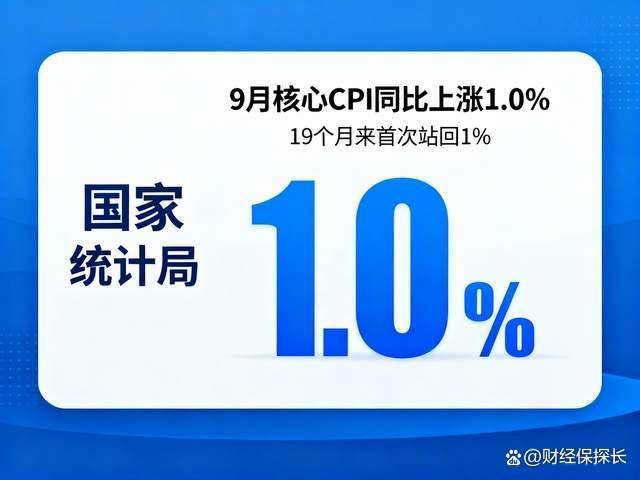
19个月,核心CPI重回1%!但CPI还在降,经济到底是暖了还是凉了?
Sou Hu Cai Jing· 2025-10-21 05:03
Core Insights - The core CPI in September increased by 1.0% year-on-year, marking a significant return to focus after 19 months of fluctuations [3] - Overall CPI, however, decreased by 0.3% year-on-year, indicating a mixed economic signal where core CPI rises amidst overall deflation [5] Price Movements - Prices of essential food items such as seasonal vegetables and eggs rose by 2.2% and 3.3% respectively, while pork prices fell by 0.7%, suggesting a shift in consumer sentiment away from pork [7] - Service prices, particularly in tourism and accommodation, saw a year-on-year increase of 0.6%, reflecting a growing demand for higher quality services despite a seasonal decline post-summer [9] Economic Indicators - The core CPI's rise to 1% is viewed as a positive sign for consumer demand recovery, although it is influenced by base effects from the previous year [10] - The disparity in energy prices, with continued declines in gasoline and diesel, indicates a lack of recovery in production demand, highlighting structural issues in the economy [11] Consumer Behavior - The surge in gold prices by 6.5% is driven by both risk aversion due to geopolitical uncertainties and a lack of consumer confidence, leading to increased purchases of gold as a safe asset [11] - The demand for higher quality services, such as beauty and home services, is indicative of a trend towards consumption upgrades, where consumers prioritize quality over mere affordability [10] Future Outlook - The sustainability of the core CPI's upward trend depends on timely policy support and the stabilization of market confidence, as current recovery appears to be largely spontaneous [12] - The interplay between weak energy prices and fluctuating service costs poses a risk to consumer confidence, which is crucial for sustained economic recovery [12]