
股票

Search documents
大类资产早报-20250804
Yong An Qi Huo· 2025-08-04 14:09
Report Overview - The report provides a comprehensive overview of the global asset market performance on August 1, 2025, including bond yields, exchange rates, stock indices, and futures trading data [3][5][6] Global Bond Market 10 - Year Treasury Bond Yields - In major economies on August 1, 2025, the US was at 4.218%, the UK at 4.526%, France at 3.346%, etc. There were various changes in the latest, weekly, monthly, and yearly periods. For example, the latest change in the US was -0.172, and the one - year change was -0.067 [3] 2 - Year Treasury Bond Yields - Yields and their changes are presented for different countries. For instance, China (1Y) was at 3.940 on August 1, 2025, with a latest change of 0.080 [3] Exchange Rate Market Dollar against Major Emerging Economies' Currencies - On August 1, 2025, the exchange rate of the dollar against the Brazilian real was 5.542, with a latest change of -1.04%. There were also changes in weekly, monthly, and yearly periods [3] RMB Exchange Rates - The on - shore RMB was at 7.193, the offshore RMB at 7.194, etc. on August 1, 2025, with different changes in different time frames [3] Global Stock Index Market Major Economies' Stock Indices - As of August 1, 2025, the Dow Jones was at 6238.010, the S&P 500 at 43588.580, etc. There were different latest, weekly, monthly, and yearly changes. For example, the latest change in the Dow Jones was -1.60%, and the one - year change was 14.94% [3] Other Stock Indices - The report also includes data on the Russian, Japanese, and other countries' stock indices, such as the Nikkei at 40799.600 on August 1, 2025, with a latest change of -0.66% [3] Stock Index Futures Trading Data Index Performance - The closing prices and percentage changes of A - shares, CSI 300, etc. are provided. For example, the closing price of A - shares was 3559.95 with a -0.37% change [5] Valuation - PE (TTM) and its环比 changes are given for CSI 300, S&P 500, etc. For example, the PE (TTM) of CSI 300 was 13.12 with a -0.07环比 change [5] Risk Premium - The risk premium and its环比 changes are presented for some indices. For example, the 1/PE - 10 rate of the S&P 500 was -0.44 with a 0.22环比 change [5] Fund Flows - The latest values and 5 - day average values of fund flows for A - shares, the main board, etc. are shown. For example, the latest value of A - share fund flow was -522.29 [5] Trading Volume - The latest trading volumes and环比 changes of the Shanghai and Shenzhen stock markets, CSI 300, etc. are provided. For example, the latest trading volume of the Shanghai and Shenzhen stock markets was 15983.51 with a -3376.84环比 change [5] Main Contract Basis - The basis and basis ratio of IF, IH, and IC are given. For example, the basis of IF was -25.33 with a -0.62% basis ratio [5] Treasury Bond Futures Trading Data - The closing prices and percentage changes of T00, TF00, etc. are presented. For example, the closing price of T00 was 108.435 with a 0.17% change [6] - The money market shows the R001, R007, and SHIBOR - 3M rates and their daily changes in basis points [6]
“坏消息就是坏消息”,美国就业数据打破华尔街对经济乐观的幻象
Feng Huang Wang· 2025-08-03 00:08
Group 1 - The confidence in the U.S. economy supporting the market is wavering due to weak employment growth data and new tariffs imposed by President Trump [1][2] - The U.S. non-farm payrolls increased by only 73,000 in July, significantly below the economists' forecast of 100,000, with prior months' data being revised downwards [1] - The new tariffs have raised the average tax rate on U.S. imports to 15%, the highest level since the 1930s, contributing to increased market volatility [3] Group 2 - The weak employment data has led to a significant increase in traders' bets on Federal Reserve rate cuts, rising from 40% to 91% [2] - The Cboe Volatility Index (VIX) has surged above 20, indicating heightened market volatility for the first time since early April [3] - The combination of weak employment data and tariff uncertainty presents new challenges for the market, reminding investors of potential risks ahead [4]
基金研究周报: A股整体回调,微盘股逆势走强(7.28-8.1)
Wind万得· 2025-08-02 22:28
Market Overview - The A-share market experienced a correction from July 28 to August 1, with major indices like the Shanghai 50, CSI 300, and STAR 50 declining by 1.48%, 1.75%, and 1.65% respectively, indicating significant pressure on undervalued blue-chip and technology sectors [1] - The only highlight was the rise of the Wind Micro-Stock Index, which increased by 1.09%, while the Wind Double Innovation Index recorded a positive return of 0.12% [1] - The Shanghai Composite Index rose by 1.67%, the Shenzhen Index by 2.33%, and the ChiNext Index by 2.76% during the week [1] Industry Performance - The average decline of Wind's first-level industry indices was 1.44%, with only 19% of sectors achieving positive returns [1] - The healthcare, telecommunications, and media sectors performed relatively well, with increases of 2.95%, 2.54%, and 1.13% respectively [1] - Conversely, real estate, non-ferrous metals, and coal sectors saw significant declines of 3.43%, 4.62%, and 4.67% respectively [1] Fund Issuance - A total of 28 funds were issued last week, including 19 equity funds, 6 mixed funds, and 3 bond funds, with a total issuance of 12.833 billion units [14] Global Asset Review - The global equity markets showed mixed performance, with the Nasdaq index slightly up by 0.07%, while the Dow Jones and S&P 500 fell by 1.72% and 0.77% respectively [3] - European markets were generally weak, with the French CAC40 and German DAX down by 0.80% and 0.63% respectively, while the UK FTSE 100 saw a slight increase of 0.14% [3] - Asian markets mostly declined, with the Nikkei 225, Korean Composite Index, and Hang Seng Index down by 1.58%, 2.40%, and 3.47% respectively [3] Domestic Fund Market Review - The Wind All-Base Index fell by 0.36% last week, with the ordinary equity fund index down by 0.38% and the mixed equity fund index down by 0.39% [2][6] - The bond fund index saw a slight increase of 0.04% [2] - The performance of various fund categories showed that the ordinary equity fund index had a year-to-date return of 14.48% [6] Bond Market Review - The stock-bond "teeter-totter" effect continued, with the national bond futures index (CFFEX 10-year) rising by 0.22% [11] - Short-term funding spreads showed little change compared to the previous week, while medium to long-term rates remained low [11]


全线暴跌,超16万人爆仓
Zheng Quan Shi Bao· 2025-08-02 10:07
Group 1: Currency Market Impact - The US dollar experienced a significant decline, with the dollar index dropping 1.37%, marking the largest decrease since mid-April [1][2] - The dollar fell 2.23% against the Japanese yen and 1.48% against the euro, indicating a broad weakening of the dollar [2][3] Group 2: Employment Data and Economic Outlook - The US added only 73,000 non-farm jobs in July, significantly below the expected 104,000, with previous months' data revised down by a total of 258,000, the largest downward revision since the pandemic [2][3] - Analysts suggest that uncertainty from US tariff policies is negatively impacting business sentiment and contributing to a deteriorating labor market [2] Group 3: Stock Market Reaction - US stock markets faced a sell-off, with the Dow Jones dropping over 500 points (1.23%), the Nasdaq down 2.24%, and the S&P 500 falling 1.6% [3] - Major tech stocks, including Amazon and Meta, saw significant declines, reflecting broader market concerns [3] Group 4: Cryptocurrency Market Response - The cryptocurrency market also faced a downturn, with Ethereum dropping over 5% and total liquidations exceeding $700 million in the past 24 hours [4] - The market saw over 160,000 liquidations, primarily affecting long positions, indicating a strong negative sentiment [4] Group 5: International Trade and Tariff Reactions - The US announced new tariffs ranging from 10% to 41% on various countries, leading to widespread international criticism and concerns about global economic impacts [5][6] - Countries like Germany, Switzerland, and Brazil expressed strong opposition to the tariffs, indicating potential trade negotiations and disputes [6][7]
市场恐慌阴霾再起,美股对冲成本飙升预警下行风险
智通财经网· 2025-08-02 07:00
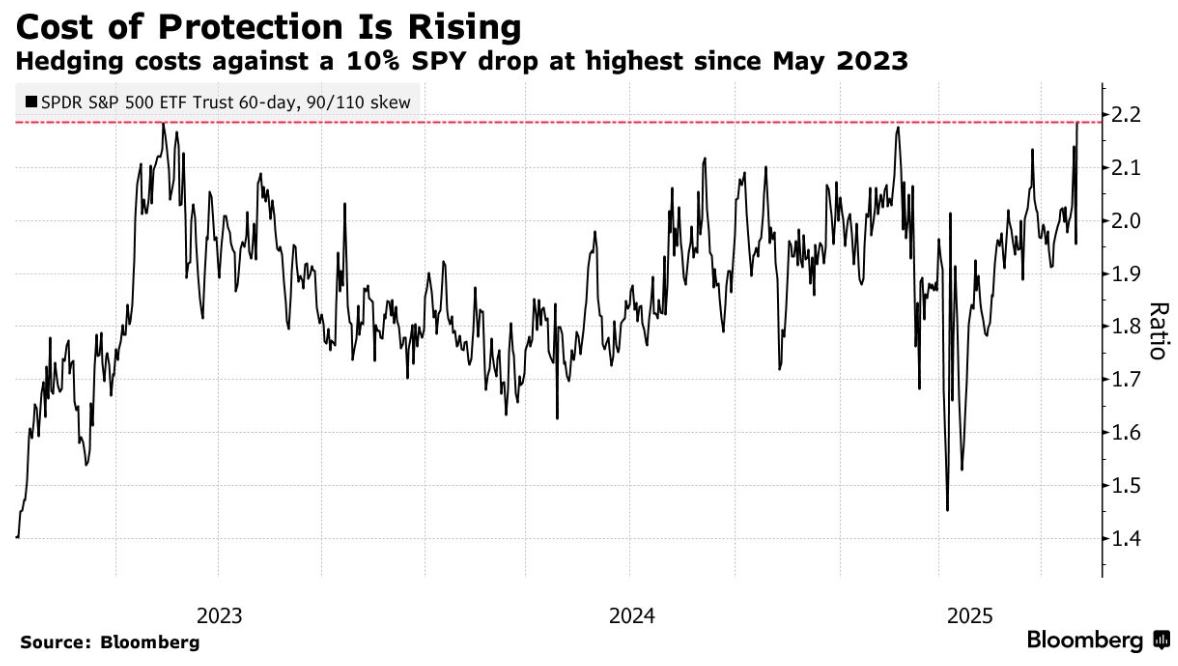
Group 1 - The S&P 500 index experienced a significant drop of 1.8%, marking its worst single-day performance since April, driven by fears of economic downturn due to tariff policies and disappointing job growth [1] - The Cboe Volatility Index (VIX), known as the "Wall Street Fear Index," surged to nearly 20, indicating increasing market pressure [1] - The cost of hedging against a potential 10% decline in the S&P 500 index ETF has reached its highest level since the regional banking crisis in May 2023, reflecting heightened concerns among investors [1] Group 2 - Following a 25% rise in the S&P 500 index since early April due to tariff impacts, investors are now seeking risk protection for the upcoming two months, particularly as the historically poor-performing months of August and September approach [3] - Data from Deutsche Bank indicates that Commodity Trading Advisors (CTAs) are holding stock long positions at the 94th percentile, the highest level since January 2020, suggesting confidence in the market but also potential for sharp reversals if conditions change [3] - Investor anxiety remains primarily focused on the short term, with the skewness indicator for S&P 500 options rising but still below levels seen before the April downturn [3]
油价,下跌!金价,大涨!
Sou Hu Cai Jing· 2025-08-02 02:57
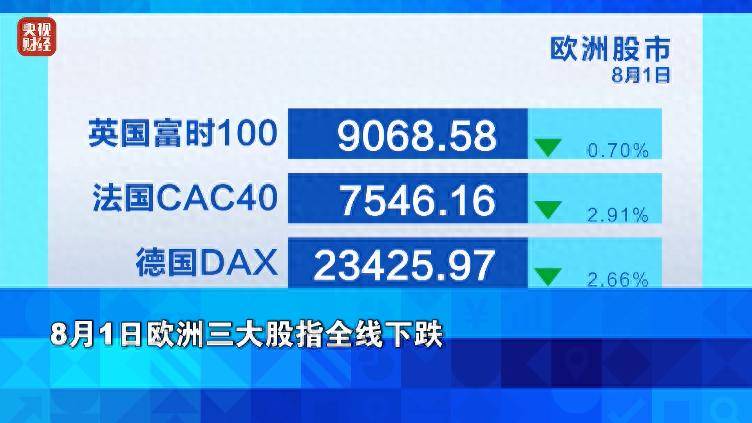
Group 1 - European stock indices experienced a decline due to concerns over tariffs impacting global economic growth, with the FTSE 100 down 0.70%, CAC 40 down 2.91%, and DAX down 2.66% [3] - International oil prices fell on Friday influenced by potential production increases from OPEC and its allies, with light crude oil futures down 2.79% and Brent crude down 2.83% [6] - Despite the drop on Friday, U.S. oil prices saw a cumulative increase of 3.33% for the week, while Brent oil rose by 1.80% [6] Group 2 - International gold prices rose over 1% on Friday, driven by disappointing U.S. employment data and increased market demand for safe-haven assets, closing at $3,399.80 per ounce, a 1.53% increase [9] - For the week, international gold prices accumulated a rise of 1.92% [9]
美股散户投机泡沫重现?这次可能有所不同
美股IPO· 2025-08-01 23:51
Core Viewpoint - The current speculative activity in the market is primarily focused on small-cap and low-priced stocks, with minimal impact on major indices like the S&P 500, contrasting with the 2021 meme stock frenzy led by GameStop and AMC [1][3]. Group 1: Speculative Activity - The most notable feature of the market in July was the intense pursuit of low-priced stocks, with the median increase of the lowest-priced decile of stocks reaching 16% by July 23, significantly outpacing the 1.4% increase of the highest-priced stocks [5]. - This investment logic, based on stock price rather than company fundamentals, is viewed as absurd by institutional investors, as companies can easily alter their stock prices through stock splits without affecting shareholder proportions or profit sharing [5]. - Many retail investors either do not understand or choose to ignore this fundamental principle, leading to a situation where their strategies worked during the trading frenzy in July, but when the speculation reversed at the end of the month, the cheapest stocks experienced the largest declines, averaging 6% [6]. Group 2: Capital Allocation Concerns - Excessive speculation may lead to improper capital allocation, as evidenced by the 2021 meme stock craze where companies like GameStop and AMC issued billions in new shares at inflated prices, only to see their stock prices plummet afterward [8]. - Historical warnings from economists, such as Keynes, highlight the risks of capital flowing to the wrong companies during speculative bubbles, which could harm growth and employment, a concern that remains relevant today [8]. Group 3: Market Impact and Sentiment - The current speculative activities have a relatively limited impact on the broader market, as there are no low-priced stocks within the S&P 500, and cheaper stocks among large companies did not show significant performance patterns in July [9]. - Investor sentiment, while more positive than at the beginning of the year, has not reached excessive optimism levels, and futures traders are less bullish compared to 2021 [10]. - Retail investors may have contributed to the rise of the S&P 500 index since April through buying on dips, but their influence in July was relatively limited, with the new meme stocks representing a public manifestation of summer speculation among private traders [11].
GDP连增十个季度,私人消费时隔一年转正:香港稳住了|湾区观察
Di Yi Cai Jing· 2025-07-31 14:21
Economic Performance - Hong Kong's economy shows resilience in the first half of 2025, supported by strong export performance and improved local demand [1][2] - The GDP in Q2 2025 increased by 3.1% year-on-year, marking the tenth consecutive quarter of growth [1] - Private consumption expenditure rebounded with a 1.9% increase year-on-year after four consecutive quarters of decline [1] Retail Sector - Retail sales value in June 2025 was estimated at HKD 30.1 billion, a year-on-year increase of 0.7% [2] - Seasonally adjusted retail sales value in Q2 2025 rose by 0.3% compared to Q1 2025, while retail sales volume increased by 2.7% [2] - The retail sector is stabilizing, supported by rising employment income and a positive stock market [2] Trade and Exports - Total merchandise exports grew by 11.5% year-on-year, accelerating from 8.4% in Q1 2025 [1][3] - Merchandise imports also increased by 12.7%, higher than the 7.2% growth in Q1 2025 [1] Financial Market - The Hong Kong stock market saw significant activity with 42 IPOs raising over HKD 107 billion in the first half of 2025, a 22% increase compared to the previous year [3] - The Hang Seng Index rose by 20% in the first half of 2025, marking the largest half-year increase in history [3] Government Initiatives - The Hong Kong government is implementing measures to boost consumption, attract investment, and diversify markets to support economic growth [2][4] - New initiatives include the "New Industrial Acceleration Program" and "New Industrialization Subsidy Program" to support strategic industries [3][4] - The government is also consulting on legislation for digital asset trading and custody services to promote the digital asset market [4]
大类资产早报-20250731
Yong An Qi Huo· 2025-07-31 12:39
1. Report Industry Investment Rating - No relevant content provided 2. Core Viewpoints - No clear core viewpoints are presented in the content. The report mainly provides data on the performance of various global asset markets. 3. Summary by Related Catalogs Global Asset Market Performance - **10 - year Treasury Yields of Major Economies**: - On July 30, 2025, yields in the US, UK, France, etc. were 4.372%, 4.603%, 3.358% respectively. Latest changes ranged from -0.029 to 0.073, weekly changes from -0.051 to 0.066, monthly changes from -0.057 to 0.157, and annual changes from -0.575 to 0.443 [3]. - **2 - year Treasury Yields of Major Economies**: - On July 30, 2025, yields in the US, UK, Germany, etc. were 3.910%, 3.873%, 1.951% respectively. Latest changes ranged from -0.017 to 0.020, weekly changes from -0.008 to 0.175, monthly changes from -0.054 to 0.127, and annual changes from -1.081 to 0.486 [3]. - **USD Exchange Rates Against Major Emerging - Market Currencies**: - On July 30, 2025, rates against the Brazilian real, South African rand, etc. were 5.571, 17.998, etc. Latest changes ranged from -0.06% to 0.61%, weekly changes from 0.13% to 2.68%, monthly changes from 0.11% to 2.70%, and annual changes from -9.45% to 0.14% [3]. - **Stock Indices of Major Economies**: - On July 30, 2025, the Dow Jones, S&P 500, etc. had values of 6362.900, 44461.280, etc. Latest changes ranged from -1.22% to 2.22%, weekly changes from -1.63% to 4.13%, monthly changes from 3.15% to 31.81%, and annual changes showed various trends [3]. Stock Index Futures Trading Data - **Index Performance**: - A - shares, CSI 300, SSE 50, ChiNext, and CSI 500 had closing prices of 3615.72, 4151.24, 2819.35, 2367.68, and 6314.69 respectively, with percentage changes of 0.17%, -0.02%, 0.38%, -1.62%, and -0.65% [5]. - **Valuation**: - PE (TTM) of CSI 300, SSE 50, and CSI 500 were 13.35, 11.40, and 30.97 respectively, with no环比 changes [5]. - **Fund Flows**: - Latest values of A - shares, main board, small - and medium - sized enterprise board, ChiNext, and CSI 300 were -1164.11, -709.25, -, -366.27, and -41.53 respectively [5]. - **Trading Volume**: - Latest values of Shanghai and Shenzhen stock markets, CSI 300, SSE 50, small - and medium - sized board, and ChiNext were 18442.79, 4451.68, 1125.97, 3578.93, and 4998.73 respectively, with环比 changes of 411.08, 164.04, 6.43, 11.72, and 76.38 [5]. - **Main Contract Premium/Discount**: - IF, IH, and IC had basis of -14.84, 0.65, and -99.29 respectively, with amplitudes of -0.36%, 0.02%, and -1.57% [5]. Treasury Bond Futures Trading Data - **Closing Prices and Percentage Changes**: - T00, TF00, T01, and TF01 had closing prices of 108.300, 105.630, 108.210, and 105.675 respectively, with percentage changes of -0.24%, -0.17%, -0.26%, and -0.17% [6]. - **Funding Rates**: - R001, R007, and SHIBOR - 3M were 1.3642%, 1.6113%, and 1.5640% respectively, with daily changes of -25.00, 0.00, and 0.00 BP [6].
大类资产早报-20250729
Yong An Qi Huo· 2025-07-29 03:21
Report Summary 1. Report Industry Investment Rating - No information provided in the given content. 2. Core Views - The report presents a comprehensive overview of the global asset market performance on July 28, 2025, including data on major economies' 10 - year and 2 - year government bond yields, exchange rates, stock indices, and futures trading data [3][5][6]. 3. Summary by Directory Global Asset Market Performance - **Government Bond Yields**: - **10 - year Government Bonds**: In major economies such as the US, UK, France, etc., yields showed various changes. For example, the US 10 - year government bond yield was 4.412 on July 28, 2025, with a latest change of 0.033, a one - week change of 0.182, and a one - month change of 0.209 [3]. - **2 - year Government Bonds**: Different economies also had different yield trends. For instance, the US 2 - year government bond yield was 3.903 on July 28, 2025, with a latest change of 0.022, a one - week change of 0.038, and a one - month change of - 0.061 [3]. - **Exchange Rates**: - **Dollar against Major Emerging Economies' Currencies**: The dollar against currencies like the South African rand, Russian ruble, etc., had different percentage changes. For example, the dollar - South African rand exchange rate was 5.589 on July 28, 2025, with a latest change of 0.44% and a one - week change of 0.38% [3]. - **Renminbi**: The on - shore and off - shore renminbi exchange rates and the middle - price also had corresponding changes. For example, the on - shore renminbi exchange rate was 7.179 on July 28, 2025, with a latest change of 0.13% and a one - week change of 0.13% [3]. - **Stock Indices**: - **Major Economies' Stock Indices**: Indices such as the Dow Jones, S&P 500, and Nasdaq had different percentage changes. For example, the Dow Jones Industrial Average was 6389.770 on July 28, 2025, with a latest change of 0.02%, a one - week change of 1.33%, and a one - month change of 2.98% [3]. - **Other Stock Indices**: Including the Nikkei, Hang Seng Index, etc., also showed different trends. For example, the Hang Seng Index was 25562.130 on July 28, 2025, with a latest change of 0.68%, a one - week change of 2.27%, and a one - month change of 6.19% [3]. - **Credit Bond Indices**: Different credit bond indices in emerging economies and developed economies, such as emerging economies' investment - grade and high - yield credit bond indices, and the US and euro - zone investment - grade and high - yield credit bond indices, showed different performances [3]. Stock Index Futures Trading Data - **Index Performance**: The closing prices and percentage changes of A - shares, CSI 300, SSE 50, ChiNext, and CSI 500 were presented. For example, the closing price of A - shares was 3597.94 with a percentage change of 0.12% [5]. - **Valuation**: The PE (TTM) and its环比 changes of CSI 300, SSE 50, and CSI 500 were given. For example, the PE (TTM) of CSI 300 was 13.52 with a环比 change of 0.01 [5]. - **Risk Premium**: Although the specific values were not filled in, the relevant indicators for CSI 300, SSE 50, etc., were mentioned [5]. - **Fund Flow**: The latest values and 5 - day average values of fund flows in A - shares, the main board, and other segments were provided. For example, the latest value of A - share fund flow was - 472.56 [5]. - **Trading Volume**: The latest trading volumes and环比 changes of the Shanghai and Shenzhen stock markets, CSI 300, etc., were shown. For example, the latest trading volume of the Shanghai and Shenzhen stock markets was 17423.07 with a环比 change of - 450.30 [5]. - **Main Contract Premium or Discount**: The basis and percentage changes of IF, IH, and IC were presented. For example, the basis of IF was - 13.82 with a percentage change of - 0.33% [5]. Treasury Bond Futures Trading Data - **Closing Prices and Percentage Changes**: The closing prices of T00, TF00, T01, and TF01 were 108.395, 105.720, 108.400, and 105.785 respectively, with percentage changes of 0.00% each [6]. - **Funding Rates**: The R001, R007, and SHIBOR - 3M were 1.4907%, 1.6264%, and 1.5600% respectively, with daily changes of - 20.00 BP, - 6.00 BP, and 0.00 BP [6].