
石化

Search documents
政策周观察第61期:来年工作有何新部署?
Huachuang Securities· 2025-12-29 14:14
Macro Policy Updates - The Central Commission for Discipline Inspection's fifth plenary session will be held from January 12 to 14, 2026[2] - The National People's Congress will convene its fourth session on March 5, 2026[2] Fiscal Policy - The national fiscal work conference on December 27 emphasized expanding fiscal spending and optimizing government bond tools[3] - New special bond quotas will be allocated to regions with high investment efficiency and project readiness[3] - The Ministry of Finance will enforce strict accountability for local government debt and prohibit the creation of new hidden debts[3] Monetary and Capital Markets - The People's Bank of China suggested integrating incremental and stock policies to enhance financial support for key sectors[4] - The 2025 Financial Stability Report aims to improve the investment scale and proportion of long-term funds in A-shares[4] Industrial Development - The National Development and Reform Commission is focusing on optimizing traditional industries and regulating competition in emerging sectors[5] - The industrial and information technology conference highlighted the need for technological innovation and the development of new industries[5] Risk Management - There is a risk of delayed policy updates affecting economic stability[5]
甲醇日报:伊朗装置扰动下,反内卷风波再起-20251229
Guan Tong Qi Huo· 2025-12-29 11:14
【冠通期货研究报告】 对钢铁、石化等原材料产业,关键在于平衡供需、优化结构。原材料行业是 我国国民经济的重要基础产业和支柱产业。当前,钢铁、石化等原材料行业普遍 投资有风险,入市需谨慎。 本公司具备期货交易咨询业务资格,请务必阅读最后一页免责声明。 甲醇日报:伊朗装置扰动下,反内卷风波再起 发布日期:2025 年 12 月 29 日 【基本面分析】 库存方面:截至 2025 年 12 月 24 日,中国甲醇港口库存总量在 141.25 万吨, 较上一期数据增加 19.37 万吨。其中,华东地区累库,库存增加 20.77 万吨;华 南地区去库,库存减少 1.40 万吨。本周甲醇港口库存大幅累库,主要累库幅度 体现在江苏,周期内卸货顺利,显性外轮记入 40.33 万吨。内地转弱导致江苏沿 江提货明显转弱,助力江苏库存大幅积累;浙江地区刚需稳定,库存窄幅波动。 本周华南港口库存小幅去库。广东地区周内仅内贸船只抵港,主流库区提货量在 当地及周边支撑下依旧稳健,库存呈现去库。福建地区进口集中卸货,下游维持 刚需消耗,库存有所累积。 进口方面:伊朗地区因限气导致开工率降低,装船放缓,进口压力有一定缓 解,但考虑到 11 ...
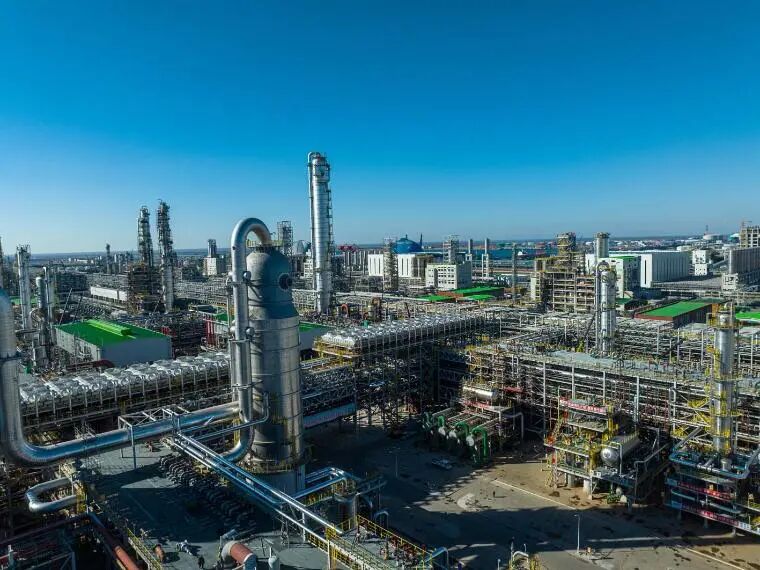
超800亿元!这个石化大项目32套装置全部竣工!(附航拍视频)
Zhong Guo Hua Gong Bao· 2025-12-29 09:06
Core Insights - The Huajin Aramco fine chemical and raw material engineering project has reached a significant milestone with the mechanical completion of 32 major production units, including a 15 million tons/year atmospheric distillation unit and a 5 million tons/year vacuum residue hydrogenation unit, successfully achieving the annual target [1][3] Group 1: Project Overview - The project commenced on March 29, 2023, with a total investment of 83.7 billion yuan, focusing on the construction of 15 million tons/year refining and 1.65 million tons/year ethylene among other units [1] - The project team emphasized high standards in planning, aiming for green and low-energy consumption, and quickly initiated procurement for long-cycle equipment and materials to ensure material supply for subsequent construction [1] Group 2: Construction Achievements - The 1.65 million tons/year ethylene unit is the largest single ethylene unit in China and serves as the leading unit in the chemical area of the project, with significant construction progress being critical [3] - The project team established multiple "installation assault" teams to ensure timely completion, achieving the simultaneous lifting of a 2,100-ton propylene distillation tower and a nearly 1,000-ton ethylene distillation tower, setting an industry record [3] - Innovative modular solutions were employed, such as the simultaneous implementation of civil foundations and prefabrication for pipe corridors, reducing high-altitude work by 60% and saving over 50 days in installation time [3] Group 3: Future Implications - Upon completion, the Huajin Aramco project will integrate upstream and downstream of the industrial chain, reduce the yield of finished oil products, and elevate the petrochemical industry structure from "coarse with fine" to "fine," providing new solutions for the transformation and upgrading of the petrochemical industry in Panjin and Liaoning [4]

淘气天尊:如何看待强行九连阳的市场?(12.29)
Jin Rong Jie· 2025-12-29 08:14
来自深圳市新兰德证券投资咨询有限公司【陶琦】【执业编号:A0780616060005】 从短线市场技术上看,上周市场3815点的分时线低点密集共振,引发了短线的市场低位反弹,短线市场 到今天已经第九天阳线了,上午市场出现分时线高点共振确认,最高到了3983点,午后如期小级别跳 水,最低到了3956点,回踩了不到30点,力度一般般,但投资者需要看到的是,今天指数的死撑九连 阳,石化双雄功不可没,大金融的银行和多元金融推波助澜,但指数红了,大部分个股不为所动,指数 红了也不涨,跌了也不跟跌,就是杵在那里,两市今天2500多股涨跌幅在1%以内,也就是说,两市快 接近一半的个股在梦游,不怎么涨,也不怎么跌,就是磨盘,铁杵磨成针的磨盘! 面对着这种行情,耐心还是最关键的!投资者手中低位没有补涨的个股,耐心等待一下,看看有没有最 后的契机;已经放量大涨的个股,尽量高抛等待;高抛以后有空间了,再考虑接回;没有空间,就耐心 等待!千万不要手中个股没有明显补涨就莫名其妙卖空了,也不要手中个股明显阶段天量大涨了,不知 道保护操作!淘气可没有说现在必须空仓或轻仓,毕竟淘气是低位3815点分时线低点共振反复强调的低 吸和加仓机会,现 ...
多行业将深度治理 湖北今年继续推进污染防治攻坚战
Chang Jiang Shang Bao· 2025-12-29 07:10
Core Viewpoint - Hubei Province is committed to enhancing environmental protection efforts, focusing on pollution prevention and control, and ensuring compliance with the "14th Five-Year Plan" for carbon emissions and energy consumption reduction. Group 1: Air Quality Improvement - Hubei aims to control PM2.5 and O3 levels while promoting the construction of projects for reducing volatile organic compounds (VOCs) and nitrogen oxides emissions [1] - The province will continue to implement ultra-low emissions transformations in the thermal power and steel industries, as well as comprehensive rectification of industrial furnaces and kilns [1] - Focus will be placed on deep governance in industries such as cement, coking, glass, ceramics, and petrochemicals, emphasizing source reduction, process control, and end-of-pipe treatment for VOCs pollution [1] Group 2: Water Pollution Control - Hubei will strengthen actions against water pollution, focusing on the treatment of inferior water bodies and the remediation of black and odorous water bodies [1] - The province will conduct inspections and rectifications of key lake pollutant discharge outlets and promote comprehensive governance pilot projects for lake sedimentation [1] - Efforts will be made to ensure stable water quality in the Three Gorges and Danjiangkou reservoir areas through comprehensive management [1] Group 3: Soil and Waste Management - Hubei will continue to advance soil pollution prevention actions and enhance comprehensive solid waste management [2] - The province plans to initiate groundwater pollution prevention pilot projects and conduct environmental assessments of groundwater conditions around pollution sources [2] - There is an effort to include cities like Wuhan and Xiangyang in the national "waste-free city" pilot program [2]
涉及六大行业!生态环境部发文加强“两高”项目源头防控
Shang Hai Zheng Quan Bao· 2025-12-29 07:10
Core Viewpoint - The Ministry of Ecology and Environment has issued guidelines to strengthen the environmental assessment and control of high energy consumption and high emission projects, emphasizing stricter approval processes and the integration of carbon emission impact assessments into the environmental evaluation system [1] Group 1: Regulatory Framework - The guidelines specify that high energy consumption and high emission projects will be strictly regulated, particularly in six industry categories: coal power, petrochemicals, chemicals, steel, non-ferrous metal smelting, and building materials [1] Group 2: Environmental Impact Assessment - Carbon emission impact assessments will be incorporated into the environmental impact evaluation framework, promoting coordinated control of pollution reduction and carbon emission across high energy consumption and high emission industries [1]
抚顺高新区:助力企业走好每一步
Zhong Guo Hua Gong Bao· 2025-12-29 04:27
营商环境是园区发展的核心竞争力。抚顺高新区通过构建"落地无忧、靶向赋能、安商护航"的全生命周 期服务体系,实现"园区所能"精准对接"企业所需"的服务范式,让精准服务成为吸引、留住、成就企业 的最佳名片。 精准适配:让企业"落地无忧" 企业落地初期,面对繁杂的审批流程与陌生的政策环境,往往"不知从何下手"。为此,抚顺高新区将复 杂的落地流程转化为清晰易懂的服务指南,让企业"一目了然"。针对首次落地、缺乏经验的企业,高新 区推出"单项+全流程"双叠加服务模式,提供从工商登记到许可审批的全流程"帮办代办"服务。"企业来 我们这里投资都是奔着长远发展来的,得把咱们承诺的政策给落实好,让企业感受到在这里投资落地有 保障、有人帮。"抚顺高新区投资促进局副局长张勇表示。 辽宁优尔实业有限公司公共事业部部长刘赫对此感受颇深。这家从辽阳奔赴抚顺、盘活本地老旧企业的 外来企业,于去年1月顺利试生产。"我们选择了落地全流程服务,每个环节都有专人跟进,还会主动告 知政策节点,让我们少跑腿。"刘赫表示,目前公司已进入正式生产阶段,二期项目正在筹划中。 很多企业像辽宁优尔一样,被优良的营商环境所吸引,在高新区落地生根。"十四五"期间,抚 ...
八连阳传递积极信号?华夏基金:以宽基锚定市场大势
Mei Ri Jing Ji Xin Wen· 2025-12-29 01:17
Group 1 - Offshore RMB broke 7, and A-share market completed a mid-term adjustment with an eight-day consecutive rise, approaching mid-November highs. The non-ferrous metals and power equipment sectors led the gains [1] - Institutional investors are optimistic about the continuation of the year-end rally, with expectations for an early spring market surge. Historical data shows that in bull markets, an eight-day consecutive rise often leads to stable upward trends, with average gains of 1.57% over the next five trading days and 15.95% over the next sixty trading days [1] - Two potential scenarios for the market outlook are identified: one where the market continues to rise, attracting new capital and expanding into various sectors, and another where the index remains volatile, potentially leading to adjustments in popular sectors [1][2] Group 2 - The market is currently in a valuation expansion phase, with strong long-term support factors such as new growth drivers, policy support, and low interest rates continuing to attract capital. The market has shown resilience with quick recoveries from previous adjustments [2] - Recommended strategies include a broad-based approach to capture market trends, focusing on high-growth sectors such as computing power, photovoltaic, energy storage, and non-ferrous metals. Investors are advised to prepare for both potential adjustments and continued strength in the market [2] - Relevant ETFs include broad-based options like the CSI 300 ETF and sector-specific ETFs for computing power, photovoltaic, power grid equipment, non-ferrous metals, and petrochemicals [3]
周期的进攻与防守
2025-12-29 01:04
Summary of Key Points from Conference Call Records Industry Overview Chinese Companies and Global Demand - Chinese listed companies maintain higher overseas gross margins compared to domestic margins, particularly in capital and technology-intensive industries, indicating a significant competitive advantage [1] - The global demand in 2026 is expected to be favorable for Chinese outbound enterprises, benefiting from the latter half of the Federal Reserve's easing cycle, with an uptrend in global industrial and infrastructure capital expenditure [1][5] Aviation Industry - The aviation sector is viewed as a major investment opportunity, with ticket prices showing positive year-on-year growth, serving as a catalyst for the industry [1][6] - Despite fluctuations in December ticket prices, strong travel demand during the holiday season is anticipated to support price increases post-New Year [6] - Recommended stocks include China National Aviation, Juneyao Airlines, China Eastern Airlines, Southern Airlines, and Spring Airlines [6] Shipping and Oil Transportation - The oil shipping market experienced significant price fluctuations recently, with a notable drop in TCE rates for VLOCs [7] - Long-term outlook remains optimistic due to increased oil production driving demand, with a recommendation to focus on COSCO Shipping Energy, China Merchants Energy Shipping, and China Ship Leasing [8] Chemical Industry - The chemical sector, particularly the spandex segment, is performing well, with Huafeng Chemical showing significant cost advantages and benefiting from demand growth [9] - Other noteworthy areas include coal chemical companies like Hualu Hengsheng and soda ash producers like Boyuan Chemical [9] Metals Sector - The metals sector is experiencing strong performance, with gold reaching new highs and significant increases in silver, copper, aluminum, and lithium carbonate prices [11] - The supply side remains rigid, and the demand recovery driven by liquidity and AI-related factors is expected to keep prices on an upward trend [11][12] Company-Specific Insights Coal Market - Current coal prices are declining, with expectations of stabilizing around 670 RMB/ton as a bottom [3][18] - The outlook for 2026 suggests a rebound in coal demand due to a recovery in thermal power generation [21] Petrochemical Industry - The petrochemical sector is optimistic for 2026, with signs of inventory replenishment and a favorable price index for products [16] - The polyester supply chain is particularly promising, with recommendations for Tongkun Co., New Fengming, and Hengyi Petrochemical [17] New Materials - Focus areas in the new materials sector include lubricant additives, storage materials, and AI-related high-speed technologies, with specific companies recommended for investment [10] Energy Metals - The lithium carbonate market is expected to remain strong due to increasing storage demand, with recommendations for stocks in the energy metals sector [14] Steel Industry - Leading steel companies like Nanjing Steel and Baosteel are seen as good investment opportunities despite recent adjustments, with a projected decline in capital expenditure for 2026 [15] Additional Considerations - The overall sentiment for the Chinese stock market in 2026 is optimistic, driven by economic reforms and increased capital inflows [3] - The impact of monetary policy, geopolitical factors, and supply uncertainties on various sectors should be closely monitored [2]
哪些行业受益人民币升值
2025-12-29 01:04
Summary of Key Points from Conference Call Records Industry or Company Involved - The discussion primarily revolves around the impact of the appreciation of the Renminbi (RMB) on various industries, including steel, non-ferrous metals, petrochemicals, paper, aviation, and real estate. The focus is also on the financial sector, particularly banks and insurance companies, as well as the performance of the Hong Kong stock market. Core Insights and Arguments 1. **Market Outlook and Trends** - The market is expected to undergo a short-term consolidation, waiting for support from the five-day moving average, with a bullish sentiment anticipated post-New Year [1][2] - The upcoming announcement of the new Federal Reserve Chair by President Trump is seen as a potential catalyst for market movement [3][4] 2. **Beneficial Industries from RMB Appreciation** - Industries benefiting from RMB appreciation include steel, non-ferrous metals, petrochemicals, paper, and aviation fuel on the cost side, while airlines and real estate are on the liability side [1][5] - The financial sector, particularly state-owned banks and insurance companies, is expected to see asset revaluation due to foreign capital inflow [6][7] 3. **Investment Recommendations** - Three main investment directions are recommended: - **RMB Asset Revaluation**: Focus on industries benefiting from RMB strength, including steel, petrochemicals, and aviation [5][7] - **Overseas Expansion**: Anticipation of strong overseas economic growth in 2026, with a focus on the "奔马 50" portfolio, which has shown a 10% absolute return recently [5][11] - **Tech IPO Supply Chain**: Companies related to tech IPOs, such as Suiren and Changxin Storage, are expected to benefit from increased capital expenditure [5] 4. **Historical Performance During RMB Appreciation** - Historical data indicates that sectors like steel, petrochemicals, and consumer goods have shown positive performance during previous RMB appreciation periods [9] 5. **Evaluation of Industry Benefits** - The evaluation of industry benefits during RMB appreciation is based on three dimensions: sensitivity of net profit to exchange rate changes, changes in gross profit margins, and improvements in foreign exchange gains reported in financial statements [8] Other Important but Possibly Overlooked Content 1. **Impact of Year-End Settlement Demand** - Year-end corporate settlement demand is expected to support the RMB exchange rate, with employment demand at a high level [10] 2. **Market Dynamics and Investor Behavior** - The market is expected to see reduced activity as many institutional investors take holidays, leading to a potential decrease in trading volume [2] 3. **Potential Risks** - Concerns about the withdrawal of large funds from the A500 ETF post-New Year, although there is optimism that insurance funds may continue to invest due to bullish market expectations [4]