建筑

Search documents
建筑行业2026年度策略报告:寻重大工程“足迹”,挖产业转型“宝藏”-20251231
Hua Yuan Zheng Quan· 2025-12-31 09:08
Group 1 - The overall performance of the construction sector in 2025 was weaker than the CSI 300 index, with the SW construction decoration index increasing by 8.88% compared to the CSI 300's 18.19% [4][7] - Private enterprises in the construction sector showed significant advantages, achieving a return rate of 35.6%, while state-owned enterprises faced pressure with a return rate of -4.51% [4][7] - The report anticipates that the "14th Five-Year Plan" will open an investment upturn, with major projects expected to be launched in 2026, leading to a new cycle of investment growth [4][24] Group 2 - The report identifies three main value lines for future investment: major engineering projects, high dividends, and growth transformation [4][32] - Major engineering projects include significant investments in waterway construction, the Tibet railway, and hydropower projects, with total investments estimated at approximately 6,211 billion yuan for waterway projects alone [4][36][39] - The report suggests focusing on companies with high dividend yields and low valuations, as regulatory measures are enhancing the importance of shareholder returns [4][49] Group 3 - The construction sector is expected to benefit from the AI investment wave, with the cleanroom market projected to grow significantly due to increased demand from the semiconductor industry [4][55] - The cleanroom investment is estimated to account for 10-20% of the total capital expenditure in the semiconductor industry, indicating a strong growth potential in this area [4][55] - Companies such as Deep Sanda A, Yaxin Integration, and others are recommended for investment due to their involvement in the cleanroom sector [4][61]


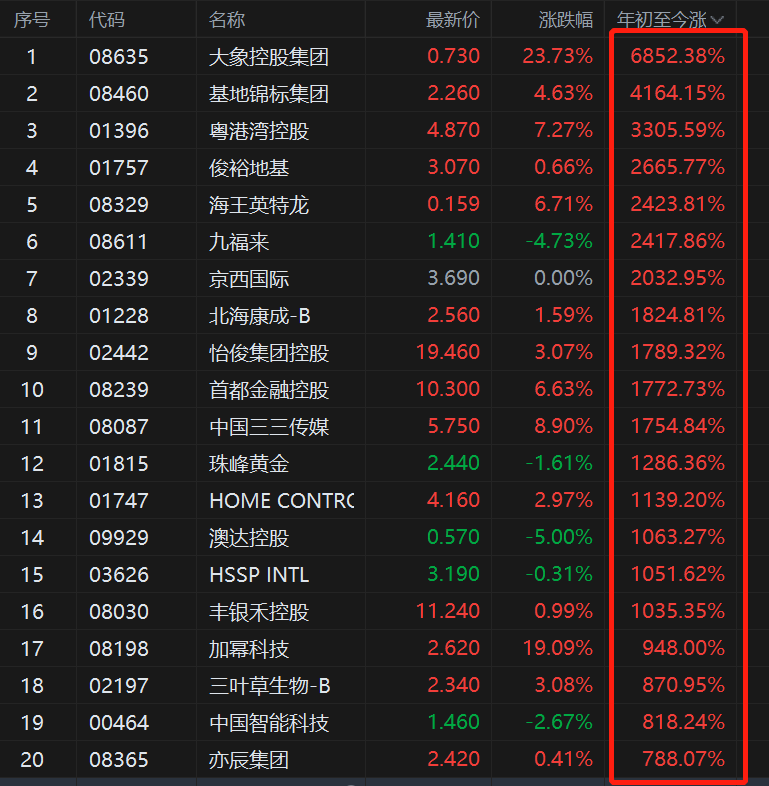
港股25年收官:细价股引领涨跌幅榜,其中大象控股集团暴涨6852.38%高居首位
Ge Long Hui· 2025-12-31 07:27
Core Viewpoint - The Hong Kong stock market has seen extreme gains in micro-cap stocks, with notable examples including Elephant Holdings Group, which surged by 6852.38%, highlighting a phenomenon of "survivorship bias" in the market [1]. Group 1: Stock Performance - Elephant Holdings Group (08635) experienced a price increase of 23.73% with a year-to-date gain of 6852.38% [1] - Base Champion Group (08460) saw a 4.63% rise, accumulating a year-to-date increase of 4164.15% [1] - Other significant gainers include Guangdong-Hong Kong Holdings (01396) with a 3305.59% increase, and Junyu Foundation (01757) with a 2665.77% rise [1] Group 2: Market Characteristics - The extreme percentage gains are attributed to a very low base price at the beginning of the year, allowing small amounts of capital to double stock prices, resulting in inflated percentage increases [2] - The price increases are primarily driven by trading factors such as speculative news, technical short squeezes, and concentrated shareholding rather than fundamental performance [2] - These stocks carry high risks due to low liquidity, making them susceptible to sharp declines after rapid increases, and the lack of transparency complicates investment decisions for ordinary investors [2]

最高法发布人民法院治理欠薪典型执行案例
Xin Hua Wang· 2025-12-31 04:03
在一起案例中,江苏某建筑公司拖欠62名农民工139万余元。温州市中级人民法院和龙湾区法院借助协 同执行平台,发现被执行人公司在温州市瓯海区人民法院有一笔150万元执行款即将发放,中院执行指 挥中心经研判后,当即指令瓯海区法院暂缓原定款项发放程序,并组织龙湾、瓯海两家法院成立联合工 作组,最终促成被执行人同意优先全额支付农民工工资。 府院联动机制在涉民生案件执行中发挥着关键作用。在另外一起案例中,安徽滁州某餐饮公司应向余某 等61人支付劳动报酬共计116万余元,但执行法院未发现可供执行财产。了解到该公司主营业务系从事 学校食堂供餐后,法院立即启动府院联动机制,向滁州市教育体育局发出协助调查函。在双方共同努力 下,法院锁定了被执行人主要业务所在地并在当地教育体育局协助下依法查实并冻结了应收餐费相关债 权。最终,被执行人法定代表人主动联系法院表示愿意履行义务,61名工人工资全部得到兑现。 最高法表示,下一步将加大对涉农民工工资等欠薪案件执行力度,强化综合治理,加强立审执协调,综 合运用交叉执行、失信惩戒、强制措施、执行和解等机制,进一步推动生效裁判执行到位,营造和谐稳 定的社会环境。 新华社北京12月31日电(记者 ...
异动盘点1231 |英矽智能涨超25%,美联股份跌超18%;美股太空概念股走强,金银概念股盘前反弹
贝塔投资智库· 2025-12-31 04:01
Group 1 - Xunfei Medical Technology (02506) increased by over 5.2% after shareholders committed not to reduce their holdings until December 29, 2026 [1] - Yimei International Holdings (01870) rose nearly 4% as its subsidiary's independent energy storage project was included in Guangdong's energy construction plan for 2025 [1] - Yituo Co., Ltd. (00038) slightly decreased by 0.35%, focusing on overseas business expansion and aiming to create a world-class brand [1] - Damai Entertainment (01060) surged over 5.5%, with the 2025 New Year film box office surpassing 5 billion yuan, marking a new high in eight years [1] Group 2 - Meilian Holdings (02671) fell over 18% on its second day of trading, dropping below its IPO price of 7.1 HKD [2] - Tianli International Holdings (01773) increased by over 4.4% as the Ministry of Education plans to advance AI in education [2] - Xuanwu Cloud (02392) rose by 0.87% after a major shareholder agreed to extend the lock-up period for their shares [2] - Ganfeng Lithium (01772) dropped nearly 5% due to allegations of insider trading [2] Group 3 - Boke Vision Cloud-B (02592) increased by 3.38% after a major shareholder extended the lock-up period for their shares [3] Group 4 - Yingsi Intelligent (03696) surged over 11% on its second day of trading, with a significant increase in share price from the IPO [4] - The company has developed over 20 clinical or IND application assets using its AI platform, with a total contract value of up to 2.1 billion USD [4] Group 5 - Intel (INTC.US) rose by 1.69% after Nvidia purchased 5 billion USD worth of Intel shares [5] - The global market for advanced driver assistance systems (ADAS) and autonomous driving sensors is projected to reach 61 billion USD by 2035 [6] - NIO (NIO.US) increased by 3% as it announced the global launch of its 2026 model P7+ [6] - Baidu (BIDU.US) rose by 4.39% after announcing a partnership with a logistics company to provide high-precision mapping services [6]

最高法:将加大对涉农民工工资等欠薪案件执行力度
Xin Lang Cai Jing· 2025-12-31 03:25
Core Viewpoint - The Supreme People's Court has released typical cases of governance on wage arrears, emphasizing the legal protection of workers' wage rights, particularly for migrant workers, and highlighting various effective execution measures taken by local courts [1]. Group 1: Case Summaries - Case 1: The court in Chuzhou, Anhui, utilized a government-court linkage mechanism to resolve execution difficulties, successfully freezing receivables from schools to ensure payment of over 1.16 million yuan to 61 workers [2][3][5]. - Case 2: The court in Wenzhou, Zhejiang, implemented a cross-execution mechanism, coordinating with other courts to secure the payment of over 1.39 million yuan to 62 migrant workers within a month [6][7]. - Case 3: The court in Suqian, Jiangsu, effectively managed the liquidation of perishable goods to recover 380,000 yuan owed to 51 workers, transitioning to bankruptcy proceedings to ensure payment [8][9][10]. - Case 4: The court in Jinshan, Shanghai, employed punitive measures against a non-compliant employer, leading to the full payment of wages owed to seven workers through coercive actions [11][12]. - Case 5: The court in Ganzhou, Jiangxi, facilitated a self-disposal process for a packaging company to quickly liquidate assets worth over 1.5 million yuan to pay 61 workers, demonstrating effective conflict resolution [13][14][15]. - Case 6: The court in Guanxian, Shandong, conducted thorough field investigations to uncover rental income, leading to the successful payment of over 600,000 yuan to 34 workers [16]. Group 2: Mechanisms and Strategies - The "government-court linkage" mechanism has proven crucial in executing cases related to wage arrears, enhancing efficiency and pressuring non-compliant parties to fulfill their obligations [5]. - The "cross-execution" mechanism allows for coordinated efforts across different jurisdictions, showcasing the advantages of information sharing and asset control in resolving wage disputes [7]. - The integration of execution and bankruptcy procedures provides a model for addressing complex wage arrears cases, ensuring that workers' rights are prioritized even in challenging circumstances [10]. - The use of punitive measures and collaborative enforcement strategies effectively deters non-compliance and reinforces the legal framework protecting workers' rights [12].
把握未来五年中国经济蕴藏的新机遇
Jing Ji Ri Bao· 2025-12-30 23:58
Core Viewpoint - The "14th Five-Year Plan" outlines strategic opportunities and challenges for China's economic and social development, emphasizing high-quality growth and a focus on various key sectors [2][3]. Economic Opportunities - The plan identifies numerous new opportunities, including the development of a modern industrial system and the strengthening of the real economy, with specific mentions of sectors such as mining, metallurgy, chemicals, and advanced technologies [3]. - The goal is to achieve significant results in high-quality development, with economic growth maintained within a reasonable range and an increase in domestic consumption driving economic growth [2][3]. Economic Challenges - Challenges include unbalanced development, insufficient effective demand, and pressures on employment and income growth, which need to be addressed to convert challenges into opportunities [4]. - The plan sets a target for per capita GDP to reach the level of moderately developed countries by 2035, requiring an average annual GDP growth of approximately 4.17% from 2025 to 2035 [4]. Consumer Income and Spending - The plan aims to increase residents' income through various channels, including wage, operational, property, and transfer income, with a focus on enhancing the share of labor remuneration in national income distribution [7][11]. - There is an emphasis on improving the structure of income distribution to promote a more reasonable allocation of income among residents [7]. Investment and Consumption - The plan suggests that increasing government spending on social welfare and implementing direct consumer support policies will enhance residents' consumption capacity [8][11]. - The importance of stabilizing the stock market to increase residents' property income and subsequently boost consumption is highlighted [14]. Capital Market Development - The stability of the capital market is crucial for enhancing investor confidence and ensuring sustainable income growth, which in turn affects consumer behavior [14][15]. - Encouraging long-term funding sources for technological innovation is essential for fostering a robust capital market and supporting economic growth [15][18]. Technological Innovation and Global Competitiveness - The plan emphasizes the need for China to cultivate high-quality listed companies with international competitiveness, particularly in the technology sector, to participate in global competition [18]. - The focus is on creating a favorable investment environment for companies to grow and attract long-term capital into the market [18].
湖北23条措施加快场景培育与应用 聚焦20个领域推动技术走向市场
Chang Jiang Shang Bao· 2025-12-30 23:29
Core Viewpoint - Hubei Province is accelerating the cultivation and application of innovative scenarios to drive industrial upgrades and enhance development momentum through the implementation of the "Hubei Province Accelerating Scene Cultivation and Application Implementation Plan" [1][2] Group 1: Implementation Plan Overview - The plan includes 23 measures across six areas: creating multi-level application scenarios, innovating supply models, providing key support elements, establishing evaluation mechanisms, strengthening organizational implementation, and ensuring supportive measures [1][3] - It targets five major categories and 20 specific fields, focusing on new industries, industrial transformation, deep application in sectors, innovative social governance, and public welfare [1][2] Group 2: Goals and Timeline - By 2027, the plan aims to significantly enhance scene supply capabilities, fully realize scene-driven effects, and optimize the scene innovation ecosystem [2] - The establishment of the Hubei Scene Innovation Service Platform is planned, which will provide over 1,000 scene services annually and host more than 100 promotional activities [2] Group 3: Key Support Elements - The plan emphasizes the importance of data infrastructure, diversified financial services, forward-looking infrastructure, talent support, and the establishment of a scene service platform [3] - It proposes a multi-dimensional evaluation index system for continuous optimization of scenarios and outlines measures for effective implementation [3] Group 4: Future Work and Initiatives - Hubei will initiate a "scene demand collection" process to quickly identify and publish high-value application scenarios [4] - The government aims to create a comprehensive platform for scene information and facilitate supply-demand matching through organized promotional activities [4] Group 5: Role of State-Owned Enterprises - Hubei's state-owned enterprises are actively engaging in scene cultivation and opening, focusing on industrial upgrades and product innovation [6][7] - A dynamic mechanism for updating and publishing scene demand lists has been established, with the first list including 113 specific AI application needs across 13 key areas [7]
新华财经早报:12月31日
Xin Hua Cai Jing· 2025-12-30 23:28
Group 1: Policy Changes and Economic Measures - The State Council of China announced the implementation of the VAT Law Regulations starting January 1, 2026, which includes tax incentives and requires timely public disclosure of VAT exemption standards and conditions [1] - The National Development and Reform Commission and the Ministry of Finance released a notice on the "Two New" policy for 2026, adjusting the subsidy for old-for-new vehicle exchanges to a percentage of the vehicle price, while maintaining the upper limit for automobile subsidies [1] - The Ministry of Finance and the State Taxation Administration confirmed a reduction in the VAT rate for individuals selling homes purchased for less than two years from 5% to 3%, effective January 1, 2026 [1] Group 2: Industry Developments - The automotive industry is set to receive support through a one-time subsidy for consumers who scrap older vehicles and purchase new energy vehicles or fuel-efficient cars, as outlined in the 2026 implementation details [1] - The Ministry of Industry and Information Technology announced a digital transformation plan for the automotive industry, aiming for over 95% adoption of design tools and a 10% increase in labor productivity by 2027 [1] - The securities and futures industry saw a significant increase in the number of private asset management products registered, with a 44.78% month-on-month increase and a 129.96% year-on-year increase in November 2025 [1] Group 3: Company Announcements - Zijin Mining announced an expected net profit increase of approximately 59%-62% for 2025, attributed to higher production and sales prices of key mineral products [1] - Sichuan Road and Bridge signed a highway construction contract worth 154.58 billion yuan [5] - Salt Lake Co. plans to acquire a 51% stake in Minmetals Salt Lake for 46.05 billion yuan [5]

房屋品质提升工程该如何推进
Jing Ji Ri Bao· 2025-12-30 22:13
Core Viewpoint - The construction of "good houses" is a key task during the 14th Five-Year Plan period, emphasizing the need for improved housing construction standards and the transformation of old houses into "good houses" [1][3]. Group 1: Housing Quality Improvement - The implementation of housing quality improvement projects is expected to significantly enhance housing standards, design, materials, construction, and operational levels over the next five years [1]. - The "Good House" initiative has been incorporated into the 14th Five-Year Plan, with a focus on creating safe, comfortable, green, and smart housing [1][2]. - The Ministry of Housing and Urban-Rural Development is soliciting public opinions on enhancing housing quality, providing clearer guidance for the construction of "good houses" [1]. Group 2: Construction Standards and Design - The "Residential Project Specification" will be implemented starting May 1, 2025, establishing baseline requirements for "good houses" [2]. - Housing design must consider various factors such as functionality, safety, performance, quality, and user experience, with an emphasis on optimizing space utilization [2]. - New construction methods, including intelligent and green building practices, will be promoted, marking a shift towards high-quality development in the construction industry [2]. Group 3: Property Management and Renovation - There is significant room for improvement in housing operation and maintenance services, with plans to establish a long-term safety management mechanism for housing [3]. - The scope of property services will expand to include various community services, reflecting the growing demand for quality living services [3]. - Renovation of old houses will be systematically advanced, focusing on energy-efficient upgrades and community development [3]. Group 4: Technological Integration - Technology will play a crucial role in the construction of "good houses," with an emphasis on foundational research and the development of key technologies [4]. - Real estate and construction companies are expected to transition into integrators for "good house" construction, enhancing collaboration across the entire industry chain [4]. - The standardization and serialization of building components will continue to improve, leading to a more specialized and efficient production system [4].
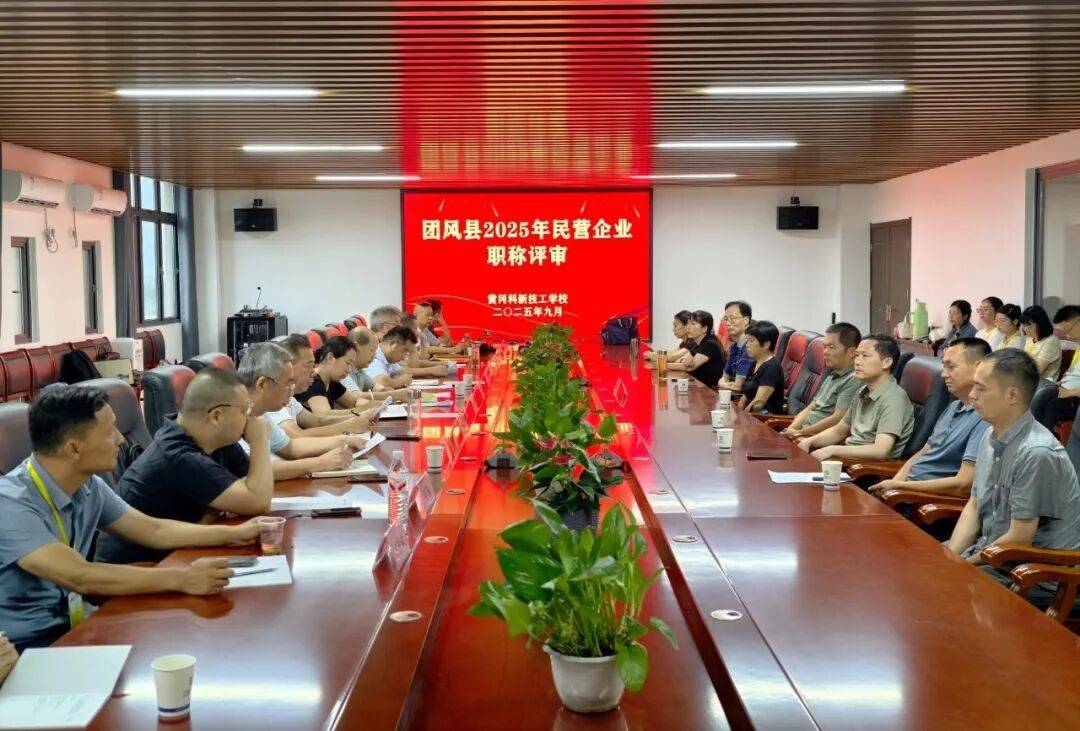
2025年度黄冈市民营企业职称评审“直通车”活动圆满收官
Sou Hu Cai Jing· 2025-12-30 20:58
责任人社 法治人社 温情人社 清廉人社 近日,黄冈市2025年度民营企业专项职称评审"直通车"服务系列活动圆满收官。本次活动由市人社局统筹组织,各县市区人社部门具体承办。全年紧扣民 营企业专业技术人才评价需求,在市直及县市基层先后开展评审活动7场,累计为779名民营企业工程技术人才评定职称,涵盖机械、化工、生物制药、建 筑、水利等34个专业,基本实现工程领域主要行业全覆盖。 政策宣讲 坚持多渠道、多形式开展,确保政策精准直达。通过线上线下解读、专场宣讲、发放政策指南等方式,帮助企业与人才及时掌握并运用政策。 ▲政策宣讲 设立"人社专员服务岗",为重点企业和人才提供一对一全程代办与精准指导。专员主动对接,协助办理引进、申报、待遇落实等事项,变"人才跑"为"专 员跑",大幅压缩办事时间,解决实际困难,打造高效有温度的服务环境。 专员服务 ▲服务专员主动对接 ▲职称政策进企业 ▲实地了解企业需求 ▲民营企业职称评审宣传册 精准评价 创新实施"面试答辩+材料审核+线上表决"三位一体评价模式。面试考察实操与认知能力,材料审核聚焦专利、技术突破等实际贡献,线上表决确保全程 留痕可追溯。从能力、成果、流程三方面把关,实现了 ...