
医疗保健

Search documents
深夜大逆转,中国资产爆发
Zheng Quan Shi Bao· 2025-10-02 00:13
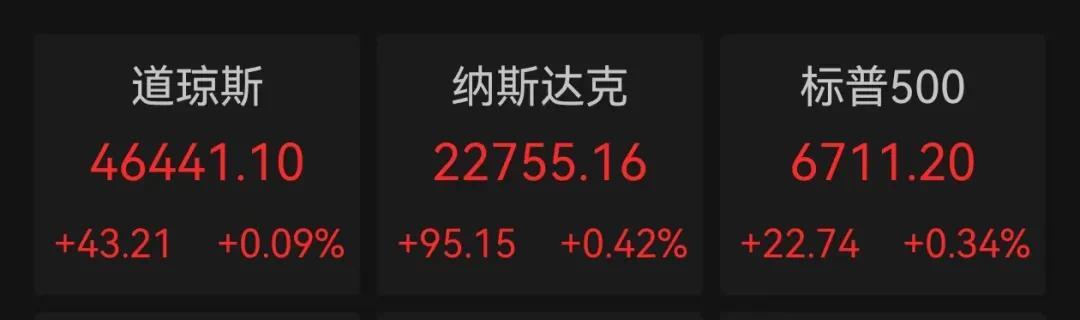
Market Performance - On October 1, U.S. stock markets initially dropped due to the government shutdown but later rebounded, with the Dow Jones index closing up 0.09%, reaching a historical high [1] - The S&P 500 index increased by 0.34%, and the Nasdaq Composite index rose by 0.42% [1] Chinese Stocks - The Nasdaq China Golden Dragon Index rose by 1.44%, with most popular Chinese concept stocks experiencing gains [3] - Notable stock performances include Vipshop up 5.36%, Baidu up 4.3%, JD.com up 3.4%, Alibaba up 2.25%, Pinduoduo up 1.69%, Xpeng Motors up 1.11%, and Li Auto up 0.63% [3] Stock Unlocking Events - In October, 107 stocks are facing unlocking events, with a total market value of 240.73 billion yuan, which is lower than the unlocking pressure in July, August, and September [4] - Three stocks have unlocking values exceeding 10 billion yuan: China Merchants Port (11.55 billion yuan), Meihua Medical (10.32 billion yuan), and Hengshuai Co. (10.31 billion yuan) [6] Performance of Unlocking Stocks - Among the unlocking stocks, 22 reported losses in the first half of the year, with notable declines in companies like Dizh Medical-U and Baiwei Storage [11] - The average stock price of unlocking stocks increased by 2.84% since September, with Demingli leading with a 117.02% increase [10] Institutional Research - 20 unlocking stocks were researched by institutions in September, with 14 stocks having more than 10 institutional inquiries [11] - Companies like Ruide Intelligent and Fuchuang Precision received significant attention, with Ruide Intelligent focusing on the pet economy and Fuchuang Precision achieving breakthroughs in heating plate technology [11]

“科技投资大师”警告:AI估值飙升“令人不安”,英伟达千亿押注OpenAI让人想起互联网泡沫
Hua Er Jie Jian Wen· 2025-10-01 11:33
Group 1 - James Anderson warns about the rapid valuation increases in the AI sector, citing OpenAI's valuation rising from $157 billion to $500 billion in under a year and Anthropic's valuation nearly doubling to $170 billion in six months, which he finds "disturbing" [1][2] - Anderson draws parallels between the current situation and the unsustainable "vendor financing" model seen during the internet bubble, particularly concerning Nvidia's potential $100 billion investment in OpenAI [2] - Despite his concerns, Anderson remains a "huge admirer" of Nvidia, but the structure and uncertainty of the investment deal have made him more apprehensive [2] Group 2 - The Lingotto Innovation Strategy fund, managed by Anderson and Morgan Samet, has reduced its position in Nvidia, which was previously its largest holding, now shifting to Chinese battery manufacturer CATL as the top holding [3] - This shift in investment strategy contrasts sharply with Anderson's previous optimistic predictions about Nvidia's market value potentially reaching trillions, as the company's current market cap is approximately $4.4 trillion [3] Group 3 - Despite concerns over AI valuations, Anderson and his team are actively pursuing early-stage technology investments, expanding into this area under the management of Lingotto [4] - Morgan Samet highlights a focus on opportunities in autonomous vehicles and AI in healthcare, emphasizing the need for early involvement to understand future developments [4]

Energy Fuels, Firefly Aerospace And Other Big Stocks Moving Lower In Tuesday's Pre-Market Session
Benzinga· 2025-09-30 12:04
Market Overview - U.S. stock futures are lower, with Dow futures dropping over 100 points [1] Company-Specific Movements - Energy Fuels Inc (NYSE:UUUU) shares fell 6.4% to $15.47 in pre-market trading after announcing a proposed $550 million private offering of convertible senior notes due 2031 [1] - Epsium Enterprise Limited (NASDAQ:EPSM) declined 24.3% to $18.60 in pre-market trading, following a 30% drop on Monday [3] - JFB Construction Holdings (NASDAQ:JFB) shares decreased 12.9% to $11.06 in pre-market trading after an 85% surge on Monday due to a $44 million private placement announcement [3] - bioAffinity Technologies Inc (NASDAQ:BIAF) fell 11.1% to $2.89 in pre-market trading after pricing a $4.8 million public offering [3] - Firefly Aerospace Inc (NASDAQ:FLY) shares dropped 9.7% to $33.36 after reporting the destruction of its Alpha rocket's core stage during testing [3] - USBC, Inc. (NYSE:USBC) declined 6.7% to $1.26 after a 16% increase on Monday [3] - Tilray Brands, Inc. (NASDAQ:TLRY) fell 5.4% to $1.75 in pre-market trading after a significant 60% rise on Monday following a video shared by President Donald Trump discussing potential medical benefits of CBD for seniors [3] - First Majestic Silver Corp. (NYSE:AG) shares decreased 4.8% to $11.80 in pre-market trading [3] - LuxExperience B.V. (NYSE:LUXE) fell 4.5% to $8.07 in pre-market trading [3]

海外宏观周报(香港市场观察第2期):金管局跟随降息,港股保持热度-20250930
Min Yin Zheng Quan· 2025-09-30 08:06
Group 1: Macroeconomic Overview - The Hong Kong Monetary Authority (HKMA) followed the Federal Reserve's rate cut on September 18, reducing the base rate by 25 basis points to 4.5%, indicating potential further declines in interest rates due to the Fed's ongoing easing policy [4][12]. - The Hong Kong dollar (HKD) appreciated slightly against the US dollar, with the exchange rate at 7.7839 on September 29, compared to 7.7963 at the end of August, reflecting a stable banking system surplus of HKD 54.2 billion [13]. Group 2: Stock Market Performance - The Hang Seng Index rose by 6.16% over the past month, with the Hang Seng Technology Index increasing by 11.45% and the Hang Seng China Enterprises Index up by 5.66% [5][15]. - The average price-to-earnings (P/E) ratio of the Hang Seng Index reached 12.06 times, placing it in the 79.7% percentile of the past decade, while the average price-to-book (P/B) ratio was 1.23 times, in the 83.6% percentile [19][21]. Group 3: Sector Analysis - The materials sector saw the highest increase, with an 18.4% rise, followed by non-essential consumer goods at 17.8%, while telecommunications experienced the largest decline [15][17]. - Notable performers in the sub-sectors included other metals and minerals, food additives, and online retailers, which rose by 39.9%, 31.5%, and 31.2% respectively [17]. Group 4: Capital Flows - Southbound capital inflows reached over HKD 160 billion in September, marking a four-year monthly high, with total inflows for the year surpassing HKD 1 trillion for the first time [25][27]. - The sectors attracting the most inflows included non-essential consumer goods, healthcare, and information technology [27].
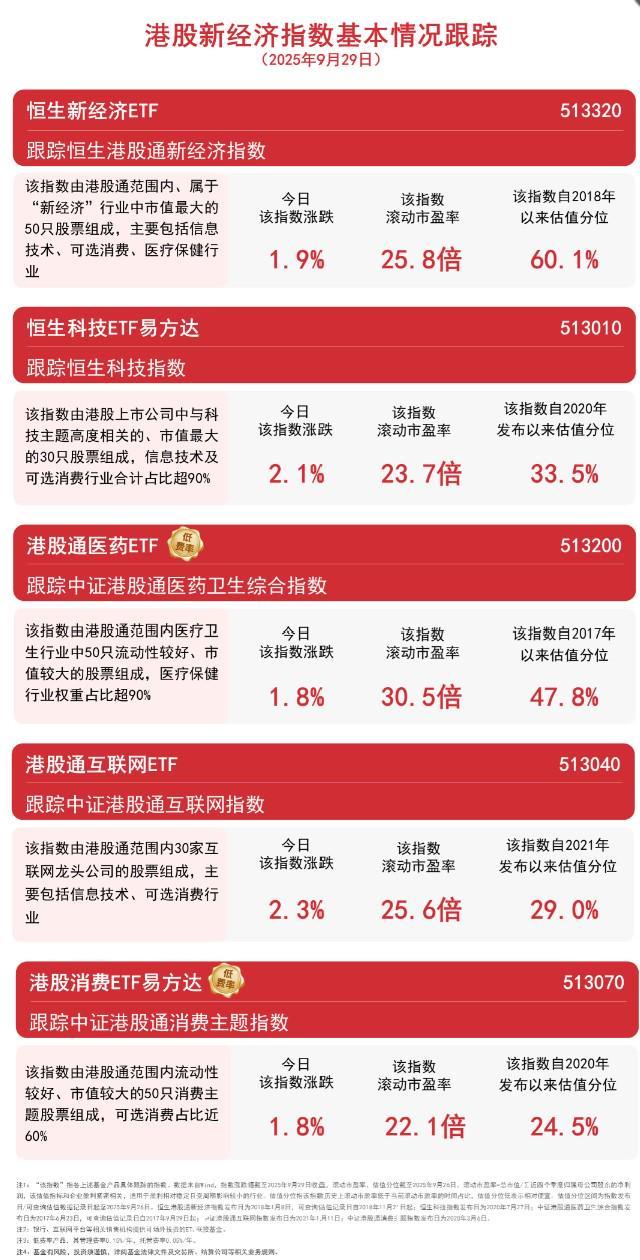
港股科技板块高开高走涨超2%,关注港股通互联网ETF(513040)、恒生科技ETF易方达(513010)等配置价值
Mei Ri Jing Ji Xin Wen· 2025-09-29 11:43
Group 1 - Hong Kong stocks strengthened today, with technology-related concepts such as semiconductors, integrated circuits, and chips leading the gains [1] - As of the market close, the CSI Hong Kong Stock Connect Internet Index rose by 2.3%, the Hang Seng Technology Index increased by 2.1%, and the Hang Seng Hong Kong Stock Connect New Economy Index climbed by 1.9% [1] - The CSI Hong Kong Stock Connect Medical and Health Comprehensive Index and the CSI Hong Kong Stock Connect Consumer Theme Index both rose by 1.8% [1] Group 2 - According to Wind data, as of last Friday, the net inflow for the E Fund Hang Seng Technology ETF (513010) exceeded 4 billion yuan in the past month, ranking first among similar ETFs [1] - The Hang Seng New Economy ETF tracks the Hang Seng Hong Kong Stock Connect New Economy Index, which consists of the 50 largest stocks in "new economy" sectors within the Stock Connect range [2] - The Hang Seng Technology ETF tracks the Hang Seng Technology Index, composed of the 30 largest stocks highly related to technology, with over 90% of the index comprising information technology and consumer discretionary sectors [2] Group 3 - The Hang Seng Medical ETF tracks the CSI Hong Kong Stock Connect Medical and Health Comprehensive Index, which includes 50 highly liquid and large-cap stocks in the healthcare sector, accounting for over 90% of the index [2] - The Hang Seng Internet ETF tracks the CSI Hong Kong Stock Connect Internet Index, consisting of stocks from 30 leading internet companies, primarily in information technology and consumer discretionary sectors [2] - The Hang Seng Consumer ETF tracks the CSI Hong Kong Stock Connect Consumer Theme Index, which includes 50 large-cap consumer stocks, with nearly 60% in consumer discretionary [3]
更加均衡第四季度策略
Zhao Yin Guo Ji· 2025-09-29 10:49
Group 1: Macro Strategy Overview - The report suggests a balanced asset allocation strategy for the fourth quarter, favoring equities, commodities, and non-USD currencies while being bearish on bonds and the USD [1] - The US economy is experiencing slight stagflation, with expectations of a GDP growth decline from 2% in the first half to 1.3% in Q4 2023 [9] - The Eurozone economy is performing better than expected, with inflation stabilizing and government bond yields rising [1][13] Group 2: Currency Recommendations - The report recommends an overweight allocation to currency market products (20%), emphasizing their liquidity and safety [4][7] - Specific currency allocations include an overweight in USD (10.5%), Euro (4%), and GBP (2.5%), while recommending a neutral position in RMB (1.2%) and underweight in JPY (0%) [4][6][8] Group 3: Bond Market Insights - A neutral allocation to bonds (22.5%) is suggested, with a focus on US bonds (10%) and an overweight in UK (2%) and emerging market bonds (5%) [4][42] - The report highlights that bond valuations are more attractive than equities, despite potential inflation risks [42][43] Group 4: Equity Market Analysis - A neutral allocation to equities (30%) is recommended, with specific overweight positions in Eurozone (4.3%), UK (2.5%), and China (3.5%) stocks, while underweighting US (17%) and Japanese stocks (1%) [4][6][42] - The report notes that stock valuations are currently higher than fixed income products, indicating a need for caution [4][42] Group 5: Alternative Assets - The report suggests a lower allocation to alternative assets (27.5%) due to their high risk and low liquidity, recommending a diversified approach [4][6] - Specific alternative assets include private equity (9%), hedge funds (5%), and real estate (5.5%), with a cautious outlook on digital assets (1%) [4][6][42]
AH股市场周度观察(9月第4周)-20250927
ZHONGTAI SECURITIES· 2025-09-27 10:32
A-Share Market - The A-share market is experiencing a divergence, with growth styles outperforming. The ChiNext Index and the CSI 100 Index increased by 1.96% and 1.75% respectively, while the CSI 1000, CSI 2000, and the Northbound 50 Index saw declines, with the Northbound 50 dropping by 3.11% [2][7] - The semiconductor industry chain is performing well, particularly in equipment and wafer foundry sectors, leading to a 3.67% increase in the electronics sector. The long-term growth outlook for technology hardware remains positive due to demand driven by AI [5][7] - The average daily trading volume for the week was 2.31 trillion, reflecting a week-on-week decline of 8.13% [2][7] Hong Kong Market - The Hong Kong market is generally weak, with major indices recording declines. The Hang Seng Index fell by 1.57% and the Hang Seng Tech Index decreased by 1.58%. The materials sector was the only standout, increasing by 2.53%, while healthcare, consumer staples, and real estate sectors saw significant declines [9][10] - The market's performance is under pressure from weak economic data from the mainland and the digestion of Federal Reserve interest rate cut expectations. The healthcare sector is notably impacted by potential high tariffs on Chinese pharmaceuticals from the US [9][10] - Future market trends in Hong Kong will be influenced by developments in AI and technology sectors, with Alibaba's CEO announcing a three-year plan to invest 380 billion in AI infrastructure, which is expected to significantly enhance cloud computing capabilities by 2032 [10]
科创板收盘播报:科创50指数跌1.61% 半导体股表现分化
Xin Hua Cai Jing· 2025-09-26 08:42
Group 1 - The core index, the Sci-Tech 50 Index, experienced a significant decline, closing at 1450.82 points with a drop of 1.61% and a trading volume of approximately 939.0 billion yuan [1] - The overall performance of the Sci-Tech Composite Index also fell by 1.97%, ending at 1671.02 points with a total trading volume of 2466 billion yuan [2] - The majority of the 588 stocks in the Sci-Tech board saw declines, with an average drop of 1.52% and an average turnover rate of 3.32% [2] Group 2 - Individual stock performance highlighted that Fangyuan Co. and Pinming Technology reached their daily limit up, while Borui Pharmaceutical saw the largest decline at 12.57% [3] - In terms of trading volume, SMIC led with a transaction amount of 121.8 billion yuan, while *ST Guandian had the lowest at 487.4 million yuan [4] - The turnover rate was highest for Juhe Materials at 19.93%, while Longteng Optoelectronics had the lowest at 0.26% [5]

HOME CONTROL(01747.HK)在香港成立一家全资新公司 积极拓展医疗健康业务
Ge Long Hui· 2025-09-25 23:00
Group 1 - The company has established a wholly-owned subsidiary in Hong Kong named Orbiva Limited, with the registration completed on September 22, 2025 [1] - The decision to create Orbiva Limited is driven by the increasing global demand for healthcare and the company's achievements in the healthcare sector, leveraging its expertise in IoT and smart control technologies [1] - Orbiva Limited will serve as a new strategic core for the company, focusing on expanding its healthcare-related business, including an AIoT-enabled home healthcare platform and ecosystem [1] Group 2 - The company will maintain its existing product-based healthcare business while allowing Orbiva Limited to operate independently under the original structure [1] - The new brand under Orbiva Limited will aim to integrate hardware, software, data, and services to provide comprehensive healthcare operational services [1]
HOME CONTROL(01747)设立Orbiva为新战略核心 布局AIoT家庭医疗平台
智通财经网· 2025-09-25 22:32
Core Insights - HOME CONTROL (01747) has established a wholly-owned subsidiary named Orbiva Limited in Hong Kong to expand its healthcare business in response to growing global healthcare demands [1][2] - Orbiva Limited will focus on developing an AIoT-enabled home healthcare platform and ecosystem, integrating hardware, software, data, and services [1] Company Developments - The formation of Orbiva Limited was completed on September 22, 2025, under Hong Kong's Companies Ordinance [1] - The company aims to leverage its existing IoT and smart control technologies along with the expertise of its new board members to drive its healthcare initiatives [1] Strategic Partnerships - Orbiva Limited is exploring collaborations with renowned academic institutions for joint laboratories and other suitable forms of cooperation in technology research and development [2] - The company is in discussions with leading hardware suppliers to define and develop products, as well as engaging with fintech institutions for innovative business models [2] - The board anticipates progress in these collaborations and will continue to seek partnership opportunities in the outlined business directions [2]