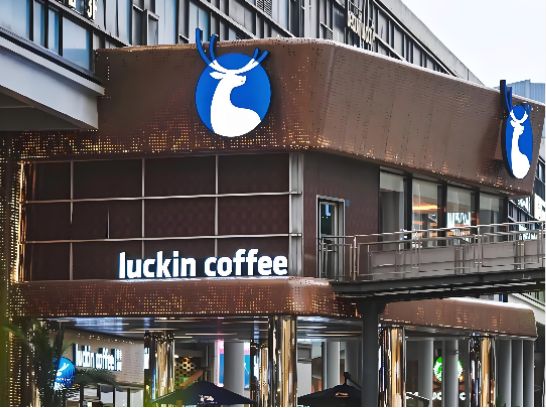
咖啡

Search documents
澄迈咖啡区域公用品牌推介会举行
Hai Nan Ri Bao· 2025-12-06 01:32
Core Insights - The event held on December 5 showcased the unique qualities and industrial potential of Chengmai coffee, attracting over 200 industry guests and representatives to discuss new opportunities in the global coffee trade market [1][2] Industry Overview - In 2024, the total output value of the Chengmai coffee industry chain is projected to reach 690 million yuan, involving approximately 750 entities within the coffee industry chain [1] - The Fushan Coffee Cultural Town serves as a key hub for the Chengmai coffee industry, featuring a coffee-themed cultural tourism area and a distinctive industrial park, with 117 enterprises established and a registered capital exceeding 3 billion yuan [1] Event Highlights - The event included brand promotions and experience sharing from representatives of various companies, including Chengmai Fushan Development Co., Ltd. and Hainan Lexiang Times Agricultural Technology Development Co., Ltd. [1] - Three projects were signed during the event: a coffee fresh fruit peeling and de-gumming production line, the entry of Durian DD into Fushan Coffee Cultural Town, and the entry of Taichung Agricultural Innovation Park Group into Fushan Coffee Cultural Town, which will inject strong development momentum into the Chengmai coffee regional public brand [1] Networking and Collaboration - The event featured a product exhibition where thirteen coffee enterprises, including Fushan Coffee, showcased their unique products, allowing attendees to experience the charm of Chengmai coffee up close [2] - During the industry matchmaking segment, representatives from enterprises engaged in active discussions with buyers and partners, reaching multiple preliminary cooperation intentions regarding coffee procurement and brand collaboration, which will provide strong momentum for the future development of the Chengmai coffee industry [2]
全国120余位主理人齐聚浙江安吉聊透“村咖”新玩法
Zhong Guo Xin Wen Wang· 2025-12-05 12:12
Core Insights - The "Village Coffee" conference held in Anji, Zhejiang, gathered over 120 village coffee operators and industry representatives to explore new pathways for rural development through coffee [1][4] Group 1: Economic Impact - Anji has seen the emergence of 332 village coffee shops, contributing to rural development and embodying the concept that "green mountains and clear waters are as valuable as mountains of gold and silver" [1] - In the past three years, Anji has launched 617 youth entrepreneurship projects centered around "Village Coffee," attracting 38,000 young people to the area [1] - The "Village Coffee" initiative has led to 856 young entrepreneurs returning to their hometowns, generating revenue of 750 million yuan and increasing collective income in Anji County by over 18.6 million yuan [1] Group 2: Talent Development - Anji Youth Innovation Academy has trained over 6,000 young talents and issued 751 special vocational certificates in rural operations [4] - The academy aims to deepen national cooperation and support the growth of small and beautiful rural cultural tourism industries [4] Group 3: Conference Activities - The conference featured the release of the "Anji Village Coffee Tour Map," detailing the distribution and characteristics of village coffee shops in Anji [5] - Notable brand founders shared practical experiences on brand operation and community building during the "Big Coffee Open Mic" session [5][6] - Participants visited successful projects like "Deep Blue Plan" and "Waterfall Coffee," experiencing the ecological value transformation model of "natural scenery + coffee" [5] Group 4: Future Collaborations - The conference concluded with multiple cooperation intentions, with many external operators planning to collaborate with Anji brands to bring the "Anji experience" back to their hometowns [5]


证券市场周刊-第44期2025
2025-12-04 15:37
Summary of Key Points from the Conference Call Industry or Company Involved - The conference call discusses the integration of three securities firms under the Huijin system, marking a significant event in the domestic securities industry and indicating a shift towards creating globally competitive investment banks [12][2][11]. Core Points and Arguments - **Integration of Securities Firms**: The merger of the three firms sets a record for the largest single integration in China's securities industry, signaling the start of a fourth wave of mergers and acquisitions aimed at enhancing competitiveness on a global scale [12][2]. - **Market Adjustments**: The market experienced a correction after six consecutive months of gains, with the Shanghai Composite Index dropping approximately 2% as of November 28. This adjustment is seen as a normal market behavior following a prolonged uptrend [8][9]. - **Sector Performance**: The technology sector, particularly the STAR 50 Index, has seen a significant pullback of about 17% from its October peak, indicating a broader trend of profit-taking among investors [8][9]. - **Long-term Market Outlook**: Analysts from Guotai Junan Securities express optimism about the long-term growth potential of the Chinese capital market, suggesting that the market is in a developmental cycle with significant upward potential for stock indices [9][10]. - **Policy Focus for 2026**: Attention is shifting towards the upcoming Central Economic Work Conference, which will set the economic agenda for 2026. Investors are advised to remain cautious and await clearer policy signals [10][11]. - **Investment Opportunities**: There is a recommendation to focus on traditional manufacturing and resource sectors, with particular emphasis on industries where China holds a competitive advantage, such as chemicals, non-ferrous metals, and new energy [11][12]. Other Important but Possibly Overlooked Content - **Consumer Spending and Economic Growth**: The government is implementing measures to enhance consumer spending, which is crucial for driving economic growth. The focus is on improving the supply-demand balance in the consumer goods market [47][51]. - **Currency Strength**: The Chinese yuan has appreciated against the US dollar, reaching a one-year high, which is attributed to a weaker dollar environment and strong performance in the domestic equity market [50]. - **Sector-Specific Growth**: The innovative pharmaceutical sector is experiencing a significant recovery, with upstream research services seeing substantial performance improvements due to better financing conditions and recovering industrial demand [17]. - **Agricultural Modernization**: The Dayaogu Group is positioning itself as a leader in agricultural modernization, leveraging technology to enhance productivity and quality in the food supply chain [6]. This summary encapsulates the key insights from the conference call, highlighting the strategic movements within the securities industry, market trends, and broader economic indicators that could influence investment decisions.
博鳌一线观察丨新国货,“上链接”!
Xin Hua She· 2025-12-04 14:27
Core Viewpoint - The rise of "New National Goods" represents a comprehensive resurgence in industry, culture, and consumption, showcasing a shift from "Made in China" to "Intelligent Manufacturing in China" driven by technology and cultural identity [1][11]. Group 1: Technological Empowerment - Technology has permeated the core of national goods, enabling significant advancements in manufacturing and product innovation [4]. - Companies like Shenzhen Guoci Yongfengyuan have invested nearly 10% of their revenue in R&D annually, resulting in 40 invention patents and 501 design patents, making them attractive partners for international design teams [3]. Group 2: Cultural Connection - Young consumers are increasingly purchasing not just products but also cultural identity, with traditional elements like the 24 solar terms and intangible cultural heritage being integrated into product design [6][8]. - The new tea beverage market in China has surpassed 200 billion yuan, with 650,000 stores serving as vital touchpoints for 150 million consumers to engage with tea culture [8]. Group 3: Global Expansion - Companies like Kudi Coffee have established 18,000 stores across 33 countries, successfully introducing local flavor innovations that resonate with global consumers [9]. - Haier's approach emphasizes localized operations, adapting products to meet local cultural needs rather than simply exporting standardized goods, which has allowed Chinese brands to root themselves in global markets [9]. Group 4: Future Outlook - The narrative of New National Goods reflects not only product evolution but also an awakening of cultural confidence and the arrival of a new consumption era in China [11]. - The expectation for the next decade is not just about sales figures but also about the visibility and impact of Chinese brands in the global market [11].
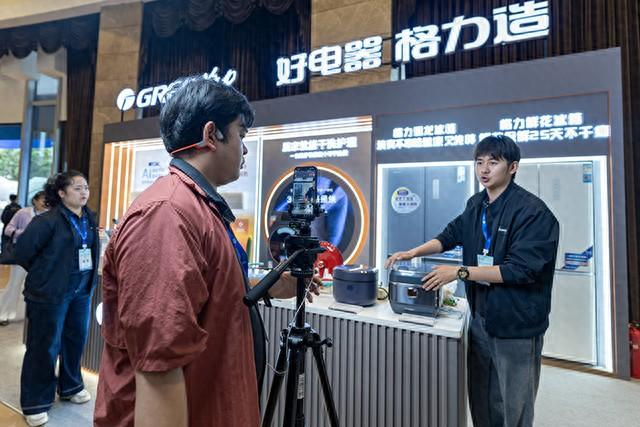
云南保山“火烧咖啡”激活乡村消费,“体验+文化+社交”深度融合
Sou Hu Cai Jing· 2025-12-04 13:33
Core Insights - The article highlights the emergence of new consumption scenarios across various regions in China, which provide consumers with more diverse and personalized experiences while activating local特色资源, leading to a new consumption model that integrates "experience + culture + social interaction" [1] Group 1: Business Model and Innovation - The "Fire Roasted Coffee" concept, created by Li Jinhe, has gained significant popularity due to its unique visual appeal and rich flavor, resulting in a surge of customer interest [1] - Li Jinhe's coffee shop, which has been operating for 14 years, has seen a dramatic increase in daily revenue, rising from hundreds to over ten thousand yuan, indicating a successful business transformation [1] - The innovative idea of "Fire Roasted Coffee" emerged from discussions with coffee enthusiasts, showcasing the importance of customer feedback in product development [1] Group 2: Market Trends and Consumer Behavior - The coffee shop's peak business days have seen demand for over a hundred cups, reflecting a growing trend in coffee consumption and the popularity of unique coffee experiences among consumers [1] - Li Jinhe plans to expand and renovate the coffee shop, aiming to create a cultural exchange space for villagers and tourists, which aligns with the trend of integrating local culture into consumer experiences [1]
让供给与需求“双向奔赴”——企业家博鳌论坛嘉宾热议消费增长新空间
Sou Hu Cai Jing· 2025-12-04 11:32
Group 1 - A traditional bedding company has transitioned from home products to health services by quantifying sleep quality through sensors, chips, and algorithms, promoting a healthier sleep experience [1] - The Chinese consumer market is undergoing a transformation from "total expansion" to "structural optimization," driven by demand and supply dynamics [4] - The dairy industry is focusing on precision nutrition, with increasing demand for products containing probiotics and whey protein, necessitating more refined processing for higher added value [4] Group 2 - Cheese consumption in China faces challenges in market adaptation, primarily relying on restaurant channels; companies like Yili are innovating to create new growth points by developing crispy cheese snacks for the retail market [4] - The matcha industry is rapidly growing, with domestic production expected to reach around 7,000 tons this year, expanding into various high-value sectors such as baking, beauty, and pharmaceuticals [4] - Consumer demand is becoming increasingly diversified, with emotional value becoming a core demand for many consumers, particularly in the pet industry, which is evolving towards a more humanized and high-end approach [7] Group 3 - The widespread application of artificial intelligence is reshaping consumer market dynamics, with brands like KinuPu utilizing AI to analyze consumer feedback and adapt products to meet differentiated needs [7] - New technologies are enhancing consumer experiences in retail environments, exemplified by Kudi Coffee's use of IoT to standardize coffee preparation across over 18,000 stores [7] - A recent implementation plan by the Ministry of Industry and Information Technology aims to enhance the adaptability of consumer goods supply and demand, encouraging companies to innovate on the supply side to meet diverse consumer trends [8]
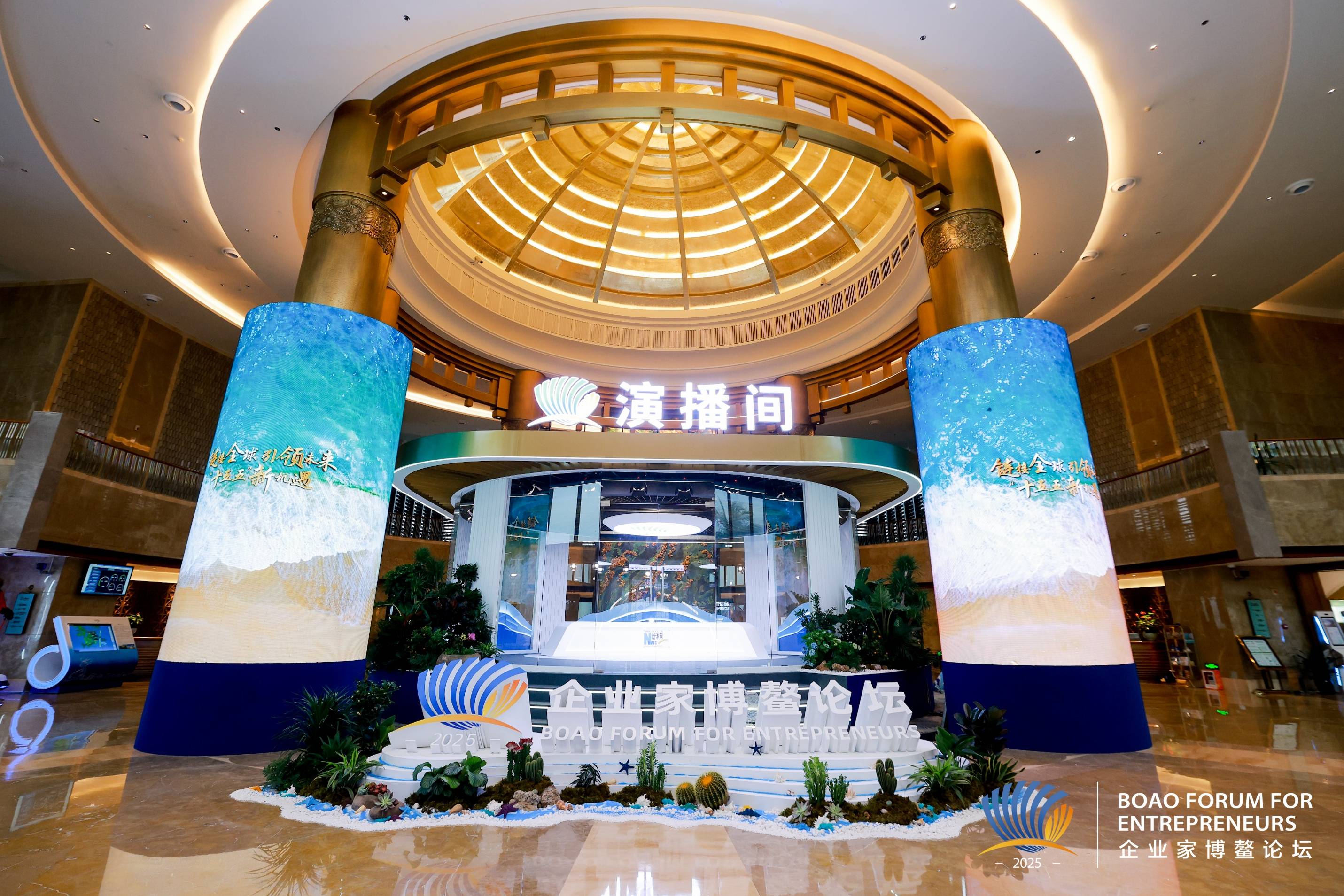
瑞幸“9.9元”咖啡,越来越难喝到了
3 6 Ke· 2025-12-04 10:21
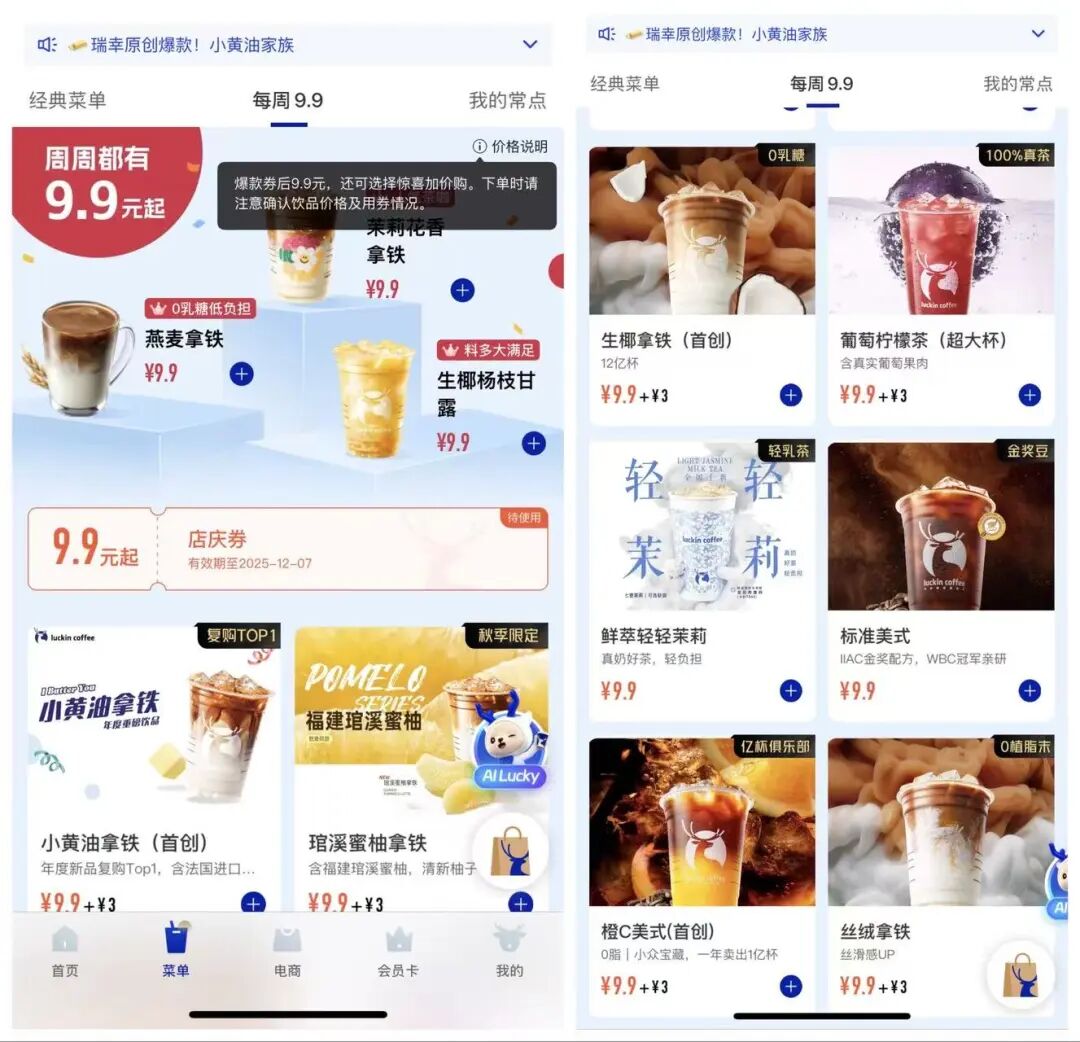
Core Viewpoint - Luckin Coffee's "weekly 9.9 yuan" promotion has become increasingly difficult to access, raising questions about its authenticity as the offer has been gradually reduced from a wide selection of drinks to only a few options, with additional costs now required for many items [1][2][4] Group 1: Promotion Changes - The "weekly 9.9 yuan" promotion started in the first half of 2023, initially allowing all drinks to be purchased at this price, but has since limited the offer to a few specific drinks, with many now requiring an additional 3 yuan [1][5] - Customers have expressed frustration over the promotion's diminishing value, feeling misled by the marketing tactics employed by Luckin Coffee [2][5] Group 2: Customer Experience and Legal Aspects - Legal experts indicate that while the small print disclosures may fulfill legal obligations, the marketing strategy may still be seen as misleading and could damage consumer trust [5] - The promotion's initial success was linked to a competitive pricing strategy aimed at increasing brand recognition and market share, but the recent changes may alienate some customers [9] Group 3: Financial Performance - In Q3 2023, Luckin Coffee reported a significant increase in monthly active customers, reaching 58.48 million, and a net revenue growth of 84.9% year-on-year, totaling 7.2 billion yuan [6] - However, the company's operating profit margin has decreased significantly, dropping from 18.9% to 3% in Q4 2023, and resulting in a loss of 65.11 million yuan in Q1 2024 [7] Group 4: Future Strategies - Luckin Coffee is expected to shift its promotional strategies towards more flexible methods, such as member-exclusive offers and limited-time discounts, as the low-price strategy becomes less sustainable [13] - The company is also exploring international expansion, having entered markets like Singapore and Malaysia, and is considering a return to the U.S. stock market [11][13]

瑞幸被曝克扣员工工时,每天白干3小时,官方暂未正面回应
新浪财经· 2025-12-04 10:18
Core Viewpoint - Luckin Coffee is facing allegations of employee exploitation, particularly regarding unpaid overtime and high work intensity, which has sparked significant public concern [2][5][8]. Employee Exploitation Allegations - Employees claim they work 12 hours daily but are only compensated for 9 hours, resulting in 3 hours of unpaid labor [5][8]. - The scheduling system reportedly misrepresents rest periods, as employees must remain on standby without pay during these times [5][8]. - High work intensity is highlighted, with strict performance metrics leading to a lack of breaks, even during designated rest times [8][9]. Financial Performance - In Q3 2025, Luckin Coffee reported total net revenue of 15.287 billion RMB, a 50.2% year-over-year increase, but net profit decreased by 1.9% to 1.28 billion RMB [14][15]. - The company experienced a significant rise in costs, with total costs and expenses reaching 13.5106 billion RMB, a 57.0% increase from the previous year [15][16]. - Delivery costs surged by 211.4% to 2.8892 billion RMB, now accounting for 19% of total revenue, indicating a substantial impact on profitability despite revenue growth [16]. Market Position and Future Outlook - Luckin Coffee is planning to return to the U.S. capital market after previously exiting due to financial fraud, with the CEO stating that this move could enhance the company's global presence [19][20]. - The company has shown recovery from past financial issues, achieving significant growth in revenue and profit, with a market share of 32% in China's ready-to-drink coffee sector [20][21]. - Analysts suggest that while the company has made substantial progress, regaining trust and navigating the complexities of re-listing on the U.S. market will be challenging due to its history of fraud [20][21].

瑞幸被曝克扣员工工时,每天白干3小时,官方暂未正面回应
Xin Lang Cai Jing· 2025-12-04 08:16
Core Viewpoint - Luckin Coffee is facing allegations of employee exploitation, particularly regarding unpaid overtime and excessive work hours, which has sparked significant public concern and discussion on social media [2][7][11]. Employee Exploitation Allegations - Employees claim they work 12 hours daily but are only compensated for 9 hours, resulting in 3 hours of unpaid labor [2][7]. - Reports indicate that scheduled "rest periods" require employees to remain on standby in-store without pay, leading to accusations of deceptive labor practices [2][7]. - High work intensity is reported, with strict performance metrics that pressure employees to complete tasks rapidly, often leaving no time for breaks [7]. Company Response - As of the article's publication, Luckin Coffee has not officially responded to the allegations of labor exploitation, and customer service representatives have avoided addressing the core issues [2][13]. Financial Performance - In Q3 2025, Luckin Coffee reported total net revenue of 15.287 billion RMB, a year-on-year increase of 50.2%, but net profit decreased by 1.9% to 1.28 billion RMB [13][14]. - The company added over 3,000 new stores, bringing the total to 29,214 globally [13]. - Despite revenue growth, the profit margin declined from 12.9% in the previous year to 8.4% in Q3 2025, indicating challenges in profitability [14][15]. Cost Structure - Total costs and expenses for Q3 2025 were 13.5106 billion RMB, a 57% increase from the previous year, with significant rises in material costs and operational expenses [14][15]. - Delivery costs surged by 211.4% to 2.8892 billion RMB, now accounting for 19% of total revenue, highlighting the financial impact of the competitive delivery market [15]. Market Position and Future Outlook - Luckin Coffee is planning to return to the U.S. capital market after overcoming past financial scandals, with the CEO expressing optimism about the company's growth and market position [16][17]. - The company has shown significant recovery from its previous financial crisis, achieving substantial revenue and profit growth, and is positioned as a leader in China's coffee market with a 32% market share [17].