国防军工

Search documents
新余国科:新余国晖计划减持公司股份不超过10万股
Mei Ri Jing Ji Xin Wen· 2026-01-15 10:20
Group 1 - The company Xinyu Guoke announced that its chairman Yuan Yougen plans to reduce his shareholding by selling up to 100,000 shares, which represents 0.0361% of the total share capital [1] - The company's director and general manager Liu Aiping, along with deputy general manager He Guangming, also plan to reduce their shareholdings by selling up to 100,000 shares each, representing 0.0361% of the total share capital [1] - Yuan Yougen indirectly holds approximately 1.09 million shares, accounting for 0.395% of the total share capital, while Liu Aiping and He Guangming hold approximately 460,000 shares (0.1675%) and 450,000 shares (0.1642%) respectively [1] Group 2 - The news mentions a potential entry of a "cheap version" of Tesla's Model 3 into the Chinese market, with a range of 480 kilometers [1] - There are significant adjustments in the autonomous driving market in the United States, indicating potential shifts in industry dynamics [1]

国防军工行业资金流出榜:航天电子等28股净流出资金超亿元
Zheng Quan Shi Bao Wang· 2026-01-15 09:08
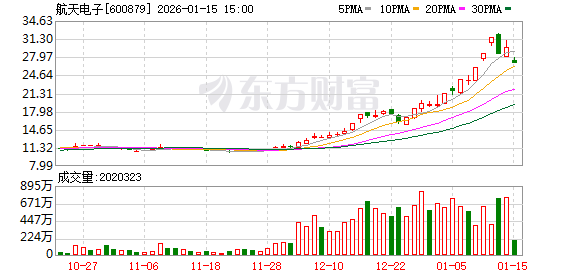
Market Overview - The Shanghai Composite Index fell by 0.33% on January 15, with 11 sectors experiencing gains, led by the electronics and basic chemicals sectors, which rose by 1.67% and 1.40% respectively. The defense and military industry had the second-largest decline at 2.80% [2] - The net outflow of capital from the two markets was 62.864 billion yuan, with six sectors seeing net inflows. The electronics sector had the highest net inflow of 12.083 billion yuan, followed by the non-ferrous metals sector with a net inflow of 1.936 billion yuan [2] Defense and Military Industry - The defense and military industry experienced a decline of 2.80%, with a total net capital outflow of 9.695 billion yuan. Out of 138 stocks in this sector, 32 rose, including one that hit the daily limit, while 103 fell, with 10 hitting the lower limit [3] - Among the stocks with net inflows, 40 saw capital inflow, with nine exceeding 100 million yuan. The top inflow was for Shenglu Communication, with a net inflow of 438 million yuan, followed by Feilihua and AVIC Shenyang Aircraft Corporation with inflows of 426 million yuan and 340 million yuan respectively [3] - The stocks with the highest net outflows included Aerospace Electronic, China Satellite, and Shanghai Hanxun, with outflows of 1.455 billion yuan, 1.092 billion yuan, and 796 million yuan respectively [3] Capital Flow in Defense and Military Stocks - The top stocks with capital inflow in the defense and military sector included: - Shenglu Communication: +9.97%, 438.2 million yuan - Feilihua: +3.78%, 426.1 million yuan - AVIC Shenyang Aircraft Corporation: +2.34%, 339.5 million yuan [4] - The stocks with the highest capital outflow included: - Aerospace Electronic: -9.98%, -1.4547 billion yuan - China Satellite: -10.00%, -1.0918 billion yuan - Shanghai Hanxun: -11.54%, -796.3 million yuan [5]





【广发金工】周期与先进制造业绩预告增速领先
广发金融工程研究· 2026-01-15 08:25
Core Viewpoint - The overall performance forecast for 2025 shows a cumulative disclosure rate of approximately 3.99% and a cumulative positive performance rate of about 40.83% among the disclosed companies [10][11]. Group 1: Overall Performance Forecast - Among the 218 companies that disclosed performance forecasts, 53 companies (24.31%) expect an increase in performance, 26 companies (11.93%) expect slight increases, 9 companies (4.13%) expect to turn losses into profits, and 1 company (0.46%) expects to maintain profitability [10]. - Conversely, 129 companies (59.17%) anticipate performance reductions, losses, or have uncertain forecasts [10]. Group 2: Performance by Sector - In the advanced manufacturing sector, the defense and military industry index has risen by 12.70%, correlating with a 26.50% growth in net profit attributable to the parent company [24]. - The machinery equipment sector shows a net profit growth of 39.63%, with an index increase of 6.06% [24]. - The pharmaceutical and medical sector has seen a significant decline, with net profit down by 36.59%, yet the index has increased by 9.85% [25]. - In the cyclical sector, upstream and midstream raw material industries have shown substantial improvement, with net profit growth exceeding 160% in construction materials, steel, and basic chemicals, although market reactions have been relatively stable [25]. - The consumer sector shows mixed results, with light industry manufacturing and agriculture experiencing net profit declines of -45.13% and -27.40%, respectively, while the automotive and home appliance sectors have seen net profit growth of 42.43% and 30.49% [25]. - The technology sector, particularly in media, has shown a significant divergence, with net profit down by 163.49% but an index increase of 24.65% [25]. - The real estate sector remains weak, with a net profit decline of 74.57%, while the banking sector has recorded a 5.98% profit growth but a 2.83% decline in the index [25]. Group 3: Performance Disclosure by Market Capitalization - The disclosure rate increases with market capitalization, with large-cap companies (over 100 billion) showing a disclosure rate of 7.95% and a positive performance rate of 64.29% [11][20]. - Mid-cap companies (500-1000 billion) have a disclosure rate of 8.70% and a positive performance rate of 56.25% [11][20]. - Small-cap companies (under 50 billion) have the lowest disclosure rate at 2.16% and a positive performance rate of 28.89% [11][20].

股市面面观丨市场“降温”背后:融资余额开年八连涨 一个月2000亿杠杆资金进场
Zhong Guo Jin Rong Xin Xi Wang· 2026-01-15 07:55
转自:新华财经 新华财经上海1月15日电(林郑宏)火热的A股市场近期出现降温,沪指在创纪录的日线十七连阳后出现两连阴。1月15日,沪指盘中一度跌破4100点,虽尾 盘收回这一整数关口,但仍收跌0.33%,已连续3个交易日下跌。两市成交额亦较前期下降超万亿元。 消息面上,1月14日,经中国证监会批准,沪深北交易所发布通知调整融资保证金比例,将投资者融资买入证券时的融资保证金最低比例从80%提高至 100%。上述通知自1月19日起施行。这一措施被认为是监管层引导市场"降温"。 沪深北交易所表示,近期融资交易明显活跃,市场流动性相对充裕,根据法定的逆周期调节安排,适度提高融资保证金比例回归100%,有助于适当降低杠 杆水平,保护投资者合法权益。 如果从月度数据来看,2026年开年以来,融资净买入额已超1500亿元,自"9.24行情"以来,已仅次于2025年8月和2024年10月。另有数据显示,1月14日参与 融资融券交易的投资者数量为72.35万名,创2024年10月09日以来新高。各方面数据显示出,近期杠杆资金入市的步伐大幅加快。 | 日期 | 沪深京合计 期间净买入额 | | | --- | --- | --- ...

2026 Market Outlook: 3 Top Sectors to Watch Amid Global Tensions
ZACKS· 2026-01-14 21:01
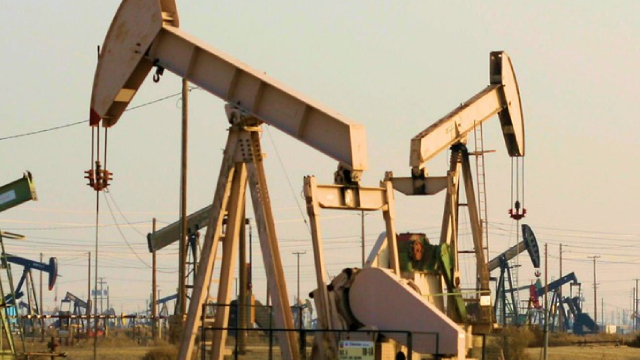
Core Insights - The global economic and political environment remains unsettled, yet there are solid growth opportunities for investors, particularly in sectors driven by long-term demand and innovation [1][4] Sector Summaries Energy Transition and Power Infrastructure - The renewable energy and power infrastructure sector is positioned for sustained growth due to decarbonization efforts and the need for reliable energy sources amid rising trade tensions and geopolitical risks [6] - Investment is being driven by the need to support data centers, electric vehicles, and industrial electrification, with companies like NextEra Energy (NEE) and GE Vernova (GEV) well-positioned to benefit from these trends [7] Oil & Conventional Energy - Oil and conventional energy remain strategically important, especially in the context of geopolitical tensions and the need for secure supply chains [8][11] - Integrated energy companies like Chevron (CVX) are expected to navigate price swings effectively due to their diversified operations and strong balance sheets [11] Defense & Security - The defense sector is experiencing strong demand due to rising geopolitical tensions and the need for enhanced national security, with governments increasing defense budgets and focusing on advanced systems [12][13] - Companies such as Lockheed Martin (LMT) are well-positioned to benefit from long-duration government contracts and their involvement in next-generation defense systems [13]
“卖出美国”交易卷土重来,聪明钱悄悄北上涌入加拿大
Hua Er Jie Jian Wen· 2026-01-14 13:03
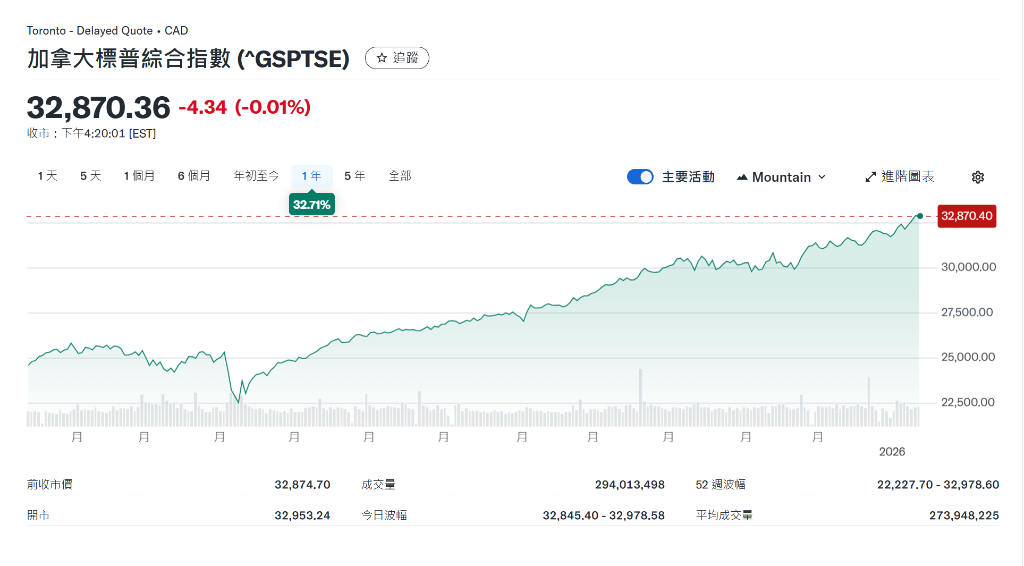
随着投资者对美国市场波动的担忧加剧,一波被称为"卖出美国"的交易浪潮正在悄然兴起,促使资本寻求更稳定的避风港,加拿大股市因此展现 出二十年来未曾有过的相对优势。 加拿大股市刚刚创下二十年来相对于美股的最佳年度表现,S&P/TSX 综合指数去年跃升28%,远超标普500指数16%的涨幅。这一趋势在2026年开 年得以延续,截至目前,加拿大基准指数已上涨3.7%,优于美股1.7%的涨幅。资金管理者押注这种优异表现将持续下去,在美国市场动荡不安之 际,促使投资者转向波动性较低的替代市场。 市场观察人士认为,特朗普政府对美联储及主席鲍威尔不断升级的攻击,是美国资产面临的最重大潜在干扰源。加拿大丰业银行的策略师 Hugo Ste-Marie 和 Jean-Michel Gauthier 指出,这一局势可能会重燃去年4月出现的温和版"卖出美国"交易,导致美债收益率上升、美股表现不佳以及美 元贬值。 这股"卖出美国"交易风潮的卷土重来可能给美元带来新的压力,并进一步压制美股表现。Janus Henderson Investors 全球客户投资组合管理主管 Seth Meyer 警告称,全球投资者正开始要求为持有美国资产获得 ...
“唐罗主义”推升全球地缘政治风险 面对动荡时局应如何布仓
Xin Lang Cai Jing· 2026-01-14 12:31
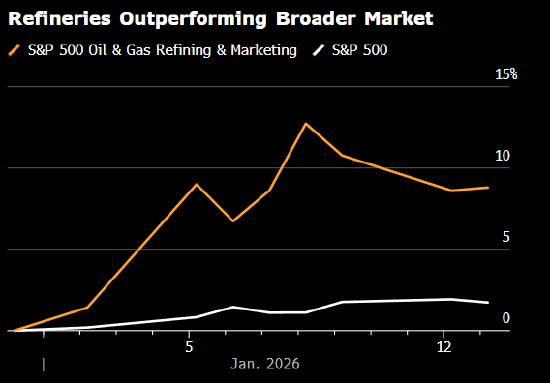
Geopolitical Risks and Market Impact - The U.S. is experiencing a shift towards "Trumpism," reviving a 200-year-old foreign policy aimed at projecting American dominance, which is causing investors to prepare for increased geopolitical risks in the coming year [1][9] - Trump's unpredictable actions could affect various asset classes, including energy prices and imports of AI chips, as outlined in a recent national security strategy [9][10] - Despite geopolitical tensions, the stock market has shown resilience, with the recent ousting of Venezuela's Nicolás Maduro being a minor event in the context of rising U.S. stock prices [10] Defense Sector - Defense stocks have shown volatility due to Trump's social media posts, but they may provide relative protection in the long term amid potential global conflicts and increased military spending [11] - Defense contractors like L3Harris Technologies Inc. and Huntington Ingalls Industries Inc. have seen stock price increases of 16% and 21% respectively this year [11] - Investment managers suggest that larger defense companies, such as Raytheon and General Dynamics, may be viewed as stable investments in an unstable environment [11] Energy Sector - Following Trump's warnings to Iran, oil prices have risen for four consecutive days, drawing investor attention to potential military actions against the oil-rich nation [14] - The recent rise in oil prices has not significantly changed skepticism regarding the core tenet of "Trumpism," particularly concerning drilling in Venezuela, which ExxonMobil has labeled as "uninvestable" [15] - Refining companies are expected to benefit the most from Trump's actions in Venezuela, as they typically perform better when oil prices are low [15] Materials Sector - The mining and metals sector has seen significant gains, particularly after discussions about potential U.S. military actions to acquire Greenland, which is rich in critical minerals [17] - Companies involved in rare earth minerals and lithium exploration, such as Critical Metals Corp., have experienced stock price surges, with an 84% increase noted [17] - However, there are risks associated with chasing raw material stocks, as market reactions may be influenced by geopolitical tensions, particularly regarding China's potential responses to U.S. actions [17]
地缘风险或成市场动荡导火索 解码美股四大板块危与机
智通财经网· 2026-01-14 12:12
Geopolitical Risks and Market Impact - The revival of the "Donroe Doctrine" by the White House aims to strengthen the U.S. dominance in the Western Hemisphere and beyond, leading investors to prepare for a year of heightened geopolitical risks [1] - The unpredictability of former President Trump's policy shifts could trigger chain reactions across various asset classes, affecting everything from energy prices to core chip imports in the AI industry [1] - Increased military spending calls have driven defense stocks up, while investors are focusing on potential U.S. actions in regions like Greenland, Iran, and Cuba, weighing responses from China and Russia [1] Technology Sector - The U.S. technology sector, particularly companies like Nvidia (16% of revenue from Taiwan), is likely to face significant impacts due to geopolitical tensions surrounding Taiwan [3] - The focus on Taiwan will center on TSMC, which supplies major U.S. tech firms including Apple, Nvidia, and Amazon [3] - Companies with contracts with the Pentagon, such as Palantir Technologies, may benefit from rising geopolitical risks, while Intel's stock has risen over 28% this year as investors buy into U.S. chip manufacturers [3] Defense Sector - U.S. defense stocks, despite recent volatility due to Trump's social media posts, may offer relative protection in the long term as global conflict possibilities increase [4] - Proposed increases in U.S. military spending have led to strong performance in the defense sector, with contractors like L3Harris Technologies and Huntington Ingalls Industries seeing stock price increases of 16% and 21% respectively this year [4] - Major defense stocks like Raytheon Technologies and General Dynamics are viewed as stable investment choices amid geopolitical instability [4] Energy Sector - Oil prices surged following Trump's warning to Iran, raising concerns about potential military actions affecting oil-rich regions [5] - Skepticism remains regarding the viability of drilling in Venezuela, especially after ExxonMobil deemed the country "not investable," which displeased Trump [5] - Refiners are expected to be the biggest beneficiaries in the energy sector, particularly those along the Gulf Coast, as increased heavy crude oil supply is anticipated [5] Materials Sector - The metals and mining sector has seen significant gains, particularly with companies like Critical Metals Corp. experiencing an 84% stock price increase due to discussions about Greenland's mineral assets [6] - Other mining companies, including MP Materials Corp. and USA Rare Earth Inc., have also seen stock price increases amid geopolitical tensions [6] - The rise in gold and silver prices following Maduro's ousting indicates that investors are seeking hedges against anticipated geopolitical turmoil [6]

主力资金丨5股尾盘获主力资金大手笔抢筹
Zheng Quan Shi Bao Wang· 2026-01-14 11:16
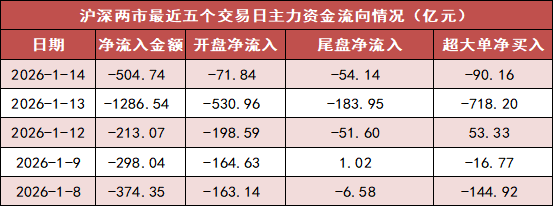
Group 1 - The core point of the article highlights that on January 14, the main funds in the Shanghai and Shenzhen markets experienced a net outflow of 504.74 billion yuan, with the ChiNext board seeing a net outflow of 210.18 billion yuan and the CSI 300 index stocks a net outflow of 154.4 billion yuan [1] - Among the 17 primary industries, the computer industry had the highest increase, rising by 3.42%, while the banking and real estate sectors saw declines exceeding 1% [1] - Ten industries experienced net inflows of main funds, with the computer industry leading at a net inflow of 46.7 billion yuan, followed by non-bank financials and telecommunications with inflows exceeding 11 billion yuan each [1] Group 2 - In individual stock performance, the automotive parts company Shanzi Gaoke had the highest net inflow of main funds at 21.18 billion yuan, with a trading volume of 128.48 billion yuan and a turnover rate of 24.14% [2] - PCB concept stock Hu Dian shares saw a net inflow of 13.28 billion yuan, ranking second, while AI financial stock Lakala had a net inflow of 12.91 billion yuan [2] - The article also notes that over 250 stocks had net outflows exceeding 1 billion yuan, with 10 stocks seeing outflows over 10 billion yuan [3] Group 3 - The article mentions that leading sectors for net outflows included robotics, electricity, and wind power, with each seeing outflows exceeding 21 billion yuan [4] - Hai Ge Communication experienced a net outflow of 14.3 billion yuan, with the company announcing expected losses for the 2025 fiscal year [4] - The tail-end trading session saw a net outflow of 54.14 billion yuan, with the CSI 300 index stocks experiencing a net outflow of 49.52 billion yuan [5]






【14日资金路线图】两市主力资金净流出超500亿元 计算机等行业实现净流入
Zheng Quan Shi Bao· 2026-01-14 11:12
Market Overview - The A-share market showed mixed performance on January 14, with the Shanghai Composite Index closing at 4126.09 points, down 0.31%, while the Shenzhen Component Index rose 0.56% to 14248.6 points, and the ChiNext Index increased by 0.82% to 3349.14 points. The total trading volume for both markets reached 39,413.89 billion yuan, an increase of 2,904.04 billion yuan compared to the previous trading day [1]. Capital Flow - The net outflow of main funds from the Shanghai and Shenzhen markets exceeded 500 billion yuan, with a total net outflow of 504.74 billion yuan for the day, including an opening net outflow of 71.84 billion yuan and a closing net outflow of 54.14 billion yuan [2][3]. - The CSI 300 index experienced a net outflow of 154.4 billion yuan, while the ChiNext saw a net outflow of 210.18 billion yuan [4]. Sector Performance - The computer industry saw a net inflow of 208.24 billion yuan, with a growth of 3.44%, driven by stocks like Tonghuashun [6]. - The electronics sector recorded a net inflow of 101.23 billion yuan, increasing by 1.36%, led by Huadian Co. [6]. - The automotive sector faced a net outflow of 102.89 billion yuan, with a slight decline of 0.19%, primarily impacted by Jianghuai Automobile [6]. - The banking sector also saw a net outflow of 96.11 billion yuan, down 1.45%, with Beijing Bank being a significant contributor [6]. Institutional Activity - Notable institutional buying included Guangxun Technology, which saw a net purchase of 51,578.19 million yuan, reflecting a daily increase of 10.00% [8]. - Other significant purchases included Liou Co. with 39,662.88 million yuan and China Satellite Communications with a net outflow of 34,609.85 million yuan, down 10.00% [8]. Stock Recommendations - UBS has rated Shanghai Pharmaceuticals as a "Buy" with a target price of 22.3 yuan, indicating a potential upside of 26.85% from the latest closing price of 17.58 yuan [11]. - Other stocks recommended by UBS include Longi Green Energy with a target price of 54 yuan, suggesting a 51.69% upside from its current price of 35.60 yuan [11].