
国际贸易

Search documents
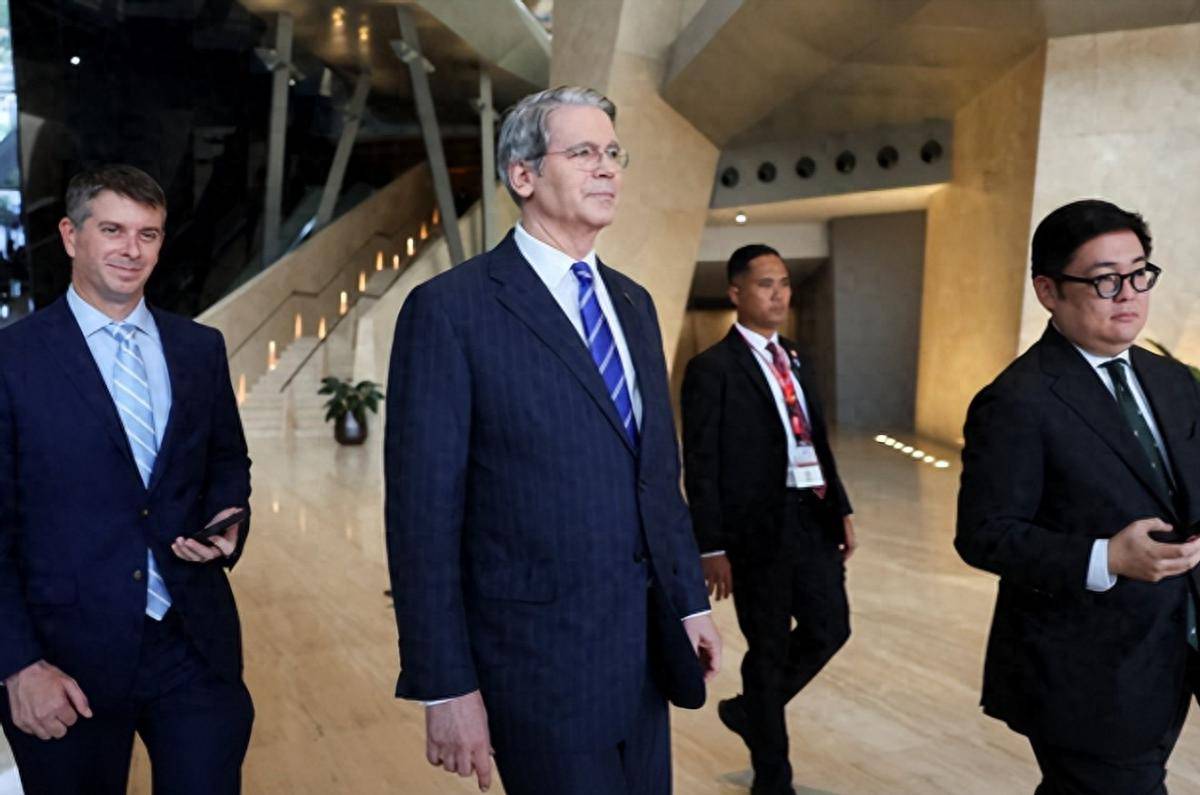
中方给了贝森特面子,但美国输了底子,特朗普:中方希望达成协议
Sou Hu Cai Jing· 2025-10-28 08:43
Core Points - The recent US-China trade negotiations in Kuala Lumpur ended without a formal agreement, but the US decided to temporarily suspend the planned 100% tariff on Chinese goods, indicating a complex power struggle [1][3][5] - The US Treasury Secretary, Becerra, emphasized avoiding the tariff as a significant achievement, while the Chinese delegation maintained a firm stance without showing any signs of compromise [4][12] - The negotiations highlighted the structural issues within the US economy, including rising debt and inflation, which pressured the US to reconsider its aggressive trade tactics [10][11][15] Summary by Sections Negotiation Dynamics - The atmosphere during the negotiations was tense, with no significant breakthroughs or agreements reached, reflecting a stalemate in US-China relations [1][3] - Becerra's comments suggested a tactical retreat rather than a strategic victory, as the US faced internal disagreements on how to approach the negotiations [11][14] Economic Context - The US's total debt has surpassed $38 trillion, with interest payments at a historical high, making further tariffs potentially damaging to the economy [10][11] - The imposition of additional tariffs could exacerbate inflation and harm consumer confidence, leading to a reconsideration of aggressive trade measures [10][12] Strategic Implications - The negotiations revealed China's strategic patience and ability to maintain its position without yielding to US pressure, indicating a shift in the balance of power [12][15] - The US's initial strategy of using trade leverage to force concessions from China has proven ineffective, as the global supply chain has diversified, reducing the impact of US threats [15][16]

深圳市奇江国际贸易有限公司成立 注册资本1万人民币
Sou Hu Cai Jing· 2025-10-28 07:20
Core Insights - Shenzhen Qijiang International Trade Co., Ltd. has been established with a registered capital of 10,000 RMB [1] - The company is involved in a wide range of business activities including sales of electronic products, electronic components, household appliances, and adult products [1] Company Overview - The legal representative of the company is Feng Shuaqi [1] - The company’s general business scope includes wholesale and retail of various products such as daily necessities, jewelry, and office supplies [1] - The company is also engaged in technology services, consulting, and internet sales, excluding items that require special permits [1]
中美谈判取得突破性进展,美国不再考虑对华加征100%关税
Sou Hu Cai Jing· 2025-10-28 05:24
Core Points - The initial consensus reached between China and the U.S. on trade issues after intense negotiations indicates a shift in the dynamics of their trade relationship [1][3] - The U.S. has focused on key areas such as rare earth materials, soybeans, and fentanyl, aiming to pressure China into concessions [3][5] - The recent negotiations in Kuala Lumpur have reportedly made substantial progress, with indications that the U.S. will not impose new high tariffs on Chinese exports [5][7] Group 1 - The U.S. displayed a strong attitude during negotiations, with threats of imposing tariffs as high as 500% on Chinese goods, which have now been retracted [1][5] - The discussions included critical topics such as shipping fees under Section 301, extension of tariff suspension periods, and enforcement cooperation, suggesting a comprehensive approach to resolving trade tensions [5][7] - The acknowledgment from U.S. Treasury Secretary that no new 100% tariffs will be considered reflects significant progress in the negotiations [5][7] Group 2 - The trade conflict has broader implications, as high tariffs not only affect China but also have detrimental effects on the U.S. economy, impacting American households [7][8] - China has alternative export channels, such as the China-Europe Railway Express, which can alleviate export pressures, while the U.S. remains heavily reliant on Chinese manufacturing for consumer goods [8] - The ongoing negotiations highlight the importance of cooperation between the two nations, suggesting that mutual benefits can be achieved through collaboration rather than conflict [8]
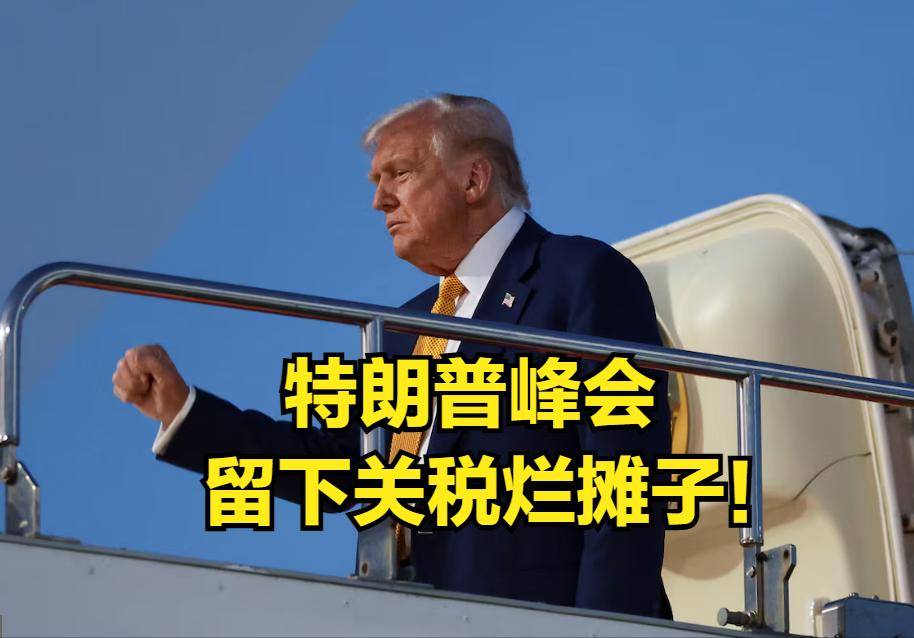
美国挖坑中国填!特朗普赴日会见高市早苗,中国在东盟收拾烂摊子
Sou Hu Cai Jing· 2025-10-28 02:23
Group 1 - The article highlights China's efforts to fill the leadership void left by the U.S. in Southeast Asia, particularly in promoting open trade and strengthening regional economic ties during a summit in Kuala Lumpur [1][3] - The U.S. under President Trump is facing criticism for its high tariffs on Southeast Asian countries, which analysts believe is a strategy to pressure these nations to align with U.S. interests against China [3][4] - The Regional Comprehensive Economic Partnership (RCEP), supported by China, is emphasized as a significant trade agreement that could buffer the impact of U.S. tariffs, covering about 30% of global GDP [4][6] Group 2 - China's call for maintaining free trade and opposing protectionism is seen as a direct response to U.S. tariff policies, aiming to promote regional economic integration [3][4] - The article notes the challenges China faces, such as criticism from the Philippines regarding its actions in the South China Sea, which complicates its regional leadership aspirations [4][6] - Brazil's President Lula expresses optimism about achieving better trade agreements with the U.S., reflecting a common sentiment among Southeast Asian nations to balance relations with both the U.S. and China [6][7]
今年前三季度霍尔果斯口岸进出口货运量超3480万吨
Yang Shi Xin Wen Ke Hu Duan· 2025-10-28 00:55
Core Insights - The Horgos port has achieved a record high cargo throughput of 34.881 million tons in the first three quarters of this year, ranking first among ports in Xinjiang [1] - The main export products from Horgos port include new energy vehicles, electromechanical products, high-tech products, and clothing [1] - Horgos port is the largest land port for automobile exports in China, with 296,000 vehicles exported in the first three quarters, also a historical high [1] Industry Developments - Horgos Huashang International Trade Co., Ltd. reported exporting nearly 1,000 vehicles from Horgos port this year, with a trade value of 170 million yuan [1] - The port has implemented various customs clearance options, including local customs declaration and integrated declaration, enhancing operational convenience for companies [1] - To improve port openness and efficiency, Horgos Customs has adopted 24/7 cargo clearance, focusing on enhancing the efficiency of goods passage [1] Regulatory and Operational Changes - Horgos Customs is promoting reforms such as "road port + local direct access model" and "smart railway port + local rapid clearance model" [1] - Additional facilitation measures like advance declaration and immediate release upon arrival are being implemented to ensure continuous customs clearance [1]
中美贸易谈判结束:我国稀土管制延期,准备采购美国大豆,美国承诺对中国不加关税
Sou Hu Cai Jing· 2025-10-27 11:49
Core Points - The recent US-China trade negotiations in Malaysia resulted in a preliminary framework agreement, with China agreeing to delay restrictions on rare earth exports by one year and committing to purchase a certain amount of US soybeans, while the US promised not to impose a 100% tariff on China [1][3][5] Group 1: Negotiation Outcomes - The US Treasury Secretary, Behnam, announced a "very successful negotiation framework," indicating a perceived victory for the US, while China's representative emphasized the firm stance of China in protecting its interests [1][3] - The agreement includes a one-year postponement of China's rare earth export restrictions, which is seen as a strategic move to provide both sides with a buffer period, avoiding immediate escalation of tensions [1][3][7] - The US's abandonment of the 100% tariff threat reflects its deep reliance on China's rare earth materials, as China controls over 85% of global rare earth processing capacity [3][5] Group 2: Strategic Implications - The postponement of rare earth restrictions is not a relinquishment of rights by China but rather a strategic maneuver that maintains leverage over the US, allowing for adjustments in response to any US violations of the agreement [7] - The negotiations highlight a shift in the US's approach, moving from a high-pressure stance to one of "equality and respect," indicating recognition of China's countermeasures [5] - Despite the framework agreement, structural contradictions between the two countries suggest that the trade conflict is far from over, with ongoing issues such as TikTok ownership remaining contentious [7]

贵金属日评-20251027
Jian Xin Qi Huo· 2025-10-27 02:08
Report Summary 1. Report Industry Investment Rating No specific industry investment rating is provided in the report. 2. Core Viewpoints - The current round of precious metals upward trend since late August may extend to 2026 due to factors such as the Fed's potential interest - rate cuts, high geopolitical risks, and the acceleration of the global trade - currency system restructuring. Investors are advised to maintain a long - position mindset, and short - hedgers can appropriately reduce the hedging ratio. However, the current high price - earnings ratio of gold requires strong safe - haven demand, and long - position investors need to control their positions and be aware of short - term adjustment risks [4][5]. 3. Summary by Relevant Catalogs Precious Metals Market Analysis - **Intraday Market**: Sino - US trade tensions show signs of easing, weakening safe - haven demand and pressuring London gold to around $4080 per ounce. But the US federal government shutdown and Fed rate cuts support precious metals. It is necessary to observe whether London gold can stabilize between $3950 - $4050 per ounce. This week, focus on Sino - US trade talks, China's September economic data, the progress of the US government shutdown, and the Fourth Plenary Session of the 20th CPC Central Committee [4]. - **Medium - term Market**: The US employment and inflation situation supports the Fed's rate - cut restart. Global trade - currency system restructuring and high geopolitical risks continue to drive gold demand. The upward trend of precious metals since late August may extend to 2026. The six - month and one - year target prices for London gold are $4500 and $4800 per ounce respectively, and for London silver are $58 and $63 per ounce respectively. However, the current high price - earnings ratio of gold requires strong safe - haven demand, and long - position investors need to control positions and beware of short - term adjustments. The support levels for London gold are $4130 and $3975 per ounce, and for London silver are $50.31 and $47.76 per ounce [5]. Precious Metals Market - Related Charts The report provides multiple charts related to precious metals, including Shanghai gold and silver futures indices, London gold and silver spot prices, the basis of Shanghai futures indices against Shanghai gold T + D, and gold and silver ETF holdings, etc., but no specific analysis of these charts is given in the text [6][7][9]. Major Macroeconomic Events/Data - Russian President Putin stated that Moscow will never yield to external pressure and will respond overwhelmingly if its deep - seated targets are attacked. He also said that US and Western sanctions have little impact on Russia's economic well - being [17]. - The EU included two Chinese refineries (Liaoyang Petrochemical and Shandong Yulong Petrochemical) and PetroChina's trading unit (PetroChina Hong Kong) in the sanctions list against Russia, claiming they are major buyers of Russian crude oil. It also sanctioned a Chinese trading company for its role in Russia's sanctions - evasion [17]. - The US is preparing to investigate China's compliance with the trade agreement signed during Trump's first term [17]. - The Kuwaiti oil minister said that OPEC is ready to increase oil production by further canceling production cuts if necessary after the US imposed new sanctions on Russian oil giants, expecting demand to shift to the Gulf and Middle East regions [17].
贝森特:美方“不再考虑”对中国加征100%的关税
Huan Qiu Shi Bao· 2025-10-27 00:05
Core Points - The recent two-day trade talks between China and the U.S. in Kuala Lumpur resulted in a basic consensus on key economic issues, including maritime logistics, shipbuilding, and tariff suspensions [1][2][3] - Both sides emphasized the importance of mutual respect and cooperation in resolving trade disputes, highlighting the interdependence of their economies [2][4] - The discussions were described as constructive, with both parties expressing a commitment to further detail and internal approval processes for the agreements reached [3][5] Group 1: Trade Negotiations - The talks included discussions on export controls, extension of tariff suspension, and cooperation on fentanyl-related issues, with both sides showing a willingness to explore solutions [3][4] - U.S. Treasury Secretary expressed optimism about the framework established during the talks, indicating it could facilitate a meeting between the two leaders [3][4] - The outcome of these negotiations is seen as a significant step towards easing tensions in U.S.-China trade relations, with potential implications for global trade dynamics [4][5] Group 2: APEC Meeting Context - The upcoming APEC meeting, where Chinese President Xi Jinping will attend, is expected to draw global attention, particularly regarding the potential meeting between the U.S. and Chinese leaders [1][6] - Analysts suggest that the results of the trade talks could influence the outcomes of the APEC discussions, particularly in terms of trade cooperation and economic stability in the region [5][7] - The significance of the APEC meeting is underscored by the current global economic challenges, with the need for a balanced approach in U.S.-China relations being highlighted [6][7]
围绕多项重要经贸问题,双方进行“建设性的”探讨,中美吉隆坡磋商达成基本共识
Huan Qiu Shi Bao· 2025-10-26 22:27
【环球时报赴马来西亚特派记者 曹师韵 环球时报记者 迟静怡 韩雯】10月26日,中美经贸团队在马来西 亚首都吉隆坡结束为期两天的磋商。双方以今年以来两国元首历次通话重要共识为引领,围绕美对华海 事物流和造船业301措施、延长对等关税暂停期、芬太尼关税和执法合作、农产品贸易、出口管制等双 方共同关心的重要经贸问题,进行了坦诚、深入、富有建设性的交流磋商,就解决各自关切的安排达成 基本共识。双方同意进一步确定具体细节,并履行各自国内批准程序。此次会谈的成果受到各方积极评 价。中国国家主席习近平将于10月30日至11月1日赴韩国庆州出席亚太经合组织(APEC)第三十二次 领导人非正式会议并对韩国进行国事访问。美方也确认美国总统特朗普将访问韩国。韩国《东亚日报》 称,全世界的目光都将集中在中美元首是否会举行会晤上。韩国纽西斯通讯社表示,中美贸易冲突对全 球影响重大,两国领导人能否会晤,备受瞩目。 彭博社称,美国贸易代表格里尔在记者会上说,中美贸易谈判富有成效,涉及各种议题,"谈到延长对 等关税暂停期,也谈到稀土",双方正就一项贸易协议提案的最终细节进行讨论,几乎可以提交两国领 导人审议。 26日,美国总统特朗普在吉隆 ...
Bitcoin Tops $113K, SOL, ADA, ETH Jump as US–China Trade Progress Lifts Risk Appetite
Yahoo Finance· 2025-10-26 12:55
Core Insights - Bitcoin surpassed $113,000, marking its highest level in nearly two weeks, driven by positive developments in US-China trade talks [1] - A preliminary consensus was reached on key issues such as export controls and tariffs, alleviating fears of escalating trade tensions [2] - The overall crypto market capitalization increased by 1.8% to $3.72 trillion, indicating a recovery from previous declines [4] Market Reactions - US and Asian equity futures rose, while gold prices slightly decreased, reflecting a shift towards risk assets [3] - Major cryptocurrencies like ether (ETH), BNB, and Solana (SOL) experienced gains, with ether rising 2.6% to around $4,060 [3] - XRP saw a 2.3% increase to $2.64, continuing its rally linked to ETF optimism, while Tron’s TRX was the only major token to decline, falling 2.9% [3] Future Outlook - The upcoming Federal Reserve policy meeting is anticipated to influence market trends, with a dovish tone potentially supporting further breakout in crypto prices [5] - The easing of geopolitical tensions has provided a temporary relief for traders, helping to stabilize the market after a period of volatility [4][5]