宠物

Search documents
美股异动丨海川证券跌30.92%,为跌幅最大的中概股
Ge Long Hui· 2025-11-04 00:49
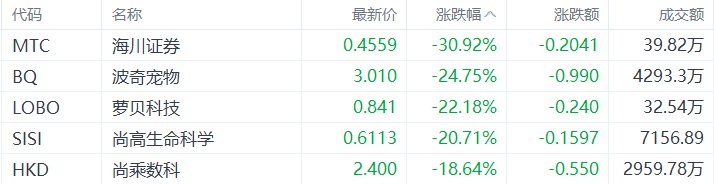
Group 1 - The article reports significant declines in the stock prices of several Chinese concept stocks, with notable drops including Haichuan Securities down 30.92% and BQ Pet down 24.75% [1] - The closing prices and trading volumes of the affected stocks are detailed, highlighting Haichuan Securities at 0.4559 with a trading volume of 398,200, and BQ Pet at 3.010 with a trading volume of 42,933,000 [1] - Other companies experiencing declines include Lobo Technology down 22.18%, Shangao Life Sciences down 20.71%, and Shangcheng Shuke down 18.64%, indicating a broader trend of falling stock prices in this sector [1]




机构:宠物行业呈现持续增长、高韧性特征
Zheng Quan Shi Bao Wang· 2025-11-04 00:30
Core Insights - The demand and trading of "exotic pets" in China is rapidly increasing, with approximately 17.07 million people currently keeping these pets, leading to a market size nearing 10 billion yuan [1][1][1] Industry Overview - The pet industry in China, although starting later than in other countries, is benefiting from demographic changes, upgraded emotional needs, and refined consumption trends, resulting in sustained growth and resilience [1][1][1] - There are structural opportunities across various segments of the industry chain, particularly in domestic production, innovation in niche categories, and increased service penetration [1][1][1] Market Trends - The pet market is thriving, with steady growth in the pet food and staple food sectors [1][1][1] - Pet owners exhibit strong purchasing power and an increasing willingness to spend on their pets [1][1][1] - Trends observed at the Asia Pet Expo indicate a rise in "precise segmentation" and "functional" trends in pet food [1][1][1] - Sales data from events like "Double 11" shows the emergence of domestic brands in the market [1][1][1]
行业点评报告:2025Q3生猪开启去化,饲料动保后周期经营改善
KAIYUAN SECURITIES· 2025-11-03 14:12
Investment Rating - The investment rating for the agriculture industry is "Positive" (maintained) [1] Core Viewpoints - The agriculture sector's profit has contracted significantly due to the unexpected decline in pig prices, leading to a year-on-year profit drop of 58.8% in Q3 2025 [17] - The overall revenue for the agriculture industry in Q1-Q3 2025 reached 872.718 billion, with a year-on-year increase of 6.44%, while the net profit attributable to shareholders was 35.477 billion, up 10.63% year-on-year [5][17] - The average price of pigs in Q3 2025 was 13.81 yuan/kg, down 28.89% year-on-year, with the lowest price of 10.84 yuan/kg recorded on October 13, 2025 [5][17] Summary by Sections Overall Industry - In Q3 2025, the agriculture sector's profit contracted by 58.8% due to falling pig prices [17] - The industry's sales gross margin for Q1-Q3 2025 was 11.79%, up 0.12 percentage points year-on-year, while the net profit margin was 4.21%, up 0.21 percentage points year-on-year [20] - The industry’s net asset return rate was 6.75%, an increase of 0.28 percentage points year-on-year [20] Subsector Analysis - The pig farming sector has entered a de-stocking cycle, while the feed and animal health sectors are experiencing post-cycle operational improvements [6][25] - In Q1-Q3 2025, the revenue growth rates for pet food, animal health, feed, and planting were 20.34%, 17.69%, 12.38%, and 9.50% respectively [6][25] - The net profit growth rates for animal health, agricultural product processing, and feed sectors were 69.40%, 59.33%, and 54.17% respectively [6][25] Pig Farming - In Q1-Q3 2025, pig farming enterprises achieved revenue of 341.269 billion, a year-on-year increase of 8.32%, with a net profit of 22.175 billion, up 14.29% year-on-year [7][28] - The overall pig output from 12 enterprises was 123.9948 million heads, a year-on-year increase of 19.45% [41] - The profitability of the pig farming sector has declined due to falling prices, with average gross margin, net margin, and ROE at 12.25%, 4.08%, and 5.87% respectively [31] Poultry Farming - In Q1-Q3 2025, revenue for poultry farming reached 40.215 billion, a year-on-year increase of 6.92%, while net profit was 1.646 billion, down 9.52% year-on-year [44] - The profitability metrics for poultry farming were a gross margin of 12.61%, a net margin of 2.83%, and a return on equity of 4.18% [46] Feed Industry - The feed sector generated revenue of 152.955 billion in Q1-Q3 2025, reflecting a year-on-year increase of 11.69%, with a net profit of 4.505 billion, up 8.72% year-on-year [8][57] - The average gross margin, net margin, and ROE for feed enterprises were 9.41%, 1.17%, and 3.65% respectively [57] Animal Health - The animal health sector achieved revenue of 9.977 billion in Q1-Q3 2025, a year-on-year increase of 14.08%, with a net profit of 1.265 billion, up 45.51% year-on-year [63] - The average gross margin, net margin, and ROE for animal health enterprises were 53.42%, 17.77%, and 4.35% respectively [63] Seed Industry - The seed sector reported revenue of 6.814 billion in Q1-Q3 2025, down 5.82% year-on-year, with a net profit of -880 million, a decline of 53.87% year-on-year [68]





专注宠物卫护30载,它能靠宠物食品构建起第二增长曲线?
市值风云· 2025-11-03 10:09
Group 1 - The article highlights the growing trend of pet ownership leading to increased spending on pet-related products, indicating a shift in consumer behavior where pet care is prioritized over personal expenses [3][4]. - This phenomenon is described as a form of emotional compensation for the fast-paced lifestyle, resulting in a booming "pet economy" that encompasses various sectors [4]. - Within this pet economy, pet hygiene and care products are identified as essential needs for pet owners, representing a significant yet often overlooked segment of the market [5][6]. Group 2 - A Chinese company is positioned as an "invisible champion" in the pet hygiene care products sector, serving millions of pets and their owners globally [6].

广交会情绪经济观察:情绪消费破圈 企业如何打开消费新空间
2 1 Shi Ji Jing Ji Bao Dao· 2025-11-03 08:36
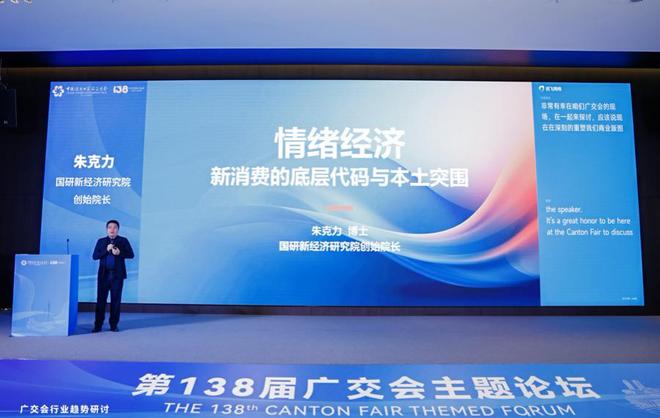
Core Insights - The event highlighted the rise of emotional consumption as a mainstream trend, with a projected emotional consumption scale in China exceeding 23 trillion yuan in 2024 and expected to surpass 45 trillion yuan by 2029 [1][2] - The shift from product manufacturers to emotional value service providers is evident, as companies adapt to the emotional economy and consumer preferences [1][5] Emotional Consumption Trends - Emotional satisfaction has become the primary purchasing driver for Generation Z, surpassing 40% in importance, while functional needs have become secondary [2] - The emotional economy is driven by a combination of generational, technological, and social pressures, leading to the emergence of healing products and emotional retail [1][2] Brand Strategies - Brands are encouraged to create unique emotional expressions and cultural symbols to build loyalty and pricing power, moving away from Western models to focus on local emotional contexts [2] - Key strategies for brands include "IPization" to enhance brand loyalty through unique personalities and storytelling, and "scenization" to integrate brands into specific life environments [3][4] Market Insights - The pet industry in China is projected to reach 701.3 billion yuan in 2024, with a household penetration rate increasing from 22% in 2023 to over 30% [6] - Emotional needs drive over 40% of pet owners' decisions to adopt pets, with 32.2% willing to pay for products that enhance their pets' quality of life [6] Cultural and Emotional Integration - The integration of emotional value into product design, marketing, and user service is essential for establishing sustainable competitive advantages [4] - The emotional demand is becoming a core connection point for cross-industry integration, driving the reconstruction of consumption scenarios and linking multiple industry boundaries [8]
广交会情绪经济观察:情绪消费破圈,企业如何打开消费新空间
2 1 Shi Ji Jing Ji Bao Dao· 2025-11-03 08:25
Core Insights - The article discusses the emergence of the emotional consumption era, highlighting its impact on consumer behavior and market dynamics, with emotional value becoming a key driver of purchasing decisions [1][2][4] Group 1: Emotional Consumption Trends - Emotional consumption is becoming a mainstream trend, with a projected scale of over 23 trillion yuan in China by 2024, expected to exceed 45 trillion yuan by 2029 [1] - The Z generation is identified as the primary consumer group, with emotional satisfaction being the main purchasing driver, accounting for over 40% of their decision-making [4] - Brands are shifting from product manufacturing to providing emotional value services, creating a unique emotional expression system rooted in local cultural contexts [4][5] Group 2: Market Strategies and Insights - Emotional value plays a crucial role in purchasing decisions, with over 90% of consumers preferring brands that convey emotional value, and more than 80% willing to pay a premium for high emotional value [5] - Key strategies for brands to stand out include "IPization," which involves giving brands unique personalities and stories, and "scenization," integrating brands into specific life environments for experiential value [5][6] - The competition is evolving beyond functionality and price to include emotional resonance and service effectiveness, necessitating a deep integration of emotional value into product design and marketing [6] Group 3: Pet Industry Insights - The pet industry in China is projected to reach 701.3 billion yuan by 2024, with pet ownership penetration increasing from 22% in 2023 to over 30% [6][8] - Emotional needs drive over 40% of pet owners to keep pets, with 32.2% willing to pay for products that provide emotional comfort [8] - The trend of fashionable pet ownership is emerging, with consumers seeking unique and stylish pet products that reflect their personal style [8] Group 4: Cultural and Innovation Perspectives - Companies like KAYOU Animation are innovating in the stationery sector, emphasizing the emotional and cultural significance of products like pens, which are being optimized for quality and design [9][11] - The integration of cultural symbols and emotional connections into products is seen as essential for resonating with consumers and enhancing brand loyalty [11] - The article concludes that emotional needs are becoming a core connection point for cross-industry integration, driving the reconstruction of consumption scenarios and the fusion of multiple industry boundaries [11]
“什么值得买”“11.11”开门红:品质消费持续领跑,兴趣赛道快速增长
Zhong Guo Zhi Liang Xin Wen Wang· 2025-11-03 05:23
Core Insights - The 2025 "11.11" shopping festival by "What Worth Buying" emphasizes a consumer trend driven by interests and AI technology, aiming to enhance user experience and satisfaction during the shopping event [1][12] Consumer Trends - The top five categories by GMV during the opening period were major appliances, mobile communications, kitchen appliances, home furniture, and household electricals, indicating a strong preference for larger items [3] - Fastest-growing categories with GMV over one million included pet daily necessities, gaming hardware, outdoor apparel, kitchen tools, and automotive maintenance, with year-on-year growth rates of 90.35%, 55.28%, 43.33%, 36.26%, and 36.24% respectively [3] Interest-Driven Consumption - Interest-driven consumption is becoming a new norm, with significant performance in categories like sports equipment, travel, and home renovation, reflecting a shift from traditional consumption patterns [3][5] - The platform's upgraded "Interest Square" features over a hundred dedicated interest scenarios, enhancing the consumer experience from interest content to interest-based purchases [5] High-Value Products - High-value products such as large-capacity appliances and premium electronics are leading the market, with brands like Midea and Xiaomi dominating sales in their respective categories [4][5] - The smartphone category is witnessing a trend towards high-end and smart devices, with the new iPhone 17 series capturing the top three GMV spots [5] Health and Wellness - Health-related products are experiencing significant growth, with functional health products and smart devices becoming essential for consumers, particularly among working professionals [10] - The trend of "active health management" is driving demand for health products that focus on precise interventions rather than basic protection [10] Travel and Outdoor Activities - Travel-related consumption is on the rise, with international travel gaining popularity, particularly to destinations like Europe and Japan [8] - Outdoor sports categories, including footwear and apparel, are also seeing substantial sales, driven by both professional and amateur consumers [7] Future Outlook - The company aims to deepen its understanding of consumer interests and enhance operational strategies using AI technology, focusing on creating a more interconnected shopping experience [12]


宠物行业全景图:产业链价值重构与国产替代浪潮
2025-11-03 02:36
Summary of the Pet Industry Conference Call Industry Overview - The global pet industry is projected to exceed $200 billion in 2024, with an estimated growth to $270 billion by 2029, reflecting a compound annual growth rate (CAGR) of 5.5% [2] - The United States leads the global pet economy, expected to account for 47% of the pet food and snacks market and 52% of the pet services market by 2025 [1][2] - The European pet market is also significant, with 2023 pet food value reaching €22.93 billion, a 9% year-on-year increase [4] Key Market Insights - In the U.S., total pet industry spending is projected to reach $151.9 billion in 2024, with pet food and snacks accounting for $65.8 billion (43% of total spending) [4] - China's pet market is rapidly growing, with a projected market size exceeding ¥300 billion in 2024, a 7.5% year-on-year increase [5] - In China, the pet food market is the largest segment, making up 52.8% of total spending, followed by the medical market at 28% [5] Consumer Trends - Chinese consumers are increasingly focused on nutritional balance and ingredient transparency, with 35% of cat owners and 33% of dog owners preferring domestic brands [9] - The demand for pet health products is rising, with the pet health supplement market growing at a rate of 32% [3] Emerging Segments - The global pet wearable market is expected to grow from $3.3 billion in 2023 to $17.1 billion by 2033, with a CAGR of 18% [11] - The pet cleaning products market is seeing significant growth, particularly in functional products like deodorants and disinfectants, with sales of plant-based cat litter increasing by 307% [10] Medical and Grooming Services - The pet medical service market in China is valued at approximately ¥84 billion, with a growing demand for veterinary services due to an increasing number of aging pets [15] - The pet grooming industry in China reached ¥42 billion in 2023, with a projected growth to over ¥62 billion in 2025 [16] Challenges and Opportunities - Despite the late start, China's pet industry shows high growth potential driven by demographic changes and evolving consumer needs [18] - Investment opportunities exist in domestic brand development, niche product innovation, and the integration of insurance services within the pet care ecosystem [18]
国内头部宠企“弯道超车”进行时
Bei Jing Shang Bao· 2025-11-02 16:01
Core Insights - The performance of listed companies in the domestic pet industry shows significant divergence amid intensifying competition and rising costs, with the rise of self-owned brands and global production layout driving growth [1] - The overall industry remains in a growth phase, particularly benefiting from domestic consumption upgrades and the "national brand substitution" trend, with leading companies maintaining double-digit growth [1] Revenue Performance - Leading companies such as Guibao Pet and Zhongchong Co. reported revenues of 4.737 billion and 3.86 billion respectively in the first three quarters of this year, reflecting year-on-year growth of 29.03% and 21.05% [1] - Yuanfei Pet achieved a revenue of 1.281 billion, marking a significant year-on-year growth of 37.66% [1] - In contrast, Petty Co. and Yiyi Co. faced revenue pressures, with Petty Co. experiencing a year-on-year decline of 17.68% due to reduced overseas orders and domestic agency business adjustments, while Yiyi Co. saw a slight decline of 0.72% but managed to improve profits through cost control and product structure optimization [1] Strategic Focus on Domestic Market - Companies are emphasizing the enhancement of the domestic market as a core strategic highlight and future growth engine, increasing marketing investments, enriching brand matrices, and deepening channel construction to capture domestic consumer mindshare [2] - Yiyi Co. plans to acquire the "Gao Ye Jia" cat food and cat litter brand to quickly gain mature domestic brand operation capabilities and market share [2] - Petty Co. intends to continue investing in its domestic self-owned brand business, particularly in staple food products, and plans to introduce high-end staple food products from its New Zealand factory to the Chinese market [2] Global Production Layout - Leading pet companies are accelerating their global production layout, particularly shifting capacity to Southeast Asia to build a more resilient and efficient global supply chain [3] - Yuanfei Pet has established a dual-core production capacity structure of "domestic + Southeast Asia," with its Cambodia factory nearing full production and the Bangladesh base under construction [3] - Petty Co. plans to expand its Southeast Asia factory capacity, expecting to increase pet snack production by approximately 5,000 tons over the next two years [3] - The current global production layout is driven more by considerations of supply chain security, cost optimization, and resource integration rather than merely proximity to customers or obtaining custom orders [3]
生猪养殖持续亏损,产能去化或加速
CAITONG SECURITIES· 2025-11-02 13:13
Core Insights - The report maintains a positive outlook on the agricultural sector, particularly in pig farming, despite ongoing losses in the industry [1][3] - The report highlights a potential acceleration in capacity reduction due to supply pressures and policy guidance [6][19] Group 1: Pig Farming - The number of breeding sows decreased by 0.20% month-on-month in September, with a total of 40.35 million sows reported [20][21] - Pig prices have been on the rise, with the average price for market pigs reaching 12.22 CNY/kg on October 30, reflecting a week-on-week increase of 7.10% [29][30] - The profitability of pig farming remains negative, with losses of 89.33 CNY per head for self-bred pigs and 179.72 CNY per head for purchased piglets as of October 31 [35][37] Group 2: Poultry Farming - The average price for white feather broilers increased to 7.09 CNY/kg on October 31, marking a week-on-week rise of 3.05% [39][42] - The report notes a significant increase in the number of breeding stock, with a 143.18% month-on-month rise in the number of grandparent stock updated in October [39][40] Group 3: Animal Health - The demand for animal health products is expected to rebound, driven by a recovery in breeding cycles and an increase in livestock numbers [48] - The report mentions that several companies are actively developing new products, which may enhance growth prospects for the sector [48] Group 4: Seed Industry - The average prices for wheat, soybean meal, and corn have increased, with wheat and soybean meal rising by 0.9% and 1.3% respectively as of October 31 [52][53] - The report emphasizes the importance of food security and the promotion of biotechnology in the seed industry [52][56] Group 5: Pet Industry - Pet food exports amounted to 823 million CNY in September, showing a year-on-year decline of 6.8% [57][60] - Domestic sales of pet food have continued to grow, with a combined growth rate of 3% across major e-commerce platforms in September [60]