家具

Search documents
中美新一轮博弈的演绎及对市场将带来哪些影响?
2025-10-13 14:56
中美新一轮博弈的演绎及对市场将带来哪些影响? 20251012 特朗普希望改变原来的贸易协议主要有两个原因。一方面,他认为给中国的条 件过于优厚,尤其是在 7 月份之后美国陆续与越南、欧盟等国家达成贸易协议 本轮贸易摩擦中,美国政治经济压力小于 4 月份,市场调整幅度有限, 资金动能转负但长线资金托举,科创板、半导体、电商等科技主线流入 明显。 中美博弈期间,科技(自主可控方向如国产软件、军工、半导体、有色 稀土、黄金)和金融股受益明显,新消费领域因基本面向上也将受到关 注。 摘要 中国稀土管制措施公开化,但未对美国企业产生实质影响,中美博弈中, 美国增加要价,中国寻求应对之策,但中国官方对特朗普关税威胁反应 滞后,显示冲击超出预期。 特朗普希望改变贸易协议,认为对华条件优厚,通过第三方加税、限制 生物制药和家具等间接施压,并试图在 APEC 前迫使中国在 TikTok、农 产品和稀土等方面让步。 中国对特朗普新要求采取谨慎回应,寻求对价,如收购美国科技企业或 降低分太离关系,并宣布系统相关产品需授权,以抗衡美国施压,但引 发美国加征关税。 中美博弈可能持续僵持,通过小动作互相施压,寻求谈判筹码,导致中 美关 ...
轻工制造行业前瞻:3Q2025业绩和估值并进
CAITONG SECURITIES· 2025-10-13 10:32
Core Insights - The report maintains a positive outlook on the light manufacturing industry, emphasizing the potential for recovery and growth in various segments [1][4]. Group 1: Industry Performance - The overall export value for furniture, entertainment products, paper, and packaging printing from January to August was 898.9 billion, 2132.4 billion, 524.5 billion, and 401.2 billion respectively, with year-on-year changes of -7.9%, -1.2%, +2.2%, and -1.4% [6]. - Domestic industry performance from January to August showed a year-on-year increase in value added for furniture at -5.1%, entertainment products at +0.9%, paper at +3.2%, and packaging printing at +1.3% [6]. Group 2: Market Trends - The report highlights that the information technology sector is enhancing global production efficiency, leading to ongoing supply innovation and product upgrades [6]. - The report suggests that the pet and personal care sectors are still in a favorable economic cycle, while the furniture sector is in a bottoming process [6]. Group 3: Investment Recommendations - The report recommends focusing on companies related to pets, personal care, and the export chain, as these areas are expected to benefit from ongoing trends in supply chain innovation and product upgrades [6]. - Specific companies are highlighted with projected revenues and profit margins for Q3 2025, indicating a range of expected growth rates [7].
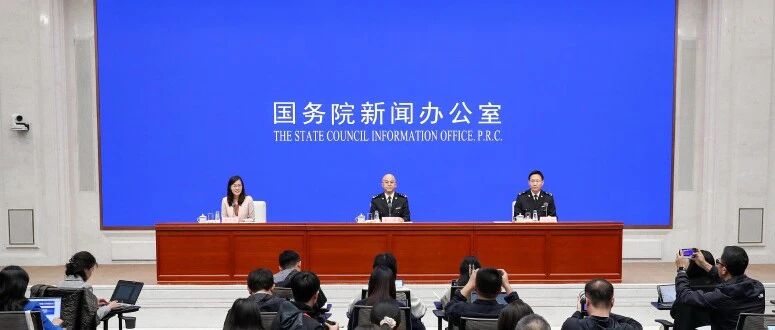
国新办举行新闻发布会 介绍2025年前三季度进出口情况
中汽协会数据· 2025-10-13 07:33
Core Viewpoint - China's foreign trade has shown resilience and growth in the first three quarters of the year, with total imports and exports reaching 33.61 trillion yuan, a year-on-year increase of 4% [4][6]. Group 1: Trade Performance - In the first three quarters, exports amounted to 19.95 trillion yuan, growing by 7.1%, while imports were 13.66 trillion yuan, a slight decline of 0.2% [4][5]. - The trade growth rate has accelerated each quarter, with the third quarter showing a 6% increase, marking eight consecutive quarters of year-on-year growth [4][5]. - The trade with countries involved in the Belt and Road Initiative reached 17.37 trillion yuan, up 6.2%, accounting for 51.7% of total trade [4][5]. Group 2: Export Trends - Exports of mechanical and electrical products reached 12.07 trillion yuan, increasing by 9.6%, representing 60.5% of total exports [5]. - High-tech product exports, including electronic information and high-end equipment, grew significantly, with increases of 8.1%, 22.4%, and 15.2% respectively [5]. - The export of cultural and traditional products has gained popularity, with items like dragon boats and wood carvings seeing strong demand [11]. Group 3: Import Dynamics - Imports began to recover, with a 0.3% increase in the second quarter and a further acceleration to 4.7% in the third quarter [5]. - Key imports such as crude oil and metal ores saw year-on-year increases of 4.9% and 10.1% respectively [5]. - The number of foreign trade enterprises reached 700,000, with private enterprises accounting for 61.3% of total trade [5][6]. Group 4: Regional Trade Developments - The western region of China saw a robust trade performance, with imports and exports totaling 3.21 trillion yuan, a year-on-year increase of 10.2% [14][15]. - The development of infrastructure and trade channels, such as the Western Land-Sea New Corridor, has significantly boosted trade in the western region [14][15]. Group 5: APEC and Bilateral Trade - Trade with APEC economies grew by 2%, reaching 19.41 trillion yuan, which constitutes 57.8% of China's total trade [20]. - Trade with South Korea amounted to 1.74 trillion yuan, with exports growing by 0.6% and imports by 3.1% [20][21]. Group 6: Private Enterprises - Private enterprises contributed significantly to trade, with a total of 19.16 trillion yuan in imports and exports, marking a 7.8% increase [25][26]. - These enterprises have been proactive in exploring new markets, with notable growth in exports to emerging markets like ASEAN and Africa [26]. Group 7: Cross-Border E-commerce - Cross-border e-commerce exports reached approximately 1.63 trillion yuan, growing by 6.6% in the first three quarters [35][36]. - The government has implemented various measures to facilitate the growth of cross-border e-commerce, including streamlined customs processes [36][37]. Group 8: Processing Trade - Processing trade reached 6.18 trillion yuan, a year-on-year increase of 6.9%, accounting for 18.4% of total trade [56][57]. - The sector is increasingly moving towards high-value-added processes, with a notable rise in high-tech product exports [56][57]. Group 9: Trade with ASEAN - Trade with ASEAN reached 5.57 trillion yuan, growing by 9.6%, maintaining ASEAN's status as China's largest trading partner [62][63]. - The upcoming upgrade of the China-ASEAN Free Trade Area is expected to further enhance trade relations [63].

海关总署:前三季度我国对共建国家进出口同比增长6.2%
Xin Hua Cai Jing· 2025-10-13 03:13
Core Insights - In the first three quarters, China's import and export to countries involved in the Belt and Road Initiative reached 17.37 trillion yuan, a year-on-year increase of 6.2%, surpassing the overall growth rate of China's imports and exports by 2.2 percentage points [1] Import Data - Among the bulk commodity imports, 64.6% came from countries involved in the Belt and Road Initiative, an increase of 1.1 percentage points compared to the same period last year [1] - The value of agricultural product imports from these countries accounted for 69.1%, rising by 3.1 percentage points year-on-year [1] Export Data - Exports of electronic information products to Belt and Road countries increased by 16.6%, high-end equipment by 37%, and wind turbine generators by 58% [1] - Exports of essential goods such as textiles, clothing, food, furniture, and automobiles also saw growth [1]
永清县鑫润户外用品有限公司成立 注册资本10万人民币
Sou Hu Cai Jing· 2025-10-11 23:48
Core Insights - A new company, Yongqing County Xinrun Outdoor Products Co., Ltd., has been established with a registered capital of 100,000 RMB [1] - The legal representative of the company is Wang Yanmei [1] Business Scope - The company is engaged in the manufacturing of sports goods and equipment, furniture parts, and furniture [1] - It also involves the production of industrial textile products and the wholesale and retail of sports goods and equipment [1] - Additional activities include sales of furniture, textiles, fishing gear, outdoor products, clothing, hats, bags, daily necessities, hardware products, plastic products, rubber products, household appliances, and electronic products [1] - The company provides personal internet live streaming services and conducts internet sales, excluding items that require special permits [1]
Trump’s 100% tariff on China threatens new supply chain shock
Yahoo Finance· 2025-10-10 23:44
Core Viewpoint - The U.S. is considering imposing tariffs of up to 100% on imports from China by November 1, escalating the trade conflict and creating uncertainty in global supply chains [1] Group 1: Impact on U.S. Companies - U.S. companies relying on Chinese manufacturing may face increased costs and shipment delays as they seek alternative suppliers in Mexico, India, or Southeast Asia [2] - Containerized imports from China, which account for approximately 40% of all U.S. inbound freight, could significantly decrease, leading to blank sailings and rate volatility [2] - Freight forwarders emphasize the need for shippers to adopt proactive strategies in response to the tariffs [3] Group 2: Supply Chain Strategies - Businesses are encouraged to build resilient supply chains by establishing sourcing hierarchies, leveraging dual sourcing, and exploring bonded warehouses or free trade zones [4] - The current trade landscape has accelerated discussions around these strategies among companies [4] Group 3: Trade Data - Year-to-date trade between the U.S. and China is approximately $420 billion to $440 billion, a decrease from over $465 billion during the same period in 2024 [5] - Major U.S. imports from China include electronics, machinery, furniture, and consumer goods, while top exports to China consist of agricultural products, aircraft, and semiconductors [5]
深耕睡眠科技,喜临门联合浙大共建大健康联合研究中心
Zhong Guo Jin Rong Xin Xi Wang· 2025-10-10 08:09
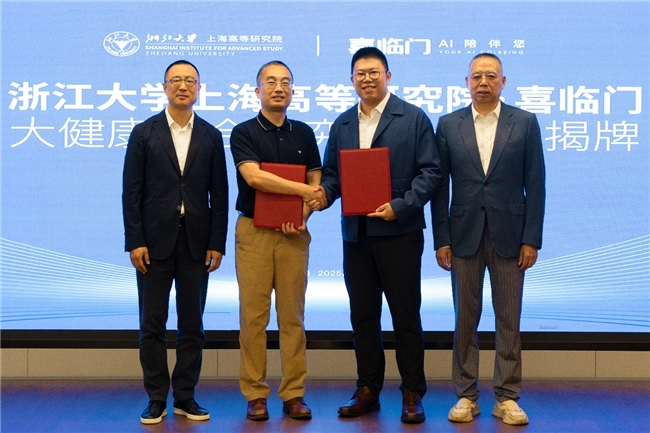
Core Insights - The establishment of the "Zhejiang University Shanghai Advanced Research Institute - Xilinmen Furniture Co., Ltd. Health Joint Research Center" marks a significant collaboration aimed at exploring sleep and health solutions, integrating resources from both parties to develop advanced medical-grade sleep solutions for global consumers [1][3]. Group 1: Collaboration Details - The signing ceremony took place in Shanghai, with key representatives from both Xilinmen and Zhejiang University present, highlighting the importance of this partnership in the health industry [1]. - The collaboration aims to focus on three main areas: developing intelligent health monitoring systems for spinal health, creating a sleep health research platform, and integrating traditional Chinese medicine with modern technology to innovate health products and standards [3][5]. Group 2: Focus on Spinal Health - The partnership specifically targets spinal health, utilizing Xilinmen's unique air spring patent technology to develop new functional mattresses and integrated spinal treatment products, with applications in hospitals, wellness centers, and civilian use [5][6]. - The joint research center will leverage clinical expertise from top medical institutions to establish new standards and paradigms for spinal and joint rehabilitation, promoting a comprehensive health application model [5]. Group 3: Research and Development Commitment - Xilinmen has demonstrated a commitment to research and development, having invested over 1.2 billion in recent years and holding over a thousand domestic and international patents, positioning itself as a leader in the industry [6]. - The company aims to transform academic research into practical products that benefit users, continuing its mission to enhance sleep technology and striving to become a global leader in the mattress industry [6].

690亿!第四批“国补”已下达
Di Yi Cai Jing Zi Xun· 2025-10-08 23:06
Core Insights - The National Development and Reform Commission (NDRC) has implemented policies to support the replacement of old consumer goods with new ones, resulting in significant sales growth in related sectors [1] Group 1: Policy Implementation - The NDRC, in collaboration with the Ministry of Finance, has effectively executed the "two new" policy, leading to the distribution of long-term special government bond funds to support consumer goods replacement [1] - A total of 3.3 billion people have applied for subsidies under the consumer goods replacement program from January to August this year [1] Group 2: Economic Impact - The sales revenue from related goods has exceeded 2 trillion yuan, indicating a strong market response to the policy [1] - Retail sales of household appliances, audio-visual equipment, cultural office supplies, furniture, and communication equipment have seen year-on-year growth rates of 28.4%, 22.3%, 22.0%, and 21.1% respectively, contributing to a 4.6% increase in total retail sales of consumer goods [1] Group 3: Financial Allocation - The NDRC and the Ministry of Finance have allocated a total of 690 billion yuan in the fourth batch of special government bonds to support the consumer goods replacement initiative, completing the annual allocation of 300 billion yuan [1] - Future efforts will focus on optimizing the use of funds, ensuring balanced and orderly expenditure of subsidies, and enhancing product quality and price supervision [1]
十一假期期间事件点评:不确定性提升,黄金牛市延续
Shanghai Securities· 2025-10-08 11:01
Market Performance - During the National Day holiday (October 1-7, 2025), the Nasdaq, S&P 500, and Dow Jones Industrial Average increased by 0.57%, 0.39%, and 0.44% respectively[3] - The Nasdaq China Technology Index rose by 1.59%, while the Hang Seng Index increased by 0.38% during the same period[3] Bond Market - U.S. Treasury yields primarily decreased, with the 10-year yield falling by 2 basis points to 4.14% as of October 7, 2025[4] - The yield curve steepened, with all maturities except for the 30-year remaining unchanged or decreasing during the holiday[4] Currency Trends - The U.S. Dollar Index increased by 0.78%, with the dollar appreciating against the Euro, Pound, and Yen by 0.65%, 0.17%, and 2.70% respectively[5] - The offshore RMB depreciated against the U.S. dollar, rising to 7.1458, a 0.24% increase[5] Gold Market - Gold prices surged, with London spot gold rising by 4.02% to $3979.00 per ounce, and COMEX gold futures increasing by 3.40% to the same price[6] - A rebound in domestic gold prices is anticipated post-holiday due to the significant rise in international prices[6] Economic Uncertainty - The U.S. government shutdown began on October 1, 2025, due to budget disagreements, which may lead to increased unemployment and reduced consumer spending, negatively impacting GDP growth[7] - The delay in non-farm payroll data release adds to economic uncertainty, affecting market predictions[8] Political Developments - Japan's political landscape may shift with the election of the first female president of the Liberal Democratic Party, which could escalate geopolitical tensions in East Asia due to her conservative stance[9] Monetary Policy - The central bank plans to conduct a 1.1 trillion yuan reverse repo on October 9, 2025, to maintain liquidity, despite a net withdrawal in October due to maturing repos[10] Consumer Spending - The fourth batch of 690 billion yuan in special bonds for consumer goods has been allocated, expected to boost retail sales in the fourth quarter[10] Investment Strategy - The market may present structural investment opportunities in sectors such as AI, energy storage, and gold, while the bond market remains attractive despite short-term risks[11]
我国科研人员解决全固态金属锂电池界面接触难题|首席资讯日报
首席商业评论· 2025-10-08 05:07
1.我国科研人员解决全固态金属锂电池界面接触难题 记者从中国科学院物理研究所获悉,由该所研究员黄学杰团队联合华中科技大学、中国科学院宁波材料技 术与工程研究所等组成的研究团队开发出一种阴离子调控技术,解决了全固态金属锂电池中电解质和锂电 极之间难以紧密接触的难题,为其走向实用化提供了关键技术支撑。相关研究成果已于7日发表在国际学术 期刊《自然-可持续发展》上。 点评:我国科研突破固态电池技术瓶颈,产业前景广阔。 2.世贸组织上调2025年全球货物贸易增长预期至2.4% 世界贸易组织(WTO)10月7日发布《全球贸易展望与统计》最新报告指出,受人工智能(AI)相关产品需 求增长、北美在关税上调前的进口激增及新兴经济体间贸易活跃推动,2025年上半年全球货物贸易超出预 期。WTO据此将2025年全球货物贸易增长预测上调至2.4%,高于8月时的0.9%;但2026年预测下调至 0.5%。 3.政府停摆致人手紧张,美多个城市航班大面积延误 当地时间10月7日,由于美国政府停摆造成航空管制人员短缺,美国联邦航空管理局(FAA)当天晚间发布 通告称,芝加哥、达拉斯和纳什维尔等主要城市的航班出现大面积延误。数据显示,飞往芝 ...