
充电设施

Search documents
六部门:到2027年底建成2800万个充电设施
Ren Min Ri Bao Hai Wai Ban· 2025-10-17 07:40
Core Insights - The National Development and Reform Commission and the National Energy Administration, along with six other departments, have issued the "Three-Year Doubling Action Plan for Electric Vehicle Charging Facility Service Capacity (2025-2027)" aiming to establish 28 million charging facilities by the end of 2027, providing over 300 million kilowatts of public charging capacity to meet the charging needs of over 80 million electric vehicles, effectively doubling the service capacity [1] Summary by Sections Current State of Charging Infrastructure - The charging infrastructure in China has developed rapidly in recent years, with service capacity generally meeting the current demand for new energy vehicle charging. However, issues such as uneven public charging network layout, suboptimal facility function structure, insufficient service supply in residential areas, inadequate power supply assurance, and the need for improved operational management quality remain [1] Action Plan Initiatives - The Action Plan outlines five major special actions. In terms of upgrading public charging facilities, it emphasizes strengthening urban fast charging networks, accelerating the renovation of charging facilities in highway service areas, and addressing the shortcomings in rural charging facility construction. By the end of 2027, it aims to add 1.6 million direct current charging guns in cities, including 100,000 high-power charging guns. Additionally, at least 14,000 direct current charging guns will be added in townships that currently lack public charging stations, with further expansion based on demand in other areas to achieve comprehensive coverage of public charging facilities in rural regions [1]
申银万国期货早间策略-20251016
Shen Yin Wan Guo Qi Huo· 2025-10-16 02:50
1. Report Industry Investment Rating - Not provided in the content 2. Core View of the Report - After the high - level oscillation in September, the stock index is expected to enter a direction - selection phase again, and it is likely to maintain a bullish trend. Domestically, the liquidity environment is expected to remain loose, and residents may increase their allocation of equity assets. Externally, with the Fed's interest rate cuts and RMB appreciation, foreign funds are also expected to flow into the domestic market. In terms of market style, although technology growth has been the core theme in the current upward market trend, considering the possible intensification of Q4's growth - stabilization policies and the potential resonance of global monetary and fiscal policies, the market style in Q4 may shift towards value and become more balanced compared to Q3 [2] 3. Summary by Relevant Catalogs 3.1 Stock Index Futures Market - **IF Contracts**: The previous day's closing prices of IF contracts (current month, next month, next quarter, and far - quarter) were 4601.60, 4586.60, 4576.40, and 4555.00 respectively, with increases of 70.60, 73.20, 77.20, and 77.80. The trading volumes were 40430.00, 16606.00, 86223.00, and 12308.00, and the open interests were 35819.00, 24260.00, 160428.00, and 56592.00, with changes of - 9895.00, 5467.00, - 2013.00, and - 848.00 respectively. The increases of the CSI 300 corresponding to these contracts were 1.56%, 1.62%, 1.72%, and 1.74% [1] - **IH Contracts**: The previous day's closing prices of IH contracts were 2999.40, 2998.20, 2997.40, and 2998.40, with increases of 41.00, 46.00, 44.40, and 44.60. The trading volumes were 17842.00, 6567.00, 41717.00, and 5176.00, and the open interests were 13703.00, 6914.00, 63594.00, and 13300.00, with changes of - 5392.00, 1526.00, - 1687.00, and - 796.00 respectively. The increases of the SSE 50 corresponding to these contracts were 1.39%, 1.56%, 1.50%, and 1.51% [1] - **IC Contracts**: The previous day's closing prices of IC contracts were 7278.20, 7196.20, 7140.20, and 6977.00, with increases of 118.40, 124.20, 121.60, and 120.00. The trading volumes were 38456.00, 19428.00, 105607.00, and 19123.00, and the open interests were 34255.00, 32793.00, 141518.00, and 52944.00, with changes of - 9786.00, 5875.00, - 10422.00, and - 2023.00 respectively. The increases of the CSI 500 corresponding to these contracts were 1.65%, 1.76%, 1.73%, and 1.75% [1] - **IM Contracts**: The previous day's closing prices of IM contracts were 7455.80, 7362.60, 7275.20, and 7060.20, with increases of 117.60, 128.20, 126.60, and 134.20. The trading volumes were 55423.00, 28745.00, 178569.00, and 30417.00, and the open interests were 47911.00, 46218.00, 191595.00, and 84507.00, with changes of - 11189.00, 7939.00, - 2448.00, and - 280.00 respectively. The increases of the CSI 1000 corresponding to these contracts were 1.60%, 1.77%, 1.77%, and 1.94% [1] - **Inter - month Spreads**: The current inter - month spreads of IF (next month - current month), IH (next month - current month), IC (next month - current month), and IM (next month - current month) were - 15.00, - 1.20, - 82.00, and - 93.20 respectively, compared to the previous values of - 25.20, - 3.60, - 87.40, and - 110.00 [1] 3.2 Stock Index Spot Market - **Major Indexes**: The previous day's values of the CSI 300, SSE 50, CSI 500, and CSI 1000 were 4606.29, 3001.35, 7294.00, and 7483.45 respectively, with increases of 1.48%, 1.36%, 1.38%, and 1.50%. The trading volumes (in billions of lots) were 284.77, 63.38, 217.56, and 244.85, and the total trading amounts (in billions of yuan) were 6073.26, 1571.06, 3974.59, and 4037.98 respectively [1] - **Industry Indexes**: Among different industries, the increases of energy, raw materials, industry, optional consumption, major consumption, medical and health, real - estate finance, information technology, telecommunications, and public utilities were 0.32%, 1.18%, 1.98%, 1.49%, 0.45%, 1.77%, 1.06%, 2.75%, 1.11%, and - 0.20% respectively [1] 3.3 Futures - Spot Basis - **IF Contracts**: The previous day's basis values of IF (current month - CSI 300), IF (next month - CSI 300), IF (next quarter - CSI 300), and IF (far - quarter - CSI 300) were - 4.69, - 19.69, - 29.89, and - 51.29 respectively, compared to the previous two - day values of 1.34, - 23.86, - 31.86, and - 52.86 [1] - **IH Contracts**: The previous day's basis values of IH (current month - SSE 50), IH (next month - SSE 50), IH (next quarter - SSE 50), and IH (far - quarter - SSE 50) were - 1.95, - 3.15, - 3.95, and - 2.95 respectively, compared to the previous two - day values of 3.90, 0.30, - 2.70, and - 0.10 [1] - **IC Contracts**: The previous day's basis values of IC (current month - CSI 500), IC (next month - CSI 500), IC (next quarter - CSI 500), and IC (far - quarter - CSI 500) were - 15.80, - 97.80, - 153.80, and - 317.00 respectively, compared to the previous two - day values of - 41.45, - 128.85, - 184.85, and - 350.65 [1] - **IM Contracts**: The previous day's basis values of IM (current month - CSI 1000), IM (next month - CSI 1000), IM (next quarter - CSI 1000), and IM (far - quarter - CSI 1000) were - 27.65, - 120.85, - 208.25, and - 423.25 respectively, compared to the previous two - day values of - 33.15, - 143.15, - 227.35, and - 451.15 [1] 3.4 Other Domestic and Overseas Indexes - **Domestic Indexes**: The previous day's values of the Shanghai Composite Index, Shenzhen Component Index, Small and Medium - sized Board Index, and ChiNext Index were 3912.21, 13118.75, 8106.60, and 3025.87 respectively, with increases of 1.22%, 1.73%, 1.77%, and 2.36% [1] - **Overseas Indexes**: The previous day's values of the Hang Seng Index, Nikkei 225, S&P, and DAX Index were 25910.60, 46847.32, 6671.06, and 24181.37 respectively, with increases of 1.84%, - 2.58%, 0.40%, and - 0.23% [1] 3.5 Macroeconomic Information - The US side said that whether to impose a 100% tariff on China depends on China's actions. The Chinese Ministry of Foreign Affairs responded, urging the US to correct its wrong practices and resolve issues through dialogue and negotiation. China also opposes the EU's protectionist and discriminatory practices in the name of enhancing competitiveness [2] - In September, M2 increased by 8.4% year - on - year, M1 increased by 7.2% year - on - year, and the "scissors gap" between M1 and M2 reached a new low for the year. In the first three quarters, RMB loans increased by 14.75 trillion yuan, and the cumulative increase in social financing scale was 30.09 trillion yuan, 4.42 trillion yuan more than the same period last year [2] - In September, China's CPI increased by 0.1% month - on - month and decreased by 0.3% year - on - year. Core CPI increased by 1% year - on - year, with the increase expanding for the fifth consecutive month and returning to 1% for the first time in nearly 19 months. PPI remained flat month - on - month and decreased by 2.3% year - on - year, with the decline narrowing by 0.6 percentage points compared to the previous month [2] - In September, the average interest rate of newly issued corporate loans was about 3.1%, about 40 basis points lower than the same period last year, and the average interest rate of newly issued personal housing loans was about 3.1%, about 25 basis points lower than the same period last year [2] 3.6 Industry Information - Six departments including the National Development and Reform Commission issued an action plan to double the service capacity of electric vehicle charging facilities in three years, aiming to build 28 million charging facilities nationwide by the end of 2027, providing over 300 million kilowatts of public charging capacity to meet the charging needs of over 80 million electric vehicles [2] - In September, the trading volume of the national second - hand car market was 1.7944 million, a month - on - month increase of 5.1% and a year - on - year increase of 8.2%, with a trading amount of 110.466 billion yuan [2] - Chengdu expanded the scope of beneficiaries of the "commercial - to - provident" loan policy,取消了本市缴存限制,符合条件的异地缴存人也可申请办理,and all commercial banks that have signed cooperation agreements with the Chengdu Housing Provident Fund Center can participate [2]
推动电车市场扩容 我国将建2800万个充电设施
Bei Jing Shang Bao· 2025-10-15 15:54
在新能源汽车加速发展之际,充电设施的规模与质量已成为决定其普及深度关键因素之一。10月15日, 国家发展改革委等部门关于印发《电动汽车充电设施服务能力"三年倍增"行动方案(2025—2027年)》 (以下简称《行动方案》)的通知中提到,通过持续健全充电网络、提升充电效能、优化服务品质、创 新产业生态,进一步提振消费信心,促进电动汽车更大范围内购置使用。到2027年底,在全国范围内建 成2800万个充电设施,提供超3亿千瓦时的公共充电容量,满足超过8000万辆电动汽车充电需求,实现 充电服务能力的翻倍增长。 在外界看来,在年销超千万的市场增长局势下,新能源车车主对便捷补能的需求日益旺盛,这无疑对充 电基础设施建设提出了更高要求,"三年倍增"计划一方面是满足不断增长的市场需求,更是为推动电动 车市场消费扩容铺垫。 提质公共设施 数据显示,截至今年8月底,我国电动汽车充电基础设施(枪)总数达到1734.8万个,同比增长53.5%。 其中,公共充电设施(枪)431.6万个,同比增长37.8%。作为公共场景补能的关键,公共充电基础设施 的完善建设在《行动方案》中被首先提及。 《行动方案》提到,到2027年底,全国城市新 ...

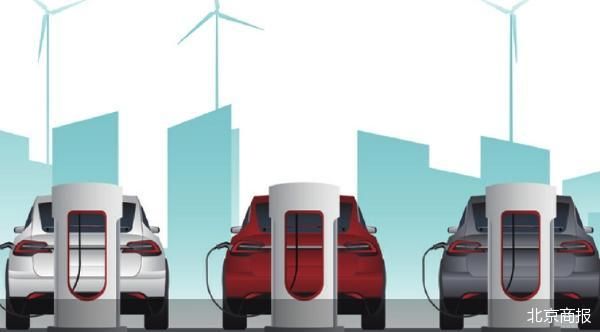
到2027年底我国有望建成2800万个充电设施
Xin Hua Cai Jing· 2025-10-15 12:32
Core Viewpoint - China's new energy vehicle (NEV) sector is entering a phase of rapid development, with charging infrastructure being a critical support that directly influences consumer confidence in purchasing [1][2] Summary by Sections Action Plan Overview - The National Development and Reform Commission and the National Energy Administration have issued the "Three-Year Doubling Action Plan for Electric Vehicle Charging Facility Service Capacity (2025-2027)" [1][2] - The plan aims to establish 28 million charging facilities nationwide by the end of 2027, providing over 300 million kilowatts of public charging capacity to meet the charging needs of more than 80 million electric vehicles, effectively doubling the service capacity [1][2] Economic Impact - The targets set in the action plan are expected to stimulate over 200 billion yuan in investment in charging facility equipment manufacturing and construction [2] Five Major Special Actions 1. **Public Charging Facility Quality Upgrade Action**: Focuses on differentiated energy supply needs across urban, intercity, and rural areas, promoting a network primarily of fast charging with supplementary slow charging and high-power charging [3] 2. **Residential Area Charging Condition Optimization Action**: Mandates that new residential areas must have 100% charging facilities or reserved installation conditions for fixed parking spaces, while existing areas will supplement charging facilities based on local conditions [3] 3. **Vehicle-Network Interaction Large-Scale Application Promotion Action**: Encourages the establishment of initial vehicle-network interaction pilot projects and explores market-oriented response models [3] 4. **Power Supply Capacity and Service Improvement Action**: Integrates charging facility connection needs into distribution network planning and enhances service guarantees for power supply [3] 5. **Charging Operation Service Quality Improvement Action**: Aims to enhance the quality and reliability of charging facilities, upgrade old equipment, and standardize charging fees [3] Implementation and Management - The National Development and Reform Commission and the National Energy Administration will coordinate the implementation of the action plan, emphasizing safety management, while local governments will develop tailored three-year action plans for charging facility construction [4]
国家能源局有关负责同志就《电动汽车充电设施服务能力“三年倍增”行动方案(2025—2027年)》答记者问
国家能源局· 2025-10-15 09:55
Core Viewpoint - The "Three-Year Doubling Action Plan for Electric Vehicle Charging Facilities Service Capacity (2025-2027)" aims to enhance the charging infrastructure to support the rapid growth of the electric vehicle industry in China, addressing existing gaps and improving consumer confidence in electric vehicle purchases [2][3]. Background of the Action Plan - The rapid development of new energy vehicles necessitates a robust charging infrastructure, which currently faces challenges such as uneven distribution, insufficient residential services, and the need for improved operational management [3]. - The plan aligns with the central government's initiative to boost consumption, particularly in the automotive sector, and aims to create a high-quality charging infrastructure system to support the growth of the new energy vehicle industry [3]. Overall Considerations of the Action Plan - The plan emphasizes four key areas: 1. **Equity**: Focus on balanced development of charging facilities, especially in rural areas, and enhancing the power capacity of existing facilities [4]. 2. **Innovation**: Promote vehicle-grid interaction to utilize electric vehicles as flexible energy storage resources [4]. 3. **Inclusivity**: Address challenges in residential charging infrastructure and simplify the installation process for consumers [4]. 4. **Implementation**: Clearly define responsibilities among various stakeholders to ensure effective execution of the plan [4]. Main Goals of the Action Plan - By the end of 2027, the plan aims to establish 28 million charging facilities nationwide, providing over 300 million kilowatts of public charging capacity to meet the needs of more than 80 million electric vehicles, effectively doubling the current service capacity [5]. Five Major Special Actions Proposed - **Public Charging Facility Upgrade**: Differentiate strategies for urban, intercity, and rural charging networks, focusing on fast charging and high-power facilities [6]. - **Residential Charging Condition Optimization**: Mandate new residential areas to include charging facilities and enhance existing ones [6]. - **Vehicle-Grid Interaction Promotion**: Expand pilot projects for vehicle-grid interaction and explore market-based response models [6]. - **Supply Capacity Improvement**: Integrate charging facility needs into distribution network planning and enhance service efficiency [6]. - **Charging Service Quality Enhancement**: Upgrade existing facilities and improve operational quality and service standards [6]. Measures to Ensure Effective Implementation - **Strengthened Leadership**: Various government departments will coordinate to ensure the plan's implementation [7]. - **Enhanced Execution**: Local governments will develop tailored action plans and support infrastructure improvements [7]. - **Safety Management**: Emphasize safety standards in the construction and operation of charging facilities [7]. - **Public Awareness**: Increase efforts in policy promotion and cross-sector communication [7].

一秒充一公里,我国建成世界上最大充电设施网络
Xuan Gu Bao· 2025-10-13 14:37
Group 1 - The core viewpoint of the article highlights that China has established the world's largest and most comprehensive charging infrastructure network, with a total of 17.348 million charging facilities by the end of August 2025, equating to two charging stations for every five vehicles [1] - The number of charging facilities on highways has increased to over 40,000, which is five times the number from five years ago [1] - Public charging facilities are available in 97% of county-level cities and 80% of townships, indicating extensive coverage [1] Group 2 - The number of high-power charging facilities has reached 37,000 units, enabling rapid charging capabilities such as one kilometer of range per second [1] - The adoption of smart slow charging technology has become widespread, with practices like appointment-based charging and charging during off-peak hours becoming common among vehicle owners [1] - Relevant A-share concept stocks mentioned include Zhongheng Electric and Huazi Technology, indicating potential investment opportunities in the sector [1]
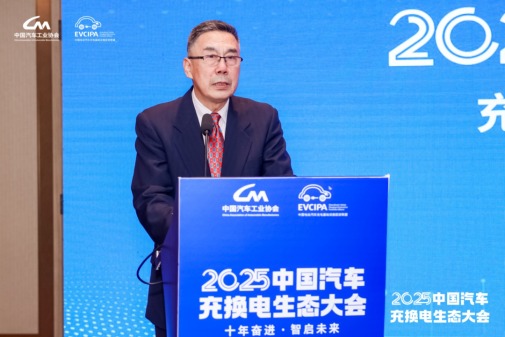
中国国际贸易学会边振瑚:充换电设施“出海”是发展新质生产力的必然选择
Zhong Guo Jing Ying Bao· 2025-09-30 23:23
Core Viewpoint - The development of charging infrastructure is crucial for the promotion of new energy vehicles (NEVs) and plays a significant role in the transition to a green and low-carbon economy, as well as in rural revitalization and building a strong transportation nation [1][2]. Group 1: Charging Infrastructure Development - As of August 2023, China's total charging infrastructure reached 17.348 million units, with 4,946 battery swap stations, establishing the largest and most comprehensive charging service network globally [3][5]. - The "14th Five-Year Plan" period is critical for summarizing the experiences of the charging industry, which will guide the development of charging infrastructure in the "15th Five-Year Plan" [1][2]. Group 2: Global Expansion of Charging Facilities - The "going global" strategy for charging facilities is driven by the rapid development of the NEV industry, making it an inherent requirement for industry growth and a necessary choice for developing new productive forces [2][3]. - Various business models are being adopted by Chinese companies for international expansion, including equipment OEM and export sales, partnerships with local energy companies, and establishing R&D centers abroad [3][4]. Group 3: Challenges in Global Market - The global economic recovery remains weak, with slow overall growth, and there are significant challenges posed by globalization backlash and protectionism, affecting trade rules and market access [5][6]. - Despite high penetration rates in emerging markets like Brazil, there are considerable influences from domestic industry and interest groups that can disrupt trade and investment cooperation [5][6]. Group 4: Strategic Recommendations - Companies are advised to focus on global trends and maintain strategic stability while navigating external challenges and competition from traditional automotive powers [6][7]. - There is a need for collaboration among enterprises, associations, and the government to create a fair environment amidst trade frictions [6][7]. - The global market for NEVs and charging facilities is not yet saturated, and companies should explore opportunities in regions like Africa, which have potential for industrialization and middle-income growth [6][7]. Group 5: Role of Industry Organizations - Industry organizations like the China Automotive Industry Association and the China Electric Vehicle Charging Infrastructure Promotion Alliance can play a significant role in advocating for support, addressing trade frictions, and promoting industry self-regulation [7].
观车 · 论势 || 从兆瓦超充勃兴看电动重卡的下一步攻坚
Zhong Guo Qi Che Bao Wang· 2025-09-02 08:00
Group 1 - The Sichuan Yuanqi Xingguang Heavy Truck Megawatt Charging Station, the world's first 100-megawatt heavy truck charging station based on Huawei's technology, has officially commenced operations, addressing key industry pain points such as slow charging and compatibility issues [1] - The heavy truck sector in China, with a vehicle ownership of approximately 8 to 9 million, contributes over 50% of carbon emissions in road transport, making it crucial for achieving carbon neutrality goals [1] - The electric heavy truck market is expected to see significant growth, with sales projected to reach 75,000 units in the first half of 2025, representing a year-on-year increase of 195.2% [2] Group 2 - The transition of electric heavy trucks into open logistics and intercity freight scenarios is anticipated to begin in the latter half of this year or early next year, driven by the need for high-power and high-density charging infrastructure [2] - Huawei has formed the "Supercharging Alliance 2.0" with major commercial vehicle manufacturers, aiming to launch around 55 models of megawatt charging heavy trucks this year, with over 20 already delivered [2] - The implementation of megawatt charging technology faces challenges related to infrastructure investment, safety, energy density, and compatibility with the power grid [3] Group 3 - The Chinese government has set a target to establish over 100,000 high-power charging facilities by the end of 2027, promoting the integration of charging infrastructure with distribution network planning [4] - The penetration rate of new energy heavy trucks has exceeded 23% for four consecutive months this year, but the penetration in long-distance logistics remains below 0.1% [4] - The successful electrification of heavy trucks is expected to rely on the effective deployment of megawatt charging technology [4]
荷兰扩建充电基础设施,覆盖率达83%
Shang Wu Bu Wang Zhan· 2025-08-28 03:45
Group 1 - The Netherlands is rapidly expanding its public charging station network, adding an average of 1,600 public charging stations per month, resulting in a coverage rate of 83%, an increase of 7% compared to 2024 [1] - The Netherlands has the highest number of public charging stations in the EU, leading to a gradual shift towards electric vehicle usage among citizens and businesses [1] - A working group has been established to ensure more transparent pricing for charging, particularly for fast charging stations [1] Group 2 - The Dutch transportation department will invest €65.5 million to build power connection stations at highway rest areas to facilitate quick charging for trucks [1] - Over €96 million in subsidies is being provided for the construction of charging facilities in the logistics and construction sectors [1] - Collaboration among the government, businesses, grid operators, and research institutions is actively promoting the development of the charging network [1]
中国充电联盟:1-7月充电基础设施增量为387.8万个,同比上升93.2%
Di Yi Cai Jing· 2025-08-22 10:06
Core Insights - As of July 2025, China's electric vehicle charging infrastructure reached a total of 16.696 million charging points, representing a year-on-year growth of 53% [1] Summary by Categories Overall Infrastructure Growth - The total number of electric vehicle charging points in China reached 16.696 million by the end of July 2025, showing a year-on-year increase of 53% [1] Public vs. Private Charging Facilities - Public charging facilities accounted for 4.202 million points, with a year-on-year growth of 38% [1] - Private charging facilities reached 12.494 million points, marking a significant year-on-year increase of 58.8% [1] Incremental Growth in 2025 - From January to July 2025, the increase in charging infrastructure amounted to 3.878 million points, which is a substantial year-on-year rise of 93.2% [1] - The incremental growth for public charging facilities was 0.623 million points, reflecting a year-on-year increase of 28.9% [1] - Private charging facilities saw an increase of 3.255 million points, representing a remarkable year-on-year growth of 113.6% [1]