
文体娱乐

Search documents
交运股份筹划重大资产置换向文体产业“华丽转身”
Shang Hai Zheng Quan Bao· 2026-01-09 18:38
Group 1 - The company is planning a significant asset swap to transition from its current automotive-related business to the cultural and sports industry, which is expected to constitute a major asset restructuring [1] - The asset swap involves exchanging automotive sales and services, as well as parts manufacturing, for assets related to the cultural and sports sectors held by the controlling shareholder, Shanghai Jiushi (Group) Co., Ltd. [1] - The company aims to improve asset quality, enhance risk resistance, and boost operational sustainability and competitive advantage through this strategic transformation [1] Group 2 - The company has reported continuous losses in its net profit attributable to shareholders, with figures of -1.74 billion yuan, -4.29 billion yuan, and -2.16 billion yuan for the first three quarters of 2023, 2024, and 2025 respectively [1] - The main business segments, including road freight and logistics, passenger vehicle sales, and automotive parts manufacturing, are under pressure due to intense competition and declining consumer demand [2] - The proposed assets to be acquired include 100% equity of Shanghai Jiushi Sports Event Management Co., Ltd., a newly established sports venue operation company, and significant stakes in various sports and tourism-related entities [2][3] Group 3 - Shanghai Jiushi Sports Event Management Co., Ltd. holds numerous high-profile sports assets, including major events like the F1 Chinese Grand Prix and various sports venues in Shanghai [3] - The company also manages landmark sports facilities and has a basketball club that is the only entity in Shanghai qualified to participate in the Chinese Men's Basketball Professional League (CBA) [3]

交运股份:筹划重大资产置换 置入文体娱乐业、旅游业相关业务资产
Zheng Quan Shi Bao Wang· 2026-01-09 10:48
Core Viewpoint - The company is planning a significant asset restructuring involving the exchange of its passenger car sales and automotive after-service segments with related assets from its controlling shareholder, Jiushi Group, and its affiliates in the cultural, entertainment, and tourism sectors [1] Group 1 - The transaction will involve the exchange of assets, with the difference in transaction prices being compensated in cash by one party to the other [1] - The transaction is expected to constitute a major asset restructuring [1] - The transaction price has not yet been determined [1]
数据见证民生温度 市井繁华幸福加码
Xin Lang Cai Jing· 2026-01-03 20:20
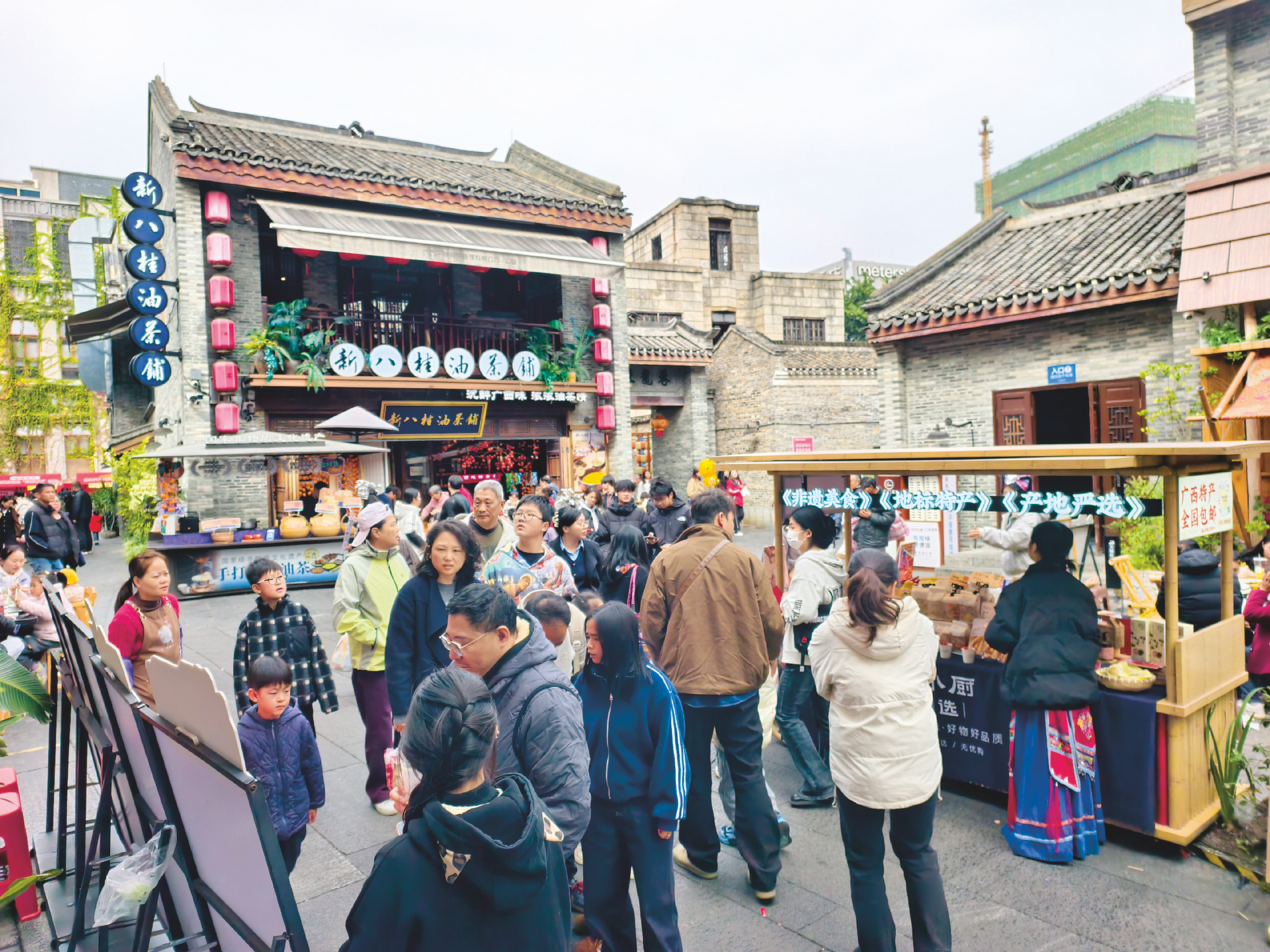
Group 1 - The core viewpoint of the article highlights the significant upgrades in consumer experiences and services in Guangxi, driven by the development of unique consumption scenarios and an optimized convenience service system [2][3][4]. Group 2 - Guangxi has recognized 8 district-level pedestrian streets, 7 night consumption gathering areas, and 2 characteristic small stall areas, with over 10,000 merchants covered by various district-level commercial streets [2]. - The "Yummy Night Guangxi" initiative has led to over 300 night-time promotional events, with large concerts and sports events generating over 8.3 billion yuan in economic and comprehensive consumption [3]. - The establishment of a 15-minute convenience living circle has been advanced in 14 cities, covering nearly 55,600 commercial outlets and serving over 2.87 million residents [4]. Group 3 - The inbound consumption environment has improved, with approximately 14.8 million inbound and outbound travelers recorded in the first 11 months of 2025, marking a 15% year-on-year increase [5]. - Various measures have been implemented to facilitate inbound consumption, including multi-language tax refund guides and the establishment of foreign currency exchange points [5].

PMI大幅反弹,什么信号
HUAXI Securities· 2025-12-31 09:08
Group 1: PMI Overview - Manufacturing PMI rebounded to 50.1% in December, up 0.9 percentage points from 49.2%, marking the first expansion in eight months and exceeding Bloomberg's expectation of 49.2%[1] - Non-manufacturing PMI also increased to 50.2%, up from 49.5%[1] - The composite PMI for December rose by 1 percentage point to 50.7%, the highest in the second half of the year[5] Group 2: Manufacturing Sector Insights - Key drivers for the manufacturing PMI were production and new orders, with production increasing by 1.7 percentage points to 51.7% and new orders rising by 1.6 percentage points to 50.8%[1] - New export orders improved by 1.4 percentage points to 49.0%, nearing the highest level of the year[2] - Manufacturing purchasing volume increased by 1.6 percentage points to 51.1%, while raw material purchase prices decreased by 0.5 percentage points to 53.1%[2] Group 3: Construction and Services Sector - The construction sector saw a significant rebound, with the business activity index rising by 3.2 percentage points to 52.8%, the highest in the second half of the year[3] - Service sector PMI increased slightly by 0.2 percentage points to 49.7%, remaining below the expansion threshold[3] - New orders in the service sector rose by 1.8 percentage points to 47.3%, indicating some improvement despite overall weakness in consumer-related services[3] Group 4: Price Trends and Economic Outlook - Price trends showed divergence, with manufacturing output prices rebounding by 0.7 percentage points to 48.9%, while service and construction prices fell[4] - The overall economic recovery in December is attributed to increased fiscal spending and positive expectations for the upcoming year, particularly with the 2026 Spring Festival being later in February[4] - The necessity for aggressive monetary policy easing appears to be decreasing, with potential delays in interest rate cuts anticipated[6]
“啄木鸟消费投诉”【2025年度消费避坑图鉴】发布 九大消费陷阱全景透视
Sou Hu Cai Jing· 2025-12-24 02:23
Core Insights - The China Consumer Association reported over 530,000 consumer complaints in the third quarter, marking a year-on-year increase of 7.9% [1] - The highest proportion of complaints was related to after-sales service, accounting for 29.4% of total complaints [1] - There was an increase in complaints regarding false advertising, safety, and contract issues [1] Complaint Categories - The top five categories of complaints included life and social services, internet services, education and training, cultural and entertainment services, and sales services [1] - The data from the Zhuomuqin consumer complaint platform aligns closely with the trends reported by the China Consumer Association [1] Future Focus - Zhuomuqin's "2025 Consumer Pitfall Guide" will focus on core consumer rights issues such as after-sales service, contracts, and quality, revealing nine major consumer complaint scenarios for the year [1] - The platform plans to delve deeper into specific sectors such as automotive, insurance, and online shopping to help consumers identify pitfalls and effectively protect their rights [1]
巩固“稳”的基底 开拓“进”的新局——聚焦省委经济工作会议①
Da Zhong Ri Bao· 2025-12-24 01:15
Group 1 - The core viewpoint emphasizes the steady growth and positive trajectory of Shandong's economy, with key indicators showing resilience and improvement [1][2] - In the first eleven months, the province's industrial added value increased by 7.7%, retail sales of consumer goods grew by 5.2%, and foreign trade rose by 4.6% [1] - Shandong is set to become the third province in China and the first in the north to surpass a GDP of 10 trillion yuan, marking significant economic milestones [1] Group 2 - The "six musts" outlined in the Central Economic Work Conference are crucial for guiding Shandong's economic development, focusing on policy support, innovation, and leveraging local advantages [2][3] - The province aims to enhance its economic structure by addressing long-standing issues while also adapting to new challenges, indicating a dual focus on stability and progress [3][4] - The emphasis on "stability" includes maintaining employment, businesses, markets, and expectations, while "progress" involves implementing key industrial projects and fostering new growth drivers [4][5] Group 3 - The service sector is identified as a key engine for economic growth and job creation, with a reported 5.3% increase in revenue from the service industry in the first ten months of the year [5][6] - Despite the growth in the service sector, challenges remain regarding its overall size and quality, prompting calls for targeted strategies to enhance its development [6] - The focus on specific industries, such as wholesale and retail, finance, and transportation, highlights the need for tailored policies to boost service sector performance [6]
这份最新趋势报告,为2026年消费市场划出重点(附下载链接)
Sou Hu Cai Jing· 2025-12-23 18:45
Core Insights - The report highlights a "moderate recovery with structural differentiation" in China's consumption market for the period from January to November 2025, with total retail sales of consumer goods reaching 45.6 trillion yuan, a year-on-year increase of 4% [1][2][8]. Consumption Market Overview - Total retail sales of consumer goods reached 45.6 trillion yuan, growing by 4% year-on-year, indicating a gradual release of domestic demand recovery [1][8]. - Significant growth was observed in discretionary consumption categories such as communication equipment (20.9%), gold and silver jewelry (13.5%), and home appliances (14.8%) [11]. - Service consumption continues to rise, with per capita service consumption accounting for 46.8% in the first three quarters [2][32]. - Online retail remains stable, accounting for approximately 25.9% of total retail sales, with a 5.7% increase in physical goods sold online [9]. Consumption Trends - The report identifies six major trends in the consumption market: 1. Stabilizing consumer confidence with internal differentiation 2. Coexistence of rational consumption and quality upgrades, with "value for money" becoming a core logic 3. The rise of emotional consumption, driven by Generation Z 4. Strong growth in lower-tier markets 5. Flourishing cultural and sports consumption driving surrounding economies 6. Acceleration of domestic brands going global, particularly in trendy toys, new energy vehicles, and smart home appliances [2][29]. Policy Impact on Consumption - Policies aimed at stimulating consumption include expanding the scope of trade-in programs to digital products and providing subsidies for consumer loans and childcare, effectively stimulating consumption potential [1][21][24]. - The report emphasizes that expanding domestic demand is crucial for economic rebalancing, requiring industrial upgrades and income distribution reforms to build a sustainable and healthy consumption market ecosystem [2][21]. Future Outlook - Looking ahead to 2026, the report anticipates a moderate recovery in total consumption volume, supported by the wealth effect, coordinated policy efforts, and gradual income improvements, with a projected retail sales growth rate of around 5% [2][63]. - The consumption structure is expected to evolve towards service consumption, emotional consumption, and green consumption, with traditional industries facing transformation challenges [2][70].

提振消费动真格了,金融市场会怎么走?
Sou Hu Cai Jing· 2025-12-15 02:32
Core Viewpoint - The core idea of the document is that finance should more directly and proactively support increased consumer spending, which has significant implications for the financial market, particularly the A-share market [1] Group 1: Financial Support for Consumption - The document outlines three main areas and eleven measures aimed at revitalizing consumer confidence, capacity, and scenarios [1] - The first main line emphasizes that financial support for commodity consumption is detailed and direct, focusing on making it easier for consumers to spend money [2] - Policies include more flexible consumer loan limits, extended terms, differentiated interest rates, and potential waivers on early repayment penalties for car loans [2] Group 2: Service Consumption - Service consumption is prioritized, addressing the need for consumers to spend on experiences rather than just goods [2] - Key sectors highlighted for support include dining, accommodation, cultural tourism, education, elderly care, childcare, sports and entertainment, and health services [3] Group 3: Financial Products and Services - The policy aims to make financial products more aligned with consumption scenarios, moving beyond just providing loans [4] - Specific initiatives include special loans for service consumption, refinancing for elderly care, and financing for intangible assets like intellectual property and technological achievements [4] Group 4: New Consumption Models - The document emphasizes the importance of new consumption models, including digital, green, and AI-driven consumption, as well as content and social e-commerce [5] - Financial institutions are encouraged to collaborate with platforms and merchants to reach more "long-tail users," indicating a shift towards sustainable growth supported by finance [5] Group 5: Economic and Market Implications - This initiative represents a shift where finance becomes a primary driver rather than a supporting role, with a focus on credit expansion rather than just subsidies [5] - The emphasis on stabilizing consumption is expected to improve corporate cash flows, restore profit expectations, stabilize bank asset quality, and lead to a more optimistic market outlook [5] Group 6: Market Sentiment - The measures aim to create conditions for a recovery in market risk appetite, with increased policy certainty for consumption-related sectors and growing opportunities in finance, technology, and services [6] - The document suggests that changes in consumer spending behavior can signal a turning point in the financial market [7]
消费利好!三部门,最新部署!
Zheng Quan Shi Bao· 2025-12-14 11:17
Core Viewpoint - The joint notice issued by the Ministry of Commerce, the People's Bank of China, and the Financial Regulatory Bureau aims to strengthen the collaboration between commerce and finance to boost consumption significantly [1][2]. Group 1: Policy Measures - The notice outlines 11 policy measures across three main areas: enhancing collaboration between commerce and finance, increasing financial support for key consumption areas, and expanding cooperation among government, finance, and enterprises [2][4]. - It emphasizes the need for local departments to improve communication and cooperation mechanisms, encouraging the integration of fiscal funds, credit, and social capital to implement specific measures effectively [2][5]. Group 2: Financial Support for Consumption - Financial institutions are encouraged to focus on five key areas: upgrading product consumption, expanding service consumption, fostering new consumption types, innovating diverse consumption scenarios, and supporting consumption assistance [2][7]. - Specific measures include enhancing financial services for durable goods and digital products, improving service consumption policies, and promoting new consumption models such as green and digital consumption [7][9]. Group 3: Government-Finance-Enterprise Cooperation - The notice encourages joint promotional activities for consumption, urging financial institutions to participate in local initiatives and develop tailored financial products to meet diverse consumer needs [2][11]. - It also highlights the importance of information sharing between local commerce departments and financial institutions to facilitate precise service delivery and enhance credit availability in the consumption sector [11][12].
三部门:引导金融机构积极向服务消费领域和养老领域经营主体发放贷款
Bei Jing Shang Bao· 2025-12-14 08:06
Group 1 - The core message emphasizes the need for financial institutions to focus on key consumer sectors to boost and expand consumption, as outlined in the notification from the Ministry of Commerce, the People's Bank of China, and the financial regulatory authority [1] - The notification proposes a "1+N" policy framework to enhance support for service consumption, particularly in areas such as housekeeping, accommodation and catering, cultural and entertainment, education, tourism, and elderly care [1] - Financial institutions are encouraged to innovate financial products and services that integrate into consumer scenarios and ecosystems, thereby enhancing their engagement in the service consumption and elderly care sectors [1] Group 2 - The notification highlights the importance of utilizing service consumption and elderly care refinancing to incentivize financial institutions to provide loans to businesses in these sectors [1] - A mechanism for promoting key enterprises, projects, and activities is to be established, which will proactively connect financial institutions with relevant service consumption entities [1]