
硬件

Search documents
两张榜单重磅发布!
Xin Lang Cai Jing· 2025-12-16 14:03
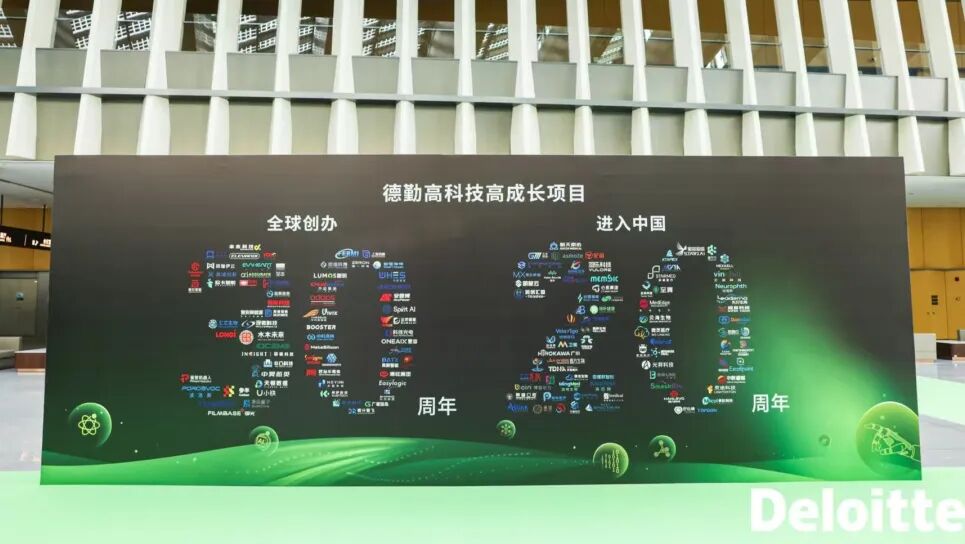
Core Insights - The "2025 Deloitte China High-Tech High-Growth 50" and "Deloitte China Rising Star" lists were unveiled at the summit held in Wuxi, showcasing the vitality of China's industrial innovation and exploring new trends in future technology development [1][21]. Industry Overview - The report indicates that the hardware sector leads the "China 50" with a 28% share, followed by high-end equipment at 18%. The growth in the semiconductor field has significantly benefited hardware, while high-end equipment thrives on intelligent manufacturing. Clean technology has increased to 10% due to the inclusion of more renewable energy companies. Software and life sciences have seen a decline compared to the previous year, with the internet sector experiencing a notable drop, indicating a shift in China's tech industry towards "hard technology" [4][23]. - The Greater Bay Area continues to dominate with a 52% share, with Shenzhen, Shanghai, Beijing, and Guangzhou remaining the top cities for tech entrepreneurship due to their mature industrial chains, talent pools, and capital environments [4][23]. - AI has become a standard in R&D, with 23% of the "China 50" companies and 66% of "Rising Star" companies investing over 50% of their revenue in AI development [4][23]. Regional Development - The event's theme "Innovation Without Boundaries, Resilient Growth" reflects the recognition of Huishan's innovation ecosystem and industrial development strength, highlighting Deloitte's collaboration with Huishan to build a high-tech hub for sustainable economic growth [4][25]. - Huishan has established itself as an innovative demonstration zone in Jiangsu, focusing on nurturing tech enterprises through high-level platforms and a comprehensive service chain from R&D to results transformation [6][25]. Company Highlights - Jiangsu Weiheng Intelligent Technology Co., a representative in the digital energy sector, has developed a technology system centered on "AI + new energy storage," successfully entering over 60 countries and showcasing China's hard tech international competitiveness. Since its establishment in Huishan High-tech Zone in 2021, it has achieved rapid growth and was included in Wuxi's unicorn cultivation list [13][32]. - Two Wuxi companies made it to the lists: Jiangsu Weiheng Intelligent Technology Co. with a 344% three-year revenue growth rate in the "2025 China High-Tech Growth 50" and Wuxi Pamu Medical Technology Co. in the "2025 Deloitte China Medical Health Rising Star" list [14][33]. - Pamu Medical, focused on cardiovascular diseases, has developed innovative solutions for pulmonary hypertension and heart failure, gaining global recognition for its original technology. Its product PFlexi sheath received FDA approval, showcasing China's innovative medical device capabilities [16][35]. Collaborative Ecosystem - Deloitte and Huishan have been collaborating on optimizing the business environment and regional economic research, resulting in the "2025 Huishan District Investment Environment White Paper," which highlights the area's advantages in industrial chain completeness, policy support, and talent environment [18][37]. - The white paper uses the acronym "HUI" to represent High potential, Unique, and Innovation, emphasizing Huishan's high-value industries, unique location advantages, and commitment to integrating research, development, and application [18][37]. Conclusion - The 2025 Deloitte dual lists not only document the growth trajectory of China's high-tech enterprises but also reflect the path of regional economic upgrades through systematic ecological construction. Huishan's proactive layout in hard technology, comprehensive innovation service system, and capital investment strategies have attracted companies to settle and grow locally while expanding globally [20][39].

报告:中国科技50强营收增长率较去年略有下降
Di Yi Cai Jing· 2025-12-16 09:48
Group 1 - The core drivers for companies pushing technology and innovation are talent, capital, and AI research and development investment [1][2] - The average three-year cumulative revenue growth rate for the top 50 companies in China is 490%, showing a slight decline compared to 2024, while the top 10 companies' revenue growth rate remains stable [1] - Companies with revenue between 50 million and 100 million yuan account for 38% of the top 50, while those with revenue over 100 million yuan maintain a 44% share, indicating a rise in the proportion of small and medium-sized enterprises [1] Group 2 - The Greater Bay Area accounts for 52% of the top 50 companies, with Shenzhen, Shanghai, Beijing, and Guangzhou leading, highlighting the importance of mature industrial foundations and talent resources in first-tier cities [1] - The hardware industry leads with a 28% share, followed by high-end equipment at 18%, benefiting from growth in the semiconductor sector and strong performance in intelligent manufacturing [1] - AI research and development investment accounts for over 50% of revenue for 23% of the top 50 companies and 66% of the rising stars, indicating a significant trend towards AI integration [2] Group 3 - The global technology industry is undergoing a profound transformation driven by AI, characterized by competition for computing power sovereignty, the rise of open-source model ecosystems, and the evolution of AI agents [3] - From 2025 to 2030, China is expected to enter a period of explosive growth in the "AI + manufacturing/renewable energy/life sciences" matrix, becoming a beneficiary and backup provider of global "computing power replacing human labor" [3] - Over 60% of the companies listed in the 2025 China Pharmaceutical and Health Rising Stars report have valuations exceeding 1 billion yuan, with innovative drugs and medical devices accounting for 80% of the most dynamic sectors [3]
国泰海通|海外策略:长线外资连续5周流入港股有色金属——12月第1周全球外资周观察
国泰海通证券研究· 2025-12-07 15:37
Group 1 - The core viewpoint of the article highlights the recent trends in capital flows across various markets, indicating a mixed sentiment among foreign investors [1][2][3] Group 2 - Northbound capital saw a slight net inflow of 1.1 billion yuan during the week of December 1 to December 5, 2025, compared to a net inflow of 3.7 billion yuan the previous week [1] - Flexible foreign capital estimated a net inflow of 3.3 billion yuan, down from 6.6 billion yuan the prior week [1] - The top active stocks in the northbound trading included Zhongji Xuchuang with a total transaction amount of 18.6 billion yuan, accounting for 11% of the stock's weekly trading volume [1] Group 3 - In the Hong Kong market, a total of 3.1 billion HKD flowed out, with stable foreign capital withdrawing 17.8 billion HKD and flexible foreign capital inflowing 5.7 billion HKD [2] - The sectors attracting foreign investment included non-ferrous metals, telecommunications services, and semiconductors, while consumer discretionary and durable goods saw significant inflows through the Stock Connect [2] Group 4 - In the Asia-Pacific market, Japan experienced a net outflow of 138.8 billion yen from foreign investors during the week ending November 24, 2025, with a cumulative net inflow of 9.7 trillion yen since the beginning of 2023 [2] - India saw a foreign capital outflow of 430 million USD in November, contrasting with an inflow of 1.66 billion USD the previous month [2] Group 5 - In the US and European markets, global mutual funds recorded a net inflow of 3.8 billion USD into the US equity market in October, down from 25.5 billion USD the previous month [3] - European markets saw net outflows, with the UK, Germany, and France experiencing net flows of -3.2 billion USD, 0.14 billion USD, and 1.16 billion USD respectively [3]

大疆旁边咖啡馆挤满了投资人
华尔街见闻· 2025-12-07 12:44
Core Insights - The article highlights the emergence of a vibrant hardware innovation ecosystem in Shenzhen, particularly influenced by former DJI employees who have founded successful startups in various hardware sectors [4][9][18]. Group 1: Investment Trends - Investors are increasingly focusing on AI hardware, with many venture capitalists (VCs) establishing a presence in Shenzhen to tap into this growing market [5][13]. - The "FOMO" (Fear of Missing Out) phenomenon is prevalent among investors regarding startups founded by former DJI employees, as these ventures often see significant valuation increases [11][12]. Group 2: Notable Startups - Several notable startups have emerged from the "DJI alumni," including LiberLive, Zhenghao Innovation, and Songling Robotics, all of which are located within close proximity to DJI's headquarters [4][9]. - The article lists a variety of startups founded by former DJI employees, such as拓竹科技 (Tuo Zhu Technology), 正浩创新 (Zhenghao Innovation), and 妙动科技 (Miao Dong Technology), showcasing their rapid growth and funding success [10][19]. Group 3: Shenzhen's Hardware Ecosystem - Shenzhen is described as a "hardware Silicon Valley," with a robust supply chain and a collaborative ecosystem that fosters innovation and competition among hardware startups [18][20]. - The city has become a hub for various hardware sectors, including 3D printing and robotics, with a high localization rate in supply chains and production capabilities [19][20]. Group 4: Global Recognition - Shenzhen's products have gained international acclaim, with over 70% of the Chinese products listed in TIME magazine's 2025 Best Inventions coming from the city, highlighting its role as a leader in hardware innovation [20].

慧与科技(HPE.US)业绩引发华尔街意见分歧:大摩担忧利润承压,Evercore与小摩维持看涨
Zhi Tong Cai Jing· 2025-12-05 14:43
Core Viewpoint - HPE's fourth-quarter performance and guidance have mixed results, with concerns over rising commodity costs and delays in AI server deliveries impacting expectations [1][2] Group 1: Financial Performance - HPE's server business fell short of expectations due to delays in AI server deliveries and weak federal orders, with two-thirds of the shortfall attributed to AI server delays and one-third to federal business weakness [1] - The company has provided a more reliant guidance for the second half of the year, indicating that some AI infrastructure demand from sovereign and enterprise clients may be pushed to fiscal year 2027 [1] Group 2: Analyst Perspectives - Morgan Stanley analyst Erik Woodring expressed concerns about the challenges of passing on rising costs to customers, predicting increased pressure on profit margins by fiscal year 2026 [1] - Evercore ISI analyst Amit Daryanani maintained an "outperform" rating and a target price of $28, suggesting investors should overlook short-term fluctuations, as the company's network business contributes approximately 50% of EBITDA [2] - JPMorgan analyst Samik Chatterjee echoed a similar optimistic view, maintaining an "outperform" rating with a target price of $30, highlighting management's confidence in maintaining revenue expectations despite rising prices across multiple product lines [2]

2025德勤深圳高科技高成长20强及明日之星榜单出炉 四成高科技企业上市首选A股
Shen Zhen Shang Bao· 2025-12-04 23:12
Core Insights - The 2025 Deloitte Shenzhen High-Tech High-Growth Top 20 and Rising Stars list was released, highlighting the top three companies: Shenzhen Qiyu Innovation Technology Co., Ltd., Urban Light (Shenzhen) Unmanned Driving Co., Ltd., and Shenzhen Huixin Biomedical Technology Co., Ltd. [1] - The evaluation aims to discover and recognize local high-growth and innovative companies, with a focus on breaking technological boundaries and cross-domain integration [1][2]. Group 1: Company Performance - The average cumulative revenue growth rate of the Shenzhen Top 20 companies exceeded 350% over the past two years, with the number of companies generating over 100 million yuan in revenue doubling from 4 in 2022 to 8 in 2023 [1]. - The 46 companies on the list are primarily focused on software, hardware, high-end equipment, and life sciences, with software companies making up 30% and hardware companies 24% of the total [1]. Group 2: R&D and Innovation - Shenzhen continues to lead the nation in technology R&D investment and intellectual property, reflecting the city's ongoing innovation strength [2]. - According to the "Shenzhen High-Tech Enterprises CEO Survey," 19% of surveyed companies allocate over 80% of their budget to R&D, with significant investments directed towards artificial intelligence and machine learning (57%) and cloud computing and big data (50%) [2]. Group 3: Sustainable Development and Challenges - Over half of the companies find it challenging to balance short-term profits with long-term sustainable development, with 47% facing regional standard discrepancies and 24% hindered by funding and technology bottlenecks [3]. - Nearly 40% of companies prefer to establish headquarters or branches in the Yangtze River Delta and Greater Bay Area, prioritizing market access, talent supply, and business environment [3]. Group 4: Financing and Expansion - Companies in Shenzhen maintain an optimistic outlook regarding financing, with over 40% expecting to raise more than 100 million yuan in the future, and the A-share market being the preferred listing destination for 40% of these companies [3].

高盛闭门会-脉动中国-近期热点、指数再平衡
Goldman Sachs· 2025-12-04 15:36
对大宗商品持中性态度,但看好黄金,预计 2026 年底价格将达到每盎 司 4,900 美元。三季度 A 股盈利增长优于海外上市中资股,但后者受外 卖大战影响盈利下滑。 中证指数调整成分股,预计产生超过 230 亿美元被动资金流动,科技、 硬件、半导体等行业或迎来资金流入,银行、营销消费等行业或面临资 金流出。 Q&A 中国政府在 2027 年推出的消费方案预计将产生 3 万亿级别的新消费行业和热 点。该方案的具体内容是什么?对中国宏观经济有何影响? 中国政府计划在 2027 年推出一项重大消费方案,目标是创造 3 万亿级别的新 消费行业和热点。该方案旨在打造三个万亿级别的领域和十个千亿级别的消费 热点。具体领域尚未明确,但文件中提到了一些方向,包括绿色产品、农村消 费、休闲运动、健康产业、国潮品牌以及宠物经济等。此外,该方案特别强调 人工智能(AI)赋能,通过 AI 技术提升商品和服务的多样性和质量。 从宏观 经济角度看,这一方案主要侧重于供给侧改革,旨在通过开拓新赛道和提高供 给质量来刺激需求。然而,短期内效果可能不明显,因为目前文件中并未详细 说明具体执行措施或资金支持。因此,中长期来看,该方案有助于扩大 ...
大疆旁边咖啡馆挤满了投资人
投资界· 2025-12-02 08:36
Core Insights - The article highlights the emergence of Shenzhen as a hub for AI hardware innovation, driven by former DJI engineers who have founded various startups in close proximity to DJI's headquarters [2][4][12] - The trend of "FOMO" (Fear of Missing Out) among investors regarding the "DJI ecosystem" is noted, with many venture capitalists eager to invest in startups founded by ex-DJI employees [8][10] Investment Landscape - Several startups founded by former DJI employees have gained significant traction, including: - LiberLive, founded by Tang Wenxuan, a former DJI engineer, which has completed two rounds of financing [3] - Zhenghao Innovation, founded by Wang Lei, former head of battery R&D at DJI, which is located 400 meters from DJI [3] - Songling Robotics, founded by Wei Jidong, a former DJI executive, which has secured substantial funding [6][7] - The article lists a variety of startups and their founders, emphasizing the strong presence of ex-DJI talent in the hardware sector [7] Ecosystem Development - Shenzhen's hardware ecosystem is described as thriving, with a notable increase in venture capital interest in AI hardware investments [4][10] - The article mentions that many venture capital firms are actively seeking AI hardware investors based in Shenzhen, reflecting the city's growing importance in the tech landscape [4][10] - The local supply chain and proximity to manufacturing resources are highlighted as key advantages for hardware startups in Shenzhen [9][12] Historical Context - DJI is portrayed as a pivotal player in reshaping the perception of Chinese manufacturing, moving away from the "copycat" image to one of innovation and quality [12] - The article notes that Shenzhen has become a breeding ground for a new generation of entrepreneurs who are more globally minded and tech-savvy, contrasting with previous generations focused on traditional manufacturing [12][13] Future Outlook - The article suggests that the trend of hardware innovation in Shenzhen is likely to continue, with a strong emphasis on AI integration and global market reach [10][12] - The presence of major venture capital firms and the establishment of new startups indicate a robust investment climate in Shenzhen's hardware sector [11][12]
希瓦私募董事长梁宏发文道歉 净值累计回撤幅度近20%
Xi Niu Cai Jing· 2025-12-01 11:25
第二大致损原因是硬件龙头公司。"最近两个月,第一重仓硬件龙头公司,持续下跌,跌幅超过37%,在这两个月回撤里面-9%以上的净值负贡献。"梁宏介 绍,该股最初建仓于30多元/股,后期在高位加仓,平均成本约为40多元/股。尽管公司在人工智能硬件入口逻辑上具备生态卡位优势,且一度预计2024年净 利润可达700亿元,但受存储芯片价格上涨影响,消费电子终端销售承压,叠加负面舆情发酵,尤其是成都事故引发舆论关注,汽车业务前景被重新评估。 第三大致损原因是美股稳定币股。"几个月前公司重仓介入了美股稳定币股。该股上市后一度股价冲到300美元/股,随后该标的股价调整50%-60%以后希瓦 买入。但该股票属于新股上市,后续出现了巨量低成本股份解禁,而且我忽略了加密货币行业反转带来的巨大负面影响。近四周该标的的调整对组合造成了 4%-5%的净值下跌。"梁宏直言。 这三次失误加起来造成了18%的净值回撤,再加上一些跟随指数的正常下跌,最终酿成了希瓦私募20%的累计回撤。 希瓦私募最新周报显示,该私募旗下多数基金周度预估净值下跌7%左右,从最高点累计回撤幅度约为20%,本次回撤大幅度跑输主要指数,主因还是个股 问题,其次是科技互联网 ...

万和财富早班车-20251126
Vanho Securities· 2025-11-26 02:07
Core Insights - The report highlights the ongoing developments in various sectors, including advancements in fusion technology, energy market growth, and the rise of AI applications, indicating a dynamic investment landscape [4][5][6]. Domestic Financial Market - The Shanghai Composite Index closed at 3870.02, up by 0.87%, while the Shenzhen Component Index rose by 1.53% to 12777.31, reflecting a positive market sentiment [2]. - The ChiNext Index increased by 1.77%, indicating strong performance in the growth sector [2]. Industry Developments - The fusion sector is entering a critical phase with the launch of international scientific plans, which may present future investment opportunities [4]. - The national electricity market saw a 7.9% year-on-year increase in trading volume from January to October, suggesting robust demand in the energy sector [4]. - Meta's significant investment in Google's TPU hardware is expected to create opportunities for related companies such as Zhongji Xuchuang and Changxin Bochuang [5]. - There is a noticeable increase in orders for flu-related medications, driven by a seasonal peak, benefiting companies like Te Yi Pharmaceutical and Panlong Pharmaceutical [5]. - The AI eyewear sector is gaining momentum with the upcoming launch of new products by Alibaba's Quark AI glasses, which could enhance market competition and innovation [5]. Company Focus - Robotech's subsidiary ficonTEC is advancing in OCS technology applications, indicating potential growth in tech-related investments [6]. - Dao's Technology has begun large-scale supply of single-walled carbon nanotube slurry to multiple battery cell clients, showcasing its market expansion [6]. - Yingboer is collaborating with Fengli Intelligent to develop joint modules, although no joint venture has been established yet [6]. - Shaanxi Natural Gas is progressing with the copper-white Zhang project, aiming to complete the main construction by 2025, which may enhance its operational capacity [6]. Market Review and Outlook - The market experienced a significant rally on November 25, with the ChiNext Index surging nearly 2%, indicating strong investor interest [7]. - The overall market saw 4300 stocks rise, with 95 hitting the daily limit up, reflecting a broad-based recovery [7]. - The report anticipates that the A-share market will benefit from improving liquidity and a favorable economic environment, with corporate earnings expected to grow as the economy transitions and new industries develop [7].