社交

Search documents
中金:维持赤子城科技(09911)“跑赢行业”评级 目标价14.5港元
智通财经网· 2025-12-16 02:01
Core Viewpoint - The report from CICC maintains the revenue and profit forecasts for Zhizi City Technology (09911) for 2025 and 2026, with an outperform rating and a target price of HKD 14.5, indicating a 38% upside potential based on a 14x 2026 Non-IFRS P/E ratio [1] Group 1: Revenue and Growth - MICO has stabilized, with SUGO and TopTop continuing to show high growth in user acquisition and revenue. The company expects a quarter-on-quarter stabilization in revenue since Q4, with YoHo revenue maintaining year-on-year growth. Mature product lines are contributing stable profits, while new products SUGO and TopTop are prioritizing user scale, showing double-digit growth in global MAU [2] - The company anticipates a 30% year-on-year increase in social revenue for the second half of the year, driven by regional expansion and the core growth of SUGO and TopTop, along with a pipeline of new products expected to support revenue in the coming years [2] Group 2: Strategic Initiatives - Short dramas and games are being explored as strategic initiatives. The company is testing global distribution of translated and self-produced dramas, currently in an investment phase with manageable losses, and sees potential for synergy with its social ecosystem [3] - The main product, the mobile game "Alice's Dream," is entering a recovery phase, with expectations for stable profit contributions. New games are in testing, with a potential launch in the first half of 2026, which may provide additional revenue [3] Group 3: AI and Operational Efficiency - The company is focused on enhancing profitability quality while expanding, utilizing AI technology and refined operations. It aims to balance growth investments with profit release based on the different development stages of its products, maintaining an adjusted net profit forecast of 1.1 billion for the year [4] - Looking ahead, there is potential for optimizing operational leverage, with expectations for gradual profit release as the market and products mature [4]
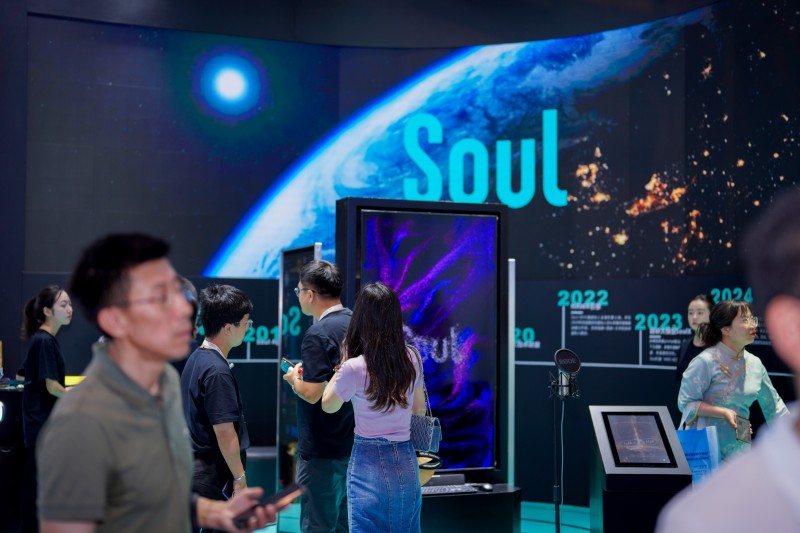
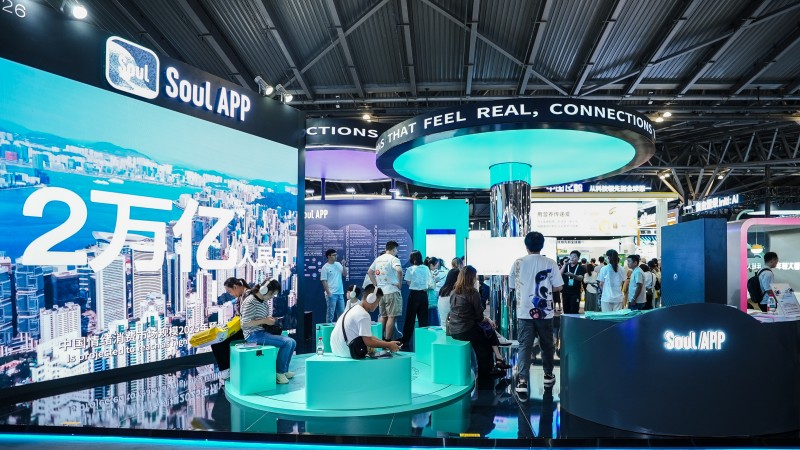
Soul启动港股上市进程,高占比Z世代用户夯实“情绪经济”叙事
Sou Hu Wang· 2025-12-15 04:26
Core Insights - Soul App has submitted its main board listing application to the Hong Kong Stock Exchange, emphasizing its focus on "emotional value" for Generation Z [1] - The platform boasts that 78.7% of its daily active users belong to Generation Z, and it has achieved sustained profitability since 2023 [1][3] - The upcoming IPO is seen as a critical moment for Soul to gain recognition in the capital market through its unique positioning [1] User Demographics and Financial Performance - Over 78.7% of Soul's daily active users are from Generation Z, who engage in self-expression and interaction through virtual identities, seeking immersive satisfaction [3] - The company has reported nearly 1 billion yuan in adjusted net profit within three years of operation [3] - By 2021, Soul reached 9.1 million daily active users, with over 70% being post-90s users [4] Unique Business Model and Market Positioning - Soul's business model disrupts traditional social networking by not encouraging real avatars and instead promoting virtual identities, focusing on interests rather than appearances [4] - The platform's core philosophy is to prioritize understanding over recognition, addressing the emotional needs of users [4] - Soul has attracted significant investments from major stakeholders, including Tencent, which holds a 49.9% stake, making it the largest institutional shareholder [4] Future Outlook and Competitive Advantage - The progression of Soul's IPO signifies a shift towards validating its ability to meet deep emotional needs and realizing its value [6] - The company's unique understanding of "emotional value" will be crucial in transforming into a sustainable competitive advantage and ensuring long-term profitability in a highly competitive social networking landscape [6]

行业周报:迪士尼联合OpenAI定义“AI+IP”新范式,在线情感社区公司冲击上市-20251214
KAIYUAN SECURITIES· 2025-12-14 15:22
Investment Rating - Investment rating: Positive (maintained) [1] Core Insights - The report highlights the rapid growth of the emotional economy market, with China's market expected to reach RMB 24.253 trillion in 2024 and grow at a CAGR of 22.2% until 2030, while the global market is projected to reach RMB 14.7 trillion in 2024, with a CAGR of 20.9% [38][43] - The report emphasizes the strong performance of the leading companies in the African hygiene products market, particularly LeShuShi, which has seen significant revenue and profit growth due to cost optimization and market expansion [45][46] - The report discusses the emergence of AI-driven social platforms, such as Soul and MiLian Technology, which are capitalizing on the emotional economy by offering unique user experiences and demonstrating strong financial performance [21][27] Summary by Sections Emotional Economy - The emotional economy is shifting consumer demand from material goods to experiences and emotional fulfillment, with consumers willing to pay for platforms and products that provide joy and stress relief [38] - The emotional economy market in China is expected to grow significantly, with a projected market size of RMB 24.253 trillion by 2024 and a CAGR of 22.2% from 2024 to 2030 [38][41] AI-Driven Social Platforms - Soul, a leading social app targeting Gen Z, reported a revenue of RMB 16.83 billion in the first eight months of 2025, a 17.8% increase year-on-year, with an adjusted net profit of RMB 2.86 billion, reflecting a 73.1% growth [21][23] - MiLian Technology, focusing on a more mature demographic, achieved a revenue of RMB 19.2 billion in the first half of 2025, marking an 85.9% year-on-year increase, with an adjusted net profit of RMB 2.97 billion, up 285% [27][33] African Hygiene Products Market - LeShuShi is the market leader in Africa's hygiene products sector, holding a 20.3% market share in baby diapers and a 15.6% share in sanitary napkins by volume [45] - The company's revenue grew from USD 320 million in 2022 to USD 454 million in 2024, with a CAGR of 19.2%, and its adjusted net profit increased from USD 1.839 million to USD 9.767 million during the same period, achieving a CAGR of 130.5% [45][46] - LeShuShi's product range includes over 340 SKUs, with a focus on multi-brand strategies to cater to various consumer segments [51]

5家消费公司拿到新钱;小红书暂停试运营“小红卡”;霸王茶姬联名Hello Kitty|创投大视野
36氪未来消费· 2025-12-14 12:29
Financing Activities - Ningkang Ruizhu completed over 100 million RMB Series A financing, led by Longpan Investment, with funds aimed at accelerating technology platform expansion and clinical research [3] - Anlan Power secured millions in angel financing, focusing on the iterative development and testing of electric and intelligent leisure boat products [4] - Jiang Liutong Pet Fresh Food raised 20 million RMB in angel financing, primarily for product R&D upgrades and capacity expansion [6] - Jiyouyou completed 10 million RMB in angel financing, with plans to deepen its "front store, middle clinic, back platform" strategy and digital upgrades [8] - Hualiao finished several million RMB in angel financing, aimed at enhancing its core product "Hualiao" social app and preparing for a potential listing on the Beijing Stock Exchange [9] Company Developments - Xiaohongshu announced the suspension of its "Xiaohong Card" trial operation starting January 1, 2026, due to unmet user expectations [10] - Mingming Hen Mang's listing application has been approved by the China Securities Regulatory Commission [11] Market Trends - Mixue Ice City launched a breakfast set priced at 7.9 RMB, including breakfast milk and bread, indicating a new product line [12] - Heytea closed over 600 stores within a year, with a net decrease of 711 stores, reflecting a 15.41% year-on-year decline [14] - Super Box NB, a community supermarket under Hema, opened its first production warehouse in Shandong, enhancing its supply chain [15] Consumer Insights - A recent oil price adjustment will reduce consumer costs by approximately 2 RMB for a full tank of gasoline [18] - The price of a trivalent flu vaccine has dropped to 5.5 RMB, highlighting intense competition and oversupply in the vaccine market [19]


香港证监会、港交所联名关切保荐人:部分上市文件“品质差劣”
Hua Er Jie Jian Wen· 2025-12-12 15:32
Core Viewpoint - The quality of IPO application documents in Hong Kong is declining, prompting regulatory concerns from the Hong Kong Securities and Futures Commission and the Stock Exchange of Hong Kong regarding non-compliance and inadequate document quality [1] Group 1: Regulatory Concerns - The joint letter from the Hong Kong Securities and Futures Commission and the Stock Exchange highlights a decline in the quality of new IPO applications, with issues such as poor document quality and insufficient review [1] - Specific concerns include unclear descriptions of business models and excessive use of promotional language in the submitted documents [1] Group 2: Case Studies of Companies - Shenzhen Huaxida Technology Co., Ltd. (Huaxida) presents itself as an "AI Home" concept, but its core product is essentially a TV box, which is a specific type of Android TV smart terminal [2][3] - Soul, a stranger social networking company, has altered its business model description multiple times during its IPO attempts, shifting from a "metaverse" focus to an "AI + immersive social platform" without changing its core service of matching users based on interests [4][5] Group 3: Operational Issues - The prevalence of "over-packaging" by sponsoring institutions is noted, where they exaggerate the business capabilities of issuers to attract investment [2] - The regulatory letter also points out that some sponsors failed to respond timely to regulatory inquiries, indicating a lack of understanding of basic facts regarding their cases [5] - Overwork and a focus on market expansion by investment banks may lead to neglect of quality control, resulting in errors in document submissions [6][8]
Soul上市是情绪经济的胜利,AI社交的资本里程碑
Sou Hu Cai Jing· 2025-12-10 01:23
Core Insights - Soul's upcoming IPO in 2025 is a significant event in the capital market, driven by its strategic backing from Tencent and a strong user base of 78.7% Gen Z users [1] - The platform has demonstrated its value in the "emotional economy" with a business model that emphasizes emotional value services, accounting for 90.8% of its revenue [1][3] User Engagement and Retention - As of August 31, 2025, Soul has 389 million registered users and 11 million daily active users, with impressive user loyalty metrics: 80% three-month retention rate, over 50 minutes of daily usage, 75 messages sent per user per day, and 20.1 daily launches [3][4] - The platform has created a "virtual social space" that allows users to connect based on interests and values, moving away from traditional social media's identity labels [3][4] Revenue Growth and Business Model - Soul's revenue compound annual growth rate (CAGR) exceeds 15% from 2022 to 2024, with revenue reaching 1.683 billion yuan in the first eight months of 2025, a 17.8% year-on-year increase [4][8] - The platform's business model combines low-entry barriers with high-margin monetization strategies, including virtual goods and subscription services, leading to a monthly average revenue per paying user (ARPPU) of 104.4 yuan, a 140% increase since 2020 [8][9] Technological Integration - Soul's proprietary AI model, SoulX, enhances user experience by accurately understanding emotions and matching social needs, improving interaction efficiency by 32% and increasing conversion rates by 18% [6][7] - The platform's AI-driven content creation tools enable users to produce high-quality content, resulting in over 10 million new original pieces monthly [7] Market Position and Future Outlook - Soul's successful transition from continuous losses to stable profitability, with adjusted profits of 361 million yuan in 2023 and 337 million yuan in 2024, showcases its effective monetization strategy [8][9] - The stable shareholder structure, with Tencent holding 49.9%, supports Soul's commercialization efforts and strategic continuity [9][10] - The upcoming IPO funds will be allocated to AI development, GPU infrastructure, global expansion, and content creation, indicating a clear strategic direction for future growth [10] Industry Impact - Soul's IPO represents a maturation of the emotional economy in China, highlighting the shift from mere user acquisition to creating irreplaceable emotional value for users [11][12] - The platform sets a new value benchmark in the social media sector, demonstrating the commercial potential of emotional connections and the feasibility of integrating AI into traditional industries [11][12]
卓越睿新登陆港交所首日暴涨 沪上逾二十家企业排队候审
Zhong Guo Jin Rong Xin Xi Wang· 2025-12-08 15:20
Core Points - Shanghai Zhuoyue Ruixin Digital Technology Co., Ltd. officially listed on the Hong Kong Stock Exchange on December 8, 2023, with stock code 02687.HK, and closed at HKD 126.40, an increase of 87.26% [1] - The company focuses on providing digital solutions for higher education, including the development, delivery, and operation of digital educational content and teaching scenarios [1] Company Summary - Zhuoyue Ruixin is headquartered in Xuhui District, Shanghai, and launched the "Wisdom Tree" brand in 2013, focusing on digital education content for universities [1] - With this listing, the total number of listed companies in Xuhui District has increased to 69 [1] - The company issued 6.67 million H-shares at an issue price of HKD 67.50, raising approximately HKD 450 million, with a net fundraising amount of about HKD 394 million [1] Fund Utilization - 36.7% of the net proceeds will be allocated to research and development, particularly in AI models and knowledge graph integration for personalized learning systems [1] - 31.8% will enhance customer service by expanding 29 branches nationwide to improve local support for universities [1] - 21.5% will be used to establish a knowledge graph center and set up two development centers in key cities to improve content production efficiency [1] - 10% will supplement working capital to support daily operations and strategic acquisitions [1] Industry Context - At least 15 Shanghai companies, including Zhuoyue Ruixin, have listed on the Hong Kong Stock Exchange this year, indicating a robust pipeline for future listings [2] - There are 23 Shanghai enterprises currently in the "processing" status for listing, covering various sectors such as automotive, new consumption, biomedicine, and hard technology [2]
年入22亿,灵魂社交神器要IPO了
Xin Lang Cai Jing· 2025-12-08 14:00
Core Insights - Soul, a social networking app targeting Gen Z, has submitted its IPO application to the Hong Kong Stock Exchange for the fourth time since initiating its listing plans in 2021 [4][16] - The company reported a revenue of over 2.2 billion yuan in 2024, with an average monthly spending of 104.4 yuan per paying user, and 78.7% of its users belong to the Gen Z demographic [4][10] Company Background - Founded by Zhang Lu, Soul was launched in November 2016 as a "soul social" platform, focusing on emotional connections rather than traditional image-based social networking [5][9] - The app gained popularity by allowing users to interact through virtual avatars and emphasizing shared values over physical appearance [7][10] Financial Performance - Soul initially adopted a "burn money for growth" strategy, with marketing expenses reaching 289.1%, 124.9%, and 118% of total revenue from 2019 to 2021, leading to significant losses [10][18] - In 2023, the company shifted its strategy to focus on existing user value, resulting in an adjusted net profit of 361 million yuan, with profits of 337 million yuan and 286 million yuan reported for 2024 and the first eight months of 2025, respectively [10][18] Revenue Structure - The primary revenue source for Soul is "emotional value services," which includes virtual gifts and membership privileges, accounting for approximately 90% of total revenue [10][11] - Users can purchase "Soul coins" for various virtual items, with prices ranging from 1.6 yuan to 5,333 yuan for premium gifts [11] IPO Journey - Soul's IPO journey began in May 2021 with plans for a NASDAQ listing, initially valued at around 2 billion USD (approximately 130 billion yuan), but was halted due to regulatory pressures and competition-related lawsuits [15][16] - After multiple failed attempts to list, including a submission to the Hong Kong Stock Exchange in 2022 that became invalid due to outdated materials, the company has now reapplied with improved financials and a clearer AI strategy [16][18] Challenges Ahead - Despite recent profitability, Soul faces challenges such as a highly concentrated revenue structure, with 90.8% of income derived from emotional value services and only 9.1% from advertising [18] - User growth has plateaued, with monthly active users peaking at 29.4 million in 2022 and declining to 28 million by August 2023, alongside a shrinking Gen Z user base [18] - The platform also grapples with governance issues, including scams and inappropriate content, and faces potential debt risks related to financial liabilities amounting to 11 billion to 12.4 billion yuan [18][19]

Soul IPO申请递交港交所,ARPPU六年增长140%
Sou Hu Cai Jing· 2025-12-08 08:44
Core Insights - Soul App has submitted its fourth application for a mainboard listing on the Hong Kong Stock Exchange, supported by stable profitability and improved financial performance, which strengthens its foundation for entering the capital market [1][6] - Key concerns for investors include the sustainability of high user willingness to pay (ARPPU) and the robustness of its user ecosystem characterized by high engagement and interaction [1][3] Financial Performance - Soul reported an annual profit of 300 million, achieving self-sustainability within two years, with strong financial data being its main strength for the IPO [3] - User engagement metrics are impressive, with an average daily usage time exceeding 50 minutes, a three-month retention rate of 80%, and an average of 75 private messages sent per user daily [3] Revenue Model - Over 90% of Soul's revenue comes from "emotional value services," primarily through value-added services [4] - The monetization strategy involves a "low-threshold lead-in + high-premium monetization" approach, with users spending on virtual gifts, rare avatars, and premium memberships [4] - The average revenue per paying user (ARPPU) reached 104.4 yuan, a 140% increase from 43.5 yuan in 2020, indicating strong user spending behavior [4] Role of AI - AI plays a crucial role in enhancing user experience, with Soul's self-developed Soul X model acting as a "social brain" that personalizes interactions and assists users in engaging more effectively [4] - Users utilizing the AI Booster feature experienced a 32% increase in interaction frequency and an 18 percentage point rise in conversion rates to paying users [4] Strategic Importance of IPO - The IPO represents a significant milestone in Soul's development, transitioning from a focus on user growth to demonstrating profitability and the viability of its business model [6] - Soul's journey offers valuable insights into the commercial logic of new-generation social products, serving as a reference case for investors [6]
Soul IPO步入新阶段,AI风控技术成效显著
Sou Hu Wang· 2025-12-06 11:04
在Soul 上市申请获港交所受理之际,平台在反诈领域取得的成效也引发市场关注。Soul IPO相关文 件显示,其通过AI技术升级与多维治理体系构建,在用户保护、内容治理等层面取得进展。这些成果 为Soul 上市进程中平台稳健运营打下坚实基础,展现出平台对生态安全治理的高度重视。 报告详尽披露了Q3季度平台在生态安全领域所取得的进展,全面展示了 Soul 围绕"技术+制度+教 育"三维治理体系的创新实践与显著成效。这标志着 Soul 在用户信息保护、反欺诈、未成年人守护、网 络暴力治理及社区共治等关键领域的持续投入和能力升级。 AI风控全面升级,筑牢社交安全屏障。在Q3季度,Soul持续深化AI前沿技术的应用,构建全方 位、高智能的安全防护体系,通过不断完善技术手段,平台在前端拦截和中端处置能力上实现提升。 •Soul持续保持与监管部门及公安机关的紧密合作,积极参与到打击违法有害信息的行动中。Q3季 度,平台向全国推送各类违法有害线索100余个,调证协查80余次,并参与其他警企合作工作3次,以实 际行动帮助构建起坚实的安全防线。 违规与低质内容治理,打造清朗社区画风。为切实保障用户在广场和群聊中的交流体验,So ...