
纯苯

Search documents
成本端原油支撑,今日化工延续偏强-20260129
Tian Fu Qi Huo· 2026-01-29 13:57
1. Report's Industry Investment Rating - Not provided in the content 2. Core Viewpoints of the Report - The chemical industry continued to be strong today supported by crude oil at the cost - end, with the short - term performance affected by the Iran geopolitical situation [1][2] - The short - term fundamentals of crude oil are weak, and the medium - term ones are pessimistically loose, but the short - term trading logic is shifted to the Iran geopolitical premium [2][3] 3. Summary by Relevant Catalogs (1) Crude Oil - Logic: US refinery operations declined, demand weakened, and EIA weekly inventories increased significantly for two consecutive weeks. The short - term fundamentals are weak, and the medium - term ones are pessimistically loose. However, the short - term trading logic is shifted to the Iran geopolitical premium. The subsequent geopolitical situation may evolve in three ways, with the first two being the key points of concern [2][3][4] - Technical Analysis: The daily - level shows a medium - term downward structure, and the hourly - level shows a short - term upward structure. It increased in volume and rose above the shock upper limit of 460 today, and the short - term structure turned to the long side. The short - term support below is at the 460 level. The strategy for the hourly cycle is to wait and see [4] (2) Styrene - Logic: Short - term supply disruptions and export rumors led to counter - seasonal inventory reduction, supporting short - term prices. However, after the recent significant expansion of profits, there is a pressure for the accelerated recovery and increased load of maintenance devices in the medium term. The short - term upward continuity depends on capital sentiment and whether there is a large reduction of positions at high levels [6] - Technical Analysis: The hourly - level shows a short - term upward structure. It increased in volume and reached a new high today, with the short - term support at the 7530 level. The hourly cycle strategy is to wait and see [6] (3) Pure Benzene - Logic: The speculation space of pure benzene is weaker than that of styrene. It is mainly driven by the passive upward space brought by the rising profit of styrene and the potential positive impact of the expected reduction of US tariffs on South Korean pure benzene on domestic imports. The medium - term overseas demand is weak, and the domestic import pressure is the biggest negative factor. The short - term upward continuity depends on capital sentiment [10] - Technical Analysis: The hourly - level shows a short - term upward structure. It increased in volume and rose today, with the short - term support at the 5930 level. The hourly cycle strategy is to wait and see [10] (4) Rubber - Logic: There is no major contradiction in the fundamentals of natural rubber. Its rise is mainly driven by the substitution effect after the increase of synthetic rubber prices and runs passively following synthetic rubber [14] - Technical Analysis: The daily - level shows a medium - term shock structure, and the hourly - level shows a short - term upward structure. It increased in volume and rose today, with the short - term support at the 16080 level. The hourly cycle strategy is to wait and see [14] (5) Synthetic Rubber - Logic: The domestic butadiene production is still at a high level in the same period. The domestic fundamentals have not changed much, but the cold wave in Europe and the United States has promoted the rise of overseas oil and gas prices and the expected short - term shutdown of overseas devices, leading to a contraction of overseas butadiene supply and an increase in international butadiene prices. Short - term cost - push and large capital inflows into the chemical sector last week have promoted the short - term strength of synthetic rubber [19] - Technical Analysis: The daily - level shows a medium - term upward structure, and the hourly - level shows a short - term upward structure. It increased in volume and rose today, with the short - term support at the 12800 level. The hourly cycle strategy is to wait and see [19] (6) PX - Logic: The supply - demand pattern is strong in the medium term before the new production capacity is put into operation in the third quarter, but the market has started trading in advance in December. Although there is a negative feedback logic of the decline in textile polyester in the short term, the capital inflow into the chemical sector since the second half of last week and the crude oil cost driven by geopolitical sentiment have promoted its short - term strength. Attention should be paid to when the Iran geopolitical impact ends [22] - Technical Analysis: The daily - level shows a medium - term upward structure, and the hourly - level shows a short - term shock structure. It fluctuated within the day today, with a wide - range interval of 7050 - 7500 at the hourly - level. The hourly - level strategy is to wait and see [22] (7) PTA - Logic: The short - term fundamentals are weak, with seasonal inventory increase due to weak demand in the off - season and a negative feedback logic of polyester production reduction in the downstream. However, the capital inflow into the chemical sector since the second half of last week and the crude oil cost driven by geopolitical sentiment have promoted its short - term strength. Attention should be paid to when the Iran geopolitical impact ends [24] - Technical Analysis: The daily - level shows a medium - term upward structure, and the short - term upward structure at the hourly - level has come to an end. It fluctuated within the day today. The pressure at the 5370 level in the 15 - minute decline is temporarily effective. The hourly - level strategy is to wait and see [24] (8) PP - Logic: The fundamentals of the domestic olefin industry chain are still weak, with the pressure of new production capacity release and the off - season of demand. However, the capital inflow into the chemical sector since the second half of last week and the cost support affected by the US cold wave have promoted its short - term strength. The continuity depends on when the capital reduces positions at high levels [26] - Technical Analysis: The hourly - level shows a short - term upward structure. It increased in volume and rose today, with the short - term support at the 6650 level. The hourly cycle strategy is to wait and see [26] (9) Methanol - Logic: The port has started seasonal inventory reduction, but the fundamentals are weak due to the extremely high inventory level compared with the same period and the negative feedback of early parking and load reduction of MTO devices. However, the Iran geopolitical sentiment has heated up again recently, and the short - term trading of geopolitical sentiment on the disk and the large capital inflow into the chemical sector last week have promoted the short - term strength of methanol [31] - Technical Analysis: The daily - level shows a medium - term decline and a short - term upward structure. It decreased in volume and rose today, testing the previous high but failing. The short - term support below is at the 2255 level. The hourly cycle strategy is to wait and see [31] (10) PVC - Logic: The situation of high production, high inventory, and weak demand remains. It is affected by the chemical sector sentiment in the short term, but the upward pressure is still huge [33] - Technical Analysis: The daily - level shows a medium - term downward structure, and the hourly - level shows a short - term shock structure. It fluctuated within the day today, and the short - term structure is unclear. The hourly cycle strategy is to wait and see [33] (11) Ethylene Glycol (EG) - Logic: The domestic fundamentals are still weak, with seasonal inventory increase pressure, high supply operation, and a negative feedback logic of polyester production reduction in demand. However, the capital inflow into the chemical sector since the second half of last week and the impact of the US cold wave have promoted its short - term strength. The continuity depends on when the capital reduces positions at high levels [35] - Technical Analysis: The daily - level shows a medium - term downward structure, and the hourly - level shows a short - term upward structure. It fluctuated within the day today, with the short - term support at the 3825 level. The hourly - level strategy is to wait and see [35] (12) Plastic - Logic: The fundamentals of the domestic olefin industry chain are still weak, with the pressure of new production capacity release and the off - season of demand. However, the capital inflow into the chemical sector since the second half of last week and the cost support affected by the US cold wave have promoted its short - term strength. The continuity depends on when the capital reduces positions at high levels [39] - Technical Analysis: The daily - level shows a medium - term downward structure, and the hourly - level shows an upward structure. It decreased in volume and rose today, with the short - term support at the 6815 level. The hourly cycle strategy is to wait and see [39] (13) Soda Ash - Logic: The fundamentals of soda ash still feature high supply, weak demand, and high inventory, with the surplus pattern continuing. Although the soda ash production has slightly decreased this week, it is still at the highest level in history compared with the same period and the previous period, and the pressure of new production capacity release is still high. The total demand is still weak. The inventory has slightly decreased due to the downstream replenishment demand before the festival, but the total inventory of 1.52 million tons is still at an extremely high level compared with the same period last year. Without unexpected policies, the premium of the far - month contracts of soda ash is expected to be gradually downward - repaired, and a short - selling idea is maintained for the 05 contract [40] - Technical Analysis: The short - term downward structure at the hourly - level may have come to an end. It increased in volume and rose today, and the closing price stood above the short - term pressure of 1215 at the end of the session. The short - term decline may have ended. The hourly cycle strategy is to wait and see after stopping the loss of short positions [41][43] (14) Caustic Soda - Logic: The pattern of high supply, high inventory, and weak demand (weak non - aluminum demand and weak alumina demand expectation) in caustic soda remains. With sufficient comprehensive profits of chlor - alkali, chlor - alkali devices still maintain high - load operation, and the supply pressure is still huge. The downward drive continues, and it is difficult to see a reversal [44] - Technical Analysis: The hourly - level shows a short - term downward structure. It fluctuated within the day today, with the short - term pressure at the 2000 level. The hourly cycle strategy is to wait and see, and do not buy at the bottom before the structure turns to the long side [44]
《能源化工》日报-20260127
Guang Fa Qi Huo· 2026-01-27 01:02
Report Industry Investment Ratings - Not provided in the content Core Views of the Reports Polyolefins - Polyolefin prices are strong due to capital rotation into the chemical sector and geopolitical tensions. Fundamentally, supply and demand are both decreasing, and inventories are being depleted. PP supply pressure is relieved due to many maintenance activities, while PE faces pressure from reduced maintenance and import expectations [1]. Methanol - Methanol futures are oscillating strongly, but the basis is weakening, and trading volume is average. The methanol market has weak supply and demand, and the rebound space is restricted by high production. The port inventory is slightly depleted, but MTO demand is weak, suppressing price rebounds [4]. Natural Rubber - In the short - term, the natural rubber market has a strong sentiment to rise due to the strong performance of the synthetic rubber market. However, considering the weak demand, the upside is expected to be limited, with an operating range of 15,500 - 16,500 [7]. Pure Benzene - Styrene - The marginal supply - demand of pure benzene is slightly improving, but the port inventory is unexpectedly increasing, limiting its self - driving force. Styrene has strong short - term performance due to export - driven inventory reduction, but the supply - demand is expected to weaken, and the price difference between styrene and pure benzene is expected to compress [10]. Urea - Urea futures are rising, and the spot market is mixed. The supply is sufficient, while the demand is weak, lacking effective support for price increases. The short - term trend is expected to be oscillatory, with the main contract focusing on the 1760 - 1800 range [12]. PVC - Caustic Soda - Caustic soda futures are slightly rebounding, but the spot price is declining. The supply - demand imbalance persists, and the upside of futures is expected to be limited. PVC futures are rising, but the supply - demand fundamentals are weak, and the upside is also expected to be restricted [13]. Glass - Soda Ash - Soda ash futures are oscillating, and the spot price is stable. The supply is high, and the demand is weak. Glass futures are also oscillating, with weak supply - demand during the pre - holiday off - season. Both need to be vigilant against potential price drops [14]. Crude Oil - Oil prices are mainly influenced by Middle - East geopolitics and the US cold wave. Although the cold wave's impact is weakening, geopolitical premiums still support oil prices [15]. Polyester Industry Chain - PX and PTA supply - demand are weakening before the Spring Festival, but have strong support in the second quarter. Ethylene glycol's supply - demand is weak in the near - term and strong in the long - term. Short - fiber's supply - demand is weak. Polyester bottle - chip's supply is decreasing, and the price and processing fee will follow the cost [18]. LPG - LPG prices are rising. The upstream refinery operating rate is increasing, while the downstream PDH operating rate is decreasing. The inventory situation is mixed, with the refinery inventory ratio increasing and the port inventory decreasing [19]. Summaries by Related Catalogs Polyolefins Price Changes - L2605, L2609, PP2605, and PP2609 closing prices all increased, with PP2609 rising 1.35% [1]. - Spot prices of East - China PP and North - China LLDPE also rose [1]. Inventory and Operating Rates - PE and PP enterprise inventories decreased, with PP enterprise inventory dropping 7.85% [1]. - PE device operating rate increased by 3.77%, while downstream weighted operating rate decreased by 3.42% [1]. Methanol Price Changes - MA2605 and MA2609 closing prices increased, and the basis weakened [4]. - Spot prices in Inner Mongolia, Henan, and Taicang all rose [4]. Inventory and Operating Rates - Methanol enterprise inventory decreased by 2.78%, while port inventory increased by 1.55% [4]. - Upstream domestic enterprise operating rate decreased by 0.64%, and downstream MTO device operating rate decreased by 1.56% [4]. Natural Rubber Price Changes - Yunnan state - owned whole - latex and Thai standard mixed rubber prices decreased slightly [7]. Production and Operating Rates - November production in some countries decreased, while December domestic tire production and export increased [7]. Inventory Changes - Bonded area inventory increased by 2.94%, while factory - warehouse futures inventory decreased by 2.49% [7]. Pure Benzene - Styrene Price Changes - Upstream crude oil and some raw material prices changed slightly, and styrene and pure benzene prices also had minor fluctuations [10]. Inventory and Operating Rates - Pure benzene and styrene inventories in Jiangsu ports increased, and some operating rates in the industry chain changed [10]. Urea Price Changes - Futures prices rose, and the spot market was mixed [12]. Supply and Demand - Domestic urea daily production increased by 2.64%, and the demand was weak [12]. PVC - Caustic Soda Price Changes - Caustic soda spot prices declined, and PVC spot and futures prices increased [13]. Supply and Demand - Caustic soda supply - demand imbalance persisted, and PVC supply was high with weak demand [13]. Glass - Soda Ash Price Changes - Glass and soda ash futures prices increased slightly, and spot prices were stable [14]. Supply and Demand - Soda ash production was high, and glass production and sales were average during the pre - holiday off - season [14]. Crude Oil Price Changes - Brent and WTI prices decreased slightly, while SC increased by 2.62% [15]. Influencing Factors - Oil prices were affected by geopolitical tensions and the US cold wave [15]. Polyester Industry Chain Price Changes - Upstream and downstream product prices in the polyester industry chain changed to varying degrees [18]. Inventory and Operating Rates - MEG port inventory increased, and some operating rates in the industry chain decreased [18]. LPG Price Changes - LPG futures prices increased, and the basis weakened [19]. Inventory and Operating Rates - LPG refinery inventory ratio increased, and port inventory decreased. The upstream operating rate increased, and the downstream PDH operating rate decreased [19].
《能源化工》日报-20260126
Guang Fa Qi Huo· 2026-01-26 03:04
1. Report Industry Investment Ratings - No industry investment ratings are provided in the reports. 2. Core Views of the Reports Crude Oil - Recent oil price trends are mainly influenced by geopolitical events in the Middle East and the cold wave in the United States. With geopolitical premiums declining and significant inventory builds in crude oil and refined products, oil prices are under pressure. However, the cold wave in the US has boosted overseas natural gas prices and increased demand for heating oil, supporting oil prices. Currently, crude oil's own driving forces are limited, and short - term oil prices are still dominated by news. Brent crude should be watched for resistance above $66 per barrel, and attention should be paid to changes in geopolitical conflicts in the Middle East [1]. Glass and Soda Ash - **Soda Ash**: The main contract closed at 1,198 yuan/ton on January 23. Spot prices remained basically flat, with a dull market sentiment and mainly downstream rigid demand procurement. On the supply side, the capacity utilization rate slightly decreased, and the comprehensive output slightly declined but remained at a relatively high level. On the demand side, the weekly shipment volume and shipment rate increased month - on - month, with little change in the float glass production line, and the weekly output and industry average capacity utilization rate were flat month - on - month. The photovoltaic glass had no new kiln shutdowns, and the in - production capacity and capacity utilization rate were flat month - on - month. Affected by the expected export - grabbing policy, the photovoltaic glass price remained stable, and the inventory continued to decline. Although the in - plant inventory of soda ash decreased overall and the macro sentiment improved recently, in the context of generally weak fundamentals, the short - term soda ash price is expected to fluctuate weakly, and it is advisable to wait and see [3]. - **Glass**: The main contract closed at 1,064 yuan/ton on January 23. Spot prices showed regional differentiation, with the overall spot price center rising slightly month - on - month. The profits of glass made from different fuels changed little overall, with the profit of petroleum coke - made glass turning negative. The spot market still mainly had rigid - demand transactions. On the supply side, the daily melting volume continued to increase slightly month - on - month, while the start - up rate and industry average capacity utilization rate remained basically flat. On the demand side, the performance of deep - processing orders was differentiated, and the start - up rate of Low - e glass was still at a relatively weak level. Real estate - related data showed that the industry was still in the adjustment stage. The shipment situation of glass enterprises varied, and the inventory also fluctuated. The overall in - plant inventory remained at a high level. As the Spring Festival approached and the consumption off - season arrived, downstream demand gradually decreased, and manufacturers were more willing to actively reduce inventory. It is expected that the rebound space of the futures price is limited, and the short - term trend will remain weakly volatile. It is recommended to pay attention to inventory changes and wait and see [3]. Pure Benzene and Styrene - **Pure Benzene**: The supply - demand situation of pure benzene continued to improve slightly, with a slight decrease in supply and a continued increase in the downstream comprehensive load. The port inventory decreased, but the absolute level of port inventory remained high, and its own driving force was still limited. Recently, styrene was driven by exports, and its port inventory decreased significantly. Coupled with news of unexpected shutdowns of domestic and foreign plants, the styrene trend was strong, driving up the absolute price of pure benzene. Recently, the profit of styrene has expanded significantly, and the price difference between styrene and pure benzene has widened significantly. However, styrene's downstream has cut production due to increased losses, and there are expectations of restarting two maintenance plants next week. It is expected that the room for further expansion of the price difference is limited, and there is an expectation of compression. Strategically, the unilateral fluctuation is large, so it is advisable to wait and see; short the EB - BZ spread when it is high [5]. - **Styrene**: Driven by previous exports, the port inventory of styrene continued to decline, and the circulating supply was limited. The short - term supply - demand situation was temporarily tight. Coupled with the shutdown of the Xuyang styrene plant and the reduction of the load of the Tianjin Bohua plant during the week, the styrene futures price continued to rise. However, currently, the styrene industry has good profits, and the overall start - up is stable, with active forward over - sales. The downstream industry's losses have expanded, and some plants have shut down, actively selling styrene raw materials and downstream product inventories. Overall, the short - term supply - demand of styrene is temporarily tight. Coupled with the overall strength of the chemical sector driven by the inflow of off - industry funds, the short - term increase in styrene is significant. However, there are no new positive factors in the short term, the downstream negative feedback is intensifying, and there are expectations of restarting the Sinopec Quanzhou and Tianjin Bohua plants next week. The short - term capital game has intensified, and caution should be exercised regarding the current increase. Strategically, it is advisable to wait and see unilaterally; short the EB - BZ spread when it is high [5]. Natural Rubber - On the supply side, the production in northern Thailand and north - central Vietnam is transitioning to a reduction and shutdown, with a shrinking total supply and rising overseas raw material prices, strengthening cost support. On the demand side, some semi - steel tire enterprises with a relatively high proportion of European exports have sufficient recent foreign trade orders, and their production has maintained a relatively high - level. Currently, the overall inventory reserve of enterprises has further increased, but domestic sales have been slow, mostly maintaining rigid - demand sales, and the overall sales pressure of enterprises remains high. In terms of inventory, China's natural rubber social inventory has continued the inventory accumulation trend. In summary, in the short term, driven by the strength of the synthetic rubber market, the natural rubber market has a strong bullish sentiment. However, considering the weak demand, it is expected that there is still significant upward pressure, with an operating range of 15,500 - 16,500 [6]. Polyolefins - Polyolefins were jointly driven by the rotation of funds into the chemical sector, geopolitical tensions, and the possible impact of the North American cold wave on supply, and their prices strengthened rapidly at the end of the week. From a static fundamental perspective, both supply and demand decreased, and inventory was destocked. The upstream inventory was low, and the price - holding intention was strong, but agents sold at a loss, the basis weakened significantly, and hedgers had no risk - free positions. Dynamically, for PP, due to many maintenance plans, the supply pressure has been relieved. Currently, the PDH profit is still low, and the production reduction drive is strong. In the later stage, attention should be paid to the implementation of marginal plant maintenance. For PE, the maintenance has decreased, and the import is expected to be under pressure. Some full - density plants have switched to LLD production, increasing the pressure on standard products, and the demand has entered the off - season, with the downstream start - up rate weakening. In terms of sentiment, the short - covering demand has been released, and the overall trading volume this week was weaker than last week [9]. PX, PTA, Ethylene Glycol, Short - Fiber, and Bottle Chips - **PX**: With high - profit margins, domestic and foreign PX plants have increased production, and currently, the PX load in Asia and China is at a historical high. In January, PX supply remained high. In terms of demand, as the Spring Festival approaches, the polyester production cut - back has expanded. The overall supply - demand of PX and PTA in the first quarter has weakened compared to expectations. It is expected that PX's own driving force will be limited before the Spring Festival. However, as PX trading switches to the March - April period, supported by tight supply - demand in the second quarter, the low - price support for PX is relatively strong. Last week, the cold wave in the US boosted overseas natural gas prices, which had a positive impact on some domestic chemical products (such as styrene, ethylene glycol, and some products with natural gas as raw material). At the same time, off - industry funds flowed into the chemical sector, driving up PX in the short term. However, the PX high point did not reach the mid - December high, and the physical PX market was slow to follow the increase. In the short - term weak supply - demand pattern of PX, caution should be exercised, and attention should be paid to the sustainability of funds. Strategically, pay attention to the resistance around 7,500 yuan/ton for PX, reduce long positions, and conduct mid - term rolling long - biased operations [11]. - **PTA**: Recently, there have been few changes in PTA plants. However, as the Spring Festival approaches, the polyester production cut - back has expanded, the PTA supply - demand has gradually weakened, and the spot basis has weakened. Recently, driven by the large - scale inflow of funds into the chemical sector and the expectation of improved PTA supply - demand in the second quarter, the PTA futures price has increased significantly, and the PTA futures processing margin has expanded significantly. However, due to the large inventory build - up pressure in February in advance, PTA's own driving force is limited before the Spring Festival. Caution should be exercised regarding the current increase. Strategically, pay attention to the resistance above 5,400 yuan/ton, and it is recommended to reduce long positions; conduct long - spread operations on the TA5 - 9 spread at low levels [11]. - **Ethylene Glycol**: The supply - demand of ethylene glycol shows a pattern of near - term weakness and long - term strength. In the near - term, ethylene glycol is still facing significant inventory build - up pressure. Since there are few domestic ethylene glycol plant maintenance plans from January to February, and with the commissioning of new plants such as Ningxia Changyi and BASF, the domestic ethylene glycol supply remains at a high level. At the same time, the polyester plant production cut - back and the seasonal weakening of terminal demand have weakened the demand support for ethylene glycol. From the information of arrived and forecasted shipping schedules, the reduction rate of ethylene glycol imports is slow, and the inventory build - up amplitude from January to February is expected to be high. However, in the long - term, the supply - demand of ethylene glycol is expected to improve in the second quarter, and inventory is expected to be reduced, mainly due to the shutdown of multiple large - scale domestic ethylene glycol plants and the spring maintenance of coal - based ethylene glycol plants, which will significantly reduce the supply expectation. Strategically, conduct long - spread operations on the EG5 - 9 spread at low levels; sell out - of - the - money put options EG2605 - P - 3800 at high levels [11]. - **Short - Fiber**: The overall supply - demand pattern of short - fiber is weak. Currently, the short - fiber supply remains at a high level. In terms of demand, as the Spring Festival approaches, downstream orders are gradually decreasing, and the number of yarn mills reducing or stopping production will increase around the end of the month. Recently, the sharp increase in the cost side has driven up the short - fiber price, and some downstream enterprises have followed up with replenishment. However, as the demand side weakens, the downstream is mostly waiting and seeing after the short - fiber price increase. The market will enter a digestion stage later. Overall, the absolute price driving force of short - fiber before the festival is weak, and it mainly follows the raw material price fluctuations. Strategically, the unilateral operation of PF03 is the same as that of PTA; the PF futures processing margin fluctuates between 800 - 1,000 yuan/ton, and it is advisable to short the spread when it is high [11]. - **Bottle Chips**: Recently, the implementation of maintenance plans for multiple polyester bottle - chip plants has been carried out one after another. In particular, a 1.2 - million - ton - per - year polyester bottle - chip plant in Jiangyin has been shut down since mid - January and will be under maintenance until March. There are still maintenance plans at the end of January. The domestic supply is expected to decrease significantly, and recently, the plants have continued to reduce inventory, supporting the processing margin. At the same time, the demand will weaken seasonally. With both supply and demand decreasing, it is expected that the absolute price and processing margin of bottle chips from January to February will still follow the cost - side fluctuations. Strategically, pay attention to the support around 6,200 yuan/ton for PR2603; the processing margin of the PR main contract is expected to fluctuate in the range of 400 - 550 yuan/ton; sell out - of - the - money put options PR2603 - P - 6200 at high levels [11]. Methanol - The methanol market has weak supply and demand. The inland plant inventory has decreased, but the high production volume restricts the rebound space, and the demand is expected to decline in the future. Although the port inventory has slightly decreased, the MTO demand is weak (many plants are under maintenance or have reduced loads), and the inventory reduction amplitude of the 05 contract has significantly weakened, suppressing the price rebound height. Currently, there are two key variables in the market: one is the reduction of imported methanol arrivals under the background of low methanol production in Iran. As of the latest data, the shipment volume from Iran is 350,000 tons; the other is the risk premium brought by geopolitical factors [13][14]. PVC and Caustic Soda - **Caustic Soda**: Last week, the prices of caustic soda in the mainstream regions continued to decline. The weekly average price of 32% caustic soda in Shandong was 633 yuan/ton, a month - on - month decrease of 6.36%. Low - price transactions frequently occurred during the week, impacting the market. The unloading of products by the main downstream enterprises was still difficult, and the order transactions were light. From the supply side, there were sporadic short - term shutdowns of chlor - alkali plants last week, but some chlor - alkali plants that had previously reduced loads resumed production, increasing the operating load rate. High - level operation combined with difficult sales led to continued inventory accumulation of caustic soda last week. On the demand side, the unloading situation of the two main downstream industries was poor. Under the strong chlorine situation, enterprises had no incentive to reduce production, and the problem of product backlogs at downstream enterprises continued. Under the weak supply - demand situation, the caustic soda price is under pressure in the short term and is still expected to decline. This week, the East China region faces monthly order contracts, and the supply - demand contradiction has not been alleviated. Coupled with the weak price transmission in the main regions, it is expected that the caustic soda market will continue to be weak [15]. - **PVC**: Last week, the domestic PVC price fluctuated after an increase, supported by positive economic expectations and bullish long - term expectations for commodities. The short - term increase in commodity prices in the market slightly pushed up the spot price. From the supply side, the operating load rate of the domestic PVC industry slightly decreased last week, and some enterprises had unplanned production cuts. However, the overall supply remained at a high level. The downstream production demand gradually weakened before the Spring Festival, and the foreign trade exports continued to be good but decreased in volume month - on - month. The inventory accumulation pressure before the festival in the industry continued. Currently, the macro - economic expectations are relatively strong, and combined with the strong PVC exports, the PVC price trend is relatively firm. However, as the Spring Festival approaches, some downstream enterprises are gradually on holiday, the industry inventory is accumulating rapidly, and combined with the weak support from raw material calcium carbide, the expected significant increase in price is limited. In the short term, the price may show a wide - range fluctuation pattern due to the cost support at the bottom and the supply - demand pressure at the top. It is expected that the PVC operating rate will continue to decline this week. Currently, some downstream enterprises are having pre - festival promotions, and the operating rate has increased. The export is expected to remain strong. However, considering that some downstream enterprises have started to take holidays one after another and the price of raw material calcium carbide is falling, it is expected that the PVC market will remain stable [15]. Urea - On January 23, the urea futures price fluctuated and closed higher, and the spot price increased slightly overall. Some regions raised their ex - factory quotes, but the downstream acceptance of the price was limited, and there were still some orders at low prices. New order transactions were relatively cautious. There are no planned maintenance enterprises this week. As the previously shut - down plants gradually resume production, the daily urea output fluctuates around the high level of 200,000 tons, and the short - term supply of goods is sufficient. In terms of demand, there is still some agricultural demand in the Jiangsu, Anhui, and Guangdong regions. The compound fertilizer industry is expected to reduce its operating rate due to the decrease in finished product sales volume. The operating rate of the board industry gradually decreases in the twelfth lunar month, and the overall industrial demand for urea has weakened. Urea inventory continued to decline this week, and the inventory reduction rhythm was faster than in previous years. This week, urea enterprises have successively launched the Spring Festival order - receiving plan, and it is expected that the inventory will be further reduced. Overall, the urea price is still restricted by the weak supply - demand situation, and the market transactions need to increase. However, the agricultural demand in some regions and the inventory reduction expectation have boosted market confidence. It is expected that the urea price will fluctuate in a wide range in the short term. The main urea contract should be watched in the range of 1,760 - 1,800 yuan/ton, and attention should be paid to the progress of downstream demand and the inventory reduction rhythm [16]. LPG - No specific views on the LPG market trend and investment strategies are provided in the LPG report. It only presents price, inventory, and operating rate data [17]. 3. Summaries According to Relevant Catalogs Crude Oil - **Price and Spread**: On January 23, Brent crude was at $64.06 per barrel, down $1.82 or 2.84% from January 22; WTI was at $59.36 per barrel, up $1.71 or 2.88
能源化工日报-20260123
Wu Kuang Qi Huo· 2026-01-23 01:02
1. Industry Investment Rating No information about the industry investment rating is provided in the report. 2. Core Viewpoints - For crude oil, although the geopolitical premium has disappeared and OPEC's production increase is minimal with supply not yet surging, short - term oil prices should not be overly bearish. Maintain a range strategy of buying low and selling high, but currently, wait and see as the price needs to test OPEC's export price - support willingness. [2] - For methanol, with low valuation and an improving outlook next year, the downside is limited. Despite short - term negative pressure, geopolitical instability in Iran brings expectations, and there is feasibility to buy on dips. [3] - For urea, the current situation of internal - external price differences has opened the import window, and with the expected increase in production at the end of January, negative fundamental expectations are coming, so take profits on rallies. [6] - For rubber, with a weak seasonal pattern, it is expected to continue to decline after consolidation. Adopt a bearish approach, short on rebounds if RU2605 breaks below 16000, and partially build positions for the strategy of buying NR main contract and shorting RU2609. [11] - For PVC, the fundamentals are poor with strong supply and weak demand in China. Short - term electricity price expectations and pre - April 1 export rush support the price, but mid - term, short on rallies before significant industry production cuts. [14] - For pure benzene and styrene, the non - integrated profit of styrene is moderately high with limited room for upward valuation repair. As the non - integrated profit has significantly recovered, gradually take profits. [17] - For polyethylene, OPEC+ plans to suspend production growth in Q1 2026, and crude oil prices may have bottomed. Although the spot price has risen, the valuation has room to decline further. With no new capacity planned in H1 2026 and reduced coal - based inventory, the price has support, but demand is in a seasonal downturn. [20] - For polypropylene, the EIA report forecasts a slight reduction in global oil inventory, and the supply surplus may ease. With no new capacity in H1 2026, the supply pressure is relieved. In a context of weak supply and demand, the inventory pressure is high. Wait for the supply - surplus situation to change in Q1 next year for the price to bottom. Long the PP5 - 9 spread on dips. [23] - For PX, it is expected to continue to accumulate inventory before the maintenance season. After the Spring Festival, both PX and its downstream PTA will have strong supply - demand, and there are mid - term opportunities to buy on dips following crude oil. [26] - For PTA, it is expected to enter the Spring Festival inventory - accumulation stage with high short - term maintenance on the supply side and weakening demand due to seasonality. There is room for valuation to rise after the Spring Festival, and look for mid - term buying opportunities. [28] - For ethylene glycol, the overall load is still high, and the inventory - accumulation cycle at ports will continue. There is an expectation of further profit compression and load reduction under new - plant commissioning pressure. Be cautious of rebound risks in the short term due to the tense situation in Iran and cold wave expectations. [30] 3. Summary of Each Product Crude Oil - **Market Information**: INE main crude oil futures rose 5.30 yuan/barrel, or 1.20%, to 446.40 yuan/barrel. Related refined product futures, high - sulfur fuel oil rose 48.00 yuan/ton, or 1.89%, to 2592.00 yuan/ton; low - sulfur fuel oil rose 51.00 yuan/ton, or 1.65%, to 3135.00 yuan/ton. [1] - **Strategy**: Maintain a range strategy of buying low and selling high, but wait and see currently. [2] Methanol - **Market Information**: Regional spot prices in Jiangsu changed by 5 yuan/ton, Lunan by - 5 yuan/ton, Henan by 0 yuan/ton, Hebei by 0 yuan/ton, and Inner Mongolia by - 2.5 yuan/ton. The main futures contract changed by 45.00 yuan/ton to 2260 yuan/ton, and MTO profit changed by 1 yuan. [3] - **Strategy**: Buy on dips as the valuation is low and the outlook is improving. [3] Urea - **Market Information**: Regional spot prices in Shandong changed by 0 yuan/ton, Henan by - 10 yuan/ton, Hebei by 0 yuan/ton, Hubei by 0 yuan/ton, Jiangsu by - 10 yuan/ton, Shanxi by - 20 yuan/ton, and Northeast by 0 yuan/ton. The overall basis was - 36 yuan/ton. The main futures contract changed by - 3 yuan/ton to 1776 yuan/ton. [5] - **Strategy**: Take profits on rallies due to expected negative fundamentals. [6] Rubber - **Market Information**: Rubber prices rebounded with a volatile pattern. The long - side reasons include limited production growth in Southeast Asian rubber forests, a seasonal upward trend in the second half of the year, and improved demand expectations in China. The short - side reasons are uncertain macro expectations, increased supply, and a seasonal demand slump. As of January 15, 2026, the operating rate of Shandong tire enterprises' all - steel tires was 62.84%, up 2.30 percentage points from last week and 2.78 percentage points from the same period last year; the semi - steel tire operating rate was 74.35%, up 6.35 percentage points from last week but down 4.09 percentage points from the same period last year. As of January 11, 2026, China's total natural rubber social inventory was 125.6 million tons, a 1.9% increase. Spot prices: Thai standard mixed rubber was 14700 (+100) yuan, STR20 was 1885 (+15) dollars, etc. [8][9][10] - **Strategy**: Adopt a bearish approach, short on rebounds if RU2605 breaks below 16000, and partially build positions for the strategy of buying NR main contract and shorting RU2609. [11] PVC - **Market Information**: The PVC05 contract rose 106 yuan to 4849 yuan. The spot price of Changzhou SG - 5 was 4570 (+70) yuan/ton, the basis was - 279 (- 36) yuan/ton, and the 5 - 9 spread was - 114 (+4) yuan/ton. The overall PVC operating rate was 79.6%, unchanged from the previous period. The demand - side downstream operating rate was 43.9%, down 0.1%. Factory inventory was 31.1 million tons (- 1.7), and social inventory was 114.4 million tons (+3). [13] - **Strategy**: Short on rallies mid - term before significant industry production cuts. [14] Pure Benzene and Styrene - **Market Information**: The spot price of pure benzene in East China was 5760 yuan/ton, unchanged; the active contract closing price was 6000 yuan/ton, unchanged; the basis was - 240 yuan/ton, narrowing by 195 yuan/ton. The spot price of styrene was 7600 yuan/ton, up 250 yuan/ton; the active contract closing price was 7694 yuan/ton, up 386 yuan/ton; the basis was - 94 yuan/ton, weakening by 136 yuan/ton. The upstream operating rate was 70.86%, down 0.06%; the Jiangsu port inventory was 9.35 million tons, a reduction of 0.71 million tons. The demand - side three - S weighted operating rate was 41.91%, up 1.02%. [16] - **Strategy**: Gradually take profits as the non - integrated profit of styrene has significantly recovered. [17] Polyethylene - **Market Information**: The main contract closing price was 6814 yuan/ton, up 148 yuan/ton; the spot price was 6640 yuan/ton, up 65 yuan/ton; the basis was - 174 yuan/ton, weakening by 83 yuan/ton. The upstream operating rate was 81.56%, up 1.23%. The production enterprise inventory was 35.03 million tons, a reduction of 4.51 million tons; the trader inventory was 2.92 million tons, unchanged. The downstream average operating rate was 41.1%, down 0.11%. The LL5 - 9 spread was - 31 yuan/ton, narrowing by 3 yuan/ton. [19] - **Strategy**: The price has support from reduced coal - based inventory and OPEC+ production suspension, but demand is in a seasonal downturn. [20] Polypropylene - **Market Information**: The main contract closing price was 6624 yuan/ton, up 139 yuan/ton; the spot price was 6660 yuan/ton, up 100 yuan/ton; the basis was 36 yuan/ton, weakening by 39 yuan/ton. The upstream operating rate was 76.61%, down 0.01%. The production enterprise inventory was 43.1 million tons, a reduction of 3.67 million tons; the trader inventory was 19.39 million tons, a reduction of 1.08 million tons; the port inventory was 7.06 million tons, a reduction of 0.05 million tons. The downstream average operating rate was 52.58%, down 0.02%. The LL - PP spread was 190 yuan/ton, widening by 9 yuan/ton; the PP5 - 9 spread was - 25 yuan/ton, widening by 9 yuan/ton. [21][22] - **Strategy**: Wait for the supply - surplus situation to change in Q1 next year for the price to bottom. Long the PP5 - 9 spread on dips. [23] PX - **Market Information**: The PX03 contract rose 184 yuan to 7390 yuan; PX CFR rose 19 dollars to 907 dollars. The basis was - 70 yuan (- 30), and the 3 - 5 spread was - 78 yuan (- 4). The Chinese PX load was 88.9%, down 0.5%; the Asian load was 81%, up 0.4%. In January, South Korea's PX exports to China decreased by 6.8 million tons year - on - year. The inventory at the end of November was 446 million tons, a monthly increase of 6 million tons. [25] - **Strategy**: Look for mid - term buying opportunities following crude oil after the Spring Festival. [26] PTA - **Market Information**: The PTA05 contract rose 144 yuan to 5298 yuan; the East China spot price rose 70 yuan to 5155 yuan. The basis was - 71 yuan (- 1), and the 5 - 9 spread was 34 yuan (- 10). The PTA load was 76.6%, up 0.3%. The downstream load was 86.7%, down 1.6%. The social inventory (excluding credit warehouse receipts) on January 16 was 204.5 million tons, an increase of 4 million tons. The spot processing fee was 353 yuan, down 31 yuan; the futures processing fee was 450 yuan, up 23 yuan. [27] - **Strategy**: Expect inventory accumulation during the Spring Festival. Look for mid - term buying opportunities. [28] Ethylene Glycol - **Market Information**: The EG05 contract rose 158 yuan to 3847 yuan; the East China spot price rose 90 yuan to 3660 yuan. The basis was - 109 yuan (+1), and the 5 - 9 spread was - 103 yuan (+14). The ethylene glycol load was 73%, down 1.4%. The downstream load was 86.7%, down 1.6%. The import arrival forecast was 20.5 million tons, and the East China port departure on January 21 was 0.76 million tons. The port inventory was 79.5 million tons, a reduction of 0.7 million tons. The naphtha - based profit was - 1059 yuan, the domestic ethylene - based profit was - 862 yuan, and the coal - based profit was - 5 yuan. [29] - **Strategy**: Be cautious of rebound risks in the short term and expect further valuation compression mid - term without significant production cuts. [30]
五矿期货能源化工日报-20260122
Wu Kuang Qi Huo· 2026-01-22 01:04
Report Industry Investment Rating No relevant content provided. Core Views of the Report - For crude oil, it is recommended to take profit on the heavy oil crack spread and go long on crude oil at low levels within the shale oil break - even cost range [1]. - For methanol, considering the low current valuation and the marginal improvement in the pattern next year, there is limited downside space. Due to the geopolitical instability in Iran, there is a feasibility of going long at low levels [2]. - For urea, with the import window opened by the current internal - external price difference and the expected increase in production at the end of January, it is advisable to take profit at high levels [5]. - For rubber, with its weak seasonality, it is expected to continue to decline after consolidation. Adopt a short - selling strategy when RU2605 breaks below 16000, and partially build positions for the strategy of buying NR main contract and short - selling RU2609 [10]. - For PVC, the domestic supply is strong while the demand is weak. In the short term, there is an expectation of short - term export rush due to the cancellation of export tax rebates on April 1. In the medium term, maintain a short - selling strategy [13]. - For pure benzene and styrene, it is advisable to go long on the non - integrated profit of styrene before the first quarter [16]. - For polyethylene, OPEC+ plans to suspend production growth in the first quarter of 2026, and the overall inventory may decline from a high level, which supports the price [18]. - For polypropylene, in the context of weak supply and demand, the overall inventory pressure is high. In the long term, the contradiction has shifted from cost - driven decline to production mismatch. It is advisable to go long on the PP5 - 9 spread at low levels [21]. - For PX, it is expected to maintain an inventory - building pattern before the maintenance season. After the Spring Festival, both supply and demand with downstream PTA are strong. Pay attention to the opportunity of going long at low levels following crude oil [24]. - For PTA, it is expected to enter the Spring Festival inventory - building stage. After the Spring Festival, there is still room for valuation increase. Pay attention to the opportunity of going long at low levels [27]. - For ethylene glycol, the current overall load is still high, and the inventory - building cycle at ports will continue. In the medium term, there is an expectation of further compressing profits and reducing production [30]. Summary by Related Catalogs Crude Oil - **Market Information**: INE main crude oil futures closed up 2.30 yuan/barrel, or 0.52%, at 440.80 yuan/barrel. High - sulfur fuel oil futures rose 20.00 yuan/ton, or 0.79%, to 2542.00 yuan/ton, and low - sulfur fuel oil futures rose 12.00 yuan/ton, or 0.39%, to 3090.00 yuan/ton. In the weekly data of Fujeirah port, gasoline inventory increased by 0.09 million barrels to 7.07 million barrels, diesel inventory decreased by 0.23 million barrels to 2.50 million barrels, fuel oil inventory decreased by 1.69 million barrels to 8.77 million barrels, and total refined oil inventory decreased by 1.82 million barrels to 18.33 million barrels [1]. - **Strategy View**: Take profit on the heavy oil crack spread and go long on crude oil at low levels within the shale oil break - even cost range [1]. Methanol - **Market Information**: Regional spot prices in Jiangsu decreased by 9 yuan/ton, in Lunan increased by 5 yuan/ton, in Henan increased by 5 yuan/ton, in Hebei decreased by 30 yuan/ton, and in Inner Mongolia decreased by 12.5 yuan/ton. The main futures contract rose 10.00 yuan/ton to 2209 yuan/ton, and MTO profit increased by 12 yuan [1]. - **Strategy View**: Considering the low current valuation and the marginal improvement in the pattern next year, there is limited downside space. Due to the geopolitical instability in Iran, there is a feasibility of going long at low levels [2]. Urea - **Market Information**: Regional spot prices in Shandong, Henan, Hebei, Hubei, Jiangsu, and Northeast remained unchanged, while in Shanxi it decreased by 10 yuan/ton. The overall basis was reported at - 29 yuan/ton. The main futures contract rose 4 yuan/ton to 1779 yuan/ton [4]. - **Strategy View**: With the import window opened by the current internal - external price difference and the expected increase in production at the end of January, it is advisable to take profit at high levels [5]. Rubber - **Market Information**: Rubber prices rebounded in a volatile manner. Bulls are optimistic due to seasonal expectations and demand expectations, while bears are pessimistic due to weak demand. As of January 15, 2026, the operating rate of all - steel tires in Shandong tire enterprises was 62.84%, up 2.30 percentage points from last week and 2.78 percentage points from the same period last year. The operating rate of semi - steel tires in domestic tire enterprises was 74.35%, up 6.35 percentage points from last week but down 4.09 percentage points from the same period last year. As of January 11, 2026, the total social inventory of natural rubber in China was 125.6 tons, a month - on - month increase of 2.4 tons [7][8]. - **Strategy View**: With its weak seasonality, it is expected to continue to decline after consolidation. Adopt a short - selling strategy when RU2605 breaks below 16000, and partially build positions for the strategy of buying NR main contract and short - selling RU2609 [10]. PVC - **Market Information**: The PVC05 contract fell 64 yuan to 4743 yuan. The spot price of Changzhou SG - 5 was 4500 (- 60) yuan/ton, the basis was - 243 (+ 4) yuan/ton, and the 5 - 9 spread was - 118 (0) yuan/ton. The overall PVC operating rate was 79.6%, flat month - on - month. Factory inventory was 31.1 tons (- 1.7), and social inventory was 114.4 tons (+ 3) [12]. - **Strategy View**: The domestic supply is strong while the demand is weak. In the short term, there is an expectation of short - term export rush due to the cancellation of export tax rebates on April 1. In the medium term, maintain a short - selling strategy [13]. Pure Benzene and Styrene - **Market Information**: The spot price of pure benzene in East China remained unchanged at 5675 yuan/ton, and the active contract closed at 5805 yuan/ton, also unchanged. The spot price of styrene fell 50 yuan/ton to 7350 yuan/ton, and the active contract closed at 7203 yuan/ton, down 92 yuan/ton. The upstream operating rate was 70.86%, down 0.06%. Jiangsu port inventory decreased by 3.17 tons [15]. - **Strategy View**: It is advisable to go long on the non - integrated profit of styrene before the first quarter [16]. Polyethylene - **Market Information**: The main contract closed at 6666 yuan/ton, up 26 yuan/ton, and the spot price was 6640 yuan/ton, up 15 yuan/ton. The upstream operating rate was 81.56%, up 1.23% month - on - month. Production enterprise inventory decreased by 4.51 tons, and trader inventory remained unchanged [17]. - **Strategy View**: OPEC+ plans to suspend production growth in the first quarter of 2026, and the overall inventory may decline from a high level, which supports the price [18]. Polypropylene - **Market Information**: The main contract closed at 6485 yuan/ton, up 24 yuan/ton, and the spot price was 6575 yuan/ton, up 10 yuan/ton. The upstream operating rate was 76.61%, down 0.01% month - on - month. Production enterprise inventory decreased by 3.67 tons, trader inventory decreased by 1.08 tons, and port inventory decreased by 0.05 tons [19]. - **Strategy View**: In the context of weak supply and demand, the overall inventory pressure is high. In the long term, the contradiction has shifted from cost - driven decline to production mismatch. It is advisable to go long on the PP5 - 9 spread at low levels [21]. PX - **Market Information**: The PX03 contract fell 26 yuan to 7206 yuan. The PX CFR remained unchanged at 888 US dollars. The Chinese PX load was 89.4%, down 1.5% month - on - month, and the Asian load was 80.6%, down 0.6% month - on - month. From mid - to early January, South Korea's PX exports to China were 21.5 tons, a year - on - year decrease of 6.8 tons [23]. - **Strategy View**: It is expected to maintain an inventory - building pattern before the maintenance season. After the Spring Festival, both supply and demand with downstream PTA are strong. Pay attention to the opportunity of going long at low levels following crude oil [24]. PTA - **Market Information**: The PTA05 contract rose 10 yuan to 5154 yuan, and the East China spot price rose 70 yuan to 5085 yuan. The PTA load was 76.9%, down 1.3% month - on - month. Social inventory (excluding credit warehouse receipts) on January 16 was 204.5 tons, a month - on - month increase of 4 tons [26]. - **Strategy View**: It is expected to enter the Spring Festival inventory - building stage. After the Spring Festival, there is still room for valuation increase. Pay attention to the opportunity of going long at low levels [27]. Ethylene Glycol - **Market Information**: The EG05 contract rose 15 yuan to 3689 yuan, and the East China spot price fell 31 yuan to 3570 yuan. The ethylene glycol load was 74.4%, up 0.3% month - on - month. Port inventory decreased by 0.7 tons [29]. - **Strategy View**: The current overall load is still high, and the inventory - building cycle at ports will continue. In the medium term, there is an expectation of further compressing profits and reducing production [30].
能源化工日报-20260121
Wu Kuang Qi Huo· 2026-01-21 00:53
1. Report Industry Investment Rating No relevant content provided. 2. Core Views of the Report - For crude oil, take profit on heavy oil cracks and buy crude oil on dips within the shale oil break - even cost range [1] - For methanol, with low current valuation and an improving outlook next year, it has the feasibility of buying on dips despite short - term negative pressure [2] - For urea, due to the opening of the import window and the expected increase in production at the end of January, take profit on rallies [5] - For rubber, expect it to continue to decline after consolidation, maintain a short - term short - selling mindset if RU2605 breaks below 16000, and partially build positions for the strategy of buying NR main contract and shorting RU2609 [10] - For PVC, in the short term, electricity price expectations and export rush support it, but in the medium term, adopt a strategy of shorting on rallies before substantial production cuts in the industry [13] - For pure benzene and styrene, it is advisable to go long on non - integrated styrene profits before the first quarter [16] - For polyethylene, although the futures price is falling, the overall inventory may decline from a high level, and the price may be supported [19] - For polypropylene, in the short - term, there is no prominent contradiction, and in the long - term, go long on the PP5 - 9 spread on dips [21] - For PX, expect it to maintain a stock - building pattern before the maintenance season, and pay attention to the opportunity of going long on dips following crude oil in the medium term [23] - For PTA, expect it to enter the Spring Festival stock - building stage, and pay attention to the opportunity of going long on dips in the medium term [26] - For ethylene glycol, the supply - demand pattern needs to be improved by increasing production cuts, and in the medium term, expect further valuation compression without further domestic production cuts [30] 3. Summary by Relevant Catalogs Crude Oil - **Market Information**: INE main crude oil futures closed down 5.60 yuan/barrel, or 1.27%, at 437.00 yuan/barrel. Chinese crude oil weekly data showed inventory accumulation. Crude oil arrival inventory increased by 5.70 million barrels to 210.81 million barrels, gasoline commercial inventory increased by 0.90 million barrels to 92.37 million barrels, diesel commercial inventory increased by 2.00 million barrels to 95.56 million barrels, and total refined oil commercial inventory increased by 2.90 million barrels to 187.93 million barrels [1] - **Strategy View**: Take profit on heavy oil cracks and buy crude oil on dips within the shale oil break - even cost range [1] Methanol - **Market Information**: Regional spot prices showed changes, with Jiangsu down 13 yuan/ton, Lunan down 5 yuan/ton, etc. The main contract decreased by 27.00 yuan/ton to 2206 yuan/ton, and MTO profit increased by 64 yuan [1][2] - **Strategy View**: With low current valuation and an improving outlook next year, it has the feasibility of buying on dips despite short - term negative pressure [2] Urea - **Market Information**: Regional spot prices changed, with Shandong down 20 yuan/ton, Henan down 10 yuan/ton, etc. The main contract increased by 3 yuan/ton to 1775 yuan/ton, and the overall basis was reported at - 25 yuan/ton [4] - **Strategy View**: Due to the opening of the import window and the expected increase in production at the end of January, take profit on rallies [5] Rubber - **Market Information**: Rubber prices fluctuated weakly with a technical bearish signal. Bulls and bears had different views. Tire factory operating rates changed, and the total social inventory of natural rubber in China increased. Spot prices of related products also changed [7][8][9] - **Strategy View**: Expect it to continue to decline after consolidation, maintain a short - term short - selling mindset if RU2605 breaks below 16000, and partially build positions for the strategy of buying NR main contract and shorting RU2609 [10] PVC - **Market Information**: The PVC05 contract rose 6 yuan to 4807 yuan, and the basis, 5 - 9 spread, etc. changed. Cost - end prices were stable, and the overall operating rate was 79.6%. Factory and social inventories changed [12] - **Strategy View**: In the short term, electricity price expectations and export rush support it, but in the medium term, adopt a strategy of shorting on rallies before substantial production cuts in the industry [13] Pure Benzene & Styrene - **Market Information**: In terms of fundamentals, pure benzene spot and futures prices were stable, while styrene spot prices rose and futures prices fell. Supply - side operating rates and inventories changed, as did demand - side operating rates [15] - **Strategy View**: It is advisable to go long on non - integrated styrene profits before the first quarter [16] Polyethylene - **Market Information**: The main contract closed at 6640 yuan/ton, down 27 yuan/ton, and the spot price was 6625 yuan/ton, down 125 yuan/ton. The upstream operating rate increased, and inventories decreased. The downstream average operating rate decreased [18] - **Strategy View**: Although the futures price is falling, the overall inventory may decline from a high level, and the price may be supported [19] Polypropylene - **Market Information**: The main contract closed at 6461 yuan/ton, down 21 yuan/ton, and the spot price was 6550 yuan/ton, down 15 yuan/ton. The upstream operating rate decreased slightly, and inventories decreased. The downstream average operating rate decreased slightly [20] - **Strategy View**: In the short - term, there is no prominent contradiction, and in the long - term, go long on the PP5 - 9 spread on dips [21] PX - **Market Information**: The PX03 contract rose 126 yuan to 7232 yuan, and the CFR price rose 9 dollars to 888 dollars. PX and PTA operating rates changed, and import and inventory data were reported [22] - **Strategy View**: Expect it to maintain a stock - building pattern before the maintenance season, and pay attention to the opportunity of going long on dips following crude oil in the medium term [23] PTA - **Market Information**: The PTA05 contract rose 114 yuan to 5144 yuan, and the spot price rose 35 yuan to 5015 yuan. PTA and downstream operating rates changed, and inventory decreased. Processing fees increased [25] - **Strategy View**: Expect it to enter the Spring Festival stock - building stage, and pay attention to the opportunity of going long on dips in the medium term [26] Ethylene Glycol - **Market Information**: The EG05 contract fell 81 yuan to 3661 yuan, and the spot price fell 36 yuan to 3601 yuan. Supply - side operating rates changed, and downstream operating rates decreased. Import and inventory data were reported, and cost - end prices changed [29] - **Strategy View**: The supply - demand pattern needs to be improved by increasing production cuts, and in the medium term, expect further valuation compression without further domestic production cuts [30]
《能源化工》日报-20260120
Guang Fa Qi Huo· 2026-01-20 02:41
1. Report Industry Investment Ratings - No industry investment ratings are provided in the reports. 2. Core Views of the Reports Polyolefin Industry - Overall, the polyolefin industry is pressured by supply and seasonal demand, but the upside space may be limited due to cost support and profit compression. Attention should be paid to the substantial changes in the demand side. For PE, the HD - LLDPE spread is narrowing, and the marginal supply of the standard product (LLDPE) is expected to increase, while the demand is in the seasonal off - season. For PP, the supply - demand is weak, but the balance has improved significantly, and attention should be paid to the implementation of future maintenance plans [1]. Methanol Industry - Methanol futures are oscillating weakly. The inland supply remains high, and the traditional demand is weak, with short - term pressure. Although the port inventory has decreased slightly, the MTO demand is weak, suppressing the price rebound. The key variables are the reduction rhythm of imported resources and the process of the risk premium fading caused by geopolitical factors [2]. Rubber Industry - Overseas raw material prices for natural rubber continue to decline, weakening the bottom support. The demand has increased slightly in some semi - steel tire foreign trade orders, and the inventory in China continues to accumulate. Considering that Thailand is about to enter the production - reduction period, the decline of raw materials is expected to be limited, and the rubber price is expected to be in the range of 15,500 - 16,500 [3]. Pure Benzene and Styrene Industry - The supply - demand of pure benzene has improved marginally, but the port inventory is still high. Styrene is strong due to export and device accidents, and the spread between styrene and pure benzene has widened. Strategies include looking for short - selling opportunities for BZ03 and narrowing the EB - BZ spread at high levels. Styrene may face inventory accumulation during the Spring Festival, and its upside space is limited [4]. PVC and Caustic Soda Industry - Caustic soda futures are weakly oscillating. The supply has increased slightly, and the demand lacks substantial improvement, so the price is expected to be weak. PVC futures are oscillating downwards. The supply is high, the demand is affected by the festival, and the inventory continues to accumulate, so the price is expected to be weak with limited downside space [5]. Urea Industry - Urea futures have declined, and the supply is at a high level. The demand is weak, and the price is expected to be weakly oscillating in the short term. Attention should be paid to the progress of downstream agricultural demand and the resumption rhythm of devices [6]. Glass and Soda Ash Industry - Soda ash futures are expected to be weakly oscillating in the short term due to high supply and weak demand, and the inventory is at a high level. Glass futures are affected by real - estate data, and the supply - demand is weak in the off - season. The price is expected to follow the decline of the futures price [7]. Crude Oil Industry - Short - term oil prices are still affected by news, and the supply - demand expectation is weak. Brent crude oil is expected to oscillate between 60 - 66 US dollars per barrel. Attention should be paid to the geopolitical conflicts in the Middle East [8]. LPG Industry - LPG futures prices have declined. The inventory has decreased, and the downstream PDH operating rate has decreased. The overall market is affected by supply and demand [11]. Polyester Industry - PX supply is at a high level, and demand is weak. It is expected to be high - level oscillating before the Spring Festival and low - level long - term treated in the medium term. PTA supply - demand is expected to weaken, and it is expected to follow the raw materials. MEG is expected to accumulate a large amount of inventory, and the price is under pressure. Short - fiber is weakly oscillating following the raw materials. Polyester bottle - chip supply is expected to decline, and it follows the cost [13]. 3. Summaries According to Related Catalogs Polyolefin Industry - **Futures Prices**: The closing prices of L2605, L2609, PP2605, and PP2609 have all declined to varying degrees [1]. - **Spreads**: The L59 spread has decreased, the PP59 spread has increased, and the LP05 spread has decreased [1]. - **Spot Prices**: The spot prices of华东PP拉丝,华北LLDPE, and other products have declined [1]. - **Operating Rates**: The PE device operating rate and downstream weighted operating rate have decreased, while the PP device operating rate has increased slightly, and the PP powder operating rate has decreased [1]. - **Inventory**: The PE and PP enterprise and social inventories have decreased [1]. Methanol Industry - **Futures Prices**: The closing prices of MA2605 and MA2609 have declined [2]. - **Spreads**: The MA59 spread has increased significantly [2]. - **Spot Prices**: The spot prices of methanol in various regions have declined [2]. - **Inventory**: The methanol enterprise inventory has increased slightly, while the port and social inventories have decreased [2]. - **Operating Rates**: The upstream domestic and overseas enterprise operating rates have decreased slightly, and the downstream MTO and other operating rates have changed to varying degrees [2]. Rubber Industry - **Spot Prices and Basis**: The spot prices of natural rubber products such as云南国营全乳胶 and泰标混合 rubber have declined, and the basis has changed [3]. - **Monthly Spreads**: The 9 - 1 and 5 - 9 spreads have changed [3]. - **Fundamental Data**: The production in Thailand, Indonesia, etc. has changed, and the operating rates of automobile tires and the production and export of domestic tires have increased [3]. - **Inventory**: The inventory in China has continued to accumulate [3]. Pure Benzene and Styrene Industry - **Upstream Prices and Spreads**: The prices of Brent crude oil and other products have changed, and the spreads between pure benzene and other products have also changed [4]. - **Benzene and Styrene Prices and Spreads**: The prices of benzene and styrene have increased, and the spreads between them have changed [4]. - **Downstream Cash Flows**: The cash flows of downstream products such as phenol and caprolactam have changed [4]. - **Inventory**: The inventories of pure benzene and styrene in Jiangsu ports have decreased [4]. - **Operating Rates**: The operating rates of various industries in the pure benzene and styrene industry chain have changed [4]. PVC and Caustic Soda Industry - **PVC and Caustic Soda Prices**: The prices of PVC and caustic soda products have changed to varying degrees [5]. - **Overseas Quotes and Export Profits**: The overseas quotes and export profits of PVC and caustic soda have changed [5]. - **Supply**: The operating rates of the caustic soda and PVC industries have increased slightly, and the profits have changed [5]. - **Demand**: The operating rates of the downstream industries of caustic soda and PVC have changed [5]. - **Inventory**: The inventories of caustic soda and PVC have changed [5]. Urea Industry - **Futures Prices and Positions**: The futures prices of urea have declined, and the positions of the top 20 long and short have changed [6]. - **Raw Material and Spot Prices**: The prices of upstream raw materials and urea spot have changed [6]. - **Spreads and Basis**: The spreads and basis of urea have changed [6]. - **Downstream Products**: The prices of downstream products such as melamine and compound fertilizer have changed [6]. - **Supply - Demand**: The daily and weekly production, inventory, and operating rate of urea have changed [6]. Glass and Soda Ash Industry - **Prices and Spreads**: The prices of glass and soda ash products and their spreads have changed [7]. - **Supply - Demand**: The operating rates, production, and inventory of glass and soda ash have changed [7]. Crude Oil Industry - **Crude Oil Prices and Spreads**: The prices of Brent, WTI, and SC crude oil and their spreads have changed [8]. - **Refined Oil Prices and Spreads**: The prices and spreads of refined oil products have changed [8]. - **Refined Oil Crack Spreads**: The crack spreads of refined oil products have changed [8]. LPG Industry - **LPG Prices and Spreads**: The prices of LPG futures and spot have declined, and the spreads have changed [11]. - **External Prices**: The external prices of LPG have declined slightly [11]. - **Inventory**: The LPG inventory has decreased [11]. - **Operating Rates**: The upstream and downstream operating rates of LPG have changed [11]. Polyester Industry - **Downstream Polyester Product Prices and Cash Flows**: The prices and cash flows of downstream polyester products have changed [13]. - **PX - Related Prices and Spreads**: The prices and spreads of PX have changed [13]. - **PTA - Related Prices and Spreads**: The prices and spreads of PTA have changed [13]. - **MEG - Related Prices and Spreads**: The prices and spreads of MEG have changed [13]. - **Operating Rates**: The operating rates of various industries in the polyester industry chain have changed [13].
商品日报(1月19日):贵金属再现强势国内外金价齐创历史新高 情绪降温沪锡连续第二日大幅回调
Xin Lang Cai Jing· 2026-01-19 08:58
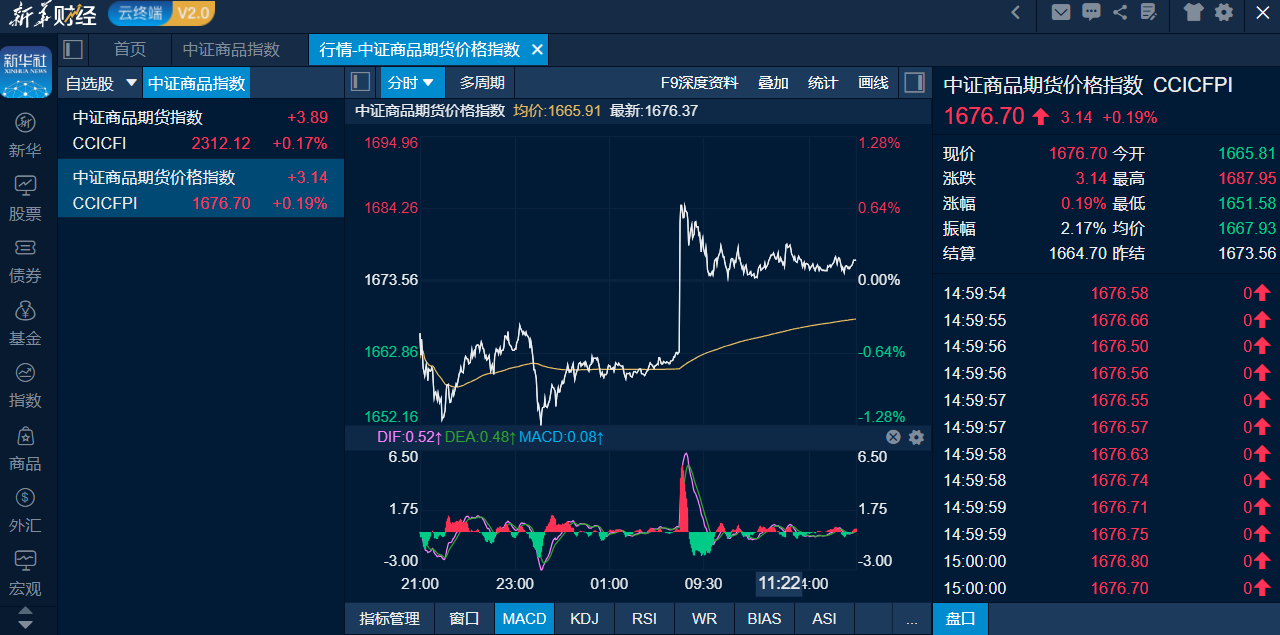
Market Overview - The domestic commodity futures market experienced a weak trend on January 19, with significant differentiation among sectors, resulting in most varieties closing lower. The China Securities Commodity Futures Price Index closed at 1676.70 points, up 3.14 points or 0.19% from the previous trading day, while the China Securities Commodity Futures Index closed at 2312.12 points, up 3.89 points or 0.17% [1]. Precious Metals - The precious metals sector was notably active, with international gold and silver prices reaching historical highs, which boosted domestic gold and silver futures. Shanghai gold hit a new historical high, while Shanghai silver rose nearly 3% by the end of the day [1][3]. Chemical Sector - In the chemical sector, pure benzene and styrene showed strong performance, closing up 3.48% and 1.84% respectively, leading the chemical sector. The strong performance of styrene is attributed to multiple maintenance shutdowns and export factors, which have increased its profitability [4]. Industrial Metals - The industrial metals sector faced widespread pressure, with Shanghai tin leading the decline, falling 5.98% after a significant drop of over 6% the previous Friday. The market sentiment cooled rapidly, leading to a correction in tin prices after reaching historical highs [5]. Other major industrial metals, including copper, aluminum, and zinc, also saw declines ranging from 0.39% to 2.33% [5]. Agricultural Products - The agricultural products sector, particularly rapeseed meal and oil, experienced significant declines, with rapeseed meal dropping 2.37% and rapeseed oil falling 1.50%. Concerns over potential increases in supply due to improved Sino-Canadian relations contributed to this downturn [6]. The overall weak supply-demand dynamics are expected to keep rapeseed meal prices under pressure [6].

能源化工日报-20260119
Wu Kuang Qi Huo· 2026-01-19 00:57
1. Report Industry Investment Rating No information provided in the content. 2. Core Views of the Report - For urea, the current situation of internal - external price differences has opened the import window, and with the expected improvement in production at the end of January, negative fundamental expectations are approaching, so it is recommended to take profits at high prices [3]. - For methanol, the current valuation is low, and the outlook for the coming year is marginally improving with limited downside. Despite short - term negative pressures, geopolitical instability in Iran has brought certain geopolitical expectations, making it feasible to buy on dips [6]. - For crude oil, although the geopolitical premium has disappeared and OPEC's production increase is minimal with supply not yet surging, oil prices should not be overly shorted in the short term. A range - trading strategy of buying low and selling high is maintained, but it is recommended to wait and see in the short term to verify OPEC's export price - support willingness [9]. - For rubber, the seasonal pattern is weak. A short - term bearish view is adopted. If RU2605 falls below 16000, a short - term short - selling strategy can be considered, and partial position - building is suggested for the strategy of buying NR main contract and short - selling RU2609 [14]. - For PVC, fundamentally, corporate comprehensive profits are at a moderately low level. Supply reduction is limited with production at a historical high, and domestic demand is entering the off - season. Although there may be short - term export rush before April 1st due to the cancellation of export tax rebates, the overall situation of strong supply and weak demand persists, and a short - term long position is supported by electricity price expectations and export rush, while a short - selling strategy on rallies is recommended in the medium term [16]. - For pure benzene and styrene, currently, styrene non - integrated profits are moderately low with large upward valuation repair space. The supply of pure benzene is still abundant, and styrene production is increasing with continuous inventory reduction at ports. It is advisable to go long on styrene non - integrated profits before the first quarter [19]. - For polyethylene, OPEC+ plans to suspend production growth in Q1 2026, and crude oil prices may have bottomed. PE valuation has further downward space. With no new production capacity planned in H1 2026, inventory may decline from a high level, and it is advisable to go long on the LL5 - 9 spread on dips [22]. - For polypropylene, the EIA monthly report predicts a slight reduction in global oil inventories, and the supply surplus may ease. With no new production capacity planned in H1 2026, the supply pressure is relieved. In the context of weak supply and demand with high inventory pressure, the futures price may bottom out after the supply surplus pattern changes in Q1 next year [25]. - For PX, the current load is high, and downstream PTA has many maintenance plans. It is expected to maintain an inventory accumulation pattern before the maintenance season. After the Spring Festival, both supply and demand with downstream PTA will be strong, and there are medium - term opportunities to go long following crude oil on dips [28]. - For PTA, the supply side will maintain high maintenance in the short term, and the demand side is under profit pressure and will gradually reduce load due to the off - season. It is expected to enter the inventory accumulation stage during the Spring Festival. There is room for valuation increase after the Spring Festival, and medium - term opportunities to go long on dips should be grasped [31]. - For ethylene glycol, the overall load is still high, and the port inventory accumulation cycle will continue. There is an expectation of further profit compression and load reduction under the pressure of new plant commissioning. The valuation is currently neutral year - on - year, and there is a risk of a rebound in the short term due to the tense situation in Iran. In the medium term, the valuation is expected to be compressed without further domestic production cuts [33]. 3. Summary by Related Catalogs Urea - **Market Information**: Regional spot price changes in Shandong, Henan, etc., with a total basis of - 41 yuan/ton. The main futures contract decreased by 10 yuan/ton to 1791 yuan/ton [2]. Methanol - **Market Information**: Regional spot price changes in Jiangsu, etc., the main futures contract increased by 45 yuan/ton to 2239 yuan/ton, and MTO profit increased by 53 yuan [5]. Crude Oil - **Market Information**: INE main crude oil futures fell 13.60 yuan/barrel, a 3.01% decline, to 438.80 yuan/barrel; high - sulfur and low - sulfur fuel oil futures also declined. Singapore ESG oil product weekly data showed inventory accumulation for gasoline, diesel, fuel oil, and total refined oil products [8]. Rubber - **Market Information**: Rubber prices fluctuated weakly with a technical bearish signal. Bulls cited seasonal and demand expectations, while bears pointed to weak demand and uncertain macro expectations. As of January 15, 2026, Shandong tire enterprise full - steel tire and semi - steel tire operating rates changed, and as of January 11, 2026, China's natural rubber social inventory increased. Spot prices of some rubber products decreased [11][12][13]. PVC - **Market Information**: The PVC05 contract fell 10 yuan to 4868 yuan, with a basis change. Cost - end prices were stable, the overall operating rate was 79.6% with changes in different methods. The downstream operating rate was 43.9% and decreased slightly. Factory and social inventories changed [15]. Pure Benzene & Styrene - **Market Information**: The spot and futures prices of pure benzene decreased, and the basis narrowed. The spot price of styrene was unchanged, and the futures price increased with a weakened basis. Upstream operating rate, port inventory, and downstream operating rates of related products changed [18]. Polyethylene - **Market Information**: The main contract closing price of polyethylene decreased by 90 yuan/ton to 6695 yuan/ton, and the spot price decreased. The basis strengthened. The upstream operating rate increased, and production enterprise and trader inventories decreased. The downstream average operating rate decreased slightly [21]. Polypropylene - **Market Information**: The main contract closing price of polypropylene decreased by 96 yuan/ton to 6496 yuan/ton, and the spot price decreased. The basis strengthened. The upstream operating rate decreased slightly, and production enterprise, trader, and port inventories decreased. The downstream average operating rate decreased slightly [23][24]. PX - **Market Information**: The PX03 contract fell 132 yuan to 7130 yuan, and the PX CFR decreased. The basis and 3 - 5 spread changed. PX and PTA loads decreased, some domestic and overseas plants had load - adjustment operations. January imports from South Korea increased, and November - end inventory increased [27]. PTA - **Market Information**: The PTA05 contract fell 68 yuan to 5048 yuan, and the East China spot price decreased. The basis and 5 - 9 spread changed. PTA and downstream loads decreased, some plants had load - adjustment operations, and social inventory decreased [30]. Ethylene Glycol - **Market Information**: The EG05 contract fell 50 yuan to 3817 yuan, and the East China spot price decreased. The basis and 5 - 9 spread changed. The supply - side load increased slightly with different changes in different production methods. Some domestic and overseas plants had load - adjustment operations. Downstream loads decreased, import arrivals were expected, and port inventory increased. Valuation and cost - related profits and prices changed [32].
国投期货化工日报-20260116
Guo Tou Qi Huo· 2026-01-16 13:08
Report Industry Investment Ratings - Propylene: ★★★ (indicating a more distinct upward trend with relatively appropriate investment opportunities currently) [1] - Polypropylene: ★★★ [1] - Plastic: ★★★ [1] - Pure Benzene: ★★★ [1] - Styrene: ★★★ [1] - PTA: ★★★ [1] - Ethylene Glycol: ★★★ [1] - Short Fiber: ★★★ [1] - Bottle Chip: ★★★ [1] - Methanol: ★★★ [1] - Urea: ★★★ [1] - PVC: ★★★ [1] - Caustic Soda: ★★★ [1] - Soda Ash: ★☆☆ (indicating a bullish/bearish bias with a driving force for price increase/decrease, but poor operability on the market) [1] - Glass: ★★★ [1] Core Viewpoints - The chemical market shows a mixed trend with different products having their own supply - demand and price characteristics. Some products are affected by supply shortages, while others are influenced by demand changes, geopolitical factors, and production schedules [2][3][5]. Summaries by Relevant Catalogs Olefins - Polyolefins - Propylene futures fluctuated within the day. Supply was tight, inventory was controllable, and some offers continued to rise. Downstream factories followed well, driving up the trading center [2]. - Plastic and polypropylene futures also fluctuated. For polyethylene, pre - sales during the Spring Festival continued, the overall transaction center of spot goods moved up, and production confidence was enhanced. For polypropylene, although the futures maintained a high level, the market was cautious due to concerns about demand [2]. Pure Benzene - Styrene - Pure benzene futures fluctuated, and spot prices in East China continued to decline slightly. Supply was abundant, and the port was accumulating inventory. In the short - term, it would fluctuate due to geopolitical risks, and in the long - term, de - stocking was difficult [3]. - Styrene futures had a narrow - range consolidation. The supply - demand was in a tight balance, the port inventory was decreasing, the export market was good, and the downstream was bullish [3]. Polyester - As oil prices fell, the cost support for PX and PTA weakened. In the short - term, the upward drive for PX was weak, but the medium - term outlook was positive. PTA's main driver was from raw materials, and the processing margin would moderately recover [5]. - For ethylene glycol, new domestic plants were put into operation, while overseas plants stopped production. The industry was mixed. In the short - term, falling oil prices were a major negative, but in the second quarter, there were expectations of improvement [5]. - Short - fiber enterprises had low inventory, but downstream orders were weak. Demand would continue to decline, and the price would fluctuate with raw materials [5]. - Bottle - chip production decreased, downstream demand was for rigid needs, and the processing margin recovered, but long - term capacity pressure remained [5]. Coal Chemical Industry - Due to the cooling of the geopolitical situation in Iran, the methanol market declined. Overseas plant operation rates were low, and the port was de - stocking. However, with demand weakening, the de - stocking speed was expected to slow down, and the market was in a multi - empty game [6]. - Urea futures declined slightly, while spot prices were stable with a slight increase. With the approaching of spring demand and positive macro factors, the market was expected to be strong [6]. Chlor - Alkali Industry - PVC weakened within the day. Although production increased slightly and exports of some enterprises increased, downstream demand was weak, and inventory increased. In 2026, it was expected to reduce capacity, and the futures price center would rise [7]. - Caustic soda was in a weak position, and the industry was accumulating inventory. Although the profit of integrated enterprises was okay, the industry was generally in a loss, and it was necessary to track whether there would be production cuts [7]. Soda Ash - Glass - Soda ash fluctuated within the day. Production continued to rise, supply pressure was high, downstream procurement was weak, and the industry was accumulating inventory. It was recommended to short on rebounds [8]. - Glass was strong within the day and continued to de - stock. However, production lines were in a loss, capacity was compressed, and demand was insufficient. It might accumulate inventory seasonally, but in the long - term, supply reduction would relieve pressure, and it was recommended to buy on dips [8].