
航空航天等

Search documents
登顶全球创新榜之后 大湾区科创合作下一步怎么走|湾区观察
Di Yi Cai Jing· 2025-09-02 12:24
Core Insights - The Shenzhen-Hong Kong-Guangzhou innovation cluster has topped the "Global Innovation Index 2025" ranking, marking a significant milestone for the Guangdong-Hong Kong-Macao Greater Bay Area and showcasing China's growing innovation capabilities on the global stage [1] Group 1: Ranking and Metrics - The ranking evaluates innovation concentration through three core indicators: PCT international patent applications, scientific publications, and venture capital transactions, with the latter being a new addition this year [1] - Over the past five years, the Shenzhen-Hong Kong-Guangzhou cluster had a patent application density of 2,292 per million people, a scientific publication density of 3,775 per million, and a venture capital transaction density of 135 per million [1] - The cluster accounted for 9% of global patent applications and 2.4% of global scientific publications, ranking second and third globally, respectively [1] Group 2: Factors Contributing to Success - The new ranking method incorporates venture capital data, reflecting entrepreneurial activities and innovation financing, which has positively impacted the cluster's overall score [2] - The balanced development across inventors, scientific authors, and venture capital activities indicates strong vitality within the Shenzhen-Hong Kong-Guangzhou cluster [2] - The Greater Bay Area's technological innovation strength is attributed to continuous accumulation and collaboration among its cities, with each city contributing unique strengths [3] Group 3: Financial Support and Infrastructure - The financial support, including venture capital, is crucial for transforming favorable conditions into technological innovation capabilities [4] - By the end of 2024, Shenzhen had over 1,560 venture capital firms managing more than 1.5 trillion yuan, with 90% of funds directed towards technological innovation [4] - The combination of strong industrial foundations and supportive policies creates an ideal innovation chain from basic research to international markets [4] Group 4: Challenges and Future Directions - Despite the achievements, the Greater Bay Area faces challenges, such as insufficient investment in basic research and systemic barriers in collaboration between cities [5] - The innovation intensity ranking for the Shenzhen-Hong Kong-Guangzhou cluster is 45th globally, indicating a need to enhance per capita innovation metrics [5] - Continuous improvement and addressing weaknesses are essential for maintaining competitiveness in technological innovation [5]
G60科创走廊科技成果拍卖会成交额突破200亿元
Guo Ji Jin Rong Bao· 2025-08-19 09:14
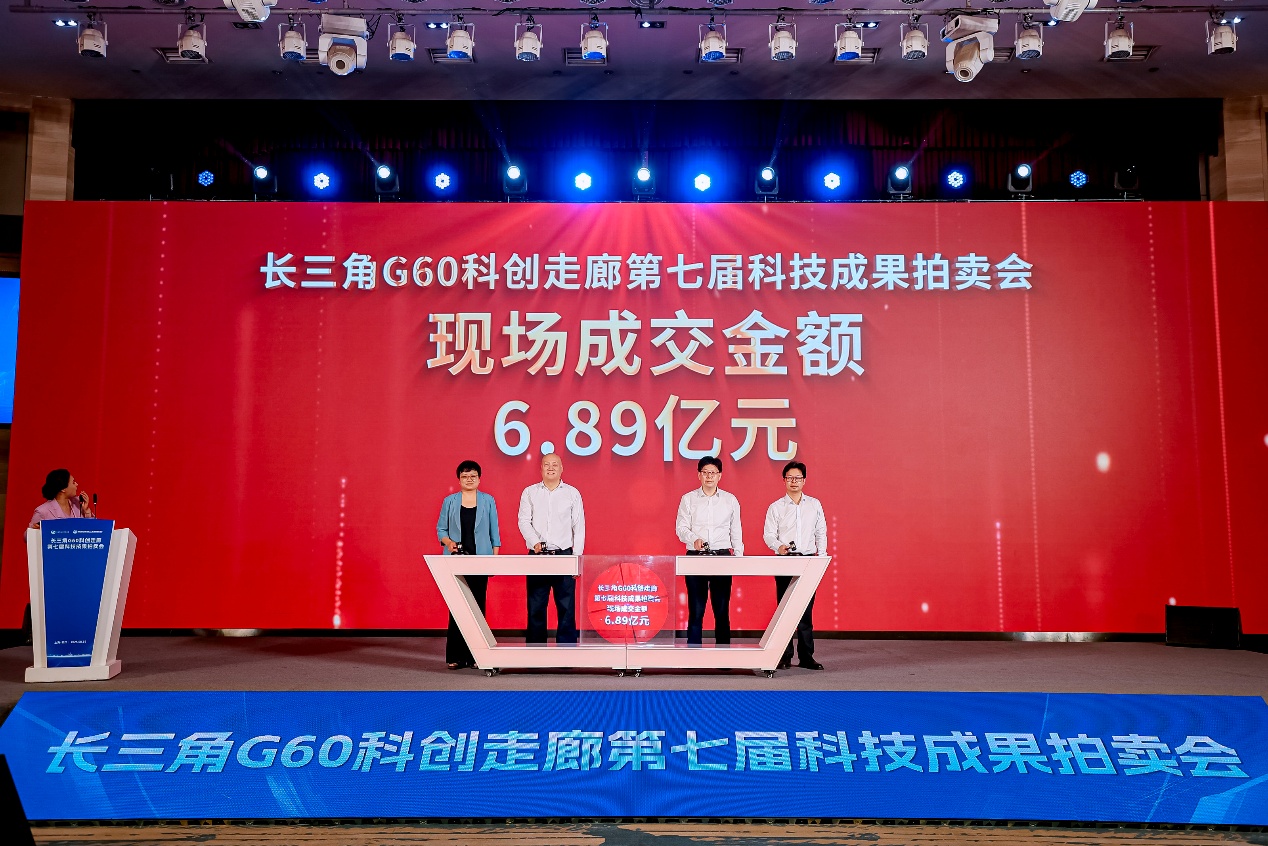
Core Insights - The seventh Yangtze River Delta G60 Science and Technology Achievement Auction held in Shanghai achieved a record transaction amount of 20.2 billion yuan, marking a 66.7% increase compared to the previous event, showcasing the region's robust capacity for technological innovation and application [1][3] Group 1: Auction Highlights - The auction attracted over a hundred county-level economies and more than a thousand technological achievements, with 42 technology managers introduced to facilitate the transformation and application of scientific results [3][7] - The event featured a diverse range of projects across various fields, including high-end equipment, medical health, new materials, artificial intelligence, and agricultural technology, reflecting strong innovation capabilities [4][10] Group 2: Collaborative Efforts - A new joint platform for the G60 Science and Technology Achievement Transformation was established, integrating resources from universities, research institutions, and enterprises to create a comprehensive system for technology transfer [9][10] - The G60 corridor has been actively supporting national strategic needs and regional integration, aiming to become a significant engine for international technological innovation [9][10] Group 3: Economic Impact - The auction demonstrated the positive impact of university technological achievements on local economies, with projects from Shanghai Engineering Technology University and Donghua University contributing to over 15 million yuan in transactions [3][4] - The event also highlighted the importance of cross-regional cooperation, with multiple projects from Shanghai and Zhejiang experiencing intense bidding, resulting in a rapid accumulation of transaction amounts [3][4]

上半年规模以上工业增加值同比增长6.4%——工业经济向稳向新向优发展
Xin Hua Wang· 2025-08-12 06:35
Core Insights - The industrial value added of large-scale industries in China grew by 6.4% year-on-year in the first half of the year, demonstrating strong resilience [2] - High-tech manufacturing value added increased by 9.5%, contributing 23.3% to the overall industrial growth [1] - The manufacturing investment rose by 7.5% year-on-year, indicating ongoing upgrades and technological transformations in the sector [1] Economic Performance - The manufacturing value added accounted for 25.7% of GDP, remaining stable [2] - Key industries such as electrical machinery, automotive, electronics, general equipment, chemicals, and non-ferrous metals showed rapid growth, enhancing their contribution to industrial growth [2] - The number of large-scale industrial enterprises reached 520,000, an increase of 8,000 from the end of last year, with manufacturing profits rising by 5.4% year-on-year [2] Innovation and Technology - The production of industrial robots increased by 35.6%, while service robots grew by 25.5% [4] - The total transaction value of technology contracts rose by 14.2%, with significant growth in aerospace and intelligent vehicle manufacturing sectors [4] - The integration of artificial intelligence is accelerating across various industries, with new applications emerging in mining and other sectors [4] Digital Transformation - Over 18,500 "5G + Industrial Internet" projects have been established, with a digital R&D tool penetration rate of 86.2% among large-scale light industry enterprises [7] - The government is supporting digital transformation initiatives in 35 cities, focusing on key industries such as power equipment and steel [7] - The energy consumption per unit of industrial value added continues to decline, reflecting progress in green and low-carbon development [7] Green Development - Green development is emphasized as a fundamental aspect of high-quality manufacturing, with a focus on traditional industries [8] - The government aims to enhance green and low-carbon development in key sectors like steel, non-ferrous metals, petrochemicals, and building materials [8]
3600点之后:聊聊当下权益投资的锚点、策略与心态
Sou Hu Cai Jing· 2025-08-12 01:36
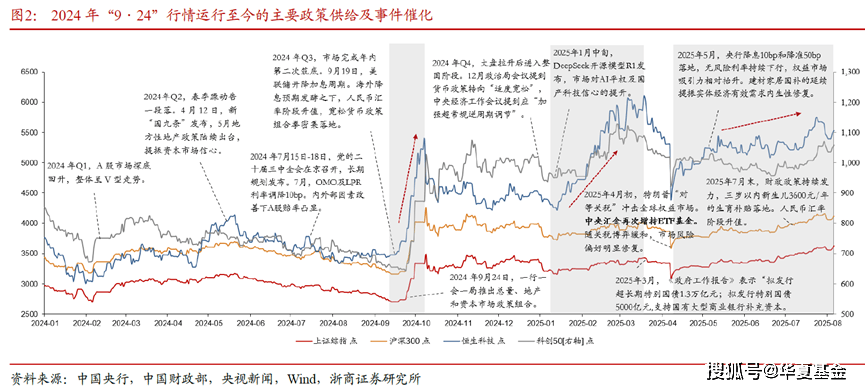
Group 1 - The market has remained above the 3600-point mark for 10 trading days since July 29, indicating a strong upward momentum [1][2] - The A-share market has shown resilience and cyclical behavior, moving from the explosive growth in 2022 to steady gains in recent months [3] - The mixed equity fund index has gained over 16% this year, marking the first time since 2021 that it has surpassed this threshold, although it remains below the historical high of 20% [5] Group 2 - The current position of the Shanghai Composite Index at 3600 points carries significant psychological and technical implications, being close to last year's high of 3674 points and the ten-year peak of 3731 points [6] - The overall valuation of A-shares is at a historically moderate to high level, with the index's PE ratio at 15.69 times and PB ratio at 1.42 times, which is lower than major US indices [9][11] Group 3 - The recent increase in market capitalization and the return of the financing balance to 2 trillion yuan indicates a growing market interest, reminiscent of the last bull market a decade ago [14] - The current leverage level in the market is still below half of the peak seen in 2015, suggesting that there is room for further capital inflow without overheating [16] Group 4 - Investors are showing varied responses at this market juncture, with some considering profit-taking while others are waiting for breakeven [17][18] - Investment strategies should focus on matching industry exposure with personal risk tolerance and aligning investment styles with market trends [20][21] Group 5 - The market is expected to experience fluctuations, and a long-term investment perspective is essential as the capital market's importance grows [27][29] - Investors should focus on understanding market dynamics and their own limitations, emphasizing the value of time in investment [30]
高新技术产业产值占规上工业比重达51.8%
Xin Hua Ri Bao· 2025-08-10 19:48
Group 1: Industry Growth and Performance - The new generation information and communication industry in Nanjing achieved a revenue of 74.2 billion yuan in the first half of the year, representing a year-on-year growth of 12.1% [1] - There are 59 companies in Nanjing whose growth rate exceeded 100%, indicating robust vitality in the high-tech industry [1] - The province's high-tech industry added value grew by 9.2% in the first half of the year, surpassing the growth of regulated industrial output by 1.8 percentage points [2] Group 2: Policy and Strategic Initiatives - Nanjing has identified six core areas, including 5G/6G and future networks, as development priorities and has implemented policies to support the new generation information and communication industry [1] - The provincial government aims to strengthen basic research and enhance independent innovation capabilities in response to external pressures on high-tech industries [3] - The province plans to continue the annual review process for high-tech enterprise recognition, ensuring that the number of high-tech enterprises exceeds 61,000 by the end of the year [4] Group 3: Investment and Collaboration - The recent roadshow event in Nanjing facilitated discussions between investment institutions and companies, highlighting the strong intent for collaboration [1] - The government is creating platforms to guide direction, while investment institutions are providing capital to support technological development and market expansion [1] - There is a focus on optimizing resource allocation to enhance investment efficiency in high-tech industries, including partnerships with major enterprises [4]

中试平台:全球科技竞速的新赛道
Huan Qiu Wang Zi Xun· 2025-07-24 02:05
Core Viewpoint - The construction of pilot testing platforms is crucial for the transformation and industrialization of scientific research achievements, with a global competition emerging around these platforms [1] Group 1: Importance of Pilot Testing Platforms - Pilot testing platforms serve as a critical bridge between laboratory innovations and large-scale production, effectively addressing the common "valley of death" in technology transfer [4] - The U.S. government has elevated the construction of pilot testing platforms to a strategic level, investing $53 billion to support key sectors like semiconductors and clean energy [2] - The UK government has established a national strategy to create seven national-level pilot centers, investing £1 billion over four years to enhance technology transfer in various fields [3] Group 2: Global Initiatives and Investments - Germany's federal government has positioned pilot testing platform construction as a core node in its "Industry 4.0" transformation strategy, focusing on renewable energy and advanced materials [4] - Japan's Ministry of Economy, Trade and Industry has allocated ¥2 trillion to support hydrogen pilot projects as part of its "Science and Technology Innovation Comprehensive Strategy 2020" [5] - South Korea plans to invest 622 trillion won in a semiconductor ecosystem support plan, aiming to establish the world's largest semiconductor industrial cluster [5] Group 3: Collaboration Between Academia and Industry - The efficient operation of pilot testing platforms relies on deep collaboration between universities and enterprises, leveraging their respective strengths in technology exploration and market demand [6] - Singapore's pilot testing platform construction focuses on nanomaterials and artificial intelligence, enhancing research efficiency by approximately 40% through automation [6] - The EU has initiated a cutting-edge chip pilot line project, marking a shift from technology validation to innovation in pilot testing platforms [6]
“小巨人”蕴含大能量
Jing Ji Ri Bao· 2025-07-20 03:54
Core Insights - China's GDP grew by 5.3% year-on-year in the first half of the year, reflecting overall economic stability despite a complex international environment [1] - The contribution of over 60 million small and medium-sized enterprises (SMEs) is crucial for this economic performance, particularly the "specialized, refined, distinctive, and innovative" small giant enterprises [1] Group 1: Economic Contribution of Small Giants - Small giant enterprises, although small in size, have significant competitive advantages due to continuous innovation, with an average R&D investment intensity of 7% in 2024, surpassing the manufacturing sector average [2] - These enterprises hold 327,400 invention patents, averaging 22.3 patents per enterprise, accounting for 11% of the total invention patents in the country [2] - The 14,600 small giant enterprises contribute significantly to key technological breakthroughs, acting as a "hidden protective barrier" against external risks [2] Group 2: Policy Support and Industry Upgrading - The central government plans to support key small giant enterprises from 2024 to 2026, focusing on creating new momentum, tackling new technologies, developing new products, and enhancing industrial chain capabilities [3] - Local governments are also implementing cultivation plans for specialized small giant enterprises, emphasizing tiered cultivation, capability enhancement, and brand excellence [3] - National-level small giant enterprises play a leading role in major industrial clusters, with over 20% representation in the top 100 industrial clusters, significantly higher than the national average [3] Group 3: Global Supply Chain Dynamics - Nearly 90% of small giant enterprises are in the manufacturing sector, with over 80% involved in strategic emerging industries like integrated circuits and aerospace [4] - These enterprises serve as key suppliers to well-known domestic and international companies, particularly in future industries such as artificial intelligence and low-altitude economy [4] - Small giants are essential for stabilizing the supply chain and mitigating risks, while also facing challenges such as industry competition and external protectionism [4] Group 4: Future Outlook - The growth of small giant enterprises is expected to continue, with the potential for many to evolve into larger entities over time [5]
A股专精特新“小巨人”企业超1000家 相关指数系列即将发布
Zhong Guo Jing Ying Bao· 2025-07-07 12:46
Group 1 - The Shanghai Stock Exchange and China Securities Index Co., Ltd. will officially launch the Sci-Tech Innovation Board Specialized and New Index, Specialized and New Index, and the China Securities Specialized and New 100 Index on July 21, aimed at providing benchmarks for the performance of specialized and new listed companies and guiding capital towards innovation-driven SMEs [1][4] - As of now, China has cultivated a total of 14,600 specialized and new "little giant" enterprises, with over 1,000 of them listed on the A-share market, showing significantly higher R&D intensity, gross profit margins, and revenue growth rates compared to the A-share average [1][2][3] Group 2 - Specialized and new "little giant" enterprises are considered the vanguard of SMEs, playing a crucial role in promoting new industrialization and developing new productivity [2] - Nearly 90% of these "little giant" enterprises are in the manufacturing sector, with over 80% located in strategic emerging industries such as integrated circuits and aerospace, and more than 90% serve as suppliers to well-known domestic and international companies [2] - In 2024, these enterprises demonstrated strong patent innovation capabilities, holding 327,400 invention patents, averaging 22.3 patents per enterprise, accounting for 11% of the total invention patents held by all enterprises in the country [2] Group 3 - The average market capitalization of A-share specialized and new "little giant" listed companies is approximately 6.7 billion, with average operating revenue around 1.3 billion; their R&D intensity (10.4%), gross profit margin (31.6%), and revenue growth rate (9.8%) are all significantly above the A-share average [3] - Since 2019, over 370 specialized and new "little giant" enterprises have been listed in Shanghai, accounting for 45.9% of all specialized and new listed companies during that period, with more than 310 listed on the Sci-Tech Innovation Board [3] Group 4 - The Sci-Tech Innovation Board Specialized and New Index will select 50 larger specialized and new "little giant" listed companies as sample securities, representing 47.7% of the total market capitalization and 41.9% of R&D expenditure of all specialized and new securities on the Sci-Tech Innovation Board, with an average R&D intensity of 21.2% [4] - The Specialized and New Index will select 100 larger specialized and new "little giant" listed companies from the Shanghai market, with a sample market capitalization accounting for 54.7% of the total specialized and new securities in the Shanghai market [4][5] Group 5 - The China Securities Specialized and New 100 Index will select a total of 100 top-ranked specialized and new "little giant" securities from the Shanghai, Shenzhen, and Beijing markets, covering 33.0% of market capitalization, 20.9% of operating revenue, 28.8% of R&D expenditure, and 40.0% of net profit of all specialized and new listed companies [5] Group 6 - The launch of the specialized and new index series is expected to enhance the capital market's role in serving the real economy, providing investors with diverse investment tools and supporting the high-quality development of SMEs [6]
2025年上半年创业板排行榜
Wind万得· 2025-07-01 22:23
Market Sector - In the first half of 2025, the ChiNext 50 Index decreased by 0.43%, outperforming the Shenzhen 50 Index [2] - As of the end of the first half of 2025, the total market capitalization of the ChiNext reached 13.85 trillion yuan, an increase of 6.10% compared to the end of Q1 2025, which is higher than both the Sci-Tech Innovation Board and the main boards of Shanghai and Shenzhen [4] - The total trading volume of the ChiNext in the first half of 2025 was 45.09 trillion yuan, with an average trading volume per stock of 326.25 million yuan, surpassing the Shanghai main board, Sci-Tech Innovation Board, and Beijing Stock Exchange [7][8] - The average daily turnover rate of the ChiNext was 5.45% in the first half of 2025, indicating active trading, which is higher than the main boards of Shanghai and Shenzhen as well as the Sci-Tech Innovation Board [9] - As of the end of the first half of 2025, the price-to-book ratio of the ChiNext was 3.54 times, higher than the main boards of Shanghai and Shenzhen, but lower than the Sci-Tech Innovation Board and Beijing Stock Exchange [13][16] - The financing balance of the ChiNext reached 358.47 billion yuan at the end of the first half of 2025, showing a significant increase of 20.45 billion yuan since the beginning of the year, indicating a large scale of leveraged buying [15] - The margin trading balance of the ChiNext was 1.02 billion yuan at the end of the first half of 2025, an increase of 0.19 billion yuan since the beginning of the year [17] Individual Stocks - CATL ranked first with a market capitalization of 1.16 trillion yuan, followed by companies like Oriental Fortune, Mindray Medical, and AVIC Chengfei, with 13 companies having a market capitalization exceeding 100 billion yuan [19] Industry Distribution - In the first half of 2025, companies listed on the ChiNext were distributed across five Wind primary industries, with the industrial sector leading with 7 companies, followed by information technology and consumer discretionary sectors, each with 4 companies [31] - The majority of the 16 companies listed on the ChiNext in the first half of 2025 adhered to Standard One for listing, which requires positive net profits in the last two years, a cumulative net profit of no less than 100 million yuan, and a net profit of no less than 6 million yuan in the most recent year [34] - Guangdong led the distribution of ChiNext companies with 7 listings, followed by Jiangsu and Zhejiang with 5 and 3 listings, respectively [37] IPO Financing - The total IPO financing for ChiNext companies in the first half of 2025 was 10.588 billion yuan, representing a year-on-year increase of 21.41%. Among these, 2 companies raised over 1 billion yuan, while the remaining 88.89% raised less than 1 billion yuan [40] - Han Shuo Technology led the IPO financing with 1.162 billion yuan, while Hengxin Life, Youyou Green Energy, and Xin Henghui also had financing scales exceeding 500 million yuan [44]





江苏 “高原”之上起高峰
Jing Ji Ri Bao· 2025-06-26 22:38
Core Viewpoint - Jiangsu Province is focusing on integrating technological innovation with industrial innovation to build a globally influential industrial technology innovation center and a competitive advanced manufacturing base [1][3]. Group 1: Research and Development - Jiangsu Province has allocated 2.48 billion yuan for basic research, establishing three provincial basic science centers and initiating 67 key projects through partnerships [2]. - The province is expected to achieve a research and development intensity of 3.35% and a basic research investment ratio of 5.6% by the end of the year [2]. - The province aims to become a significant basic research center in several frontier technology fields by 2035, focusing on interdisciplinary collaboration and key technology breakthroughs [3]. Group 2: Industrial Upgrading - Jiangsu Province is optimizing its industrial structure and enhancing innovation capabilities, with initiatives like the "Technology Innovation Year" series in Wuxi [4]. - Wuxi's Xishan District has seen over 1,500 new technology-based enterprises established in 2024, driven by innovation strategies [4]. - The district is developing specialized industrial parks and focusing on future industries such as humanoid robots and synthetic biology [4]. Group 3: Enterprise Role - Jiangsu Province emphasizes the role of enterprises in driving technological and industrial innovation, implementing policies to enhance corporate innovation capabilities [7]. - By the end of 2024, the number of high-tech enterprises in Jiangsu is expected to exceed 57,000, ranking second in the country [7]. - The province has the highest number of listed companies on the Sci-Tech Innovation Board and leads in the number of "specialized, refined, and innovative" enterprises [7][8].