金属矿业

Search documents
寒锐钴业受益印尼镍供应收紧 股价随钴概念板块上涨
Jing Ji Guan Cha Wang· 2026-02-11 10:10
Core Viewpoint - The stock price of Hanrui Cobalt (300618) has risen alongside the cobalt concept sector, primarily driven by tightening nickel supply from Indonesia, benefits from the company's projects in Indonesia, and the effects of industry chain linkage [1] Stock Performance - On February 11, 2026, Hanrui Cobalt's stock price increased as part of the cobalt concept sector, which rose by 2.51% on that day [2] Industry Policy and Environment - The Indonesian Ministry of Energy and Mineral Resources confirmed a significant reduction in nickel ore production quotas for 2026 to 260-270 million tons, down approximately 34% from 379 million tons in 2025. The quota for the world's largest nickel mine, Weda Bay Nickel, dropped sharply from 42 million tons to 12 million tons, leading to a continuous rise in nickel prices on the London Metal Exchange, with an intraday increase of 2.6% on February 11. The strengthening nickel prices provide cost support and performance improvement expectations for Hanrui Cobalt, which is positioned in the nickel resource sector [3] Company Project Progress - Hanrui Cobalt is constructing a "20,000 tons/year high-nickel matte project" in Indonesia, scheduled to commence production by the end of March 2026. This project utilizes a high-oxygen side-blowing process, with expected electrolytic nickel costs below $13,000 per ton. In the context of tightening supply in Indonesia, the low-cost capacity is anticipated to directly benefit from the profit expansion brought about by rising nickel prices [4] Industry Chain Status - Hanrui Cobalt's main business includes cobalt powder and electrolytic copper, but the company is entering the nickel industry chain through its Indonesian project, forming a diversified layout of "cobalt-copper-nickel." The rise in nickel prices typically resonates with cobalt prices, and the company's integrated industry chain can mitigate risks associated with fluctuations in individual metal prices. In Q3 2025, the company's revenue increased by 16.49% year-on-year, and the commissioning of the Indonesian project will further strengthen its position in the supply chain for new energy materials [5] Capital Movement - On February 11, the cobalt concept sector saw a net inflow of 4.507 billion yuan, reflecting market recognition of the tightening metal supply logic. Although Hanrui Cobalt experienced a net outflow of 64.08 million yuan on February 5, the new policies from Indonesia have shifted overall sentiment in the sector positively, driving individual stocks to rise [6]

申万宏源:金属价格强势突破 有色板块景气持续
智通财经网· 2026-02-10 09:01
Core Viewpoint - The performance growth of key companies in the non-ferrous metal sector for Q4 2025 is expected to vary, with precious metals showing potential for recovery and industrial metals like copper and aluminum likely to see price increases due to supply-demand dynamics [1][2]. Non-Ferrous Metals Sector Overview - The precious metals sector is currently valued at the lower end of its historical range, indicating potential for sustained recovery [1][3]. - Copper supply is relatively inelastic, with expectations for a continued increase in price levels due to solid fundamentals and increased investment in infrastructure [4]. - The aluminum supply-demand balance is tightening, suggesting a long-term upward price trend [4]. Company Performance Forecasts - Companies expected to see over 50% year-on-year growth in Q4 2025 include Zijin Mining, Shandong Gold, and Huayou Cobalt, among others [2]. - Companies projected to achieve 20-50% growth include Jincheng Mining and CITIC Special Steel, while those with 0-20% growth include Luoyang Molybdenum and Tianshan Aluminum [2]. - Companies expected to turn profitable include Zhongfu Industrial and Guocheng Mining [2]. Precious Metals Insights - The Federal Reserve's decision to maintain interest rates and the nomination of Kevin Walsh as the next Fed Chair may impact precious metal prices, which have recently declined due to overbought conditions [3]. - The long-term outlook for gold prices remains positive, driven by central bank purchases and a declining real interest rate environment [3]. Industrial Metals Insights - The Chinese government is considering expanding its copper strategic reserves, which may support copper prices in the short term [4]. - The aluminum market is expected to remain tight due to production capacity limits, with recommendations for companies with integrated operations [4]. Minor Metals Insights - Nickel prices are expected to rise due to supply disruptions from Indonesia and stable demand [5]. - Lithium prices are projected to increase as supply tightens, with a shift from surplus to balance anticipated by 2026 [5]. - Cobalt prices are expected to remain strong due to export controls from the Democratic Republic of Congo and low inventory levels [5].
紫金矿业集团股份有限公司关于三年(2026-2028年)主要矿产品产量规划和2035年远景目标纲要的公告
Shang Hai Zheng Quan Bao· 2026-02-09 18:10
Core Viewpoint - The announcement outlines the production planning for major mineral products from 2026 to 2028 and sets a long-term vision for 2035, aiming to establish the company as a "green, high-tech, top-tier international mining group" [2][10]. Group 1: Background and Financial Performance - The company has successfully completed its targets for 2023-2025, achieving significant economic indicators and ranking among the top 3-5 globally in copper and gold production [3]. - In 2025, the company completed the acquisition of control over Zangge Mining and the spin-off of Zijin Gold International, leading to a substantial increase in market capitalization, which exceeded 1.1 trillion yuan in January 2026 [4]. - The company ranked 251st in the 2025 Forbes Global 2000 list, an increase of 74 places from 2022, and 4th among global metal mining companies [4]. Group 2: Industry Analysis - The global mining landscape is undergoing significant changes due to geopolitical risks, supply chain disruptions, and the demand for critical minerals driven by energy transitions [7]. - The company has established competitive advantages through market-oriented operations, resource acquisition strategies, and innovative management practices [7]. Group 3: Planning Goals - The company aims to enhance its resource reserves, production capacity, sales revenue, and profitability by 2028, with copper and gold production targeting the top 3 globally [10]. - By 2035, the company aspires to achieve significant growth in key performance indicators, with some reaching the top position globally [10]. Group 4: Strategic Initiatives - The company will prioritize resource acquisition, focusing on gold and copper, while also developing a competitive lithium segment [11]. - It plans to accelerate production capacity for key minerals, including gold and copper, and aims to become one of the largest lithium producers globally [12][13]. - The company will address international talent shortages and enhance its ESG framework to improve its global standing [15][19]. Group 5: Operational Improvements - The company will implement a globalized operational management system that aligns with international standards while maintaining its unique characteristics [17]. - It will leverage capital markets to enhance its capital structure and attract long-term investors [18].

读懂金银铜:培风客陈大鹏带你理解全球秩序重构下的资源品定价新机遇
Hua Er Jie Jian Wen· 2026-02-09 10:07
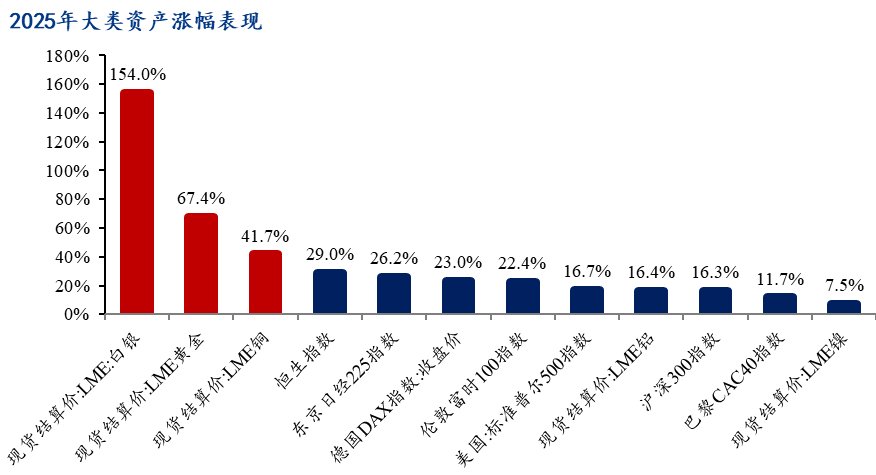
Core Insights - The global metal market has shown remarkable performance in 2025, with silver rising by 154%, gold by 67.4%, and copper by 41.7%, indicating a significant shift in pricing dynamics influenced by "resource nationalism" and strong market expectations [1][5] - The volatility in the market is part of the pricing process, with the geopolitical landscape extending from advanced technologies like AI chips to critical metal assets, suggesting that the metal market may experience a more pronounced premium trend due to global order restructuring [5][6] Market Dynamics - The current era of increased market volatility amplifies both risks and opportunities, prompting the need for individuals to identify stable returns and safety nets [6] - The nomination of Kevin Warsh as the new Federal Reserve Chairman on January 30, 2026, led to a sharp liquidity contraction, causing silver prices to plummet by 30% within two trading days, highlighting the harsh realities of mean reversion in a liquidity crisis [7] Expert Analysis - Chen Dapeng, founder of KP Research and a prominent figure in the financial community, emphasizes the importance of deep industry understanding over mere modeling in commodity research, leveraging his extensive experience in mining and finance to provide insights into market dynamics [9][17] - Chen's analyses in 2025 gained significant recognition, leading to invitations to major financial events, where he was acknowledged as one of the most popular speakers [9][17] Course Overview - The upcoming course will cover five core modules, including the evolution of global resource pricing paradigms from "efficiency" to "security," the transformation of precious metal pricing power, and new paradigms for non-ferrous metal pricing influenced by resource nationalism [10][12][14] - Participants will learn to construct a framework for analyzing macroeconomic and geopolitical factors affecting resource nationalism and investment strategies in key metals [19][20]

上调近三成!紫金矿业规划黄金产量目标:2028年拟达130至140吨
Hua Er Jie Jian Wen· 2026-02-09 07:09
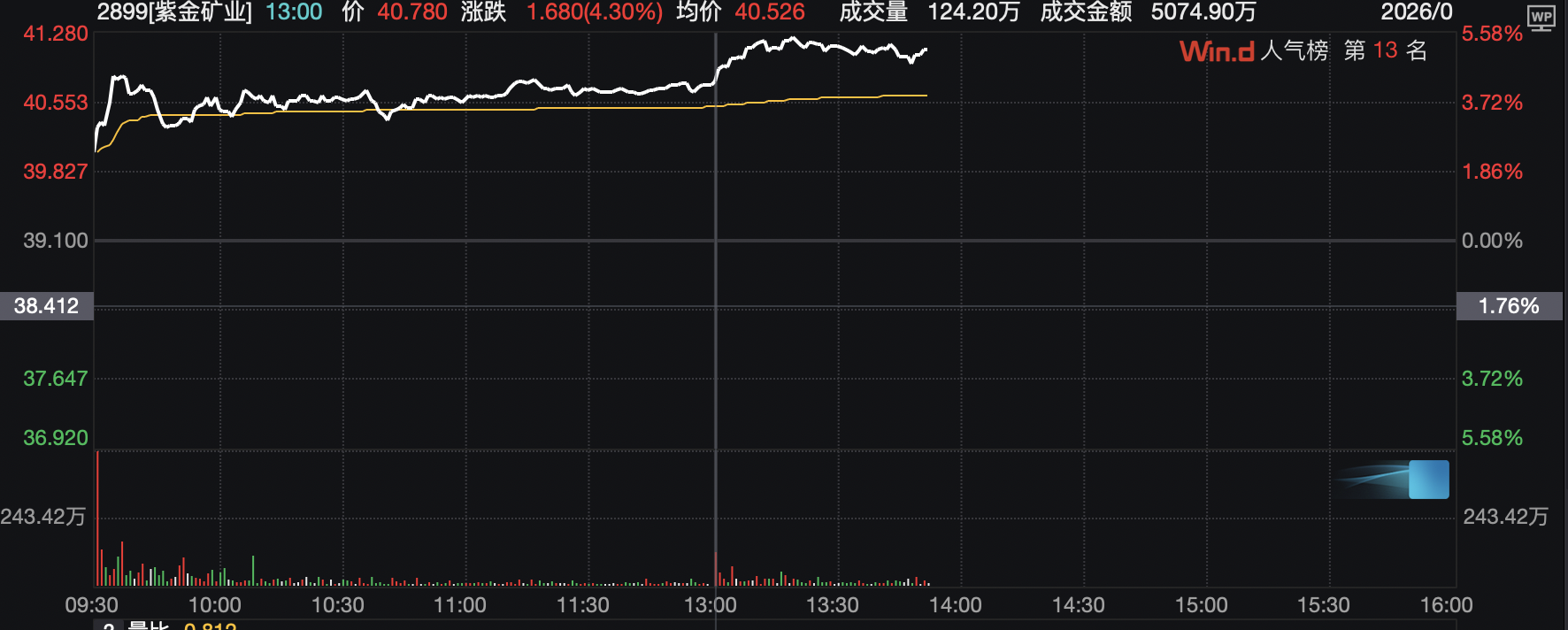
Core Viewpoint - Zijin Mining has significantly raised its future gold production target to 130-140 tons over the next three years, reflecting strong confidence in market prospects and a strategic intent to accelerate gold production capacity [1][4]. Production Targets - The gold production target for 2028 has been increased from the previous range of 100-110 tons set in 2024 to 130-140 tons, marking an increase of nearly 30% [1]. - The copper and silver production targets remain unchanged at 150-160 million tons and 600-700 tons, respectively [1]. - The 2026 gold production target is set at 105 tons, a 17% increase from 90 tons in 2025, while the 2028 target's midpoint is 135 tons, a 50% increase from 2025's actual production [4]. Financial Performance - Zijin Mining's projected revenue for 2025 is approximately 345 billion yuan, a 28% increase from 2022, with total profit expected to reach around 80 billion yuan, a 167% increase [5]. - The net profit attributable to shareholders is estimated to be between 51-52 billion yuan, reflecting a growth of 155% to 160% [5]. - The company reported a significant increase in resource reserves, with copper resources growing by 16% to 108.84 million tons and gold resources increasing by 26% to 4,537 tons by 2025 [5]. Strategic Focus - The company plans to intensify the acquisition of strategic mineral resources, focusing on gold and copper, particularly in key regions in the west of China and friendly countries with good legal environments [3]. - The lithium production target has been significantly raised, with a goal of 12 million tons by 2026 and 27-32 million tons by 2028, compared to an actual production of only 2.5 million tons in 2025 [4]. Market Position - Zijin Mining aims to rank among the top three globally in copper and gold production by 2028, with aspirations to achieve first place in certain metrics by 2035 [4]. - The company reached a market capitalization of over 1.1 trillion yuan in January 2026, with the overall market value of the "Zijin System" exceeding 1.8 trillion yuan [5].
算力+稀缺双重加持!锡价单日暴涨1.6万,节前行情怎么走?
Xin Lang Cai Jing· 2026-02-09 06:54
Core Viewpoint - The significant surge in tin prices on February 9, with a daily increase of 16,000 yuan, is attributed to a combination of macroeconomic factors, improved supply-demand dynamics, and pre-holiday speculative buying, supported by a long-term tight supply-demand balance in the tin market [1][7]. Group 1: Macroeconomic Factors - The tin price is highly sensitive to the global macroeconomic environment, with a 0.36% drop in the US dollar index to 97.61 contributing to the price surge [1]. - Positive signals from the US Federal Reserve and a collective rise in major US stock indices, including the Dow Jones reaching a new high above 50,000 points, have boosted global risk appetite [1]. - In the domestic market, the shift of A-share funds towards non-ferrous metals, along with stable foreign exchange and gold reserves, has created a favorable environment for tin prices [1]. Group 2: Supply and Demand Dynamics - The supply side remains tight due to reduced production from domestic smelters during the holiday season and limited recovery in tin production from Myanmar and Indonesia [2]. - Despite nearing the end of inventory replenishment by downstream electronic and photovoltaic companies, there is still sporadic demand for restocking, particularly after the price drop on February 6 [2]. - The overall supply-demand balance in the tin market remains tight, with low domestic inventories providing support for prices [2]. Group 3: Industry Chain Analysis - The tin industry chain exhibits a dichotomy between short-term speculative trading and long-term high demand, with various segments supporting the V-shaped price recovery [3]. - The upstream mining sector is characterized by scarce global tin resources and rigid supply, with miners stabilizing prices after the February 6 drop [3]. - The midstream smelting sector, which accounts for over 50% of global capacity, is experiencing a rise in price support due to reduced production and a reluctance to sell [3]. Group 4: Trading Strategies - Investors are advised to adopt a "light position participation" strategy, focusing on fundamental factors and avoiding emotional volatility in trading [4]. - Priority should be given to tin and tungsten, which are in tight supply-demand balance and have high downstream demand, while avoiding commodities with loose supply and high inventories [4]. - Monitoring spot transactions and macroeconomic trends is crucial, with recommendations to hold positions if spot prices recover and to take profits if negative macroeconomic signals emerge [4]. Group 5: Short-term Price Forecast - The forecast for tin prices leading up to the 2026 Spring Festival indicates a strong oscillation, supported by a tight supply-demand balance [5]. - The core trading range for tin is projected to be between 370,000 and 380,000 yuan per ton, with strong support at 368,000 yuan and resistance at 380,000 yuan [5][6].

金属市场不是牛市结束,而是中场休息
Sou Hu Cai Jing· 2026-02-09 01:09
Core Viewpoint - Morgan Stanley indicates that major metals like gold, silver, and copper will enter a consolidation phase in the coming weeks after significant price increases [2][3]. Group 1: Gold Market Analysis - The recent decline in gold prices is characterized as a technical reversal rather than a long-term bearish trend, suggesting that the bull market is still intact but requires a pause [3][4]. - Gold's previous price surge exhibited a parabolic pattern, which typically faces momentum exhaustion, with $5000 and the $5100–$5150 range acting as significant short-term resistance levels [5]. - The core logic supporting the gold bull market remains intact, primarily driven by the weakness of the US dollar, which is expected to stay below 100, indicating ongoing risks of currency devaluation [6]. Group 2: Copper and Economic Expectations - Copper prices have recently slowed above $14,000, raising questions about whether the price increase is detached from fundamental realities, as current manufacturing PMI is around 50.5, while copper prices imply a PMI of approximately 53 [10]. - The analysis suggests that the optimism surrounding copper is not isolated but reflects a broader bet on economic recovery across cyclical assets, including semiconductor stocks [11]. - In the upcoming consolidation phase, basic metals like copper are expected to receive more support than precious metals due to the dual influence of manufacturing recovery and cyclical rotation, while gold faces profit-taking pressures [12]. Group 3: Market Dynamics and Investment Strategy - The report emphasizes that during the consolidation phase, the focus should be on market rhythm rather than direction, with the metaphor of a paused dance indicating that while the metal frenzy may slow, it is not over [13][14]. - Investors are encouraged to reassess their positions rather than exit the market entirely, as true trends often require consolidation to solidify their foundations [15].

紫金矿业(02899) - 关於三年(2026—2028年)主要矿產品產量规划和2035年远景目标纲...
2026-02-09 00:18
關於三年(2026—2028 年)主要礦產品產量規劃和 2035 年遠景目標綱要的公告 重要内容提示: 一、編制背景 2023—2025 年,面對全球政治經濟和社會環境深刻變革,公司堅持「提質、控本、增效」工 作總方針,超預期完成目標任務,主要經濟指標和銅、金礦產品產量進入全球第 3—5 位。 主要財務數據 單位:人民幣億元 營業收入 利潤總額 歸母淨利潤 經營性淨現金流 資產總額 2022 年 2,703 300 200 287 3,060 2025 年 約 3,450 約 800 約 510-520 約 730 約 5,100 增長率 約 28% 約 167% 約 155%-160% 約 154% 約 67% 註:以上 2025 年數據為初步核算數據,具體以公司後續披露的經審計的 2025 年年度報告為 準。 1 ● 2026 年 2 月 8 日,紫金礦業集團股份有限公司(以下簡稱「本公司」、「公司」、「紫金」) 召開第九屆董事會 2026 年第 4 次臨時會議,會議審議通過《公司三年(2026—2028 年) 主要礦產品產量規劃和 2035 年遠景目標綱要》,明確未來三年主要礦產品產量規劃指 標,並提出 ...

非洲金属热潮遇现实冲击
Shang Wu Bu Wang Zhan· 2026-02-06 16:18
Core Insights - The global metal market downturn poses significant challenges for African mining economies, revealing the vulnerabilities of commodity-dependent economic structures [1] - Recent price surges in gold, silver, and copper have been followed by a sharp market correction, impacting currencies, stock markets, and investor confidence in Southern Africa [1][2] - Countries like South Africa and Zambia, heavily reliant on metal exports, are particularly sensitive to global demand fluctuations and investor sentiment [1] Group 1: Market Impact - The Johannesburg Stock Exchange (JSE) experienced a maximum single-day drop of 6%, indicating heightened market volatility and investor caution [1] - Zambia's currency, the kwacha, has weakened significantly, with copper accounting for over 70% of its export revenue, making the economy vulnerable to minor fluctuations in global copper prices [1] Group 2: Economic Diversification - Economists suggest that the recent market turmoil should accelerate the diversification of economies, emphasizing the importance of manufacturing, agricultural processing, digital services, and regional trade over single commodity exports [2] - Southern African nations have committed to investing mining revenues into infrastructure, skills training, and sovereign wealth funds to build more resilient economic systems [2]
估值分歧致2600亿美元并购告吹 力拓嘉能可三度终止合并谈判
Huan Qiu Wang· 2026-02-06 02:37
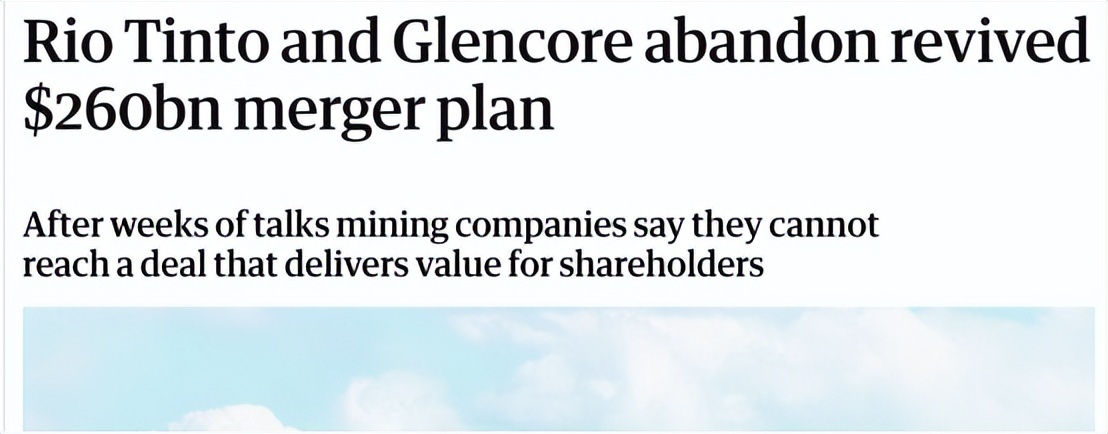
Core Viewpoint - The merger plan between global mining giants Rio Tinto and Glencore, valued at $260 billion, has been officially abandoned after weeks of negotiations failed to reach consensus on key terms, marking the third failed attempt at merging the two companies [1]. Group 1: Merger Details - Rio Tinto has decided not to pursue further discussions with Glencore after determining that an agreement would not create value for shareholders [3]. - Glencore criticized the proposed terms from Rio Tinto, claiming they undervalued Glencore's contribution to the merged entity and did not adequately assess the value of Glencore's copper business and growth plans [3]. - The merger discussions have been ongoing for over a decade, with initial talks dating back to the period before the 2008 global financial crisis [4]. Group 2: Market Reaction - Following the announcement, Glencore's stock price dropped by as much as 10.8% during trading, making it the largest decliner in the FTSE 100 index for that day, while Rio Tinto's stock fell by 1.4% [3]. - According to UK takeover rules, Rio Tinto is prohibited from making any acquisition offers to Glencore for the next six months without approval from the takeover panel [3]. Group 3: Industry Context - The potential merger aimed to create a leading advantage in key metals such as iron ore, copper, cobalt, and lithium, which are essential for the production of technology products and support the development of the artificial intelligence industry [5]. - The global copper market is currently experiencing significant attention due to price volatility, with copper prices recently surpassing $14,000 per ton, and analysts predicting a potential supply gap of 10 million tons by 2040 [5].