
家电制造

Search documents
每日报告精选-20251124
GUOTAI HAITONG SECURITIES· 2025-11-24 12:30
Economic Overview - High-frequency data indicates that automotive consumption remains strong, benefiting from tax incentives and subsidies, while textile and film consumption is weak[7] - Real estate sales and land market show signs of fatigue, with infrastructure special bonds fully issued but project progress lagging[7] - Exports to South Korea are recovering, while import demand weakens post shopping festival[7] Market Performance - Major global asset prices have declined, with the Hang Seng Index dropping 5.1%, the largest decline among major indices[9] - The S&P 500 Index fell by 1.9%, while the Shanghai Composite Index decreased by 3.9%[9] - The 10-year U.S. Treasury yield fell by 8 basis points to 4.06%[9] Federal Reserve Insights - The U.S. added 119,000 non-farm jobs in September, significantly exceeding expectations of 51,000[12] - The unemployment rate rose to 4.4%, higher than the expected 4.3%[12] - Federal Reserve officials exhibit significant internal disagreement regarding future monetary policy direction[8] Investment Strategies - ETF inflows have increased significantly to 503 billion, while foreign and financing funds have seen outflows[15] - The market's trading activity has decreased, with average daily turnover dropping to 1.9 trillion[14] - The risk appetite remains low, with the overall market sentiment declining[14] Sector Analysis - The technology sector is expected to benefit from AI advancements, with recommendations for investments in internet and computing sectors[35] - The financial sector is poised for recovery, with a focus on brokerage and insurance stocks[35] - Consumer stocks are seen as undervalued, with potential growth in food and beverage sectors[35]


两大龙头联手!比亚迪与美的达成车家互联战略合作
Xin Hua Cai Jing· 2025-11-24 10:58
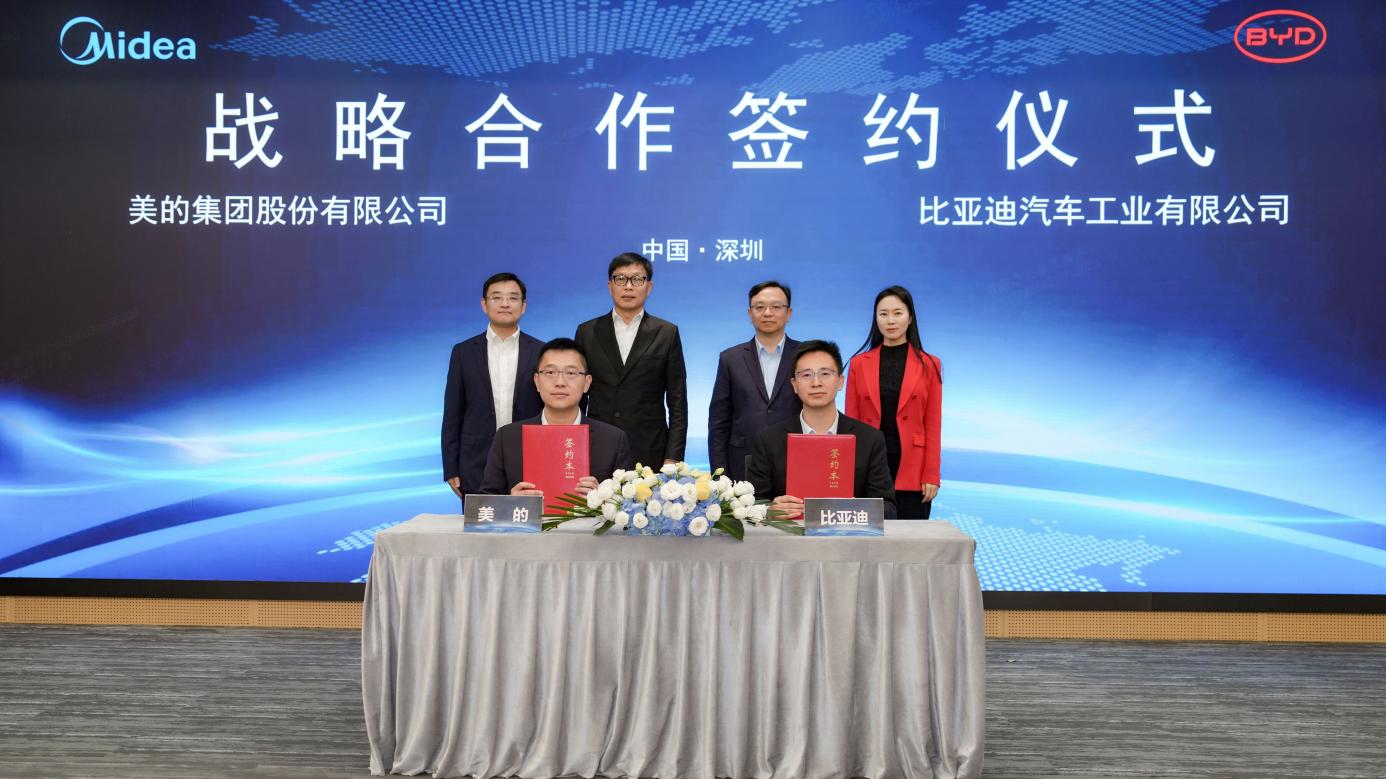
Core Viewpoint - BYD and Midea Group have signed a strategic cooperation agreement to integrate their core advantages in smart vehicles, smart home, and AIoT, aiming to create a new "human-vehicle-home" smart ecosystem [1][3]. Group 1: Strategic Cooperation - The cooperation will focus on collaborative innovation in AI agents, standardization of technology interfaces and data protocols, and exploring data interconnectivity between smart vehicles and home environments [3]. - Both companies will work together to establish standards for "human-vehicle-home" interconnectivity, with the goal of upgrading these standards to industry benchmarks [3]. Group 2: Product Integration - All BYD vehicle models will collaborate with Midea's brands, including Midea, COLMO, Little Swan, Hualing, and Toshiba, to gradually integrate smart home appliances, smart home devices, and IoT vehicle products [3]. - The integration will enable seamless connectivity, allowing users to control home smart devices from their vehicles and vice versa, enhancing user experience with features like "home warming before arrival" and "remote vehicle preparation" [3]. Group 3: Sales and Experience - The partnership will also focus on creating a "human-vehicle-home" smart living experience space at BYD and Midea's offline terminals, facilitating a full sales loop from experience to purchase [5]. - This initiative aims to provide a one-stop shopping experience where customers can experience smart home features while purchasing vehicles and vice versa, enhancing consumer engagement [5].



TCL智家:截至2025年9月30日股东总数36172户
Zheng Quan Ri Bao· 2025-11-24 09:06
Core Viewpoint - TCL Smart Home announced on November 24 that as of September 30, 2025, the total number of common stock shareholders is 36,172 [2] Summary by Category - **Company Information** - TCL Smart Home has reported a total of 36,172 common stock shareholders as of September 30, 2025 [2] - **Investor Engagement** - The company responded to investor inquiries on its interactive platform regarding shareholder numbers [2]


王传福交付,方洪波接车
新华网财经· 2025-11-24 08:29
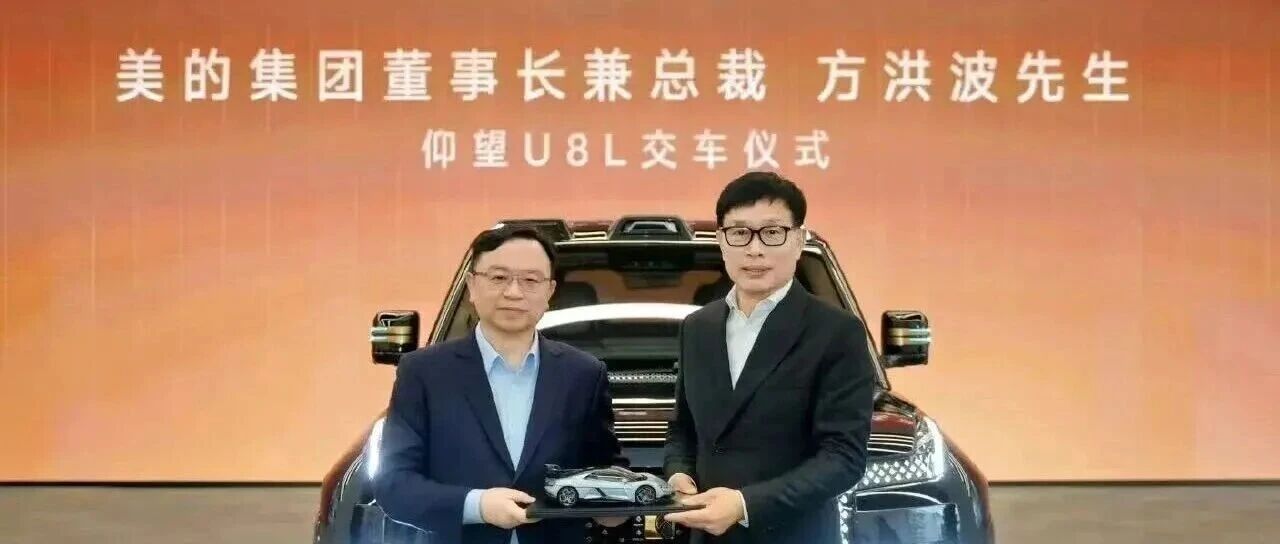
Core Viewpoint - The collaboration between BYD and Midea Group is strengthening, with the launch of the Yangwang U8L luxury SUV aimed at capturing the high-end market segment, particularly against established brands like Mercedes-Benz, BMW, and Audi [2][7]. Group 1: Collaboration and Product Launch - Midea Group's Chairman Fang Hongbo has become a customer of the Yangwang U8L, which was delivered by BYD's Chairman Wang Chuanfu [2]. - BYD's Tengshi brand has partnered with Midea's high-end appliance brand, Kemeida, to integrate smart home control features into their vehicles, enhancing user experience [6]. - The Yangwang U8L, launched in September, is positioned as a full-size luxury SUV with a starting price of 1.28 million yuan, featuring advanced technologies such as a 3nm smart cockpit chip and various safety capabilities [7]. Group 2: Market Performance - In the first ten months of the year, BYD's cumulative sales of new energy vehicles reached approximately 3.7019 million units, reflecting a year-on-year growth of 13.88% [8].
比亚迪 × 美的战略合作,共筑“人-车-家”智慧新生态
Huan Qiu Wang· 2025-11-24 08:21
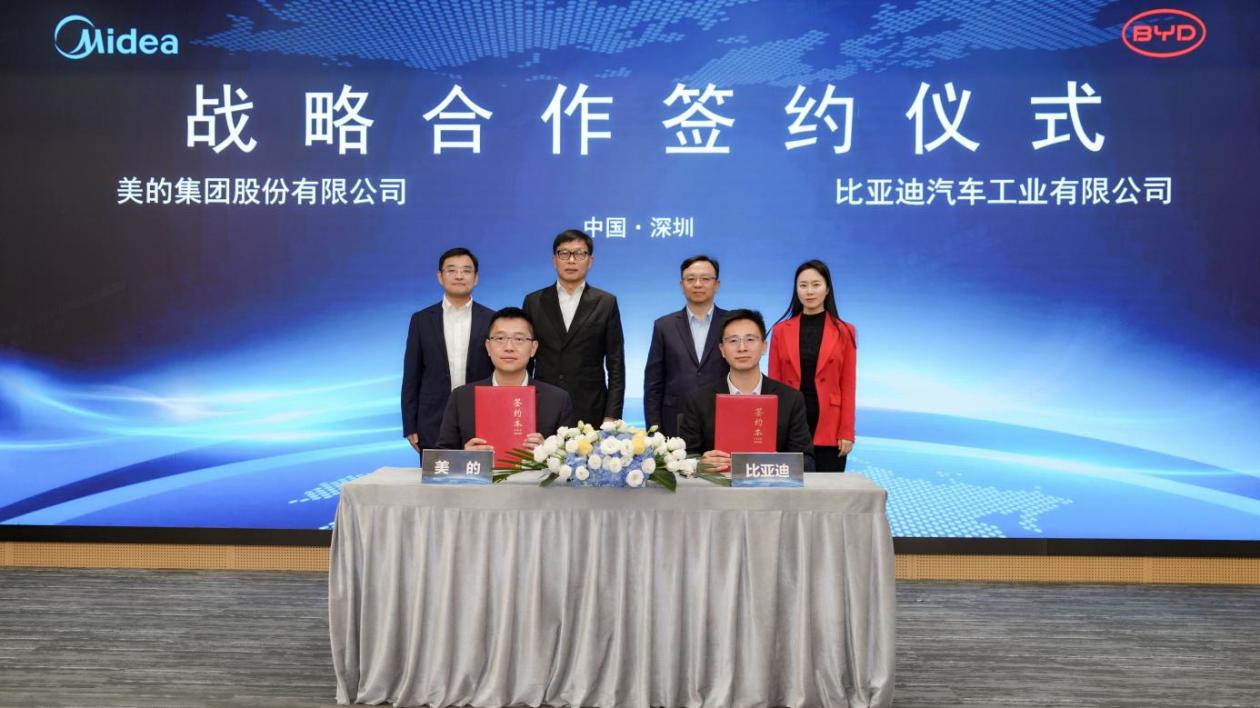
Core Viewpoint - BYD and Midea have signed a strategic cooperation agreement to integrate their strengths in smart vehicles, smart homes, and AIoT, aiming to create a new "human-vehicle-home" smart ecosystem [1][5]. Group 1: Strategic Cooperation - The cooperation will focus on collaborative innovation in AI agents, standardization of technology interfaces and data protocols, and exploring data interconnectivity between smart vehicles and home environments [5]. - Both companies will work together to establish standards for "human-vehicle-home" interconnectivity, with the goal of upgrading these standards to industry benchmarks [5]. Group 2: Product Integration - All BYD vehicle models will collaborate with Midea's brands, including Midea, COLMO, Little Swan, Hualing, and Toshiba, to integrate smart home devices and IoT products, creating a seamless interconnection [7]. - Users will be able to control home smart devices from their vehicles and vice versa, enhancing convenience and user experience [7]. Group 3: Sales and Experience - The partnership will also focus on creating a "human-vehicle-home" smart living experience space in offline stores, allowing customers to experience both smart home and smart vehicle products in a single visit [7]. - This initiative aims to establish a complete sales loop from experience to purchase, enhancing the overall consumer experience [7].
回到工厂:那些诞生于制造业的管理传奇
3 6 Ke· 2025-11-24 04:29
Core Insights - The factory serves as the origin of management theory, evolving from a site of industrial production to a complex platform for digital control, organizational collaboration, and knowledge updating [1][2][19]. Group 1: Historical Evolution of Management Theories - The first factory revolution introduced scientific management by Frederick Taylor, which significantly improved efficiency through systematic measurement and optimization of labor [3][6]. - The second factory revolution, characterized by Fordism, emphasized mass production and worker welfare, creating a closed-loop system of high wages, high efficiency, and high consumption [4][7]. - The third factory revolution focused on rational thinking through data modeling and optimization, transforming decision-making processes in management [15][16]. Group 2: Human-Centric Management Approaches - The emergence of the human relations school, highlighted by the Hawthorne experiments, shifted the focus from efficiency to worker well-being and social dynamics within organizations [10]. - Japanese management practices, particularly lean production and total quality management, emphasized employee involvement and continuous improvement, leading to significant competitive advantages [11][12]. Group 3: Modern Technological Integration - The fourth industrial revolution is marked by the integration of AI, IoT, and big data into manufacturing, creating smart factories that enhance production efficiency and organizational structure [19][20]. - Companies like Midea are leveraging AI and robotics to improve productivity and reduce production cycles, showcasing the potential of advanced technologies in manufacturing [23][24]. Group 4: Future Directions in Management - The evolution of management practices necessitates a return to the factory setting to understand the interplay between technology, organization, and human values, which is crucial for developing effective management theories [26][27].

比亚迪王传福向美的方洪波交车 方洪波成为仰望U8L车主
Ge Long Hui· 2025-11-24 03:51
格隆汇11月24日|比亚迪旗下仰望汽车今日官宣,美的集团董事长兼总裁方洪波成为仰望 U8L 鼎世版 车主。从官方图可以看到,比亚迪董事长王传福亲自为方洪波交车。 ...
比亚迪王传福向美的方洪波交车,方洪波成为仰望U8L车主
Xin Lang Cai Jing· 2025-11-24 03:45
比亚迪旗下仰望汽车今日官宣,美的集团董事长兼总裁方洪波成为仰望 U8L 鼎世版车主。从官方图可 以看到,比亚迪董事长王传福亲自为方洪波交车。 ...
如何看待后续地产政策与产业链的投资机会?
2025-11-24 01:46
Summary of Conference Call Records Industry Overview - The conference call primarily discusses the real estate industry and its related sectors, including construction materials and banking. Key Points on Real Estate Industry - The real estate price decline cycle is categorized into small, medium, and large bubbles, each with different declines and durations [1] - Core city housing prices are under pressure due to pessimistic income or inflation expectations, as well as inverted rent-to-sale ratios and interest rates [1][4] - Valuation indicators like rent-to-sale ratios and price-to-income ratios are useful for identifying price turning points but typically lag behind actual price changes [2] - Loan interest subsidy policies can significantly impact the real estate market, with the coverage scope and duration being critical factors [5] - Improving income expectations is more crucial than the interest rates themselves for enhancing housing attractiveness [5] Challenges Facing the Real Estate Sector - The real estate industry is currently facing multiple challenges, including weakened transaction volumes, pressure from old and new inventory, and low income expectations [6] - New and second-hand housing transactions have declined, affecting related sectors like construction materials [6] - Quality leading companies are showing strong risk resistance and growth potential by increasing market share and optimizing their structures [6] Insights on Construction Materials Industry - Despite the ongoing downturn in the real estate market, some leading companies in the construction materials sector are showing signs of operational turning points [7] - Companies like Oriental Yuhong and Beixin Materials are expected to achieve year-on-year growth even if the real estate market continues to decline [7] - The waterproofing industry leaders are experiencing strong growth momentum, with market share increasing from 28% to 30-35% [7] Investment Opportunities in the Construction Sector - The construction industry is poised for new investment opportunities as the real estate market stabilizes and policy expectations strengthen [8] - Key players in the construction sector, such as China State Construction and China Railway Construction, are highlighted as significant investment targets [9] Banking Sector Insights - Banks are facing significant interest margin pressure, with asset yields continuing to decline [14] - Future policies may focus on alleviating pressure on banks and residents through loan interest subsidies [15] - The overall valuation of bank stocks is expected to recover, with attractive dividend yields [16] Home Furnishing Industry Analysis - The home furnishing industry shows strong investment value, particularly among leading companies with good cash flow [10] - Companies like Oppein and Gujia are expected to perform well, providing a safety net for investors [10][11] - The soft furniture segment is outperforming the custom furniture segment, benefiting from increased market share in the second-hand housing market [10] Conclusion - The real estate sector is currently under pressure but presents potential investment opportunities in leading companies within the construction materials and home furnishing industries. The banking sector is also expected to recover, providing attractive investment options.





海尔智家20251120
2025-11-24 01:46
Summary of Haier Smart Home Conference Call Company Overview - **Company**: Haier Smart Home - **Date**: October 2025 Key Points Industry Performance - In October, Haier Smart Home achieved growth in both domestic and international markets, with performance skewed towards the left of the median, indicating resilience compared to the overall industry [2][4] - The company reported a double-digit growth in Q3 2025, while the industry faced a double-digit decline [3] Domestic Market Insights - The domestic market showed strong resilience, outperforming the overall industry, with significant revenue and profit growth driven by improved product, channel, and marketing efficiencies [3][4] - Key product categories such as air conditioners and water products performed better than washing machines [4] Strategic Initiatives - To counter the high base effect from the 2024 national subsidy policy, Haier Smart Home enhanced product competitiveness and implemented digital inventory reforms to improve overall efficiency [2][4] - The company is focusing on product structure optimization and iterative upgrades to maintain competitiveness amid subsidy reductions [7][8] Pricing Strategy - The company is managing pricing strategies by considering market competition and avoiding vicious price competition, ensuring profit margins are protected [2][9] - Despite an increase in average prices due to national subsidy impacts, the company has implemented self-supplement measures within strict profit assessment limits [6][8] Future Expectations - For 2026, the company anticipates the continuation of national subsidy policies, albeit with potential changes in amount and scope. The company aims to maintain a double-digit growth target regardless of subsidy status [10][11] - The company is optimistic about achieving higher-end revenue growth and maintaining double-digit profit growth in 2026 [11] Export Performance - In October, exports to emerging markets outperformed those to developed countries, indicating a positive outlook for future growth [12] Macro-Economic Considerations - Despite uncertainties in the macroeconomic environment, including domestic policies and geopolitical factors, the company plans to seize growth opportunities by enhancing efficiency and market share [13] Overall Confidence - The company expresses confidence in its performance planning for 2026, focusing on both domestic and international market strategies to improve profitability and market presence [13]
