
贵金属

Search documents
金价疯涨并不是牛市,而是警报!全球银行狂囤金,旧秩序正在碎裂
Sou Hu Cai Jing· 2026-02-14 05:14
Core Viewpoint - The surge in gold prices to $4,985 is not indicative of a bull market but rather a warning signal of the loosening global dollar credit system [1] Group 1: Price Volatility - Gold prices experienced extreme fluctuations, with a monthly increase of 13.01% in January 2026, reaching over $5,000, followed by a significant drop of over 9.25% on January 30, marking the largest single-day decline in 40 years [3] - The gold market saw a dramatic adjustment, with prices swinging nearly $700 within a week, prompting exchanges to raise margin requirements for precious metal trading [3][4] - The price discovery mechanism is chaotic, with different market participants (leveraged funds, ETF investors, and central banks) operating on different strategies, leading to amplified volatility [16] Group 2: Central Bank Behavior - Central banks are the primary buyers in the gold market, with China's gold reserves reaching 74.19 million ounces by the end of January 2026, marking a continuous increase for 15 months [3] - In Q4 2025, global central banks net purchased 230 tons of gold, a 6% increase from the previous quarter, with total purchases for 2025 reaching 863 tons [3][4] - The trend of central banks increasing gold holdings contrasts sharply with the erratic behavior of institutional investors [4] Group 3: Institutional Investor Activity - In January 2026, global gold ETFs saw inflows of approximately $19 billion, the highest monthly record, pushing total assets under management to $669 billion, a 20% increase [4][15] - Despite the record inflows, the behavior of institutional investors is characterized by instability, with rapid buying and selling patterns driven by market fluctuations rather than fundamentals [4][16] Group 4: Consumer Behavior - Ordinary consumers are purchasing smaller gold items, reflecting a trend of "light investment" as they seek psychological security amid uncertainty [6] - The retail gold market remains supported by traditional consumption patterns, particularly during the Chinese New Year [6] Group 5: Structural Changes in the Market - The foundation of dollar credit is weakening, with U.S. federal debt exceeding $38 trillion and the dollar's share in global foreign exchange reserves dropping to 56.92%, the lowest since 1995 [6] - The shift towards "de-dollarization" is evident as central banks increase gold holdings while reducing U.S. Treasury holdings [7][9] Group 6: Geopolitical Risks - Geopolitical tensions, such as the U.S.-Iran conflict and the Russia-Ukraine war, have transitioned from short-term market disturbances to long-term pricing factors for gold [7] - The market reacts to geopolitical news, with prices fluctuating based on expectations rather than actual events [7] Group 7: Future Outlook - Analysts have differing views on gold prices, with some predicting a rise to $6,000 by the end of 2026, while others expect short-term fluctuations between $4,800 and $5,200 [13][19] - The gold market is increasingly viewed as a strategic asset rather than a cyclical commodity, reflecting a loss of confidence in the current financial order [9][21]


黄金、白银,反弹
第一财经· 2026-02-14 05:00
微信编辑 | 格蕾丝 第 一 财 经 持 续 追 踪 财 经 热 点 。 若 您 掌 握 公 司 动 态 、 行 业 趋 势 、 金 融 事 件 等 有 价 值 的 线 索 , 欢 迎 提 供 。 专 用 邮 箱 : bianjibu@yicai.com 2026.02. 14 本文字数:268,阅读时长大约1分钟 当地时间2月13日,现货黄金涨2.41%,重回5000美元上方,报5042.808美元/盎司,今年以来涨 16.78%;现货白银涨2.81%,报77.338美元/盎司,今年以来涨8.05%。 国际贵金属期货周五普遍收涨,Wind数据显示,COMEX黄金期货涨2.33%,报5063.80美元/盎司; COMEX白银期货涨2.10%,报77.27美元/盎司。 | | 国际贵金属 | | | | | --- | --- | --- | --- | --- | | 名称 | 现价 | 涨跌 | 涨跌幅 | 年初年今 | | 伦敦金现 | 5042.808 | 118.504 | 2.41% | 16.78% | | 伦敦银现 | 77.338 | 2.114 | 2.81% | 8.05% | | COM ...
黄金、白银大涨!
中国能源报· 2026-02-14 04:54
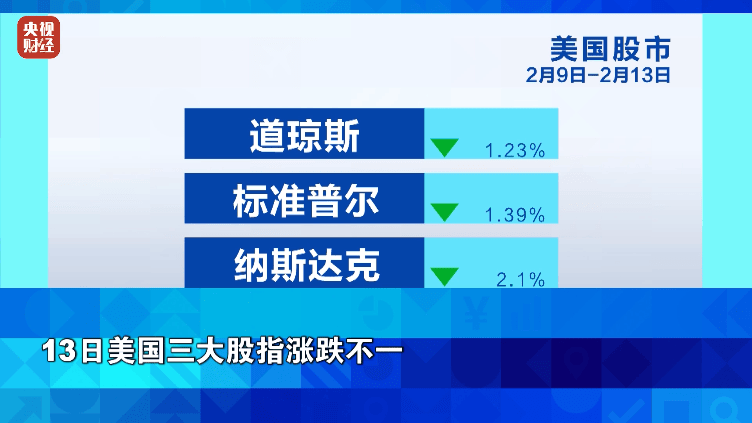
美国1月通胀数据提振美联储降息预期,国际金价和银价在前一个交易日大跌后反弹。全周 来看,黄金期价上涨1.3 4%,白银期价上涨1.4%。 当地时间周五,最新公布的美国1月CPI数据显示通胀压力超预期降温,在一定程度上缓解了 市场对特朗普高额关税可能导致持续通胀的担忧,美国三大股指中,道指上涨0.10%,标普 500指数上涨0 . 05%,纳指则下跌0 . 2 2%。盘面上,贵金属涨幅居前,泛美白银涨超6%,皇家 黄 金 涨 超 4% 。 博 彩 、 邮 轮 板 块 表 现 不 佳 , 挪 威 邮 轮 跌 超 7% , 嘉 年 华 邮 轮 跌 超 2% 。 全 周 来 看,道指下跌1.23%,标普500指数下跌1.39%,纳指下跌2.1%。 美国1月CPI同比增速创2 0 25年5月以来新低 提振市场对美联储今年降息预期 13日美国三大股指涨跌不一 原油期货方面,消息人士称,"欧佩克+"倾向于从今年4月起恢复石油增产,投资者权衡"欧佩 克+"供应前景以及美国通胀数据, 国际油价周五小幅上涨 。截至收盘,纽约商品交易所3月 交货的轻质原油期货价格收于每桶62.89美元,涨幅为0 .08%;4月交货的伦敦布伦特原油 ...
金价银价,大跌后反弹!
Sou Hu Cai Jing· 2026-02-14 04:50
Group 1 - The core viewpoint of the news is that the latest US inflation data for January has exceeded expectations, leading to increased market expectations for a Federal Reserve interest rate cut this year [3][5]. - The US January CPI rose by 2.4% year-on-year, marking the lowest growth rate since May 2025, and lower than the market expectation of 2.5% [5]. - The core CPI for January increased by 2.5% year-on-year, the lowest growth rate since March 2021, which has further bolstered the market's anticipation of a rate cut by the Federal Reserve [5]. Group 2 - In the stock market, the three major US indices showed mixed results, with the Dow Jones rising by 0.10% and the S&P 500 increasing by 0.05%, while the Nasdaq fell by 0.22% [3]. - The performance of precious metals was notable, with gold prices rising by 1.34% and silver prices increasing by 1.4% over the week [12]. - European stock indices displayed varied performance, with the UK FTSE 100 rising by 0.42%, while the French CAC40 index fell by 0.35% and the German DAX index increased by 0.25% [7]. Group 3 - In the oil market, there are indications that OPEC+ is inclined to resume oil production increases starting in April, which is being weighed against the backdrop of US inflation data [9]. - The price of light crude oil for March delivery closed at $62.89 per barrel, up by 0.08%, while Brent crude for April delivery closed at $67.75 per barrel, up by 0.34% [9].
国际金价银价,大跌后反弹!
Sou Hu Cai Jing· 2026-02-14 04:22
Group 1 - The latest US January CPI data shows inflation pressure cooling more than expected, alleviating market concerns about sustained inflation due to high tariffs [3][5] - The US January CPI year-on-year increase is 2.4%, the lowest since May 2025, and below the market expectation of 2.5% [5] - The core CPI for January increased by 2.5% year-on-year, marking the lowest growth since March 2021 [5] Group 2 - The US stock indices showed mixed performance, with the Dow Jones up 0.10% and the S&P 500 up 0.05%, while the Nasdaq fell by 0.22% [3] - Precious metals saw significant gains, with silver rising over 6% and gold increasing over 4% [3] - The overall performance for the week showed the Dow down 1.23%, S&P 500 down 1.39%, and Nasdaq down 2.1% [3] Group 3 - In Europe, investors focused on corporate earnings, leading to mixed results in the major indices, with the FTSE 100 up 0.42% and the CAC 40 down 0.35% [7] - Oil prices experienced slight increases, with light crude oil futures closing at $62.89 per barrel, up 0.08%, and Brent crude at $67.75 per barrel, up 0.34% [9] - The week saw a decline in oil prices, with US oil down 1.04% and Brent oil down 0.44% [9] Group 4 - International gold and silver prices rebounded after a previous decline, with gold futures closing at $5046.30 per ounce, up 1.98%, and silver futures at $77.964 per ounce, up 3.02% [9] - For the week, gold prices increased by 1.34% and silver prices by 1.4% [9]
晚间暴雷!黄金、白银、原油、美股全线崩盘,42只中概集体下跌
Sou Hu Cai Jing· 2026-02-14 04:22
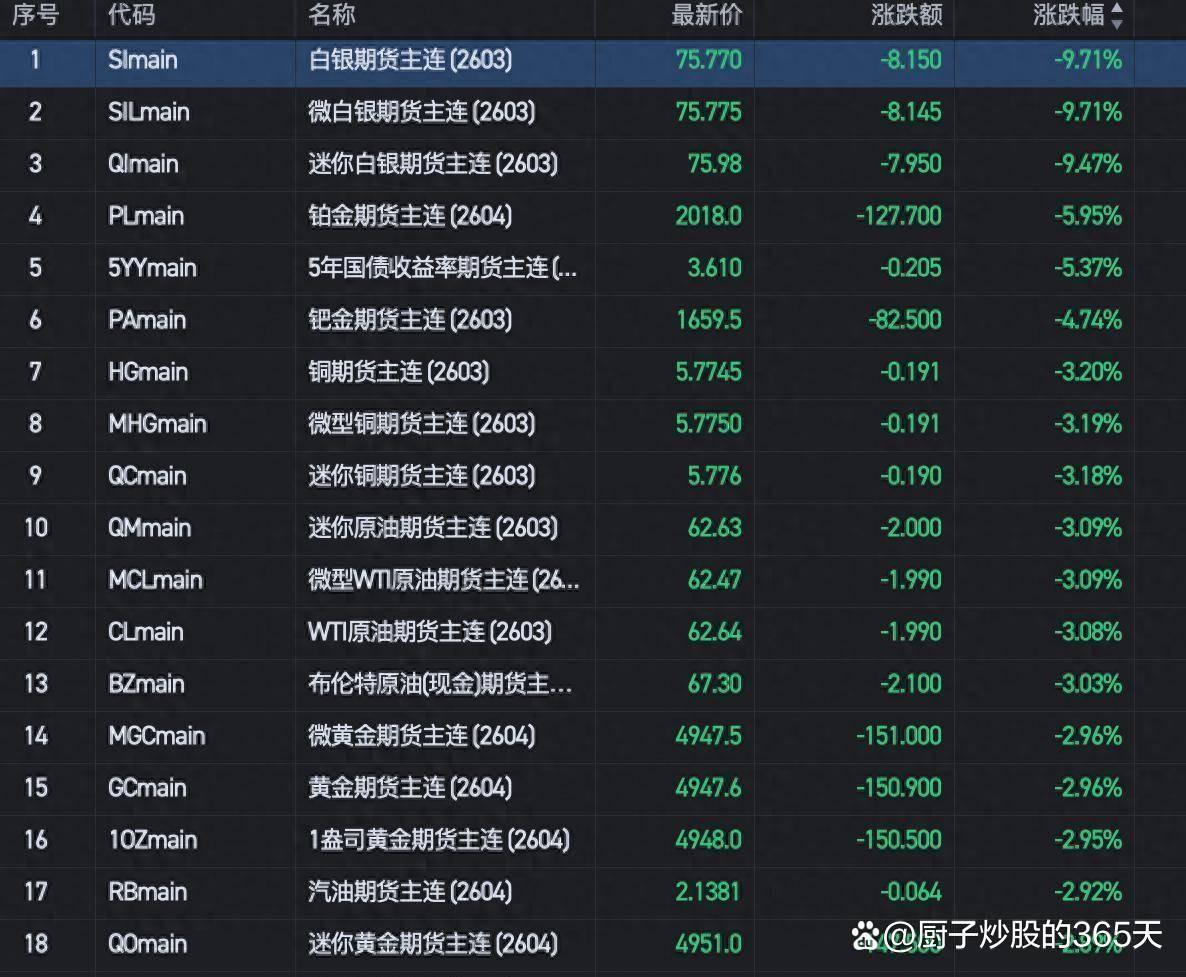
Market Overview - On February 13, 2026, a significant asset sell-off occurred in global financial markets, particularly impacting U.S. stock indices. The Dow Jones Industrial Average fell by 669.42 points (1.34%) to close at 49,451.98, while the Nasdaq Composite Index dropped 469.32 points (2.03%) to 22,597.15. The S&P 500 Index also declined by 108.71 points (1.57%) to 6,832.76 [1]. Commodity Market Impact - The sell-off extended to the commodity markets, with gold and silver experiencing substantial declines. COMEX gold futures fell by 3.08% to $4,941.4 per ounce, while COMEX silver futures plummeted by 10.62% to $75.01 per ounce [2][3]. Technology Sector Reaction - Major technology companies were severely affected, with Apple’s stock price dropping by 5%, resulting in a market value loss of over $120 billion (approximately 800 billion RMB). Other tech giants like Microsoft, Amazon, Tesla, Meta, and Nvidia also saw significant declines [3][4]. Chinese Concept Stocks - The Nasdaq Golden Dragon China Index, which includes many Chinese concept stocks, fell by 3% on the same day, indicating a collective sell-off in this sector. Over 40 Chinese concept stocks experienced substantial declines, with Tencent Music down 10.57% and Alibaba down 3.40% [3][4][6]. Employment Data Influence - The catalyst for this market turmoil was a strong U.S. employment report released on February 11, showing a non-farm payroll increase of 130,000 in January, significantly above the expected 70,000. This led to a shift in market expectations regarding Federal Reserve interest rate cuts, with the probability of a March rate cut dropping from 19.6% to 6% [5][6]. Capital Expenditure Concerns - Major tech companies announced aggressive capital expenditure plans for 2026, with Alphabet projecting $175 billion to $185 billion and Amazon estimating $200 billion, both nearly doubling their 2025 expenditures. This raised investor concerns about the return on such investments, especially as many companies reported record profits but saw stock price declines [10][11]. Market Sentiment and Volatility - The market's fear and volatility increased sharply, with the VIX index rising significantly. The sell-off was exacerbated by algorithm-driven trading, which triggered stop-loss orders and led to extreme price movements [15][16][17]. Global Market Impact - The financial turmoil that began in Wall Street quickly spread to global markets, with Asian and European stock markets opening lower in response to the U.S. declines [18].




新一轮俄美乌会谈即将举行!国内金属市场节前普遍收跌
Qi Huo Ri Bao· 2026-02-14 03:07
Market Performance - COMEX gold futures rose by 2.17% to $5050.50 per ounce, while COMEX silver futures increased by 1.98% to $77.180 per ounce [1] - The three major US stock indices closed mixed, with the Dow Jones up 0.10%, the Nasdaq down 0.22%, and the S&P 500 up 0.05% [1] - Major tech stocks like Apple and Nvidia fell over 2%, while Google and Meta dropped more than 1% [1] Domestic Metal Market - The domestic metal market saw a general decline before the Spring Festival, with significant drops in prices for tin and silver [3] - Shanghai gold futures fell by 1.61% to 1110.10 yuan per gram, while Shanghai silver futures dropped by 5.52% to 19782 yuan per kilogram [3] - The decline in gold and silver prices is attributed to weakened market sentiment and risk appetite, exacerbated by a significant drop in US stocks [3][4] Employment Data Impact - The US non-farm payroll data for January showed an increase of 130,000 jobs, significantly exceeding the market expectation of 70,000 [4] - This strong employment data has reduced the perceived necessity for the Federal Reserve to lower interest rates in the short term [4] - However, the total projected job growth for 2025 was revised down by 898,000, indicating that one month's data may not reflect a complete turnaround in the job market [4] Market Sentiment and Future Outlook - Analysts suggest that the gold and silver markets are currently in a "rebalancing" phase, with prices expected to remain volatile in the short term [5] - Long-term factors such as high global debt, geopolitical tensions, and structural shortages in silver are expected to support higher prices after adjustments [5] - The upcoming release of key macroeconomic data during the holiday period is anticipated to significantly influence precious metal prices post-holiday [6][7]
亚洲1月黄金资金净流入约100亿美元,连续五个月正流入
Xin Lang Cai Jing· 2026-02-14 03:00
据世界黄金协会消息,2026年1月,亚洲地区黄金资金净流入约100亿美元,远超其2025年月均水平,且 已连续五个月实现正流入,创下有史以来最强单月表现,占全球总流入比重达51%。 其中,中国地区受高金价、地缘风险及机构需求支撑,流入约60亿美元,位居亚洲首位、全球第二。 印度地区则受益于金价上涨及股市偏弱推动的资产多元化配置需求,流入约25亿美元。 (来源:财闻) 其中,中国地区受高金价、地缘风险及机构需求支撑,流入约60亿美元,位居亚洲首位、全球第二。 ...
A股缩量回调收官,资源和科技股领跌,节后行情可期
Guo Ji Jin Rong Bao· 2026-02-14 01:12
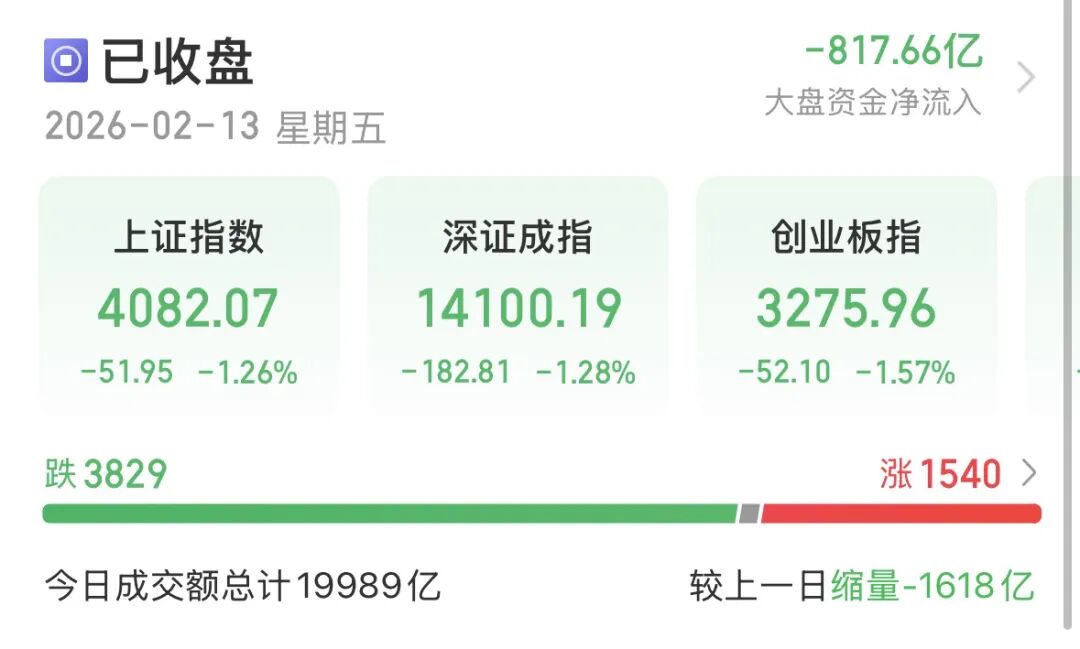
Market Overview - The last trading day before the Spring Festival on February 13 saw a significant decline in trading volume, dropping below 2 trillion yuan, with 3,829 stocks closing lower [1][4] - The Shanghai Composite Index fell by 1.26% to 4,082.07 points, while the ChiNext Index decreased by 1.57% to 3,275.96 points [4] Sector Performance - Resource and technology stocks led the decline, with significant drops in sectors such as non-ferrous metals, building materials, and oil and petrochemicals, all falling over 3% [8] - Natural gas, gold concepts, and rare earth permanent magnets were among the hardest-hit resource stocks [5][8] Trading Dynamics - The market exhibited typical defensive adjustment characteristics, with increased caution among investors as they prepared for the holiday [3][12] - The trading volume decreased significantly, with only three stocks exceeding 100 million yuan in daily trading volume [5][11] Investment Sentiment - Analysts noted that the market is currently in a phase of stock selection and defensive positioning, with a focus on technology growth and policy-supported sectors [11][14] - There is an expectation for increased market activity post-holiday, contingent on external market conditions remaining stable [3][13] Future Outlook - Historical data suggests that the A-share market tends to perform better after the Spring Festival, with potential for upward movement if trading volume rebounds [13][14] - Key sectors to watch include technology, AI, and high-end manufacturing, which are expected to benefit from ongoing trends and policy support [14][15]



大宗商品综述:WTI两周连跌 铝价走低 金价再度站上5000美元
Xin Lang Cai Jing· 2026-02-13 22:43
原油年内首次出现两周连跌,交易员权衡OPEC+可能扩大供应的前景、美国与伊朗的核谈判进展以及 近期整体市场的疲软。铝价下跌,之前有报道称美国可能计划缩减部分钢铝关税。金价走高,交易员在 数据显示通胀温和后加大对美联储降息的押注,一些投资者在周四的大幅抛售后逢低买入黄金。 原油:WTI年内首次两周连跌 交易员权衡伊朗局势及OPEC+增产前景 原油年内首次出现两周连跌,交易员权衡OPEC+可能扩大供应的前景、美国与伊朗的核谈判进展以及 近期整体市场的疲软。 WTI本周下跌1%, 周五收盘基本持平。美国总统唐纳德·特朗普表示,美国已向中东增派一艘航空母 舰,以防未能与伊朗达成核协议。"如果我们没有达成协议,我们就需要它," 特朗普在白宫表示。他 还补充称,他认为谈判最终会取得成功。交易员一直密切关注华盛顿和德黑兰之间紧张局势是否升温, 因为这可能对来自中东的供应构成威胁。 早些时候,油价下跌,与会代表称,OPEC+成员认为有空间在4月恢复增产,因其认为有关供应过剩的 担忧被夸大。与会代表称,该组织尚未承诺采取任何行动方针,也尚未在3月1日会议前启动正式讨论。 原油期货市场连续第二周下跌,终结2026年初以来的连涨势 ...