
数字经济

Search documents
“十四五”答卷·科技支撑强国建设丨科技创新绘就数字中国新图景
Ke Ji Ri Bao· 2025-10-23 05:34
Core Insights - The launch of the domestic commercial operating system based on Linux 6.6, named Galaxy Kirin V11, enhances the security, intelligence, and usability of Chinese operating systems [1] - The opening of the first commercial line of anti-resonance hollow-core optical fiber in Guangdong establishes a low-latency "information expressway" for cross-border financial services between Shenzhen and Hong Kong [1] - The development of 5G networks and rural e-commerce has transformed mobile phones into essential tools for agriculture, with data becoming a new agricultural resource and live streaming emerging as a new agricultural activity [1] Digital Economy Development - Since the 14th Five-Year Plan, China has made significant strides in digitalization, networking, and intelligence, leading to a robust digital economy [1][9] - The digital economy's core industry value added accounted for approximately 10% of GDP in 2024, with emerging business revenues, including cloud computing and big data, reaching 434.8 billion yuan, a 10.6% increase from the previous year [9][10] - The number of data enterprises in China exceeded 400,000 in 2024, with the data industry scale reaching 5.86 trillion yuan, reflecting a 117% growth compared to the end of the 13th Five-Year Plan [10] Technological Breakthroughs - The release of the superconducting quantum computing prototype "Zuchongzhi No. 3" demonstrates a processing speed 10^15 times faster than the fastest supercomputer, marking a significant achievement in quantum computing [2][3] - China has become the second country globally to conduct clinical trials for invasive brain-machine interface technology, indicating advancements in this field [2] Infrastructure Development - The construction of digital infrastructure has accelerated, with 5G base stations increasing fivefold to 4.55 million by mid-2025, and gigabit broadband users growing 34 times to 226 million [7][8] - The "East Data West Computing" initiative has concentrated computing power in key national nodes, with over 60% of new computing power being added in these areas [8] Industry Integration - The integration of digital technology with the real economy has deepened, with over 10,000 smart factories established, covering more than 80% of manufacturing sectors [9] - The software revenue in China grew by 80% by the end of 2024 compared to 2020, and the added value of the electronic information manufacturing industry increased by over 70% [9]
工信部推进算力标准构建,数字经济ETF(560800)调整蓄势
Xin Lang Cai Jing· 2025-10-23 02:50
Group 1 - The China Securities Digital Economy Theme Index (931582) decreased by 1.72% as of October 23, 2025, with the leading stocks being Tuojing Technology (688072) up by 3.49%, Runhe Software (300339) up by 3.10%, and China Software (600536) up by 2.93% [1] - The Digital Economy ETF (560800) experienced a significant scale growth of 1.0124 million yuan in the past week, with a total of 6 million shares added [1] - Over the last 10 trading days, the Digital Economy ETF attracted a total of 18.6144 million yuan in inflows [1] Group 2 - On October 21, the Ministry of Industry and Information Technology publicly solicited opinions on the "Computing Power Standard System Construction Guide (2025 Edition)", aiming to establish or revise over 50 standards by 2027 across various fields related to computing power [2] - The computing power sector is viewed positively in the long term, with a focus on PCB, domestic computing power, IP licensing, and chip inductors, despite short-term adjustments [2] - AI is identified as the core driver of growth in the cloud computing industry, with major global cloud vendors increasing capital expenditures for high-performance infrastructure to meet the growing demand for computing power [2] Group 3 - The Digital Economy ETF closely tracks the China Securities Digital Economy Theme Index, which includes companies involved in digital economy infrastructure and high levels of digitalization [3] - As of September 30, 2025, the top ten weighted stocks in the index accounted for 54.31% of the total index weight, with notable companies including Dongfang Wealth (300059) and SMIC (688981) [3]

【公告全知道】深地经济+机器人+商业航天+人工智能!公司推出“深地工程”综合解决方案
财联社· 2025-10-22 15:43
Group 1 - The article highlights the importance of major announcements in the stock market, including suspensions, investments, acquisitions, and performance reports, to help investors identify potential investment opportunities and risks [1] - A company has launched a comprehensive solution for "deep earth engineering" and successfully drilled the first 10,000-meter scientific exploration well [1] - Another company is involved in the supply of products for the "Deep Earth No. 1" oil and gas well and is participating in the research of large-scale hydrogen storage systems in deep earth rock caverns [1] - A company has made an acquisition to enter the storage chip sector, focusing on space computing [1]

周边命运共同体视域下的中国东盟全面战略伙伴关系
Ren Min Ri Bao· 2025-10-21 22:53
高 飞 中国和东盟山海相连、休戚与共。自1991年开启对话进程以来,双方始终坚持睦邻友好、携手合作,成 功走出一条互利共赢、共同发展的正确道路,为地区和平稳定与繁荣进步作出重要贡献。2021年双方宣 布建立面向和平、安全、繁荣、可持续发展的全面战略伙伴关系,标志着中国东盟关系开启新篇章。习 近平主席提出共建和平家园、安宁家园、繁荣家园、美丽家园、友好家园,深刻回答了双方关系向何处 去这一重大课题,为构建更为紧密的中国—东盟命运共同体指明了方向。 2025年是中国东盟关系承前启后的关键之年。5月,第46届东盟峰会通过《东盟共同体愿景2045》及相 关战略规划,为未来20年的东盟发展擘画蓝图。8月,《中国—东盟全面战略伙伴关系行动计划(2026 —2030)》正式发布,为双方携手构建更为紧密的中国—东盟命运共同体注入新动能。 站在新的历史起点上,共建"五大家园"的宏大目标相互支撑、彼此贯通,共同推动中国东盟全面战略伙 伴关系不断走深走实。 建设和平家园,守护地区安全稳定。中国和东盟始终致力于维护地区和平稳定,通过领导人会议、外长 会、高官磋商等机制深化对话合作,坚持《联合国宪章》原则,推动地区安全架构不断完善,以 ...
国家最新城市排名,天津逆袭广州,南京反超武汉,你家乡上榜了吗
Sou Hu Cai Jing· 2025-10-21 17:52
2025年10月的中国城市排名,像一声惊雷,砸碎了旧有的认知。北京、深圳、上海依旧稳坐前三,似乎 没什么新意,却暗藏玄机。 天津,这个曾被忽视的北方城市,一跃而上,挤进第六的位置,超过广州,让人咋舌。广州从一线阵营 跌落到第七,旧王朝的威严瞬间崩塌。 南京的逆袭也颇为引人注目,第八名反超武汉,让人不得不重新审视长江中游的力量格局。成都紧随其 后,排名第九,稳扎稳打。 这份排名由中国标准化研究院发布,时间定格在10月14日,地点在北京,恰逢第56届世界标准日。评价 体系不再单纯看GDP,而是涵盖创新、宜居、美丽、韧性、文明、智慧六大维度。 这转变,像一阵春风,吹散了GDP至上的迷雾。城市不再比拼数字的堆砌,而是比谁的生活更有质感, 谁的未来更有韧劲。 北京依旧领先创新和智慧,技术成果转化强劲,但宜居和韧性仍待提升,像个功成名就却不满足的书 生。深圳表现突出,尤其在创新、美丽及文明方面,犹如江南才子风流倜傥。 济南被称为最大黑马,凭借宜居性高分夺得第五,令人惊叹。它的成功不只是偶然,而是均衡发展、环 境治理与社会文化的综合体现。 天津的崛起更是均衡发展的典范。六大指标几乎齐头并进,既无明显短板,也无单一突出点,稳 ...
经济观察丨中国经济稳定增长护航民生基本盘
Zhong Guo Xin Wen Wang· 2025-10-21 01:39
Economic Growth and Employment - China's GDP grew by 5.2% year-on-year in the first three quarters, accelerating by 0.2 and 0.4 percentage points compared to the previous year and the same period last year respectively, providing a solid foundation for employment and income stability [1] - The average urban unemployment rate from January to September was 5.2%, with quarterly averages of 5.3%, 5.0%, and 5.2%, showing overall stability in the employment situation [1] - Economic growth serves as a "ballast" and "stabilizer" for the job market, encouraging businesses to invest and expand, thus creating more job opportunities [1] Policy Support and Employment Measures - China has implemented targeted support measures for key employment groups, including special subsidies and expanded employment channels, aiming to deliver policy benefits to those in need [2] - The country is actively guiding and supporting the development of industries related to new productive forces, such as high-tech manufacturing, digital economy, and green industries, to create new employment opportunities [2] Resident Income and Consumption - The per capita disposable income of residents reached 32,509 yuan, a nominal increase of 5.1% year-on-year, with a real growth of 5.2% after adjusting for price factors, aligning with economic growth [3] - The ratio of urban to rural residents' disposable income decreased from 2.46 to 2.43, indicating a slight improvement in income distribution [3] - The increase in wage income, net operating income, and net transfer income are the main factors supporting the growth of residents' income [3] Price Trends and Market Signals - The Consumer Price Index (CPI) slightly decreased by 0.1% year-on-year in the first three quarters, while the core CPI, excluding food and energy, rose by 0.6%, indicating the effectiveness of policies aimed at expanding domestic demand and promoting consumption [4] - The Producer Price Index (PPI) fell by 2.8% year-on-year, with a narrower decline of 2.9% in the third quarter compared to the second quarter, reflecting an improvement in domestic market competition and price recovery in certain industries [4]
新修订的反不正当竞争法正式施行 法治护航全国统一大市场
Ren Min Ri Bao· 2025-10-20 23:36
Core Points - The newly revised Anti-Unfair Competition Law will take effect from October 15, aiming to enhance market competition rules and optimize the business environment [1][3] - The law targets "involution-style" competition, particularly in the platform economy, to promote healthy market practices and prevent low-quality competition [2][4] - The law emphasizes the protection of small and medium-sized enterprises (SMEs) from unfair practices by larger companies, ensuring fair competition opportunities [4][5] Group 1 - The revised law establishes a fair competition review system to ensure all market participants can compete fairly [2][3] - It prohibits platform operators from forcing internal operators to sell below cost, addressing the issue of "involution-style" competition [2][4] - The law aims to break down industry barriers and market entry restrictions, fostering a more vibrant market environment [3][5] Group 2 - The law provides specific protections for SMEs against the abuse of power by larger enterprises, ensuring reasonable payment terms and conditions [4][5] - It aims to create a comprehensive legal framework for fair competition, enhancing resource allocation and promoting innovation [5] - The law addresses challenges in regulating unfair competition in the digital market, including data misuse and malicious transactions [6][7]
2025年第42周计算机行业周报:短期Token数据波动不改AI长期趋势-20251021
Changjiang Securities· 2025-10-20 23:30
Investment Rating - The report maintains a "Positive" investment rating for the software and services industry [7]. Core Insights - The computer sector experienced a significant decline of 5.63% last week, ranking 27th among major industries in the Yangtze River region, with a trading volume accounting for 7.00% of the total market [2][4]. - Despite short-term fluctuations in Token data, the long-term growth trend of AI remains intact, with a strong outlook for domestic AI application monetization and commercial investment opportunities [6][57]. - Key events include the 2025 World Intelligent Connected Vehicle Conference, the successful launch of 12 low-orbit satellites for satellite internet, and the opening of the 2025 China International Digital Economy Expo [5][22][43]. Summary by Sections Market Performance - The computer sector saw a substantial pullback, with the Shanghai Composite Index closing at 3839.76 points after a 1.47% decline [4][16]. - Notable activity was observed in domestic software stocks, with several companies showing significant gains [18]. Key Recommendations - Focus on AI infrastructure and cloud vendors, domestic model export companies, and firms that excel in vertical scenarios to achieve marginal returns [6][57]. - The report emphasizes the importance of the intelligent driving sector and satellite internet as areas for potential investment opportunities [31][42]. Events and Developments - The 2025 World Intelligent Connected Vehicle Conference highlighted the integration of AI in the automotive industry, with a push for standardization in autonomous driving technologies [22][25]. - The successful launch of low-orbit satellites marks a significant step in the development of satellite internet, with expectations for accelerated commercialization [32][37]. - The 2025 China International Digital Economy Expo showcased the potential of trusted data spaces in empowering various industries [43][49].
烽火淬炼运河畔 协同发展作示范
Bei Jing Ri Bao Ke Hu Duan· 2025-10-20 22:45
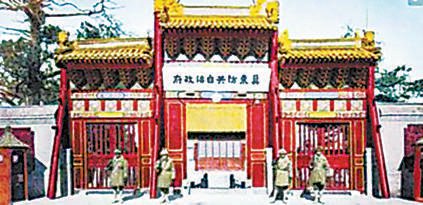
Core Viewpoint - The article highlights the historical resilience of the Tongzhou district during wartime and its transformation into a modern urban center, emphasizing the integration of cultural heritage with contemporary development efforts in the Beijing urban sub-center [1][8]. Historical Context - The ancient tree "Tower Elm" symbolizes the enduring spirit of the local people during the Japanese occupation, witnessing significant events such as the 1937 massacre of over 700 civilians [1][2]. - The area has a rich history marked by resistance against oppression, with local citizens actively participating in anti-Japanese efforts during the war [1][2]. Modern Development - The Tongzhou district is undergoing significant urban development, with the construction of the Beijing urban sub-center and the integration with the "North Three Counties" of Hebei province, aiming for high-quality development [1][5][6]. - The "Yunhe Business District" has seen a surge in enterprise registration, with over 20,000 companies established, accounting for 8.48% of the total enterprises in Tongzhou [5]. Cultural and Tourism Growth - The area has become a cultural and tourism hub, attracting over 30 million visitors, with attractions like the "Three Temples and One Tower" scenic area and the Universal Studios Beijing [4][5]. - The restoration of historical sites and the establishment of new cultural facilities contribute to the district's appeal as a tourist destination [4][5]. Policy Support and Collaboration - Various policies are being prioritized for the Yunhe Business District, including benefits from national service industry expansion and free trade zones, fostering a conducive environment for business growth [5][6]. - Collaborative efforts between Tongzhou and the "North Three Counties" focus on infrastructure, industry synergy, and shared public services, enhancing regional integration [6][7].
一扇理解时代发展趋势的重要窗口(国际论坛)
Ren Min Ri Bao· 2025-10-20 21:57
Group 1 - The core viewpoint emphasizes China's commitment to high-quality development during the "14th Five-Year Plan" period, showcasing a forward-looking development path that integrates innovation and mutual benefits [1][2] - Significant progress has been made in frontier areas such as digital economy, artificial intelligence, new energy, and life sciences, demonstrating an innovation-driven economic development model [1][2] - The concept of "new quality productivity," which promotes industrial upgrading through innovation, is becoming a key term in international discussions on future development [1][2] Group 2 - China's achievements during the "14th Five-Year Plan" extend beyond the economic realm, achieving systematic progress in social governance, ecological protection, and opening up to the outside world [2] - The development practices align closely with the United Nations Sustainable Development Goals, particularly in green energy development and carbon reduction [2] - The recognition that economic growth can coexist with social progress and sustainable development injects confidence into a turbulent world, providing important references for resource-rich economies in Latin America [2] Group 3 - The strong economic complementarity and cooperation potential between Brazil and China are highlighted, with China being Brazil's largest trading partner [3] - The practical cooperation in areas such as green energy, infrastructure, and agricultural technology has transformed into opportunities for Brazil's economic and social development [3] - Media cooperation is seen as an essential "soft connection" in international relations, promoting mutual understanding and reducing biases [3]