电力

Search documents
全国政协常委蔡冠深:加快“中国—中亚输电走廊”建设
中国能源报· 2026-03-09 10:35
Core Viewpoint - The construction of the "China-Central Asia Power Transmission Corridor" is a significant initiative for collaborative development with SCO member countries, aimed at enhancing energy cooperation between China and Central Asia [2]. Group 1: Project Foundation and Benefits - The "China-Central Asia Power Transmission Corridor" has a solid foundation for cooperation, with a clear advancement path established by a joint statement signed between China and Kyrgyzstan on February 6, 2022, proposing the "Kyrgyz Hydropower to China" concept [2]. - The completion of the corridor will address the bottleneck of renewable energy transmission from Xinjiang, preventing issues like wind and solar energy wastage that lead to low grid prices, thus encouraging investment in renewable energy [2]. - The corridor will also resolve electricity supply bottlenecks for major international projects like the China-Kyrgyzstan-Uzbekistan railway, opening new avenues for energy trade between China and Central Asia, and generating significant green energy trade revenue along with thousands of job opportunities [2]. Group 2: Implementation and Management - It is suggested to establish a new central enterprise led by the State-owned Assets Supervision and Administration Commission (SASAC) to implement the "China-Central Asia Power Transmission Corridor," involving major state-owned enterprises such as Huaneng Group, Huadian Group, and State Grid [3]. - The proposed registration location for this new enterprise is Urumqi, which would support the China (Xinjiang) Free Trade Zone and provide economic growth points [3]. - The construction of the corridor is expected to strengthen connections with SCO member countries, expanding trade and cultural exchanges, and a preparatory committee could be formed to facilitate ongoing collaboration and establish a platform for commerce, technology, and culture [3].


午后,688316、301396等涨停!“龙虾”引爆算力概念
证券时报· 2026-03-09 08:37
Core Viewpoint - The article discusses the recent market trends in the A-share and Hong Kong stock markets, highlighting the surge in the computing power concept and the strong performance of the electric power sector, while also noting the volatility in the oil sector due to geopolitical tensions and market reactions. Group 1: A-share Market Trends - The A-share market opened lower and saw a decline, with the Shanghai Composite Index dropping over 1% at one point but later narrowing its losses to close down 0.67% at 4096.6 points [3] - Major sectors such as military, semiconductor, insurance, and brokerage saw declines, while the smart grid concept remained active, with stocks like Zeyu Intelligent hitting a 20% limit up [3] - The computing power concept experienced a significant surge, with multiple stocks including Yuke Technology and Hongjing Technology reaching their daily limit up of 20% [6][3] Group 2: Hong Kong Market Trends - In the Hong Kong market, stocks like Xun Ce surged over 50%, with a peak increase of over 70%, while MINIMAX-WP and Kingsoft Cloud also saw notable gains [4] Group 3: Computing Power Concept - The computing power concept saw a strong rally, with stocks like Yuke Technology and Hongjing Technology hitting their daily limit up of 20% [6] - The OpenClaw AI service has gained traction, with major cloud providers like Tencent Cloud and Alibaba Cloud announcing support, indicating a growing demand for AI-related computing power [9] Group 4: Electric Power Sector - The electric power sector showed strong performance, with stocks like Jinkai New Energy and Yinxing Energy hitting their daily limit up [11] - Recent approvals for $75 billion in transmission expansion projects in the U.S. are expected to significantly boost electric power demand, particularly driven by AI needs starting in 2026 [13] Group 5: Oil Sector Volatility - The oil sector initially saw strong gains, with companies like CNOOC and PetroChina approaching their daily limit up, but later experienced a pullback [15] - International oil prices have been highly volatile, with Brent and WTI crude oil prices experiencing significant fluctuations, influenced by geopolitical tensions in the Middle East [15][16]






行业轮动ETF策略周报-20260309
金融街证券· 2026-03-09 07:42
Group 1: Report Industry Investment Rating - No relevant information Group 2: Core Viewpoints of the Report - The strategy is based on two research reports, constructing a strategy portfolio of industry and theme ETFs [2] - From 20260302 - 20260306, the strategy's cumulative net return was about -2.24%, and the excess return relative to the CSI 300 ETF was about -1.01%. From October 14, 2024, the out - of - sample cumulative return of the strategy was about 35.44%, and the cumulative excess relative to the CSI 300 ETF was about 11.95% [3] - In the week of March 9, 2026, the model recommends allocating sectors such as joint - stock banks, power, and securities. The strategy will newly hold products like Bank ETF, Green Power ETF, etc., and continue to hold products like Coal ETF [12] Group 3: Summary by Relevant Catalogs ETF Strategy Portfolio Information - The strategy portfolio includes multiple ETFs, such as Bank ETF (market value: 14.61 billion yuan), Green Power ETF (market value: 5.13 billion yuan), etc. The holding situation includes调入 (newly included) and 继续持有 (continue to hold). Different ETFs have different heavy - position Shenwan industries and corresponding weights, as well as weekly and daily timing signals [3] Performance Tracking - During 20260302 - 20260306, the strategy's cumulative net return was about -2.24%, and the excess return relative to the CSI 300 ETF was about -1.01%. From October 14, 2024, the out - of - sample cumulative return of the strategy was about 35.44%, and the cumulative excess relative to the CSI 300 ETF was about 11.95% [3] Future Recommended Allocation - In the week of March 9, 2026, the model recommends allocating sectors such as joint - stock banks, power, and securities. The strategy will newly hold products like Bank ETF, Green Power ETF, Financial Real Estate ETF Guotou Ruixin, Grid Equipment ETF, Central Enterprise ETF ICBC, etc., and continue to hold products like Coal ETF [12]
投资策略周报:地缘扰动下A股的韧性与相对确定性将凸显-20260309
HUAXI Securities· 2026-03-09 07:24
Market Review - The A-share market demonstrated strong resilience amid global market volatility caused by geopolitical tensions, particularly the US-Iran conflict, which led to a surge in oil prices to around $120 per barrel [2][3] - Major indices in the A-share market generally declined, with the exception of the dividend index, while the "HALO" strategy (heavy assets and low elimination rates) gained traction among investors [1][2] - Sectors benefiting from rising international commodity prices, such as oil and gas, coal, and power equipment, led the market [1][2] Market Outlook - The resilience and relative certainty of the A-share market are expected to stand out amid global pressures, with key factors including China's diversified oil import sources, which mitigate supply shocks compared to Japan and South Korea [2][3] - The stability of the RMB exchange rate index in early March supports market risk appetite, while regulatory measures aim to enhance the stability of the A-share market [2][3][4] - The ongoing geopolitical tensions and their impact on oil supply will be critical variables to monitor, particularly the duration of the closure of the Strait of Hormuz [2][3] Industry Configuration - Investment recommendations include focusing on cyclical commodities related to price increases, such as oil transportation, non-ferrous metals, and chemicals [4] - Attention is also advised on sectors supported by industrial policies, including military industry, storage, AI applications, and commercial aerospace [4] - High-end manufacturing industries related to overseas expansion, such as power equipment and engineering machinery, are highlighted as potential investment opportunities [4]
告别大海捞针!ESIE 2026:我们从数百海外买家中,深度剖析了15家“战略级”巨头。
中关村储能产业技术联盟· 2026-03-09 04:08
Core Viewpoint - The article emphasizes the importance of identifying strategic buyers in the energy sector during the ESIE 2026 event, focusing on key customers who play a significant role in national energy strategies and large-scale projects [3][6]. Group 1: National Energy Strategy Leaders - This section highlights strategic buyers that play a leading role in their country's energy transition, acting as top coordinators and core entities in power distribution [9]. - ESB (Electricity Supply Board) in Ireland is a key player, investing €300 million in large-scale battery storage systems to achieve the country's "net zero" emissions target by 2050 [10]. - ESB's storage projects include: - Aghada Phase I: 19MW, 38MWh (2022) - Poolbeg Battery: 75MW, 150MWh (2023/2024) - Aghada Phase II: 150MW, 300MWh (2024) [11]. - The demand for flexible resources is critical in Ireland due to its reliance on wind energy, with plans to achieve 80% renewable energy by 2030 [11]. - PLN (Perusahaan Listrik Negara) in Indonesia is the state-owned electricity company, monopolizing the electricity market and playing a central role in the energy system [13]. - PLN is accelerating the implementation of integrated "solar + storage" projects, with a notable project in Nusantara featuring 50MW solar and 14.2MWh storage [16]. - Indonesia's government plans to invest nearly $183 billion in new power generation facilities, including 10.3GW of storage [16]. - NEPCO (National Electric Power Company) in Jordan is the sole buyer of electricity and plays a pivotal role in the country's energy transition, with a new electricity law encouraging storage investment [18][20]. - EPS (Elektroprivreda Srbije) in Serbia is the largest state-owned energy company, with a significant solar project requiring a 200MW/400MWh battery storage system [25]. - EETC (Egyptian Electricity Transmission Company) is crucial for Egypt's power system, with plans to increase renewable energy to 42% by 2035 [28]. - BLEnergy in Israel is a leading storage system integrator, with a long-term supply agreement with CATL for 4GWh of storage products [29][31]. Group 2: Market Entry Strategies for Chinese Companies - Chinese companies are encouraged to leverage their cost advantages in lithium iron phosphate batteries and establish partnerships with local engineering firms in Ireland to penetrate the market [12]. - In Indonesia, a localization strategy is essential, with recommendations to set up assembly plants or joint ventures to comply with local content policies [17]. - In Jordan, Chinese firms should focus on the new BOO (Build-Own-Operate) model opportunities under the new electricity law, participating as both EPC contractors and equipment suppliers [22]. - In Serbia, Chinese companies should provide proven turnkey solutions that meet EU standards to capture market share in large solar-storage projects [25]. - In Egypt, the focus should be on smart upgrades of the power grid infrastructure, integrating products into local energy management systems [28]. - In Israel, a growth model combining Chinese manufacturing with local integration channels is recommended to secure high-value contracts and expand into the European and American markets [32].

全国政协委员辛保安:全面推进新型能源体系构建,避免仅关注电力领域
中国能源报· 2026-03-09 02:59
Group 1 - The core viewpoint of the article emphasizes the importance of a new energy system that extends beyond just electricity, advocating for a comprehensive approach to energy transition and development [2][3] - The current annual electricity consumption in China is growing by approximately 500 billion kilowatt-hours, with an expected average growth rate of around 5% during the 14th Five-Year Plan period, leading to a projected total electricity consumption of about 13 trillion kilowatt-hours by 2030 [2] - It is noted that electricity will only account for 33% of total energy consumption by 2030, indicating that 67% will still rely on other energy forms, highlighting the need for a diversified energy strategy [2] Group 2 - The new energy system is defined as one that relies on non-fossil energy as the main supply, fossil energy as a backup, and a new power system as a key support, which is crucial for national energy security and achieving carbon neutrality goals [3] - The article discusses the significance of accelerating the development of the Nu River, which is seen as vital for China's clean energy transition and optimizing the energy structure in the southwest region, with all necessary conditions for development already in place [3] - It is recommended to expedite the Nu River development process, aiming to initiate it during the 14th Five-Year Plan period to fully leverage its potential for energy transition and regional economic growth [3]

TOKEN 出海,全国电价趋同,西部或受益
GUOTAI HAITONG SECURITIES· 2026-03-09 02:40
Investment Rating - The report assigns an "Overweight" rating for the industry [1]. Core Insights - The report highlights that the overseas demand for computing power driven by Token's expansion may convert into domestic electricity demand, particularly benefiting low electricity price regions in the southwest and northwest of China [3]. - It is anticipated that domestic electricity prices will converge by 2030, with the current price of approximately 0.2 CNY in the northwest and southwest gradually aligning with the national average of 0.35 CNY [3]. - The report cites that the International Energy Agency projects a global electricity demand growth rate of 3.6% annually from 2026 to 2030, an increase from 2.8% over the past decade and 3% in 2025 [5]. - The report notes that the Chinese intelligent computing power scale is expected to reach 725.3 EFLOPS in 2024, a year-on-year increase of 74.1%, and is projected to grow to 2781.9 EFLOPS by 2028, with a compound annual growth rate of 40% [5]. - The report emphasizes that electricity has become a core production factor for computing power, with electricity and computing depreciation accounting for 70% of AIDC operating costs [5]. - The report mentions that the Chinese government has included "computing-electricity synergy" in its work report for the first time, indicating a focus on large-scale intelligent computing clusters and new infrastructure projects [5]. Summary by Sections - **Electricity Pricing Trends**: The report predicts that electricity prices in low-cost regions will rise to meet the national average, benefiting from the increased demand for computing power [3]. - **Government Initiatives**: The report highlights the government's commitment to reducing carbon emissions and enhancing energy production capabilities, with specific targets set for the 14th and 15th Five-Year Plans [5]. - **Market Dynamics**: The report discusses the competitive landscape, noting that the industrial electricity prices in western China provide a global competitive advantage, with companies like Yunnan Energy Holdings and Runze Technology leading the transformation [5].
未知机构:华泰策略A股周观点20260309上周全球市场在交易伊朗战争和由此引-20260309
未知机构· 2026-03-09 02:15
Summary of Key Points from the Conference Call Industry or Company Involved - The report focuses on the A-share market and its response to global events, particularly the implications of the Iran war on inflation expectations and market dynamics. Core Insights and Arguments - Global markets experienced declines due to the Iran war and the resulting inflation expectations, with stocks, bonds, and gold all falling [1] - The market's pricing of risk is deemed insufficient, leading to a recommendation for caution in the short term [2][4] - A-share market saw a significant drop on Tuesday, followed by a rebound on Wednesday afternoon, indicating volatility and a potential mispricing of the war's impact as a temporary event [5] - The implied volatility of ETF options peaked on Wednesday before declining, suggesting a reduction in panic among investors [5] - In the commodity market, oil prices surged past $100, reaching $107, with significant increases in the implied volatility of oil ETFs [6] - The futures market indicates a steep contango, suggesting that the market does not expect a significant long-term shift in inflation due to the war [6][7] - The primary market concern is the war's impact on risk appetite and fundamentals, overshadowing other factors like the Two Sessions and AI developments [8] - There is a recognition that the war is escalating, with the market pricing in an overly optimistic outlook, leading to asymmetric risks where downside risks are greater than upside [10][11] - A recommendation for investors to be cautious in the short term is based on considerations of tail risks [12] Additional Important Content - Industry configuration recommendations include focusing on the oil price's impact on various sectors: - **Affected Industries**: Logistics, chemicals, leasing, mining [13] - **Benefiting Industries**: - Direct beneficiaries: Oil and natural gas [13] - Substitution effects: Coal and renewable energy [13] - Strong downstream transmission capabilities: Oilfield services, cement, chemical raw materials, personal care [13] - Defensive sectors: Aquaculture and retail [14] - The report emphasizes energy and electricity as priority sectors, aligning with government work reports on future energy and green transitions [14] - Attention is drawn to energy metals, grid equipment, and power operators, with a shift towards fundamental pricing expected from mid-March to April [15] - Opportunities may arise from rapid adjustments in high-growth industries, including small metals, chemicals, components, storage, military industry, engineering machinery, and agriculture [15]
“AI下半场是能源!”算力需求催生电力革命,“卖铲人”异军突起
券商中国· 2026-03-09 01:51
Core Viewpoint - The consensus in the investment community is that "the second half of AI is energy," with various sectors such as photovoltaic, thermal power, ultra-high voltage, and smart grid experiencing double-digit growth [1][2]. Group 1: Energy Sector Performance - The energy sector has shown strong performance, with indices for ultra-high voltage, virtual grid, and smart grid all increasing by over 30% since the beginning of the year [2]. - Several funds focusing on energy concepts have achieved approximately 40% returns in the first two months of the year [2]. Group 2: Investment Opportunities - Fund managers emphasize the importance of selecting high-margin offshore supply chains as investment targets in the ongoing global energy revolution [4]. - The domestic manufacturing sector is well-positioned to participate in this energy transition due to its efficiency advantages [4]. Group 3: Infrastructure and Demand - The mismatch between the exponential growth in AI computing power demand and the linear upgrade of power grid infrastructure is particularly evident in North America, where the average age of the power grid is 50 years [3]. - China's investment in power infrastructure is expected to reach 4 trillion yuan during the "14th Five-Year Plan," a 40% increase from the previous plan, with a focus on main grid construction and cross-province transmission capacity [3]. Group 4: Competitive Advantages of Chinese Companies - Chinese companies possess a complete industrial chain and cost advantages, allowing them to respond quickly to overseas demand [5]. - They also have leading technology and service capabilities, particularly in ultra-high voltage and flexible direct current fields, which enhances their order acquisition ability [6]. - The profitability and sustainability of Chinese firms are bolstered by higher margins on overseas projects compared to domestic ones, with a focus on long-term market opportunities [6]. Group 5: Gas Turbine Sector - The gas turbine sector has emerged as a standout performer, with companies like Jerry Holdings and Yingliu Technology seeing significant stock price increases due to strong demand [7][8]. - The global gas turbine industry is expected to face a supply-demand gap in the next 3-5 years, making it challenging to meet the rising demand [8].



中国特高压:绿电闪送 千里直达
Zhong Yang Ji Wei Guo Jia Jian Wei Wang Zhan· 2026-03-09 00:28
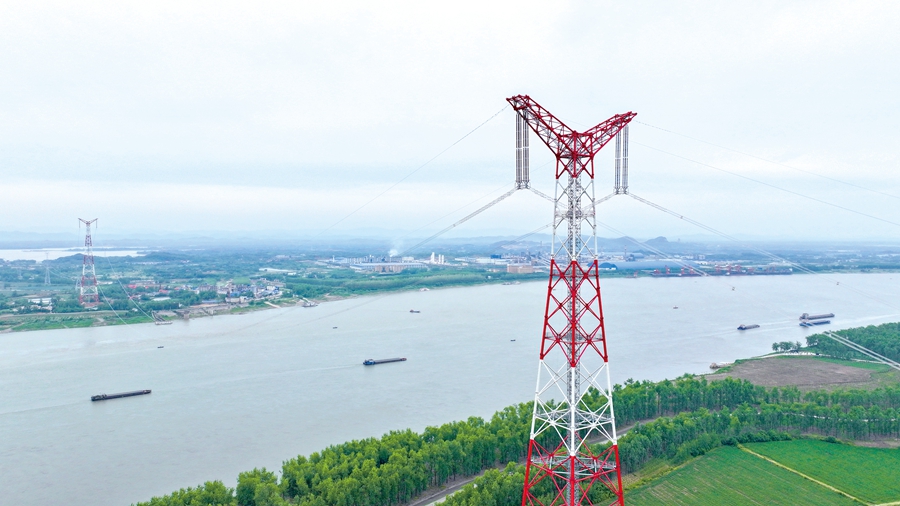
Core Viewpoint - The construction of ultra-high voltage (UHV) power transmission projects is crucial for enhancing energy security, optimizing clean energy distribution, and supporting the green transformation of the economy in China [7][21]. Group 1: Project Developments - The Shaanxi-Fujian ±800 kV UHV DC transmission project is set to be operational by June 2024, spanning 1,070 kilometers to deliver clean energy to the Jianghuai region [6]. - The Inner Mongolia-Beijing-Tianjin-Hebei ±800 kV UHV DC project is progressing steadily, aimed at supporting the energy output from the Kubuqi Desert renewable energy base [6]. - The Jinshang-Hubei ±800 kV UHV DC project is designed to transmit clean energy from Tibet across nearly 1,900 kilometers, marking a significant engineering achievement [10]. Group 2: Energy Consumption and Capacity - By 2025, China's total electricity consumption is expected to exceed 10 trillion kilowatt-hours, solidifying its position as the world's largest electricity consumer [7]. - The UHV projects consist of 46 completed projects with a total length exceeding 62,000 kilometers, forming the largest and most advanced long-distance power transmission network globally [12]. Group 3: Technological Innovations - UHV technology has evolved rapidly in China, achieving world-leading standards in design, construction, and management, with over 500 various standard documents developed [16]. - The projects utilize innovative technologies to address challenges such as high-altitude construction and extreme weather conditions, ensuring safety and efficiency [14][16]. Group 4: Environmental Impact - The Ningxia-Hunan project has a total installed capacity of 17.64 million kilowatts, with over 70% from renewable sources, significantly reducing carbon emissions by 16 million tons annually [18]. - The Hami-Chongqing project can support over 10 million kilowatts of renewable energy, also contributing to a reduction of 16 million tons of carbon emissions each year [19]. Group 5: Future Prospects - The upcoming Tibet to Guangdong-Hong Kong-Macau Greater Bay Area ±800 kV UHV DC project will span 2,681 kilometers, expected to deliver over 43 billion kilowatt-hours of clean energy annually by 2029 [20]. - The Longdong-Shandong ±800 kV UHV DC project will facilitate the development of a significant renewable energy base in Gansu, providing 36 billion kilowatt-hours of electricity to Shandong each year, also reducing carbon emissions by 16 million tons [20].