白色家电

Search documents
白电企业ESG报告: 高分者全 低分者简 供应链碳排放多缺失
Zhong Guo Zheng Quan Bao· 2025-07-06 20:27
Core Insights - The white goods industry in China is experiencing a significant shift towards sustainability, driven by consumer preferences for energy-efficient and environmentally friendly products [1][7] - ESG (Environmental, Social, and Governance) reporting among listed white goods companies is improving, with an 80% disclosure rate, surpassing the A-share average of 45.7% [1][2] Group 1: ESG Reporting and Ratings - Among the 10 listed white goods companies, 8 have disclosed their 2024 ESG reports, indicating a strong commitment to transparency [1][2] - Companies like Haier, Hisense, and Midea have consistently received high ESG ratings (A or BBB), while some companies remain below CCC, highlighting disparities in ESG management practices [2][3] - The correlation between ESG disclosure levels and ratings suggests that comprehensive reporting enhances a company's ESG assessment [2][3] Group 2: Green Product Initiatives - The industry is witnessing a growing consumer demand for green products, with over 60% of consumers preferring energy-efficient appliances [7][8] - Companies are investing heavily in R&D for green innovations, with leading firms like Midea and Haier each spending over 10 billion yuan on R&D in 2024 [7][8] - The introduction of products with carbon footprint certifications is becoming more common, with Haier and Hisense reporting multiple certified models [8] Group 3: Waste Recycling and Management - The waste recycling system for old appliances is becoming more robust, with companies like Midea and Gree reporting significant volumes of recycled appliances [5][6] - Midea aims to recycle 50 million old appliances by 2030, while Haier and Gree have also set ambitious recycling targets [5][6] - The industry is enhancing its recycling capabilities through partnerships and improved collection services, contributing to resource reuse and environmental sustainability [4][6]






每周股票复盘:澳柯玛(600336)为子公司提供1000万元担保
Sou Hu Cai Jing· 2025-06-28 18:54
Core Points - Aucma (600336) closed at 6.84 yuan on June 27, 2025, up 5.23% from 6.5 yuan the previous week [1] - The company's market capitalization is currently 5.458 billion yuan, ranking 9th in the white goods sector and 2762nd in the A-share market [1] Company Announcements - Aucma provided a guarantee of 10 million yuan for its subsidiary, Qingdao Aucma Biomedical Co., Ltd., with a total guarantee amount of 1.28 billion yuan, representing 52.44% of the company's latest audited net assets [1] - The guarantee is intended to support the daily operational funding needs of the biomedical company, which specializes in the development, production, and sales of ultra-low temperature equipment and laboratory refrigerators [1] - In Q1 2025, the biomedical company reported revenue of approximately 41.1 million yuan and a net profit of approximately 857,441 yuan, while the total revenue for 2024 was approximately 144.6 million yuan with a net profit of approximately 12.6 million yuan [1]

特朗普为扩大关税对象瞄准“衍生品”
日经中文网· 2025-06-26 02:47
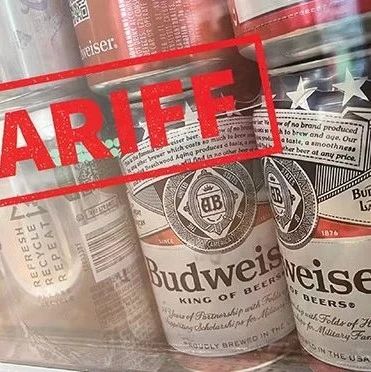
Core Viewpoint - The Trump administration is expanding the scope of tariffs on various products, including white goods, which are now subject to a 50% tariff due to their classification as "derivative products" of steel and aluminum [1][2][3]. Group 1: Tariff Implementation - Starting June 23, the Trump administration imposed a 50% tariff on white goods such as washing machines, dryers, refrigerators, dishwashers, and microwaves [2]. - White goods are classified as "derivative products" of steel and aluminum, leading to tariffs based on their metal content [3]. - Approximately 20% of imported refrigerators in the U.S. come from Mexico, and 10% from South Korea, with over 20% of certain products imported from China [3]. Group 2: Impact on Imports and Prices - The cumulative tariff burden on products from China could approach 100%, which may not be fully absorbed by companies and could lead to increased retail prices [3]. - The Trump administration has previously expanded the list of products subject to steel and aluminum tariffs, including beer cans in April [3]. Group 3: Government's Stance and Future Implications - The U.S. government has not clearly defined the relationship between the newly taxed products and national security, despite the tariffs being justified on those grounds [3]. - The nature of "derivative products" has changed under the second Trump administration, indicating a stronger intent to protect domestic industries through expanded tariffs [3][4]. - The U.S. Department of Commerce has begun accepting applications for additional product categories to be included under the steel and aluminum tariffs, suggesting a proactive approach to expanding tariff applications [4]. Group 4: Concerns Over Future Tariffs - There are concerns that future tariffs could extend to other sectors, such as semiconductors, potentially including everyday consumer electronics like smartphones and personal computers [5]. - The South Korean government has expressed concerns to the U.S. Department of Commerce, advocating for the exclusion of daily consumer goods from tariff applications [5].

6月25日晚间公告 | 大基金二期减持思特威;长川科技半年报净利润预增67.54%-95.46%
Xuan Gu Bao· 2025-06-25 11:59
Group 1: Resumption of Trading - *ST Huamei has changed its controlling shareholder to Jilin Provincial State-owned Assets Supervision and Administration Commission, leading to the resumption of its stock trading [1] Group 2: Mergers, Acquisitions, and Capital Increases - Ningbo Energy plans to acquire a 40% stake in Yongchuang Power [2] - Yandong Micro has received approval from the China Securities Regulatory Commission for a specific issuance of A-shares [2] Group 3: Share Buybacks and Holdings - Midea Group has canceled 11.09 million shares from its buyback program [3] - Funi Shares' controlling shareholder and its concerted parties plan to increase their holdings by 100 million to 200 million yuan [3] - Taida Shares intends to repurchase shares worth between 35 million to 70 million yuan [4] - Sitwei has seen a reduction of 2.612 million shares by the National Fund Phase II [5] Group 4: External Investments and Daily Operations - Tianji Shares has received patent authorization related to lithium sulfide and is advancing industrialization [6] - Lianhua Holdings' subsidiary Lianhua Zixing plans to sell four intelligent computing servers for 4.2 million yuan [6] - Hanyu Pharmaceutical's wholly-owned subsidiary has received approval for the listing application of the raw material drug Acetate Degarelix [7] - Jianghe Group's overseas subsidiary has signed a subcontract for a façade engineering project in Saudi Arabia, valued at 1.052 billion Saudi Riyals, approximately 2.012 billion yuan [7][9] - Lutai A has sold shares in Rongchang Biotechnology, generating a profit of 450,000 yuan [7] - Zhejiang Rongtai plans to acquire no less than 15% of Jinli Transmission's shares, facilitating entry into emerging fields such as humanoid robots [8] Group 5: Performance Changes - Changchuan Technology expects a net profit of 360 million to 420 million yuan in the first half of 2025, representing a year-on-year growth of 67.54% to 95.46%, driven by strong demand in the integrated circuit industry and recognition of its high-end testing equipment products [10]

中国企业传承驶入“三峡地带”
Hu Xiu· 2025-06-24 12:41
Core Viewpoint - The article discusses the challenges of succession in Chinese private enterprises, highlighting the difficulties faced by companies like Vanke and Alibaba in transitioning leadership from their founders to new management teams [2][24]. Group 1: Succession Challenges - Liu Qiangdong's retirement plan was influenced by the serious succession issues in domestic enterprises, aiming to be the first large internet company to be managed by professional managers [1][2]. - The succession of founders like Wang Shi and Jack Ma has led to significant personnel upheaval in their respective companies, indicating a broader issue in the succession of private enterprises in China [2][3]. - The lack of actual control in companies like Vanke and Alibaba complicates their succession process compared to those with a clear controlling shareholder [3][4]. Group 2: Internal Dynamics and Changes - Successors in both Vanke and Alibaba were chosen from within the companies, which can lead to instability as they navigate their new roles [5][6]. - Organizational changes initiated by new leaders, such as large-scale restructuring in Vanke and Alibaba, reflect their efforts to assert their leadership and justify their positions [8][9][10]. - Cultural shifts were also significant, with both companies undergoing discussions to redefine their core values and cultural frameworks post-succession [10][11]. Group 3: Leadership Styles and Strategies - New leaders like Zhang Yong and Yu Liang have adopted different strategies to establish their authority, including organizational restructuring and cultural iterations [12][13][15]. - The transition to a new business model, such as Vanke's shift to a partnership system and Alibaba's focus on a "business operating system," illustrates the need for successors to innovate and adapt to changing market conditions [16][17][18]. - The article emphasizes that successors must prove their capabilities and establish their own identities separate from their predecessors to gain legitimacy [20][21][22]. Group 4: Broader Implications - The ongoing challenges in succession highlight the complexities of leadership transitions in large private enterprises, which often face external market pressures alongside internal changes [23][24]. - The article concludes that the issue of succession in Chinese private enterprises remains unresolved and requires further exploration and solutions from future leaders [25].


美国对白色家电也开始加征关税
日经中文网· 2025-06-24 02:39
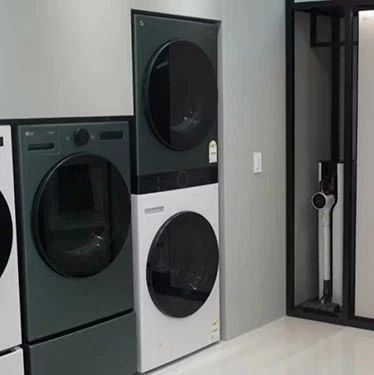
Core Viewpoint - The U.S. government has imposed a 50% tariff on white goods, classified as "derivative products" of steel and aluminum, starting from June 23, 2023, to promote domestic manufacturing [1][2]. Group 1: Tariff Details - The U.S. government initially imposed a 25% tariff on steel and aluminum products in March, which was later increased to 50% on June 4 [2]. - White goods affected by the tariff include washing machines, dryers, refrigerators, dishwashers, gas stoves, microwaves, and electric ovens, with tariffs based on the steel and aluminum content [2]. Group 2: Impact on Companies - South Korean, Mexican, and Chinese companies, which export significantly to the U.S., will be impacted by the increased tariffs [1][2]. - Some South Korean companies are considering expanding production of refrigerators and electric ovens domestically in the U.S. to avoid high tariffs [2]. Group 3: Strategic Intent - The Trump administration aims to strengthen U.S. domestic manufacturing through high tariffs, potentially leading to further demands for Japanese companies to shift production to the U.S. if the strategy is deemed successful [2].
投资策略专题:从“第四消费时代”看未来消费机遇
KAIYUAN SECURITIES· 2025-06-17 12:13
Group 1 - The current Chinese consumer market is experiencing a transformation characterized by "pressure on total volume and structural differentiation," with traditional consumption upgrading and emerging sectors expanding rapidly [2][10] - The emotional characteristics of consumers are becoming more pronounced, with a tendency to seek psychological compensation and cultural resonance through consumption [2][10] - The transformation path of Chinese consumption is highly similar to Japan's "fourth consumption era," which began around 2005, driven by economic, demographic, and psychological factors [2][10] Group 2 - Japan's "fourth consumption era" is marked by a shift from ownership to shared and experiential consumption, emphasizing individual value realization and social connections [3][11] - The transition in Japan is driven by three structural variables: long-term economic stagnation, demographic changes, and shifts in consumer psychology [19][22] - The consumption focus in Japan has shifted from material goods to services and experiences, leading to a restructuring of the industrial landscape [28][30] Group 3 - The concept of Delta G (marginal change in profit growth) is proposed as a key indicator for identifying structural opportunities in the consumer sector [4][44] - The report identifies three investment themes based on Delta G: sectors with improving economic forecasts, those with significant upward revisions in profit predictions, and those with relatively small downward adjustments [4][44] - Specific sectors highlighted for potential investment include personal care products, food processing, and internet e-commerce, among others [4][44][50] Group 4 - The report emphasizes the importance of cultural identity and local values in shaping consumer behavior, suggesting that brands should leverage local cultural narratives to enhance differentiation [43][40] - The rise of the "silver economy" and "single economy" in Japan provides insights for China to develop related industries, such as elder care services and single-person living solutions [39][40] - Sustainable consumption is becoming a strategic necessity for long-term business success, with companies encouraged to integrate environmental considerations throughout the product lifecycle [40][41]
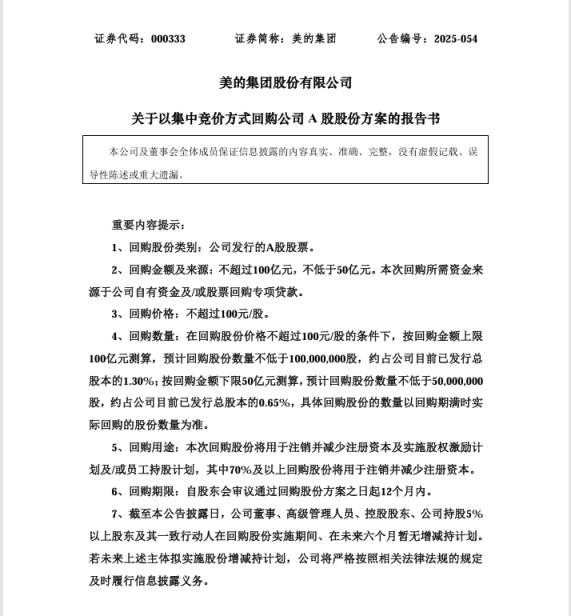
最高100亿元!美的年内第三次出手回购,七成回购股份将用于注销
Guo Ji Jin Rong Bao· 2025-06-17 11:51
Core Viewpoint - Midea Group has announced a share buyback plan, reflecting confidence in its future development and commitment to enhancing shareholder returns and corporate governance [1][3]. Group 1: Share Buyback Details - Midea Group plans to repurchase A-shares worth up to 10 billion yuan (approximately 1.3% of total share capital) and not less than 5 billion yuan (approximately 0.65% of total share capital) [1]. - The buyback will be funded by the company's own funds and/or special loans, with a duration of 12 months from the approval date by the shareholders' meeting [1]. - This marks Midea's third buyback announcement in 2023, following previous plans of 5 to 10 billion yuan and 1.5 to 3 billion yuan [3]. Group 2: Historical Context of Buybacks - Since 2021, Midea Group has been active in share buybacks, with the largest plan in 2021 amounting to 14 billion yuan for 50 to 100 million shares, completed in under two months [3]. - Cumulatively, Midea has announced buyback plans totaling up to 37 billion yuan since 2021 [3]. Group 3: Dividend Distribution - For the fiscal year 2024, Midea Group plans to distribute a cash dividend of 35 yuan per 10 shares, totaling 26.712 billion yuan, which represents 69.31% of the net profit attributable to shareholders [5]. - Since its listing in 2013, Midea has distributed cash dividends 12 times, amounting to a total of 134.194 billion yuan [5][6].
【立方早知道】巴奴递表港交所/创新药赛道迎重磅利好/最高100亿元!美的集团再抛回购方案
Sou Hu Cai Jing· 2025-06-17 00:36
Group 1: Company Developments - Banu International Holdings Limited submitted its listing application to the Hong Kong Stock Exchange, reporting revenues of 5.639 billion RMB in Q1 2024 and 7.087 billion RMB in Q1 2025, with adjusted net profits of 575 million RMB and 767 million RMB respectively [1] - Midea Group announced a share repurchase plan with a maximum amount of 10 billion RMB and a minimum of 5 billion RMB, aiming to repurchase up to 1 billion shares, which is approximately 1.30% of the total issued shares [6] - *ST Zhongdi plans to transfer its real estate development assets and liabilities to its controlling shareholder for 1 RMB, focusing on property services and asset management for strategic transformation [7] - Muyuan Foods announced that its application for H-share issuance has been accepted by the China Securities Regulatory Commission [8] - *ST Jiuyou's stock will be delisted, with the Shanghai Stock Exchange initiating the delisting process due to significant reporting violations, including a fine of 8.5 million RMB [10] - Weir Shares will change its name to Haowei Group, effective June 20, 2025 [11] - Three squirrels terminated the acquisition of Hunan Ailing Food Technology due to failure to reach agreement on core terms [12] - Bohai Automobile plans to acquire stakes in four automotive parts companies through a combination of share issuance and cash payments [13] - Zhujiang Beer elected a new chairman, Huang Wensheng, following the retirement of the previous chairman [14] Group 2: Industry Trends - The National Medical Products Administration announced measures to support innovative drug development, including a 30-day review process for clinical trial applications [3] - Guangdong Province aims to cultivate 3-5 leading enterprises in the nuclear medicine industry by 2030, enhancing innovation capabilities and establishing a competitive industry cluster [5] - The National Radio and Television Administration is implementing regulations to improve user experience in internet television services, addressing issues related to automatic renewal and user complaints [4] - Shanshui Technology plans to invest 6 billion RMB in a new chemical materials project, expected to generate an annual output value of 8 billion RMB upon completion [19]



最高100亿元,美的拟用再贷款资金回购股票
Bei Jing Ri Bao Ke Hu Duan· 2025-06-16 11:57
回购股份目的何在?美的集团表示,基于对公司未来发展前景的信心和对公司价值的高度认可,并结合 公司经营情况、主营业务发展前景、公司财务状况以及未来的盈利能力等因素,拟回购公司A股股份, 用于依法注销减少注册资本及持续用于实施公司股权激励计划及/或员工持股计划,以增强投资者信 心,提高股东回报,优化公司治理结构,构建管理团队持股的长期激励与约束机制,确保公司长期经营 目标的实现。此次回购中70%及以上回购股份将用于注销并减少注册资本。 对于资金来源,公告称,回购资金为公司自有资金及/或中国银行股份有限公司顺德分行提供的股票回 购专项贷款。 据悉,根据中国人民银行联合金融监管总局、中国证监会发布《关于设立股票回购 增持再贷款有关事 宜的通知》的指导意见,公司符合股票回购增持再贷款的条件,积极响应决策部署,已取得中国银行出 A股又现百亿级大回购。 6月16日晚间,白电巨头美的集团股份有限公司(简称"美的集团")公告表示,拟以集中竞价方式回购 公司A股股份,回购金额不超过100亿元,不低于50亿元。 据公告,美的集团此次股票回购价格不超过100元/股。在回购股份价格不超过100元/股的条件下,按回 购金额上限100亿元 ...