电动车

Search documents
港股异动 | 小米集团-W(01810)再跌超3% 较6月高点跌超三成 高盛称做空小米成对冲基金共识
智通财经网· 2025-11-07 03:51
Core Viewpoint - Xiaomi Group's stock has declined over 30% from its peak in June, with a current drop of 3.08% to HKD 42.1, amid increasing short-selling activity by hedge funds [1][1][1] Group 1: Stock Performance - Xiaomi's stock price has fallen to HKD 42.1, representing a decline of over 30% since June's highest point [1] - The trading volume reached HKD 30.76 billion, indicating significant market activity [1] Group 2: Hedge Fund Activity - Hedge fund short positions on Xiaomi surged by 53% in the past week, reflecting growing bearish sentiment [1] - Recent data shows that selling pressure from pension funds and hedge funds has dominated the market in the last two weeks [1] Group 3: Investor Sentiment - Investor sentiment is turning cautious ahead of Xiaomi's third-quarter earnings report scheduled for November 18 [1] - Feedback from hedge funds suggests that Xiaomi is viewed as a consensus short/sell target in the short term due to a lack of catalysts [1] Group 4: Analyst Outlook - Goldman Sachs has lowered its target price for Xiaomi, citing rising storage chip prices that suppress smartphone gross margins [1] - The growth rate of Xiaomi's AIoT business has slowed to single digits, and delays in the electric vehicle phase two factory are impacting deliveries [1]

年末资产如何配置?科技成长板块仍是主力 联想、中芯国际等是关注重点
Ge Long Hui· 2025-11-06 05:52
Core Viewpoint - The market has experienced a significant style switch since November, with brokerages suggesting a focus on technology, consumption, and core asset industries as the year-end approaches in a bullish market environment [1] Market Valuation - As of October 31, the Hang Seng Technology PE-TTM stands at 22.9 times, which is in the 29th percentile historically [1] - Hong Kong's broad market valuation is notably low compared to global indices, with Hang Seng Technology valuations lower than the S&P 500 by 95%, Nasdaq by 88%, DAX by 79%, Nikkei 225 by 73%, and Nifty by 72% since 2005 [1] Capital Inflows - Since 2025, southbound capital inflows have exceeded 1.1 trillion yuan, primarily driven by institutional forces such as public funds and insurance capital [1] - It is anticipated that net inflows from southbound capital will exceed 1.5 trillion yuan next year [1] - In Q3 2025, both long and short-term foreign capital consistently flowed into Hong Kong's technology sector, indicating a growing consensus among foreign investors [1] Institutional Behavior - Data from China Aviation Securities indicates that in Q3, actively managed equity funds increased their positions in technology while reducing exposure to blue-chip sectors like banking [1] Investment Opportunities - Most brokerages believe that the technology growth trend is not over and still presents investment value, particularly in Hong Kong's technology, consumption, and core asset sectors [1] - The acceleration of the AI industry both domestically and internationally is expected to open new growth avenues for technology stocks, with potential for increased capital investment in the AI sector [1] Magnificent 7 in Hong Kong - The "Magnificent 7" in the Hong Kong market includes Xiaomi, Lenovo, BYD, SMIC, Alibaba, Tencent, and Meituan, which are seen as core technology assets attracting investor attention [2] Company-Specific Insights - **Xiaomi**: Expected to benefit from AI applications and successful entry into the smart electric vehicle market, with a focus on new product launches and growth in smart hardware [3] - **Lenovo**: Anticipated growth in PC and smartphone demand driven by AI investments and expansion in emerging markets, particularly in the Middle East [4] - **BYD**: Projected to achieve global sales of 4.27 million vehicles in 2024, with a focus on smart vehicle technology and international expansion [4] - **SMIC**: Positioned as a major beneficiary of global supply chain restructuring, with strong demand for localized production [5] - **Alibaba**: Expected to lead in cloud services driven by AI demand, with a focus on enhancing e-commerce market share through innovative applications [5] - **Tencent**: Anticipated to leverage AI in social advertising and gaming, with a focus on enhancing product offerings through AI integration [6] - **Meituan**: Expected to benefit from growth in the local consumption market and improvements in profitability across various business segments [6]

北水动向|北水成交净买入103.73亿 内资再度加仓科网股 全天抢筹南方恒生科技(03033)近13亿港元
智通财经网· 2025-11-05 10:06
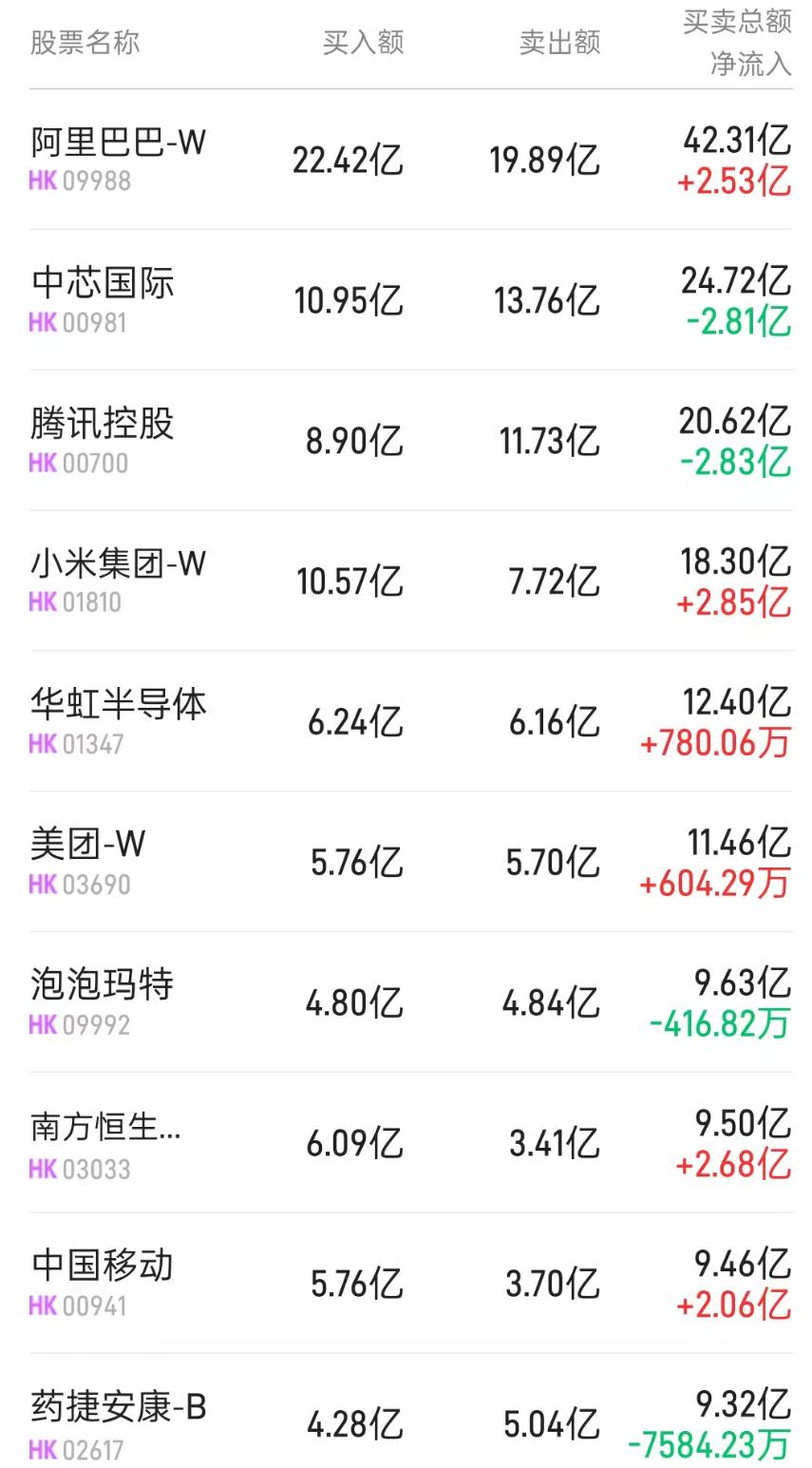
Group 1: Market Overview - On November 5, the Hong Kong stock market saw a net inflow of 10.373 billion HKD from northbound trading, with 3.359 billion HKD from the Shanghai Stock Connect and 7.014 billion HKD from the Shenzhen Stock Connect [1] - The most net bought stocks included Southern Hang Seng Technology (03033), Alibaba-W (09988), and Xiaomi Group-W (01810) [1] - The most net sold stocks were Hua Hong Semiconductor (01347), SMIC (00981), and Ganfeng Lithium (01772) [1] Group 2: Individual Stock Performance - Alibaba-W (09988) had a net inflow of 2.53 billion HKD, with a total trading volume of 4.231 billion HKD [2] - Xiaomi Group-W (01810) saw a net inflow of 2.85 billion HKD, with a total trading volume of 1.830 billion HKD [2] - Tencent Holdings (00700) experienced a net outflow of 2.83 billion HKD, with a total trading volume of 2.062 billion HKD [2] Group 3: Analyst Insights - Analysts from Daiwa maintained a positive outlook on the Chinese internet sector, highlighting Tencent's strong product pipeline and anticipated growth in gaming revenue [5] - Citi's report on Xiaomi projected a 22% year-on-year revenue growth and a 60% increase in adjusted net profit for Q3, driven by robust electric vehicle sales [5] - China Mobile (00941) announced a share transfer of 0.19% to China National Petroleum Corporation to enhance strategic collaboration [6] Group 4: Sector Trends - The semiconductor sector faced net selling, with SMIC and Hua Hong Semiconductor seeing net outflows of 4.99 billion HKD and 6.4 billion HKD, respectively [7] - Analysts suggested focusing on the design sector's performance in storage, foundry, and ASICs, as well as the potential for price increases in leading foundries [7]






又开打了?稀土王牌再亮剑!美国关税大棒卷土重来,中国破局关键锁定第三世界
Sou Hu Cai Jing· 2025-11-05 08:22
Group 1 - The U.S. is resuming tariff threats against China despite recent agreements on rare earth trade, indicating a shift in negotiation tactics [1][3] - U.S. Trade Representative Katherine Tai's comments reveal a dual strategy, suggesting that the 301 investigation is merely paused and will be revisited [3][5] - The historical context shows that U.S. negotiations often involve immediate follow-up actions that undermine previous agreements, as seen in past trade disputes [5] Group 2 - The U.S. is heavily investing in its rare earth supply chain, with a $14 billion emergency investment plan to reduce reliance on China [7][8] - China controls 60% of global rare earth mining and 90% of refining capacity, highlighting the strategic importance of these resources in high-tech manufacturing [8] - The U.S. is forming alliances with countries like Australia and Japan to create a "rare earth alliance" and is providing financial support to domestic companies for refining capabilities [8] Group 3 - China is adopting a multi-faceted strategy to counter U.S. pressures, including seeking markets in developing countries and enhancing its ecological control over resources [11][12] - The shift in trade dynamics is evident as China's imports of lithium from Brazil have surged, indicating a diversification of supply sources [12] - China's technological advancements in rare earth recycling and patent holdings are strengthening its position in the global market [12] Group 4 - U.S. Treasury Secretary Janet Yellen's statement about reducing dependence on Chinese rare earths is part of a broader psychological strategy, but the reality is that U.S. refining capacity is limited [14][16] - The timeline for U.S. facilities to become operational extends to 2028, while Japan's reserves are only sufficient for 18 months, indicating vulnerabilities in the U.S. supply chain [14] - The urgency for China lies in leveraging its resource alliances and infrastructure projects to secure a stable supply of critical minerals [18][19]

里昂:料小米集团-W(01810)第三季经调整净利润增60% 电动车续为亮点
智通财经网· 2025-11-05 07:10
Core Viewpoint - Citi expects Xiaomi Group-W (01810) to achieve a year-on-year revenue growth of 22% and adjusted net profit growth of 60% in Q3, reaching RMB 112.9 billion and RMB 10 billion respectively, driven by robust electric vehicle sales [1] Group 1: Financial Performance - Xiaomi's total revenue for Q3 is projected to be RMB 112.9 billion, with an adjusted net profit of RMB 10 billion, reflecting significant growth compared to the previous year [1] - For Q4, Xiaomi is anticipated to see a 15% year-on-year increase in total revenue and a 16% increase in adjusted net profit, primarily due to a recovery in smartphone sales and continued growth in electric vehicle deliveries [1] Group 2: Business Segments - The smartphone segment may experience a 3% year-on-year decline in revenue due to decreased shipments in China and India [1] - The AIoT business is expected to slow down to a 5% year-on-year growth rate, impacted by reduced subsidies for trade-in programs [1] - Electric vehicle deliveries are projected to rise to 109,000 units, with an average price of approximately RMB 260,000, and the segment may have reached breakeven [1] Group 3: Market Outlook - The approval of Xiaomi's second electric vehicle factory is seen as a catalyst for stock price revaluation, with a target price set at HKD 69 [1] - Despite challenges in the AIoT segment due to a higher base effect, the overall outlook remains positive with expectations of recovery in smartphone sales and sustained electric vehicle growth [1]
里昂:料小米集团-W第三季经调整净利润增60% 电动车续为亮点
Zhi Tong Cai Jing· 2025-11-05 07:09
Core Viewpoint - Citi expects Xiaomi Group-W (01810) to achieve a year-on-year revenue growth of 22% and a 60% increase in adjusted net profit in Q3, reaching RMB 112.9 billion and RMB 10 billion respectively, driven by robust electric vehicle sales [1] Group 1: Financial Performance - Q3 total revenue is projected to be RMB 112.9 billion, with adjusted net profit at RMB 10 billion, reflecting a year-on-year growth of 22% and 60% respectively [1] - For Q4, total revenue and adjusted net profit are expected to grow by 15% and 16% year-on-year, attributed to a recovery in smartphone sales and continued growth in electric vehicle deliveries [1] Group 2: Electric Vehicle Segment - The approval of Xiaomi's second electric vehicle factory is anticipated to act as a catalyst for stock price revaluation [1] - Electric vehicle deliveries are expected to rise to 109,000 units, with an average price of approximately RMB 260,000, and the segment may have already achieved breakeven [1] Group 3: Smartphone and AIoT Business - Xiaomi's smartphone revenue may decline by 3% year-on-year due to decreased shipments in China and India [1] - The AIoT business is projected to slow down to a year-on-year growth of 5% due to reduced subsidies for trade-ins [1]
大行评级丨里昂:维持小米“高度确信跑赢大市”评级 预期Q3经调整净利润同比增长60%
Ge Long Hui· 2025-11-05 05:33
里昂预期,小米第四季总收入及调整后净利润将分别同比增长15%及16%,主因智能手机恢复正增长且 电动车交付量持续提升。第二座电动车工厂获批投产,将成为推升股价重估的催化剂。该行维持对 其"高度确信跑赢大市"评级,目标价69港元。 里昂发表报告,预期在电动车销售稳健推动下,小米第三季总收入及经调整净利润将实现同比分别增长 22%及60%,达1129亿及100亿元。期内电动车交付量进一步攀升至10.9万辆,均价约26万元,并可能已 实现收支平衡。 ...
恒指收跌205点,金价下跌
Guodu Securities Hongkong· 2025-11-05 01:17
Market Overview - The Hang Seng Index closed down 205 points, falling below the 26,000 mark, with significant selling pressure observed in the afternoon session [3][4] - The total market turnover was 239.986 billion HKD, with a net inflow of 9.832 billion HKD from northbound trading [3] Macro & Industry Dynamics - Hong Kong's digital competitiveness has risen to fourth globally, with a score of 97.79, improving from seventh last year. The top three are Switzerland, the USA, and Singapore [7] - The Chief Executive of Hong Kong expressed full support for the Asian Infrastructure Investment Bank (AIIB) to utilize the local market for financing, highlighting Hong Kong's vibrant capital market [8] - The Financial Secretary noted that foreign investors have a positive outlook on Hong Kong's capital market, with significant participation from both southbound and western investors [9] - The China Securities Regulatory Commission plans to introduce more measures to enhance cross-border investment and financing convenience, emphasizing the commitment to opening up the capital market [10] Company News - Yum China reported a 5% decline in net profit for Q3, amounting to 282 million USD, despite a 4.4% increase in total revenue to 3.206 billion USD [12] - The company achieved a 4% growth in system sales, driven by new store openings and a 1% increase in same-store sales [12] - Sirus, in collaboration with Huawei, announced a 10% subscription rate for its IPO, raising approximately 14.016 billion HKD [14] - The autonomous driving company WeRide set its final share price at 27.1 HKD, with expected gross proceeds of around 2.392 billion HKD from its global offering [15]
星星科技:MAXW风冷电机由立马公司自主研发,石墨烯电池采用优质供应商供货模式
Mei Ri Jing Ji Xin Wen· 2025-11-05 00:48
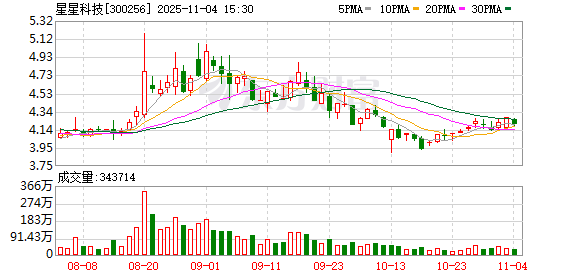
Group 1 - The core technology of the MAXW air-cooled motor is independently developed by the company LIMA [2] - The graphene battery is supplied through a high-quality supplier model [2] - There are certain differences between the company's electric vehicle products and those of LIMA, highlighting the need for investors to be cautious [2]

美国之所以走到如今“疯癫”的地步,很大程度就是因为低估了中国
Sou Hu Cai Jing· 2025-11-04 14:53
Group 1 - The announcement of the "Liberation Day" tariff plan by Trump in 2025 raised tariffs on China to 54%, Vietnam to 46%, and Cambodia to 49%, causing significant market reactions, with the S&P 500 index dropping 4.8% on April 3, marking its largest single-day decline in years [2] - The U.S. underestimated China's economic resilience, as China's GDP reached $18 trillion by 2024, growing nearly 90 times since 1978, with exports accounting for 14% of global trade and consumption driving 55% of GDP [2][4] - China's industrial value added accounted for 35% of the global total in 2024, while the U.S. only accounted for 18%, highlighting China's comprehensive industrial capabilities [4] Group 2 - The trade war initiated by Trump in 2017 led to retaliatory measures from China, including restrictions on U.S. agricultural products, which have strained U.S. farmers [6][7] - China's "Belt and Road" initiative has stabilized its trade, with trade volume exceeding $2 trillion in 2024, benefiting regions like Africa and Latin America, while U.S. alliances have begun to fracture [9] - The U.S. military and technological underestimations of China are evident, with China's military budget growing annually by 10% and advancements in AI, electric vehicles, and military technology [9][11] Group 3 - The high tariffs intended to protect U.S. industries have inadvertently weakened American competitiveness, with economists noting that tariffs have not effectively prevented U.S. growth [11][13] - The rise of the Chinese economy is becoming a global trend, with the share of the renminbi in global payments increasing to 3.5% and a notable acceleration in de-dollarization [13] - The internal divisions within the U.S. political landscape, including criticisms from both Democrats and Republicans regarding the tariff policies, reflect a broader inability to address long-term challenges posed by China's economic rise [13]