
电子商务

Search documents
泰国商业部计划在2026年通过电商平台开拓中国市场
Shang Wu Bu Wang Zhan· 2025-12-30 09:12
据泰媒报道,泰国商业部宣布,计划于2026年重点开拓中国市场,通过天猫直播电商推动泰国产品出 口。国际贸易促进厅将升级带有Thai SELECT、TTM(泰国信赖市场)和PM Awards标志的产品,于春节 前以直播等线上形式进入中国市场。 国际贸易促进厅表示,已在"开放日及采购论坛"期间与天猫平台TOPTHAI零售商对接,作为"网红直播 电商"项目的一部分,帮助企业提升数字化营销能力。相关活动举办逾30场商务洽谈,并将于2026年1月 15日至25日联合中国KOL开展直播,增强品牌认知、促进成交。 目前,国际贸易促进厅通过TOPTHAI项目,携手天猫等九大全球电商平台,助力泰国中小企业拓展国 际市场。项目实施五年来,吸引2400余个品牌参与,累计成交额超8亿泰铢。 ...
跨年购物狂欢来袭!京东新年购物季将于12月31日晚开启,新年爆品1折秒杀
Jin Rong Jie Zi Xun· 2025-12-30 09:08
Group 1 - JD.com is launching its New Year Shopping Season on December 31 at 8 PM, featuring various promotional activities across multiple product categories including electronics, beauty, food, and apparel [1][2] - The Super Flash Sale will last for 52 hours, offering significant discounts on popular products, with prices starting as low as 1 yuan and discounts up to 90% [2] - The JD PLUS Member Annual Gala on January 7 will offer exclusive deals, including a "super co-branded card" valued over 1,000 yuan for a limited-time price of 298 yuan, along with additional benefits for members [2] Group 2 - JD.com is the exclusive title sponsor of the 2025-2026 Hunan TV New Year's Eve Concert, enhancing its promotional strategy with multiple giveaways for viewers and users [3] - The concert will feature numerous celebrities and hosts, and consumers can participate in interactive activities on the JD app to win prizes, including a share of 1 billion yuan in red envelopes [3][4] - Prizes include high-value items such as cars, smart devices, and gift cards, with a total of 2026 prizes available, emphasizing JD's commitment to customer engagement during the festive season [4]

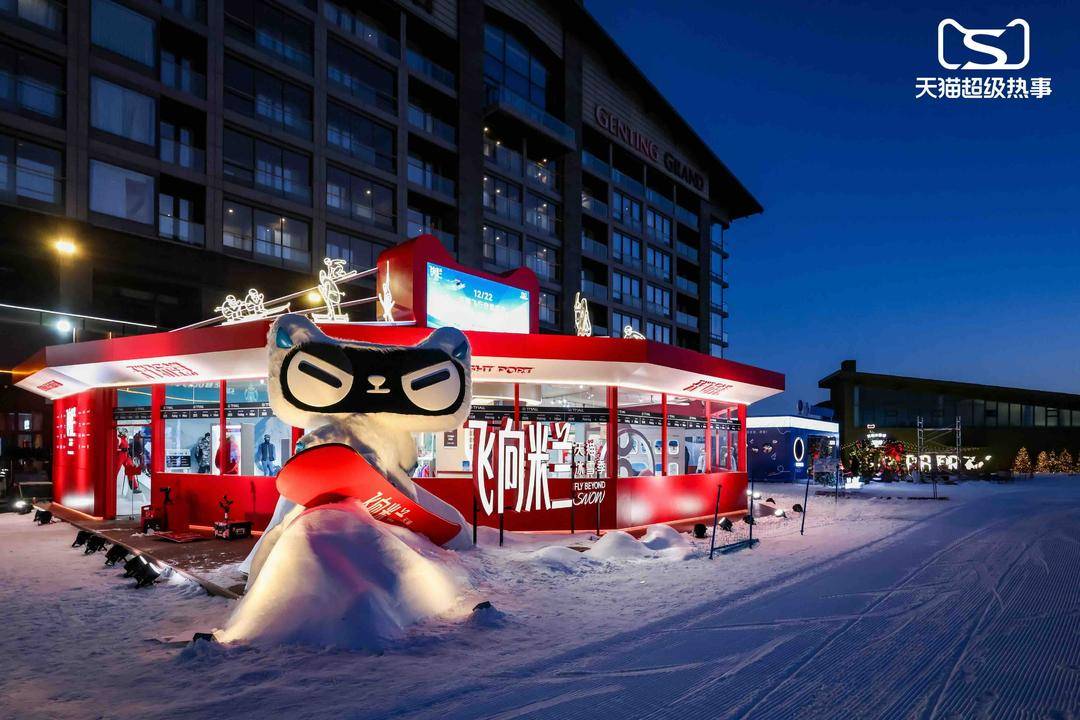
天猫举办冰雪大秀“超级热事” ,让赛场成为大众消费场
Yang Zi Wan Bao Wang· 2025-12-30 04:35
Group 1 - The core theme of the event is "Flying to Milan," symbolizing the transition of China's ice and snow consumption towards the 2026 Milan Winter Olympics, showcasing the potential of the ice and snow industry in China [1][3] - The ice and snow industry in China is projected to exceed 1 trillion yuan by 2025, indicating a shift towards mass consumption and a vibrant economic landscape [3][8] - Tmall's immersive ice and snow show featured over 30 sets of winter fashion and ski gear, highlighting the integration of sports, brands, and consumer experiences [1][5] Group 2 - The event at Chongli not only serves as a platform for showcasing products but also aims to enhance the local ice and snow economy by attracting consumers and providing interactive experiences [3][5] - Tmall's role is evolving from a mere participant to a key influencer in defining consumer trends and meeting the needs of niche markets within the ice and snow sector [8] - The transformation of China's ice and snow economy is characterized by a shift from event-driven growth to a focus on brand innovation, cultural identity, and consumer experience [8]

财报盘点| 宁愿透支当下的利润,阿里巴巴也要为AI和即时零售撕开一道口子
Sou Hu Cai Jing· 2025-12-30 02:52
对于2025年的阿里巴巴来说,在外卖市场和AI赛道风云变幻的局势下,阿里巴巴的战略重心也在无形 之中发生了调整。 这种变化,尤其是在阿里巴巴在2026财年第二季度(对应自然年2025年7月-9月)能找到答案。为了抓 住AI和即时零售这两个未来的机会,阿里正在进行一场豪赌式的巨额投入,这直接导致了利润的大幅 下滑。 利润"腰斩" 这一季度,阿里的营收虽然实现了增长,但赚钱的能力却因为战略投入而被大幅稀释。 从总营收来看,阿里巴巴在这一财季实现了2478亿元的营收,同比增长5%。如果剔除已出售的高鑫零 售和银泰业务,同口径下的收入增速高达15%,说明核心业务其实恢复得不错。 不过阿里巴巴的净利润206.1 亿元,同比大幅下滑53%,经营利润更是下滑到了53.7亿元,同比暴跌 85%。 真正让投资者出现担忧的还不是净利润,比起净利润,自由现金流才是衡量一家公司生存能力的终极指 标。本季度阿里巴巴自由现金流为-218.4亿元,这是阿里自由现金流首次大额净流出,去年同期还是净 流入137.35亿元。 这意味着什么? 阿里巴巴不仅把这季度赚的钱全花出去了,还倒贴了近200亿的家底。这种"入不敷出"的状态,如果持 续超过一 ...


李军:场景相融促进消费扩容
Jing Ji Ri Bao· 2025-12-30 00:32
Core Viewpoint - The article emphasizes the growth of consumer momentum in China driven by policies such as trade-in programs, highlighting the importance of expanding service consumption and creating new consumption scenarios through innovation and technology [1] Group 1: Current Trends in Consumption - China's consumption landscape is characterized by digitalization, integration, and greening, with technologies like 5G, AI, and VR enhancing the consumer experience [1] - The integration of various sectors is breaking down industry boundaries, leading to the emergence of cross-sector consumption scenarios such as "consumption + culture and tourism" and "consumption + health" [1] - The transition towards green consumption is becoming a significant trend, with rapid adoption of new energy vehicle charging scenarios and smart home energy management systems [1] Group 2: Advantages of Building Consumption Scenarios - China benefits from a massive market that drives consumer demand, exemplified by the live e-commerce market growing from less than 500 billion yuan in 2019 to 5.8 trillion yuan by 2024, a tenfold increase [2] - The digital infrastructure supports this growth, with China accounting for over 60% of global 5G base stations and a mobile payment penetration rate of 86%, facilitating scenarios like contactless payments [2] - Targeted policy initiatives, such as the "smart business district" pilot by the Ministry of Commerce, are fostering an innovative environment for consumption scenario development [2] Group 3: Challenges in Consumption Scenario Development - There are shortcomings in China's consumption scenario development, including an incomplete ecological collaboration mechanism and low cross-departmental data sharing, leading to prolonged conversion cycles from technology research to practical application [2] - Regional disparities exist, with first-tier cities dominating innovation while third and fourth-tier cities still rely on traditional consumption models, and rural areas face challenges like insufficient cold chain logistics [2] - The standard system is lagging, with high complaint rates regarding false advertising in live streaming and data security breaches, indicating a need for improved evaluation standards and service norms [2] Group 4: Recommendations for Enhancing Consumption Scenarios - Strengthening top-level design and policy support systems is essential, including establishing a national-level consumption scenario innovation fund to support new consumption themes [3] - Enhancing technological empowerment through the use of VR, AR, and AI to create immersive consumption experiences and building "consumption scenario innovation laboratories" to shorten the technology-to-application cycle [3] - Promoting cross-industry integration by developing "consumption + metaverse," "consumption + health," and "consumption + education" scenarios, and supporting the revitalization of traditional brands through technology [4]
刘强东在英国大搞物流,野心藏不住了
Xin Lang Cai Jing· 2025-12-29 13:46
Group 1 - JD Logistics has launched its first overseas "Smart Wolf" warehouse in the UK, covering over 3,000 square meters and deploying nearly 200 smart robots, resulting in a fourfold increase in efficiency [2][17] - The warehouse has undergone modifications to increase shelf height and density, allowing for more storage capacity within the same footprint, enhancing operational efficiency [4][19] - The Smart Wolf warehouse is part of JD's broader overseas intelligent logistics network, with nine high-standard logistics parks established in the UK, improving local logistics experiences and showcasing Chinese logistics technology [7][22] Group 2 - JD has faced challenges in international expansion, initially struggling to replicate its domestic model in markets like Russia and Southeast Asia, leading to significant losses [8][23] - The company has shifted its strategy to focus on local e-commerce, utilizing local teams and sourcing local products, moving away from a purely cross-border e-commerce platform model [10][25] - Recently, JD acquired a controlling stake in European consumer electronics giant Ceconomy for approximately 18.5 billion RMB, gaining access to a mature retail network across Europe, aligning with its localization strategy [10][25] Group 3 - In the Middle East, JD is addressing last-mile delivery challenges in Saudi Arabia by testing its sixth-generation smart delivery vehicle, "Wolf," which can carry up to 1,000 kg and features L4 autonomous driving capabilities [12][27] - A recent incident involving theft at a JD warehouse in Paris raised concerns, but the company clarified the situation and emphasized its ongoing global network expansion, with over 130 overseas warehouses established in 23 countries [14][29] - JD's approach to international expansion may appear slower but is designed to be more stable and sustainable, focusing on building a controllable intelligent logistics network and deep local sourcing systems [14][29]

法院判决首次认定销售烟卡“违反公序良俗”,电商平台何为?
Nan Fang Du Shi Bao· 2025-12-29 12:31
Core Viewpoint - The Beijing Internet Court ruled against the sale of "smoking cards" to minors, emphasizing the need for e-commerce platforms to take responsibility in protecting minors from tobacco-related products [1][7][9]. Group 1: Court Ruling and Analysis - The court determined that selling smoking cards as toys violates public order and morals, as it poses a risk to minors' health and promotes tobacco-related imagery [9][11]. - The ruling highlighted that the sale of smoking cards undermines the legal framework designed to protect minors from tobacco exposure, despite existing laws not explicitly banning such products [8][9]. - The court's decision reflects a broader societal goal of safeguarding minors' physical and mental well-being, aligning with the principles established in the Minor Protection Law [8][9]. Group 2: E-commerce Platform Responsibilities - The defendant e-commerce platform argued that it merely serves as a marketplace and does not control the products sold by third-party vendors, claiming no legal basis for banning smoking cards [5][12]. - Despite the platform's implementation of a "Green Network Plan" to filter out smoking card listings, the effectiveness of these measures has been questioned, as many listings remain accessible [11][12]. - The court indicated that the platform must enhance its oversight and regulatory measures to better protect minors, suggesting that current efforts are insufficient [12][15]. Group 3: Public and Regulatory Response - The case has drawn attention to the rising popularity of smoking cards among schoolchildren, prompting concerns from health experts about their potential to normalize smoking behavior [2][14]. - Regulatory bodies, including the State Tobacco Monopoly Administration, have initiated actions to address the sale of smoking cards, urging e-commerce platforms to self-regulate and remove such products [14][15]. - Despite these efforts, the ongoing availability of smoking cards on various platforms indicates that previous regulatory actions have not achieved lasting results [15].
什么样的商业模式最有价值?
创业家· 2025-12-29 10:57
Group 1 - The most valuable entrepreneurial model is the "two ends long tail," where buyers are small and medium-sized enterprises (SMEs) and sellers are long-tail suppliers, exemplified by Alibaba [1] - Companies that serve only large clients are considered less valuable, referred to as "two ends big" [1] Group 2 - The event led by Wu Shichun aims to explore the technology manufacturing industry and unlock opportunities in a trillion-dollar market [6] - Participants will engage in deep immersive learning and cognitive resonance over three days, covering topics from technological innovation to commercialization [8] - The event will feature discussions with key industry figures and provide networking opportunities among 100 entrepreneurial elites [8] Group 3 - The itinerary includes a welcome dinner, cultural exploration, and case studies on opportunities and challenges in commercial applications of aerospace technology [16][17] - The event targets various sectors, including robotics, smart manufacturing, low-altitude economy, aerospace, and new materials [18][19][20][21][22] - The cost of participation is set at 15,800 yuan per person, with an early bird discount of 12,800 yuan [23]

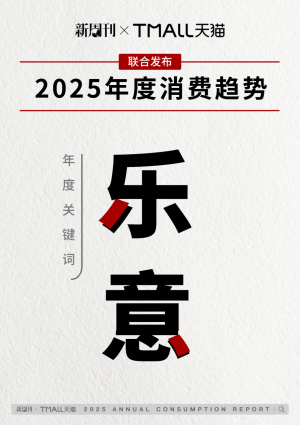
天猫发布2025年度消费观察:“乐意”成为年度关键词
Sou Hu Cai Jing· 2025-12-29 09:00
Group 1 - The core viewpoint of the article highlights six major consumer trends for 2025 as identified by Tmall, which include professional players, emotional spending, and the rise of Chinese aesthetics [1][3] - The annual consumption keyword is "willingness," reflecting a shift in young consumers' spending philosophy that emphasizes spending based on mood and personal desire [1][3] - Young consumers are increasingly identifying as "professional players" across various fields, prioritizing unique aesthetics and quality over quantity in their purchases [3] Group 2 - The new consumption logic among young people focuses on buying less but better, emphasizing long-lasting and meaningful purchases [3] - Products that serve multiple functions, such as "Swiss Army knife" style items, are gaining popularity among consumers, indicating a trend towards practicality and versatility [3] - The influence of Chinese aesthetics is becoming prominent, with young consumers showing a strong preference for products that resonate with their cultural identity [3]
吉宏股份:“滚动库存”产品销售率超过98%
Zheng Quan Ri Bao· 2025-12-29 08:37
证券日报网讯 12月29日,吉宏股份在互动平台回答投资者提问时表示,特定产品主要是指稳定热销产 品,系公司电商业务供应链团队根据过往的销售数据及未来一段周期内的销量预测确定,公司针对这部 分热销产品进行"滚动库存"备货,通常周期在7-10天左右,同时经验证的"滚动库存"产品销售率超过 98%,因此公司多年来持续维持较低的库销比。 (文章来源:证券日报) ...
