
锂电

Search documents
权益ETF,谁是主题轮动下一棒?
HUAXI Securities· 2026-01-20 07:41
Group 1: Report's Investment Rating - No information about the industry investment rating is provided in the report. Group 2: Core Viewpoints - In early 2026, the market sentiment has significantly warmed up, and the market has risen strongly. However, the risk - return ratio of chasing the rising market may not be high. Thematic investment remains popular, and funds from previously over - heated themes are expected to shift to other thematic sectors [1][7]. - The technology main line is still the market consensus. Funds are likely to flow into sectors such as semiconductor computing power and robotics within the technology sector, while lithium battery, non - ferrous metals, power grid, chemical, and innovative drugs are important supplementary sectors for the market [2][22]. Group 3: Summary by Directory 1. Which theme ETFs are expected to be the direction of capital return? - **Market situation**: In early 2026, the market has risen strongly, with commercial aerospace, AI applications, and non - ferrous metals becoming the focus. But there are signs of the market correcting irrational behaviors under regulatory guidance, and the risk - return ratio of chasing the rising market may be low. Thematic investment is still very popular. As of January 19, 2026, the cumulative net capital inflow of thematic index ETFs in the past five days exceeded 42.254 billion yuan, while industry index ETFs only had a net inflow of 9.763 billion yuan, and broad - based index ETFs showed a large net outflow [1][7]. - **Analysis from the perspective of rise and valuation**: Technological industries generally have high rises, while traditional cyclical industries such as liquor, coal, and breeding have relatively low rises. New energy sectors like lithium battery, photovoltaic, and new - energy vehicles, as well as the chemical industry, have risen but still have room to reach previous highs. From the valuation dimension, the current valuations of the game, intelligent driving, lithium battery, and breeding sectors are low [8]. - **Analysis using the quadrant chart**: - **First quadrant (high rise and high congestion)**: Mainly includes commercial aerospace, communication, AI, and non - ferrous metals. Non - ferrous metals (such as copper) and AI have relatively moderate congestion, and relevant sectors are still worthy of attention [2][17]. - **Second quadrant (high rise and low congestion)**: There are relatively few relevant industries, mainly semiconductor equipment (including related industrial chains such as storage) and lithium battery. The sector sentiment is not over - heated, and the industrial supply - demand pattern is optimized, so they are still worthy of attention [2][17]. - **Third quadrant (low rise and low congestion)**: Sectors such as innovative drugs, chemicals, and games have both industrial logic and market capacity, with large potential for a supplementary rise. For example, since 2026, the chemical ETF has re - entered the state of net inflow [2][17]. - **Fourth quadrant (low rise and high congestion)**: Includes robotics, power grid equipment, consumer electronics, and software. Power grid equipment has received renewed attention due to the unexpected increase in the 14th Five - Year Plan expenditure, and robotics has also been favored by the market because Tesla's third - generation robot has entered the scheme confirmation stage [2][21]. - **Specific ETF selection**: For ETFs tracking the same index, products with larger scale, relatively lower fees, and smaller tracking errors are selected. Specific ETF lists are provided in the report [22].
黄金广告位招商!鑫椤资讯2026全球锂电产业链分布图
鑫椤锂电· 2026-01-20 07:40
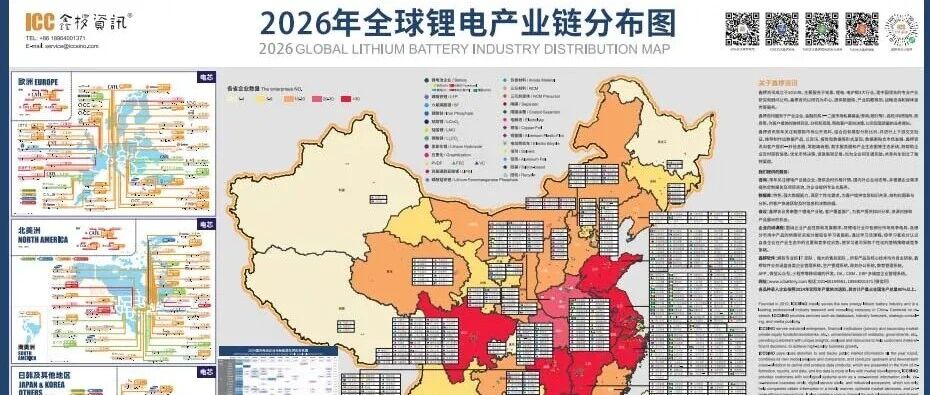
Core Viewpoint - The article emphasizes the creation and significance of a comprehensive lithium battery industry chain distribution map, which has gained high acclaim in the industry since its launch in 2022, highlighting its unique value and far-reaching impact [1]. Group 1: Overview of the Lithium Battery Industry Chain Distribution Map - The distribution map meticulously outlines the entire ecosystem of the global lithium battery industry, covering raw materials, four main materials, battery manufacturing, and end applications, involving key enterprises in various sectors [2]. - Key raw materials include lithium carbonate, lithium iron phosphate, lithium hexafluorophosphate, lithium iron, lithium cobalt oxide, lithium manganese oxide, lithium hydroxide, and basic chemical raw materials like graphite and electrolyte solvents [2]. - The map also focuses on companies involved in the research, production, and supply of battery anode and cathode materials, including both traditional and cutting-edge materials [2]. Group 2: Components and Applications - It includes manufacturers of critical components such as separators and electrolytes, which ensure the safe and efficient operation of batteries [3]. - The battery manufacturing section encompasses various types of lithium-ion batteries, including cylindrical, prismatic, and pouch cells, covering design, production, and assembly [4]. - The map addresses battery recycling and reuse, featuring a whitelist of companies, and highlights end applications in electric vehicles, energy storage systems, consumer electronics, and lightweight power sectors, showcasing the broad application prospects of lithium battery technology [5]. Group 3: Geographic Coverage - The distribution map covers four major lithium battery industry clusters: China, North America, Europe, and Southeast Asia, including Japan and South Korea [6]. Group 4: Target Audience and Collaboration - The target investors include global venture capital funds, private equity funds, and industrial investment funds, particularly those focused on new energy and new materials [8]. - Industry enterprises are invited to join the ecosystem, including raw material suppliers, material manufacturers, battery producers, electric vehicle manufacturers, and energy storage solution providers [8]. - Research institutions and universities in fields such as new energy, materials science, and electrochemistry are encouraged to participate in advancing technological innovation and talent development [8]. - Collaboration with local governments and industry associations is emphasized to promote the implementation of lithium battery industry policies and optimize the development environment [8]. Group 5: Invitation for Cooperation - The article extends a sincere invitation for participation in exploring deep cooperation opportunities within the lithium battery industry chain [9].

碳酸锂日报-20260120
Guang Da Qi Huo· 2026-01-20 06:56
1. Report Industry Investment Rating - No relevant content provided. 2. Core Viewpoints of the Report - Yesterday, the lithium carbonate futures contract 2605 dropped 3.83% to 147,260 yuan/ton. The average price of battery - grade lithium carbonate decreased by 7,000 yuan/ton to 151,000 yuan/ton, the average price of industrial - grade lithium carbonate fell 7,000 yuan/ton to 147,500 yuan/ton, and the price of battery - grade lithium hydroxide (coarse particles) declined 5,000 yuan/ton to 144,000 yuan/ton. The warehouse receipt inventory increased by 240 tons to 27,698 tons [3]. - On the supply side, the weekly output increased by 115 tons to 22,535 tons. In January 2026, the lithium carbonate production is expected to decline 1.2% month - on - month to 97,970 tons. On the demand side, in January 2026, the production of ternary materials is expected to drop 5% month - on - month to 78,180 tons; the production of lithium iron phosphate is expected to fall 10% month - on - month to 363,400 tons; the production of ternary power batteries is expected to decrease 6.15% month - on - month to 28.7 GWh, the production of lithium iron power batteries is expected to decline 9.77% month - on - month to 90.01 GWh, and the production of lithium iron energy - storage batteries is expected to increase 0.99% month - on - month to 63.15 GWh. On the inventory side, the weekly social inventory of lithium carbonate increased by 337 tons to 109,942 tons [3]. - Due to capital disturbances, the lithium carbonate price has significantly corrected recently. If the basis fails to remain strong, it may lead to a spiral decline in spot and futures prices. In the absence of a clear negative feedback in demand, the main strategy is to go long on dips, while being vigilant about increased market volatility and position disturbances, and pay attention to supply - side disturbances (overseas and in Jiangxi) and right - hand opportunities [3]. 3. Summary by Relevant Catalogs 3.1 Daily Data Monitoring - In the futures market, the closing price of the main contract increased by 1,280 yuan/ton to 163,220 yuan/ton, and the closing price of the continuous contract decreased by 4,440 yuan/ton to 161,900 yuan/ton. The price of lithium spodumene concentrate (6%, CIF China) dropped by 40 US dollars/ton to 2,060 US dollars/ton, and the prices of various types of lithium mica and lithium - phosphate - aluminum ore also declined [5]. - The price of battery - grade lithium carbonate decreased by 4,000 yuan/ton to 159,000 yuan/ton, and the price of industrial - grade lithium carbonate fell by 4,000 yuan/ton to 155,500 yuan/ton. The prices of different types of lithium hydroxide and lithium hexafluorophosphate also showed varying degrees of decline [5]. - The prices of some ternary precursors increased, while the prices of some ternary materials remained unchanged. The prices of different types of lithium iron phosphate decreased, and the price of manganese - acid lithium (power type) increased by 500 yuan/ton [5]. - The prices of some types of battery cells and batteries increased slightly, while others remained unchanged [5]. 3.2 Chart Analysis - **Ore Prices**: Charts show the price trends of lithium spodumene concentrate, different types of lithium mica, and lithium - phosphate - aluminum ore from 2024 to 2026 [6][9]. - **Lithium and Lithium Salt Prices**: Charts display the price trends of metal lithium, battery - grade and industrial - grade lithium carbonate, battery - grade and industrial - grade lithium hydroxide, and lithium hexafluorophosphate from 2024 to 2026 [12][14][17]. - **Price Spreads**: Charts present the price spreads between battery - grade lithium hydroxide and battery - grade lithium carbonate, battery - grade and industrial - grade lithium carbonate, and other related price spreads from 2024 to 2026 [19][20][21]. - **Precursors & Cathode Materials**: Charts show the price trends of ternary precursors, ternary materials, lithium iron phosphate, manganese - acid lithium, and cobalt - acid lithium from 2024 to 2026 [25][27][30]. - **Lithium Battery Prices**: Charts display the price trends of 523 square ternary battery cells, square lithium iron phosphate battery cells, cobalt - acid lithium battery cells, and square lithium iron phosphate batteries from 2024 to 2026 [32][36]. - **Inventory**: Charts show the inventory trends of downstream, smelters, and other links of lithium carbonate from May 2025 to January 2026 [38][40]. - **Production Costs**: The chart presents the production profit trends of lithium carbonate from different raw materials such as外购三元极片黑粉,外购磷酸铁锂极片黑粉,外购锂云母精矿, and外购锂辉石精矿 from 2024 to 2026 [43][44].
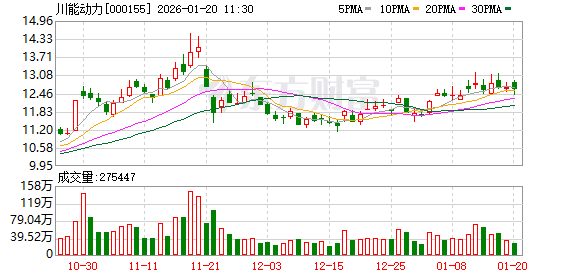
川能动力:公司锂电业务包括锂精矿采选和锂盐制造,其中锂精矿产能18万吨/年,锂盐产能为4.5万吨/年
Mei Ri Jing Ji Xin Wen· 2026-01-20 04:30
Group 1 - The core viewpoint of the article is that the company's lithium mining business is projected to account for approximately 50% of its revenue by 2026, based on current market prices and production estimates [2] - The company has a lithium concentrate production capacity of 180,000 tons per year and a lithium salt production capacity of 45,000 tons per year, with revenues derived from both lithium concentrate and lithium salt sales [2] - The company adheres to accounting standards and does not recognize prior period costs in the current period, addressing investor concerns about discrepancies between net profit margin and gross profit margin for the lithium business [2]

退税取消,倒逼光伏锂电加速洗牌
Zhong Guo Hua Gong Bao· 2026-01-20 02:32
Group 1 - The Ministry of Finance and the State Taxation Administration announced the cancellation of export VAT rebates for photovoltaic and lithium battery products starting April 1, 2026, significantly increasing export costs and putting pressure on profits, with companies expected to rush to declare exports before the deadline [1] - China's photovoltaic industry holds 80%-90% of global capacity and has been the world's largest in production and installation for over a decade, but faces structural contradictions due to excessive capital inflow and a large number of small enterprises, leading to disordered capacity expansion [1] - The adjustment of the export tax rebate policy is seen as a targeted measure to reduce reliance on subsidies, encouraging technological innovation and shifting the industry from low-price competition to value competition [2] Group 2 - The policy is expected to benefit leading companies by promoting industry concentration and eliminating low-price competition, with companies that have strong technology and cost control likely to gain in the medium to long term [3] - Some companies are signaling a cautious approach, with Tianqi Materials planning to suspend production of a lithium hexafluorophosphate line and adjust investment projects, indicating a shift from large-scale expansion [3] - The introduction of the export tax rebate policy is anticipated to intensify the competition between upstream and downstream sectors, potentially driving up material prices, as most major materials have shown significant price increases since December [3]
未知机构:上周核心观点锂电近期固态电池催化不断工信部将固态电-20260120
未知机构· 2026-01-20 02:20
Summary of Key Points from Conference Call Records Industry: Lithium Battery - Solid-state batteries are gaining traction, with the Ministry of Industry and Information Technology placing them as a key focus in the "14th Five-Year Plan" for smart connected new energy vehicles [1] - Recommended companies to watch include: - Xiamen Tungsten Co., Ltd. - Hailiang Co., Ltd. - Yunnan Tin Company Limited - Xian Dai Intelligent - Rongqi Technology - Naconor [5] Industry: Energy Storage - Attention is drawn to the progress of national capacity electricity price subsidies [2] - Companies to focus on include: - Sungrow Power Supply Co., Ltd. - Canadian Solar Inc. - Haibo Technology - Tongrun Equipment [6] - For household storage, recommended companies are: - Deye Technology - Goodwe - Airo Energy - Jinlang Technology [3][7] Industry: AIDC (Artificial Intelligence Data Center) - Keda Technology has released a profit forecast for 2025, expecting a net profit attributable to shareholders of 600-660 million yuan, representing a year-on-year growth of 52%-67% [8] - The trend of electricity shortages in North America is viewed positively for AIDC's overseas expansion [8] - Companies to monitor include: - Jinpan Technology - Igor - Keda Technology - Kehua Data [8] Industry: Geothermal Energy - Demand for geothermal energy in the U.S. is rising due to data center needs, with a focus on leading geothermal company Kaishan Group [9] Industry: Photovoltaics - North America is driving demand for photovoltaic industry chain equipment, with recommended companies including: - Maiwei Technology - JinkoSolar - Shuangliang Eco-Energy - Dongfang Rising - Junda Technology [10] - The AR7 results in the UK exceeded expectations, with positive outlooks for: - Daikin Heavy Industries - Haile Wind Power - Tienshun Wind Power - Dongfang Cable - Zhongtian Technology [10] Industry: Power Grid Equipment - The State Grid's "14th Five-Year Plan" investment of 4 trillion yuan exceeded expectations, with continued optimism for: - Pinggao Electric - XJ Electric - China XD Electric - TBEA - Dalian Electric Porcelain - Siyuan Electric [11] - Risk factors include: - Industry demand falling short of expectations - Price levels not meeting expectations - Supply-side reforms in the industry not meeting expectations [11]
开门红-之后
2026-01-20 01:50
Summary of Key Points from Conference Call Industry or Company Involved - The discussion primarily revolves around the investment landscape in China, focusing on monetary policy, market trends, and the impact of AI technology across various sectors. Core Insights and Arguments - **Investment Window**: The first half of the year is identified as an investment window, with a focus on growth sectors, overseas opportunities, and cyclical turning points. Short-term recommendations include optical communication, lithium batteries, and humanoid robots, while emphasizing the need to monitor profit expectations and valuation digestion [2][3] - **Monetary Policy**: The central bank's structural interest rate cuts aim to stabilize the economy and ensure a strong market opening. The total policy for 2026 is expected to be stable, which is crucial for maintaining market confidence [4][6] - **Market Dynamics**: Current market conditions show a divergence between the stock market and the real economy, with capital flowing into the stock market rather than the real economy. This trend is expected to continue, leading to a prolonged disconnection between stock performance and economic fundamentals [10] - **AI Penetration**: AI technology is rapidly penetrating various sectors, particularly in legal and financial services. The growth in AI search capabilities is expected to drive significant traffic increases, although there are concerns regarding public sentiment and misinformation related to AI [12][13][14] - **US-China AI Landscape**: There are notable differences in the AI industry landscape between the US and China, particularly in infrastructure, model development, and talent availability. The US has a lead in data center infrastructure, while China has advantages in power generation and a growing talent pool [21][22] Other Important but Potentially Overlooked Content - **Economic Indicators**: High-frequency data indicates that the first quarter's performance is likely to be lower than the previous year, with challenges in achieving a strong market opening. The overall economic policy for the year is expected to mirror last year's intensity, with potential for additional policies in the second half [9][10] - **Investment Strategy**: The investment strategy should focus on sectors benefiting from credit expansion, while avoiding areas with credit contraction, such as traditional real estate and consumer sectors, until clear improvements are observed [29][31] - **Market Performance**: The A-share market has shown strong performance compared to the Hong Kong market, which has lagged since October 2025. This disparity is attributed to structural differences and varying credit cycles [25][28] - **Future Investment Opportunities**: Key investment opportunities in the AI sector include hardware and chip-related companies, with a focus on high-profit expectations amid government support. The application layer presents diverse opportunities across different markets [26][30] This summary encapsulates the essential insights and arguments presented during the conference call, highlighting the current investment landscape, monetary policy implications, and the evolving role of AI in various industries.
川能动力:预计出口退税调整不直接影响公司
Sou Hu Cai Jing· 2026-01-20 01:34
Core Viewpoint - The announcement by the Ministry of Finance and the State Taxation Administration regarding the adjustment of export tax rebates for battery products is not expected to have a direct negative impact on the company's business or its performance in 2026 [1] Group 1: Company Impact - The company's lithium business primarily involves lithium ore mining and lithium salt manufacturing, which are not directly affected by the export tax rebate adjustments [1] - However, the company's lithium business is part of the upstream lithium battery supply chain and may experience indirect effects due to downstream demand transmission, price fluctuations, and industry changes [1]
川能动力:预计2026年公司锂电业务比同期有较大幅度提升
Ge Long Hui· 2026-01-20 01:20
Core Viewpoint - Chuaneng Power indicates that with the gradual release of lithium ore and lithium salt production capacity under current market conditions, the company's lithium battery business is expected to see significant growth by 2026 [1] Group 1 - The company is optimistic about the future of its lithium battery business due to improving market conditions [1] - The expected growth in the lithium battery sector is attributed to the increasing production capacity of lithium ore and lithium salts [1]
财信证券黄红卫:“降温”稳节奏不改趋势 五大主线锚定2026年投资方向
Zhong Guo Zheng Quan Bao· 2026-01-20 00:33
Group 1 - The A-share market has experienced a strong start in 2026, driven by a combination of market trend continuation, spring market catalysts, and a recovery in overseas markets [1][2] - Recent market fluctuations are attributed to the implementation of counter-cyclical adjustment policies and profit-taking in popular sectors, indicating a healthy adjustment that does not alter the overall upward trend [1][3] - The spring market typically lasts around 57 days, and historical data suggests that A-shares tend to strengthen during this period, supported by liquidity and valuation drivers [2][7] Group 2 - Investment strategies should focus on five main lines for 2026: the artificial intelligence industry chain, high-dividend assets, anti-involution sectors, domestic demand expansion, and resource sectors, all of which have performance support and policy backing [1][7][8] - The AI industry is transitioning, with investment opportunities expected to shift from hardware to application sectors, emphasizing the importance of commercial viability [7] - High-dividend assets remain a stable investment choice, with long-term funds continuing to increase their positions in dividend-paying stocks, which are characterized by stable returns and low volatility [7][8] Group 3 - The anti-involution sectors, including coal, steel, photovoltaic, and lithium battery industries, are expected to see performance improvements due to high state-owned enterprise ratios and market consolidation [7][8] - The expansion of domestic demand should focus on new consumption areas such as health, sports, and travel-related industries, which are poised to benefit from recovering consumer scenarios and policy support [7][8] - Resource sectors, particularly precious metals and strategic minor metals, are anticipated to experience valuation recovery in 2026, presenting potential investment opportunities [8]