
金融科技

Search documents
传统企业AI转型的“黄埔军校”:混沌AI院一模块实战纪实
混沌学园· 2026-01-12 12:06
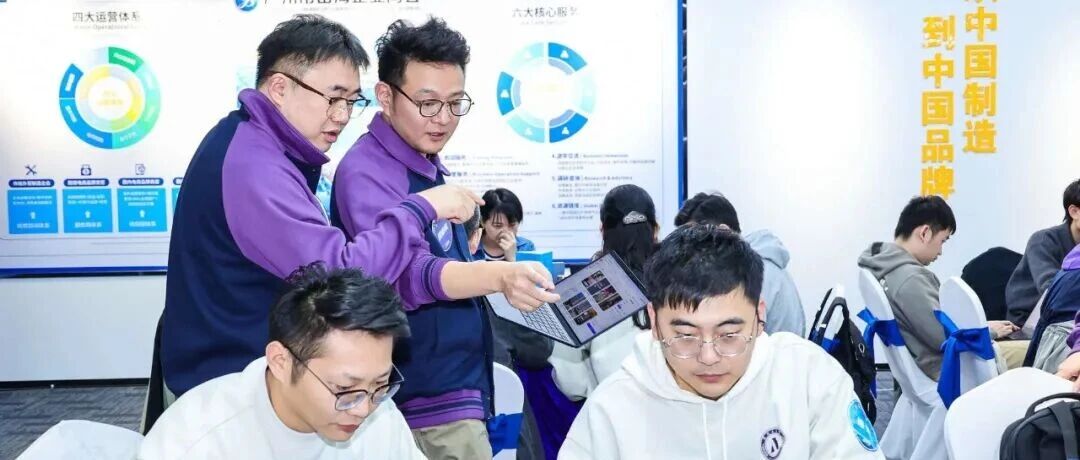
Core Insights - The article emphasizes the transformation of AI from a mere tool to an "Agent," marking 2025 as the "Agent Year" in the industry, while highlighting the challenges faced by small and medium enterprises in adopting AI [4][5] - It contrasts traditional consulting methods, which often result in theoretical plans, with the practical, executable solutions provided by the Chaos AI Institute's training programs [2][5] Challenges in AI Adoption - High technical barriers exist, with concepts like large models and prompt engineering creating a cognitive gap for non-technical managers [4] - There is a severe shortage of talent that understands both business and AI, with over 70% of companies citing this as the biggest obstacle to transformation according to McKinsey's 2025 report [4] - Traditional training and consulting often fail to align with actual business processes, leading to difficulties in implementing solutions [4] Chaos AI Institute's Approach - The Chaos AI Institute aims to bridge the gap by transforming AI from a technical concept into actionable business solutions [5] - The training program is designed as an intensive two-day workshop, where participants move from theoretical understanding to practical application [7][25] Training Structure and Methodology - The training includes a four-step cycle: problem definition, method learning, solution construction, and iterative optimization with personalized coaching [49][52] - Participants are encouraged to attend as teams, which helps avoid the "AI silo effect" and ensures that solutions are developed with multiple departmental perspectives [51] Practical Applications and Case Studies - The training covers three main areas: AI in marketing growth, operational efficiency, and product innovation, each with specific frameworks and tools [18][20][22] - Case studies demonstrate significant improvements, such as a 16-fold increase in efficiency for a snack brand using AI for user insights and a reduction in product innovation cycles from weeks to half a day [36][42] Conclusion - The Chaos AI Institute's program is positioned as an "accelerator" for enterprise AI transformation, providing a reusable framework for innovation and actionable strategies [54] - The article underscores the urgency for companies to embrace AI, suggesting that the greatest risk lies in failing to adopt AI technologies [54]

AI会抢走金融人的饭碗吗?行业大咖秀共识:那1%的灵感与温度机器永远学不会
第一财经· 2026-01-12 11:23
Core Viewpoint - The article emphasizes that artificial intelligence (AI) is not merely a "replacement" for humans but rather a "creator" and "reshaper" in the financial industry, highlighting the irreplaceable role of human judgment, creativity, and responsibility in the face of advancing technology [3]. Group 1: Financial Innovation and Human Role - Liu Xiaochun, Vice President of Shanghai New Finance Research Institute, asserts that financial innovation should focus on the essence of finance rather than technology, maintaining that the core role of humans in technology application remains unchanged [4]. - He categorizes relevant technologies into three levels: financial technology (designing financial solutions), institutional technology (establishing reasonable distribution of benefits and risks), and scientific technology, emphasizing the need to balance these elements for effective financial technology implementation [5]. - Despite ongoing efforts to reduce workforce in the banking sector over the past two decades, the total number of employees has continued to grow, indicating that while technology replaces certain roles, it also creates new demands for technical services [5]. Group 2: Financial Intelligence and Technological Pathways - Yuan Yue, Chairman of Zero Point Data, outlines the evolution of financial technology into a new phase centered on "financial intelligence," transitioning from early automation to intelligent decision-making [6]. - He introduces a framework using the A-Z method to identify core technologies supporting risk control and service optimization, while critiquing the current hype around large language models, stating they are insufficient for high-sensitivity financial applications [6][7]. Group 3: AI's Impact on Content Creation and Financial Services - The conference also explored the intersection of financial technology and content creation, with discussions on how AI's rapid development fundamentally impacts various industries, particularly finance [7]. - Zhang Wenyu from Zhejiang University highlights that the emergence of ChatGPT marks a shift from "weak AI" to a new era of AI that mimics human-like responses, emphasizing the importance of human creativity and insight in the face of AI advancements [8]. - Financial entrepreneur Zhu Guangye acknowledges the reality that many repetitive tasks in finance will be replaced by AI, but stresses that not all foundational work can be easily substituted, particularly in areas requiring human judgment and experience [9]. Group 4: Tools and Applications in Financial Technology - Tian Li, COO of Yingfan Technology, discusses the launch of the first intelligent agent swarm, aimed at enhancing user understanding and transforming passive data into personalized insights for financial institutions [9]. - The consensus among various industry experts is that financial technology provides precise tools for content creation, while content creation supports user education and brand communication for financial products, indicating a deep integration that will drive high-quality industry development [9].

东方通信:公司所从事的卫星互联网网络维护业务营业收入占公司营业收入比例不到1%
Ge Long Hui A P P· 2026-01-12 11:19
Core Viewpoint - The stock of Dongfang Communication has experienced a significant price fluctuation, with a cumulative deviation of over 20% in closing prices over three consecutive trading days, prompting an announcement regarding abnormal trading activity [1] Group 1: Company Overview - Dongfang Communication's main business areas include information communication, financial technology, and intelligent manufacturing, providing digital, networked, and intelligent products and services to key sectors such as government, public security, telecommunications, banking, and transportation [1] - The company has noted increased market attention towards the "commercial aerospace" concept, which may be influencing its stock performance [1] Group 2: Business Operations - The company's satellite internet network maintenance services contribute less than 1% to its total revenue, indicating that this segment has a minimal impact on overall profitability [1] - There have been no significant changes in the company's main business operations during the reporting period [1]

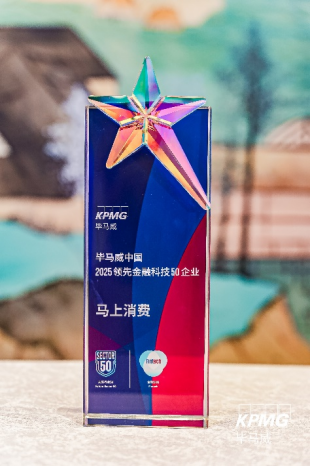
马上消费连续十年蝉联毕马威金融科技50企业榜单
Jin Rong Jie Zi Xun· 2026-01-12 10:03
在刚刚过去的2025年,马上消费在科技布局持续深化:自主研发的金融大模型"天镜"迭代至3.0版本, 实现了对营销、客服、运营等零售金融八大领域的深度覆盖,这驱动了业务质效的跨越:天镜大模型意 图理解准确率达93%,自动化审批率与智能客服自助办结率均超90%,年度智能客服交互量超7700万 次,客户满意度超97%。 马上消费副总经理孙磊表示,连续十年上榜是行业对公司践行"长期主义"与"自主创新"的最诚挚认可。 他指出,金融科技的发展是一场马拉松,唯有深耕底层技术,在变局中坚守战略定力,方能掌握发展的 主动权。站在新十年的起点,马上消费将持续深耕AI赋能金融,将大模型能力转化为推动行业进步的 新质生产力,在筑牢安全底座的同时,精准做好"五篇大文章",让金融活水精准灌溉实体经济。展望未 来,公司将持续统筹发展与安全,以自主可控的专业能力助力金融高质量发展。 财经频道更多独家策划、专家专栏,免费查阅>> 自毕马威首届"金融科技50"榜单发布以来,中国金融科技行业已走过十年历程。行业见证了移动支付爆 发、互联网金融兴起,也经历了监管框架完善、科技与金融深度融合。本届榜单反映了中国金融科技行 业在技术创新、场景融合及服务 ...
数据看盘多只中证A500相关ETF上周份额大减 机构和游资激烈博弈AI应用概念股
Sou Hu Cai Jing· 2026-01-12 09:53
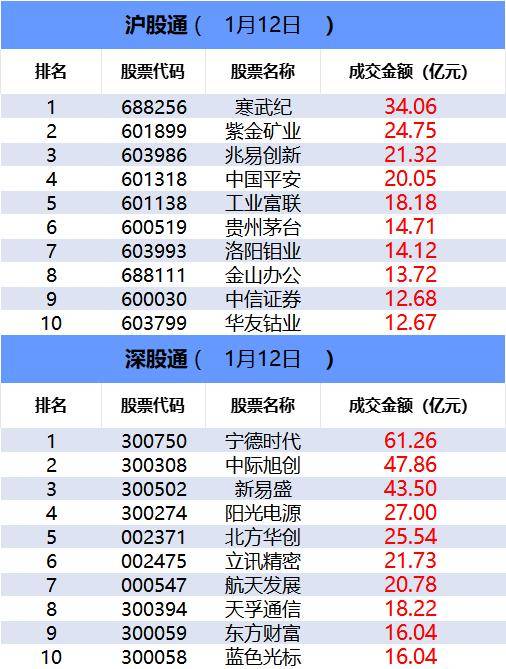
Summary of Key Points Core Viewpoint - The trading volume of the Shanghai and Shenzhen Stock Connect reached a total of 398.98 billion, with Cambricon and CATL leading in individual stock trading volume on the Shanghai and Shenzhen exchanges respectively [1][2]. Trading Volume - The total trading amount for the Shanghai Stock Connect was 172.86 billion, while the Shenzhen Stock Connect totaled 226.12 billion [2]. Top Individual Stocks - In the Shanghai Stock Connect, Cambricon (688256) had a trading volume of 3.406 billion, followed by Zhaoyi Innovation (603986) at 2.132 billion [3]. - In the Shenzhen Stock Connect, CATL (300750) led with a trading volume of 6.126 billion, followed by Zhongji Xuchuang (300308) at 4.786 billion [3]. Sector Performance - The AI application and commercial aerospace sectors showed the highest gains, while insurance, oil and gas, and real estate sectors experienced the largest declines [4]. - The new energy sector saw the highest net outflow of funds [5]. Major Fund Inflows and Outflows - The top ten stocks with net inflows included Dongfang Caifu with 1.742 billion and Lingyi Technology with 1.651 billion [6]. - The top ten stocks with net outflows included China Ping An with -2.303 billion and Sunshine Power with -2.071 billion [6]. ETF Trading - The top ETF by trading volume was the Hong Kong Securities ETF (513090) with 14.5289 billion, followed by the CSI A500 ETF (159338) at 8.2104 billion [8]. - The CSI A500 ETF saw a decrease of 3.72% compared to the previous trading day [8]. ETF Share Changes - The top ten ETFs with the largest share increases included the Medical Device ETF (159883) with an increase of 2.768 billion shares, and the Securities Insurance ETF (512070) with an increase of 2.695 billion shares [10]. - The top ten ETFs with the largest share decreases included the Wine ETF (512690) with a decrease of 2.3994 billion shares, and the A500 ETF Leader (563800) with a decrease of 2.301 billion shares [11]. Market Activity - The four major index futures contracts saw both long and short positions increase, with the IF and IM contracts seeing a larger increase in short positions [12]. - The market saw significant activity from institutions, with notable purchases in stocks like Shanzi Technology and LeiKe Defense [14]. Retail and Quantitative Trading - Retail investors showed high activity, with significant purchases in stocks like Kunlun Wanwei and BlueFocus [16]. - Quantitative funds were also active, with notable purchases in stocks like Dazhi Technology and significant sell-offs in others [17].






【申万宏源策略】周度研究成果(20260105 - 20260111)
申万宏源研究· 2026-01-12 08:06
Group 1: Market Overview - The spring market is characterized by continuous opportunities for long positions, with a significant increase in risk appetite. There are no major downside risks, only potential short-term corrections after market rallies, suggesting that overall profit-making effects may continue to spread to higher levels [6] - The spring theme remains focused on industrial sectors such as commercial aerospace, robotics, and nuclear fusion, which are expected to yield the strongest profit-making effects. The A-share pricing in the primary market is at a turning point, with venture capital and investments in unlisted tech leaders showing high elasticity [7] Group 2: Industry Comparison - As of January 9, 2026, the valuation of A-shares shows that the CSI All Share (excluding ST) has a PE of 22.4x and a PB of 1.9x, which are at the 83rd and 49th historical percentiles, respectively. The Shanghai Stock Exchange 50 has a PE of 12x and a PB of 1.3x, at the 65th and 45th percentiles [10] - Industries with PE valuations above the 85th historical percentile include real estate, automation equipment, retail, chemical pharmaceuticals, and electronics. Meanwhile, industries with PB valuations above the 85th percentile include defense and military, electronics (semiconductors), and communications [10] Group 3: Asset Allocation - The U.S. labor market remains resilient, and expectations of fiscal and monetary easing are supporting the rise of precious metals. Additionally, geopolitical tensions in Iran and U.S. sanctions on Russian oil are expected to lead to significant increases in oil prices [11] Group 4: Thematic Investment - The commercialization of brain-machine interfaces is accelerating, with significant events expected in 2026, such as mass production of brain-machine interface devices and the launch of humanoid robot production lines [12][14] - Key catalytic time nodes for six future industries have been identified, providing investors with reference points for tracking developments in quantum technology, bio-manufacturing, hydrogen energy, and 6G technology [13][17] Group 5: Service Industry Insights - The service industry in China is increasingly integrating technology, with strong companies emerging in sectors such as fintech, logistics, enterprise services, and healthcare. These companies leverage innovation, technology empowerment, and ecosystem integration to achieve leading positions in the global market [15] - Various countries have adopted different core models and policies to support their service industries, such as the U.S. focusing on innovation-driven models and Germany emphasizing manufacturing-service integration [16] Group 6: Stock Buybacks and Dividends - In December, the total amount of stock buybacks and increases in shareholding decreased by 31% month-on-month, primarily due to a 70% drop in the amount of increase applications. However, the implementation of buybacks in A-shares saw a significant increase of 97% [22]

春季行情启动如何配置,如何交易?
ZHONGTAI SECURITIES· 2026-01-12 07:53
Group 1 - The current market uptrend is supported by long-term capital inflows and strong performance from the insurance sector, with the A500 ETF seeing significant net inflows of nearly 100 billion RMB in December 2025, contributing to market buoyancy [4][8][12] - The "spring rally" is characterized by a seasonal pattern in the A-share market, typically occurring from late December to the first quarter, driven by macroeconomic policies, liquidity conditions, and the timing of financial reports [5][22][24] - Historical data from 2016 to 2025 indicates that the spring rally usually starts in late January and lasts about 30 trading days, with an average index increase of approximately 15% [24][25][31] Group 2 - The macroeconomic environment for 2026 is expected to remain in a weak recovery phase, with structural support for technology-related sectors likely to continue, as policies emphasize growth and technological advancement [33][37][38] - The transition from old to new economic drivers is showing initial results, with several high-tech companies moving from policy-driven growth to performance validation, which is crucial for sustained investment confidence [40][41][45] - The market is likely to experience active trading with structural opportunities rather than a broad-based rally, as long-term capital and policy support create a conducive environment for thematic investments [48][49][50] Group 3 - Investment recommendations suggest prioritizing small-cap growth and innovation-driven sectors, as these areas are expected to benefit from improved liquidity and risk appetite [57][58] - The strategy should focus on short-term trend tracking and rapid rotation among themes, as the market dynamics are driven more by policy and industry expectations than by fundamental improvements [60][61] - The securities and financial technology sectors are expected to benefit from increased trading volumes and active leverage, while the insurance sector is positioned for long-term growth due to favorable market conditions and improved investment returns [63][64]


资本市场丨锚定未来 产业机遇与企业竞争力双重赋能
Sou Hu Cai Jing· 2026-01-12 06:19
Core Insights - The latest "Top 500 Chinese Listed Companies by Market Value" list for 2025 highlights the dominance of leading enterprises in finance, energy, technology, consumption, and intelligent manufacturing, with companies like Tencent and Industrial and Commercial Bank of China showcasing trillion-level market values [2][5][17] - The presence of companies such as Industrial Fulian, SMIC, and BYD in the 11th to 30th rankings reflects the deep transformation of China's economic structure, indicating these firms are both stabilizers and leaders in industrial upgrades [2][5][24] Market Value Rankings - The top ten companies by market value include Tencent (49400 billion), ICBC (26311 billion), Agricultural Bank of China (26123 billion), Alibaba (24621 billion), and others, collectively representing a significant portion of the market [17][19] - The total market value of the top ten companies reaches 181.5 trillion, emphasizing the concentration of market power among these leading firms [17][19] Industry Distribution - The companies ranked 11th to 20th span key sectors such as intelligent manufacturing, finance, e-commerce, energy, technology, and new energy vehicles, with a combined market value of 91645 billion [7][24] - The average market value of the top 500 companies is 1856 billion, reflecting a year-on-year increase of 373 billion, with information technology, finance, and consumer discretionary sectors leading in market share [10][27] Economic Transformation - The high market values of these companies signify a shift from extensive growth to intensive growth in China's economy, driven by national policies like "Made in China 2025" and the new energy strategy [9][26] - Analysts suggest that the emergence of high-value companies is due to their alignment with economic transformation directions and their potential for future growth, leading to higher valuation premiums from the capital market [9][26] Corporate Strategies - Companies are focusing on core business upgrades and exploring new growth avenues, with Xiaomi targeting 550,000 vehicle deliveries by 2026 and BYD investing in solid-state and hydrogen fuel cell technologies [11][28] - Financial institutions like China Ping An and China Merchants Bank are enhancing their digital transformation and wealth management capabilities, while Pinduoduo is investing in agricultural technology and expanding its global market presence [11][28] Investment Trends - The performance of the 11th to 20th ranked companies reinforces a value investment orientation, guiding capital towards high-quality enterprises and core sectors [12][28] - The capital market is expected to support the long-term matching of value and market capitalization for these quality enterprises, promoting a positive cycle of corporate development and investor returns [12][28]




神州信息股价涨5.18%,华宝基金旗下1只基金位居十大流通股东,持有950.53万股浮盈赚取912.51万元
Xin Lang Cai Jing· 2026-01-12 05:53
Group 1 - The core point of the news is that Shenzhou Information's stock price increased by 5.18% to 19.50 CNY per share, with a trading volume of 1.951 billion CNY and a turnover rate of 10.64%, resulting in a total market capitalization of 19.028 billion CNY [1] - Shenzhou Information, established on November 18, 1996, and listed on April 8, 1994, is based in Beijing and focuses on financial innovation, intelligent finance based on 5iABCDs, and cross-industry integrated financial services [1] - The company's main business revenue composition includes software development and technical services at 65.72%, system integration at 34.22%, and other supplementary services at 0.06% [1] Group 2 - Among the top ten circulating shareholders of Shenzhou Information, Huabao Fund's Huabao CSI Financial Technology Theme ETF (159851) increased its holdings by 4.6308 million shares in the third quarter, now holding 9.5053 million shares, which is 0.98% of the circulating shares [2] - The Huabao CSI Financial Technology Theme ETF was established on March 4, 2021, with a latest scale of 12.319 billion CNY, yielding 4.92% this year, ranking 2268 out of 5580 in its category, and achieving a 36.37% return over the past year, ranking 2159 out of 4203 [2] Group 3 - The fund managers of Huabao CSI Financial Technology Theme ETF are Chen Jianhua and Cao Xucheng, with Chen having a cumulative tenure of 13 years and 25 days, managing a total fund size of 27.702 billion CNY, and achieving a best return of 184.66% during his tenure [3] - Cao Xucheng has a tenure of 236 days, managing a total fund size of 35.182 billion CNY, with a best return of 126.35% during his tenure [3]

中科江南股价涨5.04%,华宝基金旗下1只基金位居十大流通股东,持有239.86万股浮盈赚取307.02万元
Xin Lang Cai Jing· 2026-01-12 03:45
Group 1 - Zhongke Jiangnan's stock price increased by 5.04% to 26.68 CNY per share, with a trading volume of 392 million CNY and a turnover rate of 4.59%, resulting in a total market capitalization of 9.414 billion CNY [1] - The company, established on November 8, 2011, and listed on May 18, 2022, specializes in providing comprehensive solutions based on electronic payment technology. Its main revenue sources are: electronic payment (63.43%), smart finance (20.19%), government and enterprise digitalization (12.68%), and others (3.70%) [1] Group 2 - Among the top ten circulating shareholders of Zhongke Jiangnan, Huabao Fund's Huabao Zhongzheng Financial Technology Theme ETF (159851) increased its holdings by 1.1901 million shares in the third quarter, totaling 2.3986 million shares, which represents 0.73% of the circulating shares. The estimated floating profit today is approximately 3.0702 million CNY [2] - The Huabao Zhongzheng Financial Technology Theme ETF was established on March 4, 2021, with a current scale of 12.319 billion CNY. Year-to-date returns are 4.92%, ranking 2268 out of 5579 in its category; the one-year return is 36.37%, ranking 2159 out of 4202; and since inception, the return is 77.54% [2] Group 3 - The fund managers of Huabao Zhongzheng Financial Technology Theme ETF are Chen Jianhua and Cao Xucheng. As of the report, Chen Jianhua has a cumulative tenure of 13 years and 25 days, managing a total fund size of 27.702 billion CNY, with the best fund return during his tenure being 184.66% and the worst being -49.65%. Cao Xucheng has a tenure of 236 days, managing a total fund size of 35.182 billion CNY, with the best return of 126.35% and the worst of -4.65% [3]