超市

Search documents
A股公告精选 | 东星医疗(301290.SZ)拟收购武汉医佳宝90%股权 预计构成重大资产重组
智通财经网· 2025-09-26 11:40
Group 1 - Dongxing Medical plans to acquire 90% stake in Wuhan Yijiaobao, which is expected to constitute a major asset restructuring. The acquisition aligns with the company's strategic development needs and aims to enhance its competitive strength in the orthopedic and biomedical materials sector [1] - Yonghui Supermarket received a warning letter from Sichuan Securities Regulatory Bureau for failing to timely disclose equity changes after reducing its stake in Hongqi Chain from 11% to 10%. The company will enhance its compliance training and improve information disclosure practices [1] - Xinhua Jin announced that due to non-operational fund occupation by related parties and failure to rectify within one month, its stock will be renamed to ST Xinhua Jin, with a daily price limit of 5%. The outstanding non-operational fund occupation amounts to 406 million yuan [3] Group 2 - Zhongke Lanyun is making forward-looking investments in high-growth areas such as GPU and AI, holding shares in companies like Muxi Integrated Circuit and Moer Thread, with ownership percentages of 0.24% and 0.34% respectively [2] - Yousheng Co. received a project notification from a well-known German automaker for battery tray products, with a total sales amount expected to be approximately 2.3 billion yuan [4] - *ST Songfa's subsidiary signed contracts for the construction of four vessels, with a total value between 400 million to 600 million USD [5]


永辉超市完成北京大兴区门店调改
Bei Jing Shang Bao· 2025-09-26 08:37
Core Insights - Yonghui Supermarket has completed the transformation of its Daxing Kangzhuang Tianjian Plaza store, marking its 13th transformed store in Beijing and the 5th in Daxing District, indicating the completion of its store transformation efforts in the area [1][2] - The transformed store has achieved profitability within three months of opening, reflecting the success of the new operational model [1] Group 1 - The Daxing Kangzhuang Tianjian Plaza store has undergone a systematic restructuring of its product system, with over 50% of new products in the food and daily necessities category, achieving over 80% of the product structure of the "Fat Donglai" model [1] - The fresh food section features a live kitchen for on-site preparation, introducing popular products such as boneless pig trotters and sweet sausages, while retaining classic flavors like Peking duck and Korean fried chicken [1] - The bakery section collaborates with high-quality suppliers like COFCO and Anchor, and features a dedicated area for "Fat Donglai" branded products, showcasing dozens of items [1] Group 2 - All five transformed stores in Daxing District have been completed, each showcasing distinct regional characteristics in their product offerings [2] - The Hongkun Plaza store is community-oriented, with strong demand for cooked and noodle products; the Kaide Mall Daxing store focuses on Beijing specialty foods and convenient meals; the Yinghai Huanyu Fang store caters to young families with high-quality fruits and seafood; and the Jiugong store serves a mature community with a strong demand for seafood, Western cuisine, and high-quality eggs [2]
永辉超市北京第13家“胖改”店开业
Bei Ke Cai Jing· 2025-09-26 07:05
Core Insights - Yonghui Supermarket has officially opened its Daxing Kangzhuang Tianjian Plaza store after implementing the "learning from Pang Donglai" self-adjustment model [1] - This store is the 13th adjusted store in Beijing and the 5th in Daxing District to adopt the "Pang Donglai model" [1] Product Structure - The adjusted Daxing store has undergone a systematic restructuring of its product system, with over 50% of new products in the food and daily necessities categories [1] - The overall product structure now aligns with over 80% of the Pang Donglai product structure [1] - There is a significant increase in the proportion of fresh food items, including baked goods and ready-to-eat meals, along with a further increase in imported products [1] Fresh Food and Services - The seafood section offers "24-hour fresh delivery," and specialty fruits from regions like Xinjiang and Yunnan are delivered to shelves within 72 hours [1] - The deli section has introduced popular products such as boneless pig trotters, small sweet sausages, and beef jerky, mirroring offerings from Pang Donglai [1] - The store features a convenience service area equipped with over 30 facilities, including height and weight measurement tools, blood pressure monitors, and a pet area [1] Upcoming Adjustments - Yonghui Supermarket's Huai Fang Wanda Plaza store is also undergoing a closure and adjustment phase, set to reopen on October 17 with the "Pang Donglai model" [2]
节前房山商业“上新三连”!网红超市、高端家居、休闲广场一次性配齐
Bei Jing Shang Bao· 2025-09-26 03:56
Group 1 - The core viewpoint of the articles highlights the expansion of commercial services in Beijing's Fangshan District, with new openings enhancing consumer experiences and driving commercial quality upgrades [1][2]. - Wumart Supermarket's "Fat Transformation Store" in Fangshan is the first of its kind in the district, featuring a product structure closely resembling that of the popular brand Pang Donglai, with significant expansions in the bakery and ready-to-eat food sections [1]. - The opening of the new IKEA store in Fangshan fills a gap in the mid-to-high-end home furnishing market, leveraging digital operations to reshape the consumer landscape in southwest Beijing [1]. Group 2 - The newly opened Rui Lai Plaza is the ninth commercial complex in Fangshan, featuring diverse offerings such as an indoor sports experience space and a cultural market, aimed at enhancing regional vitality [1]. - Fangshan District aims to boost consumption by focusing on discount economy, self-indulgence economy, and ticket-root economy, promoting quality upgrades in consumption and integrating commerce with culture, tourism, and sports [2].
娃哈哈将换标“娃小宗”?淘宝将下线小时达;淘小胖加速全国布局
Sou Hu Cai Jing· 2025-09-25 16:59
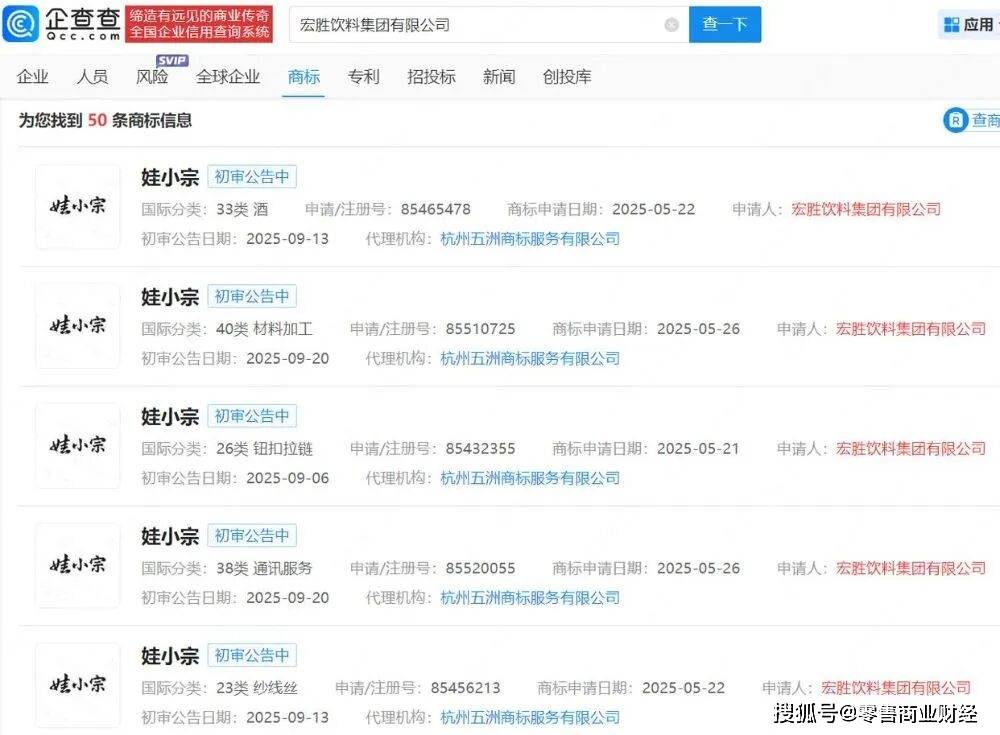
Group 1: Wahaha Brand Change Rumors - Wahaha is reportedly considering a rebranding to "Wawaizong" starting from the 2026 sales year, as indicated in a leaked notice [1] - Several distributors expressed uncertainty about the rebranding, with some stating they have not received any official communication regarding the change [1] - Concerns were raised by distributors that a brand change could negatively impact their business, emphasizing the strength of the existing "Wahaha" brand [1] Group 2: JD Discount Supermarket Expansion - JD opened its sixth discount supermarket in Hebei, which saw a large turnout on opening day with many products sold out [3] Group 3: Fat Donglai Mooncake Pricing - Fat Donglai's mooncake is being sold overseas for approximately 168 yuan, while the official price in China is 29.8 yuan [4] - The overseas sales are not officially sanctioned by Fat Donglai, raising concerns about product quality and shelf life [4] Group 4: Alibaba's Stake Reduction in Suning - Alibaba's affiliate, Hangzhou Haoyue, plans to reduce its stake in Suning by up to 2.85%, which may heighten market concerns regarding Suning's financial stability [4] Group 5: Pupu Supermarket Expansion in Quanzhou - Pupu Supermarket is accelerating its expansion in Quanzhou with plans to open 10 stores by the end of the year, focusing on high-value customer areas [5] Group 6: Tao Xiaopang's Recruitment Drive - Tao Xiaopang is recruiting 346 employees for its new store in Zhengzhou, indicating plans for further expansion beyond its current locations [6] Group 7: Taobao's Service Changes - Taobao announced the discontinuation of its "hourly delivery" service, set to take effect on October 12, 2025, in favor of a new "flash purchase" service [7] Group 8: ByteDance IPO Rumors Denied - ByteDance's vice president denied rumors of a potential IPO in Hong Kong, cautioning against misinformation regarding "Byte concept stocks" [10] Group 9: Growth in China's Online Retail - The 2025 China Online Retail Top 100 report indicates a total sales scale of 2.17 trillion yuan, reflecting a year-on-year growth of 13.6% [11] Group 10: New Store Openings by Various Brands - Hema Fresh opened its first store in Suqian, marking its entry into the 11th city in Jiangsu [15] - Luckin Coffee opened a new store at Hong Kong International Airport, bringing its total in Hong Kong to over 20 [15] - Muji plans to open 11 new stores across 8 cities, focusing on enhancing brand presence in key consumer areas [17]

无锡首家学习“胖东来”,永辉超市正式亮相
Yang Zi Wan Bao Wang· 2025-09-25 11:49
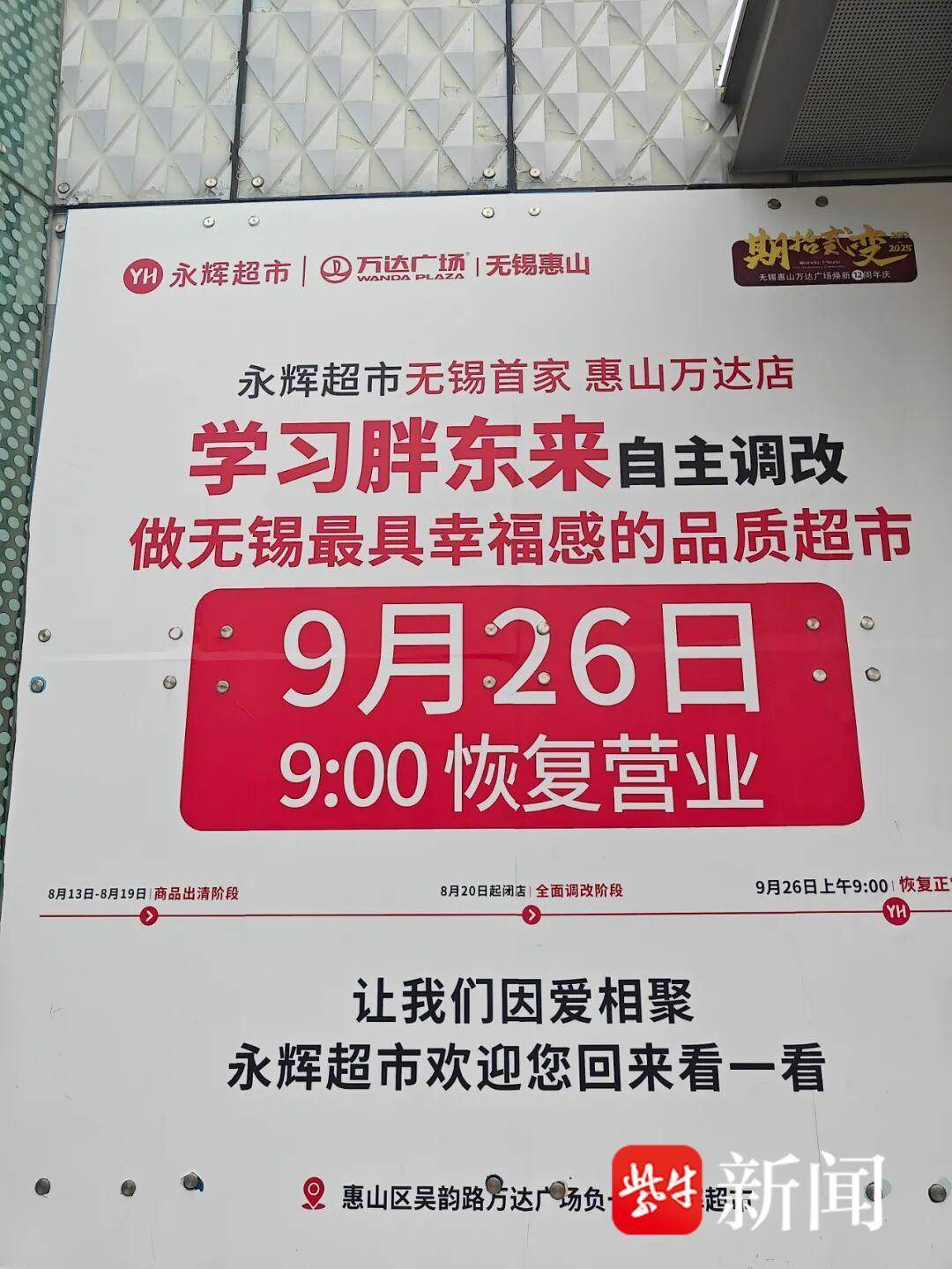
Core Insights - The first "Pang Donglai model" supermarket in Wuxi, Yonghui Supermarket (601933), will officially open on September 26, allowing local residents to purchase Pang Donglai's proprietary products without the need for a purchasing agent [1] Group 1: Store Transformation - The newly renovated Yonghui Supermarket is located in Wuxi Huishan Wanda Plaza B1, featuring a dedicated area for Pang Donglai's proprietary brand products [5] - The store has significantly restructured its product offerings, removing 8,089 of the original 12,826 items and adding 4,573 new products, resulting in a nearly 50% replacement rate [5] - 80% of the new product selection is based on Pang Donglai's standards, with imported products accounting for 13% of the total [5] Group 2: Product Categories - The proportion of fresh food categories, including baked goods and prepared foods, has increased from 5% to 20% [5] - The bakery section features popular items such as durian mille-feuille and matcha red bean soufflé, while the prepared food section offers items like Korean fried chicken and various sausages [5] Group 3: Customer Experience Enhancements - The store has improved the shopping environment by standardizing shelf heights to 1.6 meters and reducing the number of shelf layers to 5-6, creating a more spacious shopping experience [7] - New customer amenities include a rest area, free disposable tableware, drinking water, and microwave access, as well as convenience devices like height and blood pressure measurement tools [7] - The store implements a freshness standard labeled "468," offering discounts based on the time since product preparation [7] Group 4: Employee Welfare - The number of employees has increased from 110 to 222, with a significant rise in average salaries [7] - Employee benefits have improved, including 10 days of paid annual leave after one year of service, and the establishment of rest areas, training rooms, and changing rooms [7]
服务供给增加 双节前夕房山商业迎新
Bei Jing Shang Bao· 2025-09-25 05:49
Group 1 - The upcoming holidays are prompting an increase in commercial service supply in Beijing, with new store openings in Fangshan District [1] - Wumart Supermarket's "Fat Transformation Store" in Fangshan is the first of its kind in the district, featuring a product structure similar to that of the popular brand Pang Donglai, with significant expansions in bakery and ready-to-eat food sections [1] - The new IKEA store in Fangshan is a complete upgrade of a local home goods market, filling a gap in the mid-to-high-end home goods market and utilizing smart operational capabilities to reshape the home consumption landscape in southwest Beijing [1] Group 2 - The newly opened Rui Lai Plaza is the ninth commercial complex in Fangshan, featuring diverse business formats including indoor sports experiences and cultural markets, enhancing regional vitality [1] - The plaza includes a hotel with nearly 10,000 square meters of space, a large badminton court, and various dining and convenience options, contributing to the area's commercial ecosystem [1] - Fangshan District aims to boost consumption by focusing on discount economy, self-indulgence economy, and ticket-root economy, promoting quality upgrades in consumption and the integration of commerce, culture, and sports [2]
滨海新生活·品质新厨房:永辉超市厦门杏林万科里店9.26调改开业
Sou Hu Cai Jing· 2025-09-24 11:07
Core Viewpoint - The opening of the upgraded Yonghui Supermarket in Xiamen's Jimei District represents a significant enhancement in the retail landscape, aligning with local consumption promotion policies and aiming to provide a high-quality shopping experience for residents [1][25]. Store Upgrade Details - The new store, located in the basement of the Anxin Vanke Mall, covers an area of 1,758 square meters and targets nearby communities and young families, focusing on "quality living + convenient service" [3]. - The store features approximately 7,100 selected products, with nearly 3,600 from first and second-tier brands, and 14.8% of imported goods, closely mirroring the product structure of the "Fat Donglai" model [5][25]. - The product upgrade emphasizes higher quality, differentiation, and local relevance, catering to the dietary habits and quality demands of residents in Fujian [5]. Product Categories - The fruit and vegetable section introduces a three-dimensional matrix focusing on "livelihood attraction + quality differentiation + trendy new products," including both traditional and trendy items [6]. - The meat and poultry section highlights local freshness and quality upgrades, featuring a mix of international and domestic brands [8]. - The seafood area enhances the coastal theme by introducing a variety of imported seafood and offering live fish cutting services, enhancing customer experience [10]. - The bakery and deli sections have added popular items and diverse instant food options to attract younger customers [12]. Environmental and Service Enhancements - The store environment has been revamped for better visibility and comfort, with upgraded lighting and wider aisles to create a pleasant shopping atmosphere [13]. - New customer service facilities include health measurement tools and convenience items, enhancing the overall shopping experience [15]. - The store implements strict food safety measures, including a freshness management system to ensure product quality [17]. Employee Welfare Improvements - The number of employees has increased from 66 to 100, with salary and welfare enhancements to improve job satisfaction and service quality [19]. - The management emphasizes the importance of employee care, aiming to foster a respectful and warm service environment [21]. Market Impact and Future Plans - The store's opening coincides with the Mid-Autumn Festival and National Day, featuring seasonal products to meet diverse consumer needs [23]. - The successful performance of the first upgraded store in Xiamen, with over 800% sales growth in the first week, validates the effectiveness of the upgrade model [23]. - Yonghui plans to continue adopting the "Fat Donglai" model to enhance quality retail, aiming to better meet the needs of mainstream Chinese families and support high-quality market development in Xiamen [25].
东莞分批解除“五停”,商超、外卖恢复营业
2 1 Shi Ji Jing Ji Bao Dao· 2025-09-24 09:21
Core Points - Dongguan has announced a phased lifting of the "Five Stops" measures (suspension of classes, work, production, transportation, and business) due to the diminishing impact of Typhoon Haikashan, with the emergency response level adjusted from Level I to Level III [1] - Various sectors including education, construction, and transportation are set to resume operations starting September 25, with specific guidelines for different types of work [2][3] Group 1: Education Sector - All educational institutions including primary, secondary, and higher education will gradually resume classes from September 25 [2] - The resumption includes kindergartens, vocational schools, and various training institutions [2] Group 2: Construction Sector - Construction activities at various sites will resume in an orderly manner from September 25, with certain types of work such as fishing vessels and high-altitude operations remaining suspended until further notice [2] Group 3: Industrial and Commercial Sector - Industrial parks, production bases, and factories will restart operations from September 24 [3] - Markets, shopping malls, supermarkets, and restaurants will also reopen, with major retailers like Rainbow, Walmart, and Hema Fresh confirming their reopening [3] - Essential supplies such as vegetables and meat are reported to be sufficient, encouraging citizens to shop in a staggered manner to avoid crowding [3] Group 4: Transportation Sector - Various transportation modes including public transport and highways will resume operations from September 24, with rail services starting on September 25 [3] Group 5: Safety Measures - Authorities will guide institutions and businesses to conduct safety checks before resuming operations, ensuring that potential hazards are addressed [5] - Continuous monitoring of weather conditions is advised for both businesses and citizens to ensure safety [5]
大型超市纷纷倒下,老百姓真的已经不需要了?4大原因太现实
Xin Lang Cai Jing· 2025-09-23 16:29
Core Viewpoint - The decline of large supermarkets in China is attributed to various factors, including the rise of online shopping, the emergence of community stores and convenience stores, the advent of new retail models, and operational issues within the supermarkets themselves [3][12]. Group 1: Reasons for Decline - The first reason is that young consumers prefer online shopping due to lower prices and home delivery, with online retail sales reaching 6.8 trillion yuan in the first half of the year, a year-on-year increase of 16.5% [5]. - The second reason is the rise of community stores and convenience stores, which cater to consumers' needs for quick and easy access to daily necessities, especially for those with limited time [7][8]. - The third reason is the emergence of new retail models, such as Hema and Dingdong Maicai, which combine online ordering with the convenience of physical stores, leading to a projected market size of 1.8 trillion yuan by 2025, a growth of 32.5% from 2024 [10]. - The fourth reason is operational challenges faced by large supermarkets, including high costs related to rent and labor, and severe product homogenization, which leads to market share loss to competitors and e-commerce platforms [12]. Group 2: Future Strategies for Supermarkets - Large supermarkets should identify their unique advantages and specialties, such as increasing the proportion of imported goods and enhancing the supply of fresh products to cultivate loyal customer bases [12][14]. - Establishing their own e-commerce platforms for synchronized online and offline sales is crucial, utilizing big data to understand consumer needs and provide targeted products and services [14]. - Optimizing supply chain management by reducing intermediaries and directly sourcing from manufacturers can help lower procurement costs, enabling supermarkets to offer better prices and attract more loyal consumers [14].