医疗保障

Search documents
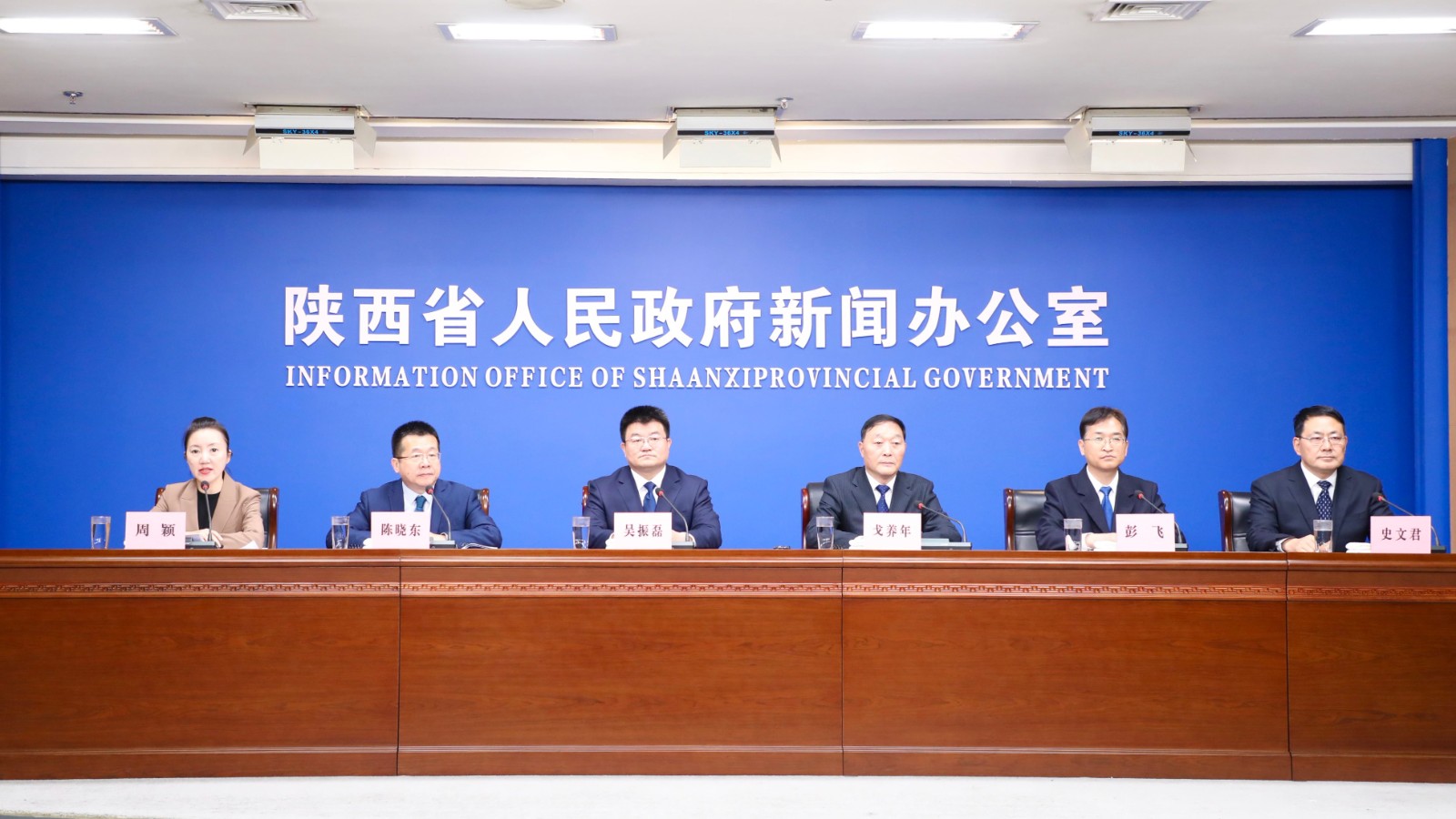
陕西省人民政府新闻办公室举办新闻发布会介绍陕西“十四五”时期民生保障和社会建设成效有关情况
Shan Xi Ri Bao· 2025-12-03 07:50
Core Viewpoint The news conference held by the Shaanxi Provincial Government highlighted the achievements in social welfare and construction during the "14th Five-Year Plan" period, focusing on employment stability, social security reforms, talent development, and healthcare improvements. Employment and Social Security - The employment situation in Shaanxi has remained stable, with over 2.14 million new urban jobs created during the "14th Five-Year Plan" period, supported by various employment policies and training programs [5][6]. - The social security system has been enhanced, with the number of participants in basic pension, unemployment, and work injury insurance reaching 32 million, 5.66 million, and 7.27 million respectively, showing significant increases from the end of the "13th Five-Year Plan" [6][7]. Talent Development - The province has focused on aligning talent development with key industrial needs, resulting in over 2.6 million professional technical personnel and attracting more than 6,000 postdoctoral talents for research and innovation [7][8]. - A comprehensive talent support system has been established, including a new skill level system and extensive training programs, contributing to over 6.1 million skilled workers in the region [8]. Healthcare Improvements - Shaanxi has strengthened its public health system, effectively managing multiple COVID-19 outbreaks and reducing the incidence of tuberculosis from 47.26 per 100,000 in 2020 to 36.72 per 100,000 [14][15]. - The province has improved healthcare access and quality, with 434 hospitals implementing streamlined services, and the establishment of regional medical centers to enhance healthcare delivery [15][16]. Education Development - The education system has made significant strides, with 8 universities included in national "Double First-Class" initiatives and over 600 new educational institutions built or renovated [9][10]. - The province has implemented various educational reforms, including a focus on moral education and the integration of technology in teaching, resulting in improved student engagement and performance [10][11]. Social Welfare and Governance - Shaanxi has enhanced its social welfare programs, with an increase in the average urban and rural minimum living standards by 10.1% and 15.5% respectively, ensuring support for over 1.19 million urban low-income individuals [19][20]. - The province has optimized social governance, with initiatives to improve marriage registration services and reduce funeral costs, enhancing overall community welfare [21][22].

以有限资源最大程度守护生命健康(人民时评)
Ren Min Ri Bao· 2025-11-26 22:09
Core Viewpoint - The recent rumor claiming that only 2% of approved drugs are included in the medical insurance catalog has been clarified, revealing that 3,159 drugs are listed, accounting for approximately 63% of the total market drugs [1] Group 1: Medical Insurance Catalog - The medical insurance catalog has been continuously expanded, with 835 new drugs added in recent years, enhancing the basic medical insurance coverage [1] - The catalog reflects a response to public medication needs, with updates ensuring better coverage for cancer treatments, rare diseases, and children's medication safety [2] - The adjustment mechanism for the medical insurance catalog has become regularized and scientific, aiming to improve the quality and structure of clinical medication [2] Group 2: Multi-layered Medical Security System - The need for a multi-layered medical security system is emphasized, as basic medical insurance alone cannot meet diverse health demands [3] - The "14th Five-Year Plan" suggests optimizing drug procurement and insurance payment policies to support a multi-tiered medical security framework [3] - The introduction of a commercial health insurance innovative drug catalog aims to enhance the multi-layered medical security system, even though basic medical insurance does not cover these drugs [3] Group 3: Commitment to Public Health - The focus is on ensuring that every penny spent on health maximizes benefits rather than just purchasing expensive drugs, maintaining the principle of "basic protection" [4] - The ongoing reforms aim to alleviate the healthcare burdens of the population, reflecting a commitment to improving public health and well-being [4]
群众工作札记丨压实责任守护救命钱
Zhong Yang Ji Wei Guo Jia Jian Wei Wang Zhan· 2025-11-25 00:33
Core Insights - The article discusses the efforts of Yiwu City in Zhejiang Province to address issues related to the management and use of medical insurance funds, focusing on combating corruption and ensuring proper fund utilization [1][2] Group 1: Regulatory Measures - Yiwu City has established a collaborative mechanism involving multiple departments such as medical insurance, health, public security, and civil affairs to enhance the management of medical insurance funds [1] - The city is utilizing big data analytics through a provincial smart medical insurance supervision platform to monitor key risk points dynamically, improving the precision of regulatory efforts [1] Group 2: Case Studies and Findings - A specific case was highlighted where a warning from the big data analysis model indicated potential fraudulent behavior at a rehabilitation hospital, leading to a prompt investigation that prevented duplicate payments from the civil affairs system [1] - The city has mandated the rehabilitation hospital to improve internal management and has conducted multiple inspections to address violations related to "bed occupancy" practices, identifying 88 patients who were not actually hospitalized [2] Group 3: Financial Recovery and Oversight - An expert review group has been formed to conduct quarterly cross-reviews of hospitalization records, resulting in the review of 4,143 cases this year, with 403 cases identified as having inadequate admission criteria, leading to the recovery of over 1.57 million yuan in medical insurance funds [2] - The article emphasizes the importance of medical insurance funds as critical financial resources for insured individuals, highlighting ongoing efforts to strengthen oversight and enhance the effectiveness of governance in the healthcare sector [2]
下月起全区实现医保刷脸支付
Guang Xi Ri Bao· 2025-11-15 02:23
去医院就诊,发现忘带医保卡?没有智能手机无法扫码支付?没关系,刷脸就能全部搞定! 11月14日,记者从自治区医疗保障局获悉,全区将从12月1日起,全面应用医保便民支付结算方 式。参保人员在定点医药机构就医购药时,选择扫医保码(医保亲情账户)、人脸识别、实体社保卡 +社保卡密码等其中一种安全核验方式,即可完成医保基金结算。 刚在南宁某社区医院体验医保刷脸结算的张阿姨表示,不管是挂号、缴费还是取药,只要在医保终 端前露个脸,"实名+实人"核验瞬间通过,全程不用摸手机、掏卡片,老年人操作也毫无压力。 刷脸支付安全吗?记者了解到,医保刷脸支付,依托国家医疗保障局认证的医保业务综合服务终 端,以医保码(电子凭证)为核心,采用"人脸识别+实名+实人"安全核验技术,保障个人信息安全。 没有激活过医保码的用户,可在结算时直接在刷脸设备上完成激活。 目前,全区已有2303家定点医疗机构、4033家定点零售药店提供医保刷脸结算服务。此外,从12月 1日起,医保平台将不再支持仅凭身份证号码进行无密码验证的结算操作。本人就医购药时,需提前准 备好医保码,也可以选择医保刷脸终端快速刷脸结算;如为家人代办,需提前绑定好家人的医保亲情账 ...
居民50元职工150元,河南新乡门诊医保报销每日限额,官方回应
Di Yi Cai Jing· 2025-11-10 10:11
Group 1 - The core issue is the implementation of daily reimbursement limits for medical insurance in Xinxiang, with residents capped at 50 yuan and employees at 150 yuan, effective from June 13, 2025 [2][4] - The Xinxiang Medical Insurance Bureau stated that without these limits, the insurance fund could face a deficit by the end of the year, emphasizing the need for efficient fund management [4][6] - The adjustment aims to prevent fraud in the medical insurance system and to standardize medical practices in hospitals and clinics, with the bureau asserting that typical outpatient expenses are around 100 to 200 yuan per visit [7] Group 2 - The bureau clarified that the new limits are not indicative of a funding shortfall but are a preventive measure against fraudulent claims [6][7] - Patients needing to exceed the daily limit are encouraged to self-pay the excess amount, as splitting large expenses over multiple days is not compliant with insurance regulations [7]

政府破纪录“停摆”拖累美国经济
Bei Jing Shang Bao· 2025-11-05 14:10
Economic Impact - The ongoing government shutdown has the potential to negatively impact overall economic growth, with the Congressional Budget Office estimating a decrease in the annual GDP growth rate by 1 to 2 percentage points in Q4 2023, translating to a loss of $7 billion to $14 billion depending on the duration of the shutdown [4][6] - Consumer confidence is expected to be directly affected, as federal employees face delayed wages and contractors experience payment delays, which could impact the traditional holiday shopping season if the shutdown persists [4][6] - The shutdown has already caused significant disruptions in various sectors, including aviation, with over 3.2 million travelers affected by flight delays or cancellations since the shutdown began [3][4] Aviation Sector - Approximately half of the major air traffic control facilities in the U.S. are experiencing staffing shortages, particularly in the New York area where nearly 90% of air traffic controllers are absent [3] - The Department of Transportation has warned that if the shutdown continues, it may have to close certain airspaces due to staffing and safety pressures, potentially leading to longer wait times at airports during the busy Thanksgiving travel season [3][4] Healthcare and Food Assistance - The shutdown has halted the distribution of funds for the Supplemental Nutrition Assistance Program, affecting over 40 million Americans, with emergency funds being utilized to cover only part of the month's assistance [3][4] - The inability to pass a temporary funding bill has led to significant increases in health insurance premiums, with estimates suggesting an additional $1,000 per year for individuals without government subsidies [2][4] Political Stalemate - The political deadlock between the Republican and Democratic parties continues, with no clear resolution in sight, as both sides appear to be using the shutdown as a political tool rather than seeking a compromise [7][8] - Recent attempts to advance a temporary funding bill have failed to secure the necessary votes, indicating a deepening divide and a lack of urgency to resolve the crisis [7][8]
美联邦政府“停摆”近纪录 民众“伤不起”
Xin Hua She· 2025-11-03 12:15
Core Points - The U.S. federal government shutdown has entered its 34th day, nearing the record of 35 days set in late 2018 to early 2019, with significant impacts on various sectors including aviation, food assistance, and healthcare [1] - The ongoing political polarization between the Republican and Democratic parties is exacerbating the situation, with both sides using the shutdown to further their political agendas without signs of compromise [1] Aviation Industry - Approximately 13,000 air traffic controllers and 50,000 airport security personnel are working without pay, leading to staffing shortages and increased flight delays across the country [2] - The Federal Aviation Administration reported that nearly half of the major air traffic control facilities in the U.S. are experiencing staffing shortages, with nearly 90% of controllers in the New York area absent [2] - On November 2, nearly 4,300 flights were delayed and over 550 flights were canceled due to the staffing crisis [2] Food Assistance and Healthcare - The federal food assistance program, the Supplemental Nutrition Assistance Program, ceased operations on November 1 due to funding exhaustion, affecting 42 million Americans, or about one-eighth of the U.S. population [3] - The Affordable Care Act's enrollment for the new year began on November 1, with 24 million expected to enroll, but rising premiums are anticipated due to a lack of agreement on government subsidies [3] - The Congressional Budget Office estimates that the shutdown could reduce the annual GDP growth rate by 1-2 percentage points in Q4, translating to economic losses of $7 billion for a 4-week shutdown, $11 billion for 6 weeks, and $14 billion for 8 weeks [3] Political Stalemate - The shutdown is primarily due to a deadlock between the two parties over healthcare spending, with neither side showing urgency to resolve the issue [4] - The Trump administration has been attempting to significantly cut spending and reduce federal employment, with expectations that over 10,000 federal positions may be eliminated due to the shutdown [5] - Both parties are leveraging the shutdown to solidify their political positions, with Democrats aiming to portray themselves as advocates for low-income groups while Republicans focus on reducing government spending [5]
学习贯彻党的二十届四中全会精神 “十五五”任务书⑥丨加大保障和改善民生力度 扎实推进全体人民共同富裕
He Nan Ri Bao· 2025-10-31 23:59
Core Insights - The article emphasizes the importance of establishing a multi-tiered medical insurance system to enhance public health security in the context of China's 14th Five-Year Plan [2][3] Group 1: Medical Insurance System - The provincial medical insurance bureau aims to implement the central government's decisions and focus on key reforms in medical insurance payment and drug pricing to improve service levels [2][3] - The bureau will enhance budget and operational management of the medical insurance fund to ensure its sustainable operation and strengthen regulatory frameworks to combat fraud [3][4] - The integration of artificial intelligence in the medical insurance sector is planned to optimize services and improve efficiency for the public [3][4] Group 2: Healthcare Development - The medical insurance system will support the collaborative development of healthcare, medical insurance, and pharmaceuticals, including the implementation of a new drug list and direct settlement with pharmaceutical companies [4] - The bureau aims to create a more equitable and adequate medical insurance benefit mechanism and extend services to grassroots levels [4][5] Group 3: Education Sector Improvements - The article highlights significant investments in educational infrastructure, with over 15 billion yuan allocated to improve conditions in compulsory education schools, resulting in the addition of 1620 new student places [5][6] - The province has implemented various student aid programs, distributing approximately 96.835 billion yuan to support over 74 million students across different educational levels [6][7]

牢记嘱托答好民生“幸福卷”
Shan Xi Ri Bao· 2025-10-23 00:22
Group 1: Employment and Economic Development - Employment is the foundation of people's livelihood, and promoting employment for college graduates is a top priority in Shaanxi [2] - Since the beginning of the 14th Five-Year Plan, Shaanxi has implemented multiple policies to enhance employment services and create job opportunities, resulting in 163.26 million new urban jobs from 2022 to August 2023 [4] - The "Han Zhong Rattan Weaving Master" labor brand has been recognized, leading to nearly 4 million rural laborers finding employment or starting businesses [3] Group 2: Elderly and Child Care Services - Shaanxi has developed a flexible and diverse elderly meal service system, allowing seniors to enjoy convenient dining options in their communities [6] - The establishment of community childcare centers addresses the needs of working parents, providing peace of mind and convenience [9] - The province has focused on building a comprehensive service network for the elderly and children, ensuring accessible and quality care [7][9] Group 3: Healthcare and Social Security - The family mutual aid policy for medical insurance allows for the use of family members' insurance balances, enhancing the convenience and affordability of healthcare [10] - As of September 2023, Shaanxi has achieved a basic medical insurance coverage of 36.92 million people, including 8.93 million in employee insurance and 27.99 million in resident insurance [12] - The province has established a data-sharing mechanism among multiple departments to include vulnerable groups in the basic pension insurance coverage [12] Group 4: Education and Infrastructure - Shaanxi has made significant improvements in educational infrastructure, promoting integrated urban-rural education and implementing policies to reduce burdens on students [11] - The province continues to strengthen basic, inclusive, and safety-net social services, ensuring a solid foundation for people's livelihoods [11]
美国党争闹“新疯”!雇员欠薪、平民经济被坑惨,两党死磕不松口
Sou Hu Cai Jing· 2025-10-22 05:34
Group 1 - The ongoing government shutdown in the U.S. has significant implications for both the economy and the livelihoods of federal employees, with many working without pay and others on forced leave [1][3][5] - Recent polls indicate that Congress's approval rating has dropped to 18%, highlighting public frustration over the political stalemate and its impact on ordinary citizens [5][10] - The delay in the release of key economic data, including the CPI, has created uncertainty in the markets, as analysts lack reliable indicators to assess economic conditions [8][19] Group 2 - The Senate's eighth vote failed to pass a funding bill, with a significant gap of 11 votes from the required threshold, reflecting deep partisan divisions over budget allocations [10][12] - The core disagreement between the two parties centers on funding for Medicaid, with Republicans advocating for spending cuts and Democrats insisting on maintaining support for low-income groups [12][15] - The ongoing political impasse has escalated tensions, particularly with former President Trump's announcement of a plan to permanently lay off federal employees, complicating negotiations further [17][19] Group 3 - The Federal Reserve faces challenges in making informed decisions due to the delayed CPI data, which is crucial for assessing inflation trends ahead of their upcoming meeting [19][24] - Historical context shows that previous shutdowns have had severe economic repercussions, and the current situation is more complex due to the intertwining issues of healthcare funding and economic data uncertainty [22][27] - The upcoming CPI data release on October 24 is seen as a potential turning point that could either facilitate negotiations or prolong the deadlock, with significant consequences for ordinary citizens [24][27]