蛋鸡养殖

Search documents
银河期货鸡蛋日报-20251126
Yin He Qi Huo· 2025-11-26 11:12
Group 1: Report Industry Investment Rating - No information provided Group 2: Core Views of the Report - The recent increase in the number of culled chickens has alleviated the previous supply pressure, but the number of laying hens in production is still at a high level. It is expected that the speed of capacity reduction will be relatively gentle in the short term. Considering that the spot average price is still around 2.8 - 2.9 yuan per catty, the January main contract has given a certain premium. However, considering that the downward space is relatively limited as the pre - holiday stocking approaches, it is likely to fluctuate within a range in the future [7]. Group 3: Summary by Related Catalogs 1. Fundamental Information - Today, the average price in the main producing areas is 2.9 yuan per catty, and the average price in the main selling areas is 3.12 yuan per catty, both remaining unchanged from the previous trading day. The national mainstream price remains stable, and the egg prices in major markets in Beijing remain stable. The egg prices in Northeast China, Shandong, Henan, Hubei, Jiangsu, and Anhui are generally stable [4]. - In October, the national inventory of laying hens in production was 1.359 billion, a decrease of 0.01 billion from the previous month and a year - on - year increase of 5.5%, lower than expected. The monthly output of chicken seedlings in sample enterprises in October was 39.2 million, with little change month - on - month and a year - on - year decrease of 13%. Without considering delayed culling and concentrated culling, the estimated inventory of laying hens in production from November 2025 to February 2026 is 1.359 billion, 1.355 billion, 1.346 billion, and 1.333 billion respectively [5]. - In the week of November 21, the number of culled laying hens in the main producing areas was 20.21 million, an increase of 3.8% from the previous week. The average culling age of culled chickens was 492 days, a decrease of 1 day from the previous week [5]. - As of the week of November 21, the egg sales volume in the representative selling areas was 7,472 tons, an increase of 1.2% from the previous week [5]. - As of November 13, the weekly average profit per catty of eggs was - 0.15 yuan per catty, an increase of 0.1 yuan per catty from the previous week. On November 6, the expected profit of laying hen farming was - 6.1 yuan per bird, a decrease of 1.19 yuan per catty from the previous week [6]. - As of the week of November 21, the weekly average inventory in the production link was 1.1 days, an increase of 0.09 days from the previous week, and the weekly average inventory in the circulation link was 1.2 days, an increase of 0.15 days from the previous week [6]. - Today, the price of culled chickens in the whole country has increased, and the average price in the main producing areas is 3.81 yuan per catty, an increase of 0.02 yuan per catty from the previous trading day [6]. 2. Trading Logic - The recent increase in the number of culled chickens has alleviated the previous supply pressure, but the number of laying hens in production is still at a high level. It is expected that the speed of capacity reduction will be relatively gentle in the short term. The January main contract has given a certain premium, and considering the approaching pre - holiday stocking, the downward space is relatively limited, and it is likely to fluctuate within a range in the future [7]. 3. Trading Strategies - Unilateral: It is expected to fluctuate within a range in the short term. Consider building long positions in the January contract on dips [8]. - Arbitrage: It is recommended to wait and see [8]. - Options: It is recommended to wait and see [8]. 4. Related Charts - The report includes multiple charts such as the spot price of eggs in the main producing areas, the spot price of eggs in the main selling areas, the price of chicken seedlings, the price of culled chickens, the feed cost of single - catty eggs, the inventory of laying hens in production and future inventory projections, various price spreads, and profit expectations [11][15][19]
2025年蛋鸡养殖行业利润跌至近五年最低水平,预计2026年或将有所回暖
Zhong Guo Jin Rong Xin Xi Wang· 2025-11-25 01:59
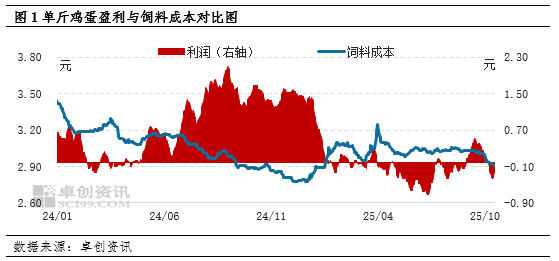
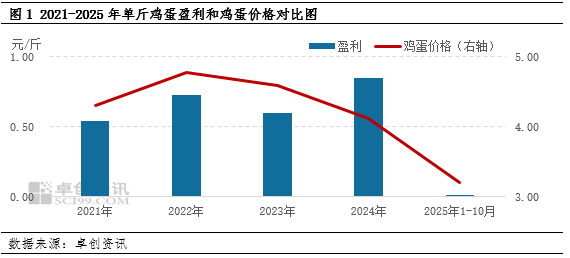
Core Viewpoint - The domestic egg-laying chicken farming industry faced unprecedented challenges in 2025, with a significant drop in profitability due to falling egg prices, despite a slight decrease in production costs. The outlook for 2026 suggests a potential recovery in profitability driven by a rise in egg prices and a decrease in supply [1][9]. Summary by Sections Profitability and Market Conditions - The egg-laying chicken farming industry was in a profitable cycle from 2021 to 2024, with average profits exceeding 0.50 yuan per pound. However, in 2025, profitability sharply declined, with average profits per pound dropping over 90% year-on-year from January to October, marking the lowest average profit level in five years [1][9]. - The decline in egg prices was the primary factor affecting profitability, despite production costs remaining low [1]. Demand and Supply Dynamics - Seasonal demand for eggs weakened, limiting the potential for demand growth. Direct consumption slightly increased, but overall demand was constrained by low prices of pork, broiler chickens, and vegetables, which reduced market acceptance of high-priced eggs. Additionally, food processing companies reduced order volumes, leading to a limited increase in egg demand [3]. - The average daily shipment of eggs from production areas increased slightly by 1.15% year-on-year from January to October 2025, but overall supply remained ample while demand support was weak, resulting in egg prices dropping over 20% year-on-year [3]. Production and Cost Factors - The high profitability in 2023-2024 led to increased enthusiasm for breeding, with total chick sales continuing to rise in 2024-2025. The average number of laying hens in production reached a five-year high, with a year-on-year increase of over 5% [4]. - Although feed costs slightly decreased due to lower prices for corn and soybean meal, this reduction was insufficient to offset the significant drop in income, leading to a continued decline in overall profitability [6]. Future Outlook for 2026 - The egg-laying chicken farming industry is expected to see a recovery in profitability in 2026, driven by a decrease in supply and a potential increase in egg prices due to traditional holiday demand and a recovery in restaurant consumption [8]. - The supply of laying hens is projected to decrease, which may alleviate some supply pressure. Egg prices are expected to rise by over 2% year-on-year, while feed costs may continue to decline by 1-2% [8][9]. - Overall, average profitability for egg-laying chicken farming is anticipated to improve by 0.10-0.20 yuan per pound in 2026, although the recovery process will still be influenced by factors such as culling rates and external market fluctuations [9].

晓鸣股份:10月鸡产品销售收入同比下降34.89%
Zheng Quan Shi Bao Wang· 2025-11-10 08:10
Core Viewpoint - The company experienced a decline in both chicken product sales volume and revenue in October 2025, influenced by the overall supply-demand dynamics in the industry [1] Company Summary - In October 2025, the company sold 19.4567 million chickens, generating a revenue of 56.2981 million yuan, representing a quarter-on-quarter decline of 10% and 14.9% respectively, and a year-on-year decline of 17.15% and 34.89% [1] - The fluctuations in sales volume and revenue are attributed to the current oversupply in the egg-laying chicken farming industry and unmet market demand during the National Day and Mid-Autumn Festival holidays [1] Industry Summary - The egg-laying chicken farming industry is currently facing a surplus supply, leading to cautious expectations among farming units regarding future market conditions [1] - The seasonal consumption downturn post-holidays has increased market pressure, resulting in low egg prices and a decrease in the enthusiasm for replenishing stock [1] - Additionally, the weak price trends of both live pigs and broiler chickens have indirectly suppressed egg consumption [1]
期权工具助力鸡蛋企业管理价格风险
Qi Huo Ri Bao Wang· 2025-11-10 01:05
Core Viewpoint - The domestic egg market is experiencing significant price volatility around the 2025 Spring Festival, with a pattern of "temporary stabilization before the festival and continuous decline after" impacting companies like Anhui Yuemu Agricultural Development Co., Ltd. The company successfully hedged price risks using options, providing a practical model for similar enterprises [2][3][4]. Market Background and Company Pain Points - After the 2025 Spring Festival, egg demand enters a traditional off-season, with household reserves from the festival expected to meet 15-20 days of demand, leading to a consumption gap [3]. - Supply-side pressures are exacerbated by delayed culling of old hens and high inventory levels, resulting in a significant imbalance in the egg market [3]. - The average daily circulation of eggs in major production areas increased by 8-10% compared to January, contributing to market pressure [3]. - The price of eggs is influenced by multiple factors, including the cycle of laying hens, feed costs, seasonal consumption, and disease, leading to significant volatility [4]. Core Operational Pain Points - Price volatility risks are squeezing profit margins, particularly during the post-festival demand slump in February 2025 [4]. - The company's sales model primarily relies on "spot retail" with a "cost-plus pricing" strategy, where feed costs account for 70% of total breeding costs. Rising feed prices could create a "scissors gap" between rigid costs and selling prices, severely impacting profits [5]. - Previous hedging attempts, such as adjusting inventory and futures hedging, have limitations due to the lag in inventory adjustments and high capital requirements for margin [6]. Options Strategy Development - To address the need for hedging against price declines while retaining upside potential, the company collaborated with Everbright Futures to develop a "buy put option" strategy [7]. Strategy Design Logic - The selected tool, put options, offers a non-linear profit and loss structure that aligns with the company's needs, allowing for profit from price declines while preserving gains from price increases [8]. - The strike price for the options was set at 3200 yuan/500kg, above the market forecast for February, ensuring coverage of potential losses [9]. - The options have a lower premium cost compared to at-the-money options, optimizing cost control [9]. Execution of the Strategy - On February 11, the company purchased 100 lots of put options at a premium of 62 yuan/500kg, matching its production scale while minimizing cash flow pressure [12]. - The strategy included dynamic tracking services from Everbright Futures, providing market insights and analysis to support decision-making [12]. Strategy Execution Results - In February 2025, egg prices fell from 3450 yuan/500kg at the end of January to 2950 yuan/500kg by the end of February, with the futures contract reaching the strike price multiple times [13]. - The company realized a net profit of 49,000 yuan after deducting the premium, effectively hedging against the decline in egg prices [13]. Comparative Analysis and Insights - A comparison of three hedging methods highlighted the strengths and weaknesses of each approach, emphasizing the suitability of put options for the company's specific risk profile [14]. - The insights suggest that matching tools to needs is crucial, with put options recommended for scenarios with a high probability of price declines [15]. - The strategy's design ensures that the strike price covers the breakeven point and the expiration date aligns with the risk period, maintaining continuity in hedging [16]. - Smaller enterprises can leverage futures companies for market analysis and professional guidance, reducing barriers to using derivatives [17]. Summary - The company effectively used a put option strategy to hedge against price declines in the egg market, resulting in a net profit that mitigated some of the losses from the spot market. This approach aligns with the needs of small to medium-sized egg enterprises for manageable risk, flexible returns, and low capital requirements, indicating a growing maturity in the egg options market [18].

四川广元:以数据架桥 “破局”中小微企业融资难题
Sou Hu Cai Jing· 2025-11-05 01:55
Core Viewpoint - The establishment of the fund flow credit information sharing platform has significantly improved the financing accessibility for small and micro enterprises in China, facilitating over 330 enterprises to secure financing of 1.698 billion yuan within a year [1] Group 1: Financing Challenges and Solutions - The fund flow information platform addresses the financing difficulties faced by small and micro enterprises, particularly those classified as "credit white households" with insufficient credit history [4][7] - The platform enables financial institutions to utilize real operational data from enterprises to create quantifiable credit assets, thus lowering the barriers for first-time loans [4][7] Group 2: Case Studies of Successful Financing - The platform has successfully assisted companies like Wangcang County Fuxin Hydropower Development Co., Ltd. in obtaining their first loan of 1 million yuan, overcoming previous challenges due to lack of collateral [2][4] - Sichuan Zhengshun An Breeding Co., Ltd. was able to secure a credit loan of 1 million yuan with an increased credit limit of 1.76 million yuan, demonstrating the platform's efficiency in loan approval processes [5][7] Group 3: Future Directions and Goals - The People's Bank of China in Guangyuan will continue to guide financial institutions in leveraging the fund flow information platform to enhance the financing channels for small and micro enterprises [7] - The aim is to implement a mechanism that encourages lending, thereby injecting more financial resources into the local economy and supporting the growth of the real economy [7]
广东省农科院科技特派员赴始兴县沈所镇开展产业技术培训与实地指导
Nan Fang Nong Cun Bao· 2025-11-03 14:02
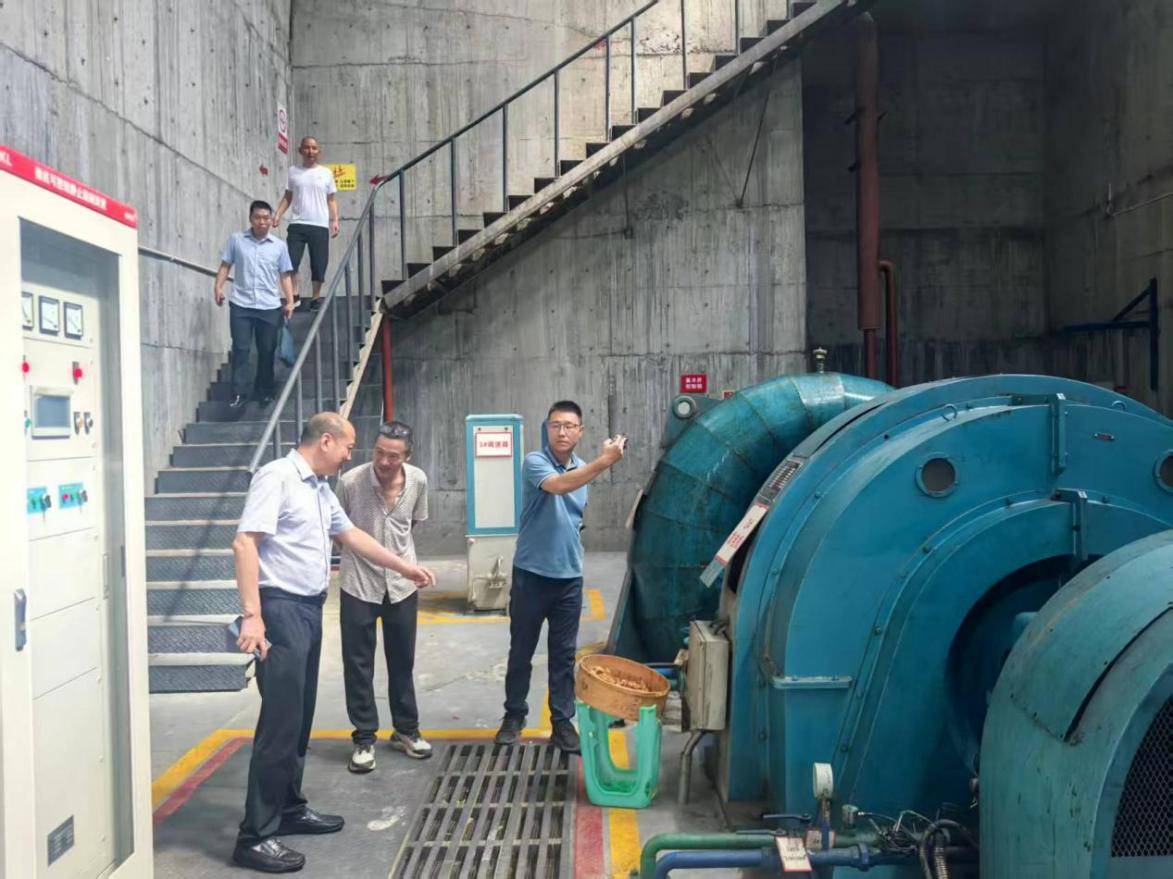
Core Viewpoint - The Guangdong Academy of Agricultural Sciences is actively promoting agricultural technology support through training and on-site guidance in Shensuo Town, aiming to enhance local agricultural practices and support the "Hundred Million Project" for rural revitalization [2][5][22]. Group 1: Training and Objectives - A specialized agricultural technology training session was successfully held in Shensuo Town, focusing on livestock breeding and ecological planting techniques [4][5]. - The training aimed to promote the green transformation of local agriculture and empower the implementation of the "Hundred Million Project" [4][5]. Group 2: Training Content - The training included a report on the application of unconventional feed materials in livestock breeding, highlighting the high dependency on imported feed grains and rising breeding costs in China [6][8]. - The report categorized unconventional feed materials into seven major types, discussing their characteristics and practical application methods [9]. Group 3: Practical Applications and Field Research - After the training, the technology team conducted field research, examining ginger planting practices and addressing issues related to continuous cropping through soil conditioning techniques [13][15]. - The team also visited local free-range egg-laying enterprises, providing solutions to technical challenges faced by the businesses [16][17]. Group 4: Future Plans - The rural technology team plans to continue leveraging the technical and talent advantages of the Guangdong Academy of Agricultural Sciences to provide targeted services based on local industry needs [20][22]. - The focus will be on promoting the resource utilization of non-grain feed and ecological planting techniques to foster integrated farming and circular agriculture development in Shensuo Town [22][23].

华福证券:情绪助推猪价反弹 关注二育进场持续性
智通财经网· 2025-10-27 06:15
Core Viewpoint - The recent increase in pig prices is driven by emotional factors and seasonal consumption recovery, with a focus on the sustainability of secondary fattening entry [2][3] Pig Farming Sector - The concentration of large pig sales has led to a decrease in large pig inventory, widening the price gap and increasing the enthusiasm for secondary fattening, with a sales proportion of 2.09% from October 11-20, up by 1.07 percentage points [1][2] - The national average pig price on October 24 was 11.81 yuan/kg, an increase of 0.63 yuan/kg week-on-week [2] - The average weight of pigs sold continues to decline, with an average weight of 127.90 kg for the week of October 24, down by 0.35 kg week-on-week [2] - Long-term expectations indicate a downward shift in pig prices, with increasing losses in farming and enhanced expectations for capacity reduction policies, which may lead to a long-term upward shift in the price center [1][3] Cattle Sector - Short-term prices for beef cattle have slightly declined, while long-term trends suggest a potential upward cycle for beef prices due to previous long-term losses leading to capacity clearance [4] Dairy Sector - Raw milk prices are currently at a cyclical low, with a price of 3.04 yuan/kg as of October 17, remaining stable week-on-week but down 31% from the cyclical high [4] - The ongoing losses in raw milk are expected to drive continued capacity reduction, potentially stabilizing prices in the future [4] Poultry Sector - The price of white chickens remains stable, with a price of 6.88 yuan/kg as of October 24, reflecting a slight increase week-on-week [5] - Egg prices have decreased, with an average price of 6.06 yuan/kg, while chick prices remain stable [5] Agricultural Products - Soybean meal prices have rebounded from a low, with a current price of 2984 yuan/ton as of October 24, down by 26 yuan/ton week-on-week [7] - The futures market for soybean meal showed a recovery, with the main contract closing at 2933 yuan/ton, up by 65 yuan/ton week-on-week [7]
湖北恩施以绿兴业擦亮生态名片
Jing Ji Ri Bao· 2025-10-23 05:34
Economic Development - Enshi Prefecture's GDP reached 769.91 billion yuan in the first half of the year, with a year-on-year growth of 6.3%, outperforming the provincial average in 13 key economic indicators [1] - The region aims to enhance its development capabilities, speed, quality, and sustainability, contributing to Hubei's strategic growth [1] Green Energy Initiatives - Tudianzi Village has become Hubei's first "green electricity village" with 100% clean energy supply, processing 3,850 tons of manure annually and generating 2 million kWh of electricity [2] - The village's clean energy initiative reduces carbon emissions by 12,000 tons per year and boosts local specialty industries by 8 million yuan [2] Green Finance and Industry - Enshi has launched GEP (Green Ecosystem Product) financial products, providing 15.2 million yuan in unsecured loans to seven local tea companies [3] - The region has established 11 national and provincial-level green factories, with energy consumption per unit of industrial output decreasing by 24.4% compared to the end of the 13th Five-Year Plan [3] Transportation Infrastructure - Enshi's international airport opened its first international route, with over 1.2 million passengers and 1,500 tons of cargo handled in the first half of the year [4][5] - The region is developing a comprehensive transportation hub, with multiple railway and highway projects underway to enhance connectivity [4][5] Trade and Export Growth - Enshi's foreign trade reached 4.31 billion yuan in the first half of the year, a 198.5% increase, with significant exports in tea and medicinal materials [6] - The region has established overseas warehouses and expanded its market reach, including the first entry of "Hedian Selenium Spring" into the U.S. market [6] Industrial Development - Enshi's wind farms generate over 800 million kWh annually, supporting the local AI computing center [7] - The region has introduced 296 projects related to its five leading industrial chains, with significant growth in the selenium and tea industries [8]
湖北恩施 以绿兴业擦亮生态名片
Jing Ji Ri Bao· 2025-10-22 22:10
Core Insights - Enshi Tujia and Miao Autonomous Prefecture aims to establish a "Two Mountains" practice innovation demonstration zone, leveraging its cultural, resource, and ecological advantages to enhance overall development and contribute to Hubei's strategic growth [1] Economic Performance - In the first half of the year, Enshi's GDP reached 76.991 billion yuan, with a year-on-year growth of 6.3%, outperforming the provincial average in 13 key economic indicators, with 7 indicators ranking in the top five in the province [1] Ecological Initiatives - The village of Tudianzai has achieved 100% clean energy supply, processing 3,850 tons of manure annually and generating 2 million kWh of electricity, reducing carbon emissions by 12,000 tons per year [2] - Enshi has maintained a 95% rate for the transfer and disposal of ship water pollutants, restored 482,000 acres of degraded forest, and completed 111 air pollution control projects [2] Green Finance and Industry - The GEP (Green Ecosystem Product) green finance loan product has been introduced, providing 15.2 million yuan in unsecured loans to seven tea companies, marking a significant step in ecological product value realization [3] - Enshi has created 11 national and provincial-level green factories, with energy consumption per unit of added value in regulated enterprises decreasing by 24.4% compared to the end of the 13th Five-Year Plan [3] Transportation Infrastructure - Enshi's international airport has opened its first international route, with 4 international and 19 domestic routes, facilitating over 12,000 inbound and outbound passengers in the first half of the year [4] - Major transportation projects are underway, including the Yifeng Railway and several highway constructions, enhancing the region's connectivity and logistics capabilities [4] Trade and Export Growth - Enshi's foreign trade import and export total reached 4.31 billion yuan, a 198.5% increase, with actual foreign investment of 22.39 million dollars, up 196.6% [5] - The region has successfully exported tea worth 37.157 million dollars and medicinal materials worth 25.748 million dollars, leading the province in both categories [5] Industrial Development - Enshi's wind power capacity totals 500,000 kW, generating over 800 million kWh annually, supporting the local AI computing center [6] - The region has established a modern industrial system, with over 1,000 industrial enterprises utilizing cloud services and achieving a 100% 5G coverage rate in administrative villages [6] Agricultural Innovations - The chicken farming base in Jianxi County utilizes advanced automation, contributing to a comprehensive industrial chain valued at over 10 billion yuan [7] - Enshi has introduced 296 projects related to its five leading industrial chains, with significant achievements in the selenium and tea industries, and a total output value of 54.04 billion yuan for the selenium industry [7]
蛋价急跌成本难降 10-11月蛋鸡养殖或再陷亏损困局
Xin Hua Cai Jing· 2025-10-22 06:51
Core Viewpoint - The egg-laying chicken farming industry experienced a brief period of profitability in September 2025, but quickly returned to losses in October due to declining egg prices and fluctuating feed costs [1][2][9]. Supply and Demand Analysis - In September, the number of laying hens increased by 0.22% compared to the previous month, leading to an oversupply of eggs in the market [4]. - Demand weakened significantly in October due to the end of pre-holiday stockpiling by food processing companies and reduced demand from schools and corporate cafeterias during the National Day holiday [4]. - As of mid-October, the shipment volume of eggs from production areas decreased by 5.48%, indicating a slowdown in market consumption [4]. Price and Cost Dynamics - The average profit per kilogram of eggs was 0.26 yuan in September, but by mid-October, it shifted to a loss of 0.22 yuan, marking a total decline of 0.39 yuan [2][9]. - Despite a slight decrease in feed costs due to new corn supplies, the drop in egg prices was more significant, leading to a negative impact on farming profitability [6][9]. - The average feed cost in October decreased by 0.09 yuan per kilogram compared to September, but this was insufficient to offset the larger decline in egg prices [6]. Future Outlook - For November, the egg market is expected to see a slight increase in demand, but supply pressures will remain, leading to a forecasted price stabilization between 3.00 and 3.10 yuan per kilogram [8]. - The overall expectation is for continued losses in the egg-laying industry, with average losses projected between 0.20 and 0.30 yuan per kilogram [9].