
家具

Search documents
【环球财经】巴西财政部:美关税或致巴西GDP降0.2%
Xin Hua Cai Jing· 2025-09-12 06:31
Core Insights - The Brazilian Ministry of Finance reported that high tariffs imposed by the U.S. on Brazilian exports are expected to reduce Brazil's GDP by 0.2 percentage points from the baseline scenario between August 2025 and December 2026 [1] - Without policy intervention, the tariff impact is projected to result in the loss of approximately 138,000 jobs, primarily in the industrial and service sectors [1] - Inflation is expected to rise slightly, adding pressure to the overall economic performance [1] Economic Measures - The Brazilian government plans to mitigate external shocks through a series of measures under the "Brazil Sovereignty Plan," including export credit support, tax deferral, and expanded public procurement [1] - These measures are anticipated to reduce the GDP loss to 0.1 percentage points and stabilize employment and inflation expectations [1] Tariff Details - In April, the U.S. imposed a 10% tariff on Brazilian steel and aluminum products, followed by an additional 40% tariff in August, resulting in total tax rates of up to 50% on certain goods [1] - The tariffs affect non-metallic minerals, metal products, machinery, electronics, furniture, and agricultural products [1] Export Impact - Brazil's total exports to the U.S. are projected to be $40.3 billion in 2024, accounting for 12% of total exports, with approximately $16.4 billion of goods subject to the 50% tariff [1] - Many affected products are primarily exported to the U.S. market, indicating significant potential impacts on related industries [1]
关税迷局:全球经济的暗战与突围
Sou Hu Cai Jing· 2025-09-11 10:41
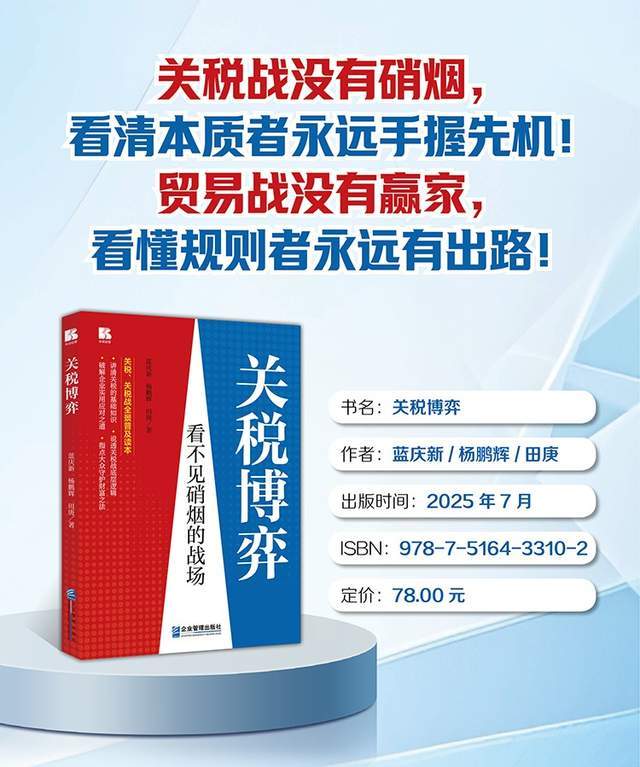
Group 1 - The trade war initiated by the U.S. government, particularly through tariffs on imported furniture, has led to significant adjustments in the global supply chain, impacting Chinese furniture companies and U.S. home improvement giant Home Depot, which has seen a decline in net profit [1] - The book "Tariff Game" provides a comprehensive analysis of the historical and contemporary implications of tariffs as a tool for national power, highlighting the stark contrast between G20 tariff commitments and actual practices [2] - The complexity of the tariff landscape in 2025 is illustrated through various case studies, including the impact of U.S. tariffs on Canadian aluminum and Chinese graphite, which have forced companies to relocate production and adapt to new market conditions [3] Group 2 - The book proposes actionable solutions to break the cycle of "tariff-war-inflation-recession," including the Singapore variable tariff system and the exploration of new tax regimes for cross-border data flow [4] - The emergence of 3D printing technology and the growth of cross-border e-commerce, with transaction volumes exceeding $4 trillion, challenge traditional tariff systems and necessitate the development of a "tariff elasticity mechanism" [4] - "Tariff Game" serves as a key to understanding the dynamics of international relations in the 21st century, providing insights for policymakers and business leaders navigating the evolving landscape of global trade [8][9]

Natuzzi Italia亮相CIFF意大利休闲区 诠释意式高端美学
Huan Qiu Wang· 2025-09-11 10:12
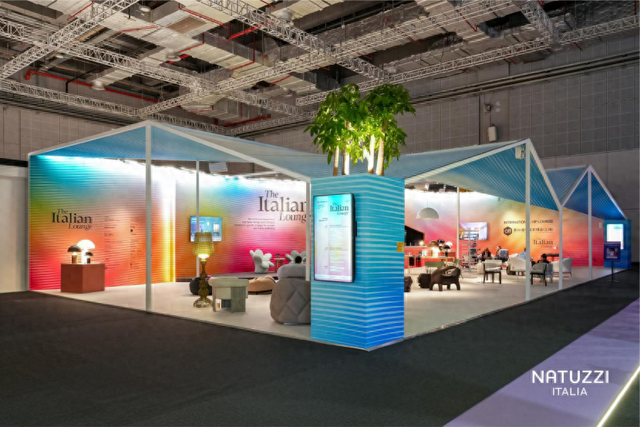
Core Insights - The 56th China (Shanghai) International Furniture Expo (CIFF) showcases the theme "Design Across Boundaries," emphasizing "Design Without Limits," "Global Resonance," and "Scene Revolution" [1] - Italian high-end furniture brand Natuzzi Italia presents its unique aesthetic values through various stunning works at the expo [1] Company Developments - Natuzzi Italia, with 66 years of history, is revitalizing its presence in the Chinese market through innovative products, marketing, and channel strategies [5] - The brand is upgrading its global retail formats, particularly in China, by renewing existing stores in major cities and expanding into emerging urban areas [5] - A new flagship store in Wuxi has successfully launched, with additional openings in cities like Wuhan, Zhengzhou, Hangzhou, and Yiwu [5] Marketing and Customer Engagement - Natuzzi Italia plans to launch an official mini-program that will showcase the brand's history, product lines, designers, and global cases, while also offering a rich membership benefits system [7] - This initiative aims to create a seamless shopping journey that enhances offline experiences and drives online traffic [7] Global Strategy and Cultural Engagement - The brand continues to deepen its involvement in global art and design, participating in high-profile international exhibitions and cultural exchange projects [8] - Natuzzi Italia has collaborated with notable architectural firms and hosted exclusive forums focused on design innovation [8] Future Outlook - The company is sponsoring the Italian Pavilion at the 2025 Osaka World Expo, viewing it as a key bridge to the Asian market [10] - Natuzzi Italia seeks to collaborate with local Chinese designers and real estate projects through initiatives like the N+Design Awards [10] - The brand's dual approach of global initiatives and local engagement enhances its influence and recognition in the Chinese market [12] - By 2025, Natuzzi Italia aims to demonstrate its long-term commitment and potential in China through product, channel, and user experience innovations [14]
家具行业半年考:龙头盈利“率先反转” 智能家居成增长引擎
Xin Hua Cai Jing· 2025-09-11 04:27
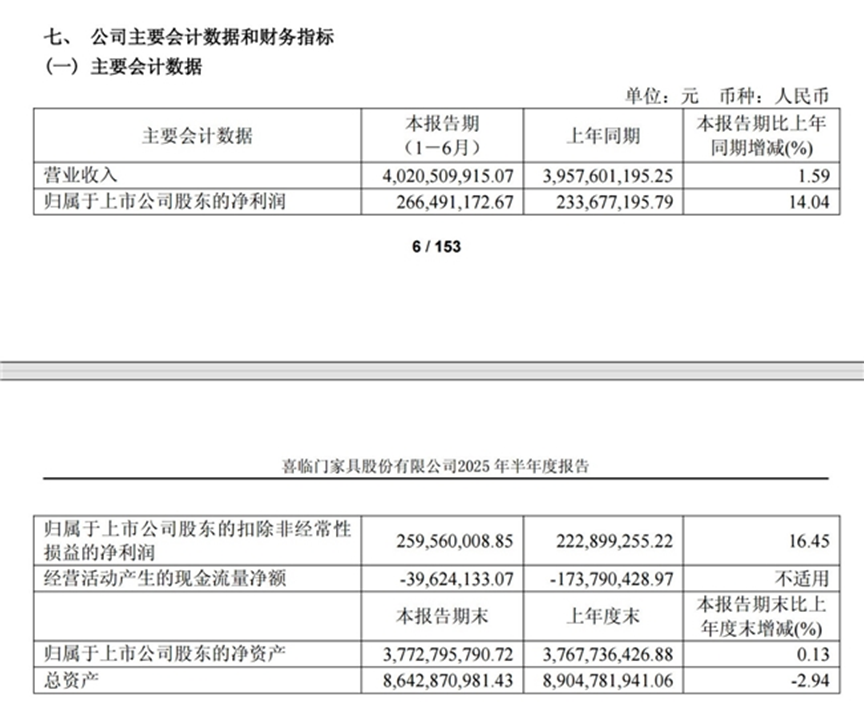
Core Insights - The home furnishing industry is experiencing a "premature reversal" trend due to the dual benefits of consumer promotion policies and the traditional consumption peak in the fourth quarter [1] Group 1: Industry Performance - Leading companies are showing resilience in profitability, with significant improvements in financial metrics [2] - Gujia Home achieved revenue of 9.801 billion, a year-on-year increase of 10.02%, and a net profit of 1.021 billion, up 13.89%, indicating effective cost control and product optimization [2] - Xilinmen reported revenue of 4.021 billion, a slight increase of 1.59%, with net profit rising 14.04% to 266 million, showcasing strong profit elasticity [2][4] - Mengbaihe's revenue reached 4.316 billion, up 9.35%, with net profit increasing by 17.82% to 115 million, benefiting from a low base effect [2] - Mosi's revenue declined by 5.76% to 2.478 billion, with net profit down 4.14% to 358 million, reflecting challenges in the high-end market [2] Group 2: Profitability and Margins - The industry shows a divergence in profitability, with companies focused on high-end smart products experiencing notable margin improvements [3] - Xilinmen's gross margin reached 36.28%, up 1.51 percentage points, indicating a clear and solid profit reversal despite minimal revenue growth [3] Group 3: Growth Drivers - The recovery in the home furnishing industry is driven by strong growth in segments like smart home and sleep economy, fueled by consumer demand for quality sleep and personalized products [6] - Companies are focusing on smart product development, with Xilinmen expanding its AI mattress series and Gujia Home enhancing its "whole-home smart ecosystem" [6][7] - The integration of smart features in products, such as voice-controlled electric sofas, is becoming standard in mid-to-high-end offerings [7] Group 4: Challenges and Opportunities - The industry faces challenges from raw material price fluctuations, real estate adjustments, and insufficient consumer confidence, alongside increased competition in international markets [8] - Companies are adopting various strategies, such as Mengbaihe's overseas production base to avoid trade barriers and Xilinmen's investment in R&D for smart products [8] - The home furnishing sector is currently valued at historical lows, reflecting market caution, but signs of an "early reversal" are emerging across various fields and companies [8] - The outlook for the second half of 2025 suggests that sectors like sleep economy and smart home may continue to outperform the industry, presenting potential investment opportunities [8]


第56届中国家博会(上海)启幕 助推大家居行业高质量发展
Zhong Guo Xin Wen Wang· 2025-09-10 06:36
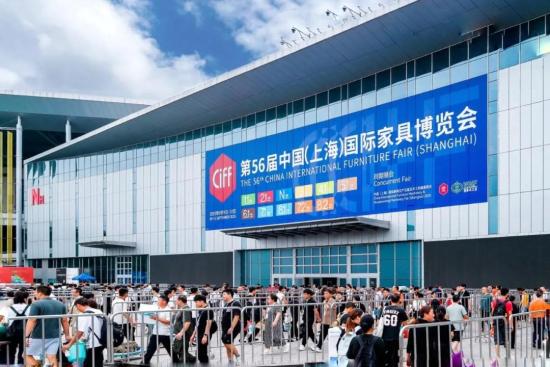
Group 1 - The 56th China International Furniture Fair (Shanghai) opened on September 9, showcasing over 1,500 domestic and international brands across a 300,000 square meter exhibition area, emphasizing the theme "Design Across Boundaries" [2][4] - The fair features ten major exhibition halls covering eight key themes, including design furniture, soft sofas, sleep solutions, and new retail, highlighting the integration of digital and experiential innovations [4][5] - The event focuses on three core highlights: design leadership, high-end product launches, and internal-external circulation, showcasing China's originality and consumer vitality while enhancing the industry's global competitiveness [4][5] Group 2 - Design serves as the core driving force of the fair, bringing together pioneering and international brands, showcasing the fusion of Eastern aesthetics and global trends [5] - The exhibition includes significant new product launches from top design brands and emerging talents, emphasizing health and intelligence in living experiences through material innovation and AI empowerment [5][6] - The fair's foreign trade section aims to enhance the global competitiveness and brand value of Chinese furniture, supported by cross-border e-commerce and business matching platforms [7] Group 3 - The first day of the fair saw a vibrant turnout, with diverse participants contributing to a successful industry event, including forums featuring leading designers sharing insights on lifestyle and industry trends [7] - Various trade matching events facilitated direct connections between exhibitors and global retailers, distributors, and e-commerce buyers, enabling precise matching of procurement needs [7] - The fair also hosted high-level forums and exchange activities covering industry strategies, design trends, digital empowerment, and international cooperation, presenting cutting-edge thoughts and practices in the home furnishing industry [7]
美国降息预期升温,轻工出口链的投资机会
2025-09-07 16:19
Summary of Conference Call Records Industry Overview - The focus is on the light industry export chain, particularly in the context of the anticipated interest rate cuts in the United States, which are expected to significantly restore durable goods demand and improve real estate sales data by 30-40% [1][3][4]. Key Points and Arguments - **Interest Rate Cuts Impact**: The probability of a 25 basis point cut in September and a cumulative 50 basis point cut in October has increased, which is expected to boost durable goods consumption and positively affect the light industry export chain [3][4]. - **Current Market Conditions**: As of the end of Q2, inventory turnover ratios for companies in the light industry export chain are at normal or low levels, indicating good inventory digestion. For example, the inventory turnover ratio for 加多宝 (Jia Duobao) is 0.55, down from 0.65 in Q1, and the real estate market ratio is 0.34, also down from Q1 [1][6][5]. - **Stock Selection Criteria**: Companies with strong business competitiveness, outstanding manufacturing capabilities, and sufficient overseas production capacity are prioritized. Key companies include 嘉兴洲永利恒宁 (Jiaxing Zhouyong Yinhengning), 孟海 (Menghai), and TT 俊 (TT Jun) [1][7]. - **匠心 Company Performance**: In H1 2025, 匠心 (Jiangxin) met revenue expectations with a significant Q2 revenue increase. The company is expanding its market presence in the U.S. through product differentiation and high-end positioning, with a profit growth forecast of 20-30% for the next year [1][8][9]. - **志欧 Company Outlook**: 志欧 (Zhiou) experienced over 10% growth in the European market in H1 2025, despite U.S. market challenges due to tariffs. The company has set ambitious revenue and profit growth targets for 2026 and 2027, with a projected profit of approximately 4.8 billion in 2026 [1][10]. - **Office Furniture Companies**: Companies like 永艺 (Yongyi), 恒林 (Henglin), and 乐歌 (Lege) are currently stable in revenue but are expected to benefit from a rebound in overseas demand due to their high coverage of U.S. production capacity [1][11]. - **Dream百合 and 天润股份**: Dream百合 (Mengbaihe) is recovering from low profit margins due to capacity issues, while 天润股份 (Tianrun) is seeing improvements in its flooring business and new product developments [1][12]. - **英科医疗 Expansion**: 英科医疗 (Yingke Medical) plans to start overseas production by the end of the year, leveraging a 20-30% cost advantage over competitors, which is expected to drive significant volume and profit growth [1][13]. - **Packaging Industry Opportunities**: The packaging industry is accelerating overseas capacity layout due to increased tariffs, with companies like 美联森 (Meilian Sen) and 牧童 (Mutong) benefiting from good demand and profitability [2][14]. - **Investment Opportunities**: Current investment opportunities are concentrated in durable goods-related export chain companies, particularly in furniture and office furniture sectors, with recommended companies including 匠心, 志欧, 永艺, 恒林, 乐歌, 梦百合, and 天润 [1][15][16]. Additional Important Insights - The light industry export chain is poised for recovery as the U.S. enters a rate-cutting cycle, which will likely lead to increased demand for durable goods and related products [3][4]. - The focus on companies with strong overseas production capabilities and competitive advantages is crucial for capitalizing on the expected market recovery [1][7].
消费贷贴息为扩内需注入强劲动力
Zheng Quan Ri Bao· 2025-09-06 15:27
Group 1 - The personal consumption loan interest subsidy policy officially implemented on September 1 aims to stimulate consumption and boost consumer confidence, serving as a strong impetus for activating the domestic demand market [1] - The subsidy focuses on essential sectors such as home appliances, furniture, automobiles, and cultural tourism, addressing consumer pain points and facilitating the recovery of key industries [1] - Banks play a crucial role in executing this policy, with many institutions prepared to implement interest subsidies for eligible personal consumption loans, simplifying application processes and enhancing consumer experience [1] Group 2 - The long-term significance of the consumption subsidy policy extends beyond immediate consumer benefits, aiming to inject vitality into the entire economic system through positive transmission across consumption, investment, and production [2] - Sustainable consumer growth requires not only short-term policy stimulation but also foundational improvements such as increasing household income, enhancing social security, and optimizing the consumption environment [2] - The continuous release of policy dividends is expected to lead to a new wave of growth in the consumption market, providing stronger and more lasting momentum for high-quality economic development [2]
那些「不务正业」的公司,靠炒股赚钱了
36氪· 2025-09-06 10:00
Core Viewpoint - The article discusses how many listed companies in China have shifted their focus from their core businesses to stock trading, often relying on stock investments for significant portions of their profits, especially during the current bull market [4][6]. Group 1: Companies Engaging in Stock Trading - Seven Wolves, originally a men's clothing company, reported a net profit of 160 million yuan in the first half of the year, with only 30 million yuan from clothing sales and the remaining 130 million yuan primarily from stock investments [7][8]. - Zhejiang Yongqiang, a furniture manufacturer, saw its net profit grow eightfold to 462 million yuan last year, with one-third of that profit coming from stock trading [8][20]. - Companies like Jiangsu Guotai have also entered the stock market, planning to use 138.3 billion yuan for investment, including 18 billion yuan for stock trading [13][20]. Group 2: Market Trends and Performance - The current bull market has seen significant gains, with the Shanghai Composite Index rising from just over 3000 points to nearly 3900 points, marking a ten-year high [8][9]. - The stock price of Cambricon, a company specializing in AI chip design, surged from 520.67 yuan to over 1500 yuan per share, becoming a market sensation [9][10]. - Companies like Liou Co. and Two Sides Needle have faced losses due to poor stock performance, highlighting the risks associated with heavy reliance on stock trading [10][12]. Group 3: Shifts in Business Strategy - Many companies have transitioned from traditional business models to include significant investment strategies, often driven by the need to adapt to changing market conditions [19][20]. - Seven Wolves shifted its focus to investment in 2015, moving away from pure manufacturing to a model that combines both industry and investment [19][20]. - Jiangsu Guotai's core business has been affected by geopolitical factors, leading the company to invest heavily in the stock market as a means of generating returns [20][21]. Group 4: Risks and Consequences - Companies that have become overly reliant on stock trading may face challenges in their core operations, as seen with Seven Wolves and Jiangsu Guotai, where R&D investments have declined significantly [36][38]. - The article notes that while stock trading can provide quick returns, it can also lead to a decline in traditional business performance and increased regulatory scrutiny [14][36]. - The experience of companies like Two Sides Needle, which relied on stock gains to offset operational losses, illustrates the precarious nature of such strategies [31][34].

美国经济:PMI显示经济回升,但仍有滞涨压力
Zhao Yin Guo Ji· 2025-09-05 10:31
Economic Indicators - The ISM Services PMI increased from 50.1 in July to 52 in August, exceeding market expectations of 51, indicating economic expansion[2] - The Services PMI corresponds to an annualized GDP growth rate of 1.1%[2] - The Manufacturing PMI rose slightly from 48 in July to 48.7 in August, but remained below the market expectation of 49, indicating a continued contraction[2] Employment and Inflation - The employment index in the services sector slightly improved from 46.4 to 46.5, indicating ongoing weakness in the job market[2] - The price index for services decreased marginally from 69.9 to 69.2, but remains significantly high compared to the post-pandemic average[2] - If August's non-farm payrolls are below 50,000 and the unemployment rate rises to 4.3%, the Federal Reserve may consider rate cuts in September or October[1] Market Outlook - The new orders index in manufacturing surged from 47.1 to 51.4, marking the highest expansion rate since the beginning of the year[2] - The Federal Reserve's focus has shifted from inflation risks to a more balanced assessment due to recent labor market data adjustments[2] - Further rate cuts are anticipated in December and potentially two more in the following year as economic growth stabilizes and inflation decreases[1]
1—7月山东规上工业增加值同比增长7.8%,高于全国1.5个百分点
Zhong Guo Fa Zhan Wang· 2025-09-05 09:09
Core Insights - Shandong Province's industrial value-added output increased by 7.8% year-on-year from January to July, surpassing the national average by 1.5 percentage points, with 35 out of 41 industrial sectors showing growth, resulting in a growth rate of 85.4% [1] - The equipment manufacturing sector saw a significant increase of 12.5%, with major industries such as electronics, automotive, and electrical machinery growing by 19.7%, 16.1%, and 12.1% respectively [1] - High-tech manufacturing also demonstrated robust growth, with a year-on-year increase of 10.5%, indicating a strengthening of new growth drivers [1] Policy Measures - The Shandong Provincial Industrial and Information Technology Department has implemented 18 supportive measures for enterprises and a 2025 action plan for industrial economy, focusing on resolving issues, providing services, and promoting development [2] - The third batch of policy measures includes targeted support for struggling industrial enterprises, promoting green transformation, enhancing AI applications, and expanding financial service channels [2] - A work plan for stabilizing industrial growth has been developed, emphasizing three key lists: a "billion-yuan incremental project list," a "billion-yuan production enterprise list," and a "standardization cultivation list" for small and micro enterprises [2] Industry Focus - The strategy to curb decline focuses on four major industries: refining, steel, electrolytic aluminum, and coking, with tailored strategies for each to enhance production efficiency and support transformation projects [3] - Additionally, six sectors experiencing a decline in value-added output, including paper, furniture, and cultural products, will receive intensified monitoring and support to facilitate recovery [3] - The approach to address external trade pressures includes initiatives to expand international markets and stabilize supply chains, alongside efforts to enhance enterprise expectations through improved service platforms [3]