新能源车

Search documents
十五五的产业政策:变局与破局
2025-11-05 02:30
Summary of Key Points from the Conference Call Industry Overview - The conference call discusses the "15th Five-Year Plan" (十五五) in China, focusing on the transition from quantity to quality in industrial policy, emphasizing industrial ecology, cutting-edge standards, AI integration, and the reduction of traditional subsidies [1][3][8]. Core Insights and Arguments - **Shift in Policy Focus**: The main goal remains unchanged, but constraints have adjusted. Technology will be the core focus for the coming years, with a gradual reduction in direct subsidies and a shift towards building an innovative ecosystem to avoid destructive competition [3][8][12]. - **Gradual Rebalancing**: The policy framework will continue but with nuanced adjustments. The emphasis will be on achieving a balance between multiple objectives, including geopolitical risks and trade friction [3][10][12]. - **AI and Innovation**: AI is expected to enhance productivity through large-scale real-world applications, with a flexible GDP growth target set around 4.5% for the next five years [8][11]. - **Decline of Subsidy-Driven Profits**: Industries that have relied on subsidies will see diminishing returns, shifting the competitive focus to research intensity and execution capabilities of enterprises [8][15]. - **Economic Rebalancing**: The government aims to shift economic growth from supply-driven to demand-driven, with social security reforms expected to stimulate consumption and reduce high savings rates [13][30]. Important but Overlooked Content - **Local Incentive Mechanisms**: The existing local government incentive structures are criticized for promoting quantity over quality, necessitating a reform to encourage consumption rather than production [14][27]. - **Challenges in Total Factor Productivity (TFP)**: TFP growth has significantly slowed, indicating a need for structural reforms to enhance efficiency and resource allocation [17][18]. - **Emerging Industries**: China is rapidly advancing in strategic emerging industries such as AI, robotics, and biotechnology, with expectations to become a leader in these sectors by 2050 [42][43]. - **Supply Chain Vulnerabilities**: Despite advancements, China still faces challenges in high-end semiconductor production and relies on foreign technology for critical components, which poses geopolitical risks [43][44]. Conclusion - The conference call highlights a pivotal moment in China's industrial policy, emphasizing a transition towards innovation and quality, while addressing the need for structural reforms to enhance productivity and consumption. The focus on AI and emerging industries indicates a strategic shift that could redefine China's economic landscape in the coming years [1][3][8][12][42].
美股异动丨Rivian夜盘一度涨超3%,Q3营收同比大增78%,毛利2400万美元超预期
Ge Long Hui· 2025-11-05 01:55
Core Viewpoint - Rivian reported strong third-quarter earnings, significantly exceeding market expectations, which led to a notable increase in its stock price [1] Financial Performance - Revenue for the third quarter reached $1.56 billion, representing a substantial year-over-year growth of 78%, surpassing market expectations of $1.5 billion [1] - The company achieved a gross profit of $24 million, a significant improvement compared to the anticipated loss of $38.6 million [1] - Adjusted earnings per share showed a loss of $0.65, better than the expected loss of $0.72 per share [1] Delivery and Future Outlook - Rivian delivered 13,201 vehicles in the third quarter, marking a 32% increase year-over-year [1] - The company maintained its previously lowered full-year guidance, projecting an adjusted loss between $2 billion and $2.25 billion, capital expenditures between $1.8 billion and $1.9 billion, and deliveries between 41,500 and 43,500 vehicles [1]

10月出海活动回顾:中东出海机遇在哪些行业?
吴晓波频道· 2025-11-05 00:29
Core Insights - The article emphasizes the importance of Chinese companies accurately capturing growth opportunities in overseas markets, particularly in the Middle East, by avoiding blind expansion and focusing on specific sectors [2][4]. Group 1: Market Opportunities - The Gulf Cooperation Council (GCC) countries, particularly Saudi Arabia and the UAE, are highlighted as key target markets for Chinese enterprises due to their high GDP per capita, exceeding three times the world average, and a young population [4][5]. - In 2024, Saudi Arabia is projected to attract foreign direct investment (FDI) of 119 billion RMB, a 24% increase year-on-year, while the UAE's FDI is expected to grow by 48%, reaching a historical high [6]. - The core opportunities in these markets are concentrated in infrastructure, digitalization, and renewable energy, with Chinese state-owned enterprises actively bidding for local projects [7]. Group 2: Consumer Market Dynamics - The consumer market in the region is described as a pyramid structure, with high-end luxury goods targeting wealthy individuals and low-cost daily necessities aimed at foreign laborers, indicating limited space for middle-class products [8]. - The UAE, particularly Dubai, is characterized as a trade and financial hub, with a significant Chinese business presence, including over 8,000 Chinese companies [8][10]. Group 3: Strategic Considerations for Chinese Enterprises - Chinese companies are advised to conduct thorough country selection and internal/external assessments before entering the Middle Eastern market, ensuring compliance and establishing efficient operational teams [11]. - The article notes that successful Chinese brands like Huawei, OPPO, and BYD have already established a presence in the region, indicating a positive reception for Chinese products [10]. Group 4: Upcoming Events and Focus Areas - The article outlines a series of closed-door meetings organized by the Huashang Outbound Industry Alliance, focusing on various overseas markets, including the U.S., Indonesia, and Mexico, to provide practical guidance for companies looking to expand internationally [15][18][21].

新能源车购置税将减半征收 多家车企宣布税费“兜底”政策
Mei Ri Jing Ji Xin Wen· 2025-11-04 12:46
Core Insights - The upcoming reduction of the new energy vehicle (NEV) purchase tax is expected to stimulate a surge in vehicle purchases before the end of the year, with consumers aiming to take advantage of the tax benefits [1][4][5] Group 1: Tax Policy and Consumer Behavior - Several automakers have introduced "tax guarantee" policies to encourage consumers to place orders before the end of November, ensuring that any tax differences due to delays will be covered by the manufacturers [2][3] - Consumers are motivated to finalize their purchases quickly, as the current tax exemption will be replaced by a 5% tax next year, making timely orders crucial for savings [4][5] Group 2: Market Dynamics and Sales Strategies - The automotive market is currently experiencing a sales push as companies leverage the tax adjustment period to boost sales figures [4][5] - Data from the China Automobile Dealers Association indicates that from October 1 to 26, retail sales of new energy passenger vehicles reached 901,000 units, with a year-to-date total of approximately 9.77 million units, reflecting a 22% year-on-year increase [4]





广东“经济老大”宝座不稳,江苏能否两年内逆袭登顶?
Sou Hu Cai Jing· 2025-11-04 10:14
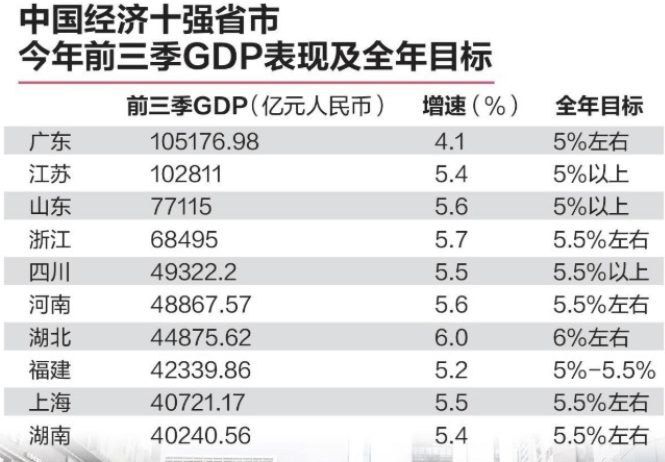
Core Insights - Guangdong's GDP reached 14 trillion in 2024, maintaining the top position nationally, but its growth rate slowed to 3.2%, missing targets for two consecutive years [1] - In contrast, Jiangsu's GDP is 13.7 trillion with a growth rate of 5.8%, leading to a significant narrowing of the economic gap, which has decreased by 43% over the past five years [1][2] - The economic slowdown in Guangdong is attributed to "transformation pains," particularly in cities like Foshan and Guangzhou, where the real estate market and traditional automotive industry face challenges [1][2] Economic Disparities - There is a stark economic imbalance within Guangdong, with developed regions like the Pearl River Delta and underdeveloped areas in western and northern Guangdong, leading to difficulties in sustaining growth when core cities like Guangzhou and Shenzhen falter [2] - Jiangsu's stable economic growth is driven by significant investments in industrial upgrades and technological innovation, contrasting with Guangdong's struggles in traditional sectors [2] Future Projections - Experts predict that if current trends continue, Jiangsu's GDP could surpass Guangdong's within two years, marking a potential seismic shift in China's economic landscape [2] - Despite challenges, Guangdong retains a strong economic foundation, with Shenzhen achieving a growth rate of 5.8% through rapid industrial transformation and significant contributions in the new energy vehicle sector [2][3] Broader Economic Context - The competition between Guangdong and Jiangsu symbolizes a broader transition in China's economy from speed to quality, emphasizing technological innovation over traditional manufacturing [3] - Regardless of the outcome, this rivalry is beneficial for national economic development, stimulating innovation and growth across regions [3]
年轻人被电车甩晕在通勤路上
投资界· 2025-11-04 08:02
Core Viewpoint - The article discusses the phenomenon of increased motion sickness experienced by passengers in electric vehicles (EVs), attributing it to the mismatch between the rapid acceleration and deceleration of EVs and the human body's adaptation to traditional gasoline vehicles [10][19][24]. Group 1: Urban Mobility Changes - Urban mobility has accelerated, but human bodies have not adapted to this new pace, leading to discomfort during commutes [10][19]. - The frequent stop-and-go nature of city driving exacerbates the issue, as passengers struggle to adjust to the rapid changes in speed [21][24]. Group 2: Physical Responses and Sensory Feedback - Human balance relies on visual cues, physical sensations, and feedback from the vestibular system, which are disrupted in EVs due to their silent operation and immediate response to acceleration [19][20]. - The lack of engine noise in EVs means that passengers do not receive the auditory cues that prepare their bodies for movement, leading to increased instances of motion sickness [20][21]. Group 3: Driver Behavior and Passenger Experience - Driver behavior, such as sudden acceleration or deceleration, can significantly impact passenger comfort, with anxious drivers contributing to a more erratic ride [20][25]. - The design of EVs, including features like regenerative braking, can create a jarring experience for passengers, as the vehicle's behavior differs from traditional cars [25][26]. Group 4: Industry Response and Consumer Adaptation - Car manufacturers are aware of the motion sickness issue but prioritize efficiency and performance over passenger comfort, leading to a growing disconnect between vehicle design and user experience [25][26]. - There is a rising trend in the market for solutions aimed at reducing motion sickness, such as "anti-motion sickness" features and products, indicating a potential new market segment [30][31].

恒生科技午后跌幅扩大,百度集团逆市大涨,旗下萝卜快跑全球订单超过1700万宗
Mei Ri Jing Ji Xin Wen· 2025-11-04 05:46
Group 1 - The Hong Kong stock market indices collectively declined, with the Hang Seng Tech Index experiencing a drop of up to 1% [1] - Technology stocks generally fell, while oil stocks continued to rise; banking stocks were active, and gold stocks saw widespread declines [1] - The largest ETF tracking the A-share sector, the Hang Seng Tech Index ETF (513180), mirrored the index's fluctuations, with leading stocks like Horizon Robotics, Sunny Optical Technology, Li Auto, and Xiaomi Group declining, while Baidu Group and Tencent Music saw gains, with Baidu Group rising nearly 5% in the afternoon [1] Group 2 - Baidu's autonomous driving service platform, Luobo Kuaipao, reported over 250,000 weekly orders as of October 31, all of which were fully autonomous, with a total of over 17 million cumulative service orders globally [1] - Luobo Kuaipao has expanded its operations to 22 cities worldwide, including Beijing, Shanghai, Wuhan, Shenzhen, Dubai, and Abu Dhabi [1] - Ping An Securities highlighted that China is at the forefront of autonomous driving pilot operations globally and recommended closely monitoring related companies such as Baidu Group and GAC Group [1] Group 3 - The Hong Kong Stock Connect Automotive ETF (159323) focuses on the Hong Kong new energy vehicle sector, featuring a leading proportion of passenger cars and covering emerging car manufacturers like Li Auto, XPeng, and Leap Motor [2] - The Hang Seng Tech Index ETF (513180) includes a mix of soft and hard technology, showcasing high elasticity and growth potential, encompassing core Chinese tech assets that are relatively scarce compared to A-shares [2]

高盛:上调比亚迪A股和H股目标价 海外市场将成关键增长驱动
Ge Long Hui· 2025-11-04 01:00
Core Viewpoint - Goldman Sachs expects overseas markets to be a key growth driver for BYD over the next decade, raising the company's sales forecast for overseas markets (excluding the U.S.) and increasing target prices for its A-shares and H-shares by 8% to 144 RMB and 141 HKD respectively [1] Sales Forecast - The sales forecast for BYD's overseas markets (excluding the U.S.) for 2026-2035 has been raised by 5%-14%, now projected to be between 1.5 million and 3.5 million units [1] - It is anticipated that the overseas market for new energy vehicles will experience a penetration rate growth exceeding 10% in the coming years, similar to the situation in the Chinese market from 2022 to 2024 [1] Competitive Position - BYD's models are noted to have higher competitiveness in key aspects such as pricing, range, and size across various market segments [1] - The company maintains a buy rating for both its A-shares and H-shares [1]
欧洲安全了?中美会谈后,中国对欧盟示好:送芯片,提供稀土
Sou Hu Cai Jing· 2025-11-03 19:22
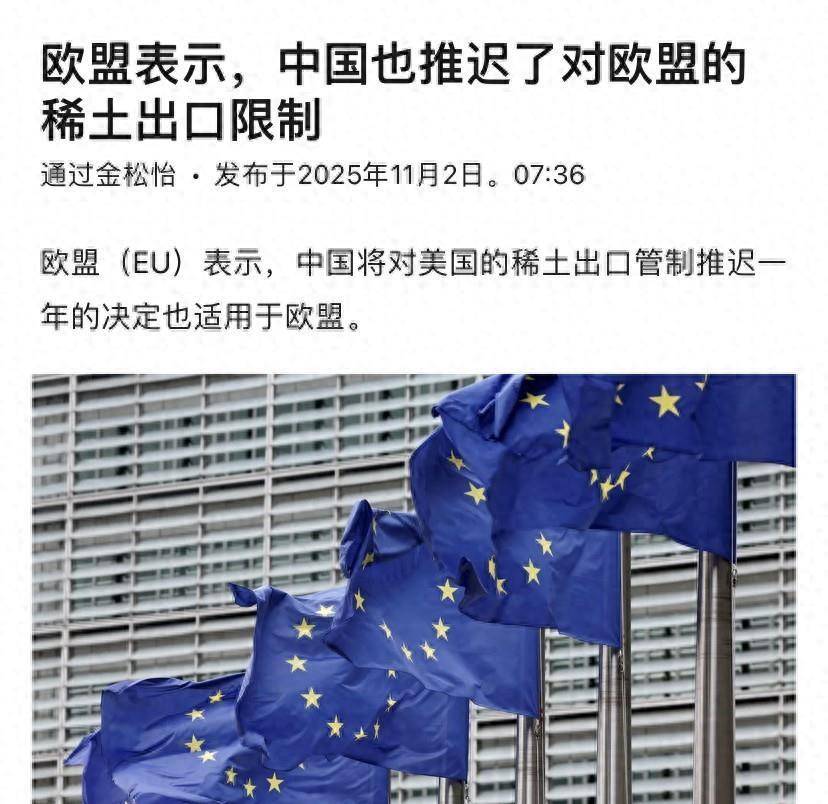
Core Points - China has announced a relaxation of rare earth export restrictions to the EU and lifted some export limits on ASML chips, signaling a potential shift in strategy towards Europe [1][3][6] - The easing of restrictions comes after a recent positive development in US-China relations, where both sides made concessions regarding export controls [3][10] - European companies, particularly in the automotive sector, are relieved as they heavily rely on Chinese rare earths and chips for production [6][7][10] Group 1: Rare Earths - Rare earths are critical for manufacturing electric vehicle batteries, wind turbines, and high-end chips, with Europe relying on imports for over 90% of its needs [6][10] - The previous tightening of export restrictions had caused significant supply chain disruptions for European manufacturers, prompting some to relocate production closer to supply sources [6][12] - The recent policy shift allows European companies to resume expansion plans without the fear of supply shortages [6][10] Group 2: Chips - The chip export restrictions imposed by China were a response to actions taken by the Netherlands against ASML, which is partially Chinese-owned [6][7] - The Chinese government has now offered export exemptions for companies facing "actual difficulties," specifically targeting European automotive manufacturers [7][10] - This development is seen as a positive signal for easing tensions and fostering cooperation between China and Europe [8][10] Group 3: Economic Cooperation - The recent actions by China are viewed as an effort to stabilize global supply chains and maintain cooperative economic relations with Europe [10][12] - Experts suggest that this could lead to a more stable and long-term partnership between China and Europe, reducing reliance on the US [10][12][15] - However, there are calls for Europe to diversify its supply sources to mitigate risks associated with over-dependence on any single country [12][15]
崔东树:2025年1-9月中国占世界新能源车份额68%
智通财经网· 2025-11-03 11:54
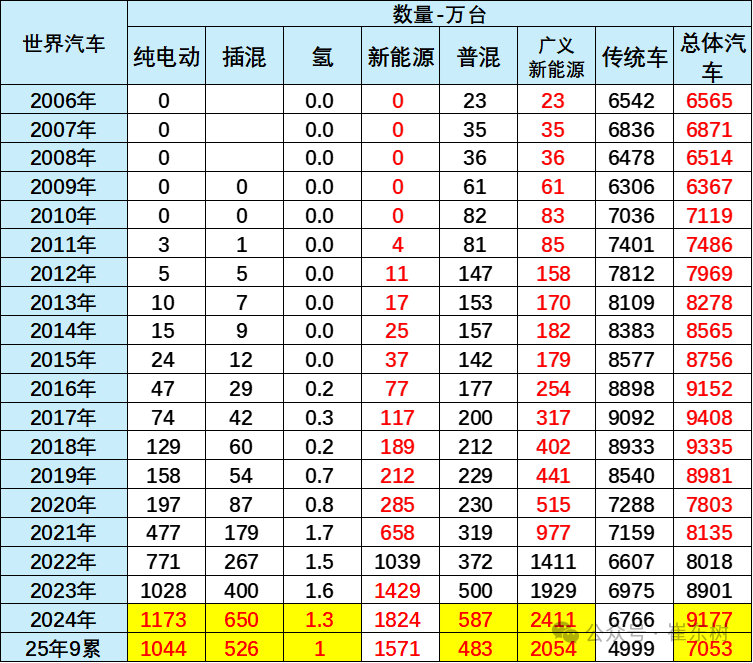
Global New Energy Vehicle Trends - In the first nine months of 2025, global new energy vehicle sales reached 1.571 million units, contributing to 29.2% of total vehicle sales, an increase of 2.9 percentage points compared to the entire year of 2024 [2][5] - The penetration rate of new energy vehicles globally is on a rapid rise, reaching 24.5% in the third quarter of 2025, up from 19.5% in 2024 [26][24] - China accounted for 68% of the global increase in new energy vehicles in the first nine months of 2025, while Germany and the United States contributed 5% and 4% respectively [1][27] Market Performance - In 2025, the global automotive market is projected to reach 70.53 million units, with new energy vehicles making up 1.571 million units [2][5] - The share of pure electric vehicles in new energy vehicles reached 14.8%, while plug-in hybrids accounted for 7.5% in the first nine months of 2025 [5][28] - The global new energy vehicle market is expected to continue its upward trajectory, with significant growth observed from 2021 to 2024 [8][10] Regional Insights - By September 2025, China's new energy vehicle penetration rate reached 46%, significantly higher than Germany's 27%, Norway's 80%, the UK's 32%, the US's 13%, and Japan's 2% [26][1] - The European new energy vehicle market is stabilizing, with a share of 17% in the global market as of September 2025, remaining relatively unchanged from the previous year [29][28] - The US new energy vehicle market showed improvement, with sales reaching 1.24 million units in the first nine months of 2025, marking a 16% increase [21][20] Competitive Landscape - Chinese brands have seen a significant increase in their share of the overseas new energy vehicle market, rising from 1.8% in 2021 to 14.5% by September 2025 [15][27] - The contribution of Chinese new energy vehicles to global sales is expected to remain dominant, with projections indicating a continued strong performance in the coming years [1][29] - The disparity in new energy vehicle development across regions highlights the varying levels of government support and market maturity [26][24]