石油与天然气

Search documents
原油:节前做多波动率、正套持有
Guo Tai Jun An Qi Huo· 2025-09-30 01:10
Report Summary 1. Industry Investment Rating - No industry investment rating information is provided in the report. 2. Core View - The report suggests going long on volatility and holding long positions in calendar spreads for crude oil before the holiday [1]. 3. Summary by Section 3.1 Oil Product Arbitrage Flows - Various oil product arbitrage routes are presented, including gasoline, diesel, jet fuel, HSFO, and naphtha. Some routes are open, while others are closed, with corresponding price differentials [2][4]. 3.2 Crude Oil Market Dynamics and Spreads - **Diesel**: Global demand is expected to be flat year - on - year, with 3Q25 showing moderate growth and 4Q25 being weak. Diesel cracking spreads have increased by $4 per barrel this month. The attack on Russian refineries may further tighten the global balance [5]. - **Jet/Kero**: Global demand growth is slowing, but aviation fuel remains a growth driver. Asian demand in 4Q25 is expected to increase by 140,000 barrels per day [5]. - **Gasoline**: Global demand growth is slowing. Chinese demand is decreasing due to the rapid penetration of new energy vehicles, while Indian and Southeast Asian demand is increasing [5]. 3.3 Crude Oil Cross - Regional Arbitrage - Different crude oil varieties are considered for cross - regional arbitrage in markets such as USGC, USAC, NWE, and Med. Some arbitrage opportunities are open, while others are closed, with corresponding values [6][7][8]. 3.4 Key Market News - President Trump has set conditions for Hamas regarding hostage release. If Hamas refuses, Israel will receive full support to destroy Hamas [9]. - The Nigerian government will hold talks with the labor union to resolve the crude oil production halt threat at the Dangote refinery, which has a capacity of 650,000 barrels per day [9]. - The EU has restored sanctions on Iran, including restrictions on crude oil procurement and transportation [10]. 3.5 Trend Intensity - The trend intensity of crude oil is 0, indicating a neutral view [11].
勇担使命再出发——写在中国石油天然气集团有限公司成立75周年之际
中国能源报· 2025-09-29 11:32
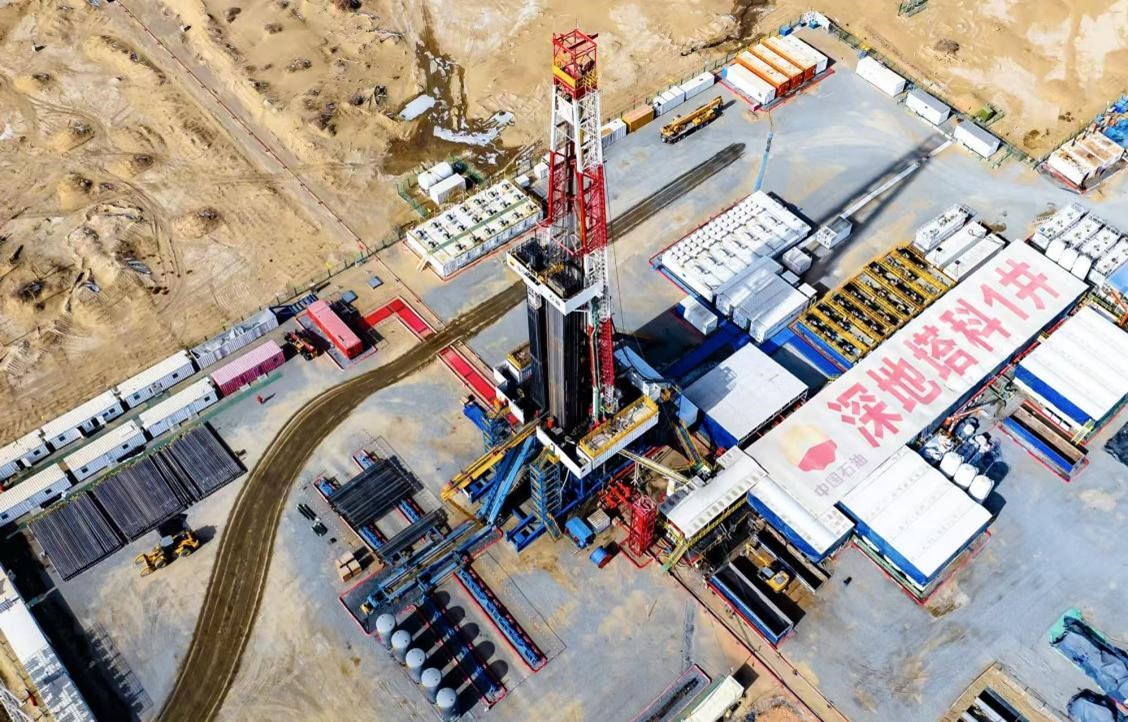
Core Viewpoint - China National Petroleum Corporation (CNPC) celebrates its 75th anniversary, reflecting its significant role in the development of China's oil industry and its commitment to national energy security and innovation [4][28]. Historical Development - The foundation of China's oil industry was laid in 1949 with an initial crude oil production of 120,000 tons, which has since evolved into a major global player [5]. - Major milestones include the discovery of the first large oil field, the Daqing Oilfield, in 1959, and surpassing 10 million tons of crude oil production in 1978, positioning China among the world's leading oil producers [5][9]. Current Achievements - CNPC has established a new production pattern with domestic oil and gas output reaching 1 billion tons each for crude oil, natural gas, and overseas oil and gas rights, solidifying its position in the energy sector [9][10]. - The company has made significant advancements in deep earth exploration, achieving a breakthrough with the successful drilling of the TaKe 1 well, which reached a depth of over 10,000 meters [31][32]. Technological Innovation - CNPC has transitioned from being a technology user to an innovator, focusing on high-level technological self-reliance and integrating innovation with industrial development [14][33]. - The company has developed advanced drilling technologies and equipment, enhancing its capabilities in deep and ultra-deep oil and gas exploration [33][39]. International Expansion - CNPC has expanded its international presence, particularly in the Middle East, establishing strong partnerships and leading projects such as the West Qurna-1 oil field in Iraq [18][19]. - The company has successfully executed numerous overseas projects, contributing to its status as a key player in the global energy market [20]. Green Transition - CNPC is actively pursuing a green transformation, integrating renewable energy projects alongside traditional oil and gas operations, with a goal of achieving a balanced energy portfolio by 2035 [26][27]. - The company has made strides in developing renewable energy sources, including wind and solar power, and aims to enhance its role in the clean energy sector [21][25]. Future Goals - CNPC aims to become a world-class integrated international energy and chemical company, focusing on sustainable development and innovation in energy supply [28][40].


南华期货LPG产业周报:估值修复-20250928
Nan Hua Qi Huo· 2025-09-28 13:33
Report Industry Investment Rating - Not provided in the content Core Viewpoints of the Report - The core contradictions affecting LPG price trends include cost - end crude oil fluctuations due to supply - demand and geopolitical issues, a strong outer - market propane with a large internal - external price difference, and a relatively loose domestic fundamental situation with stable supply - demand, slightly improved chemical demand, and weak combustion demand. PG10/11 mostly follows outer - market propane and crude oil, and with the rebound of crude oil and improved domestic sentiment, the low - level valuation of the disk has been repaired [2]. - The near - end trading logic is that the domestic market remains loose, chemical demand has slightly improved, and the outer - market price is still relatively strong. With the rebound of crude oil, the domestic market has rebounded from the low level. The far - end is affected by macro factors, outer - market seasonal demand, and the possible weakening of chemical demand [4][7]. - The market is expected to be in a volatile state. The price range of PG11 is predicted to be between 4200 - 4600. Different trading strategies are proposed, including base - spread, month - spread, and hedging arbitrage strategies [11]. Summary by Relevant Catalogs Chapter 1: Core Contradictions and Strategy Recommendations 1.1 Core Contradictions - Cost - end crude oil is under pressure from supply surplus and geopolitical disturbances, leading to increased volatility. Outer - market propane has been strong in the past month, with a converted RMB - inclusive price of 4700 - 4750 yuan/ton and a large internal - external price difference. The domestic fundamental situation is loose, with stable supply - demand, slightly improved chemical demand, and weak combustion demand [2]. - Near - end: The domestic market is loose, chemical demand has slightly improved, the outer - market price is still relatively strong, and the domestic market has rebounded from the low level due to crude oil rebound. Far - end: It is affected by macro factors, outer - market seasonal demand, and the possible weakening of chemical demand [4][7]. 1.2 Trading - Type Strategy Recommendations - **Market Positioning**: The market is in a volatile state, and the price range of PG11 is 4200 - 4600 [11]. - **Base - Spread Strategy**: It is expected to shrink in a volatile manner. Chemical demand is expected to weaken, combustion demand is still weak, the spot side is under pressure, and the disk has room for valuation repair [11]. - **Month - Spread Strategy**: Sell high and conduct reverse arbitrage. The short - term is expected to be in a volatile pattern. Recently, the disk has shown a positive arbitrage trend due to the rebound of the near - month contract [12]. - **Hedging Arbitrage Strategy**: Buy PP and sell PG at low prices. There are many maintenance plans for the PP end and PDH in October, and PDH profits have room to expand. Also, pay attention to the impact of US demand - inventory changes and Sino - US relations on the outer - market regional price difference after the National Day [12]. 1.3 Industrial Customer Operation Recommendations - **Inventory Management**: When inventory is high and worried about price drops, short - sell PG futures (PG2511) to lock in profits and sell call options (PG2511C4600) to collect premiums and reduce costs [14]. - **Procurement Management**: When procurement inventory is low, buy PG futures (PG2511) at low prices to lock in procurement costs and sell put options (PG2511P4200) to collect premiums and reduce costs [14]. Chapter 2: This Week's Important Information and Next Week's Attention Events 2.1 This Week's Important Information - **Positive Information**: Crude oil rebounded due to issues such as Russian sanctions conflicts. In the industrial sector, the arrival of goods decreased slightly due to typhoons, ports destocked, and chemical demand and production increased slightly [20]. - **Negative Information**: Spot prices dropped this week due to typhoons and refinery inventory reduction [16]. 2.2 Next Week's Important Events to Follow - September 30: China's official manufacturing PMI. October 1: US September ISM manufacturing data (expected 49.2, higher than the previous value of 48.7). October 3: US unemployment rate, non - farm employment and other economic data [21]. Chapter 3: Disk Interpretation 3.1 Price - Volume and Capital Interpretation - **Domestic Market**: The PG11 contract fluctuated and rose this week, mainly following the crude oil price for valuation repair. Major profitable seats reduced their net positions but increased their cumulative profits. The top 5 long and short positions in the dragon - tiger list did not change significantly. The net short positions of some seats decreased slightly, while foreign investors increased their net short positions slightly and retail investors increased their net long positions slightly. Technically, on the daily chart, PG11 entered the previously mentioned volatile range (4200 - 4450), and on the hourly chart, it was at the upper Bollinger Band at the Friday close [18]. - **Base - Spread and Month - Spread Structure**: The LPG month - to - month structure remained in a BACK structure, becoming steeper than last week. The 10 - 11 month spread was 148 yuan/ton, widening by 83 yuan/ton compared to last week, due to the concentrated reduction of short positions in the October contract [23]. 3.2 Outer - Market Situation - **Single - Side Trend**: FEI M1 closed at 545 dollars/ton (- 2), with the premium slightly widening to - 12.25 dollars/ton; CP M1 closed at 544 dollars/ton (+ 2), with the discount remaining at - 5 dollars/ton; MB M1 closed at 380 dollars/ton (+ 7) [25]. - **Month - Spread Structure**: FEI M1 - M2 was - 9.10 dollars/ton (- 3.10), CP M1 - M2 was - 14.94 dollars/ton (- 3.9), and MB M1 - M2 was - 3.69 dollars/ton (- 2.17) [31]. - **Regional Price - Difference Tracking**: The regional price difference was generally volatile this week, and the FEI - MOPJ price difference weakened again [34]. Chapter 4: Valuation and Profit Analysis 4.1 Upstream - Downstream Profit Tracking in the Industrial Chain - **Upstream Profits**: This week, the gross profit of major refineries was 823.98 yuan/ton (- 98.7), and that of Shandong local refineries was 204.72 yuan/ton (- 73.48). With high refinery profits, the output of liquefied gas increased [37]. - **Downstream Profits**: The PDH - to - monomer profit calculated by FEI was - 215 yuan/ton (- 65), and the PDH profit calculated by CP was - 170 yuan/ton (- 129), with greater losses in PP production. MTBE gas - separation profit was - 61 yuan/ton (- 6.75), isomerization profit was - 99 (+ 73), and alkylation oil profit was - 60.50 yuan/ton (+ 77) [39][40]. 4.2 Import - Export Profit Tracking - The outer - market spot price weakened slightly this week, and the import profit increased slightly [42]. Chapter 5: Supply - Demand and Inventory 5.1 Overseas Supply - Demand - **US Supply - Demand**: The US is still in a stock - building state this week. After the National Day, demand is expected to increase seasonally. From January to August, the US exported 45450 kt of LPG, a year - on - year increase of 3.61%, with a 38% year - on - year decrease in exports to China. The export volume remained high in August and September, while the volume to China remained low [46][53]. - **Middle East Supply**: From January to August, the Middle East exported 31745 kt of LPG, a year - on - year increase of 1.55%, with a 0.88% year - on - year decrease in exports to India and a 22.41% year - on - year increase in exports to China. The overall shipment was neutral [57]. - **India Supply - Demand**: From January to August, India's LPG demand was 21487 kt, a year - on - year increase of 5.6%, and its LPG import was 13959 kt, a year - on - year increase of 7.38%. The second half of the year is the seasonal peak season in India, and demand and imports are expected to remain high [61]. - **South Korea Supply**: South Korea's LPG demand has no obvious seasonality. From May to August, its LPG import remained high, with some re - export demand in May and June. The propane cracking profit is better than that of naphtha, and imports are expected to remain relatively high [65]. - **Japan Supply - Demand**: Japan is highly dependent on imported LPG, and its demand and imports have obvious seasonality. As the weather turns cold, imports are expected to increase, and they are still neutral in September and October [73]. 5.2 Domestic Supply - Demand - **Domestic Supply - Demand Balance**: Supply: Domestic LPG output is expected to remain high due to high refinery profits, and imports may decrease slightly in October due to possible weakening chemical demand. Demand: Chemical demand will decrease slightly, and combustion demand will increase slightly. Inventory: Overall, inventory will increase slightly [81]. - **Domestic Supply**: The operating rate of major refineries is 80.27% (- 1.25%), and that of independent refineries is 53.49% (+ 1.64%). The domestic LPG sales volume this week was 53.92 tons (+ 0.07), and the port arrival volume was 53 (- 19.55). Inventory continued to increase, with factory inventory at 18.81 tons (+ 0.78) and port inventory at 313.66 tons (- 9.74) [86]. - **Domestic Demand**: PDH demand: Wanhua Penglai has increased production, and Zhenhua has restarted. Attention should be paid to the maintenance situation in October. MTBE demand: The operating rate has slightly increased due to the resumption of production at Dongming Qianhai, and exports still provide support. Alkylation oil demand: The operating rate has slightly increased due to the resumption of production at Ningxia Baichuan. Combustion demand: It is expected to increase slightly [93][95][100].
震惊俄罗斯的民风淳朴:加油不仅没有缺斤短两,还会多给加一些
Sou Hu Cai Jing· 2025-09-28 09:45
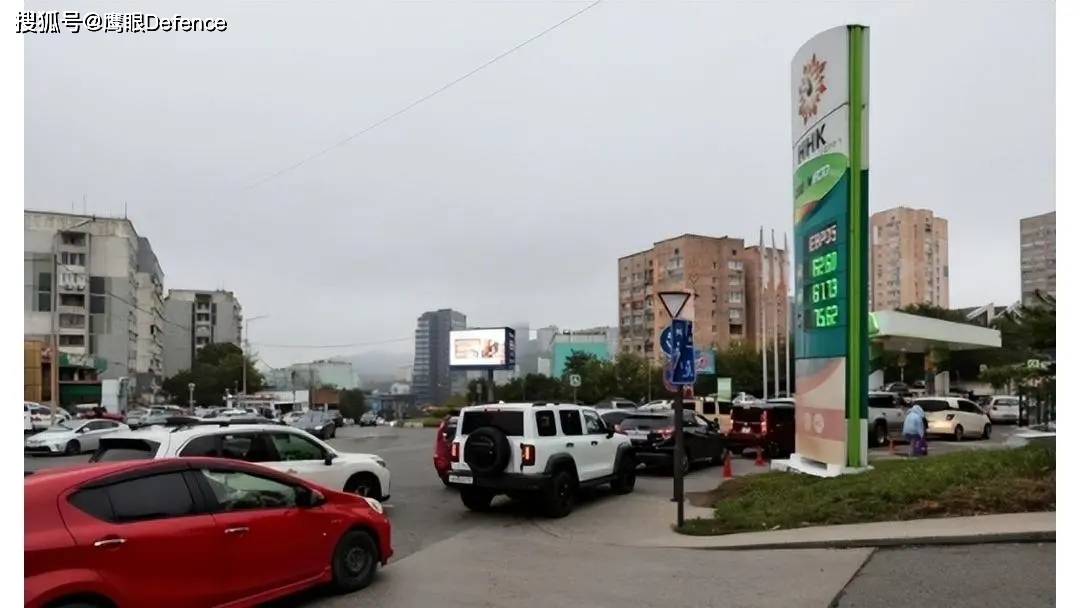
说一件很有意思的事,一件让我感到有些意外、有些震惊的事。 随着汽油价格上涨、短缺,俄罗斯的司机们也担忧加油站给加的油是不是缺斤短两,于是乎,就有俄罗斯博主专门进行了实地验证,分别从俄罗斯天然气 工业股份有限公司、俄罗斯石油公司和私营的卢卡石油下属加油站购买了5升汽油,测量后发现: 俄罗斯,终究是一个有着深厚人文底蕴的国家,跟全世界所有的国家一样,都是好人多、坏人少,可惜,俄罗斯人却被卷入了战争,并且大多数人还被洗 脑成了战争支持者,唉,兴亡百姓苦,让人们痛苦的人才是真正的敌人啊! 我知道大多数俄罗斯人都支持这场战争,包括很多俄罗斯反对派,但我也认为,俄罗斯人民同样是这场战争的受害者,发动战争的人才是罪人,不能因为 这一小撮罪犯就把一个国家、一个民族给打上有罪的烙印。 俄罗斯天然气工业股份公司加油站实际上多给了150毫升、俄罗斯石油公司加油站多给了180毫升,私营的卢克石油下属加油站则多给了200毫升。 在如此环境下,甚至黑市汽油价格每升突破200卢布(约合17.2元人民币)的情况下,俄罗斯加油站不仅没有缺斤短两,没有像传言中那样加10升汽油实 际上只给9升,反而还多给了司机们一些汽油,没想到吧?不得不承认,即 ...
国内外产业政策周报:钢铁建材等稳增长方案陆续印发,美国众议院代表团访华-20250927
CMS· 2025-09-27 08:34
Domestic Policy Focus - The industry stabilization plans for steel, construction materials, and light industry have been issued, emphasizing capacity regulation compared to previous versions [3][6][8] - The steel industry plan aims for an average annual growth of around 4% in value added, with a focus on supply-side structural adjustments and strict capacity control measures [9][10] - The construction materials plan prohibits the addition of new cement and flat glass capacity, requiring capacity replacement plans for new and renovated projects [10][11] Biopharmaceutical Sector - The National Drug Procurement Office released the national centralized drug procurement document (GY-YD2025-1), focusing on optimizing procurement rules and reducing drug costs for the public [18] - Changes in the procurement process include stricter qualification standards for bidding companies and modifications to the selection rules to respect clinical choices [18] Overseas Policy Developments - The U.S. Congress delegation visited China, with discussions focusing on Taiwan and military issues [3][6] - The U.S. and U.K. signed a significant technology cooperation agreement during President Trump's visit, addressing core issues such as the Israel-Palestine conflict and the Russia-Ukraine situation [3][6] Weekly Industry Policy Review - Key areas of focus include the rectification of internal competition, new production capabilities, infrastructure, new energy vehicles, media, and biopharmaceuticals [3][6] Other Policies - The third round of inspections by various financial regulatory bodies has been reported, indicating ongoing efforts to improve regulatory compliance and governance [3][6]
国际金价,涨了!国际油价,大涨!
Sou Hu Cai Jing· 2025-09-27 05:44
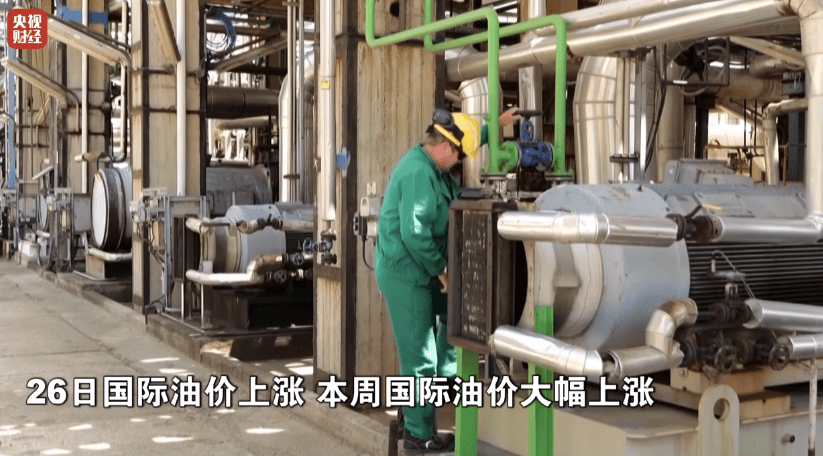
Group 1 - The core inflation indicator, the US August core PCE price index, rose in line with market expectations, indicating stabilization of inflation and easing concerns about rising inflation [1][8] - Following the data release, US Treasury yields fell, and all three major US stock indices opened higher, ending a three-day decline with the Dow Jones up 0.65%, S&P 500 up 0.59%, and Nasdaq up 0.44% [1] - The data provides the Federal Reserve with more room to respond to a cooling labor market and strengthens market expectations for future rate cuts, with an 89.8% probability of a rate cut in October and 65.1% in December according to CME FedWatch Tool [1] Group 2 - International oil prices rose significantly this week due to various factors, including Ukraine's attacks on Russian energy infrastructure and US pressure on multiple countries to reduce imports of Russian crude oil [4] - As of the close, light crude oil futures for November delivery rose by 1.14%, while Brent crude oil futures for November delivery increased by 1.02%, with cumulative increases of 4.85% and 5.17% for the week, respectively [4] - In the precious metals market, international gold prices rose over 1% on Friday and accumulated a weekly increase of 2.78%, closing at $3809.00 per ounce [4] Group 3 - The US stock indices collectively declined earlier in the week, with Oracle's stock dropping over 8% due to concerns about high valuations in the AI sector and potential risks within the industry [5] - The Dow Jones fell by 0.15%, S&P 500 by 0.31%, and Nasdaq by 0.65%, marking the first decline for the Nasdaq and S&P 500 in four weeks [5] Group 4 - The US August personal consumption expenditures (PCE) price index rose by 0.3% month-on-month, with the core PCE price index increasing by 0.2% and a year-on-year rise of 2.9%, still above the Federal Reserve's 2% inflation target [8] - Consumer spending in the US has shown growth for three consecutive months, despite the persistent challenge of inflation [8]

中国石油已成为我国最大的跨国经营企业
Jing Ji Ri Bao· 2025-09-26 07:36
Group 1 - The core viewpoint is that China National Petroleum Corporation (CNPC) has significantly enhanced its energy supply capacity, becoming a crucial pillar for national energy security as it celebrates its 75th anniversary [1][2] - CNPC's oil and gas business has established a "three 100 million tons" structure, continuously consolidating its domestic oil and gas production capabilities [1] - The company has a historical legacy dating back to the early days of New China, where the annual crude oil production was only 12,000 tons, and has since evolved through significant discoveries and developments in major oil fields [1] Group 2 - In response to the global energy revolution and carbon neutrality goals, CNPC is actively pursuing a green transformation, aiming to build a new energy system that is clean and low-carbon [2] - The company emphasizes technological self-reliance, achieving breakthroughs in geological theories and leading global advancements in oil and gas exploration technologies [2] - CNPC has successfully ranked among the top two in the China Enterprise 500 list and has maintained a position within the top six of the Fortune Global 500 for 15 consecutive years, reflecting its robust international presence and growth [2]
罕见!美国彻底不装了:俄罗斯在欧洲的能源生意,要全部取而代之
Sou Hu Cai Jing· 2025-09-26 04:39
Group 1 - The core message of the article is that the U.S. aims to replace Russia as the primary supplier of natural gas and oil products to Europe, marking a significant shift in energy strategy [1][3][5] - The U.S. is seizing the opportunity presented by the vacuum left in the European energy market due to the ongoing geopolitical tensions and the need for Europe to reduce its reliance on Russian energy [3][5][7] - Before the Ukraine conflict, Russia supplied 45% of the EU's natural gas and 27% of its oil, but by 2024, these figures are projected to drop to 19% and 3% respectively, creating a substantial market gap for U.S. energy exports [7][9] Group 2 - The U.S. is expected to become the largest supplier of LNG to Europe, with projections indicating that by 2024, 45% of the LNG imported by the EU will come from the U.S. [7][9] - The U.S. shale oil production is anticipated to reach a historical high of 13.7 million barrels per day by 2025, with Texas's Permian Basin alone producing over 5 million barrels daily [9][12] - The EU has committed to completely severing energy ties with Russia by 2027, which will require long-term contracts with the U.S. for LNG imports, costing an additional €20 billion annually [12][13] Group 3 - The U.S. strategy is not merely commercial but is also a calculated geopolitical maneuver to maintain influence over Europe and prevent it from diverging in international affairs [13][18] - Despite the U.S. ambitions, there are concerns about the stability of its own energy supply, with predictions of falling shale oil prices and reduced investment in the sector [16][18] - The article raises questions about the future of Europe, whether it will become an "energy colony" of the U.S. or find an alternative path, indicating that the situation is still evolving [18]
75载栉风沐雨 中国石油当好能源保供顶梁柱
Sou Hu Cai Jing· 2025-09-26 02:15
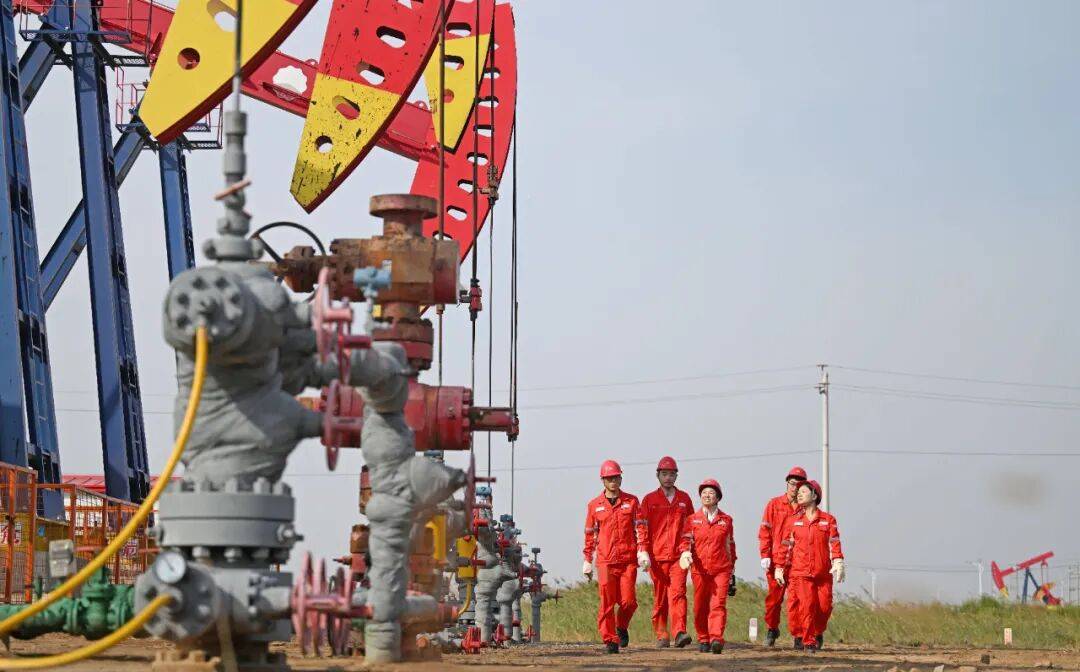
Core Viewpoint - The development of China National Petroleum Corporation (CNPC) over the past 75 years has transformed China from a poor oil country to a major oil power, significantly contributing to the country's industrialization and energy security [2][15]. Group 1: Transformation and Strategic Goals - The 18th National Congress initiated a comprehensive transformation of the energy sector, with a focus on building a world-class enterprise and implementing the "Four Revolutions and One Cooperation" energy security strategy [3][4]. - CNPC has made significant advancements in various fields, including deep earth exploration, shale oil revolution, and green hydrogen initiatives, showcasing its commitment to clean energy and technological innovation [3][4][15]. - The company aims to enhance its international competitiveness and ensure energy supply security through a series of transformative practices and strategic goals during the 14th Five-Year Plan period [4][16]. Group 2: Achievements and Economic Contributions - CNPC has successfully implemented the "Seven-Year Action Plan for Increasing Reserves and Production," achieving a production equivalent of over 100 million tons in domestic oil, natural gas, and overseas equity [4][16]. - The company's net profit is projected to triple compared to 2020, with significant increases in labor productivity and economic value added, reinforcing its position as a leading state-owned enterprise [4][16]. - During the 14th Five-Year Plan, CNPC's total assets grew from less than 70 trillion yuan to over 90 trillion yuan, with total profits increasing from 1.9 trillion yuan to 2.6 trillion yuan, reflecting a robust growth trajectory [4][16]. Group 3: Historical Context and Future Outlook - The history of CNPC is marked by significant milestones, including the establishment of centralized management in 1950 and the discovery of major oil fields, which have been pivotal in transforming China into a net oil exporter by 1978 [5][17]. - The company embodies the spirit of perseverance and dedication, as exemplified by the "Iron Man" Wang Jinxi, and has been recognized for its contributions to national energy security and industrial development [6][17]. - Looking ahead, CNPC is positioned to play a crucial role in ensuring energy supply and supporting China's modernization efforts amidst global energy transitions and geopolitical challenges [8].
七十五载能源报国 中国石油书写12万吨到“三个1亿吨”奋进答卷
Jing Ji Wang· 2025-09-25 10:06
Core Viewpoint - The 75th anniversary of China National Petroleum Corporation (CNPC) highlights its evolution from a struggling oil industry to a leading global energy company, emphasizing its significant contributions to national energy security and economic development [1][4]. Historical Development - In the early years of New China, the annual crude oil production was only 120,000 tons, leading to a pressing demand for oil as the "blood" of industry [2]. - The establishment of the Fuel Industry Ministry's Petroleum Administration Bureau in 1950 marked the beginning of unified management of national oil resources [2]. - Pioneering efforts by oil workers, exemplified by "Iron Man" Wang Jinxi, led to the discovery of major oil fields such as Karamay and Daqing, with national crude oil production surpassing 10 million tons by 1978, positioning China as the eighth largest oil producer globally [2]. Achievements and Growth - CNPC has consistently ranked among the top two in the Fortune Global 500 for 15 consecutive years and is now the second largest international chemical company as of 2024 [1]. - The company has developed a robust oil and gas supply structure, with domestic oil and gas production accounting for approximately half and two-thirds of national output, respectively [4]. Technological Advancements - CNPC has made significant strides in technology, focusing on unconventional oil and gas exploration and development, as well as new materials and products [5]. - The company is at the forefront of a digital and intelligent revolution, utilizing advanced models and software to enhance safety and efficiency in energy production [7]. Commitment to Sustainability - In response to global energy transitions and carbon neutrality goals, CNPC is actively pursuing green transformation, aiming to establish a clean and low-carbon energy system [4]. - The company has achieved a historic breakthrough in ethylene production capacity, exceeding 10 million tons per year, and is exploring renewable energy sources such as wind and solar power [4]. Social Responsibility - CNPC emphasizes its role as a state-owned enterprise, contributing to national and community needs through disaster relief, rural revitalization, and educational support [7]. - The company has gained international recognition for its contributions during major events like the Beijing Winter Olympics, showcasing its commitment to service and excellence [7].