科技股

Search documents
Palantir盘中一度重挫9%!科技股抛售加剧,标普500市值一度蒸发万亿美元
美股IPO· 2025-08-20 22:11
Core Viewpoint - The article discusses the ongoing sell-off in the U.S. stock market, primarily driven by technology stocks, highlighting concerns over high valuations and the Federal Reserve's hawkish stance [1][3][5]. Group 1: Market Trends - The sell-off led by technology stocks has resulted in the U.S. stock market declining for four consecutive trading days, with the S&P 500 index experiencing its largest single-day drop since early August [3]. - Nvidia's stock fell nearly 4% before the release of the Federal Reserve's meeting minutes, although the decline later narrowed [3][5]. - Palantir, a key indicator of speculative interest in the market, saw its stock drop over 9% in a single day, marking a cumulative decline of 23.87% since August 12, and achieving its longest losing streak since April 2024 [1][3]. Group 2: Federal Reserve Insights - The Federal Reserve's July meeting minutes indicated that officials are more concerned about the upward risks of inflation compared to the risks of weak employment [5]. - Following the release of the minutes, investors shifted their focus to Fed Chair Jerome Powell's upcoming speech at Jackson Hole, seeking clues about future policy directions [5]. Group 3: Technology Sector Dynamics - Technology stocks, which have been the main drivers of the market due to strong demand for AI products and cloud services, are now becoming the leading laggards, raising concerns about concentration risk [7][8]. - Analysts warn that the high weight of technology stocks could lead to a broader market decline if they continue to fall, with some suggesting that investors may prefer to hold cash instead of taking on more risk [9]. Group 4: Investor Sentiment - Investor opinions are divided regarding the recent market downturn, with some viewing it as a buying opportunity, while others believe that high valuations necessitate profit-taking [10][12]. - JPMorgan's Andrew Tyler suggests that Powell's speech could change market direction, indicating that the current situation is a test for buyers [11]. - BMO's Carol Schleif notes that the market has "fully" priced in future positives, leaving little room for error, and any disappointing news could disrupt the fragile balance [13].


鹰派隐忧支撑美元,金价退守100日均线,关注美联储会议纪要
Sou Hu Cai Jing· 2025-08-20 05:45
Core Viewpoint - The recent fluctuations in gold prices are primarily influenced by the strength of the US dollar, geopolitical uncertainties, and expectations surrounding Federal Reserve policies, particularly ahead of the Jackson Hole symposium [1][3][9]. Group 1: Gold Price Movements - As of August 20, spot gold is trading around $3315.04 per ounce, having dropped 0.5% to close at $3315.45 on the previous day, reaching a low of $3314.80, close to the 100-day moving average support level of $3311.15 [1]. - The recent decline in gold prices is attributed to a 0.15% increase in the US dollar index, which rose to 98.27, making gold more expensive for investors holding other currencies [5]. - UBS has raised its gold price target to $3600 by March 2026, citing ongoing macroeconomic risks in the US, a decline in dollar usage, and strong investment demand, suggesting that the current drop in gold prices may be temporary [5]. Group 2: Federal Reserve Policy Impact - The Federal Reserve's policy direction is a key driver of gold price volatility, with traders estimating an 85% probability of a 25 basis point rate cut in September, which typically benefits gold due to lower opportunity costs [3]. - Market expectations are uncertain regarding Fed Chair Powell's upcoming speech at Jackson Hole, with concerns that he may downplay the likelihood of a September rate cut, potentially strengthening the dollar and exerting downward pressure on gold [3][10]. - The upcoming release of the July Fed meeting minutes is anticipated to provide insights into the US economic outlook, which could further influence gold prices depending on the Fed's hawkish or dovish stance [3][9]. Group 3: Geopolitical Factors - Geopolitical factors are also influencing gold's safe-haven appeal, with President Trump expressing hopes for a resolution to the Ukraine conflict, which could diminish gold's attractiveness as a safe asset if peace negotiations progress [6]. - However, uncertainties surrounding the willingness of parties to reach an agreement may continue to support gold prices, as any breakdown in negotiations could reignite risk aversion among investors [6]. Group 4: Macroeconomic Data - Recent macroeconomic data presents a mixed picture, with July housing starts increasing by 5.2% to 1.428 million units, while building permits fell by 2.8% to a five-year low of 1.35 million units, indicating a cautious outlook among builders [7]. - The yield curve's bear steepening reflects rising inflation expectations, which negatively impacts gold as higher yields attract funds to bonds over non-yielding assets [8]. - Stock market performance, particularly the decline in tech stocks like Nvidia by 3.5%, is also affecting gold sentiment, as investors hedge against potential hawkish signals from the Fed [8].

英伟达,大跌
Sou Hu Cai Jing· 2025-08-20 00:22
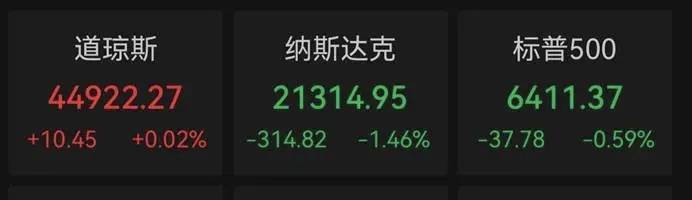
Market Performance - On August 19, U.S. stock indices closed mixed, continuing the adjustment trend from the previous trading day. The Dow Jones increased by 0.02%, while the S&P 500 and Nasdaq fell by 0.59% and 1.46%, respectively [3] - Technology stocks faced significant pressure, leading to declines in major indices. The Wande American Technology Seven Giants Index dropped by 1.69%, with Nvidia experiencing a 3.5% decline, marking its largest drop since April 21 [5] Key Company Movements - Nvidia's stock fell by 3.5%, closing at $175.64, which is its largest decline in nearly four months [2][5] - Other major tech companies also saw declines, including Meta down over 2%, and Tesla, Amazon, and Microsoft each down more than 1% [5] - Among Chinese concept stocks, Tencent and Pinduoduo saw increases, while Xiaomi Group dropped over 2%, and JD Group, Meituan, NetEase, and Alibaba fell more than 1% [6] Commodity Market - Precious metals experienced notable declines, with spot gold prices falling by 0.51% to $3315.51 per ounce, and COMEX gold futures down by 0.57% to $3358.90 per ounce. Silver prices also dropped, with spot silver down 1.65% and COMEX silver futures down 1.84% [9] - In the oil market, light crude oil futures for September delivery fell by $1.07 to $62.35 per barrel, a decline of 1.69%, while Brent crude for October delivery decreased by $0.81 to $65.79 per barrel, down 1.22% [11]

今天看到一个词,反智牛
集思录· 2025-08-19 13:28
Core Viewpoint - The current market dynamics reflect a disconnect between individual stock performance and overall market trends, with a notable rise in technology and small-cap stocks while consumer stocks struggle [1][2][4]. Group 1: Market Sentiment - The sentiment in the market is characterized as "anti-intellectual," suggesting that those who are not profiting from the current trends may perceive the market as irrational [1][2][6]. - There is a recognition that the market operates on a principle where for every winner, there is a loser, indicating a zero-sum game in trading [11]. Group 2: Investment Strategies - Investors are encouraged to reassess their holdings and strategies, particularly if they are heavily invested in consumer stocks that are underperforming [4][13]. - The discussion highlights the importance of following broader market trends, such as investing in index funds or ETFs, which may provide more reliable returns compared to individual stock picking [12][13]. Group 3: Market Behavior - The market is described as inherently irrational, with the behavior of participants leading to price movements that do not always align with fundamental values [9][10]. - The current market phase is referred to as a "debt bull market," where companies with high debt levels are driving the rally, raising questions about sustainability [7].

宋雪涛:全球TACO牛市,谁泡沫更大?
Xin Lang Cai Jing· 2025-08-19 06:25
Group 1 - The core of the global market's risk appetite recovery is attributed to the loosening of dollar liquidity, with potential risks arising from changes in Federal Reserve policy or cross-border capital flows [3][5] - The TACO (Trump Always Chickens Out) trades have led to increased confidence among investors, resulting in new highs for developed and emerging markets, including US, European, and Asian stocks [4][5] - The current environment of dollar liquidity is closely linked to the Federal Reserve's monetary policy and cross-border capital movements, impacting multiple markets and asset classes [5] Group 2 - Recent changes in dollar liquidity can be observed through five dimensions, including a significant decline in the dollar index, which has dropped 2.4% in the last quarter and 10% year-to-date [6][9] - The actual yield on US Treasury bonds has decreased by over 20 basis points since the peak in April, contributing to a more favorable risk sentiment [9] - Global central banks have accelerated their monetary supply, with a notable increase in the growth rate of global central bank money supply by nearly 7 percentage points in the last quarter [11] Group 3 - The cost of offshore dollar financing has decreased, indicating a more favorable liquidity environment for non-US equity markets [13] - Foreign capital inflows into non-US equity markets are becoming evident, with A-shares seeing a 0.75% increase in foreign ownership value compared to the end of last year [15] - In the broader non-US equity markets, foreign capital inflows have been observed in various Asian markets, contrasting with the net outflows seen over the past 12 months [19] Group 4 - The current AI wave has led to significant capital expenditures among tech giants, with an average capital expenditure growth rate of 18% from 2021 to 2024, raising concerns about the effectiveness of these investments [24] - The recent rise in US stocks has shown a barbell structure, with tech giants on one end and small-cap stocks on the other, reflecting a market pricing in economic resilience and policy risk reduction [27] - The Buffett Indicator, which measures the ratio of total market capitalization to nominal GDP, has reached a historical high of 2.1, indicating potential overvaluation in the US stock market [30][37]

宋雪涛:全球TACO牛市,谁泡沫更大?
雪涛宏观笔记· 2025-08-19 06:18
Group 1 - The core viewpoint of the article is that the recovery of global risk appetite and stock market increases are primarily driven by the loosening of dollar liquidity, with potential risks arising from changes in Federal Reserve policies or cross-border capital flows [2][4] - The article discusses the phenomenon of TACO (Trump Always Chickens Out) trading, which has led to increased confidence among investors and a bullish atmosphere in various global markets, including US, European, and Asian stocks [4][5] Group 2 - The improvement in global risk appetite is attributed to the loosening of dollar liquidity, which is closely linked to the Federal Reserve's monetary policy and cross-border capital flows [5][6] - The dollar index has significantly declined, dropping 2.4% in the past quarter and 10% year-to-date, which has positively impacted non-US stock markets [7][9] - The actual interest rates of US Treasury bonds have decreased, providing a foundation for risk sentiment release, with a decline of over 20 basis points since April [9][11] - Global central banks have accelerated monetary supply, with a notable increase in the growth rate of global central bank money supply by nearly 7 percentage points in the past quarter [11][14] - The cost of offshore dollar financing has decreased, indicating a more favorable liquidity environment for non-US equity markets [14][16] Group 3 - There is a noticeable trend of foreign capital inflow into non-US equity markets, with A-shares seeing a 0.75% increase in foreign ownership value compared to the end of last year [16][19] - Various Asian markets, including Japan, South Korea, and Vietnam, have experienced net inflows of foreign capital since July, contrasting with the previous 12 months of net outflows [19][20] Group 4 - The article highlights concerns regarding the effectiveness of capital expenditures by technology giants amid the current AI boom, with an average capital expenditure growth rate of 18% projected for tech stocks from 2021 to 2024 [20][22] - The current market structure shows a "barbell" effect, with significant gains in both large tech companies and small-cap stocks, indicating a potential increase in market fragility [22][26] Group 5 - The "Buffett Indicator," which measures the ratio of total market capitalization to nominal GDP, has reached a historical high of 2.1, suggesting a potential overvaluation of the market [26][28] - Comparisons of risk premiums across global indices reveal that US and Indian stocks have low risk premiums, while A-shares and Korean stocks maintain higher levels [31][34] - The article concludes that the high valuation levels across major stock indices, combined with the low risk premiums in developed markets, indicate a potential bubble in the current market environment [39]

美股三大指数几乎平收 英特尔结束六连涨
Mei Ri Jing Ji Xin Wen· 2025-08-18 21:17
Market Performance - On August 19, major U.S. stock indices closed nearly flat, with the Nasdaq rising by 0.03%, the S&P 500 declining by 0.01%, and the Dow Jones falling by 0.08% [1] Technology Sector - Large technology stocks showed mixed performance, with Intel dropping over 3%, ending a six-day streak of gains; Meta fell more than 2%, while Apple, Microsoft, and Google experienced slight declines [1] - Tesla increased by over 1%, and Netflix, Nvidia, and Amazon saw modest gains [1] Notable Stock Movements - GoodRx surged over 37%, marking its best single-day performance since September 2020 [1]

全球TACO牛市,泡沫有多大?
SINOLINK SECURITIES· 2025-08-18 14:52
Group 1: Market Trends and Drivers - Recent global market risk appetite has significantly improved, with many developed and emerging market indices reaching new highs, including A-shares and Hong Kong stocks entering a bull market atmosphere[2] - The decline of the US dollar index by 10% this year has notably boosted non-US stock markets[2] - The actual yield on US Treasury bonds has decreased, alleviating valuation pressure on global assets[2] - Global central banks have accelerated monetary supply growth, with 76 rate cuts this year compared to only 19 rate hikes, particularly benefiting non-US markets[2] Group 2: Valuation Concerns - The "Buffett Indicator" (total market capitalization/GDP) for US stocks has reached a historical high of 2.1, approximately 2.9 standard deviations above the long-term average, indicating potential overvaluation[3] - The capital expenditure growth rate for tech giants is projected at 18% from 2021 to 2024, raising concerns about the sustainability of this growth and potential valuation corrections[3] - The current valuation levels of major markets show that US, Indian, Vietnamese, and German stocks are at absolute highs, while risk premiums for Indian, US, and Vietnamese stocks are relatively low[4] Group 3: Market Sensitivities and Risks - The high non-fundamental premium in markets like A-shares and German stocks suggests increased sensitivity to potential reversals in dollar liquidity or changes in capital flows[4] - If the Federal Reserve's policies or cross-border capital flows change, markets with high non-fundamental premiums may be more vulnerable to corrections[4] - The report highlights the potential for a "shrinking circle" effect in global markets if risk appetite declines, particularly affecting markets with high non-fundamental premiums[4]
不懂为什么还有人看空
集思录· 2025-08-18 14:15
Core Viewpoints - The article discusses the contrasting perspectives on the stock market, highlighting the ongoing debate between bullish and bearish sentiments among investors. It emphasizes that market dynamics are influenced by the actions and beliefs of both groups, leading to trading opportunities and price fluctuations [1][7][8]. Group 1: Market Sentiment - Many technology stocks and innovative pharmaceuticals have seen significant performance increases, while consumer and new energy sectors have not yet reversed, remaining at low price levels [1] - The article questions the rationale behind bearish sentiments, suggesting that some investors may be overly focused on short-term index levels [1] - The concept of a bull market is described as a large-scale wealth transfer, where new investors often buy from those who are selling at market peaks [1] Group 2: Trading Strategies - A strategy of buying below 3000 points and selling above is mentioned, indicating a cautious approach rather than outright bearishness [3] - The article notes that market dynamics are not solely determined by loud voices or national sentiment but are influenced by fundamental and speculative factors [4][8] - The importance of having both bullish and bearish perspectives in the market is highlighted, as it creates the necessary conditions for trading [7][8] Group 3: Market Valuation - As of August 13, the median TTM price-to-earnings ratio for the market was reported at 85 times, indicating a potentially overvalued market [9] - The article references specific sectors, such as micro-cap stocks and banks, noting their performance trends and the divergence in stock price movements across different industries [10][11]

银行、科技企稳反转,中概股大跳水
Ge Long Hui· 2025-08-15 18:17
Market Overview - The market experienced a weak rebound after a dip, with the Dow Jones down 0.02%, Nasdaq down 0.01%, and S&P 500 up 0.03% [1] - Bank stocks showed signs of stabilization and reversal, while technology stocks continued to exhibit mixed performance [1] Banking Sector - Major banks like JPMorgan Chase rose by 1.25%, while Bank of America, Citigroup, Morgan Stanley, and Zions Bancorporation also saw slight gains [3] - Some banks, including United Bank and Alliance West Bank, experienced minor declines [3] Technology Sector - Intel surged by 7.38%, with Amazon up 2.86% and Netflix up 2.17% [3] - Other tech stocks like NVIDIA, Qualcomm, Google, and Microsoft had slight increases, while Advanced Micro Devices fell by 1.88% and Tesla dropped by 1.12% [3] Chinese Concept Stocks - Chinese stocks opened lower and remained weak throughout the day, with the China Golden Dragon index down 2.13% [3] - Notable declines included Li Auto down 4.62%, and other companies like Xpeng Motors, NIO, Alibaba, and NetEase all fell over 3% [3] - Tencent, JD.com, Baidu, and Bilibili also saw declines exceeding 2% [3] Gold Market - COMEX gold opened higher but closed down 0.72% at $3382.3 per ounce, with intraday fluctuations between a low of $3375.5 and a high of $3407.2 [3]