半导体

Search documents
白领和蓝领,同时站在了悬崖边
财富FORTUNE· 2026-03-19 13:04
Core Viewpoint - The procurement of humanoid robots by a traditional food company, Coconuts Group, signals a significant shift in the labor market, indicating a trend towards automation and AI-driven processes that could replace both manual and white-collar jobs [1][3]. Group 1: Automation and Labor Market Impact - Coconuts Group plans to purchase 50 humanoid robots capable of peeling 360 coconuts per hour, which could replace dozens of skilled workers, indicating a potential restructuring of labor in the industry [1]. - The rise of humanoid robots and AI in production lines suggests a "no-difference replacement" in the labor market, affecting jobs across various sectors, including engineering and banking, particularly those with repetitive and quantifiable tasks [3][4]. - The unemployment rate for recent graduates aged 22 to 27 has reached 5.6%, the highest since 2013 (excluding the COVID-19 pandemic), highlighting the growing job market pressures driven by technological advancements [3][4]. Group 2: Structural Changes in Employment - The employment pressure is not due to economic recession but rather a structural adjustment driven by technology, as evidenced by HSBC's plan to cut around 20,000 jobs, primarily in back-office roles that AI can easily replace [4][5]. - The trend of job cuts is not isolated; Meta is also planning significant layoffs, indicating a broader wave of job reductions in the tech sector as companies seek to manage costs amid rising automation [4][5]. - The traditional labor market structure is changing, with the middle layer of jobs disappearing due to the dual impact of AI and humanoid robots, creating a significant skills gap between available jobs and those being replaced [6]. Group 3: Corporate Responses and Future Outlook - Corporate leaders express mixed responses to the changes; while some encourage embracing AI, others warn of the impending job crisis, emphasizing the need for society to adapt to the rapid technological changes [7]. - BlackRock has committed to investing $100 million in training for technical jobs, aiming to prepare 50,000 workers for roles in skilled trades, but this effort is still insufficient compared to the number of jobs at risk [7]. - The urgency for societal adaptation to technological advancements is highlighted, as companies like Coconuts Group are already implementing AI-driven automation, pushing the need for a clear path forward in workforce development [7].





策略专题报告:以港为媒:中国资产安全性价值重估
ZHESHANG SECURITIES· 2026-03-19 12:53
Core Insights - The report suggests that the ongoing geopolitical tensions, particularly the US-Iran conflict, may lead to a significant shift in global capital flows, positioning Hong Kong as a preferred destination for risk-averse investments [1] - The valuation of Hong Kong stocks is highlighted as being significantly lower compared to other markets, providing a safety margin for international investors [3] - The report emphasizes the resilience of Chinese assets, particularly in the context of energy independence and the potential for capital inflows into Hong Kong [5] Group 1: Financial Security - The number of family offices in Hong Kong has increased, indicating a trend where Middle Eastern capital is seeking refuge in Hong Kong due to geopolitical uncertainties [12] - The asset management scale of private banks in Hong Kong saw an 18.5% year-on-year increase in early 2026, reflecting growing confidence among investors [13] - The Hong Kong real estate market has shown signs of recovery, with rental yields exceeding mortgage rates, contributing to a stable housing market [16] Group 2: Valuation Gap - Hong Kong stocks are currently undervalued, with the Hang Seng Technology Index trading at a price-to-earnings ratio of 21.2, significantly lower than the KOSDAQ's nearly 120 times [26] - The report notes that global capital has been reducing exposure to the South Korean stock market, further highlighting the attractiveness of Hong Kong as a rebalancing opportunity [29] - The energy self-sufficiency of China, at 85%, contrasts sharply with Japan and South Korea's reliance on imported oil, making Chinese assets more resilient to geopolitical risks [29] Group 3: Quality Core Stocks in Hong Kong - The report categorizes Hong Kong's core assets into two types: traditional high-dividend blue chips like HSBC and new economy leaders such as Chinese tech giants, both of which are seen as essential for defensive investment strategies [31] - High-dividend assets are positioned as a stabilizing force in uncertain economic conditions, with Hong Kong being a hub for such investments [32] - The report highlights the potential of the Huawei supply chain as a key area for investment, emphasizing the importance of domestic demand in supporting technological advancements [36] Group 4: Outlook for Chinese Asset Safety - The report anticipates a revaluation of the safety of Chinese assets, driven by the ongoing geopolitical landscape and the attractiveness of Hong Kong as a financial center [40] - The influx of family offices and the stabilization of the Hong Kong real estate market are seen as indicators of a broader trend towards recognizing the value of Chinese assets [41] - The report concludes that Hong Kong's strategic position and its role as a hub for offshore RMB transactions will enhance its appeal to international investors [21]
从暴利到怀疑:美光科技的高光时刻,正在成为周期的警报
美股研究社· 2026-03-19 12:10
Core Viewpoint - The market is signaling a shift from pricing based on "prosperity" to "cycles," as evidenced by Micron Technology's impressive financial results being met with a stock price decline [1][3][19]. Financial Performance - Micron Technology reported a near doubling of revenue year-on-year, with a gross margin soaring to 74.9% and an operating margin approaching 70%, marking an extremely rare level of profitability in the semiconductor industry [1][6]. - Despite these strong financials, the stock price fell by 3% after the earnings report, indicating investor skepticism about the sustainability of such profits [1][3]. Profit Drivers - The current profit surge is attributed to three main factors: explosive growth in AI server demand, passive supply contraction in NAND, and a highly concentrated storage market dominated by three major players [7][8]. - The profit increase is characterized as a result of "price distortion" rather than "volume growth," suggesting that the current high margins may not be sustainable [8][12]. Market Dynamics - Historical patterns indicate that high profitability in the storage sector often precedes downturns, as seen before the 2000 internet bubble and the 2018 trade war [8][19]. - The market's reaction reflects a belief in "mean reversion," where the current high gross margin is viewed as an anomaly rather than a new normal [14][15]. Capital Expenditure Concerns - Micron's plans to significantly increase capital expenditure (Capex) signal a new expansion cycle, raising concerns about future price sustainability [16][20]. - The potential for a "prisoner's dilemma" among major players could lead to a price war if one company breaks the current production discipline [16][17]. Demand Uncertainty - The demand for storage is highly concentrated among a few major cloud providers, which gives these buyers significant bargaining power. Any slowdown in their capital spending could rapidly decrease demand elasticity [17][19]. - Geopolitical factors and the rise of domestic competitors in China could further complicate supply dynamics and affect pricing power in the long term [17][19]. Conclusion - The market is reassessing how to value storage companies like Micron, weighing whether they should be treated as "growth stocks" driven by AI or as "cyclical stocks" subject to supply constraints [19][20]. - The future trajectory of capital expenditure will be crucial in determining whether the storage industry can maintain high prices or if it will revert to a cyclical downturn [20].


英伟达已连续两年成为全球最大半导体供应商 去年营收遥遥领先
Xin Lang Cai Jing· 2026-03-19 12:01
Core Insights - Nvidia has significantly benefited from the recent surge in generative artificial intelligence, with its computing chips being widely purchased by various manufacturers, leading to a substantial increase in its performance and revenue [2][3] - Nvidia has achieved record revenue for 11 consecutive quarters, reaching $68.127 billion in the fourth quarter of fiscal year 2026, ending January 25 of this year [2][3] - According to market research reports, Nvidia has been the highest revenue-generating semiconductor supplier globally for two consecutive years, with projections of $97.395 billion and $150.301 billion in revenue for 2024 and 2025, respectively [2][3] Competitor Analysis - Samsung Electronics is projected to be the second-highest semiconductor supplier in 2024 and 2025, with revenues of $75.091 billion and $85.759 billion, respectively, although the gap with Nvidia is widening [4] - TSMC, while not classified as a semiconductor supplier due to its role as a foundry for companies like Nvidia and Apple, reported revenue of $122.424 billion last year, making it the closest competitor to Nvidia in the semiconductor field [4]

老黄怒怼玩家根本不懂AI,英伟达新AI功能遭全网抵制,游戏圈炸锅了
3 6 Ke· 2026-03-19 11:52
Core Viewpoint - NVIDIA's new graphics technology DLSS 5 has faced backlash from gamers who feel it undermines artistic integrity by replacing unique character designs with AI-generated aesthetics, despite NVIDIA's claims of maintaining artistic control for developers [7][22][23]. Group 1: DLSS 5 Technology Overview - DLSS 5 represents a significant advancement in NVIDIA's AI-driven graphics rendering, moving from merely upscaling pixels to injecting realistic lighting and materials into scenes using a real-time neural rendering model [8][9]. - The technology allows for real-time operation at up to 4K resolution and is designed to understand complex scene semantics, bridging the gap between rendering and reality [11][12]. - NVIDIA claims that DLSS 5 is the most significant breakthrough in computer graphics since the introduction of real-time ray tracing in 2018 [11]. Group 2: Industry Reactions and Concerns - Gamers have expressed concerns that DLSS 5's AI-generated visuals create a homogenized aesthetic, detracting from the unique artistic vision of game developers [5][15][27]. - The term "Sloptracing" has emerged in online discussions, mocking the perceived low-quality AI-generated content that DLSS 5 produces [15][20]. - Industry professionals, including artists, have criticized the technology as disrespectful to creative artists, questioning the extent of control developers truly have over the AI's output [22][23]. Group 3: Developer and Publisher Support - Major game publishers and developers, including Capcom, Bethesda, Ubisoft, and Warner Bros. Games, have shown support for DLSS 5, with several upcoming titles set to implement the technology [27][28]. - Bethesda has stated that the implementation of DLSS 5 will be under the control of its art team, suggesting a collaborative approach to integrating the technology [24].

Micron (MU) Faces Key Earnings Test as AI Demand Drives 60% Growth Outlook
Yahoo Finance· 2026-03-19 10:58
Core Insights - Micron Technology, Inc. is poised to report its fiscal Q2 2026 results, marking a significant moment in the semiconductor cycle driven by AI demand [1] - Analysts expect revenue growth exceeding 60% year-over-year, with consensus EPS at $9.19 compared to $1.56 in the same period last year, indicating a rapid cycle turnaround [2] - The company is viewed as a critical player in the AI supply chain, providing essential memory for AI chips, positioning it as an "infrastructure play" for AI technologies [3] Revenue and Growth Expectations - Micron's HBM capacity for 2026 is constrained, with rising demand leading to an "AI supply squeeze," as noted in its last earnings call [4] - The company forecasts record revenue of $18.7 billion for the next quarter, supported by strong margins and AI-driven demand across its product lines [5] - Growth is primarily driven by the Compute and Networking segment, reflecting the impact of AI demand on the company's revenue mix [6] Market Sentiment and Stock Performance - The stock has shown momentum, gaining over 60% year-to-date, with increased trading activity and a "Strong Buy" consensus from 26 analysts [7][9] - The average analyst price target is approximately $461, suggesting limited upside unless the company exceeds expectations in its upcoming report [7] - Today's earnings report will be crucial in determining if the AI-driven memory boom has further growth potential or if expectations have already been met [8]
老黄怒怼玩家根本不懂AI!英伟达新AI功能遭全网抵制,游戏圈炸锅了
量子位· 2026-03-19 10:33
Core Viewpoint - NVIDIA's new DLSS 5 technology, which aims to revolutionize graphics rendering in gaming, faces backlash from players who feel it undermines artistic integrity by introducing AI-generated visuals that lack the unique touch of human artists [1][11][32]. Group 1: DLSS 5 Technology Overview - DLSS 5 represents a significant advancement from previous versions, shifting from merely enhancing resolution to using generative AI for real-time rendering of light and materials [17][22]. - The technology utilizes a real-time neural rendering model that analyzes each frame's color and motion vectors to inject realistic lighting and materials, achieving effects previously seen only in Hollywood visual effects [20][21]. - DLSS 5 supports up to 4K resolution and aims to bridge the gap between rendering and reality, allowing developers to create unprecedentedly realistic graphics [18][20]. Group 2: Player Reactions and Concerns - Players express dissatisfaction with the AI-generated visuals, arguing that they replace the unique artistic designs of games with a homogenized aesthetic [7][32]. - The term "Sloptracing" has emerged among players to criticize the perceived low-quality AI-generated content that detracts from the artistic value of games [33]. - Prominent figures in the gaming industry, including artists and developers, have voiced concerns that AI technologies like DLSS 5 may disrespect the work of human creators and diminish their creative control [41][55]. Group 3: Developer Control and Artistic Integrity - NVIDIA asserts that developers retain control over the effects of DLSS 5, allowing them to maintain their artistic vision [42][45]. - Bethesda has confirmed that the implementation of DLSS 5 in their games will be fully managed by their art teams, suggesting that players can choose to enable or disable the feature [48][49]. - However, there are doubts about the extent of control developers truly have, as AI may increasingly influence artistic decisions in game design [55]. Group 4: Industry Support and Future Prospects - DLSS 5 is set to launch in Fall 2023, with initial support from major titles such as "Assassin's Creed: Shadows," "Hogwarts Legacy," and "Starfield" [56]. - NVIDIA claims broad support from leading publishers and developers in the industry, indicating a strong push for the adoption of DLSS 5 technology [57].

黄仁勋 GTC 最新定调:“光进铜退”是误解,“光铜并举”才是未来
RockFlow Universe· 2026-03-19 10:32
Core Insights - The article emphasizes a shift in the narrative from "optical over copper" to a more balanced approach of "copper for vertical connections and optical for horizontal connections" in the AI infrastructure landscape [3][5][12] - Nvidia's CEO Jensen Huang highlighted the continued necessity of copper cables in AI data centers, correcting previous market misconceptions about the obsolescence of copper [9][10] - The investment landscape is evolving, with companies in the copper and optical sectors poised to benefit from this dual approach, particularly as Nvidia transitions from a chip supplier to a system integrator [16][18] Group 1: Market Dynamics - The previous market sentiment overly favored optical solutions, leading to inflated valuations in the optical communication sector while neglecting copper cable companies [9][10] - Huang's emphasis on the need for more copper cable capacity indicates a correction in market bias, reaffirming copper's role in short-distance data transmission within racks [9][10] - The article predicts that the transition to optical solutions within racks will not occur until 2028, contrary to earlier expectations of a 2026 timeline [10][24] Group 2: Investment Opportunities - Companies like Amphenol (APH) are positioned to benefit from the extended lifecycle of copper solutions, as they are integral to Nvidia's copper strategy [18][19] - TE Connectivity (TEL) is highlighted as a versatile player, maintaining a strong presence in both copper and optical technologies, making it a defensive investment against technological risks [19] - In the optical sector, Coherent (COHR) and Lumentum (LITE) are identified as key suppliers for CPO technology, with potential for long-term growth despite short-term valuation adjustments [20][21] Group 3: Strategic Implications - The article suggests that investors should focus on companies with tangible orders in the copper sector while also being prepared to capitalize on optical technology advancements as they materialize [24][25] - The anticipated growth in AI data centers will create significant demand for both copper and optical solutions, leading to a reshaping of the supply chain dynamics [16][24] - The conclusion stresses the importance of adhering to physical laws and commercial cycles in investment strategies, particularly in the context of AI infrastructure [25]

欧洲越来越难买芯片了
半导体芯闻· 2026-03-19 10:19
Core Insights - The ongoing conflict in Iran has disrupted air freight routes through the Middle East, leading European companies to seek alternative warehouses and incur higher shipping costs for semiconductor imports from Asia [1][4] - Global air freight capacity has decreased by approximately 9% compared to pre-war levels, causing increased costs and delivery delays for European companies importing semiconductors [1][4] - Despite the challenges, many buyers are willing to pay a premium to ensure continued delivery of high-value products like semiconductors [1][4] Group 1: Impact on Semiconductor Supply Chain - European semiconductor companies are experiencing delivery delays due to rising air freight costs, with some unable to predict future price trends [2] - The conflict has led to a shift in logistics strategies, with airlines opting for direct flights, which reduces cargo capacity due to the need for additional fuel [4] - Companies are actively testing their semiconductor supply chains due to disruptions in key shipping routes, resulting in increased logistics costs and reduced buffer inventories [6] Group 2: Industry Responses and Adjustments - Many companies have adjusted their supply chains post-COVID-19 to maintain higher inventory levels and are diversifying their semiconductor suppliers [5][6] - Automotive manufacturers, such as ZF and Volkswagen, are continuing to use air freight for semiconductor transportation but are facing increased costs [4][6] - The semiconductor supply chain is under pressure, but some companies report no immediate impact on production, indicating a level of preparedness and inventory management [5][6]
三星投资110万亿,扩产芯片
半导体芯闻· 2026-03-19 10:19
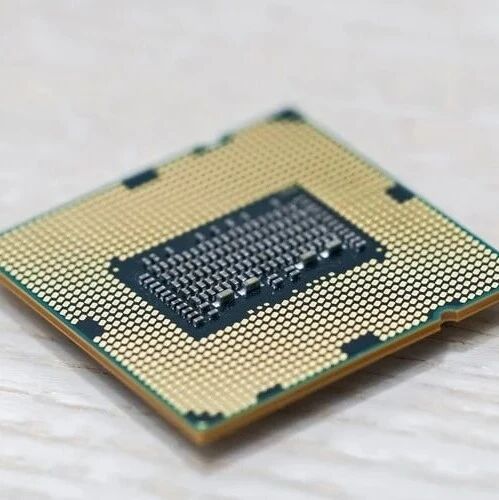
Group 1 - The core viewpoint of the article is that Samsung Electronics is significantly increasing its investment in facilities and R&D to solidify its leadership in the artificial intelligence semiconductor era, with a target investment exceeding 110 trillion KRW this year, which is an increase of about 20 trillion KRW from the previous year [1] - Samsung aims to be the only semiconductor company globally that can provide a "one-stop solution" covering memory, foundry, and advanced packaging in the AI semiconductor era [1] - The company plans to strengthen its position in the high-value memory market, such as high bandwidth memory (HBM), and to ensure long-term growth by entering future-oriented fields like AI and advanced robotics through business restructuring [1] Group 2 - Samsung's shareholder return policy includes a plan to return funds to shareholders even after distributing regular dividends of 9.8 trillion KRW in 2026, with 50% of total free cash flow over three years being returned if there are remaining funds [2] - The company is also engaging in large-scale acquisitions in future growth areas such as advanced robotics, medical technology, automotive electronics, and HVAC [1]