证券业

Search documents
专访吉姆·罗杰斯:中国经济正在进入一个新的繁荣期
2 1 Shi Ji Jing Ji Bao Dao· 2025-11-26 12:33
Core Insights - China's economy is transitioning from high-speed growth to high-quality development, emphasizing innovation, green transformation, and industrial upgrades [2][3] - The "14th Five-Year Plan" is viewed as a strategic design for sustainable growth amid a complex international landscape, influencing China's economic resilience and its relationship with global capital markets [2][3] Economic Trends - Over the past five years, China's economic growth has not been characterized by high-speed expansion, but it is now entering a new phase of prosperity [4] - The Chinese stock market is showing improvement, with optimism for 2025, making it one of the few markets where investments are still held [4][6] Investment Opportunities - The tourism and travel-related industries are highlighted as sectors with significant potential for investors, driven by increased domestic exploration and international travel [5][8] - A broad range of industries is expected to benefit from China's ongoing economic growth and expansion [5] Market Sentiment - The A-share market is perceived to be in a "systematic slow bull" phase, with a positive medium to long-term outlook [6] - Confidence in the Chinese market remains strong, despite recent stock price increases prompting a more cautious approach [6] Global Relations and Cooperation - Cross-border business, academic, and cultural exchanges are seen as vital for enhancing mutual understanding between China and the world [9] - The importance of maintaining an open policy towards foreign investments is emphasized for long-term economic health [11] Technological Innovation - China's historical spirit of innovation and its large, knowledge-seeking population position it well for future advancements in technology [12][21] - The potential for China to lead in the artificial intelligence sector is acknowledged, especially in light of the U.S.'s growing debt issues [21][22]
日本央行大消息!黑天鹅要来了?
Sou Hu Cai Jing· 2025-11-26 08:48
Core Viewpoint - The Bank of Japan is signaling a potential interest rate hike as early as next month, responding to concerns over the depreciation of the yen and diminishing political pressure to maintain low rates [1][2]. Group 1: Bank of Japan's Shift in Stance - The Bank of Japan has shifted its focus from concerns about the U.S. economy to the inflation risks posed by a weakening yen, indicating that a rate hike in December remains a possibility [1]. - There is an internal consensus among more Bank of Japan officials that the trend of a weaker yen could have a greater impact on inflation than previously thought [1][2]. Group 2: Support for Rate Hike - An increasing number of Bank of Japan policy board members believe that the conditions for a rate hike are maturing, with comments from board member Junko Koeda emphasizing the need to raise real interest rates due to strong price levels [2]. - Another board member, Kazuo Ueno, stated that the timing for a rate hike is "approaching," which has led to a rise in 5-year government bond yields to a 17-year high [2]. Group 3: Market Reactions and Future Expectations - Analysts note that the Bank of Japan is intentionally signaling to the market to prepare for a potential rate hike in December, ensuring that the market is not caught off guard [3]. - The Bank of Japan is increasingly recognizing that currency fluctuations may have a more lasting impact on prices, which is a critical factor in their decision-making regarding the timing of interest rate increases [3].
熊园:年度策略——2026年政策展望
Sou Hu Cai Jing· 2025-11-26 05:41
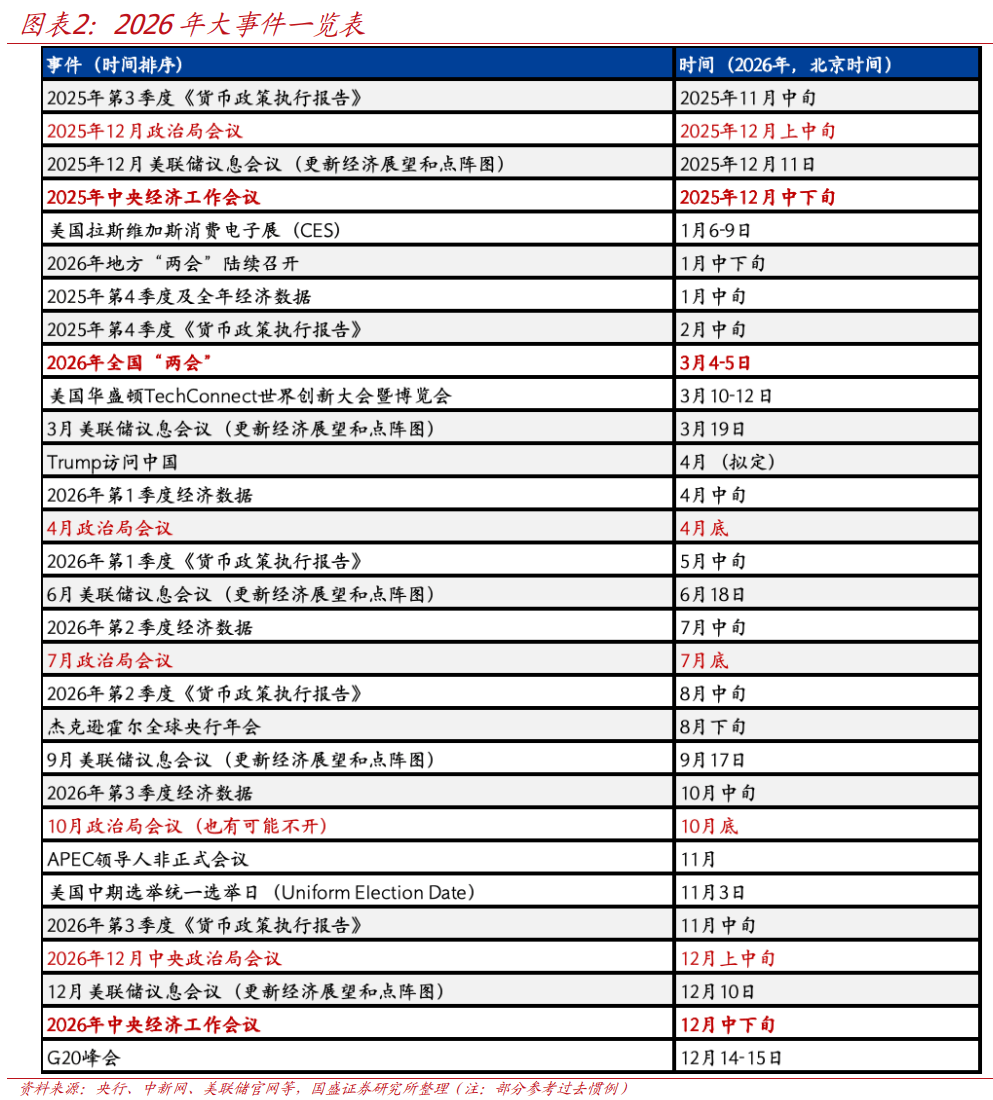
Core Viewpoint - The report outlines an optimistic economic outlook for 2026, emphasizing a proactive and expansionary policy stance to ensure a strong start to the "15th Five-Year Plan" with a GDP growth target around 5% [1][4][41] Policy Perspective - The main policy tone for 2026 is set to be positive and expansionary, with a focus on ensuring a good start to the "15th Five-Year Plan" [1][4] - Key strategies include promoting domestic demand, stabilizing real estate, and planning new major infrastructure projects [1][5] Monetary Policy - Monetary policy is expected to remain accommodative, with potential interest rate cuts and reserve requirement ratio reductions anticipated in 2026 [2][12] - It is projected that there may be 1-2 reserve requirement ratio cuts of 50-100 basis points and 1-2 interest rate cuts of 10-20 basis points [12][15] Fiscal Policy - Fiscal policy is anticipated to be proactive and expansionary, with a projected fiscal deficit rate around 4% and special bonds reaching approximately 5 trillion [2][30] - The total fiscal expenditure is expected to reach 43 trillion, reflecting an increase of 1.13 trillion year-on-year [30][29] Economic Growth Targets - The GDP growth target for 2026 is likely to remain around 5%, with quarterly growth rates projected at 5.2%, 5.0%, 5.1%, and 4.9% respectively [4][41] - Inflation is expected to remain low, with a projected annual deflation index of around 0.1% [4] Investment Focus - The focus will be on expanding domestic demand, particularly through consumer spending, real estate stabilization, and infrastructure investment [5][29] - Specific measures to boost consumption include extending the "old-for-new" policy and enhancing service consumption [5][29] Structural Reforms - Structural reforms will continue to be emphasized, particularly in enhancing the quality of life and addressing demographic challenges [8][41] - The government aims to optimize the allocation of resources towards human investment and social welfare [8][29] Key Events Timeline - A series of important economic meetings and reports are scheduled throughout 2026, including the Central Economic Work Conference and the National People's Congress [3][4]

李迅雷:期望“十五五”期间出台一批超预期超常规刺激政策
Di Yi Cai Jing· 2025-11-26 03:06
Real Estate Cycle - The long-term upward phase of the real estate market from 2000 to 2020 led to a widespread belief that housing prices would not decline, despite contrary predictions from analysts like Professor Zhu Ning [1][2] - The average rental yield in core cities of China is around 2%, indicating a price-to-earnings ratio of 50 times, while Shanghai's rental yield is even lower, suggesting a need for adjustment to around 3% [2] - Real estate investment has seen a significant decline, with a 14.7% year-on-year drop in the first ten months, raising concerns about a consensus bearish outlook [2][3] Economic Impact - The real estate sector influences numerous industries, and its downturn is expected to affect economic growth through 2026, with private investment growth already showing a significant decline [2][3] - The need for a real estate stability fund has been suggested, as urbanization continues and many new citizens have yet to purchase homes, indicating potential structural shortages in first- and second-tier cities [3] Export and Trade - China's exports have shown resilience, with a 5.3% increase in the first ten months, despite concerns over a potential downturn in external demand in the coming year [4][5] - The ongoing trade tensions and tariff wars, particularly with the U.S., are expected to impact trade volumes negatively, with a forecasted reduction in trade with major economies [5] Consumption and GDP Contribution - Consumption is projected to become a more significant contributor to GDP growth, especially as investment contributions decline [8] - The current economic environment shows a trend of high consumer debt levels, which may hinder future consumption growth unless addressed through fiscal measures [9] Fiscal and Monetary Policy - The fiscal policy for 2026 is expected to be more aggressive, with an anticipated increase in the broad deficit to around 13.2 trillion yuan, reflecting the need for stimulus amid economic pressures [15][19] - Interest rates may be lowered to stimulate demand, although this poses challenges for banks' net interest margins [18] Stock Market Dynamics - The stock market is currently facing resistance, with the need for corporate profit growth to drive a sustainable bull market, as recent gains have been primarily due to valuation increases rather than earnings growth [22][23] - Structural bull markets are anticipated, particularly in the context of the ongoing AI revolution, which may provide opportunities for growth in specific sectors [24]
人民银行开展3021亿元逆回购操作 叠加MLF操作实现净回笼54亿元
Shang Hai Zheng Quan Bao· 2025-11-25 02:18
Core Viewpoint - The People's Bank of China (PBOC) is continuing its accommodative monetary policy by conducting a 302.1 billion yuan reverse repurchase operation at a fixed rate of 1.4% and planning a 1 trillion yuan Medium-term Lending Facility (MLF) operation, indicating a focus on liquidity support amid economic pressures [1] Group 1: Monetary Operations - The PBOC announced a 302.1 billion yuan reverse repurchase operation with a 7-day term at an interest rate of 1.4% [1] - An additional 1 trillion yuan MLF operation is scheduled for today [1] - A net withdrawal of 5.4 billion yuan is achieved due to the maturity of 407.5 billion yuan in reverse repos and 900 billion yuan in MLF [1] Group 2: Interest Rates - The overnight Shanghai Interbank Offered Rate (Shibor) decreased by 0.4 basis points to 1.316%, while the 7-day Shibor increased by 3 basis points to 1.447% [1] - The weighted average rate of DR007 rose to 1.4703% by the end of trading [1] - The 1-day government bond reverse repo rate (GC001) increased to 1.438% [1] Group 3: Market Outlook - Huaxi Securities reports that due to the pressure on the economic fundamentals observed in Q3, the PBOC is likely to maintain its accommodative stance and may increase short-term reverse repo funding to alleviate liquidity pressures [1] - It is anticipated that the overnight and 7-day funding costs may peak around 1.60% during the month-end period [1]
泓德基金管理有限公司 关于旗下部分基金增加深圳前海微众银行股份有限公司为销售机构的公告
Zhong Guo Zheng Quan Bao - Zhong Zheng Wang· 2025-11-24 23:27
Core Points - The announcement details a fund sales service agreement between Hongde Fund Management Co., Ltd. and WeBank, effective from November 19, 2025, allowing investors to purchase, redeem, and invest in specific funds through WeBank [1][4] - The minimum investment for fund subscriptions and regular investments is set at 1 RMB, and the funds will participate in WeBank's fee discount activities [1][2] - Investors can convert funds only if they are managed by the same institution and have opened conversion services, with a minimum conversion of 1 share [2] Business Scope - Starting from November 19, 2025, investors can handle subscription, redemption, regular investment, and conversion of the specified funds through WeBank [1] - The funds will be eligible for fee discount activities, with specific rules determined by WeBank [1] Important Notes - Subscription and redemption services are only available during normal periods and specific open days, with a minimum subscription amount of 1 RMB [1] - Regular investment rules are subject to WeBank's regulations, with a minimum investment amount of 1 RMB per period [1] Investor Consultation - Investors can consult for details through WeBank's customer service or Hongde Fund Management's customer service [3]

发展新质生产力 扎实推进中国式现代化建设
Ren Min Ri Bao· 2025-11-24 22:31
Group 1 - The forum emphasized the importance of improving people's quality of life as a central goal of China's modernization efforts, aligning with the directives from the 20th Central Committee [2][3] - The forum provided a platform for various stakeholders, including government officials, experts, and entrepreneurs, to share experiences and discuss strategies for enhancing public welfare [2][3] - Key topics discussed included high-quality employment, income distribution, education, social security, and sustainable urban development, all aimed at ensuring that the public benefits from economic growth [3][4] Group 2 - The integration of technology and finance was highlighted as a crucial factor for innovation and economic development, particularly in the Guangdong-Hong Kong-Macao Greater Bay Area [8][9] - The forum showcased various innovative practices in financial services that aim to enhance public welfare, including the development of financial products that support green and low-carbon transitions [9][10] - The role of local governments in implementing effective policies and practices to improve living standards was underscored, with examples from different regions demonstrating successful initiatives [5][6] Group 3 - The event featured discussions on the significance of technological innovation in driving sustainable economic growth, with a focus on the role of AI and digital technologies in various sectors [12][16] - The forum also addressed the need for a collaborative approach among financial institutions, technology companies, and government bodies to foster an ecosystem conducive to innovation [10][11] - The importance of international cooperation in advancing technological capabilities and achieving mutual benefits was emphasized as a key strategy for building a strong technological foundation [13][14]

A股异动,三大变数突然来袭
Zheng Quan Shi Bao· 2025-11-24 08:38
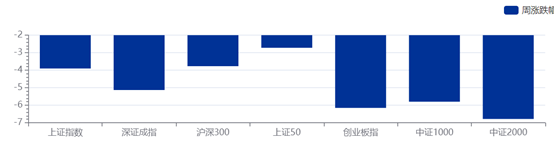
Group 1: Market Overview - The market today is weaker than expected, with A50 showing average performance despite a rebound in US stocks last Friday [1] - Core assets like Industrial Fulian and Ganfeng Lithium experienced significant declines, with some reaching their daily limit down [1][4] Group 2: Industrial Fulian - Industrial Fulian faced a sharp drop, contributing 7.63 points to the decline of the Shanghai Composite Index, indicating it accounted for over half of the index's drop [3] - The decline is attributed to rumors regarding Nvidia entering the L10 system and a downward revision of Q4 performance, which some institutions believe are unfounded [3] - Industrial Fulian reported that its Q4 operations are proceeding as planned, with no adjustments to profit targets and strong customer demand [3] Group 3: Ganfeng Lithium - Goldman Sachs downgraded Ganfeng Lithium's H-shares rating from neutral to sell, citing risks of declining lithium spot prices due to weak downstream market feedback and slowing inventory replenishment [4] - Despite improvements in the lithium market fundamentals, a prolonged inventory cycle in energy storage systems may offset some positive factors [4] Group 4: Japanese Financial Market - Japanese government bond yields continue to rise, with the 10-year yield above 1.78% and the 40-year yield reaching 3.678% [4] - Analysts suggest that potential intervention measures may not reverse the broad depreciation trend of the yen but could slow its decline [5] Group 5: A-Share Market Analysis - The A-share market is currently in a phase of adjustment, characterized by a combination of a mid-bull market consolidation, critical economic verification, and a performance policy vacuum [7] - Analysts indicate that the market's downward space is limited, and the best buying opportunity may still need to be awaited [8] - A potential bottoming point for the A-share market could be around the half-year line if it declines further [8]
外资大举参与A股定增 近1个月现身13家上市公司
Mei Ri Jing Ji Xin Wen· 2025-11-24 07:52
Group 1 - The core point of the article is that Estun (002747, SZ) has successfully completed a private placement, issuing 28.39 million shares to seven subscription entities, including several foreign institutional investors [1] - The participation of multiple foreign institutions in Estun's private placement is noted as a rare occurrence in the history of A-share non-public offerings [1] - In the past month, over ten listed companies have attracted significant foreign institutional investment in their private placements, with total subscription funds exceeding 1.4 billion yuan [1]

资管周报:收益率超37%的理财产品“诱惑” 十余家券商资管核心岗位调整
Xin Lang Cai Jing· 2025-11-24 04:21
Group 1: Market Trends - The Hong Kong IPO market has seen a significant increase in financing, with a total of HKD 250.5 billion raised as of November 19, 2025, representing a 172.44% increase compared to the previous year [1] - The "fixed income +" funds have performed exceptionally well this year, with returns reaching up to 45%, and the industry expects a return of 2%-5.5% for next year [4] - The FOF (Fund of Funds) market has rebounded significantly, with 69 new FOFs established this year, raising a total of CNY 69.236 billion, the highest in three years [7] Group 2: Pension and Financial Products - The personal pension system has achieved notable success in its three years of implementation, with 72.79 million accounts opened and over 1,245 products available, covering savings, insurance, funds, and wealth management [3] - Banks are increasingly focusing on the pension finance sector as a new growth area, especially in light of declining demand for traditional real estate and infrastructure loans [2] Group 3: Fund Management and Performance - The ETF market has reached a new high, with total market size at CNY 5.7 trillion and bond ETFs surpassing CNY 710 billion [5] - The public fund industry has seen significant changes in management, with 153 companies undergoing executive changes this year, indicating a dynamic shift in leadership [8]