金融

Search documents
资讯日报:日元强劲反弹;金价首次升破每盎司5000美元-20260126
Guoxin Securities Hongkong· 2026-01-26 12:57
Market Overview - The Hang Seng Index closed at 26,750, up 0.45% for the day and 4.37% year-to-date[3] - The Nikkei 225 Index rose 0.29% to 53,847, with a year-to-date increase of 6.97%[3] - The S&P 500 Index ended at 6,916, with a slight increase of 0.03% and a year-to-date gain of 1.02%[3] Commodity and Currency Insights - Gold prices reached a historic high, surpassing $5,000 per ounce, driven by geopolitical tensions[13] - The Japanese yen rebounded strongly, with significant daily gains, as the market anticipates potential government intervention[13] Sector Performance - The commercial aerospace sector saw significant gains, with JunDa shares rising over 51% following the launch of six platforms aimed at accelerating satellite development[9] - The photovoltaic sector also performed well, with notable increases in stocks like KaiSheng New Energy (up 14.44%) and Xinyi Solar (up 11.15%) due to support from Tesla's CEO for solar energy development[9] U.S. Market Dynamics - The U.S. stock market showed mixed results, with the Nasdaq and S&P 500 slightly up, while the Dow Jones fell nearly 0.6%[9] - Notable individual stock movements included Goldman Sachs dropping nearly 4% and Nvidia rising 1.5%[10] Economic Indicators - Japan's core CPI for December 2025 rose 2.4%, aligning with expectations, while the manufacturing PMI for January 2026 increased to 51.5, indicating expansion[13]
红利港股ETF(159331)收涨超0.6%,红利板块配置价值凸显
Mei Ri Jing Ji Xin Wen· 2026-01-26 12:26
Group 1 - The core viewpoint is that the dividend sector in Hong Kong stocks is showing significant value for allocation, with a mid-term cost-performance advantage highlighted by Tianfeng Securities [1] - The rolling correlation between the Hong Kong dividend stocks and the Hang Seng Technology Index has recently shown signs of marginal decline, indicating a potential hedging effect in portfolio allocation during volatile market conditions [1] - The Hong Kong Dividend ETF (159331) tracks the Hong Kong Stock Connect High Dividend Index, which selects 30 high dividend yield securities with good liquidity and consistent dividends, reflecting the overall performance of quality securities under a high dividend strategy [1] Group 2 - The Hong Kong Dividend ETF has maintained continuous dividends for 17 months, making it a noteworthy investment option [1] - The ETF is weighted by dividend yield and covers multiple sectors, particularly focusing on financial and traditional industries, which contributes to its robust investment characteristics [1] - In the context of tightening overseas liquidity and limited interest rate cut expectations, the dividend sector may become an important direction for portfolio allocation in the current phase [1]
公募基金指数跟踪周报(2026.01.19-2026.01.23):“春季躁动”行情分化,逐步切换至绩优方向-20260126
HWABAO SECURITIES· 2026-01-26 11:42
1. Report Industry Investment Rating There is no information provided regarding the report's industry investment rating in the given content. 2. Core Viewpoints of the Report - In the equity market last week (2026.01.19 - 2026.01.23), under the environment of continuous regulatory policy suppression and abundant liquidity, the market structure was highly differentiated. Weight - stocks in consumption, medicine, and finance declined significantly due to large - scale ETF redemptions by policy funds, while the growth direction was active, and the commercial space sector regained strength after adjustment. As the earnings period begins, the market may rotate towards profit recovery and valuation repair. With the in - depth implementation of anti - involution policies, the investment growth rates of various industries have turned negative, implying future supply contraction, while demand stabilizes under the background of fiscal stimulus and economic recovery. This shift in the supply - demand contradiction consolidates the performance inflection points of leading companies in cyclical sectors such as non - ferrous metals and chemicals, and also drives the rise of sectors with price - increase logic like photovoltaics, lithium batteries, and coal [2][10][12]. - In the fixed - income market last week, short - term bond yields rose, and long - term yields fell. The 1 - year Treasury yield rose 3.95BP to 1.28%, the 10 - year Treasury yield fell 1.26BP to 1.83%, and the 30 - year Treasury yield fell 1.65BP to 2.29%, narrowing the term spread. Some funds entered the bond market for safety as the stock market cooled. The central bank governor's statement about potential reserve requirement ratio and interest rate cuts, along with positive news from the Ministry of Finance and good 7 - year Treasury bond issuance results, contributed to the narrowing of the term spread and the decline of long - term interest rates. There is support for the bond market sentiment, and there are opportunities to capture band trading in ultra - long - term interest - rate bonds [3][13]. 3. Summary by Relevant Catalogs 3.1 Weekly Market Observation 3.1.1 Equity Market Review and Observation - Index performance: Last week, the Shanghai Composite Index rose 0.84%, the CSI 300 fell 0.62%, and the ChiNext Index fell 0.34%. The average daily trading volume of the entire A - share market was 27,972 billion yuan, a decrease from the previous week [10]. - ETF funds: Overall, ETF funds showed a net outflow trend last week. The CSI 300ETF had the most significant share reduction, with 49.603 billion shares less in the past week. The CSI 1000, SSE 50, SSE STAR 50, and CSI A500 also had share reductions of 23.3 billion, 11.5 billion, 9.6 billion, and 7.9 billion respectively. Since January 15, patient funds have continuously redeemed a basket of ETFs, and during this period, some individual stocks with high weight in the index and actively priced by funds performed better. The market trading volume has shrunk from around 4 trillion to around 2.5 trillion, indicating that policy goals have achieved some results. Future market - overheating adjustment methods may focus on cracking down on hot money, relaxing IPOs, and executive share - sales, and the impact of ETF redemptions on the market may weaken marginally [11]. - External factors: The latest US economic data remains resilient, and the November PCE inflation data is in line with market expectations, with no obvious signs of inflation rebound. This week, the Federal Reserve will hold an interest - rate meeting, and the market will focus on the meeting and the earnings reports of large technology companies, especially on performance guidance and the sustainability of profit realization under high valuations. Overseas geopolitical conflicts are also an important short - term uncertainty factor, and market risk - aversion sentiment will remain before the situation in Iran is resolved [11]. 3.1.2 Pan - Fixed - Income Market Review and Observation - Domestic bond market: Last week, short - term bond yields in the domestic bond market rose, and long - term yields fell, narrowing the term spread. The 1 - year Treasury yield rose 3.95BP to 1.28%, the 10 - year Treasury yield fell 1.26BP to 1.83%, and the 30 - year Treasury yield fell 1.65BP to 2.29%. Some funds entered the bond market for safety as the stock market cooled. Positive factors such as the central bank governor's statement on potential reserve requirement ratio and interest rate cuts, the Ministry of Finance's press conference, and good 7 - year Treasury bond issuance results contributed to the narrowing of the term spread and the decline of long - term interest rates. There is support for the bond market sentiment, and there are opportunities to capture band trading in ultra - long - term interest - rate bonds [3][13]. - US Treasury yields: Last week, US Treasury yields fluctuated. The 1 - year US Treasury yield fell 2BP to 3.53%, the 2 - year yield rose 1BP to 3.60%, and the 10 - year yield remained flat at 4.24%. Trump's remarks about Greenland led to European selling of US Treasuries and a rise in yields, but his subsequent attitude reversed the trend. US Treasuries will likely continue to fluctuate in the future, with increased unpredictability [14]. - REITs: Last week, the CSI REITs Total Return Index rose 2.17% to 1047.51 points, and all types of REITs closed higher, with data centers, consumption, and warehousing leading the gains. In the primary market, 5 public REITs withdrew or terminated, including 4 initial projects and 1 expansion project [14][15]. 3.1.3 Public Fund Market Dynamics On January 23, 2026, the China Securities Regulatory Commission issued the "Guidelines for the Performance Comparison Benchmark of Publicly Offered Securities Investment Funds," and the Asset Management Association of China issued the "Operation Rules for the Performance Comparison Benchmark of Publicly Offered Securities Investment Funds." The official versions are generally consistent with the draft versions, with some adjustments including clarifying restrictions on benchmark changes, exempting money - market funds from disclosing performance - benchmark comparisons, and modifying the requirements for long - term performance evaluation by fund evaluation institutions [16]. 3.2 Fund Index Performance Tracking 3.2.1 Equity Strategy Theme - Based Index - Active Stock Fund Selection Index: The index selects 15 funds each period, with equal - weight allocation. It selects active equity funds based on performance competitiveness and style stability within value, balanced, and growth styles, and allocates them according to the style distribution of the CSI Equity - Oriented Fund Index (930950.CSI). The performance benchmark is the CSI Equity - Oriented Fund Index (930950.CSI) [20][21]. 3.2.2 Investment Style - Based Index - Value Stock Fund Selection Index: It includes both deep - value and quality - value styles. It selects 10 funds of deep - value, quality - value, and balanced - value styles based on multi - period style classification. The performance benchmark is the CSI 800 Value Index (H30356.CSI) [24]. - Balanced Stock Fund Selection Index: It selects 10 funds of relatively balanced and value - growth styles based on multi - period style classification. The performance benchmark is the CSI 800 (000906.SH) [24]. - Growth Stock Fund Selection Index: It aims to capture the performance and valuation double - click opportunities of high - growth companies and select "dark - horse" stocks. It selects 10 funds of active - growth, quality - growth, and balanced - growth styles based on multi - period style classification. The performance benchmark is the 800 Growth (H30355.CSI) [27]. 3.2.3 Industry Theme - Based Index - Pharmaceutical Stock Fund Selection Index: It classifies funds according to the intersection market value of fund equity holdings and the constituent stocks of the CITIC Pharmaceutical Index (with an average purity of not less than 60% in the past 3 years or since inception). It constructs an evaluation system in the eligible sample, considering factors such as relative benchmark index win - rate, product drawdown, style stability, and overall performance competitiveness, and selects 15 funds to form the index. The performance benchmark is the pharmaceutical theme fund index (fitted by Huabao Securities' fund research and investment platform) [30][31]. - Consumption Stock Fund Selection Index: It classifies funds according to the intersection market value of fund equity holdings and the constituent stocks of relevant CITIC consumption - related indices (with an average purity of not less than 50% in the past 3 years or since inception). It constructs an evaluation system in the eligible sample and selects 10 funds to form the index. The performance benchmark is the consumption theme fund index (fitted by Huabao Securities' fund research and investment platform) [31][32]. - Technology Stock Fund Selection Index: It classifies funds according to the intersection market value of fund equity holdings and the constituent stocks of relevant CITIC technology - related indices (with an average purity of not less than 60% in the past 3 years or since inception). It constructs an evaluation system in the eligible sample and selects 10 funds to form the index. The performance benchmark is the technology theme fund index (fitted by Huabao Securities' fund research and investment platform) [35]. - High - End Manufacturing Stock Fund Selection Index: It classifies funds according to the intersection market value of fund equity holdings and the constituent stocks of relevant CITIC high - end manufacturing - related indices (with an average purity of not less than 50% in the past 3 years or since inception). It constructs an evaluation system in the eligible sample and selects 10 funds to form the index. The performance benchmark is the high - end manufacturing theme fund index (fitted by Huabao Securities' fund research and investment platform) [40][41]. - Cyclical Stock Fund Selection Index: It classifies funds according to the intersection market value of fund equity holdings and the constituent stocks of relevant CITIC cyclical - related indices (with an average purity of not less than 50% in the past 3 years or since inception). It constructs an evaluation system in the eligible sample and selects 5 funds to form the index. The performance benchmark is the cyclical theme fund index (fitted by Huabao Securities' fund research and investment platform) [43][44]. 3.2.4 Money - Market Enhancement Index - Money - Market Enhancement Strategy Index: It aims at liquidity management, pursuing a curve that exceeds money - market funds and is smooth and upward. It mainly allocates money - market funds with relatively good performance and passive index - bond funds (inter - bank certificate of deposit index funds). The performance benchmark is the CSI Money - Market Fund Index (H11025.CSI) [47]. 3.2.5 Pure - Bond Index - Short - Term Bond Fund Selection Index: It aims at liquidity management, pursuing a smooth and upward curve while controlling drawdown. It mainly allocates 5 funds with stable long - term returns, strict drawdown control, and significant absolute - return ability. The performance benchmark is 50% * Short - Term Pure - Bond Fund Index + 50% * Ordinary Money - Market Fund Index [50]. - Medium - and Long - Term Bond Fund Selection Index: It invests in medium - and long - term pure - bond funds, aiming for stable returns while controlling drawdown. It selects 5 funds with both return and drawdown control, and adjusts the duration and the ratio of credit - bond funds and interest - rate bond funds according to market conditions. The performance benchmark is not clearly stated in a simple formula in the text [52]. 3.2.6 Fixed - Income + Index - Low - Volatility Fixed - Income + Selection Index: The equity center is set at 10%. It selects 10 fixed - income + funds with an equity center (considering convertible bond and stock positions) of less than 15% in the past three years and recently. It focuses on the risk - return ratio and holding experience. The performance benchmark is 10% CSI 800 Index + 90% ChinaBond New Composite Full - Price Index (CBA00303.CS) [55]. - Medium - Volatility Fixed - Income + Selection Index: The equity center is set at 20%. It selects 5 fixed - income + funds with an equity center between 15% and 25% in the past three years and recently, emphasizing the risk - return ratio and performance elasticity. The performance benchmark is 20% CSI 800 Index + 80% ChinaBond New Composite Full - Price Index (CBA00303.CS) [58]. - High - Volatility Fixed - Income + Selection Index: The equity center is set at 30%. It selects 5 fixed - income + funds with an equity center between 25% and 35% in the past three years and recently, emphasizing the risk - return ratio and performance elasticity. It selects funds with stable bond - end returns, no credit - downgrading, and strong stock - selection ability on the equity end. The performance benchmark is 30% CSI 800 Index + 70% ChinaBond New Composite Full - Price Index (CBA00303.CS) [61]. 3.2.7 Other Pan - Fixed - Income Index - Convertible Bond Fund Selection Index: It selects bond funds with an average convertible - bond investment proportion of not less than 60% in the latest period and not less than 80% in the past four quarters as the sample space. It constructs an evaluation system from the fund product, fund manager, and fund company dimensions, considering factors such as long - and short - term returns, drawdown, risk - adjusted returns, and the manager's timing and bond - selection abilities, and selects 5 funds to form the index [64]. - QDII Bond Fund Selection Index: It selects 6 QDII bond funds with stable returns and good risk control based on credit and duration conditions. The underlying assets of QDII bond funds are overseas bonds, covering regions such as the world, Asia, and emerging markets, and investment targets include Chinese - funded US dollar bonds and US dollar bonds [67]. - REITs Fund Selection Index: It selects 10 REITs funds with stable operation, reasonable valuation, and certain elasticity based on the underlying asset type. The underlying assets of REITs are mainly mature, high - quality, and stable - operating infrastructure projects, with relatively clear cash - flow expectations and limited unit - net - value volatility [68].
2025年吉林法院审结民商事案件38万余件
Zhong Guo Xin Wen Wang· 2026-01-26 11:11
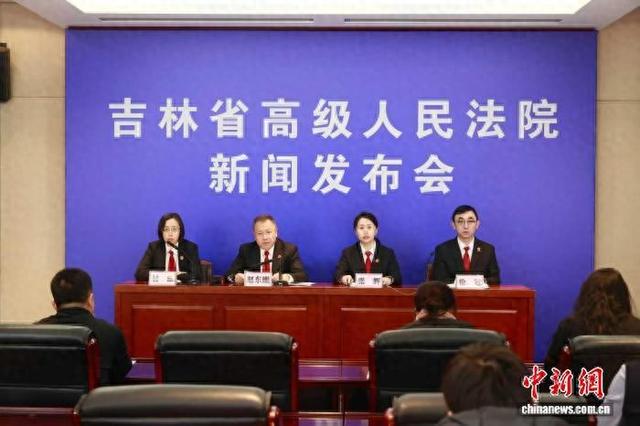
Group 1 - The Jilin Provincial High Court reported a total of 393,433 civil and commercial cases accepted and 386,016 cases concluded in 2025, achieving a case closure rate of 95.64% within the statutory time limit, ranking among the top in the country [1][3] - The court concluded 4,400 intellectual property cases related to Jilin's key industries such as automotive manufacturing, biomedicine, and optoelectronics, and handled 306 foreign-related cases, including those involving Hong Kong, Macau, and Taiwan [3] - A total of 61,144 financial cases were adjudicated, involving an amount of 112.6 billion yuan, with significant progress in the clearance of old bankruptcy cases, including the notable restructuring case of Zhongtong Guomai [3] Group 2 - The court enhanced the protection of rights for special groups, helping migrant workers recover over 23.87 million yuan in unpaid wages, and established a juvenile protection court to improve the juvenile trial mechanism [3] - The Jilin court implemented the "Fengqiao Experience," achieving a "no litigation" coverage rate of 12.13% in administrative villages and communities, with 97.1% of courts establishing connections with comprehensive governance centers [4] - All courts in the province eliminated "one-person courts," enhancing the social function of the judiciary [4]

摩根大通将中兴通讯的空头持仓比例增至6.21%
Jin Rong Jie· 2026-01-26 09:43
Group 1 - The core point of the article is that Morgan Stanley increased its short position in ZTE Corporation (0763.HK) from 5.43% to 6.21% on January 20 [1] Group 2 - The increase in short position indicates a growing bearish sentiment towards ZTE Corporation among investors [1] - The specific percentage change in short position reflects a notable shift in market perception regarding the company's stock [1]


易方达基金武阳:稳健中布局成长,聚焦消费复苏与AI硬件浪潮
Sou Hu Cai Jing· 2026-01-26 09:25
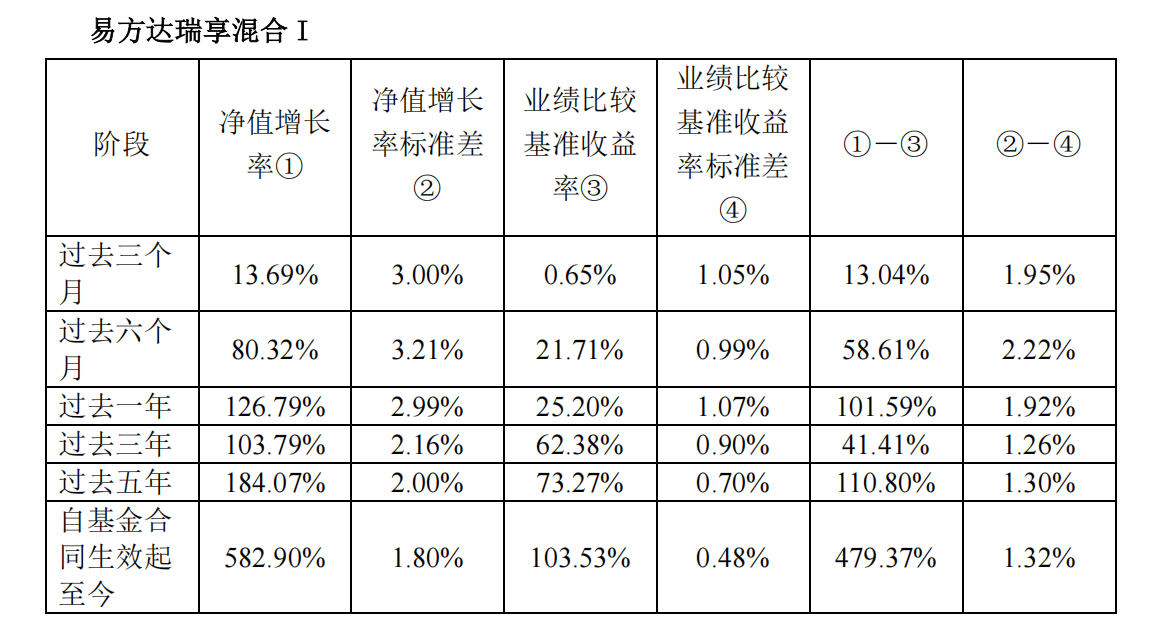
Core Viewpoint - The report by E Fund manager Wu Yang highlights a clear investment strategy focusing on technology growth and domestic demand recovery, with a net value growth rate of 13.69% for the E Fund Rui Xiang Mixed Fund I (001437) during the reporting period, significantly outperforming the benchmark [1] Economic Outlook - Wu Yang maintains a cautiously optimistic view on the macroeconomic environment, noting overall stability in domestic economic data and clearer policy intentions to support domestic demand, while also recognizing the need for patience in recovery [3] - The international market is positively influenced by the U.S. debt entering a rate-cutting cycle, which has led to an increase in commodity prices, excluding oil [3] - However, the foundation for recovery remains fragile, with weak demand from both enterprises and households, emphasizing the importance of stabilizing income expectations and restoring business confidence [3] AI Hardware Investment - A significant focus is placed on the AI industry, particularly the hardware side, where rapid technological iterations are observed, and real demand is driving a positive business cycle [4] - Key investment areas within the AI hardware sector include: - Storage demand driven by large models requiring extensive memory, increasing the need for DRAM and NAND [4] - Optical connections becoming more mainstream as AI cluster scales expand [4] - Liquid cooling technology gaining traction due to increased cabinet power [4] - PCB and upstream materials experiencing expansion and upgrade cycles [4] - The top ten holdings in the fund include major AI hardware companies, accounting for over 34% of net asset value, indicating a strong commitment to this sector [4] Consumer and Domestic Demand - Despite macroeconomic challenges, opportunities in the domestic demand sector are identified, focusing on: - The financial sector's performance elasticity, driven by market gains and increased trading volumes [5] - The resilience of consumer behavior, with a noted recovery in personal experience consumption and high-end luxury goods, despite weaker business consumption [5] - New consumption trends driven by generational changes, such as IP consumption and pet food, are also highlighted as areas of interest [5] - The potential for investment in autonomous driving and robotics is acknowledged, with a belief that the investment turning point for autonomous driving may come sooner than for robotics [5] Investment Strategy - The fund's strategy is anchored in technology, high-end manufacturing, consumer goods, and healthcare as primary investment directions, capturing the current AI-driven technological revolution while considering long-term trends in domestic recovery and health [6] - A focus on selective stock picking and efficient capital usage is emphasized, creating a comprehensive investment framework from macro to industry and individual stocks [6] - Wu Yang's approach reflects a sensitivity to industry trends and a willingness to invest in core growth areas while also seeking marginal improvements during economic recovery [6]
驻港公司和初创企业数目再创新高 团结香港基金:建议港府引进国际加速器 在新田打造加速器集群
Zhi Tong Cai Jing· 2026-01-26 08:18
港府公布的"2025年有香港境外母公司的驻港公司按年统计调查"和"2025年初创企业统计调查"结果显 示,去年母公司在内地及海外的驻港公司数目增加至11070间;香港的初创企业数目则增至5221间,均 再创新高。团结香港基金副研究总监郭凯杰表示感到鼓舞,认为在地缘政治及环球经贸格局转变下仍录 得增长,印证香港内联外通、法治及国际化营商环境依然具吸引力,亦反映海内外企业对香港前景的信 心。他建议,港府积极引进国际加速器,并在新田打造加速器集群。 郭凯杰指出,在驻港公司及招商引资数字上升之际,更重要的是把落户转化为对本地生产总值及就业的 实质贡献。他建议港府引导新增企业投向可配合香港上游研发优势、并与新型工业化发展方向一致的策 略性产业,如生物科技、生命健康及先进制造,避免企业过度集中于以金融服务等为主的轻资产模式难 以带动对实体产业;同时鼓励企业在港建立更完整的研发—中试—量产链条,包括设立具实际产出的生 产线或智能微工厂,带动本地制造生态与供应链,为青年提供更多入行机会与清晰的职业阶梯,推动经 济多元化及整体GDP增长。 他亦表示,2025年香港初创企业数目较2021年大幅增加39%至5221间,展示近年创业 ...
公益活动进社区 便民服务暖新春
Xin Lang Cai Jing· 2026-01-26 04:32
(来源:廊坊日报) 转自:廊坊日报 本报讯(记者 王满凤 通讯员 张一宁)近日,广阳区"金马迎新春 服务暖万家"公益活动走进银河北路街 道迎春社区。该活动聚焦群众需求,整合金融、医疗、法律专业资源,以一站式服务送祝福、传关怀, 为即将到来的新春佳节增添了浓浓的暖意。 "现场的法律咨询、金融服务、健康检查,全是我们生活里用得上的实在东西。"参与活动的居民高志江 说。 此次公益活动将专业服务与节日关怀有机结合,既为居民解决了生活中的实际问题,又拉近了与群众的 距离。市金融产业协会副秘书长冯士琪表示,未来协会将继续发挥桥梁纽带作用,引导行业将更多优 质、便捷、安全的金融服务融入社区生活,切实增强市民的获得感、幸福感和安全感,为城市的和谐稳 定发展贡献金融力量。 活动现场设置三大核心专区,金融专区提供惠民金融产品咨询与反诈APP安装指导;健康义诊区为居民 提供健康检查,科普冬季防病与保健知识;法律咨询台聚焦婚姻家庭、财产继承等热点,提供专业解答 与普法资料。 ...
半日主力资金丨加仓有色金属、非银金融股 抛售电子股
Di Yi Cai Jing· 2026-01-26 03:52
Group 1 - The main capital inflow in the morning was observed in sectors such as non-ferrous metals, non-bank financials, banking, oil and petrochemicals, coal, and telecommunications [1] - Specific stocks that saw significant net inflows include Zijin Mining, Zhejiang Wenhu Internet, and Dongfang Risheng, with inflows of 2.488 billion, 1.896 billion, and 1.746 billion respectively [1] - Conversely, the sectors that experienced net outflows included electronics, defense and military, automotive, computers, machinery, and electric equipment [1] Group 2 - The stocks that faced the largest net outflows were China Satellite, Aerospace Electronics, and Lens Technology, with outflows of 2.736 billion, 2.521 billion, and 1.434 billion respectively [1]



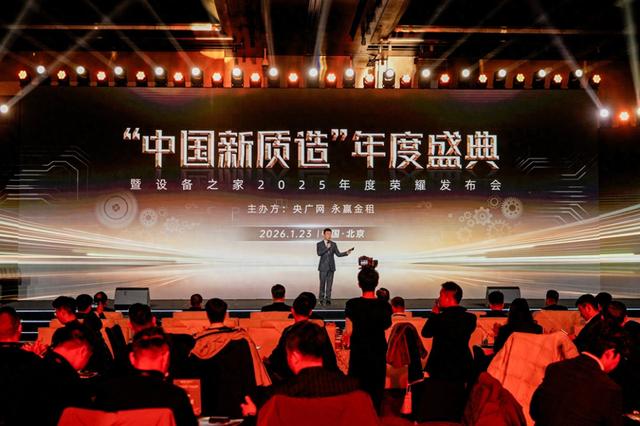
中国新质造年度盛典在北京举行
Huan Qiu Wang· 2026-01-26 03:04
Core Viewpoint - The event "China New Quality Manufacturing Annual Ceremony and Equipment Home 2025 Annual Honor Release Conference" emphasizes the integration of technological and industrial innovation as a driving force for high-quality development in China's manufacturing sector [1][3]. Group 1: Event Overview - The ceremony gathered key stakeholders from government, industry, academia, research, finance, and media to establish industry benchmarks and foster ecological consensus [3]. - The event serves as a platform for showcasing the achievements of the "China New Quality Manufacturing" initiative and aims to promote high-quality development in the manufacturing sector [5]. Group 2: Key Insights from Speakers - Zhang Jun, Vice Secretary of the Party Committee of the Central Broadcasting Television General Station, highlighted that new quality productivity, centered on technological innovation, is crucial for transforming China's manufacturing from "large" to "strong" [5]. - Li Yizhong, President of the China Industrial Economy Federation, emphasized that the core of the "14th Five-Year Plan" is the application of artificial intelligence, which is essential for fostering new quality productivity and achieving technological self-reliance [6]. - Fu Wensheng, Vice President of Ningbo Bank, stated that finance is a vital support for "China New Quality Manufacturing," with the bank having served nearly 100,000 enterprises and supported the update of over 2 million pieces of equipment [8]. Group 3: Industry Trends and Innovations - Liu Weijie from Hisense Visual emphasized the shift in the display industry from scale growth to value growth, positioning Hisense as a model for "AI + manufacturing" [11]. - Yuan Feng, Vice President of BOE Technology Group, reiterated that self-controllable core technologies are the safety cornerstone of "China New Quality Manufacturing," focusing on technological innovation and industry upgrades [13]. - Discussions at the forums highlighted that AI has penetrated over 70% of manufacturing business scenarios, with companies like Hikvision showcasing solutions that enable autonomous decision-making in production processes [13]. Group 4: Future Initiatives - The Central Broadcasting Network announced the launch of new media projects for 2026, including short video programs that focus on enhancing life quality through smart home appliances and green building materials, as well as core industrial sectors [15][16].