
AI

Search documents
股价浮盈十位数,Manus成了Meta的救命稻草 ?
雷峰网· 2025-12-31 11:41
" 用20亿美元撬动180亿市值,Manus能让Meta AI柳暗花明吗? " 作者丨胡家铭 编辑丨董子博 12月30日早,据Monica与Meta的官宣公告,Meta收购了爆款通用Agent产品Manus的母公司蝴蝶效 应。Manus服务将继续维持运营和销售,并整合进Meta的消费者与企业产品生态体系。 据彭博社等媒体报道,这笔交易对价约为20亿美元,是Meta成立以来的第三大收购,花费仅次于 WhatsApp和Scale AI。 受收购消息影响,Meta股价一度上扬至672.22美元/股,报收665.95美元/股,单日微涨1.1%。值得注 意的是,当日科技股普遍回调,在"美股七姐妹"中,Meta是少数上涨的。 Manus的交易记录,无疑创造了中国AI创业团队的历史。但从Meta近两年的财务数据来看,这家巨头的 日均自由现金流约为1.42亿美元。 换言之,马克·扎克伯格只是动用了他账户里不到两周的"零花钱",就将2025年AI Agent的顶流团队收入 囊中。当日Meta的市值涨幅为180亿美元,即便这笔收购被外界认为"大手大脚",但起码在市值层面,已 经实现了9倍的浮盈。 值得注意的是,收购之后,Manu ...



只有罗永浩还在靠嘴吃饭
虎嗅APP· 2025-12-31 11:37
Core Viewpoint - The article discusses the recent return of Luo Yonghao to the tech scene, highlighting his efforts in live streaming and AI entrepreneurship, while also addressing the challenges he faces in the competitive landscape of the tech industry [4][31]. Group 1: Event Overview - Luo Yonghao's tech sharing conference attracted significant attention, with 950 million views on Douyin and 70,000 live viewers, despite criticisms regarding the lack of innovative AI products [4][10]. - The event featured nine tech products, including Luo's own AI product "Qie Ting," which combines AI functionalities for reading and analyzing books [10][16]. - Luo announced that ticket revenues of approximately 1.66 million yuan would be donated, and he expressed intentions to invest in promising tech companies [4][10]. Group 2: Luo Yonghao's Current Position - After a hiatus from public speaking, Luo has re-emerged as a prominent figure in the tech industry, leveraging his podcast and social media presence to maintain public interest and engagement [8][11]. - His podcast has attracted seven brand sponsors within six months, indicating a successful monetization strategy while keeping him in the public eye [11][12]. - Luo's engagement in public discourse has translated into significant traffic for his live streaming sessions, with a notable increase in sales during controversial discussions [12][22]. Group 3: Challenges in AI Entrepreneurship - Luo's AI project, "Xi Hong Xian," has faced funding challenges, with no public financing updates since a $50 million angel round in November 2022 [25][27]. - The competitive AI landscape is marked by substantial investments from other companies, making it difficult for Luo to keep pace with industry leaders [24][25]. - Despite setbacks, Luo remains committed to his AI ventures, although the products presented have not met market expectations [29][31]. Group 4: Market Dynamics and Future Prospects - The smartphone market is undergoing a transformation with the rise of AI technology, presenting potential opportunities for Luo to re-enter the mobile sector [31][32]. - Luo's unique position as a multi-platform live streamer allows him to reach diverse audiences, contrasting with other major streamers who have become less vocal [21][19]. - The article suggests that Luo's ability to maintain relevance in the tech industry will depend on his continued engagement with the public and his capacity to innovate within the AI space [32][34].

年终盘点|美股年度牛股出炉!AI热度不减,核电、太空概念强势爆发
Sou Hu Cai Jing· 2025-12-31 10:19
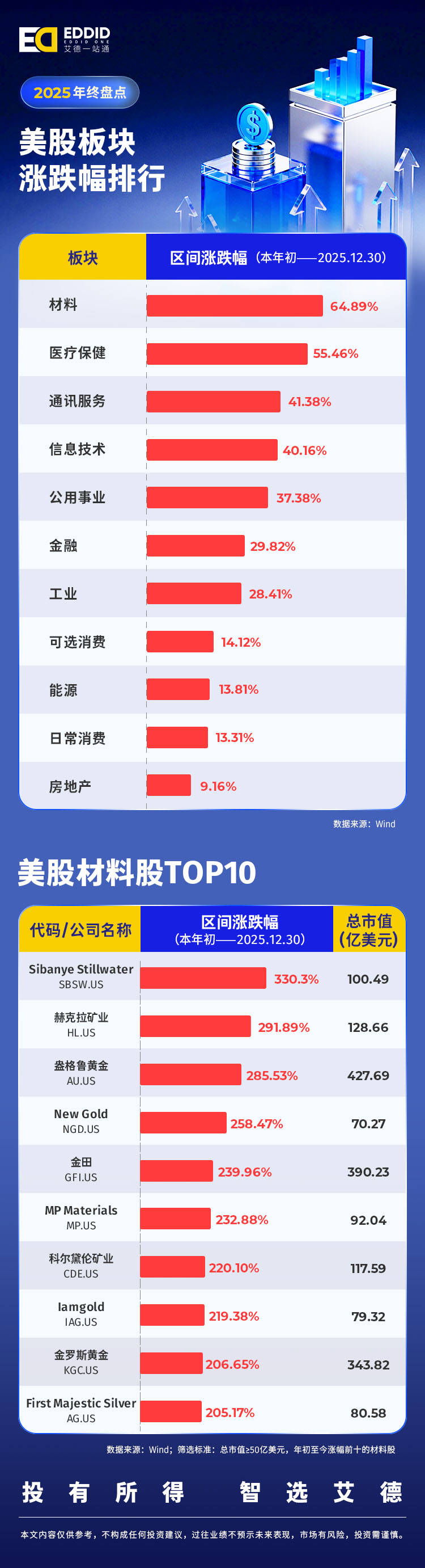
Core Insights - The U.S. stock market experienced a strong performance in 2025, with the S&P 500, NASDAQ, and Dow Jones all achieving double-digit gains for the third consecutive year, closing with increases of 17.25%, 21.28%, and 13.69% respectively [1] - The market was influenced by fluctuating tariff policies and the Federal Reserve's interest rate cuts, leading to a significant rebound in the AI sector and a robust end-of-year rally [1] Sector Performance - All 11 sectors of the U.S. stock market recorded positive growth, with the materials sector leading at a remarkable increase of 64.89%, followed by healthcare at over 55% and communication services at 41.38% [1] - The precious metals and base metals sectors had a standout year, with gold, silver, and copper prices surging, making them core investment choices globally [5] - The top-performing materials stocks included Sibanye Stillwater (SBSW.US) with a 330.3% increase, Hecla Mining (HL.US) at 291.89%, and AngloGold (AU.US) at 285.53% [4][5] AI Sector Developments - The AI narrative remained a focal point, with significant advancements such as OpenAI's Sora and Google's Gemini 3 model driving market interest and stock performance [6][7] - Major tech companies like Google (GOOGL.US) and NVIDIA (NVDA.US) saw substantial gains, with Google rising over 66% and NVIDIA nearly 40% [7] - AI-related stocks in data storage and power supply also performed exceptionally well, with companies like SanDisk (SNDK.US) and Western Digital (WDC.US) achieving increases of 578% and 300% respectively [8][7] Nuclear Energy Sector - The nuclear energy sector gained attention due to new U.S. government policies aimed at increasing nuclear power generation, leading to significant stock price increases for companies like Centrus Energy (LEU.US) and Oklo Inc (OKLO.US), which rose over 230% [10][12] - The government's initiatives included reducing project approval times and prioritizing small modular reactor (SMR) technology, aiming to triple nuclear energy output in the next 25 years [9][10] Space Sector Growth - The space sector saw a surge in interest, particularly after the U.S. government signed an executive order to establish dominance in space, leading to significant stock price increases for companies like Planet Labs (PL.US) and AST SpaceMobile (ASTS.US), which rose nearly 400% and 238.72% respectively [15][13] - The market's enthusiasm for space-related investments was reflected in the performance of various companies, with EchoStar (SATS.US) also achieving a 374% increase [15][13] 2026 Market Outlook - Analysts predict continued growth for the U.S. stock market in 2026, with target levels for the S&P 500 ranging from 7100 to 8100 points, supported by the Federal Reserve's policies and advancements in AI technology [16] - Sectors expected to perform well include non-essential consumer goods, healthcare, finance, and industrials, with a focus on financial stocks as the economy rebounds [16]
中东再添乱,黄金却怂了!
Sou Hu Cai Jing· 2025-12-31 09:39
隔夜,现货黄金从前一交易日的暴跌中反弹,一度重回4400美元关口,但美盘持续回吐日内涨幅,最终收涨0.16%,报4338.89美元。纵观全年, 黄金价格已累计上涨66%,有望成为自1979年以来表现最为亮眼的一年。今日欧市盘中,黄金小幅下跌,目前在4316美元附近徘徊。 现货白银在经历了五年多来最大的单日跌幅后收复了大部分失地,盘中触及78美元关口,最终收涨5.73%,报76.27美元。 美联储分歧严重! 隔夜,美股三大指数连续第三个交易日微幅收跌,截至收盘,标准普尔500指数下跌0.14%,纳斯达克综合指数下跌0.24%,道琼斯工业平均指数 下跌0.20%。 消息面上,美联储公布了2025年最后一份会议纪要,12月会议纪要显示,FOMC在12月会议上同意降息,但官员们分歧严重。 还有值得一提的是,特朗普和美联储主席鲍威尔的紧张关系再度升级。 特朗普周一表示,他心里已经有下一任美联储主席的人选,但并不急于宣布;他还暗示自己可能会解雇现任主席鲍威尔。 分析师称:"市场并没有把新年出现'解雇美联储主席'这种情形计入定价。但只要政策基调还能稍微偏鸽,不去讨论往相反方向转,市场大概率能 消化这些噪音。" 关于美股后市 ...

华人掌舵Meta AI 的格局,已经初步形成了
3 6 Ke· 2025-12-31 08:48
Core Insights - The acquisition of Manus team by Meta signifies a significant shift in leadership and strategy within Meta's AI division, particularly with the rise of Chinese talent in key positions [1][5][21] Group 1: Leadership Changes - Xiao Hong is set to become the Vice President at Meta, reporting directly to COO Javier Olivan, marking a notable transition from entrepreneur to executive [2][21] - Alexandr Wang, co-founder of Scale AI, has been appointed as the Chief AI Officer at Meta, leading the newly established Meta Super Intelligence Lab (MSL) [6][10] - Shengjia Zhao, a prominent figure in AI, has been named Chief AI Scientist at MSL, further solidifying the presence of Chinese talent in Meta's leadership [15][21] Group 2: Organizational Restructuring - Meta's AI business underwent significant restructuring, with MSL becoming the core of its AI operations, absorbing various departments and focusing on closed-source models [10][11] - The restructuring has led to a clear hierarchy where Wang is positioned as the top authority in AI, with Yang Likun now required to report to him [11][12] - The reorganization reflects a strategic shift from open-source to closed-source AI development, as indicated by Yang Likun's departure from Meta [11][12] Group 3: Talent Acquisition and Strategy - Meta has aggressively recruited over 50 AI researchers and engineers from competitors like OpenAI and Google, with a notable proportion being of Chinese descent [12][13] - The company has reportedly offered substantial salaries, with some offers exceeding $200 million, to attract top talent [12][13] - Meta's strategy includes not only talent acquisition but also a focus on developing competitive AI products, particularly in the AI Agent space [20][21] Group 4: Manus Acquisition and Future Prospects - The acquisition of Manus is seen as a strategic move for Meta, allowing the team to operate within a larger ecosystem while maintaining agility [20][21] - Manus, which focuses on AI Agents, is positioned to leverage Meta's resources for growth, indicating a strong alignment with Meta's AI ambitions [20][21] - The integration of Manus into Meta's AI framework highlights the company's commitment to enhancing its capabilities in the competitive AI landscape [20][21]

消费股的寒冬!A股2025年冷门板块一览
Ge Long Hui· 2025-12-31 08:27
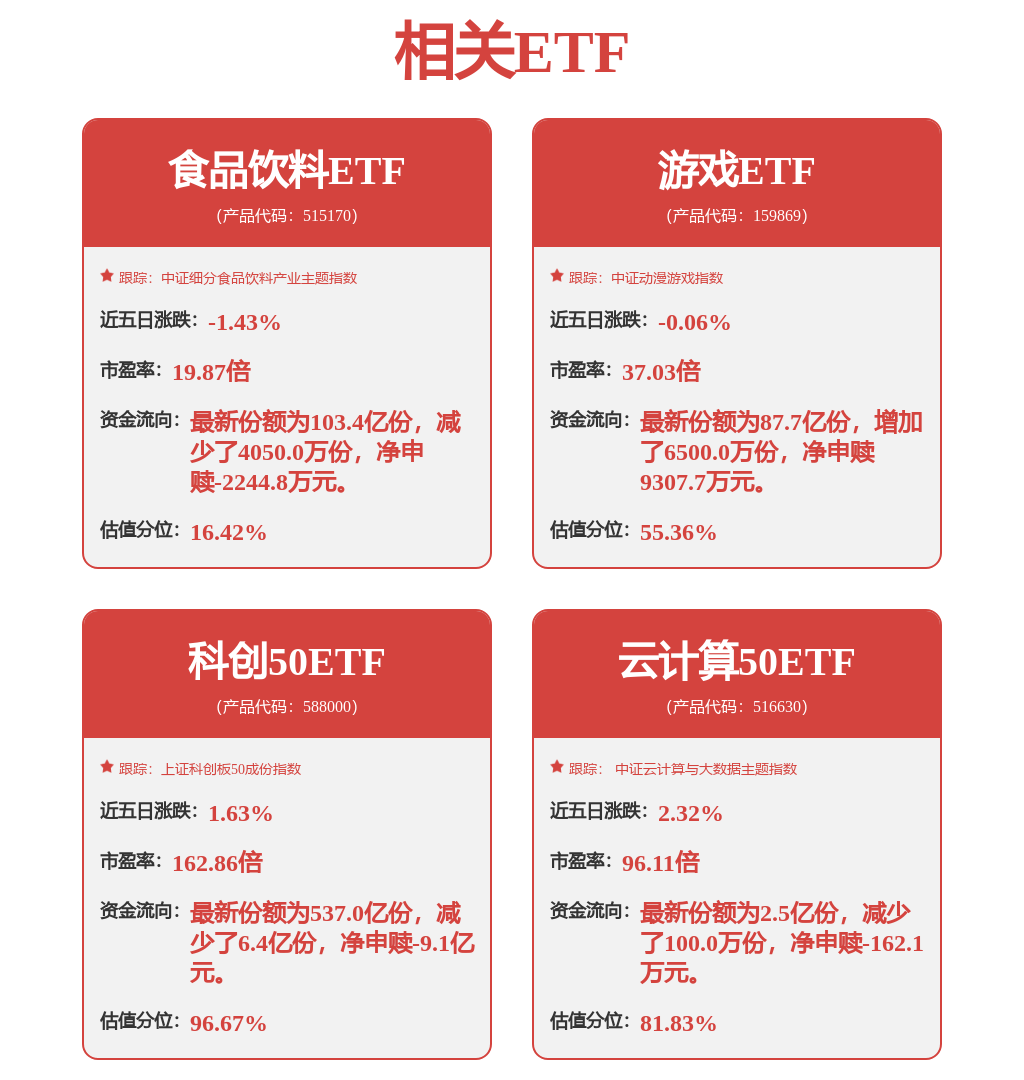
Group 1 - The core viewpoint of the articles highlights the significant decline in various sectors, particularly in consumer stocks such as liquor, which faced a drop due to weak demand and performance issues, alongside a shift of market funds towards high-growth technology sectors like AI and robotics [1] - The top ten sectors with the largest annual declines include: new stocks down 12.28%, MLOps down 0.69%, rental and sales rights down 9.99%, liquor down 8.94%, in vitro diagnostics down 8.88%, super brands down 7.48%, REITs down 7.34%, under-screen photography down 4.19%, seasoning down 3.22%, and electronic paper down 3.16% [1] - Liquor companies reported a decline in both revenue and profit in their third-quarter reports, with high inventory levels and price adjustments contributing to the downturn, particularly affecting regional and mid-to-high-end liquor brands [1] Group 2 - The Food and Beverage ETF (product code: 515170) has seen a recent decline of 1.43% over the past five days, with a price-to-earnings ratio of 19.87 times and a net redemption of 22.44 million yuan [2] - The Gaming ETF (product code: 159869) experienced a slight decrease of 0.06% in the last five days, with a higher price-to-earnings ratio of 37.03 times and a net subscription of 93.08 million yuan [2] - The Cloud Computing 50 ETF (product code: 516630) reported a 2.32% increase over the past five days, with a price-to-earnings ratio of 96.11 times and a net redemption of 1.62 million yuan [3]
收官!新年红包一天十倍!上市首日暴拉1000%!沪指十一连阳完美收官!今年你赚钱了吗?
雪球· 2025-12-31 08:24
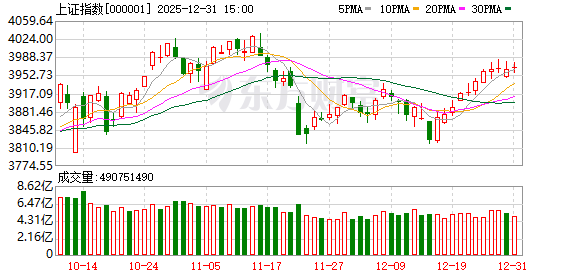
Market Overview - The three major indices closed on the last trading day of 2025, with the Shanghai Composite Index up 0.09%, marking an 11-day winning streak and an annual increase of 18.41%. The Shenzhen Component Index fell 0.58% but recorded a 29.87% annual gain, while the ChiNext Index dropped 1.23% but saw a significant annual increase of 49.57%. The STAR 50 Index rose 35.92% and the Beijing Stock Exchange 50 Index increased by 38.8% throughout the year [2]. Sector Performance - On the last trading day, sectors such as commercial aerospace, AI applications, internet, and cultural media saw the highest gains, while sectors like pharmaceutical commerce, batteries, oil, and semiconductors experienced the largest declines [3]. Commercial Aerospace - The commercial aerospace sector continued to rise, with stocks like Tailong Co. achieving five consecutive daily limits, and companies such as Reco Defense and Hongying Intelligent reaching three consecutive daily limits. Other notable stocks included Changjiang Communication, Beidou Star, Urban Development, and Fenghuo Communication, all hitting their daily limits [5][6]. - A meeting held by the Hainan Provincial Aerospace Leadership Group discussed the 2026 launch plans for the Hainan commercial aerospace launch site, emphasizing the importance of the project's successful construction and operation for supporting the nation's aerospace ambitions. The meeting outlined key tasks, including seizing strategic opportunities and enhancing industry status [9]. - Jiangxi Lianchuang Superconducting Technology Co., Ltd. successfully delivered a project related to a "high-power low-temperature refrigeration system and model superconducting magnet," marking a significant achievement in the commercial aerospace electromagnetic launch field [10]. New Stock Listings - The new stock Hengtongguang listed on the Beijing Stock Exchange saw an unprecedented opening surge of 1000%, reaching a maximum intraday increase of 1087.08%, and closing with a remarkable gain of 878.16% at 309.00. The company focuses on the research, manufacturing, and sales of passive optical devices in the optical communication field [11][12]. Investment Sentiment - Investors reflected on their experiences in 2025, with some expressing regret for missing out on the hard technology sector's gains while remaining committed to value investing principles. The sentiment highlighted the importance of patience and long-term holding of quality assets like Kweichow Moutai, despite market volatility [16][18]. - The discussion also included strategies for 2026, with plans to continue holding quality stocks and selectively increasing positions in companies with strong cash flow and dividend capabilities [18].

2025年A股收官!看看这些数据 你相信“这次不一样”了吗?
Mei Ri Jing Ji Xin Wen· 2025-12-31 08:02
Market Performance - The A-share market showed a relatively flat performance, with the Shanghai Composite Index rising by 0.09%, marking an 11-day winning streak, which is considered an "unexpected" event historically [2][3] - The total market turnover was 20,659 billion, a decrease of 958 billion from the previous day, indicating a reduction in trading activity [3] - The average stock price across the A-share market also rose, reaching a new high for the year, with major indices recording double-digit gains, except for the defensive dividend index [3] Sector Highlights - The commercial aerospace sector saw a significant increase of 27.28% over the past 20 trading days, ranking second among recent popular concepts [6] - Recent government meetings emphasized the promotion of commercial aerospace development, which is expected to accelerate financing processes for quality companies in this sector [6] - Other sectors such as AI applications, including platforms like Xiaohongshu and Kimi, also showed strong performance, indicating a shift in market focus [7][8] Year-End Performance - The Hang Seng Index closed down 0.87% but achieved a yearly gain of 27.77%, marking its best annual performance since 2017 [10] - The overall A-share market recorded a cumulative increase of 27.65% for the year, with the average stock price rising by nearly 37.22% [10] - The micro-cap index outperformed with a rise of over 80%, while other indices like the ChiNext Index and CSI 500 also achieved gains exceeding 30% [12] Top Performing Sectors and Stocks - The optical module (CPO) index was the strongest performer for the year, with a cumulative increase of 181.28% [14] - In the first-level industry categories, non-ferrous metals and telecommunications sectors both saw gains exceeding 80% [16] - The top individual stocks for the year included Shangwei New Materials, which surged by 1820.29%, and Tianpu Co., which rose by 1645.35% [18] Future Outlook - Analysts suggest that the market is shifting focus from a singular narrative around AI to a broader range of opportunities, indicating a potential for a new investment theme emerging in 2026 [19] - Recommendations include investing in industrial resources that resonate with AI and global manufacturing recovery, as well as sectors like aviation, hotels, and non-bank financials that may benefit from market expansion [20][22]
港股25年收官:科指全年累涨23.45%创历史最佳,成份股中芯国际大涨124.69%
Ge Long Hui· 2025-12-31 08:02
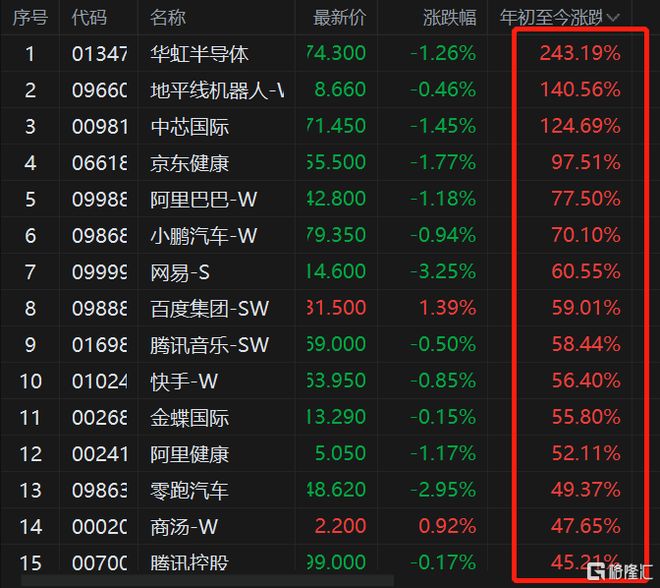
Core Viewpoint - The Hong Kong stock market's Hang Seng Technology Index achieved a remarkable annual increase of 23.45% in 2025, marking its best performance since 2020, with 22 out of 30 constituent stocks rising [1] Group 1: Stock Performance - Among the 30 constituent stocks, notable performers included Hua Hong Semiconductor, which surged by 243.19%, Horizon Robotics with a rise of 140.56%, and SMIC increasing by 124.69% [1] - Other significant gainers were JD Health at 97.51%, Alibaba-W at 77.50%, Xpeng Motors-W at 70.10%, Baidu Group-SW at 59.01%, and Tencent Music-SW at 58.44% [1][2] Group 2: Investment Preferences - The first tier of investment preference is in semiconductor manufacturing (Hua Hong, SMIC) and core AI chips (Horizon Robotics), reflecting a strong focus on hard technology and domestic substitution logic [1] - The second tier includes growth sectors such as smart electric vehicles (Xpeng, Li Auto), AI applications (Baidu, SenseTime), and digital health (JD Health), which benefit from industry trends but still face competitive and profitability uncertainties [1] - The third tier consists of value recovery in platform internet giants (Alibaba, Tencent) and mature applications (NetEase, Kuaishou, Tencent Music), with gains primarily driven by profit realization and value reassessment through dividends and buybacks, categorized as "high-quality mature assets" [1]

低费率云计算50ETF(516630)涨超1%冲击6连阳,易点天下涨超10%
Mei Ri Jing Ji Xin Wen· 2025-12-31 05:43
Core Insights - The AI computing industry chain experienced fluctuations, with the cloud computing 50 ETF (516630) rising by 1.11%, marking a six-day streak of gains, while other ETFs like the 5G communication ETF (515050) fell by 1.47% [1] - Samsung's HBM4 chip production is expected to accelerate, with the global HBM market projected to reach $98 billion by 2030 [1] - CITIC Securities predicts that the internet sector will see a rebound in 2025, driven by AI-related value reassessment and improved liquidity, with AI remaining a key catalyst for valuation increases through 2026 [1] ETF Overview - The Huaxia Entrepreneurial AI ETF (159381) tracks the entrepreneurial AI index, focusing on companies in the AI sector, with a significant weight in optical modules and a low comprehensive fee rate of 0.2% [2] - The 5G Communication ETF (515050) tracks the CSI 5G communication theme index, with a focus on major players like Nvidia and Apple, and has a recent scale of nearly 8 billion [2] - The Cloud Computing 50 ETF (516630) tracks a cloud computing index with high AI computing content, covering various sectors including optical modules and AI servers, and has the lowest fee rate among similar ETFs [2]