
国际贸易

Search documents
青岛以开放主动赢得发展主动(奋勇争先,决战决胜“十四五”)
Ren Min Ri Bao· 2025-08-11 22:01
扩大制度型开放,耕好开放试验田—— 英国阿斯利康公司连续3年在山东青岛追加投资,新生产基地预计2028年底投产;深耕青岛27年的德国 安迈铝业集团第四次增资,新建煅烧氧化铝工厂……跨国公司用行动证明,世界看好中国,看好青岛。 2024年5月,习近平总书记在山东考察时强调:"打造高水平对外开放新高地""要在进一步全面深化改 革、推进高水平对外开放上勇争先"。 深入贯彻落实习近平总书记重要指示精神,青岛着力实施更大范围、更宽领域、更深层次的开放,以对 外开放的主动赢得经济发展的主动,奋力打开改革发展新天地。 畅通物流大通道,做大国际朋友圈—— 从青岛驶出的中欧班列抵达欧洲腹地,仅需17天;货车经国际公路运输系统到俄罗斯莫斯科,仅需7 天……高质量共建"一带一路"为青岛带来了更多机遇。 "今年以来,我们抢抓中欧班列(济青)国家集结中心建设机遇,创新推出'仓、运、贸'一体化运营模 式,推动形成以物流促贸易、以贸易带产业的良性循环。"山东高速齐鲁号欧亚班列运营有限公司总经 理助理满坤说。 在青岛,开放的大门越开越大。青岛港连接180多个国家和地区的700多个港口;青岛胶东国际机场客运 航线可通达128个国内外城市;中欧 ...
大健云仓上涨6.68%,报30.84美元/股,总市值11.62亿美元
Jin Rong Jie· 2025-08-11 13:55
Core Insights - The stock price of GCT increased by 6.68% on August 11, reaching $30.84 per share, with a total market capitalization of $1.162 billion [1] - For the fiscal year ending June 30, 2025, GCT reported total revenue of $595 million, reflecting a year-on-year growth of 5.8%, and a net profit attributable to shareholders of $61.698 million, which is a 13.91% increase compared to the previous year [1] Company Overview - GCT is a Cayman Islands-registered holding company primarily operated by its domestic subsidiary, GCT Technology (Suzhou) Co., Ltd. [2] - The company operates a B2B trading platform focused on the export of large goods and is recognized as a leading provider of digital services in international trade [2] - GCT leverages an international business structure, a global logistics and warehousing system, and precise data marketing analysis to establish a "global home goods circulation backbone network" [2] Share Buyback Activity - On August 7, GCT announced a cumulative share repurchase amounting to $46.03 million for the second quarter of 2025 [2]

稀释美元信用的风险因素正在累积
Guo Ji Jin Rong Bao· 2025-08-11 06:42
Core Viewpoint - The article discusses the decline of the US dollar's credibility as the world's dominant currency due to various factors, including tariff policies and increasing national debt, which threaten its status as a global reserve currency [1][3][10]. Group 1: Impact of Tariff Policies - The US dollar has experienced a downward trend, particularly influenced by Trump's tariff policies, which have created significant risks for the global economy and the US economy [3][4]. - The average effective tariff rate in the US has reached 18.3%, the highest level since 1934, which has led to a loss of dollar credibility despite achieving some trade negotiation successes [3][4]. - Tariff policies raise trade barriers, making it harder for non-US countries to obtain dollars, thereby reducing the demand for the dollar and undermining its traditional influence [4][5]. Group 2: National Debt and Fiscal Deficits - The US national debt has surpassed $36.2 trillion, with interest payments becoming the fastest-growing part of government expenditures, projected to exceed $1 trillion in fiscal year 2024 [10][12]. - The increasing fiscal deficit, which reached $1.83 trillion in the previous fiscal year, has led to a cycle of rising national debt and interest payments, further eroding the credibility of the dollar [10][11]. - The Congressional Budget Office (CBO) predicts that the national debt could increase by $20 trillion over the next decade, raising concerns about the sustainability of the US government's ability to service its debt [11][12]. Group 3: Shift Towards De-dollarization - Many countries are actively seeking to reduce their reliance on the US dollar, creating alternative payment systems and exploring the establishment of new currencies to bypass dollar dominance [15][16]. - Initiatives such as bilateral trade agreements using local currencies and the establishment of regional payment systems indicate a growing trend towards a multi-polar currency system [15][17]. - The historical context suggests that the transition from a dollar-centric system to a diversified currency framework will be gradual and complex, reflecting the challenges of restoring trust once damaged [17].
美国关税战终结疫情后反弹,全球贸易增速放缓
Sou Hu Cai Jing· 2025-08-11 01:16
Core Viewpoint - The World Trade Organization (WTO) highlights that recent tariff measures are significantly impacting global trade, with tariff uncertainty putting pressure on business confidence, investment, and supply chains, making it one of the most destructive forces in the global trade environment [6]. Group 1: Current Trade Environment - Global trade is currently stagnant, and recent data suggests that this slowdown may deepen due to weak consumer demand, high interest rates, and tighter fiscal policies, which are suppressing cross-border goods flow [4][6]. - The U.S. trade deficit narrowed by 16.0% in June to $60.2 billion, with the goods trade deficit dropping by 10.8% to its lowest level since September 2023 [6]. Group 2: U.S. Tariff Policies - The "reciprocal tariff" policy initiated during President Trump's second term has been fully implemented, creating a differentiated tariff system covering strategic industries like steel, aluminum, and copper, affecting 69 trade partners with tariffs ranging from 10% to 50% [5]. - The average tariff rate in the U.S. has surged from 2%-3% before Trump's potential return to 18.3%, marking the highest level since 1934 [6]. Group 3: Future Trade Projections - The WTO has downgraded the global goods trade growth forecast for 2026 from 2.5% to 1.8%, warning that recent tariff adjustments will negatively impact global trade prospects [9]. - Analysts from Capital Economics indicate that the post-pandemic trade rebound has ended, with trade volumes now stagnating, and structural and cyclical factors are dragging down trade [9]. Group 4: Challenges for Developing Countries - A recent UN report highlights that landlocked developing countries face significant structural inequalities in the global economic system, with transportation costs being 40% higher than coastal countries due to geographical disadvantages [10]. - Exports from landlocked developing countries to China have doubled since 2015, but imports have grown even faster, reaching approximately $78.3 billion in 2024, indicating a trade imbalance [10].

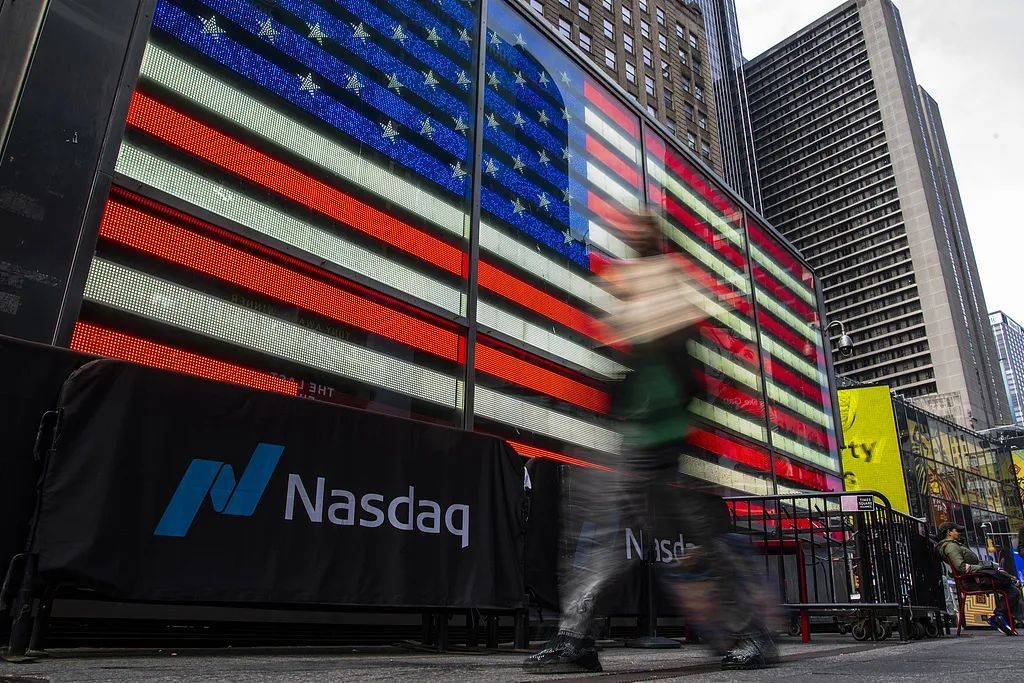
让贸易真正成为连接各国、促进福祉的桥梁(国际论坛)
Ren Min Ri Bao· 2025-08-10 21:56
Core Viewpoint - The article emphasizes that trade wars have no winners and weaken global economic vitality, with the initiating party ultimately paying a heavy price. Open cooperation is presented as the only correct path to achieve shared prosperity [1][2]. Group 1: Trade Policies and Impacts - The U.S. government announced a 40% tariff on Brazilian products starting August 6, leading to an effective 50% tariff on most Brazilian exports to the U.S. [1] - Historical evidence shows that trade wars, such as the U.S. tariffs on Japanese products in the 1980s, provided short-term protection but did not reverse the decline in U.S. manufacturing competitiveness, exacerbating global trade tensions [1][2]. Group 2: International Cooperation and Responses - The article advocates for maintaining a stable international trade environment, highlighting that many countries have achieved rapid growth and poverty reduction through open trade [2]. - Brazil is actively pursuing trade diversification and aims to protect its industrial system and employment market against unreasonable tariffs, emphasizing respect for international rules [2]. - Brazil values cooperation with major trading partners like China, particularly in sectors such as agriculture, energy, and infrastructure, showcasing the potential of South-South cooperation [2][3]. Group 3: Future Outlook - Brazil intends to uphold principles of openness, inclusivity, and transparency in trade, advocating for dialogue and cooperation to resolve disputes and improve global governance mechanisms [3].
特朗普威胁关税加到35%,拿不出6000亿美元的欧盟,转头制裁中国
Sou Hu Cai Jing· 2025-08-10 17:21
Group 1 - Trump threatens to impose a 35% punitive tariff on EU goods if the EU does not fulfill its $600 billion investment commitment, an increase from the previously threatened 30% [1][3] - The dispute originates from a trade agreement where Trump claims he reduced tariffs from 30% to 15% based on the EU's promise to invest $600 billion, which is criticized as vague and lacking concrete commitments [3][5] - The EU's requirement to purchase $750 billion in energy products from the US by 2028 is deemed unrealistic, as current imports are only $61.9 billion, necessitating an annual purchase of $250 billion, which would constitute 85% of the EU's energy spending [3][5] Group 2 - The EU quickly clarified that the $600 billion investment is dependent on voluntary private sector commitments, lacking guarantees or obligations, effectively rendering it an empty promise [5][7] - Similar situations arise with Japan and South Korea, where their commitments are largely based on loans or minimal direct investments, undermining Trump's claims of trade victories [5][7] - The EU has shifted its focus to China, threatening sanctions based on unsubstantiated claims of Chinese support for Russia, which raises questions about the timing and credibility of these accusations [7][9] Group 3 - The EU's actions may be a strategy to divert attention from domestic trade agreement disputes, align with US pressure on China, and gauge Trump's response to Russia, but this could further damage EU-China relations [9][12] - The current situation highlights the severe challenges facing the global trade order, with Trump's "America First" policy threatening to disrupt established economic ties [12] - Future US-EU trade disputes are likely to escalate, with the potential for the 35% tariff threat to be enacted, raising questions about the EU's response if it fails to meet the $600 billion demand [12]
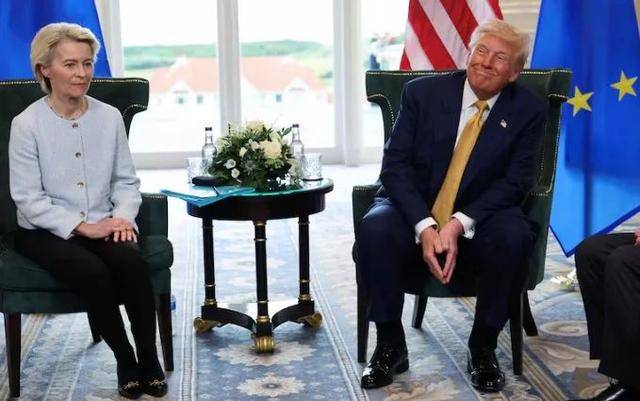
白宫:美国可能对那些购买俄罗斯石油的国家征收25%的关税
Sou Hu Cai Jing· 2025-08-10 09:13
Group 1 - Indian Prime Minister Modi's upcoming visit to China in late August marks his first trip to the country in seven years, highlighting its significance [1] - Following the announcement of Modi's visit, US President Trump expressed the possibility of imposing new tariffs on China, particularly targeting countries purchasing Russian oil [3] - Trump's threats against China are seen as part of a broader strategy to counteract the growing cooperation between China and Russia, indicating a desire to maintain US dominance [5][7] Group 2 - The US has reduced tariffs on India from an initial 250% to 25%, reflecting a significant concession amid ongoing trade tensions [7] - Trump's aggressive stance towards both China and India is perceived as an attempt to exert pressure, but it may backfire, as indicated by India's response to the situation [5][6] - The dynamics of US-India trade are likely to be affected by the imposition of higher tariffs, which could complicate future negotiations [5]
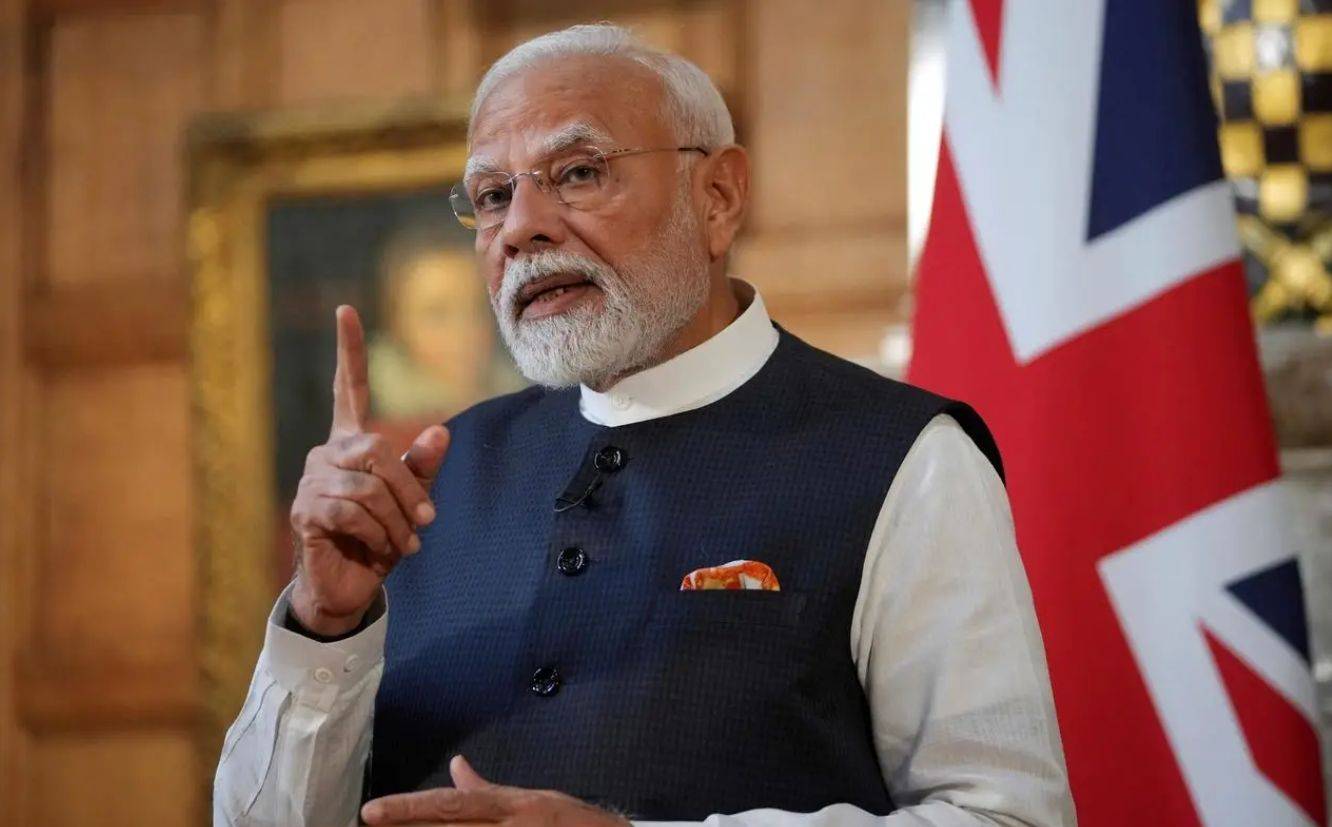
危机升级!美国再度威胁对华加税?印度已投降?却拿中国没办法?
Sou Hu Cai Jing· 2025-08-10 07:28
Group 1 - The core issue revolves around Trump's recent threats to impose tariffs on China, following his decision to increase tariffs on India to 50%, which could severely impact US-India trade relations [1][4] - India's response to US sanctions has been relatively passive, with Modi's government seeking negotiations rather than confrontation, indicating India's economic vulnerability [4][5] - The US's stance is that India's support for Russia through oil purchases undermines the US-European alliance, leading to economic repercussions for India [7][8] Group 2 - Despite facing sanctions, India has benefited economically from discounted Russian oil, which it refines and exports, helping to control domestic inflation [7] - In contrast, China has not faced similar sanctions despite its significant oil purchases from Russia, highlighting a disparity in US policy towards these two nations [8][10] - China's economic strength and strategic position make it less susceptible to US pressure, as it has developed robust countermeasures against sanctions [10][11] Group 3 - The complex relationships among China, the US, India, and Russia are characterized by intertwined interests, with China advocating for mutual development and trade [13] - India's realization of the potential benefits of repairing relations with China amidst US pressures reflects a shift in its strategic considerations [11][13]
2024年非洲内部贸易增长高达12.4%
Shang Wu Bu Wang Zhan· 2025-08-09 17:40
Core Insights - The African Export-Import Bank (Afreximbank) reported that intra-African trade is projected to reach $220.3 billion in 2024, reflecting a 12.4% increase from the previous year [1] Group 1: Trade Contributions - South Africa remains the largest contributor to intra-African trade, with trade volume amounting to $42.1 billion, accounting for approximately 20% of the total intra-African trade [1] - Despite a slight decline compared to last year, South Africa continues to play a central role in regional groups such as the Southern African Customs Union and the Southern African Development Community [1] - West African countries, particularly Nigeria and Côte d'Ivoire, have also shown significant growth, with Côte d'Ivoire's trade with African nations reaching $10.6 billion, representing 4.8% of total intra-African trade [1] - Nigeria's trade with African countries has improved significantly, amounting to $18.4 billion [1] Group 2: Trade Growth Challenges - The report highlights that trade growth across African regions is uneven, with slow growth in Central African countries due to poor infrastructure and weak management mechanisms [2] - Structural barriers among African nations continue to limit the full potential of the African Continental Free Trade Area [2] - The report recommends targeted policy interventions, significant investments in transportation, energy, and digital infrastructure to reduce trade costs [2] - It also suggests that Africa should integrate and innovate financing mechanisms, including blended finance and public-private partnerships, to support necessary infrastructure and capacity-building projects for sustainable growth across the continent [2]
阿尔及利亚加强与非洲国家贸易关系
Shang Wu Bu Wang Zhan· 2025-08-09 17:40
Core Insights - Algeria is implementing significant measures to enhance economic complementarity, modern logistics, and efficient export networks, aiming to become a trade hub in Africa and a catalyst for South-South cooperation [1] Group 1: Trade Initiatives - Algeria launched a direct maritime route from Algiers to Dakar operated by the state-owned shipping group Gatma in July 2022, connecting Algeria with the West African market and serving as a vital link for goods transportation within the African Continental Free Trade Area [1] - The establishment of five free trade zones in border areas with neighboring countries such as Mauritania, Mali, Tunisia, Libya, and Niger is underway, aimed at attracting investment, promoting local resource processing, and building regional industrial chains [1] Group 2: Financial Integration - Algeria will officially join the Pan-African Payment and Settlement System (PAPSS) on August 1, 2025, allowing for instant cross-border transaction settlements in the national currency, which is expected to reduce trade costs and eliminate currency barriers among African nations [1] Group 3: Trade Representation - Algeria is setting up trade offices and bank branches in several African countries to support local businesses in expanding into international markets [1] Group 4: Upcoming Events - From September 4 to 10, Algeria will host the fourth African Internal Trade Fair (IATF) in collaboration with the African Export-Import Bank and the African Continental Free Trade Area Secretariat, showcasing Algeria's role as an active participant in African economic development and support for the continental free trade area [2]