
太空光伏

Search documents
午评:创业板指半日涨0.76% 商业航天、太空光伏方向集体走强
Xin Hua Cai Jing· 2026-02-03 04:04
消息面上 国务院国资委:2026年国资国企要深入实施"一企一策"分类考核健全科技创新激励保障机制 近日,国务院国资委召开2026年度中央企业、地方国资委考核分配工作会议,会议强调,2026年,国资 国企要聚焦高质量发展主题,进一步深化改革,深入实施"一企一策"分类考核,切实加强收入分配管 理,健全科技创新激励保障机制,推动三项制度改革走深走实,深化考核分配信息系统建设应用,推动 考核分配体系化制度更加科学,专业化监管更加精准,数智化赋能更加有效,引导支持国有企业和国有 资本做强做优做大,实现"十五五"良好开局。 新华财经北京2月3日电 A股三大指数2月3日早盘高开回落,盘中一度翻绿,后又震荡拉升,至午间收盘 时均小幅收涨,全市场超4400只个股上涨。沪深两市半日成交额1.6万亿,较上个交易日缩量385亿。盘 面上,商业航天概念爆发,十余只成分股涨停,巨力索具、通宇通讯、神剑股份、中超控股涨停;太空 光伏概念集体走强,双良节能、钧达股份等多股涨停;CPO等算力硬件股延续强势,天通股份等涨停, 罗博特科涨超17%创新高。下跌方面,有色金属板块再度下挫,贵金属概念领跌,四川黄金、招金黄金 等多股跌停。 截至午间收盘 ...

未知机构:机械板块2月思路1光模块自动化设备-20260203
未知机构· 2026-02-03 02:10
Summary of Conference Call Notes Industry Overview - The focus is on the mechanical sector, particularly in the context of automation equipment for optical modules and the ongoing electricity shortage in North America [1][2][4]. Key Companies and Developments - **Yizhong Tian**: Reported performance exceeded expectations, indicating a positive outlook for the optical module automation equipment sector [1][2]. - **Jerey Co.**: Secured new orders for new combustion engines, suggesting growth and demand in this area [5]. - **Major Manufacturers**: Companies like Caterpillar, Trane, and GE reported full production schedules and strong order books, reflecting robust demand in the mechanical sector [6]. - **Hengli Hydraulic**: Plans to start production on the first day of the Lunar New Year due to high order volumes, indicating strong operational momentum [9]. Market Trends - The mechanical sector is expected to see significant growth, with January exports projected to increase substantially, exceeding expectations [8]. - The trend of companies expanding overseas is noted as a prevailing direction, with companies like Hengli Hydraulic, Sany, XCMG, and others leading this movement [10]. Emerging Opportunities - **Space Photovoltaics**: Rapid developments in solar technology from teams like Tesla and SpaceX are highlighted as potential investment opportunities [7]. - **Robotics Sector**: The lifting of regulatory restrictions on Fenglong Co. (related to UBTECH) may stimulate interest in the robotics sector, with some stocks already reaching new highs [10][11]. Additional Insights - The mining machinery sector is experiencing short-term price fluctuations due to volatility in non-ferrous metal prices, but the long-term outlook remains positive [10]. - The discussion encourages collaboration and sharing of ideas among participants, indicating a community-oriented approach to investment strategies [12].
政策定调与资金面共振,A股迎来关键时刻!哪些板块将成为下周赢家?
Sou Hu Cai Jing· 2026-02-01 06:31
Group 1 - The China Securities Regulatory Commission (CSRC) emphasized the importance of maintaining a stable and positive capital market, officially endorsing the "slow bull" market trend and highlighting the significance of reforms in the ChiNext and Sci-Tech Innovation Board, with a focus on a "technology bull" as a core development direction [1] - The international precious metals market experienced dramatic declines, with spot gold prices dropping nearly 8% from a high of 5600 yuan to below 5000 yuan, and silver prices plummeting by 17%, impacting the performance of the A-share non-ferrous metals sector [3] - In January, the A-share market achieved a historic milestone with the Shanghai Composite Index recording 17 consecutive days of gains, and total market turnover exceeding 60 trillion yuan, setting a new monthly record [3] Group 2 - Despite the record trading volume in the A-share market, the brokerage sector underperformed, with stock prices lagging behind significant earnings growth reported by major brokerages such as CITIC Securities and Huatai Securities [4] - The financing balance remained high at over 2.7 trillion yuan, with the non-ferrous metals industry receiving over 2.4 billion yuan in net buying, while the computer sector faced net selling of over 3.3 billion yuan [4] - The commercial aerospace sector saw active performance, with multiple stocks hitting the daily limit up, indicating strong investor interest and market momentum [4] Group 3 - The AI application sector showed signs of recovery, with significant earnings forecasts from leading companies, indicating a positive outlook for the industry despite previous stock price fluctuations [6] - The performance of the real estate sector remains under pressure, with Vanke A expected to report a substantial loss of approximately 82 billion yuan, highlighting ongoing challenges in the cyclical and real estate sectors [7] - The A-share market exhibited volatility with significant intraday fluctuations, but overall maintained a bullish trend supported by monetary policy adjustments and ongoing capital market reforms [9] Group 4 - The global manufacturing recovery is creating a favorable external environment for A-shares, with major economies' manufacturing PMIs returning to expansion, contributing to improved corporate earnings [12] - The market is characterized by a rotation of sectors, with commercial aerospace and non-ferrous metals leading gains, while funds are shifting from large-cap stocks to small and mid-cap growth stocks [12] - Institutional investor behavior is shifting towards long-term strategies, with increased stability in public fund holdings and a rise in corporate buybacks, reflecting confidence in the Chinese economy [12][13]

未知机构:周二舆情热度20260127①商业航天从中国星网获悉计划在-20260128
未知机构· 2026-01-28 01:50
Summary of Key Points from the Conference Call Industry Overview Commercial Aerospace - China Star Network plans to deploy 13,000 low Earth orbit satellites between 2026 and 2030, with internal preparations to initiate related bidding processes [1] - Related companies in the commercial aerospace sector include XW Communication, Tianyin Machinery, Hangyu Micro, Shunhao Co., Aerospace Development, and Sanwei Communication [1] Artificial Intelligence (AI) - Major companies are launching a "traffic war" for AI applications during the Spring Festival, with Tencent and Baidu both announcing cash red envelope activities for the holiday [1] - Companies involved in the AI sector include YK Technology, Hangyu Micro, Hand Information, Changying Precision, BlueFocus Communication Group, Tiandi Online, and Fantou Data [1] Robotics - The Central Radio and Television Station has announced a strategic partnership with Magic Atom, designating Magic Atom as the intelligent robot partner for the 2026 Spring Festival Gala [1]
观望
第一财经· 2026-01-27 11:23
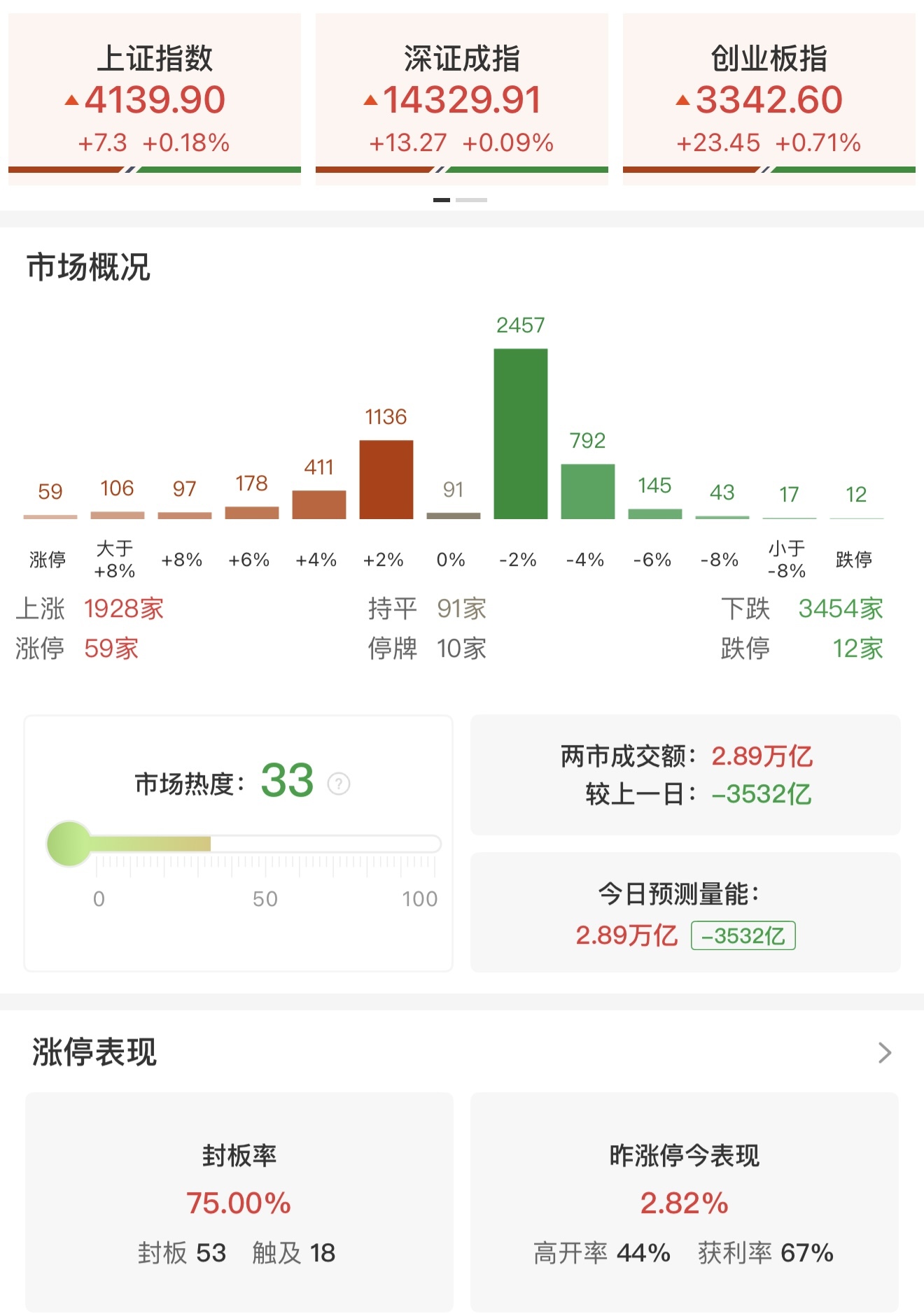
Core Viewpoint - The A-share market shows signs of recovery with the three major indices collectively rising, indicating a potential shift in market sentiment and investment strategies [5][6]. Market Performance - The Shanghai Composite Index has formed dual support at the 5-day and 10-day moving averages, closing above 4130 points after a V-shaped reversal [5]. - The market experienced a significant decrease in trading volume, with total turnover dropping to 89 trillion, a decline of 10.88%, reflecting a cautious market sentiment [7]. Sector Analysis - The market saw 1928 stocks rise, with a notable performance in gold stocks and the semiconductor and AI computing power supply chain, while sectors like coal, pharmaceuticals, and retail faced declines [6]. - Institutional investors are shifting their focus from sectors like non-ferrous metals and electric grid equipment to hard technology sectors such as semiconductors and communication equipment, while maintaining positions in undervalued defensive stocks like banks and insurance [9]. Investor Sentiment - Mainstream funds showed a net outflow of 559 million, while retail investors experienced a net inflow of 6.3 million, indicating a divergence in investment behavior [8]. - Retail investor sentiment is cautious, with 75.85% of investors adopting a wait-and-see approach, reflecting a decrease in trading enthusiasm and a lower risk appetite [10].

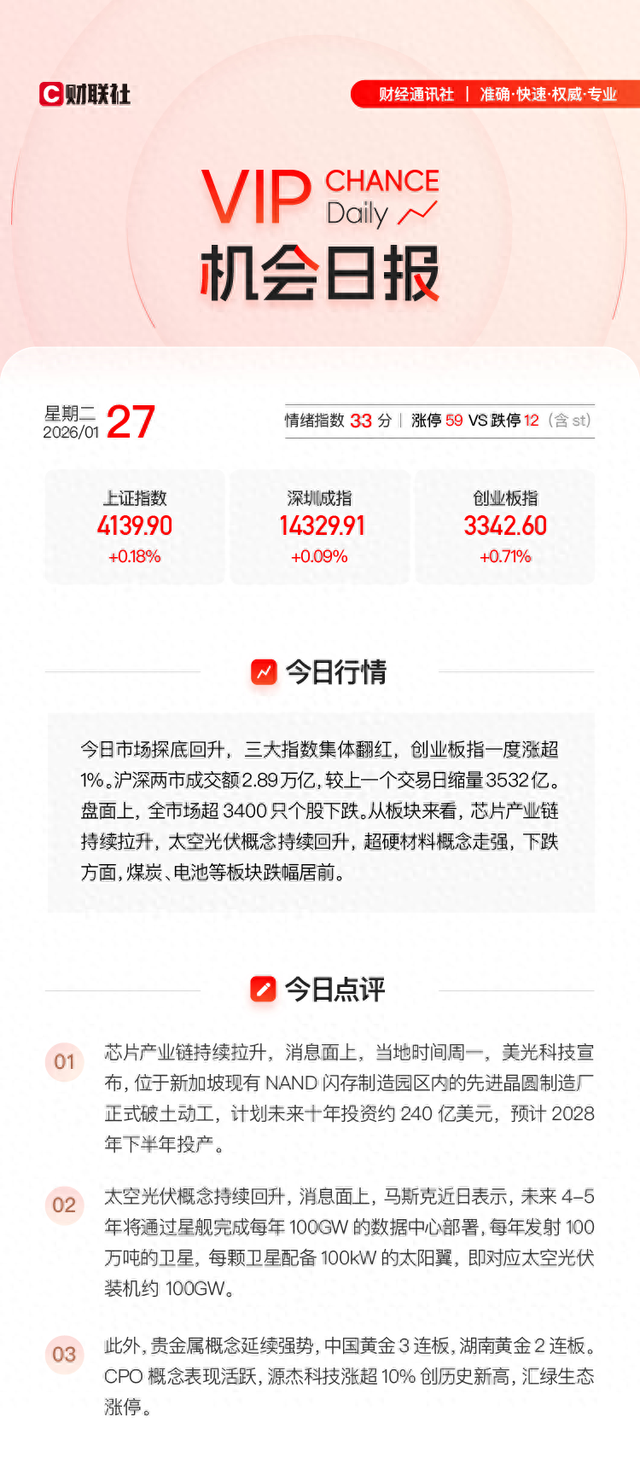
VIP机会日报市场探底回升 芯片产业链今日拉升 这家公司年报预告超预期 解读后大涨14.75%
Xin Lang Cai Jing· 2026-01-27 09:58
Group 1: Semiconductor Industry - Micron Technology has officially broken ground on an advanced wafer manufacturing facility in Singapore, planning to invest approximately $24 billion over the next decade, with production expected to start in the second half of 2028 [5] - The semiconductor industry is projected to transition from a cyclical recovery to a growth leap by 2026, with a focus on "AI foundation + domestic substitution" [6] - Puran Co. is expected to achieve a net profit of 205 million yuan by 2025, exceeding institutional expectations, driven by optimized supply in the storage chip market and demand from AI servers and high-end smartphones [10] Group 2: Advanced Packaging and AI Applications - The advanced packaging theme was discussed in a recent expert meeting, highlighting the increasing demand and technological iterations in this area, with Huada Technology seeing a maximum increase of 16.8% [12] - Dongxin Co. is actively exploring new application fields for AI, including autonomous driving and AI devices, with a maximum increase of 22.58% noted [14] Group 3: Aerospace Industry - COMAC plans to moderately increase the production and delivery of its C919 narrow-body aircraft, targeting the delivery of 28 or more units this year [21] - Aviation Power has been recognized for its position as a core engine manufacturer, benefiting from product diversification and increased production of civil aircraft, leading to a significant stock increase [21][24] - The domestic large aircraft theme was also discussed in an expert meeting, with Aviation Power and Aviation Control seeing maximum increases of 7.14% and 5.83%, respectively [27]





芯片概念爆发多股涨停,华虹公司市值首次突破2000亿
2 1 Shi Ji Jing Ji Bao Dao· 2026-01-27 07:57
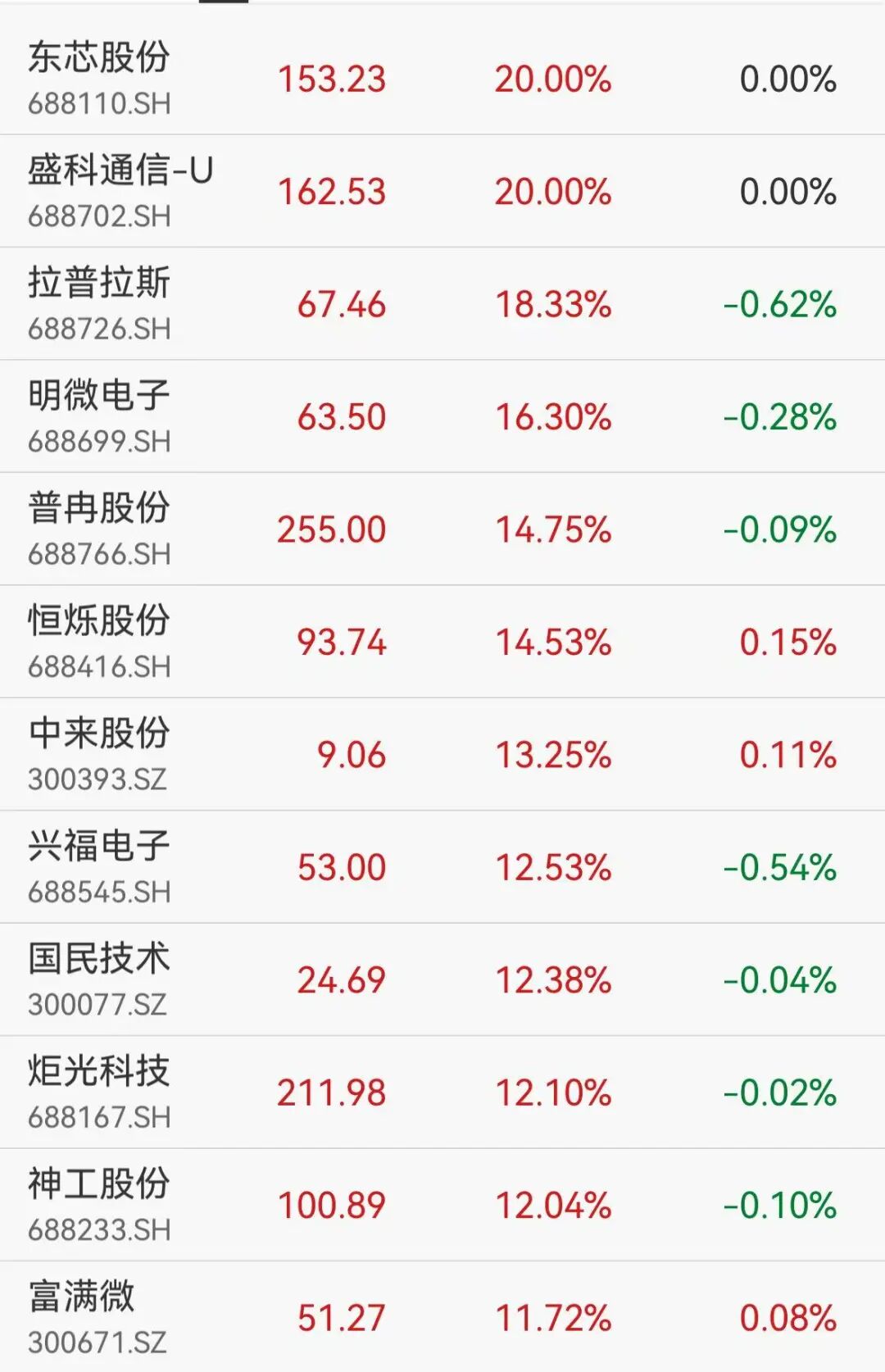
Market Overview - On January 27, the market rebounded after a dip, with all three major indices turning positive; the Shanghai Composite Index rose by 0.18%, the Shenzhen Component Index by 0.09%, and the ChiNext Index by 0.71% [1] - The total trading volume in the Shanghai and Shenzhen markets was 2.92 trillion yuan, a decrease of 359.2 billion yuan compared to the previous trading day [1] - Over 3,400 stocks in the market experienced declines [1] Sector Performance - The chip industry chain continued to rise, with notable performances from companies like Huada Technology and Hanhua Technology, which saw significant gains [1] - Precious metals maintained strong momentum, with China Gold achieving three consecutive trading limit increases and Hunan Gold two consecutive increases [1] - The CPO concept showed active performance, with Yuanjie Technology rising over 10% to reach a historical high [1] - The coal and battery sectors faced the largest declines, with battery-related stocks like Tianji Co. and Huasheng Lithium falling over 6% [1] Chip Sector Highlights - Chip stocks led the market rally, with Huada Technology hitting the trading limit and Huahong Semiconductor rising over 8% during the day, reaching a market capitalization of over 200 billion yuan [1] - Dongxin Co. and Shengke Communication both hit the trading limit, while several other stocks in the sector saw gains exceeding 12% [1][2] External Influences - The surge in stock prices of South Korean memory chip giant SK Hynix, which rose nearly 8% to reach a historical high, was identified as a factor driving the strength of related A-share concept stocks [4] - Samsung Electronics announced a price increase of over 100% for NAND flash memory supply in Q1, significantly exceeding market expectations [4] - Micron Technology plans to invest an additional $24 billion in Singapore over the next decade to expand capacity in response to the AI-driven demand for memory chips [4] Solar and Aerospace Sectors - The space photovoltaic concept saw a rebound, with companies like Laplace and Zhonglai Co. experiencing significant gains [4] - Elon Musk's announcement regarding the deployment of data centers and satellites through Starship over the next 4-5 years is expected to support the growth of the space photovoltaic sector [4] - The commercial aerospace sector also saw short-term gains, with companies like Shenglu Communication hitting the trading limit and others rising over 10% [5] Aviation Sector Developments - The large aircraft sector continued to rise, with companies like AVIC Control and AVIC Technology hitting the trading limit, and others like Tunan Co. and AVIC Power seeing gains over 10% [6] - Individual stock BoHui Innovation experienced a sudden surge, rising over 10% within 10 minutes, following the announcement of its self-developed Nipah virus nucleic acid testing kit [6]


收评:创业板指探底回升涨0.71%,芯片产业链集体走强
Feng Huang Wang Cai Jing· 2026-01-27 07:14
Market Overview - The market showed signs of recovery with all three major indices turning positive, and the ChiNext index rising over 1% at one point [1] - The total trading volume in the Shanghai and Shenzhen markets was 2.89 trillion yuan, a decrease of 353.2 billion yuan compared to the previous trading day [1] - Despite the overall market recovery, over 3,400 stocks experienced declines [1] Sector Performance - The semiconductor industry chain continued to rise, with Huahong Semiconductor reaching a historical high, and stocks like Yaxing Integrated and Shenghui Integrated hitting the daily limit [1] - Precious metals maintained strong performance, with China Gold achieving three consecutive limit-ups and Hunan Gold two consecutive limit-ups [1] - The CPO concept saw active performance, with Yuanjie Technology rising over 10% to reach a historical high, and Huilv Ecology hitting the daily limit [1] - The space photovoltaic concept showed continued recovery, with Yujing Co. achieving three limit-ups in four days, and Saiwu Technology hitting two limit-ups in three days [1] - The superhard materials sector strengthened, with Huanghe Whirlwind hitting the daily limit [1] Declining Sectors - The coal and battery sectors experienced significant declines, with the battery industry chain collectively dropping, including Tianji Co. and Huasheng Lithium Battery falling over 6% [1] Closing Summary - At the close, the Shanghai Composite Index rose by 0.18%, the Shenzhen Component Index increased by 0.09%, and the ChiNext Index gained 0.71% [1]
收评:创业板指探底回升涨0.71% 芯片产业链集体走强
Mei Ri Jing Ji Xin Wen· 2026-01-27 07:12
Market Overview - The market showed signs of recovery with all three major indices turning positive, and the ChiNext index rising over 1% at one point [1] - The total trading volume in the Shanghai and Shenzhen markets was 2.89 trillion yuan, a decrease of 353.2 billion yuan compared to the previous trading day [1] Sector Performance - The semiconductor industry chain continued to rise, with Huahong Semiconductor reaching an all-time high, and companies like Yaxing Integrated and Shenghui Integrated hitting the daily limit [1] - Precious metals maintained strong performance, with China Gold achieving three consecutive trading limit increases and Hunan Gold two consecutive limit increases [1] - The CPO concept saw active performance, with Yuanjie Technology rising over 10% to reach a historical high, and Huile Ecology hitting the daily limit [1] - The space photovoltaic concept continued to rebound, with Yujing Co. achieving three limit increases in four days, and Saiwu Technology achieving two limit increases in three days [1] - The superhard materials sector strengthened, with Huanghe Xuanfeng hitting the daily limit [1] Declining Sectors - The coal and battery sectors experienced the largest declines, with the battery industry chain collectively dropping, including Tianji Co. and Huasheng Lithium Battery falling over 6% [1] Closing Summary - At the close, the Shanghai Composite Index rose by 0.18%, the Shenzhen Component Index increased by 0.09%, and the ChiNext Index gained 0.71% [1]
筹码给出去
Xin Lang Cai Jing· 2026-01-27 01:55
甭管多诱人都不能去啊,去了钱就没了,弄不好人也进去了。 太空光伏先把航天XX和中国X星这些兄弟们吸血成了老登股,然后自己也带不了队,双手一摊,惊天 一跪。 战力下滑的兄弟还是兄弟吗?创不了新高的股怎么就不算老登了?让众多宇航员们措不及防,在火箭上 怎么也成老登了?人人都笑老登,人人都是老登。 (来源:东昌路打工人) 腊八节,持仓已经乱成一锅粥。 周末一天六场会议学习太空光伏,上一次这么高频率的动作还是多年前的一秒六棍。 这么大动静,自然让我们把眼神给了过去,然后老师们把筹码给了出去,股价形成了SX型。 经历了这么多次周末热门新知识的学习,让人恍惚之间穿越到一个陌生的城市。你刚出火车站,就有人 邀请你:"娃,你过来,姨跟你舍个话"。 另外一支马家军也遭重创,机器人粉丝前面说只要航天开始回调,一切都会好起来的。别看航天涨得时 候没带你们,跌的时候可没少跟你们一起啊。 抓马行情啊。 最像起飞的反而是云计算涨价,云本是天上来,也是航天。哪家云涨价?ali,ali也是马家军。 情绪有点差,题材有点累。背后是一只无形的大手在抓大放小,上证50结束九连阴,而此前桀骜不驯的 500和1000被上了强度,这是在引导热钱从题材回 ...